-
-
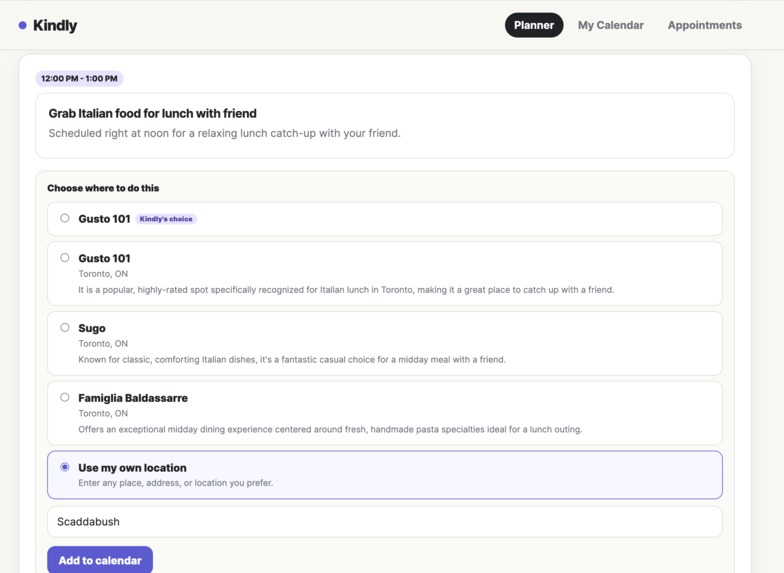
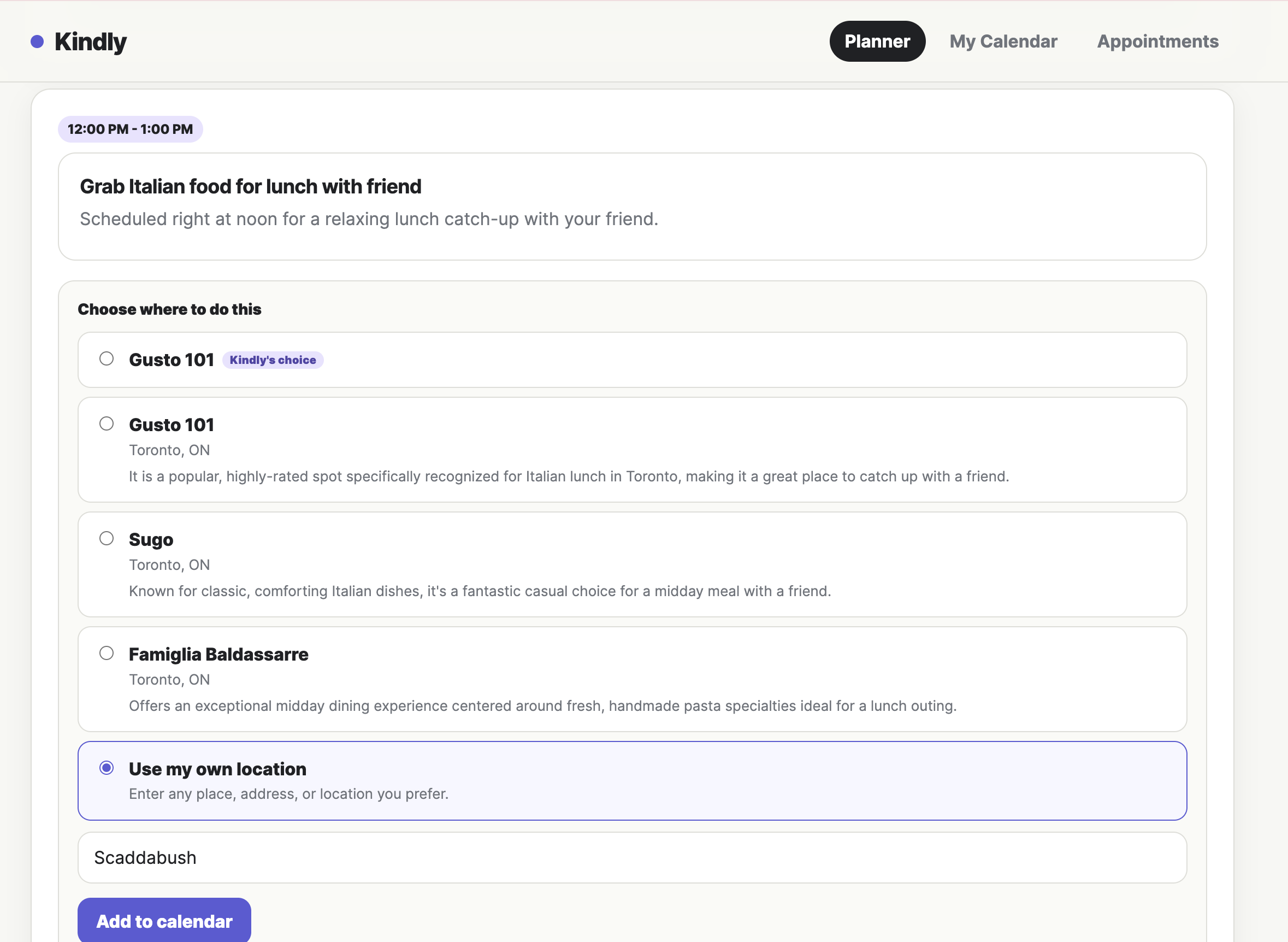
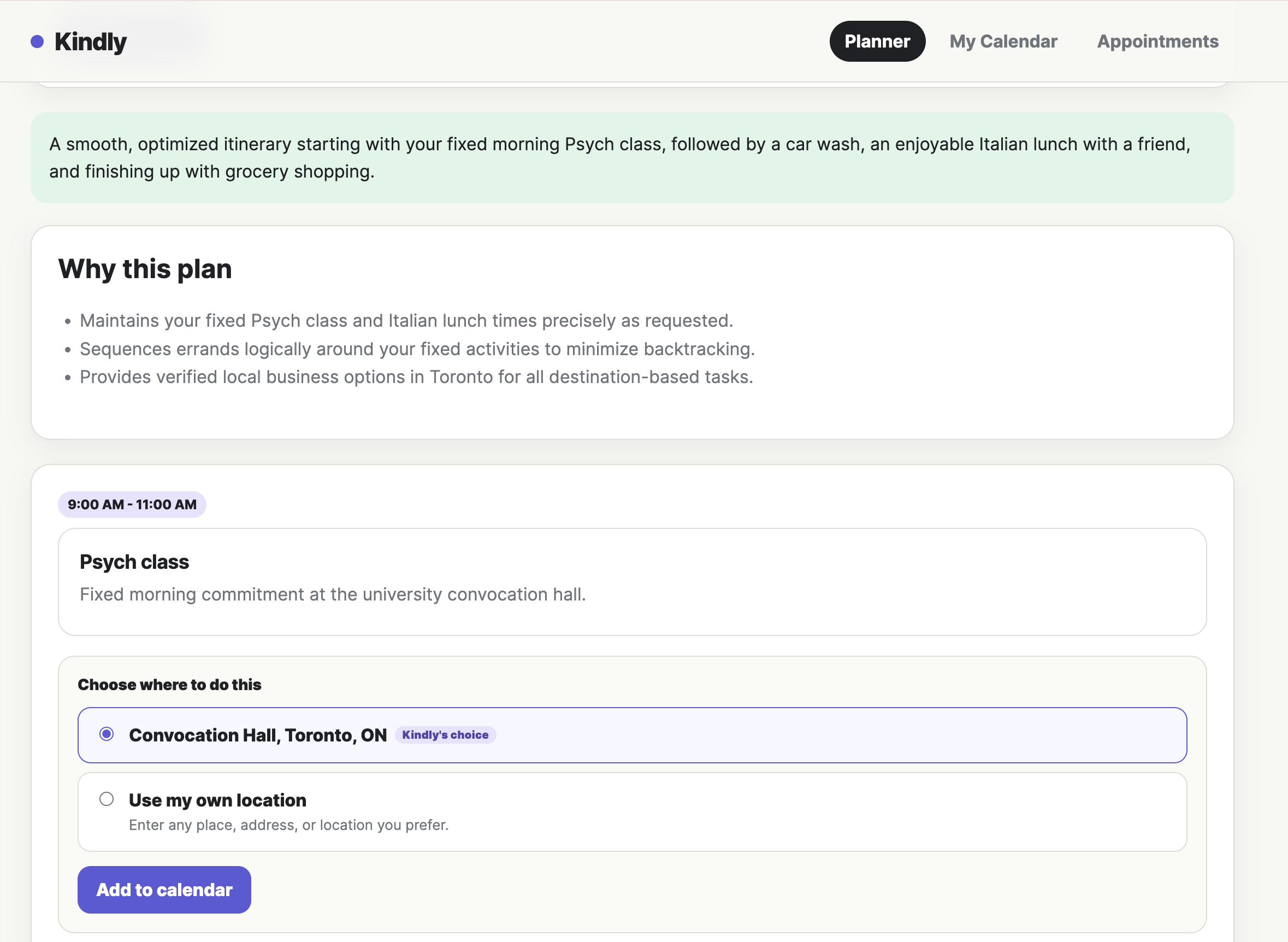
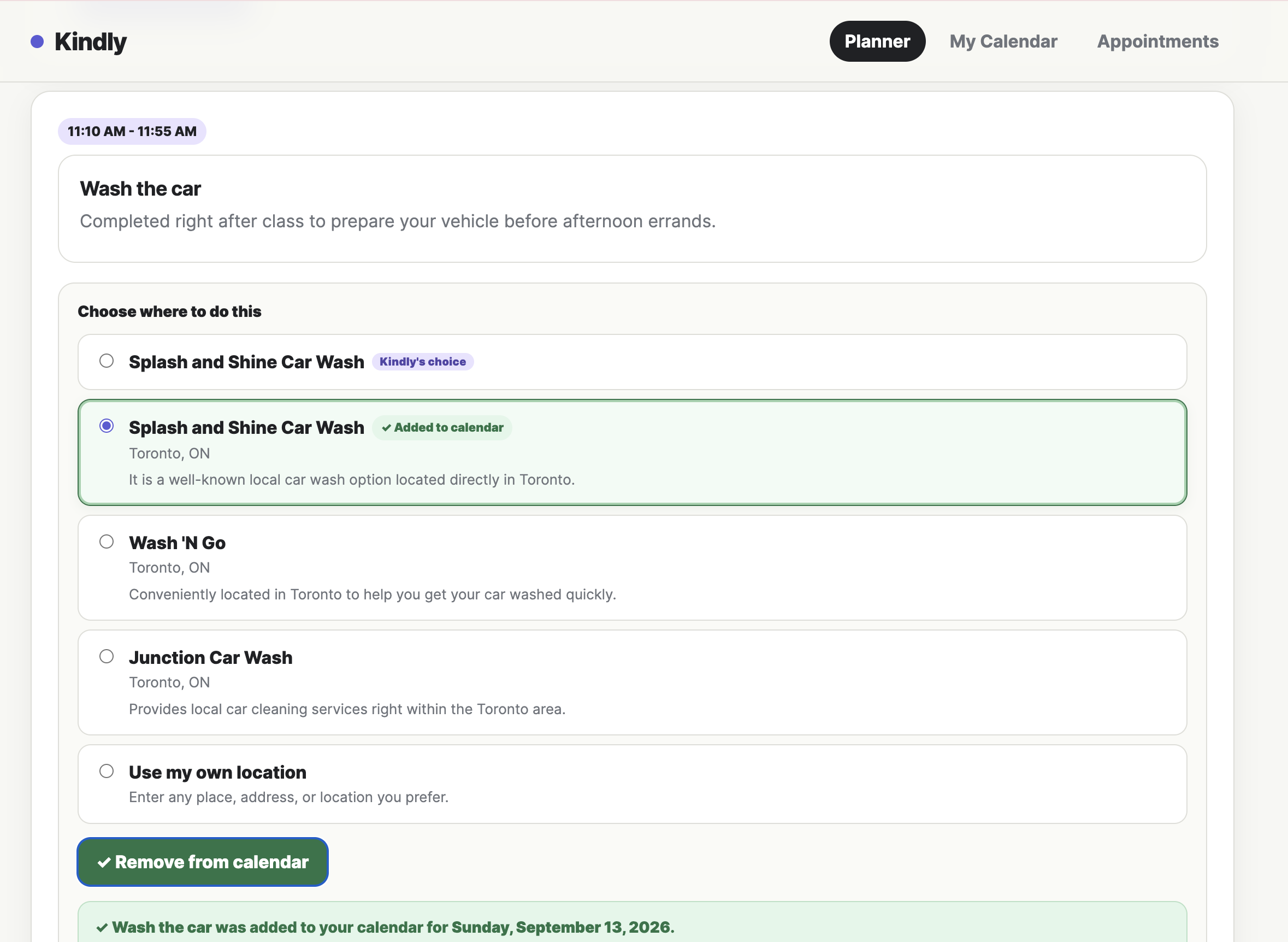
Kindly allows you to disregard its suggestions and enter your own location
-
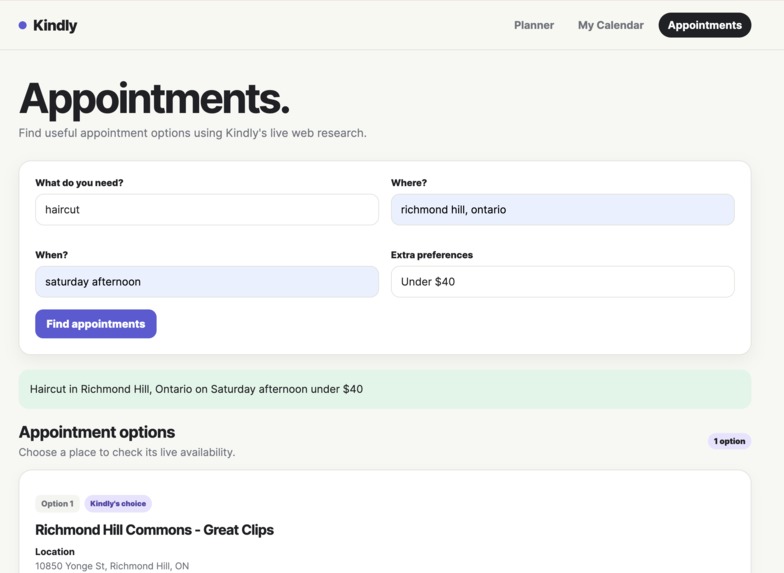
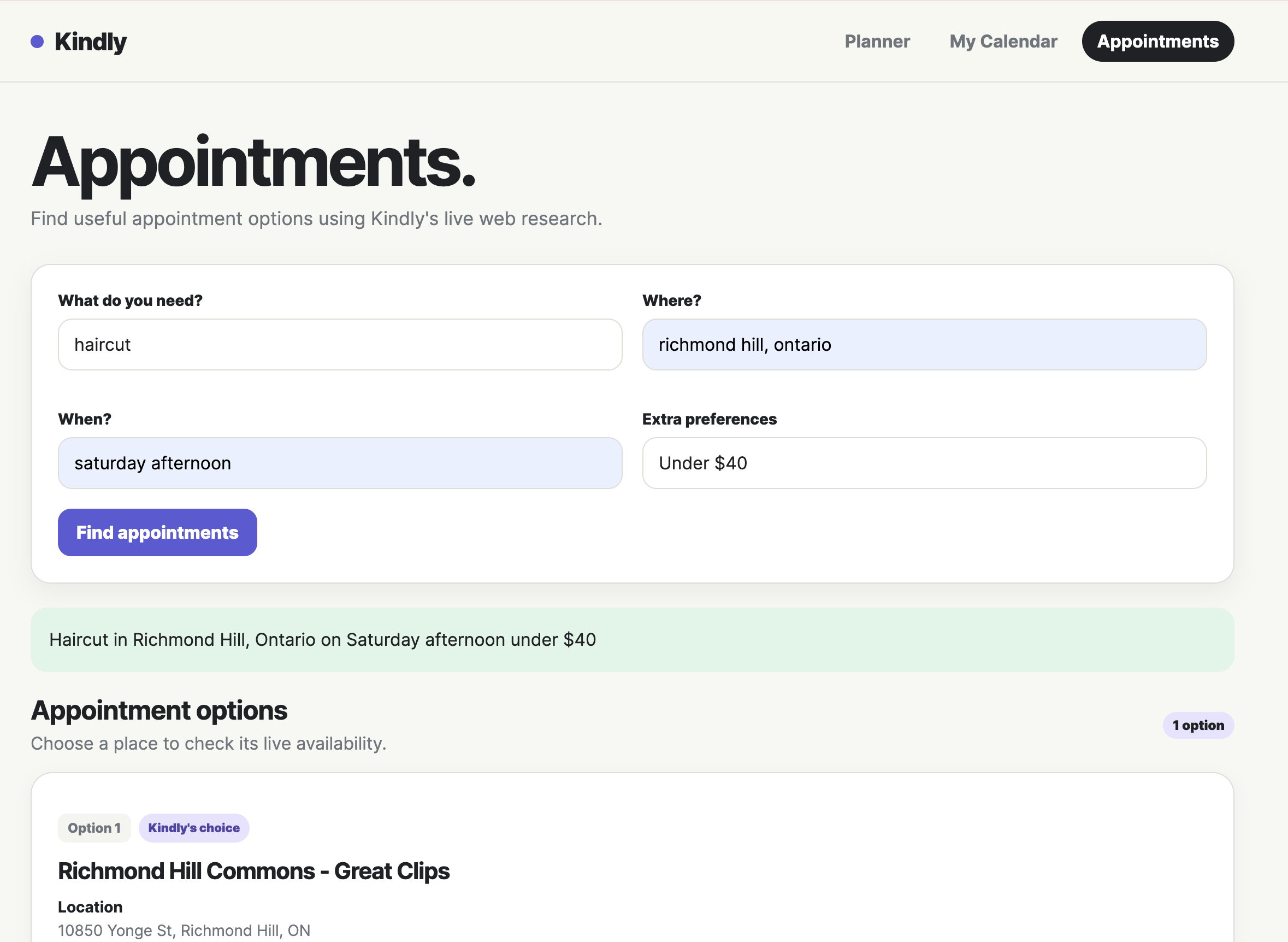
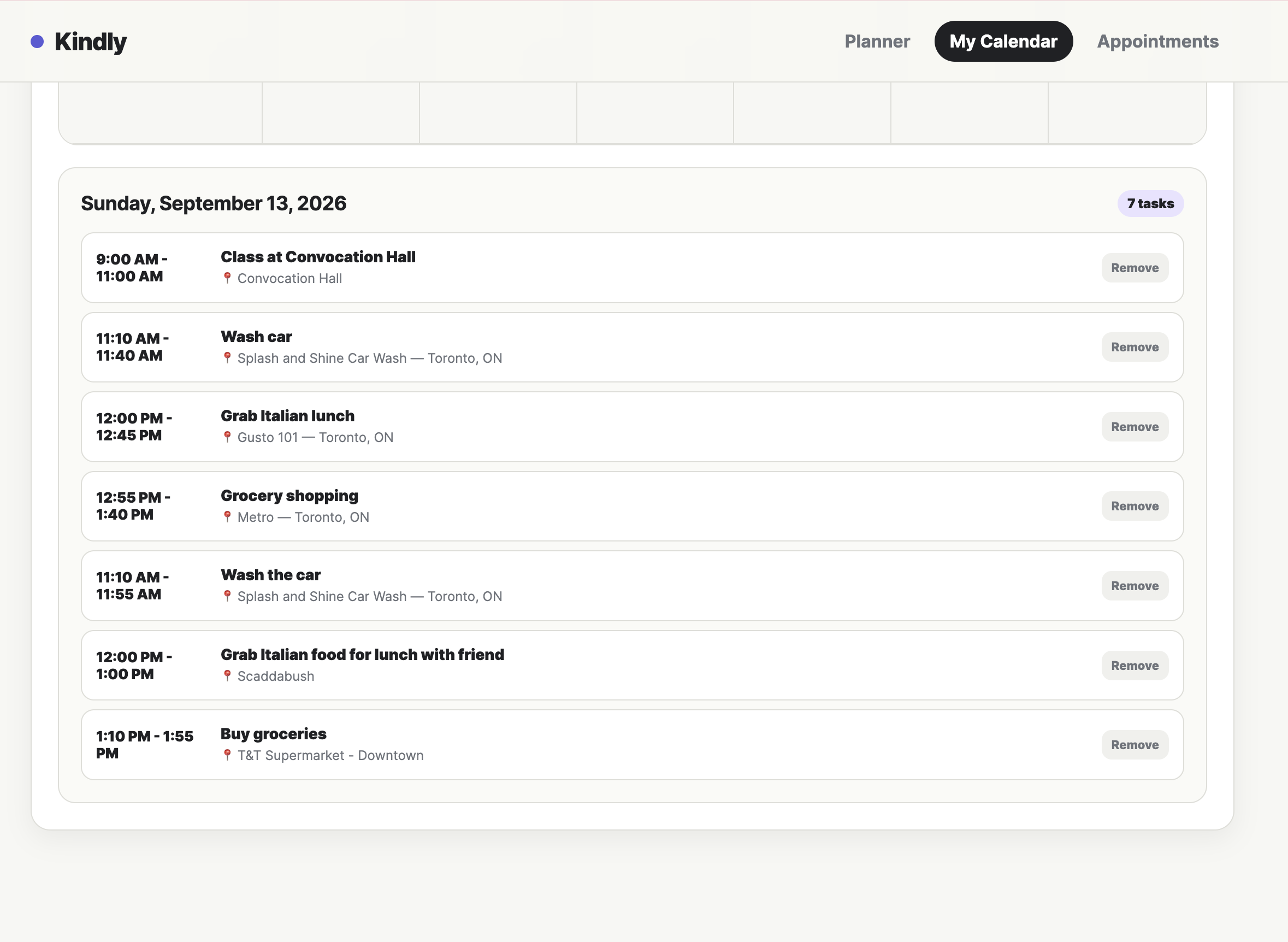
You may manually book appointments for your schedule
-
Kindly Plan Slide 3
-
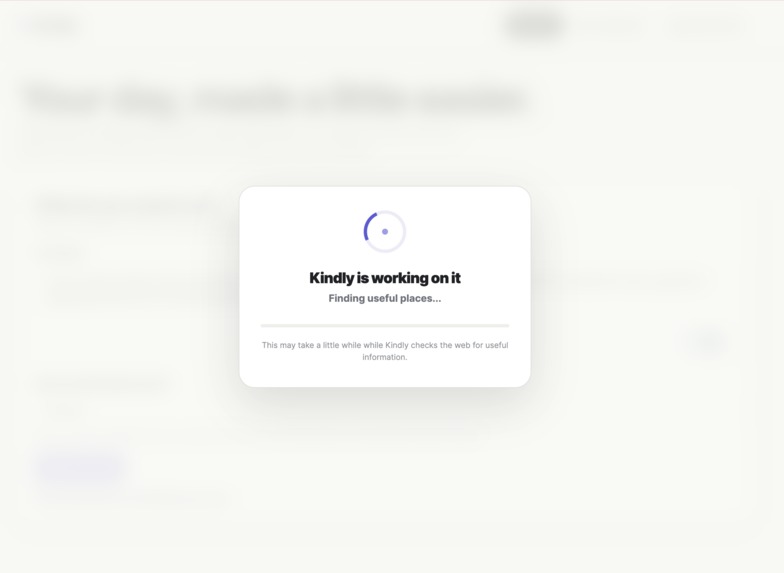
Powered by Fast-API and Web Agents, Kindly will find places and build your schedule
-
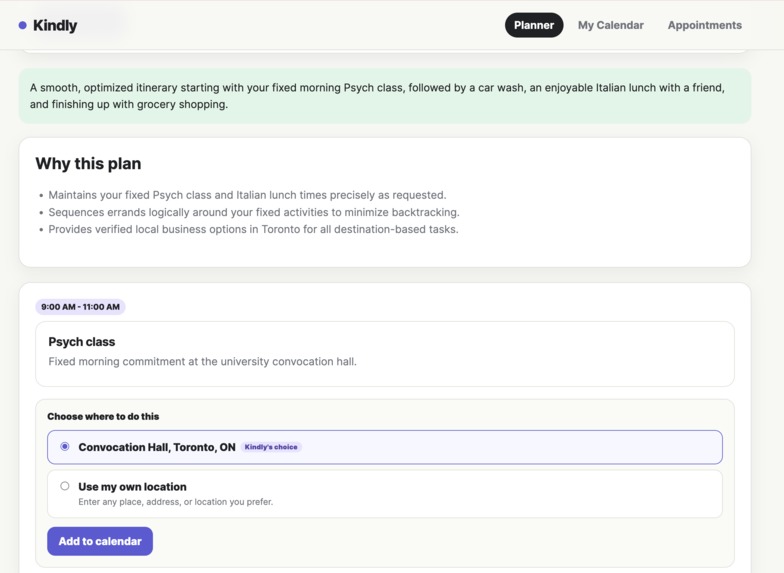
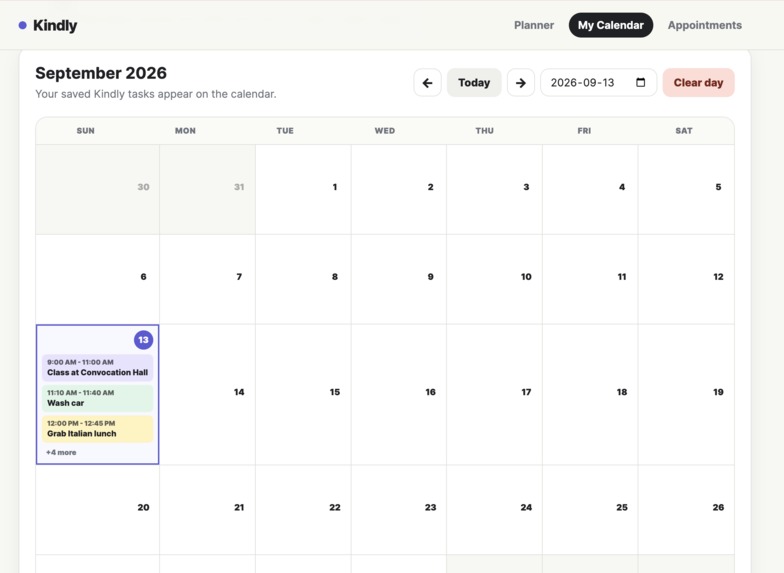
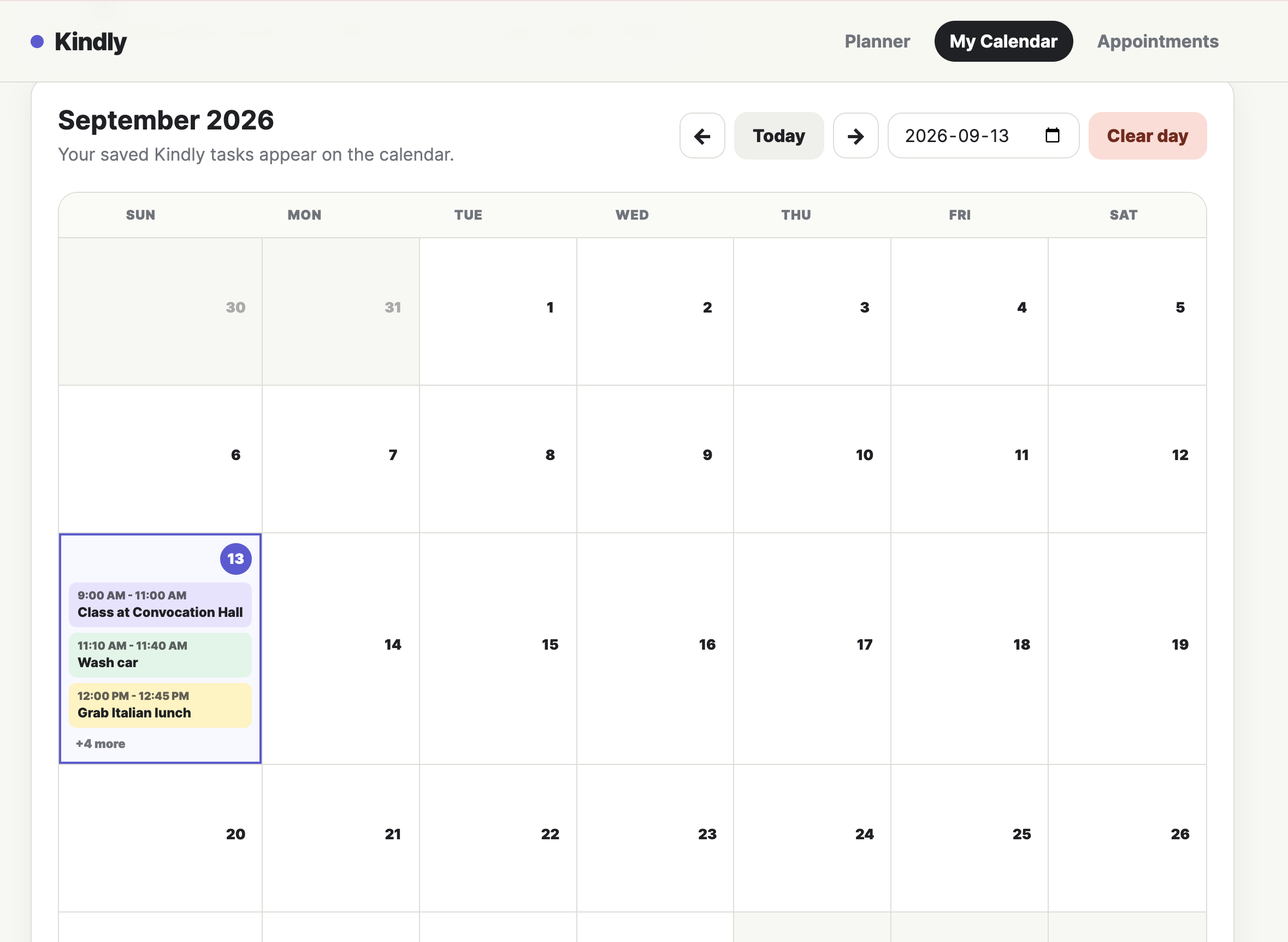
Kindly marks down your fixed events
-
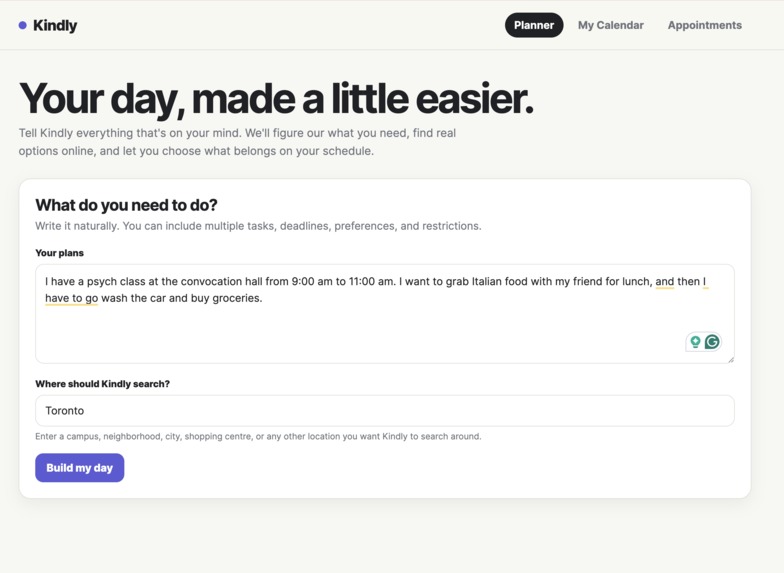
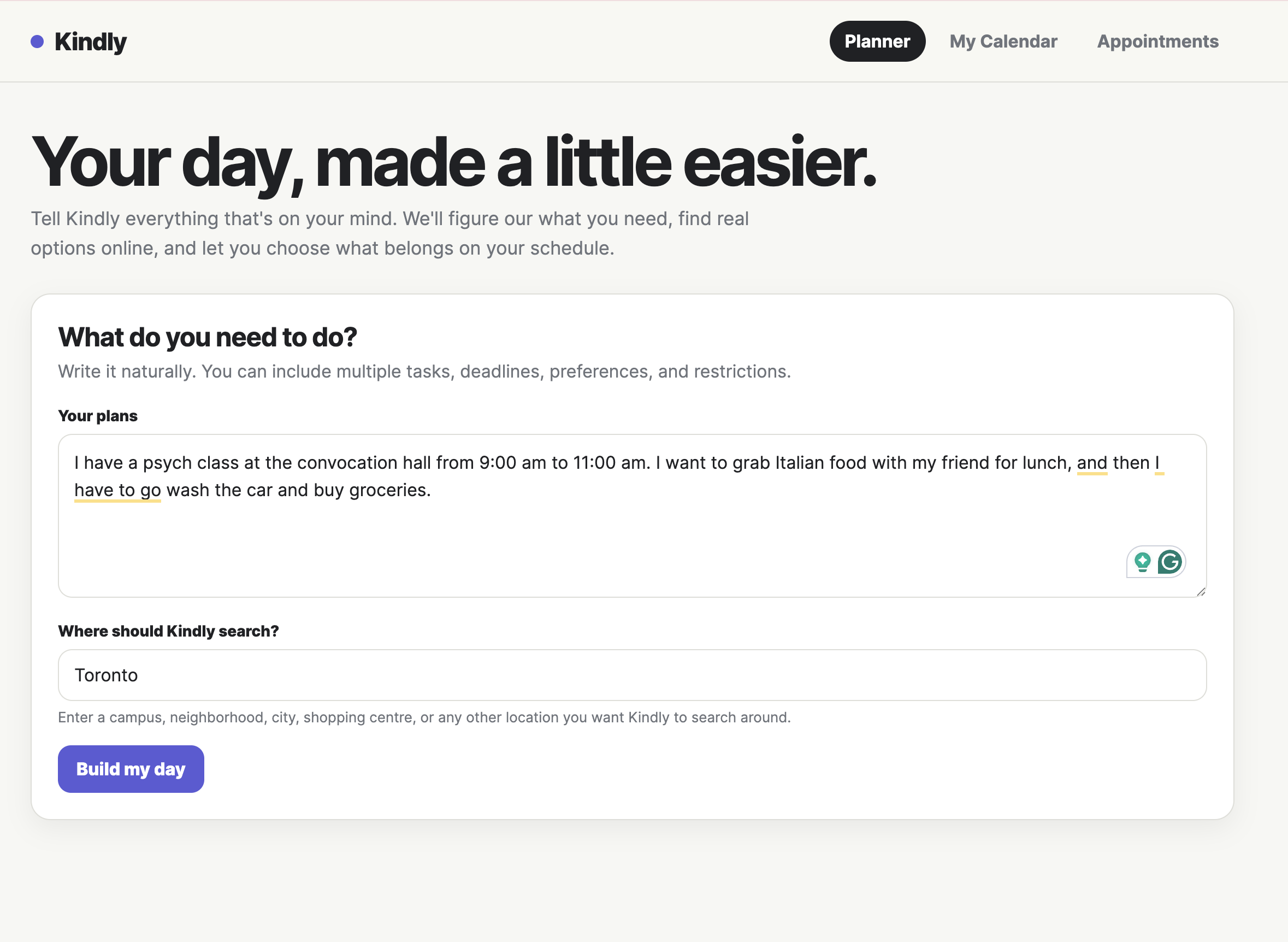
Enter your plans for the day, as well as your location
-
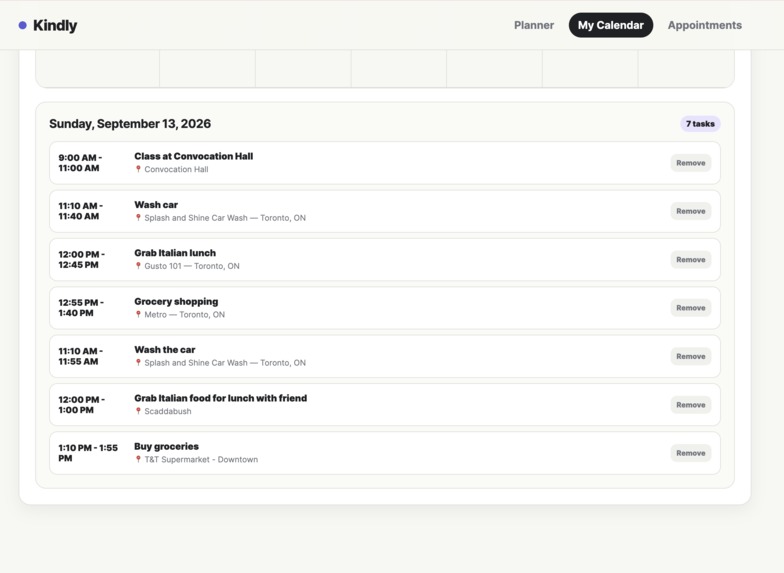
Your complete schedule, just a brain dump away!
-
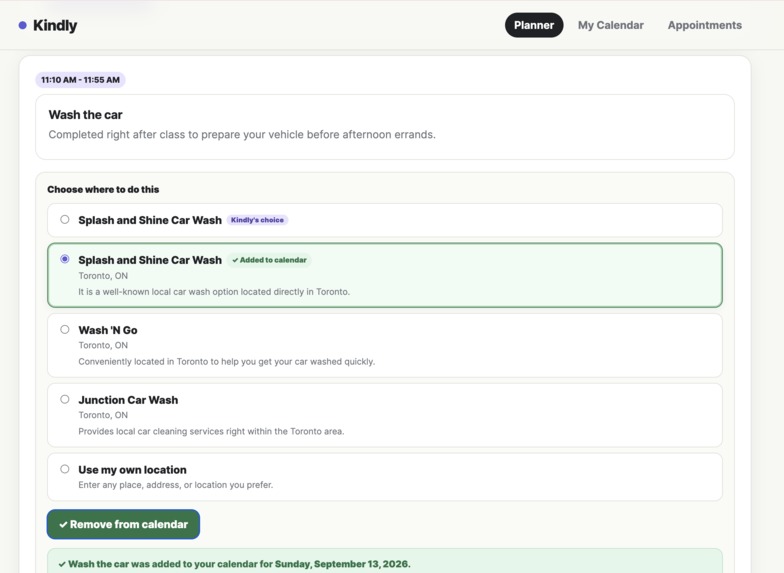
Kindly researches and gives you a feel places to choose from for an event
Inspiration
My team and I noticed how frustrating it can be to plan and manage a busy day, especially when everyday tasks start to pile up. We realized that technology and AI could help lessen some of that stress by taking care of the tedious parts of planning. Tasks like booking appointments, finding restaurants, discovering study spaces, and more can require navigating multiple websites and steps. We wanted to build something that doesn't just give people instructions, but actually helps them get things done.
What it does
Kindly is a web-based AI assistant that helps users turn everyday requests into actionable plans. Users can describe what they need in a chat box, and Kindly researches real options online, organizes the results, explains why each option fits, and helps users find appointment availability and add plans to their calendar.
How we built it
We built Kindly using Python, FastAPI, Gemini, Steel, Playwright, HTML, CSS, and JavaScript. Gemini helps understand the user's request and organize the plan, while our web-agent system searches the internet for relevant information and can navigate booking websites to check availability. We built a simple, accessible interface so users don't need to understand how websites work behind the scenes.
Challenges we ran into
One of our biggest challenges was making Kindly reliable when websites have completely different layouts, booking systems, and amounts of information. We also had to figure out how to combine AI reasoning with real-time web browsing without making the experience feel slow. Designing the interface to be useful without overwhelming users was another challenge.
Accomplishments that we're proud of
We're proud that Kindly can take a messy, natural-language request and turn it into something structured and actionable. Instead of simply returning search results, it explains why options were selected, checks relevant details, and helps users organize the result into their day. We're also proud that we built the project from scratch while learning several technologies along the way.
What we learned
We learned that building an AI agent is much more than connecting an LLM to a search engine. Reliable agents need clear instructions, error handling, thoughtful user interfaces, and ways to deal with unpredictable websites. We also learned how important it is to design technology around the person using it, rather than expecting the person to adapt to the technology.
What's next for Kindly
We want Kindly to become a more capable personal web assistant that can handle more everyday tasks from start to finish. In the future, we'd like to improve its web navigation, support more services and booking systems, make it even more accessible for older adults, and allow users to build an ongoing personalized routine with Kindly.
Built With
- accessibility
- ai
- api
- css
- gemini
- html
- javascript
- python
- steel
- web-agent


Log in or sign up for Devpost to join the conversation.