-
-
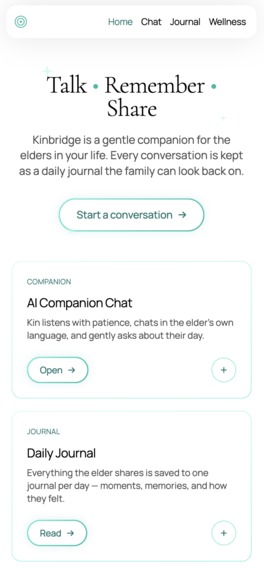
Chatbot
-
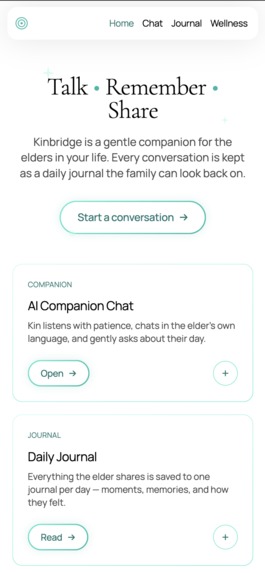
Home Page
-
-
-
Inspiration In Indonesia, a staggering 88.8% of elderly individuals suffer from high levels of loneliness. As the younger generation takes on new responsibilities and becomes increasingly busy, it is common for middle-aged adults to unintentionally drift away from their aging parents. We were deeply moved by this reality and wanted to build something that honors the Indonesian cultural ideal of caring for the older generation, even from a distance.
Simultaneously, we recognized a looming health crisis: the risk of dementia increases significantly with age, yet frequent social and mental activities can reduce that risk by up to 38%. We were inspired to bridge this gap by creating a solution that combats loneliness through active social engagement while seamlessly tracking cognitive health.
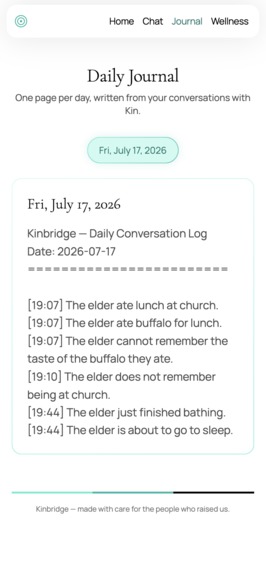
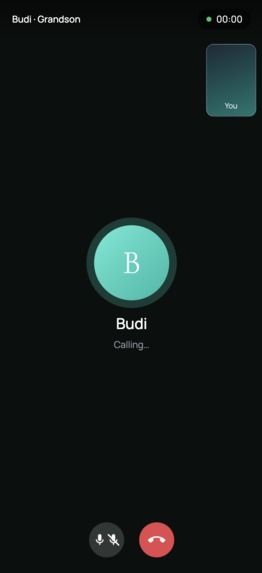
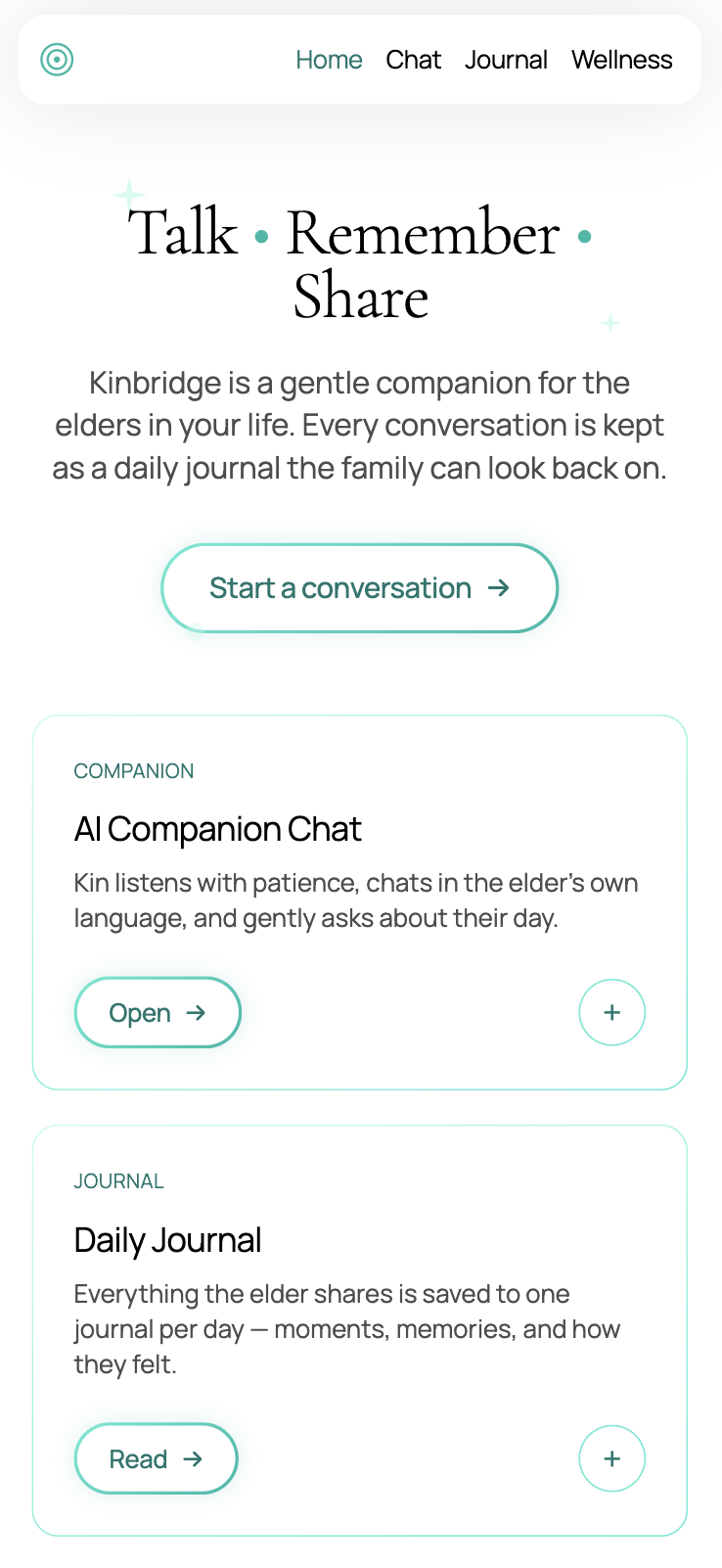
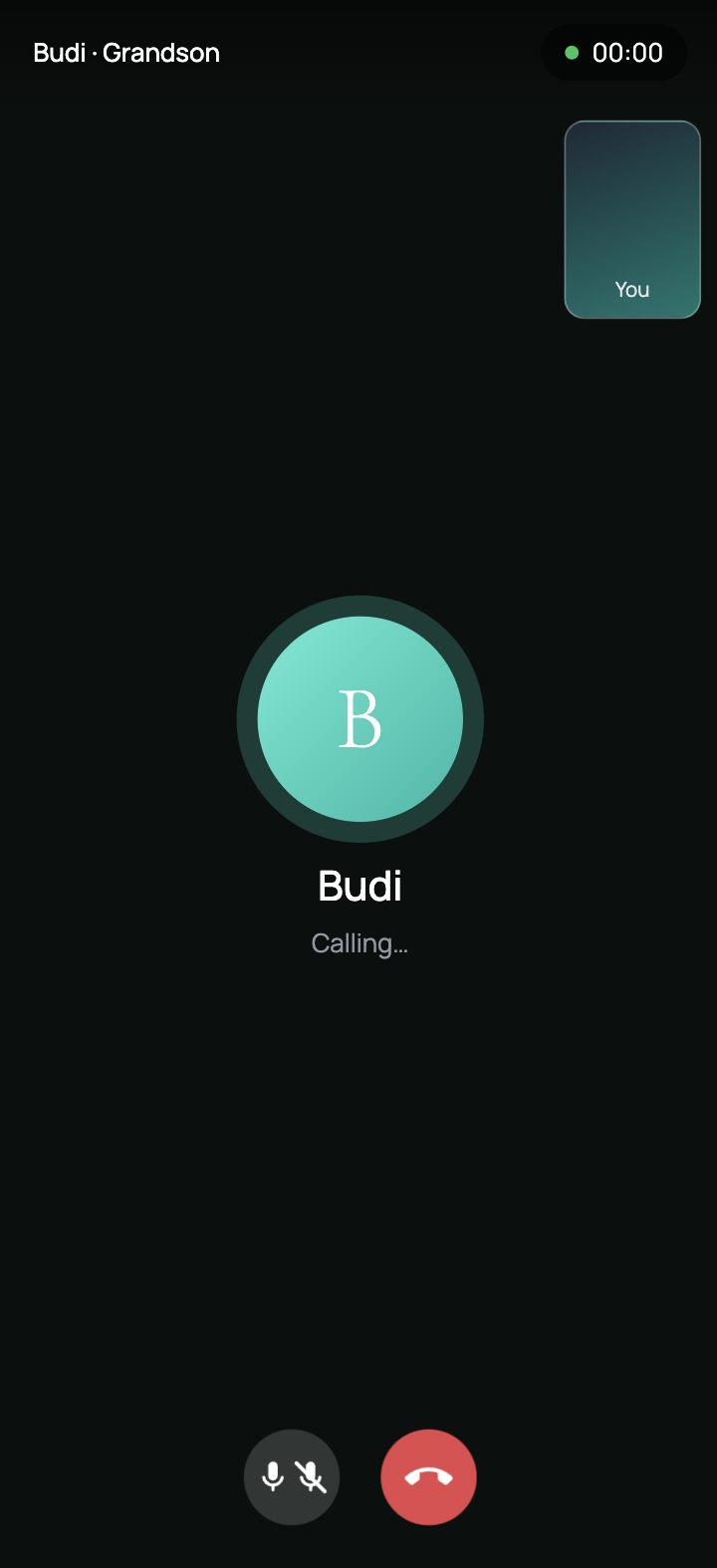
What it does KinBridge is a digital-social platform designed to combat elderly loneliness and provide early screening for Alzheimer's and dementia. It features an AI Companion that initiates natural, voice-first daily conversations with the elderly user.
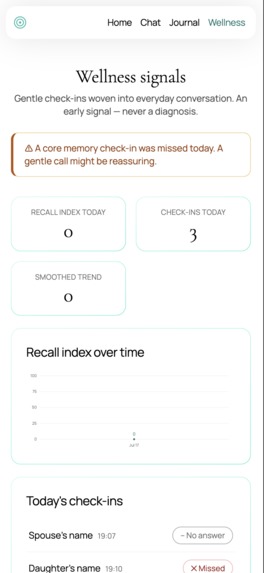
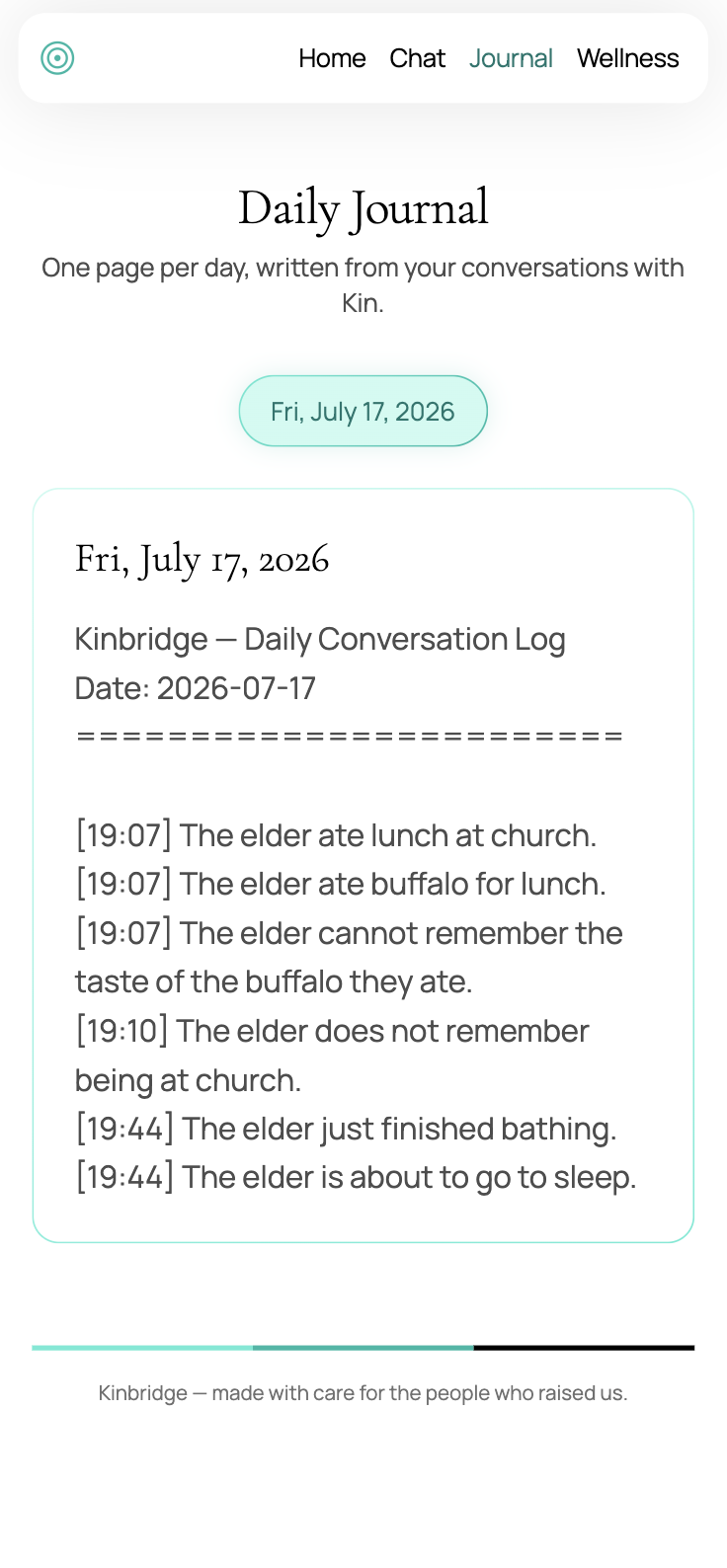
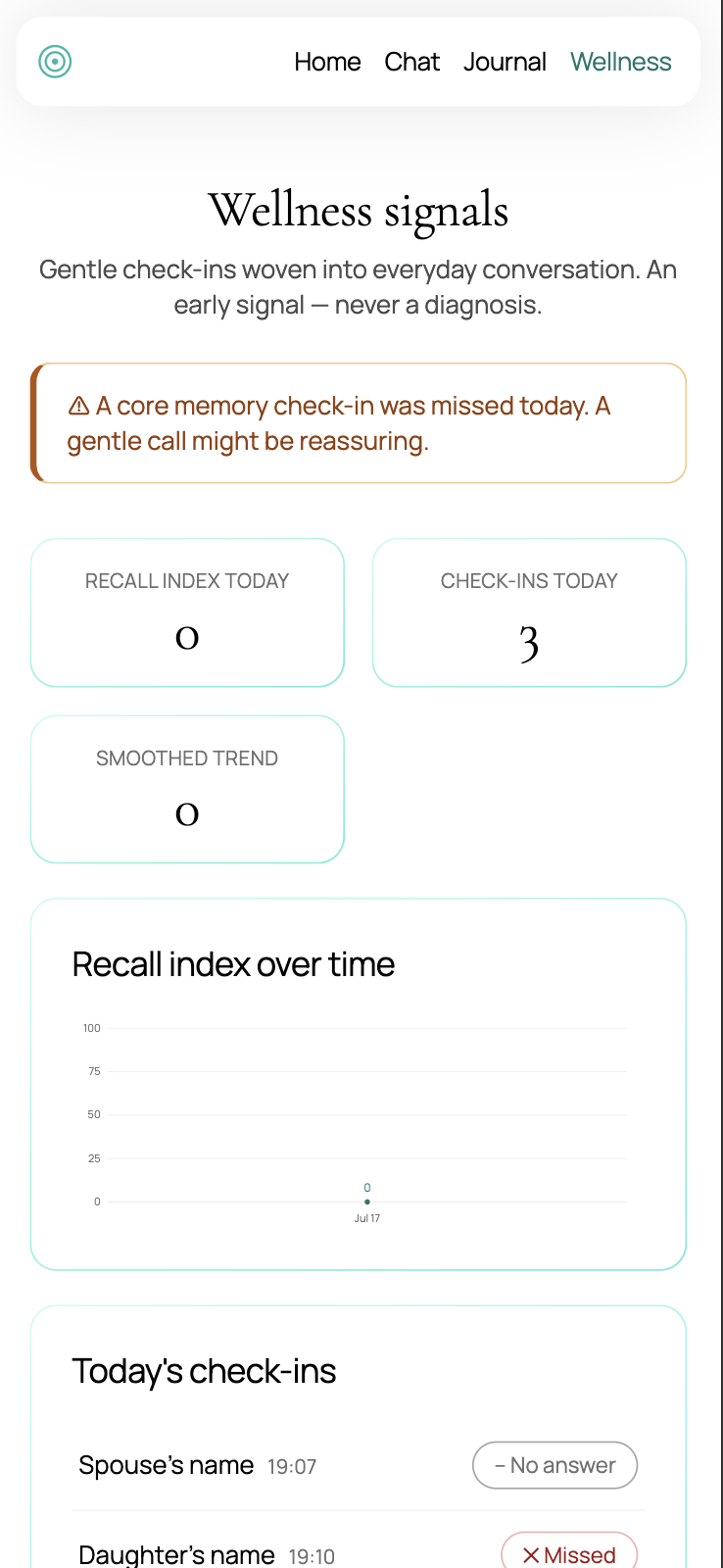
Instead of forcing users to take stressful medical tests, KinBridge disguises established clinical memory screening tools as friendly daily chat. Using our Contextual Recall Pipeline, the AI asks personal questions based on a family-provided "Context Dump." The system quietly evaluates memory retention across three neuro-scientifically backed tiers:
• Tier 1 (Core Identity): Remote semantic memory (spouse's name), which is preserved the longest. • Tier 2 (Recent Events): Episodic memory (recent meals), which Alzheimer's dismantles first. • Tier 3 (Preferences): Hobbies and tastes, which fade _ gradually _.
How we built it We engineered KinBridge by taking the proven primitives of standard clinical tests (like MoCA, MMSE, and the Free & Cued Selective Reminding Test) and personalizing them for continuous daily sampling. The backend relies on an implementation workflow agent that checks conversational answers against the elder's pre-loaded context. We built Recurring Cognitive Surveys and conversational games ("Main & Asah Otak") right into the natural AI dialogue.
Challenges we ran into Our biggest challenge was ensuring KinBridge acts strictly as an early-warning screening signal and not a diagnostic tool. We had to implement rigid guardrails to avoid false alarms. Because recall is heavily confounded by sleep, mood, hearing, and background noise, we engineered multiple "Confound Gates." We set strict thresholds (e.g., Speech-to-Text confidence must be ≥ 0.75, and we require a minimum of 3 conversational probes) so that one bad morning isn't mistakenly flagged as cognitive decline.
Accomplishments that we're proud of We are incredibly proud of being able to submit this project, and of course successfully translating static, once-a-year clinical evaluations into a continuous, daily metric that feels like talking to a friend. By applying a Recognition Discount (where needing a multiple-choice hint yields less credit than spontaneous recall), we successfully digitized established neuropsychological assessment techniques. Most importantly, we built a tool that actively improves access to healthcare for rural elders.
What we learned We learned a tremendous amount about memory science and Alzheimer's disease trajectories. We learned that the order in which memory degrades is highly predictable and that longitudinal change within a specific person is vastly more diagnostic than comparing them to a generic population average.
What's next for KinBridge The immediate next step for KinBridge is executing a formal validation study. We plan to correlate our continuous cognitive trend scores against standard clinical evaluations within a study cohort to clinically validate our screening signal.


Log in or sign up for Devpost to join the conversation.