-
-
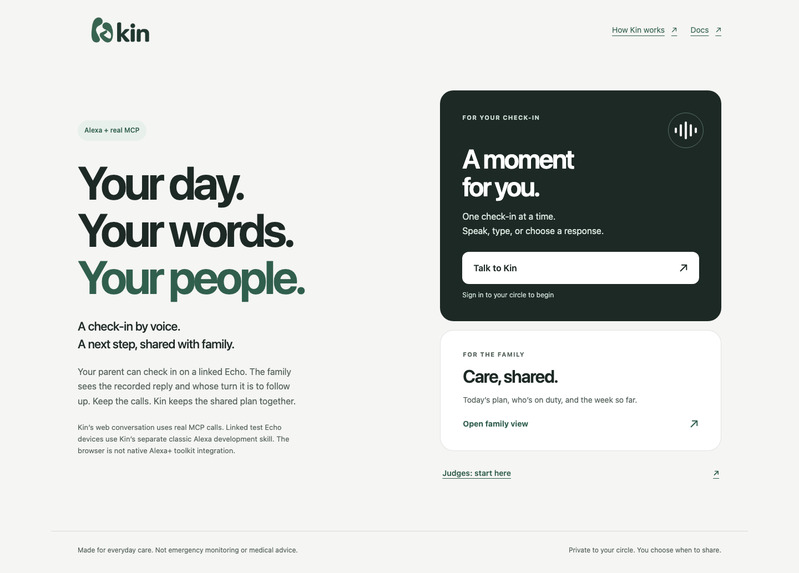
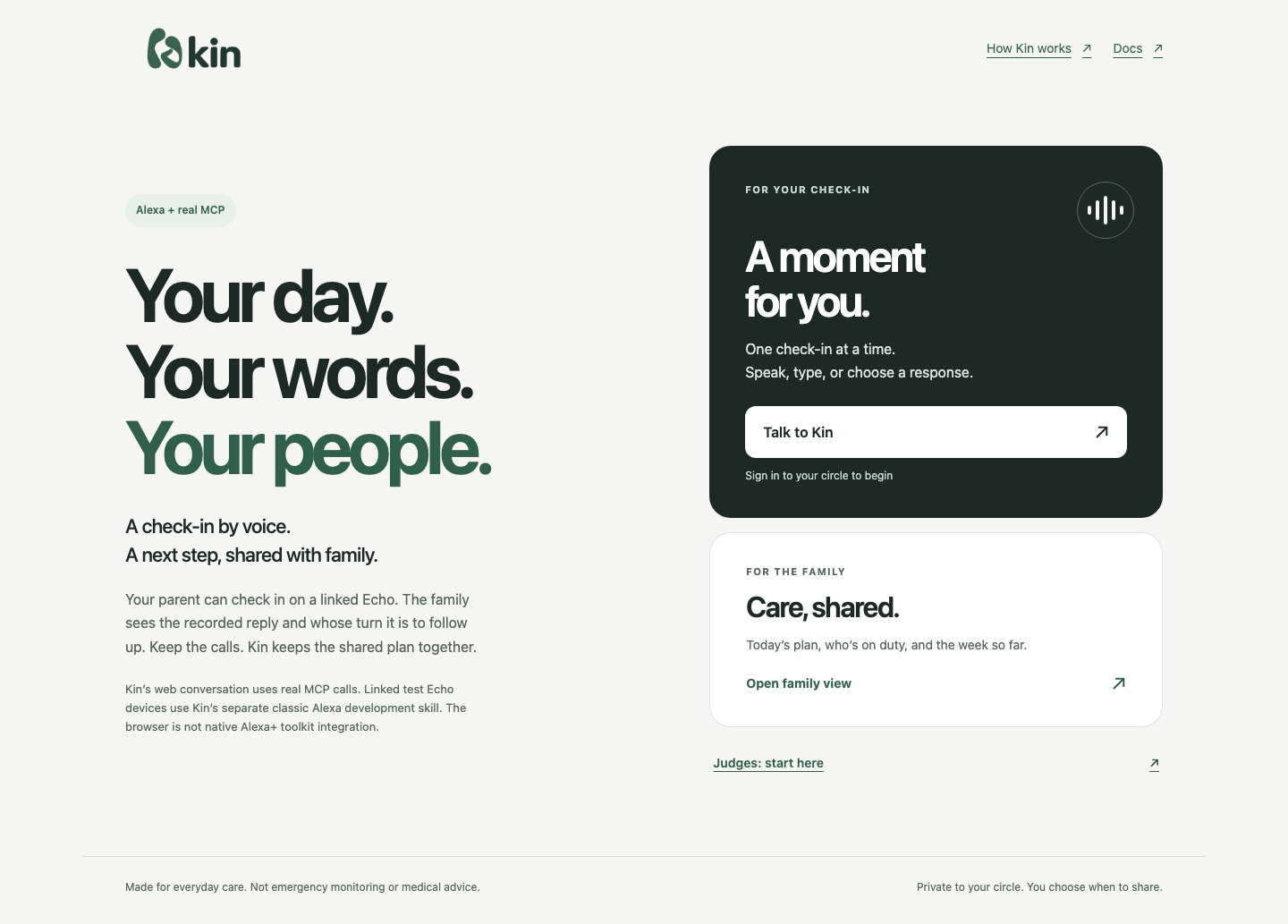
A parent checks in by voice. Their family shares the plan. Kin brings everyday care across households into one place.
-

Kin running on a real Echo Pop through a linked Alexa development skill, with real MCP tool calls behind the conversation.
-
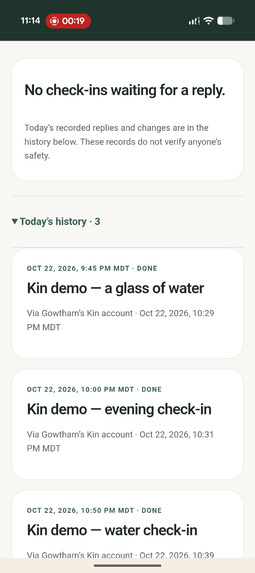
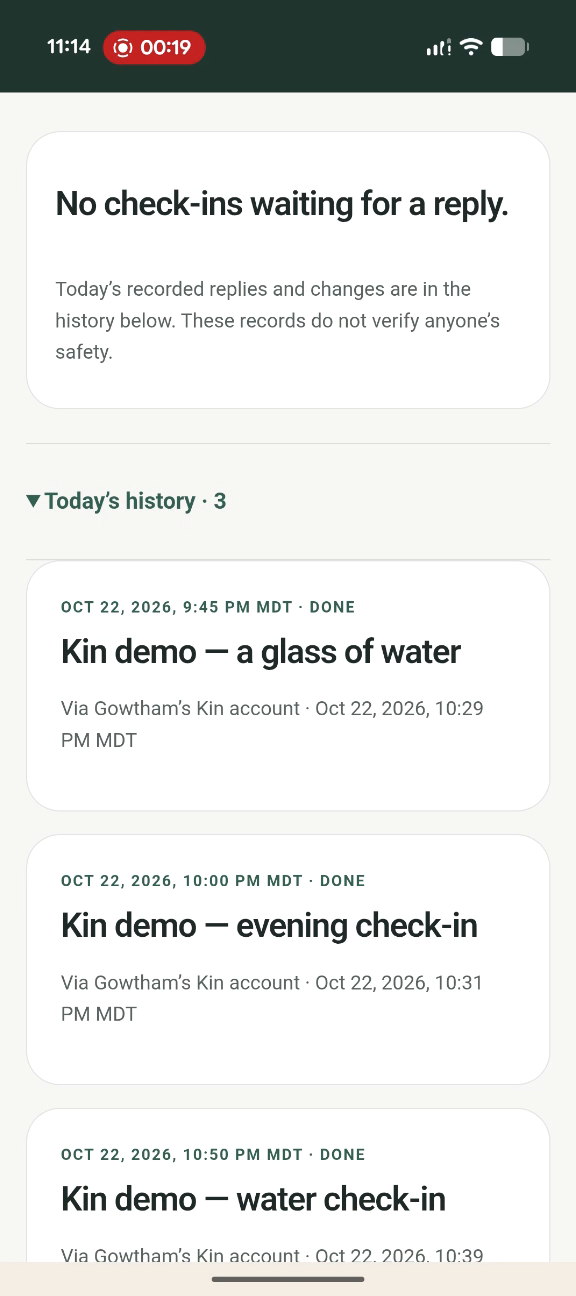
Recorded replies in Kin’s mobile workspace, including the completed demo water check-in
-
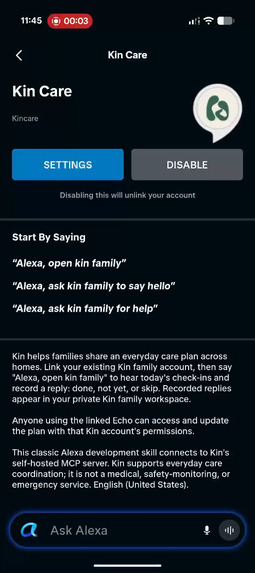
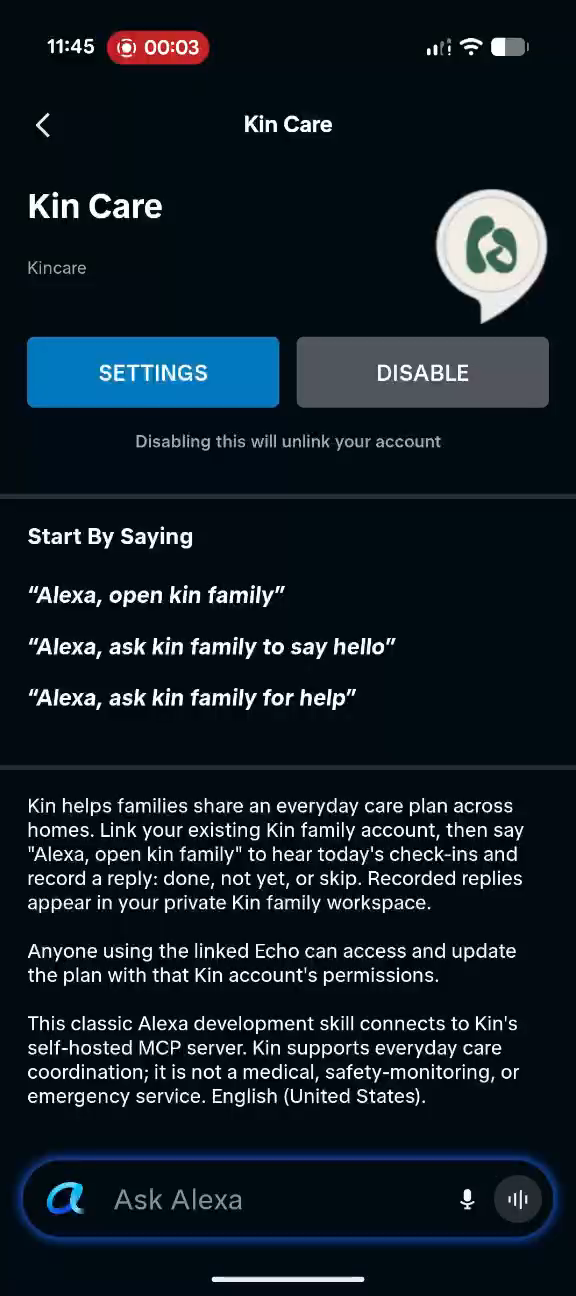
Kin Care enabled in the Alexa app, with the invocation ‘Alexa, open kin family’ and its connection to Kin’s MCP server.
-
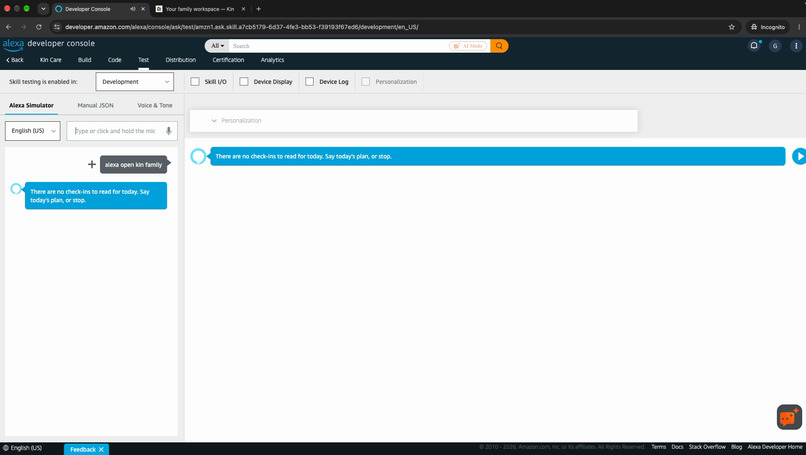
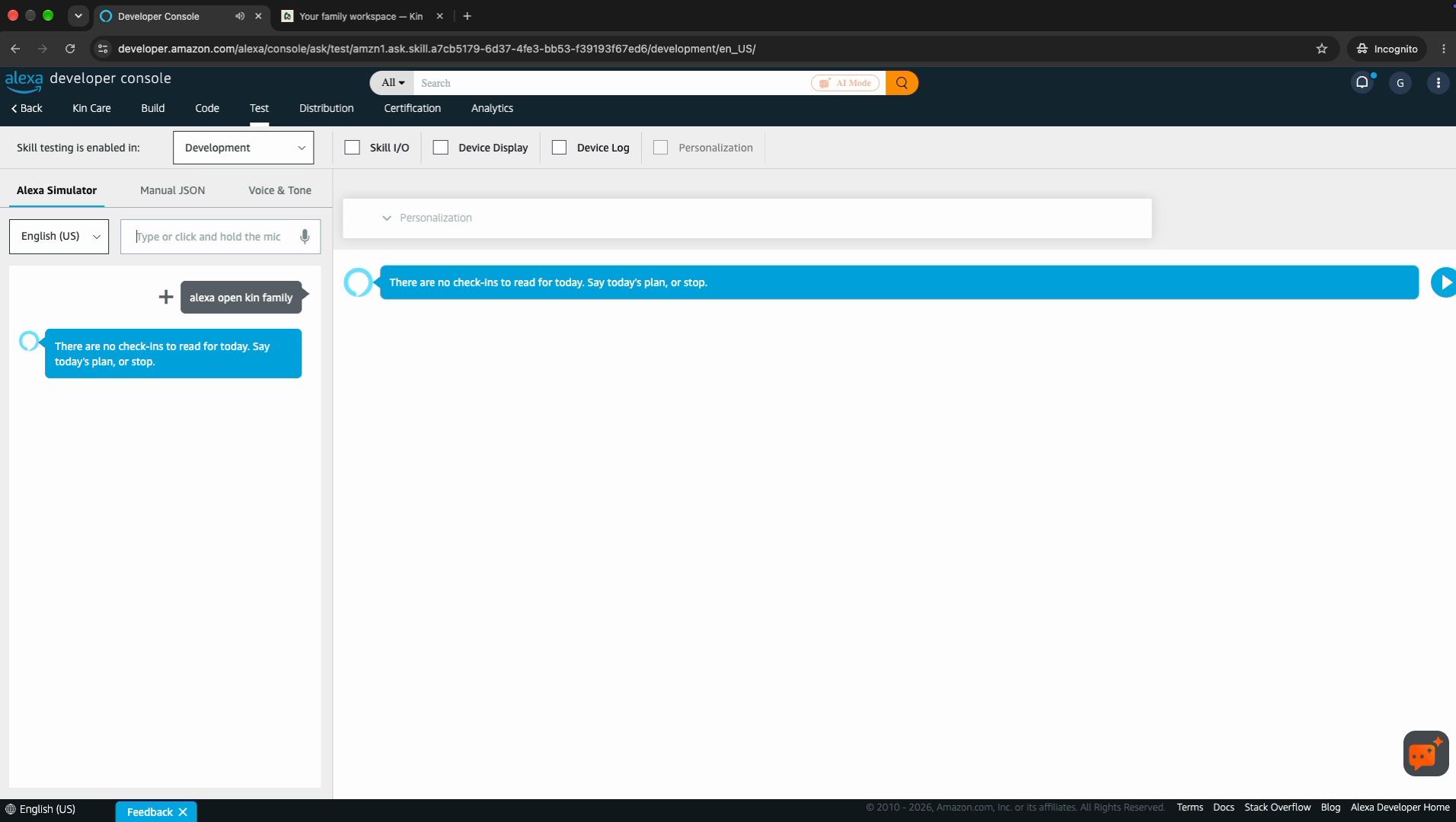
Kin Family responding in Amazon’s Alexa developer console using the classic Alexa development skill.
-
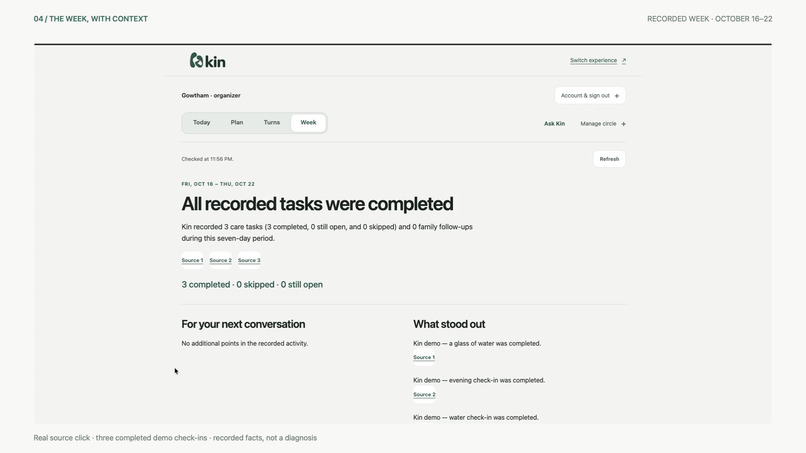
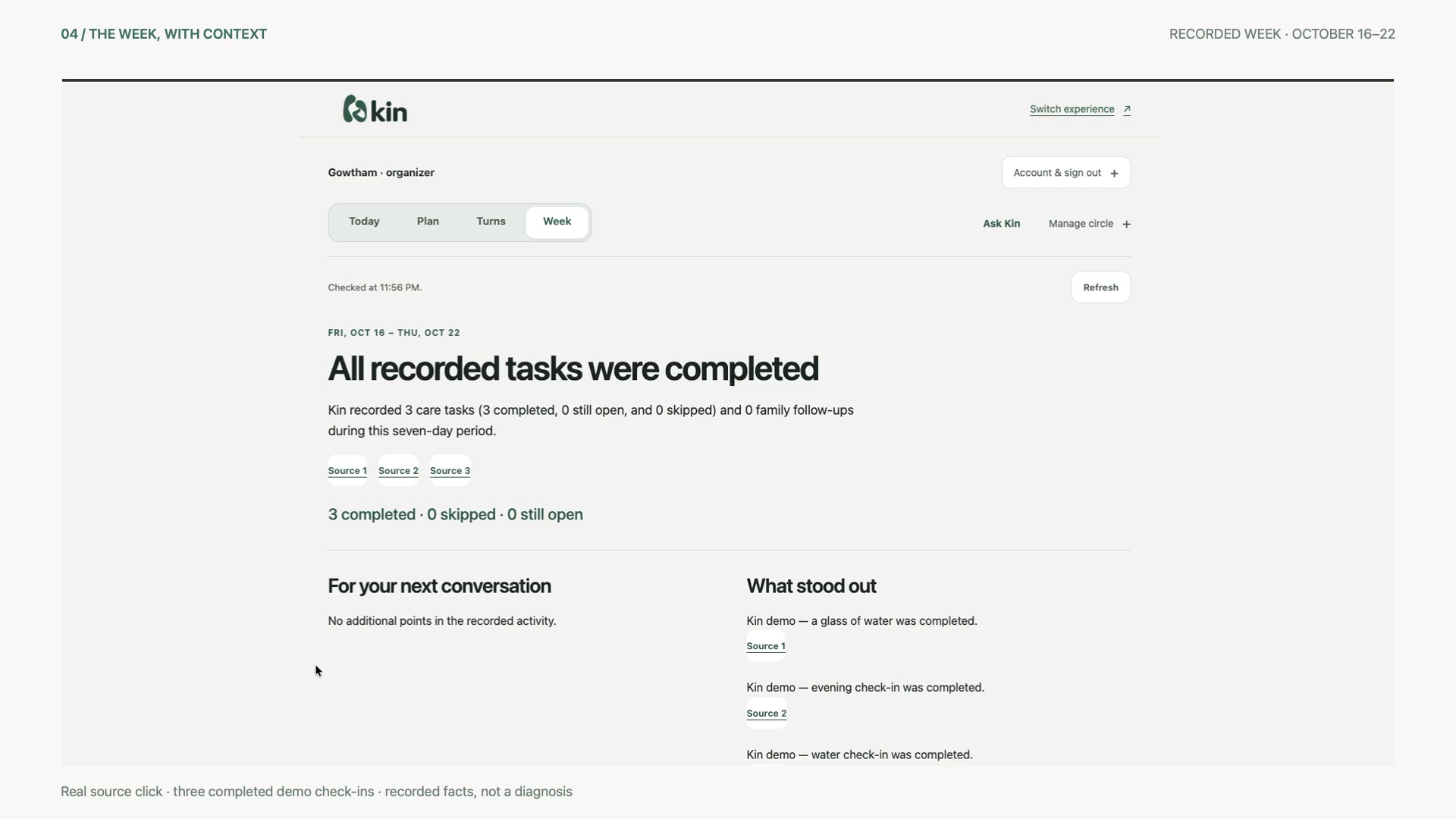
Catch up on recorded activity, then inspect the check-ins behind the summary. Every highlighted point links back to its source.

Inspiration
A family can have a very active group chat and still not know whose turn it is to check in.
That gap is where Kin started. Everyday care involves small things: a glass of water, a walk, a routine someone wanted help remembering. Across different homes, those details can get buried in messages or left to one person to keep track of.
I wanted to make that coordination easier without giving a parent another app to manage. A parent could speak to an Echo. Their family could see the reply, share responsibility, and have something useful to refer to on the next call.
Keep the calls. Kin keeps the shared plan together.
What it does
Kin connects a parent's voice check-in to a shared family workspace.
On a linked Echo, a parent says, “Alexa, open Kin Family.” Kin reads a check-in, and they can answer “done,” “not yet,” or “skip.” The recorded response appears in the family's workspace on a phone or computer.
The workspace gives the family four practical views:
- Today: recorded replies, current coverage, and family follow-ups.
- Plan: routines and individual check-ins.
- Turns: who is on duty and which days still need coverage.
- Week: a summary of recorded activity, with links to the records behind it.
“Not yet” remains a useful answer: it records the reply while leaving the check-in incomplete. A caregiver acknowledging a follow-up is a separate action from completing the parent's check-in.
Kin also includes consent-based Alexa reminders and caregiver notification workflows. Automatic missed-check-in processing is currently off in the hosted deployment.
The demo shows a real Echo Pop recording a reply, the matching record on a phone, family duty assignments, and a weekly summary with inspectable sources. It uses clearly labeled demo check-ins.
How we built it
I built Kin in TypeScript around a self-hosted Model Context Protocol (MCP) server using Streamable HTTP. The Echo backend makes actual MCP tool calls through the linked account. The voice experience and family workspace use the same persisted care records.
The working Echo integration is a classic Alexa development skill. Kin does not rely on native Alexa+ Toolkit access.
On AWS, API Gateway and Lambda serve the application, DynamoDB stores the shared state, Cognito handles family sign-in, and Secrets Manager holds private credentials. Infrastructure is defined with AWS CDK.
For the weekly brief, Amazon Nova Micro through Amazon Bedrock selects relevant source evidence. Kin validates those selections and builds the displayed wording from stored facts. Each point remains traceable to its source. If the model is unavailable or returns an invalid selection, the family still gets a factual summary.
I used Codex for implementation, debugging, and testing, and Claude for repeated product reviews. Those reviews led to changes in the product, which I checked on the actual Echo and phone.
Challenges we ran into
Getting the Echo to answer was only the beginning.
Account linking had to connect the correct person to the correct family permissions. Voice requests had to finish within a short response window. A retry after an uncertain connection could not record the same action twice.
We also had to handle changes between reading a check-in and responding to it. Kin binds a saved reply to the task state the person reviewed and rejects stale requests. Repeated confirmations reuse their original receipt.
Voice design needed its own rounds of work. Prompts that seemed reasonable on a screen became tiring when spoken aloud. I shortened replies, clarified the available answers, and kept the interaction focused on one check-in at a time.
Accomplishments that we're proud of
The part I am proudest of is also the simplest to demonstrate: saying “done” to an Echo and seeing that same check-in marked Done in the family workspace.
Behind that moment are linked accounts, real MCP calls, persisted state, and a usable phone interface. The demo follows that record through to its source in the weekly summary.
I'm also proud that Kin is open source under the MIT license, with documentation and a credential-free local walkthrough. Reviewers can inspect the implementation and try the care loop without gaining access to a private family's records.
What we learned
A voice interface and a family interface have different jobs. The person speaking needs a short, clear interaction. The person coordinating care needs context, history, and ownership.
Small wording choices matter. “Seen,” “done,” and “safe” cannot mean the same thing. Kin records replies and coordination; it does not determine whether someone is safe or provide emergency monitoring.
We also learned to give AI a specific, checkable role. Selecting useful evidence can help a family catch up. Every displayed claim still needs a record behind it.
What's next for Kin
The next step is testing with families who have never used Kin. I know too much about how it works to be its best usability tester.
I want to see whether a parent can complete a check-in unaided, whether a caregiver understands whose turn it is, and whether the weekly view helps their next conversation.
From there, the priorities are simpler onboarding, stronger notification recovery, support for separate family circles, and a path to broader Alexa skill distribution.
The goal stays small and practical: let a parent speak, give the family a shared record, and make the next step easier to share.
Your day. Your words. Your people.
Built With
- alexa-skills-kit
- amazon-alexa
- amazon-api-gateway
- amazon-bedrock
- amazon-cognito
- amazon-dynamodb
- amazon-nova
- aws-cdk
- aws-lambda
- aws-secrets-manager
- css
- express-js
- html
- javascript
- model-context-protocol
- node.js
- playwright
- typescript
- vitest
- web-push


Log in or sign up for Devpost to join the conversation.