-
-
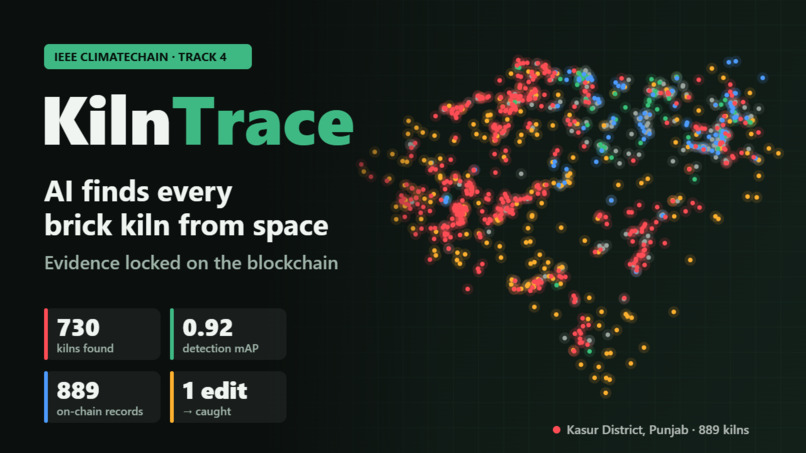
KilnTrace: AI finds brick kilns from space, evidence locked on the Polygon blockchain
-
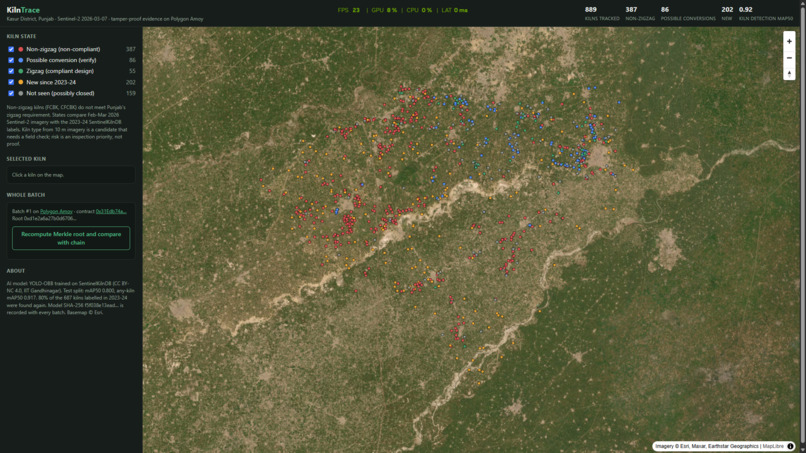
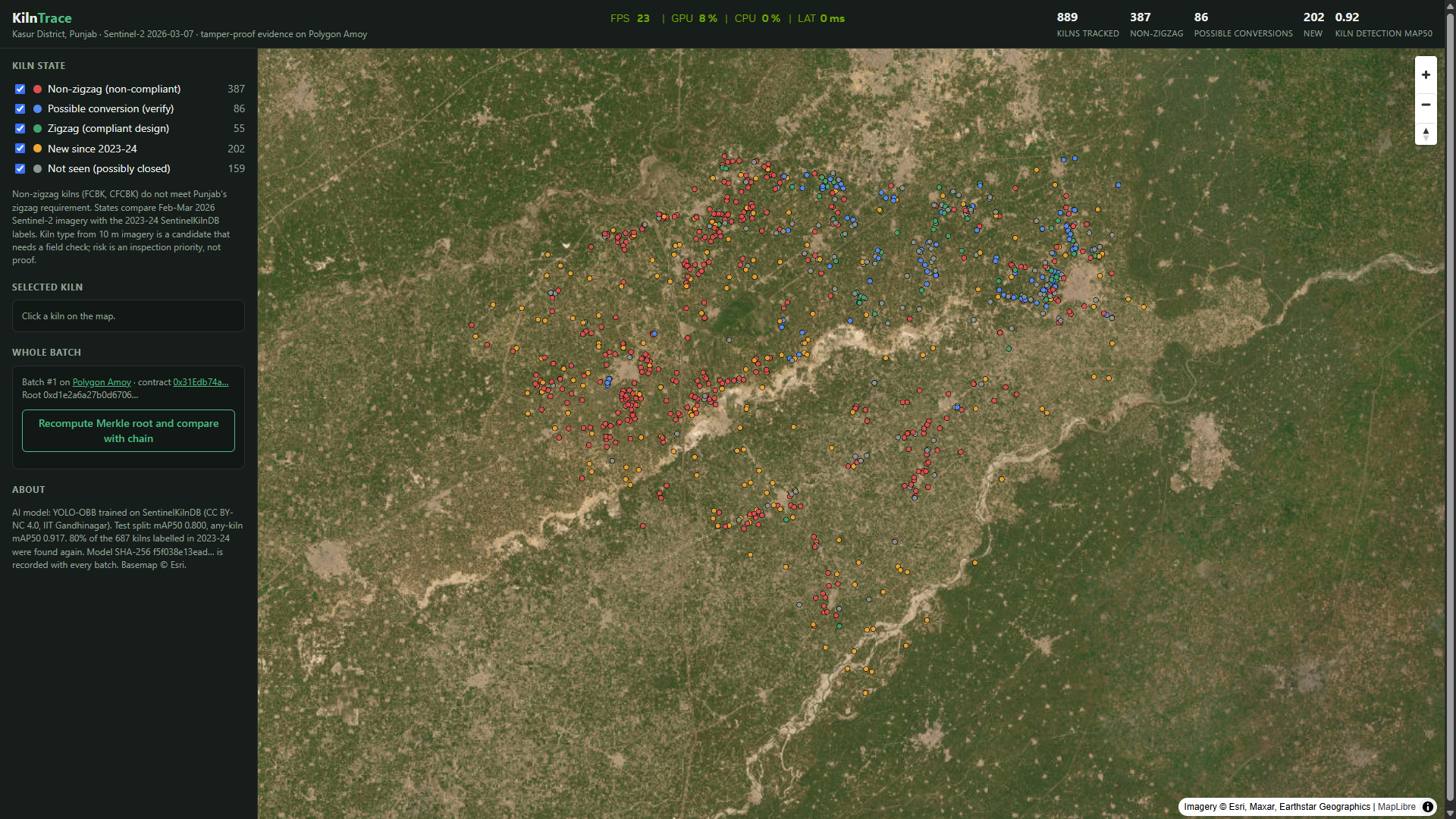
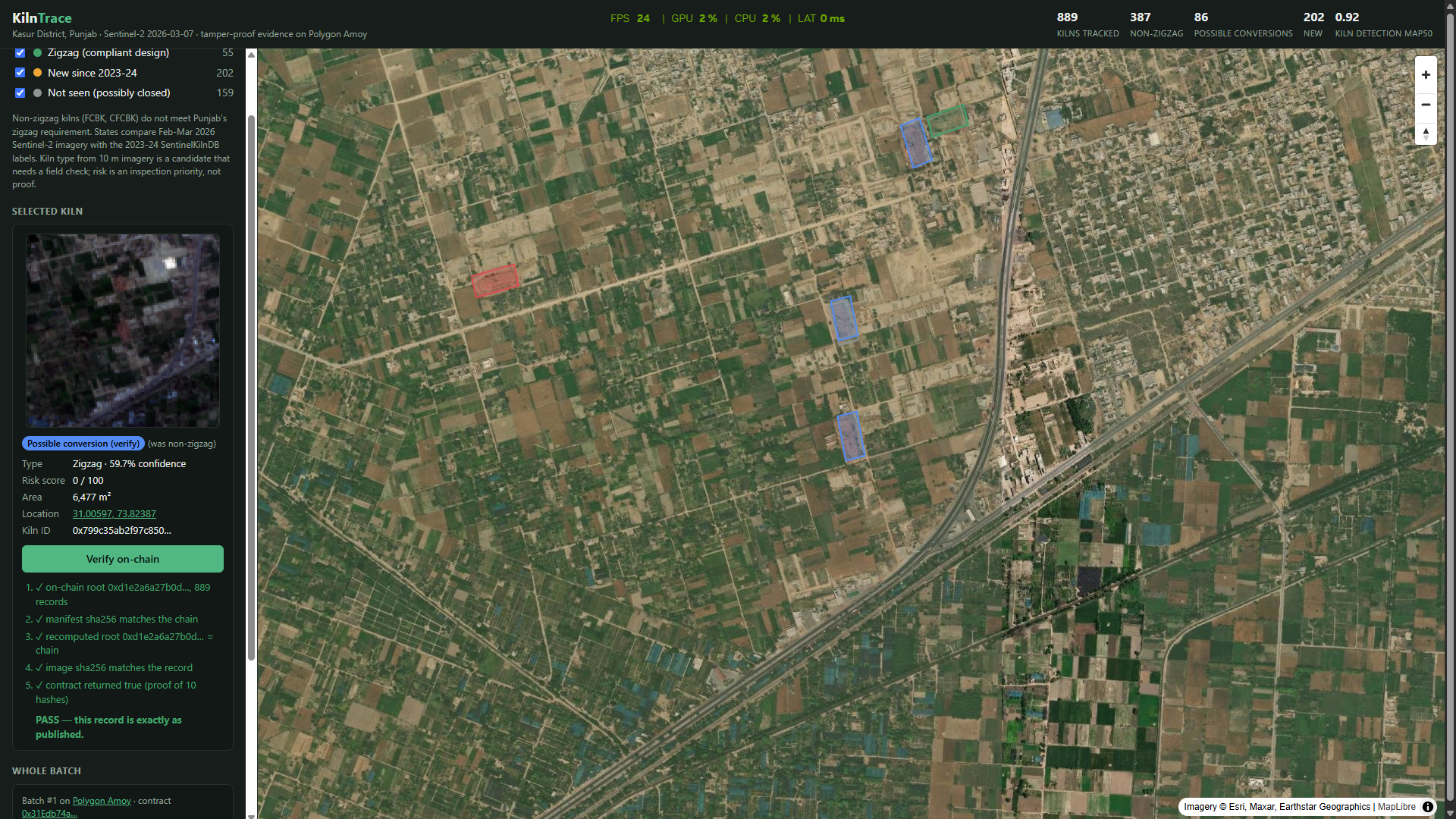
Live dashboard: 889 kilns in Kasur District, coloured by compliance state
-
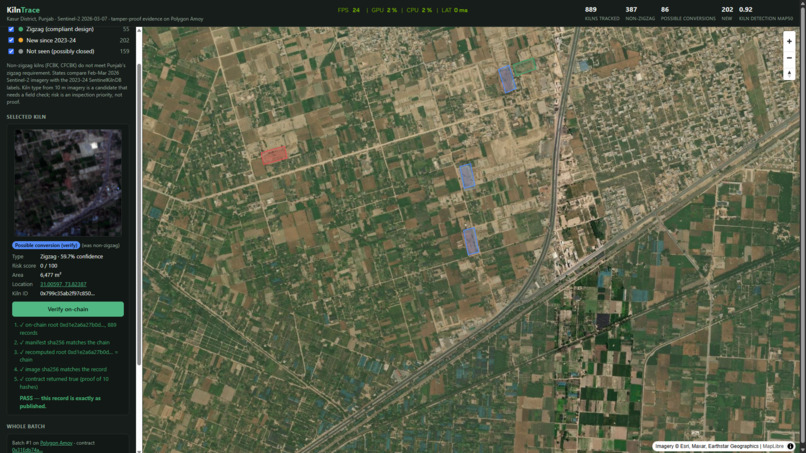
Click any kiln: satellite chip, type, confidence, and in-browser on-chain verification
-
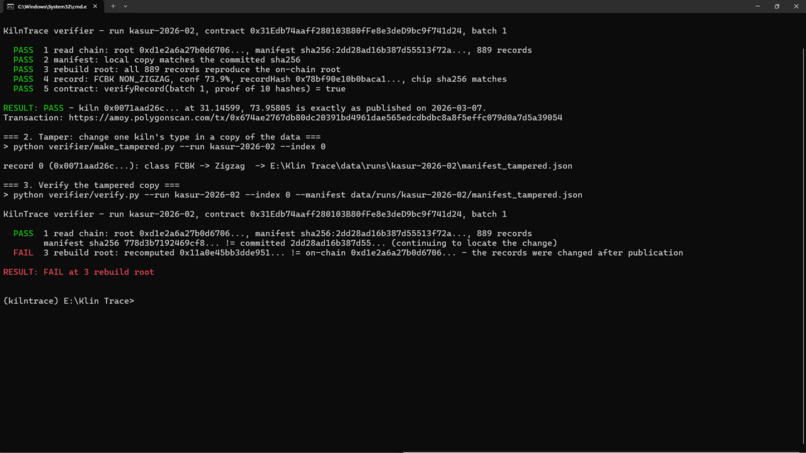
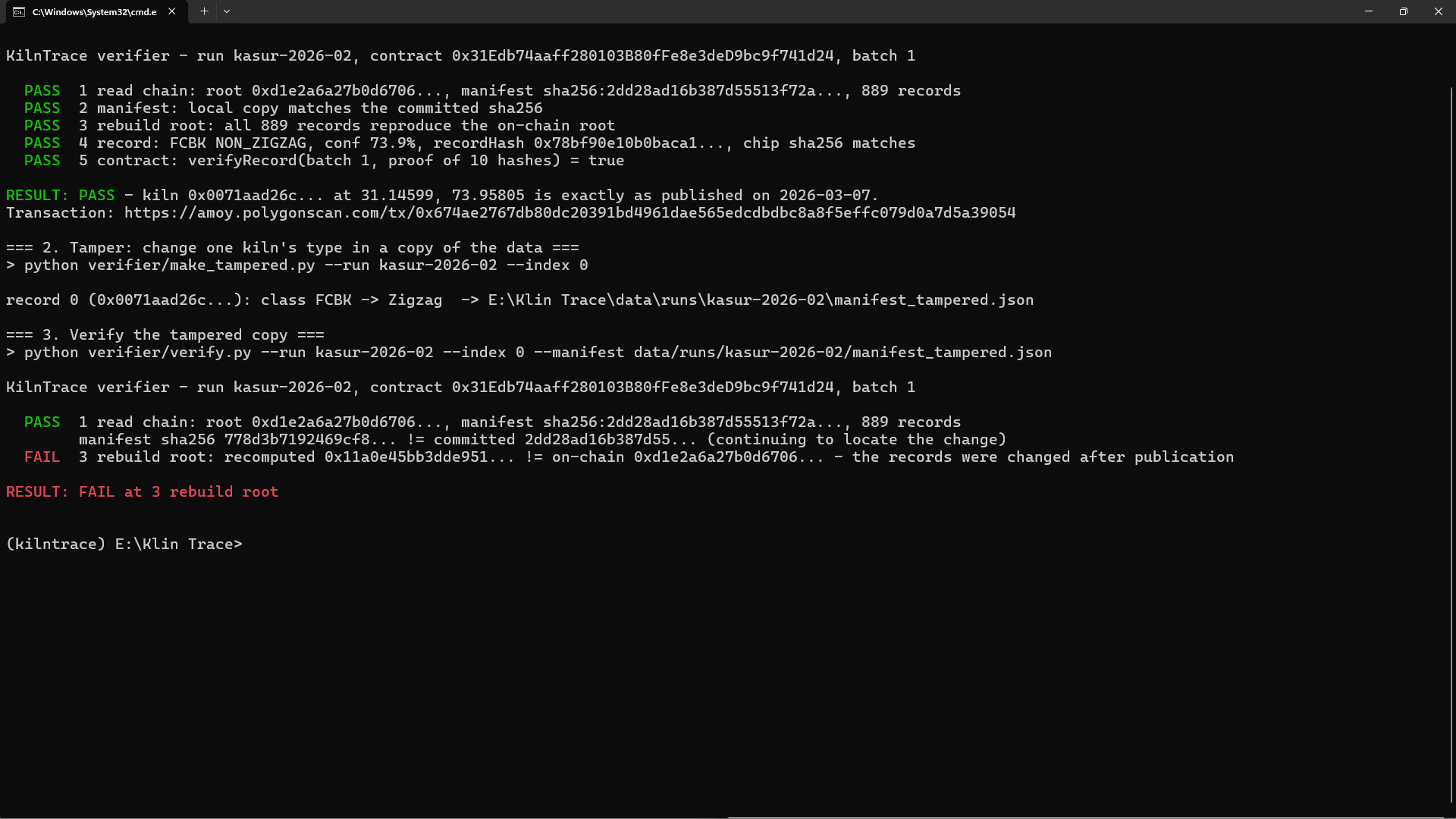
Verifier: real data passes all 5 checks; one edited field fails at the Merkle root
-
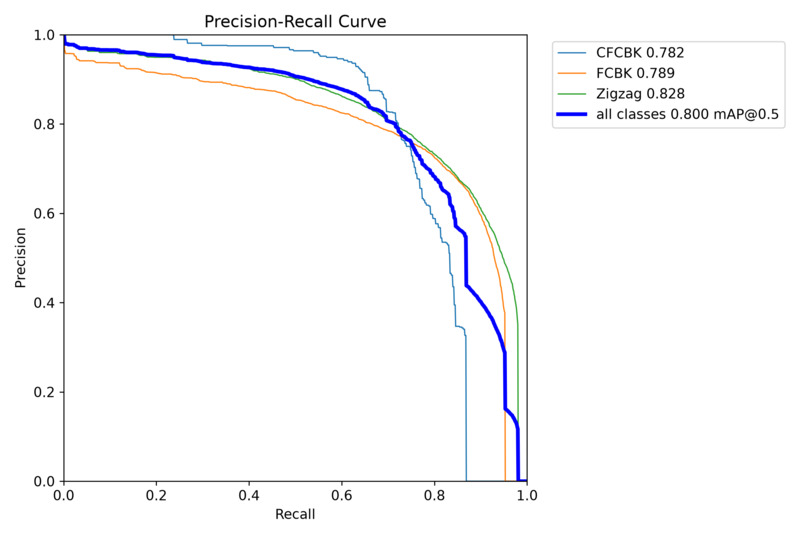
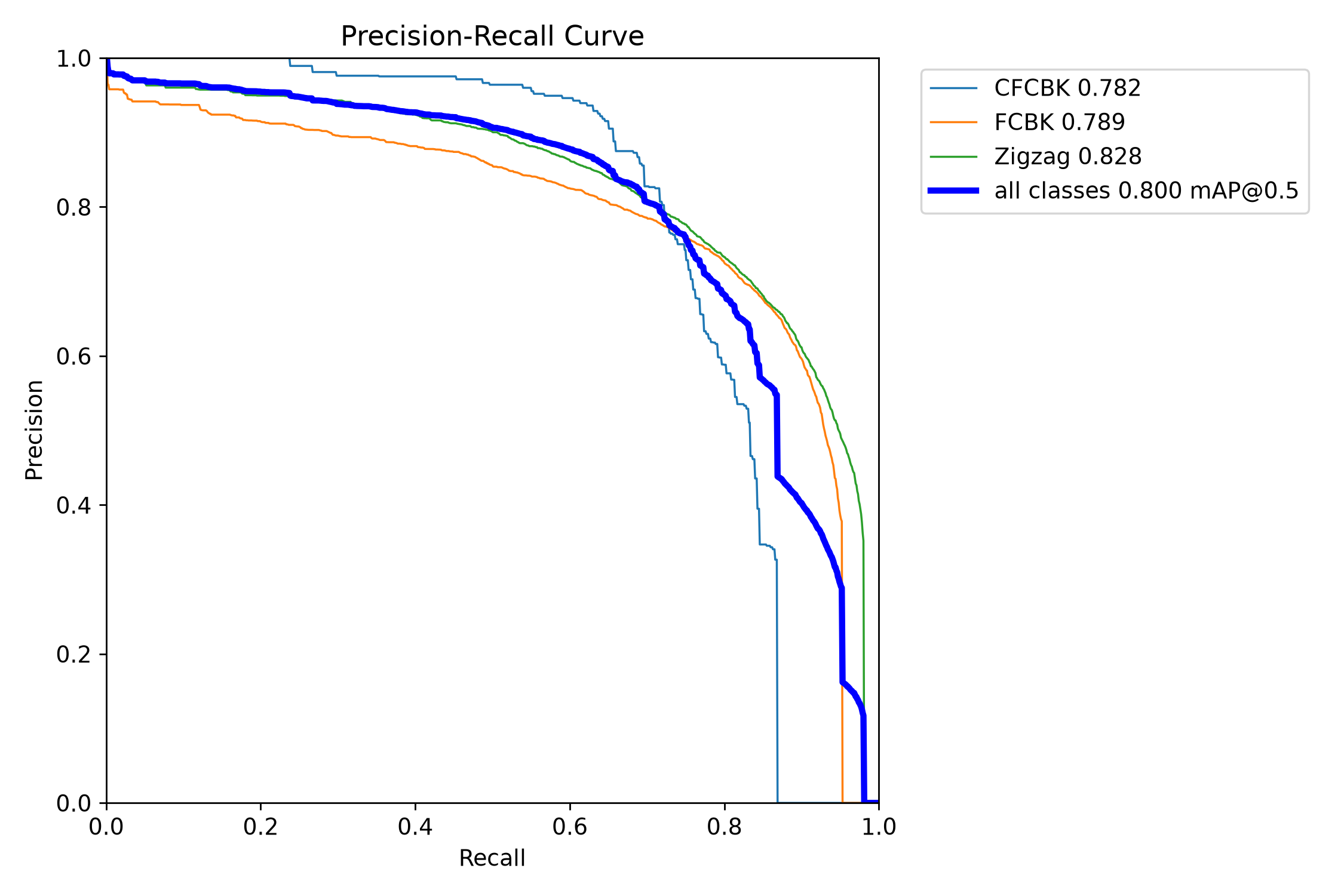
Precision–recall on the held-out test set: 0.917 mAP50 for kiln detection
-
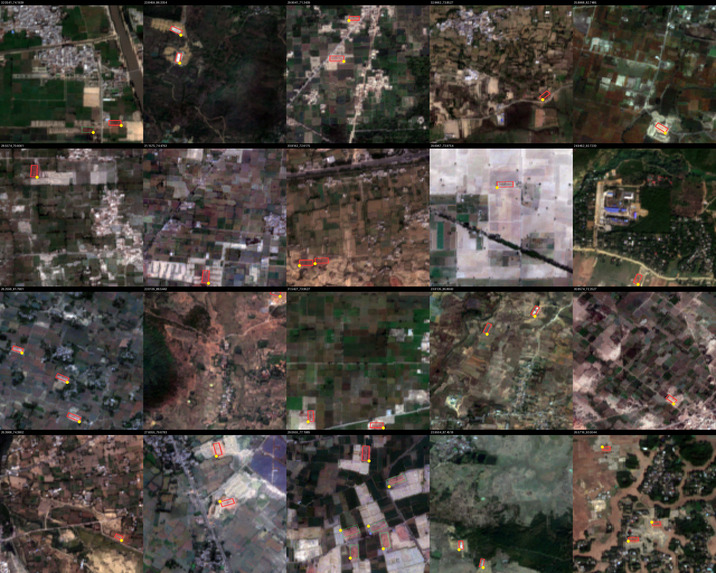
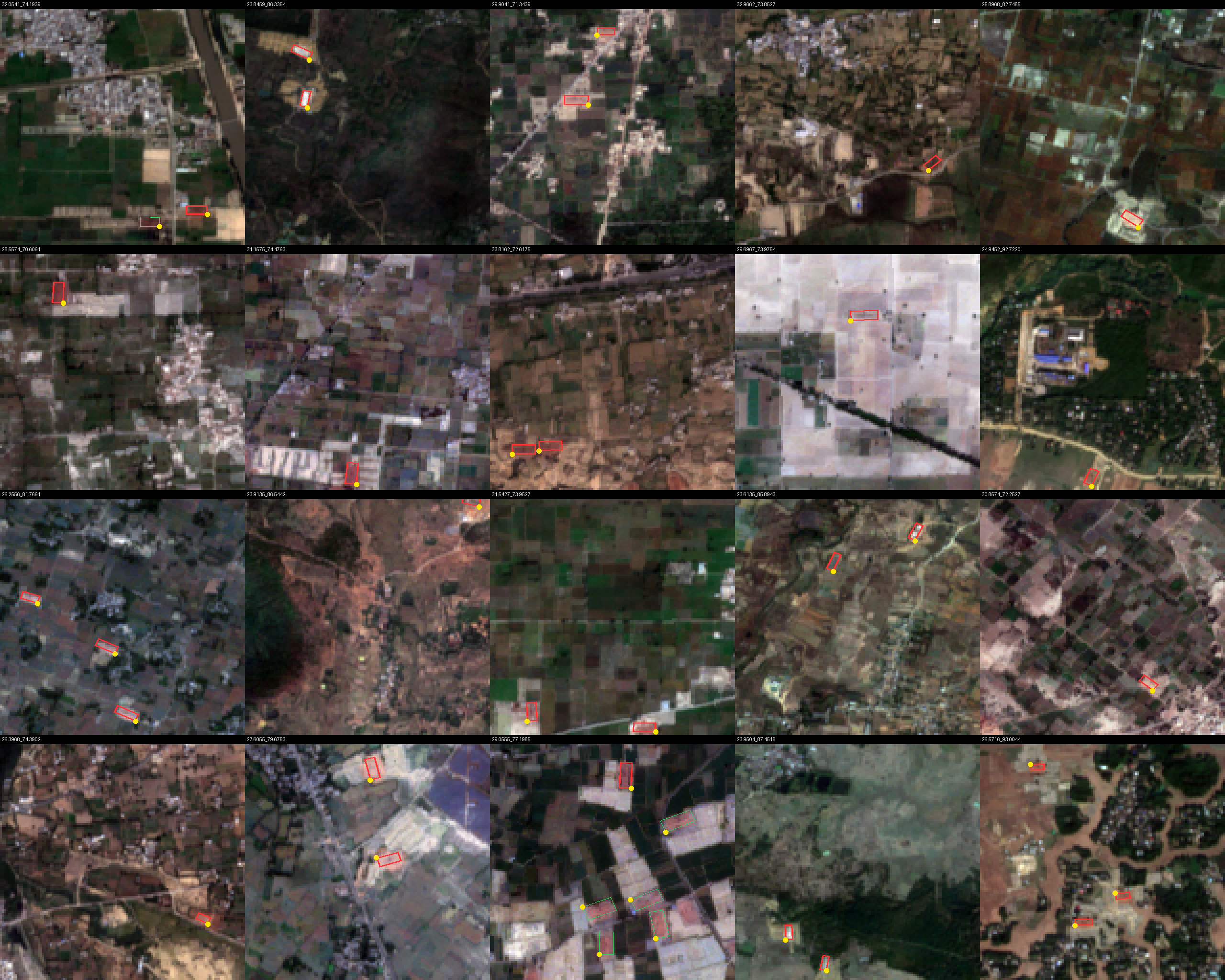
Training label check: random SentinelKilnDB tiles with oriented boxes drawn
Track 4: Climate Data & Environmental Monitoring
Inspiration
Brick kilns are a major source of Punjab's winter smog. The law requires ~10,000 kilns to use cleaner zigzag technology, but checking is manual, slow and disputed. AI can map kilns from space, but nobody has a record everyone trusts as unaltered.
What it does
- AI finds every kiln in free Sentinel-2 satellite images and flags non-zigzag (non-compliant) ones.
- Tracks change since 2023: possible conversions, new and closed kilns.
- Locks the evidence on Polygon: all records go into a Merkle tree, and one transaction stores its root, the AI model's hash and the code version.
- Anyone can verify any record in the browser. Change one field and verification fails.
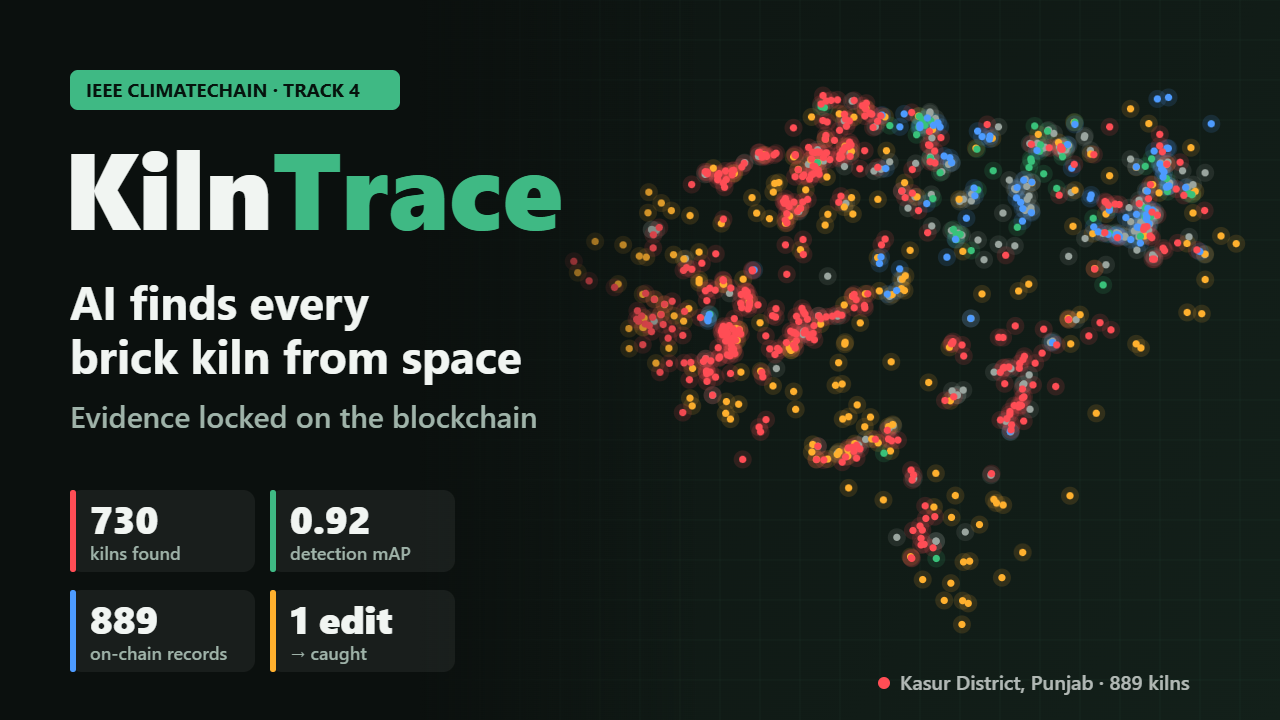
Kasur District: 730 kilns found, 387 non-zigzag flagged, 86 possible conversions, 889 records on-chain.
How we built it
YOLO11-OBB trained on SentinelKilnDB (0.917 mAP50, above the dataset paper's 0.875) · Sentinel-2 via Planetary Computer · Solidity + OpenZeppelin on Polygon Amoy · Python verifier · MapLibre + ethers.js dashboard on GitHub Pages.
Challenges
- Our first run missed most zigzag kilns. The training images used a different pixel grid, and December smog hid kiln colour. Matching the grid and using clear Feb–Mar imagery raised zigzag detections from 16 to 169.
- Python, Solidity and JavaScript must hash identical bytes, so records contain no decimals.
What we learned
Matching how training data was prepared matters as much as the model. A blockchain doesn't make data true; it makes it impossible to change silently.
What's next
Field-check app (contract already supports it), thermal data for smog-ban violations, all of Punjab.

Log in or sign up for Devpost to join the conversation.