-
-
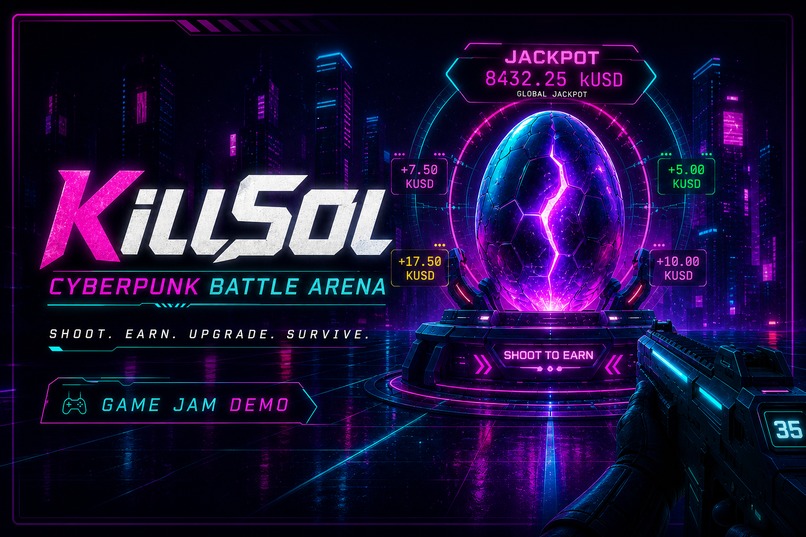
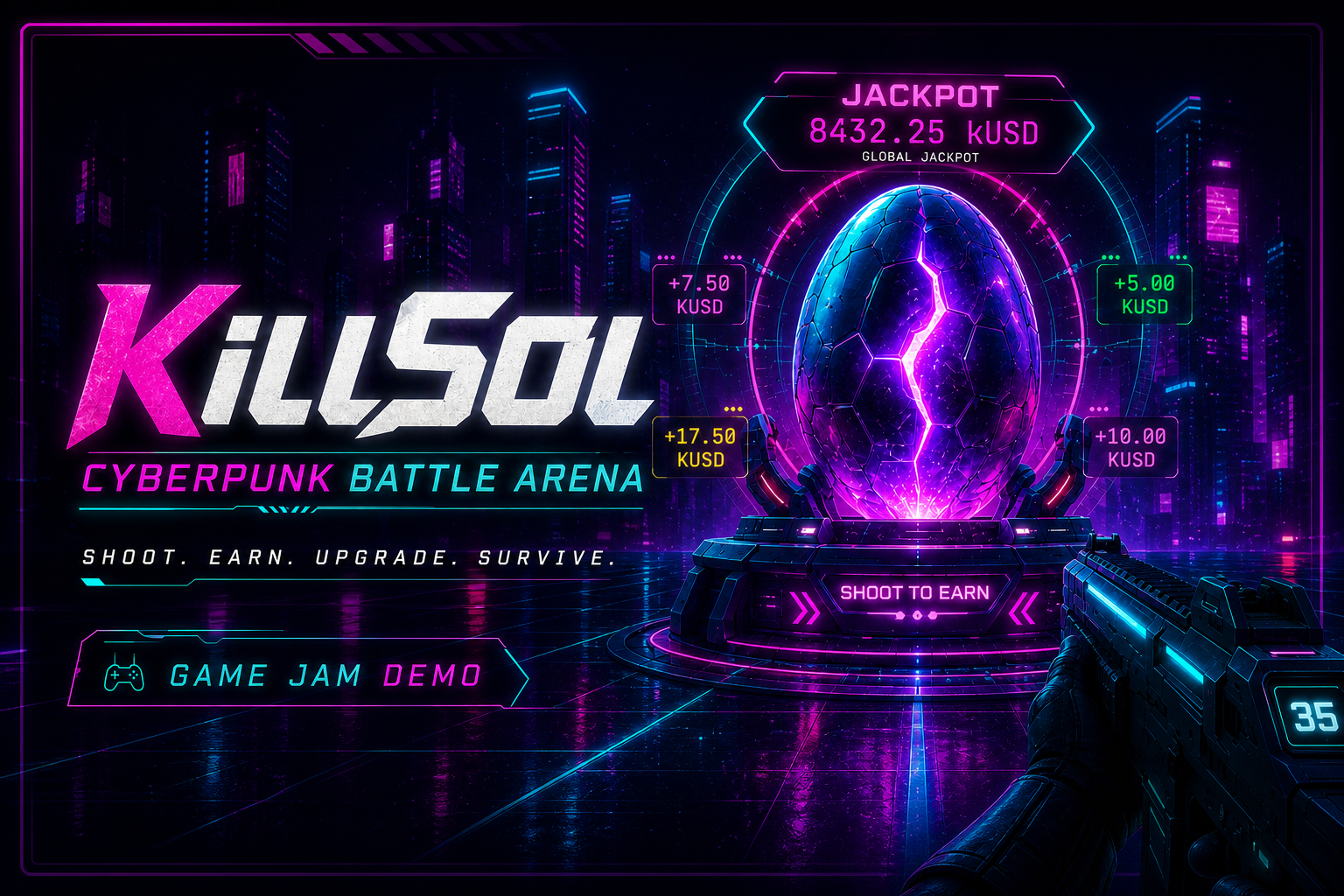
KillSol: Cyberpunk Battle Arena
-
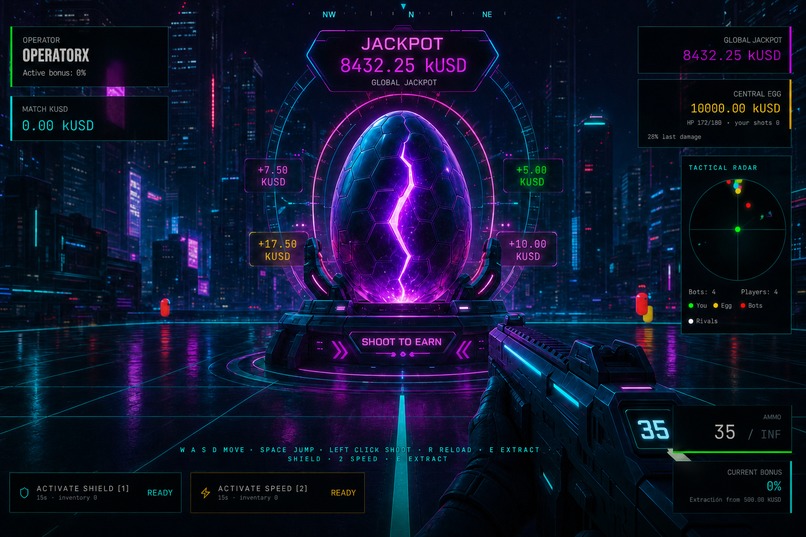
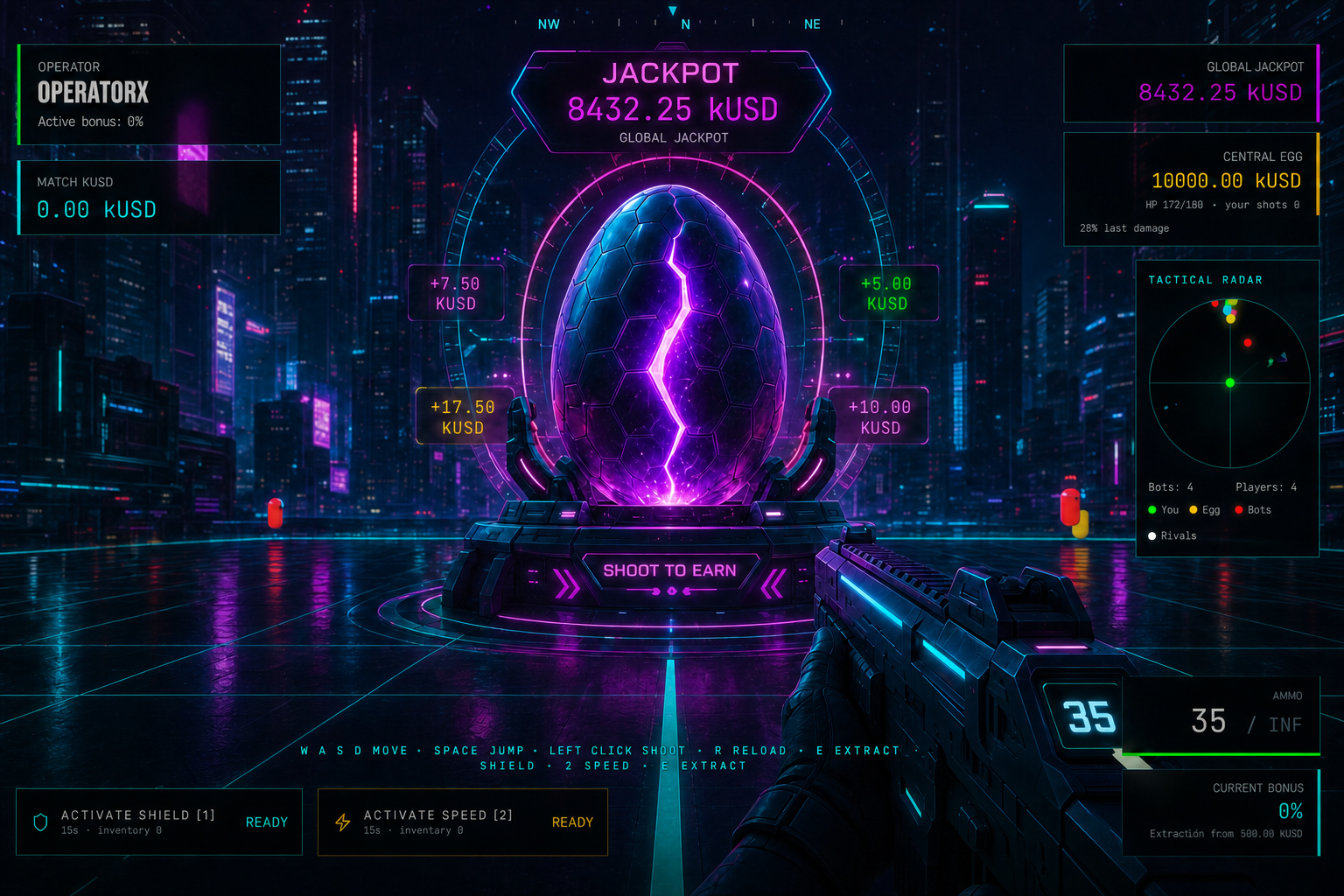
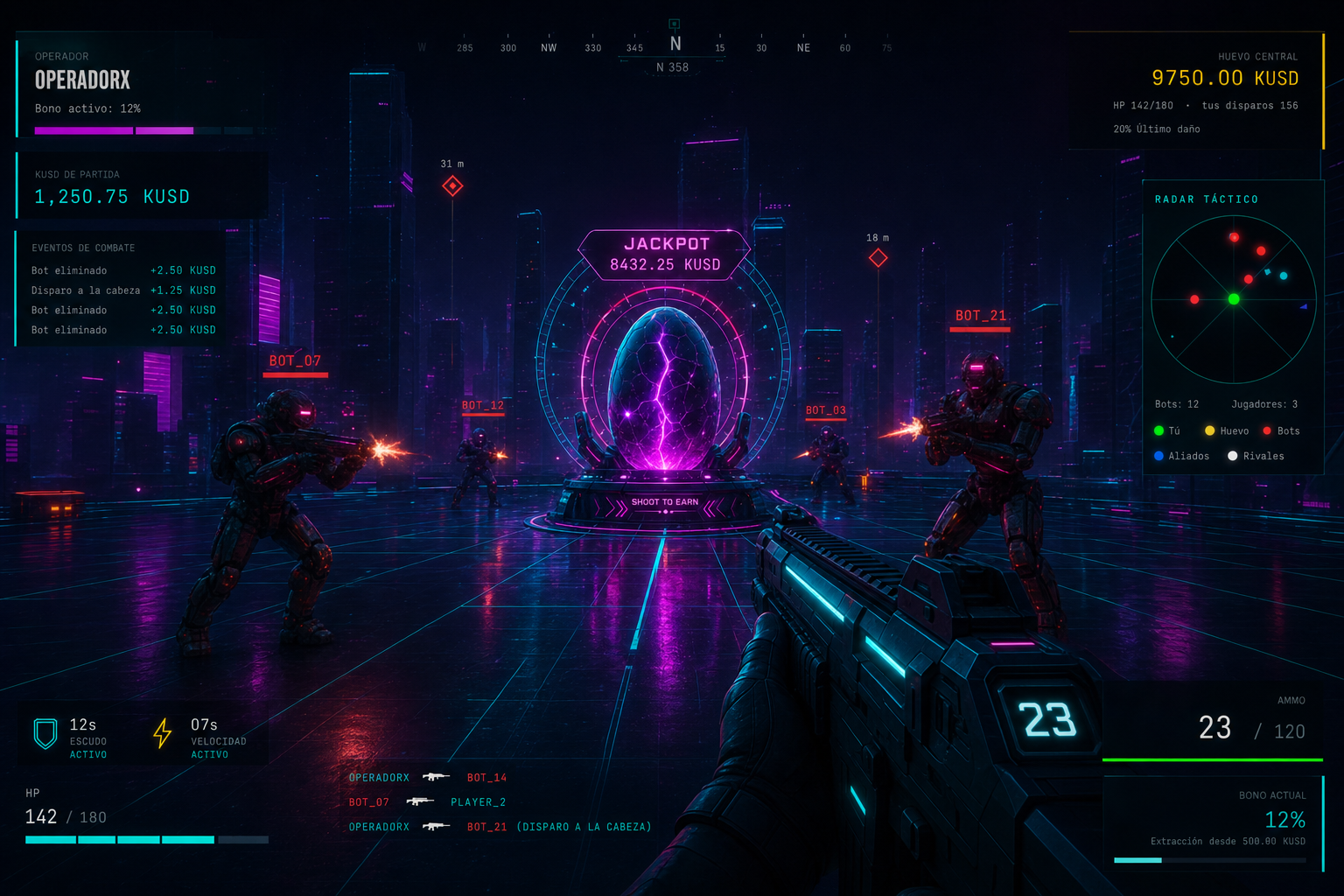
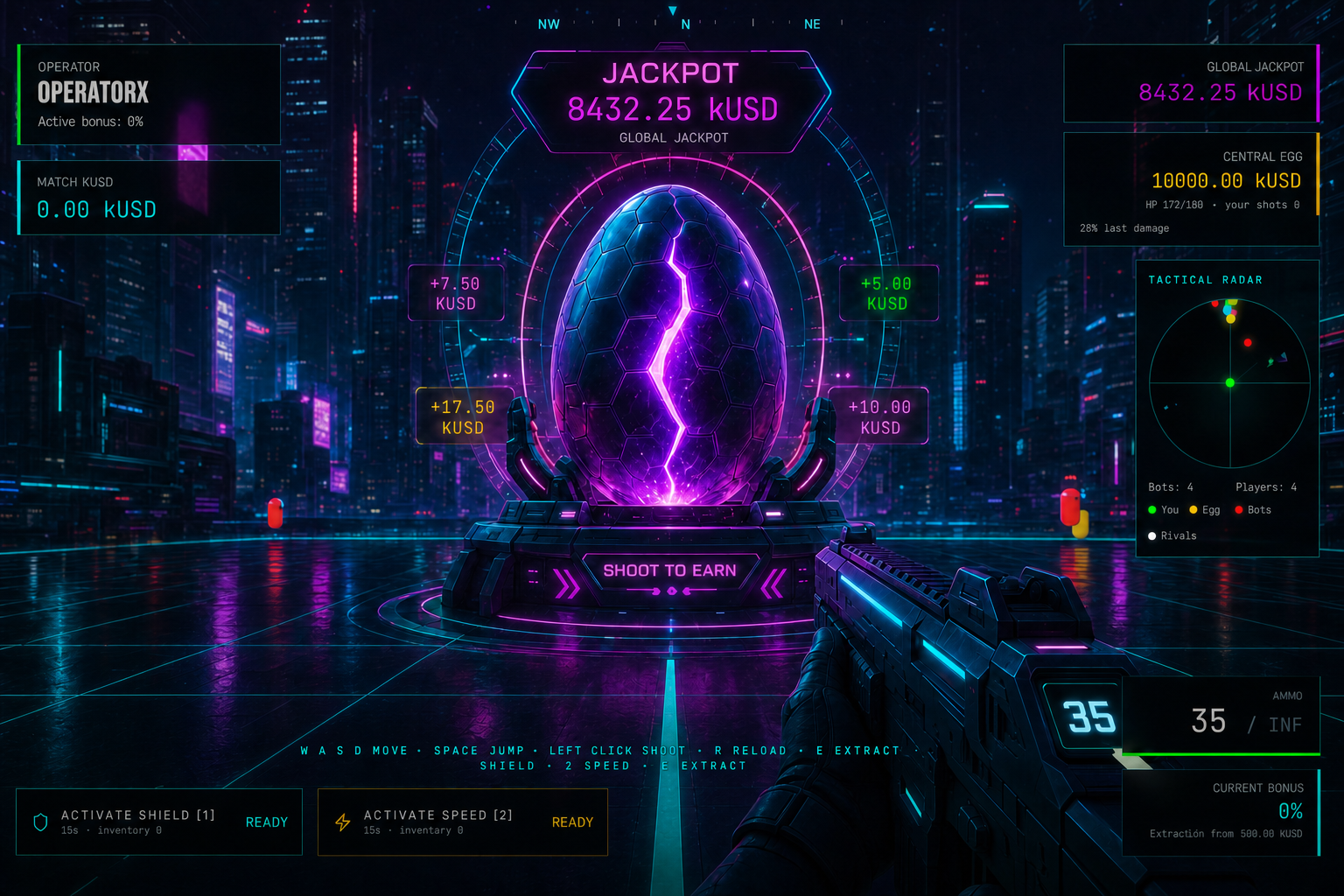
Live gameplay with tactical HUD
-
-
Inspiration
KillSol came from a very specific frustration. Most Web3 experiences still feel more like financial forms than products built to be fun. Since 2016, I have seen ecosystems, exchanges, economic models, and onboarding methods promise retention, only to fail in the same way again and again. The user enters, gets confused, and leaves.
I have also seen many games fail for similar reasons. They do not create real tension, they do not build an appealing economy, and they often depend on models that only work for early entrants. That made me think about a different kind of experience, something people would open for fun rather than speculation, but that would still have real risk, real reward, and a meaningful decision about when to stay and when to leave.
KillSol was born from combining two things people naturally enjoy, shooters and value based competition. I took the adrenaline of action games and merged it with an extraction style economy where every match matters. Instead of forcing the player to win a tournament to earn value, KillSol lets the player decide when to extract with what has been accumulated. That choice turns every match into a constant state of tension.
I also designed KillSol to work on both desktop and mobile, with a layout that adapts to different screen sizes and with the option to enter using a Web3 wallet on Solana Devnet or without a wallet. The goal is the same in both cases, to make every action inside the game have real consequences even for people with no prior Web3 knowledge. I wanted anyone to be able to have fun, take risks, and compete, while still benefiting from Web3 without feeling excluded by the technology.
I also wanted the experience to be truly global. KillSol allows the player to use their favorite language, so understanding the game does not depend on language or familiarity with the ecosystem. Artificial intelligence acts as a central engine in the experience, helping structure, direct, and keep the game, the session flow, and the user interaction coherent.
What We Learned
Building KillSol helped me understand how Web3 can become more accessible and intuitive for players. I learned that entering an ecosystem does not have to feel technical or financial. It can feel like a game that makes sense from the very first second.
I also learned that a game economy should not depend only on early users to support later ones. It should create a loop where competing, extracting, and re entering all make sense on their own. The challenge was not just to make a shooter, but to build an experience where gameplay, economy, artificial intelligence, and the Web3 layer reinforce each other.
Another important lesson was that visual clarity matters just as much as system logic. If the player does not understand what is at stake quickly, the experience loses power. That is why I focused on clear signals, visible tension, multilingual support, and an interface that makes it obvious that every action inside the arena has value.
How It Was Built
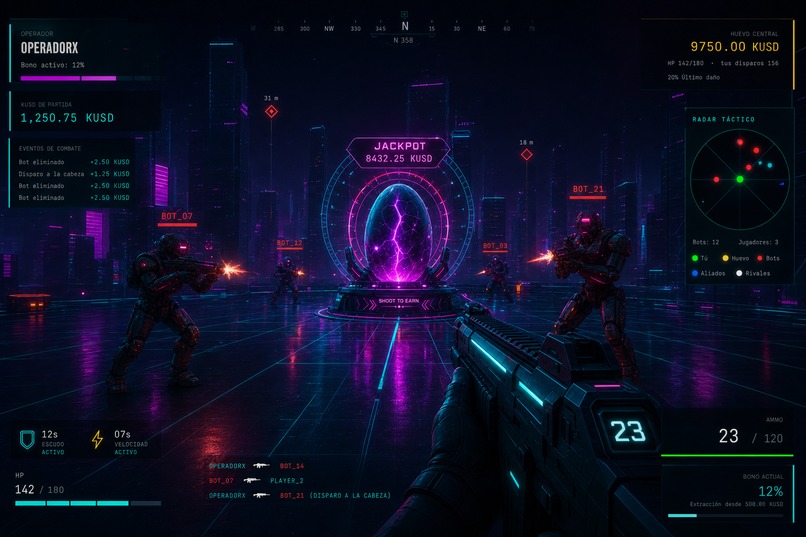
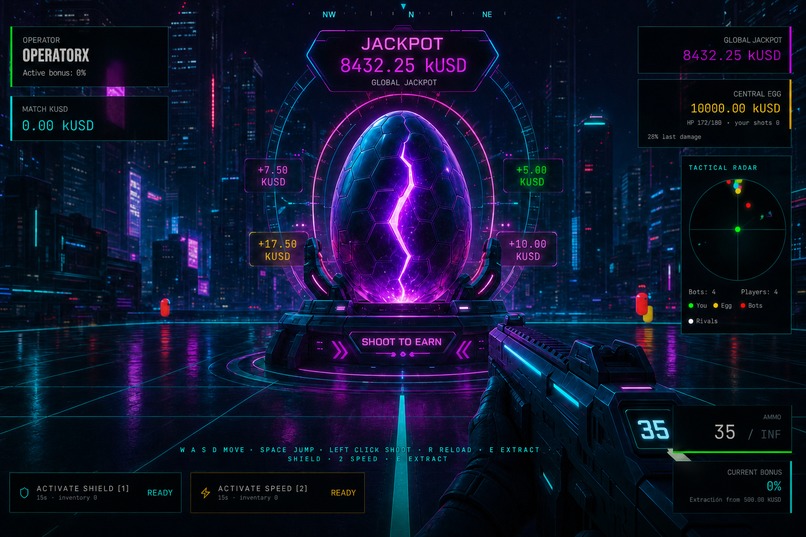
For this hackathon, I built KillSol as a playable 3D web prototype centered on a simple loop, enter, fight, accumulate value, and decide when to extract. I designed a cyberpunk arena, a tactical HUD, bots, an internal economy, session telemetry, and a central value sink represented by the egg and jackpot, which concentrates the tension of the match.
The experience is designed to adapt to desktop and mobile, with guest access or with a Web3 wallet on Solana Devnet, while keeping the same game objective in both modes. Everything that happens inside the match is meant to have visible and measurable consequences. The idea was to make the player feel that they do not need to understand Web3 to enjoy the game, but they can still benefit from it when they choose to connect.
Artificial intelligence is part of the heart of the project, not only as creative support, but as part of the experience, the system, and the pacing of the game. I used it together with Web3 development to build a prototype that feels more like a real competitive game than a financial interface.
My goal was to show that a Web3 experience can feel more like a game than like a technical app. I wanted the player to understand one thing from the start, everything they do inside the arena has value.
Challenges
The biggest challenge was balancing fun, clarity, and economic tension at the same time. I did not want a game that felt empty, or an economy that felt fragile, or an experience that was too hard to understand for someone new to Web3. Every design decision had to answer the same question, does it make sense quickly, does it feel good, and does it make clear what is at stake
Another major challenge was turning a complex idea into a simple and attractive visual experience that could work well on different devices. I had to pay attention to mobile adaptation, performance, visual hierarchy, support for different access modes, and language consistency so that the experience would not break depending on the user context.
It was also challenging to integrate a Web3 layer that adds real value without making the game rigid or complicated. I wanted the wallet, the session, the traceability, and the history to exist as a natural part of the experience, not as an interruption to the game.
KillSol is my way of saying that Web3 can feel like a real game, one where you enter, compete, take risks, win, lose, and decide when to leave, whether you play with a wallet or without one, on mobile or on desktop, and in the language you prefer.
Built With
- 3d
- crypto
- css
- defi
- development
- drei
- express.js
- fiber
- framer
- game
- motion
- node.js
- o
- openai
- react
- solana
- supabase
- tailwind
- three
- three.js
- typescript
- vercel
- vite
- web3
- webgl


Log in or sign up for Devpost to join the conversation.