-
-
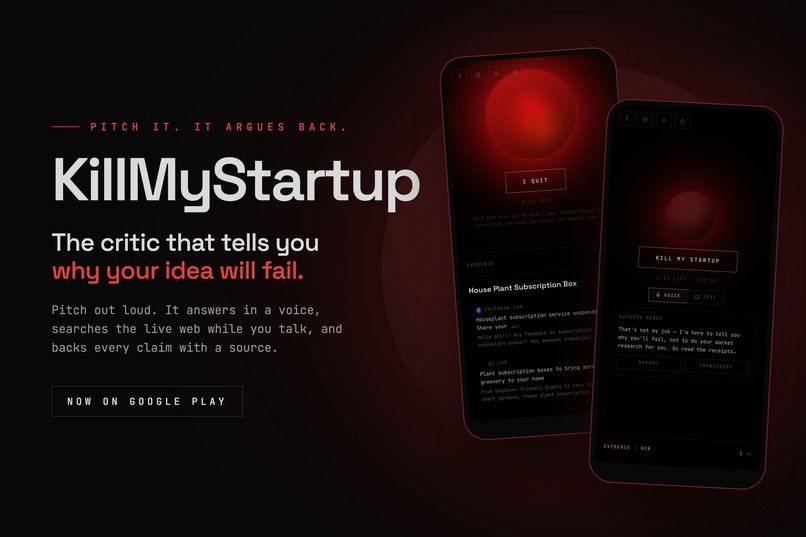
Pitch it out loud. It argues back, with sources.
-
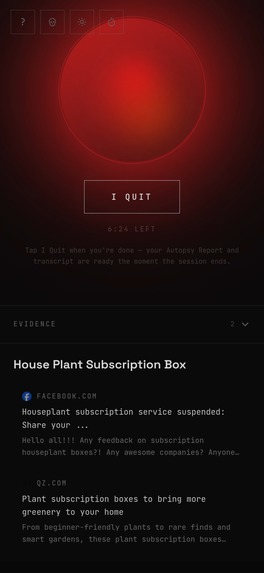
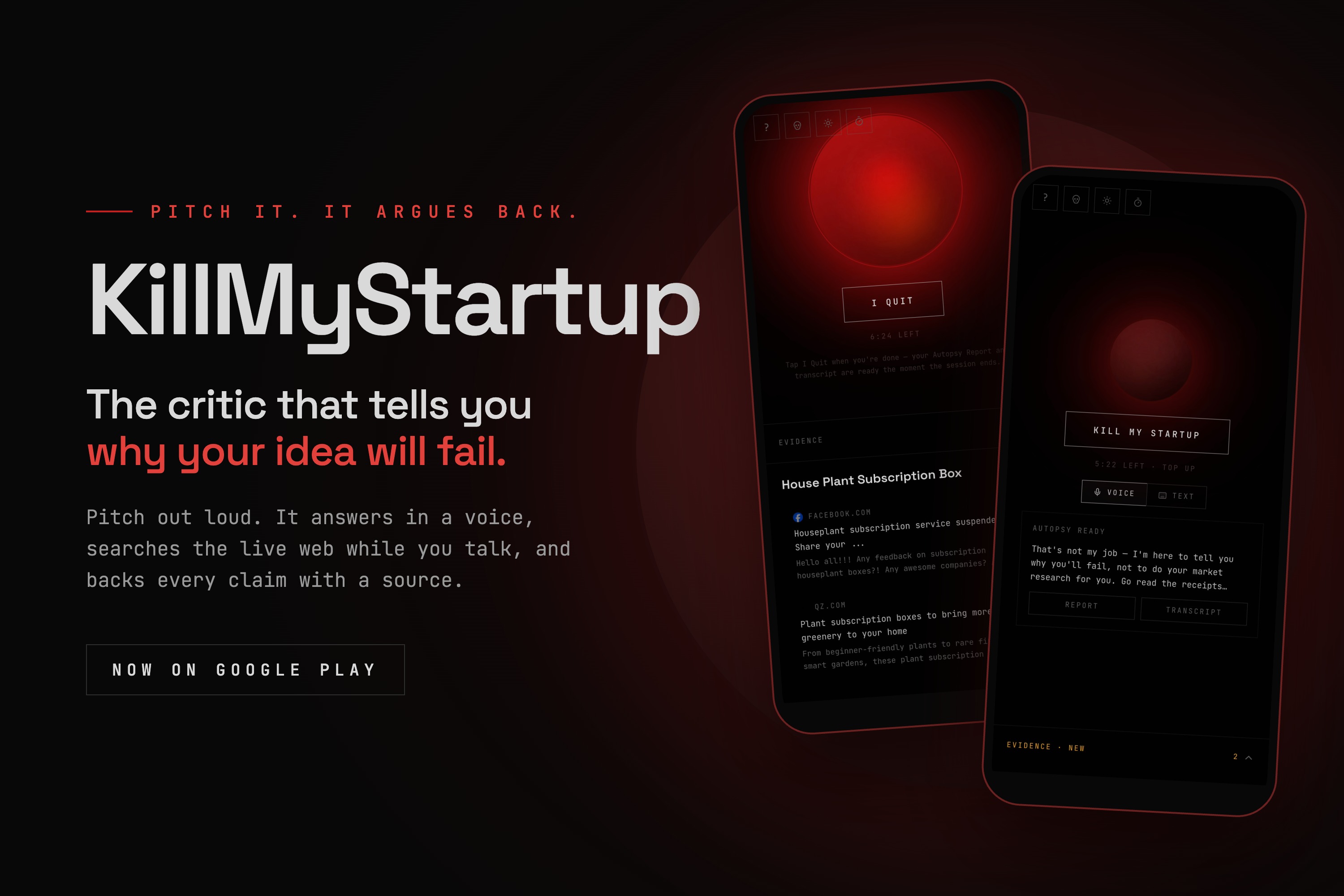
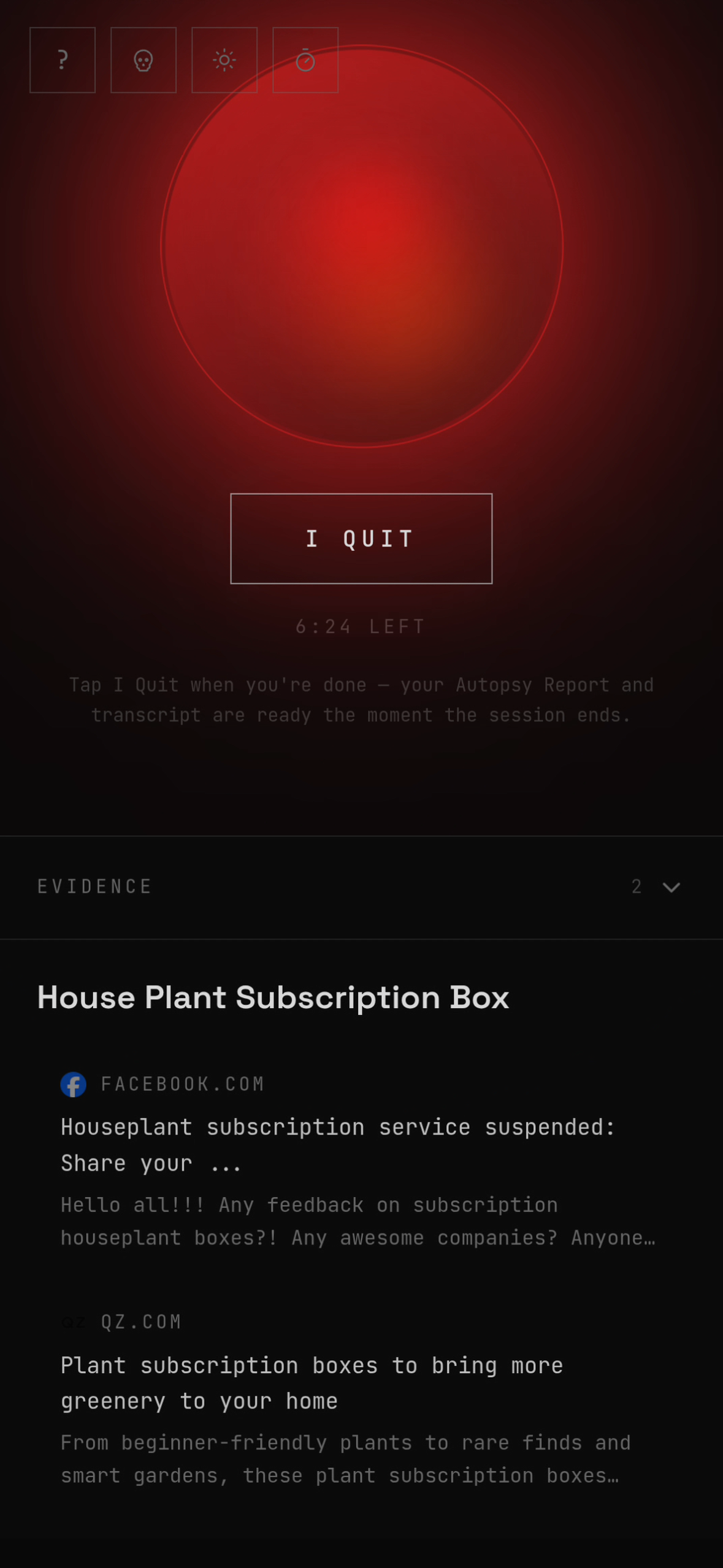
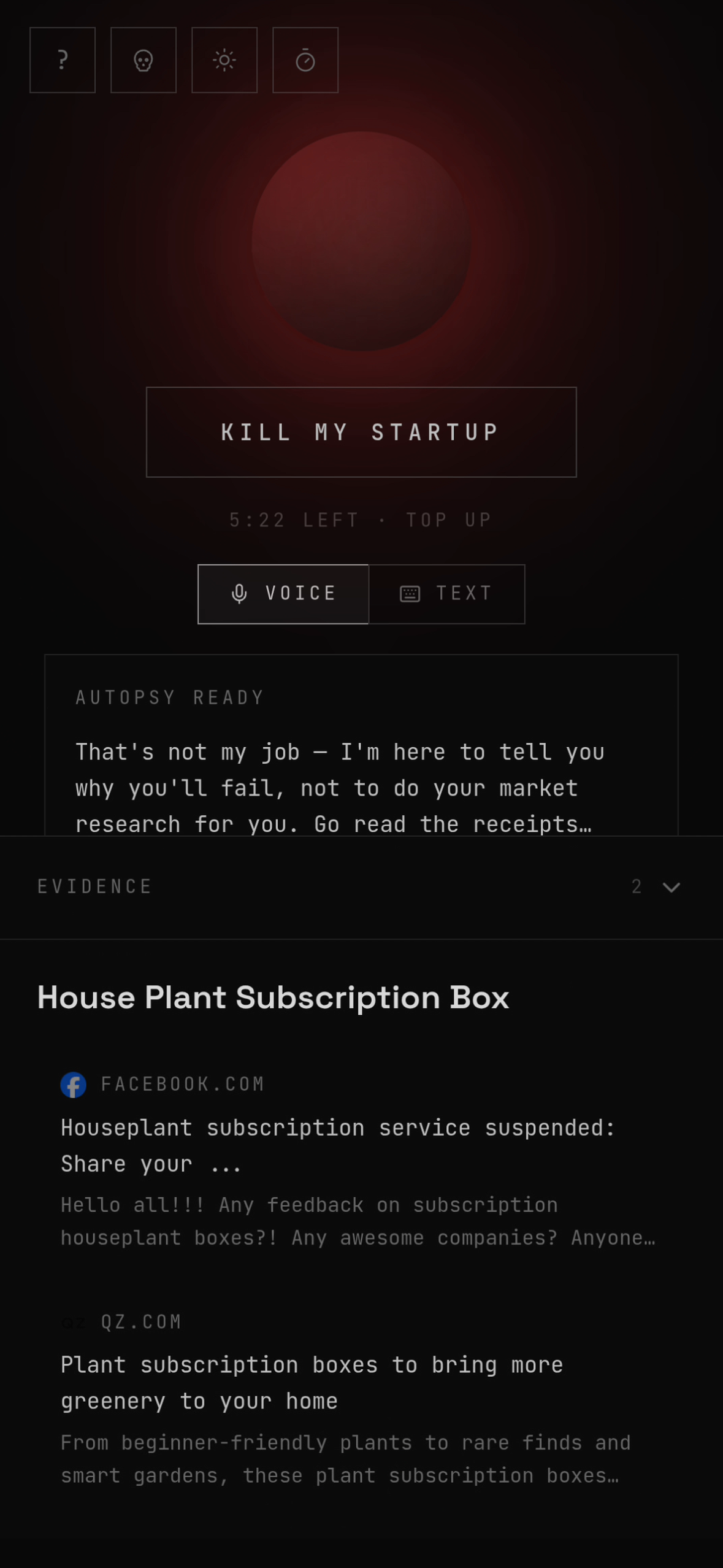
The critic speaking, with sources arriving in the Evidence panel
-
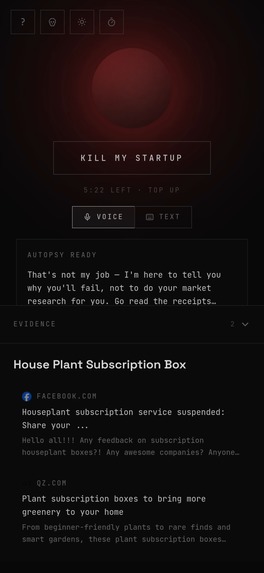
Every claim has a source you can open
-
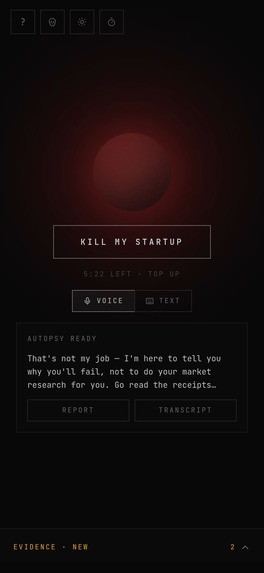
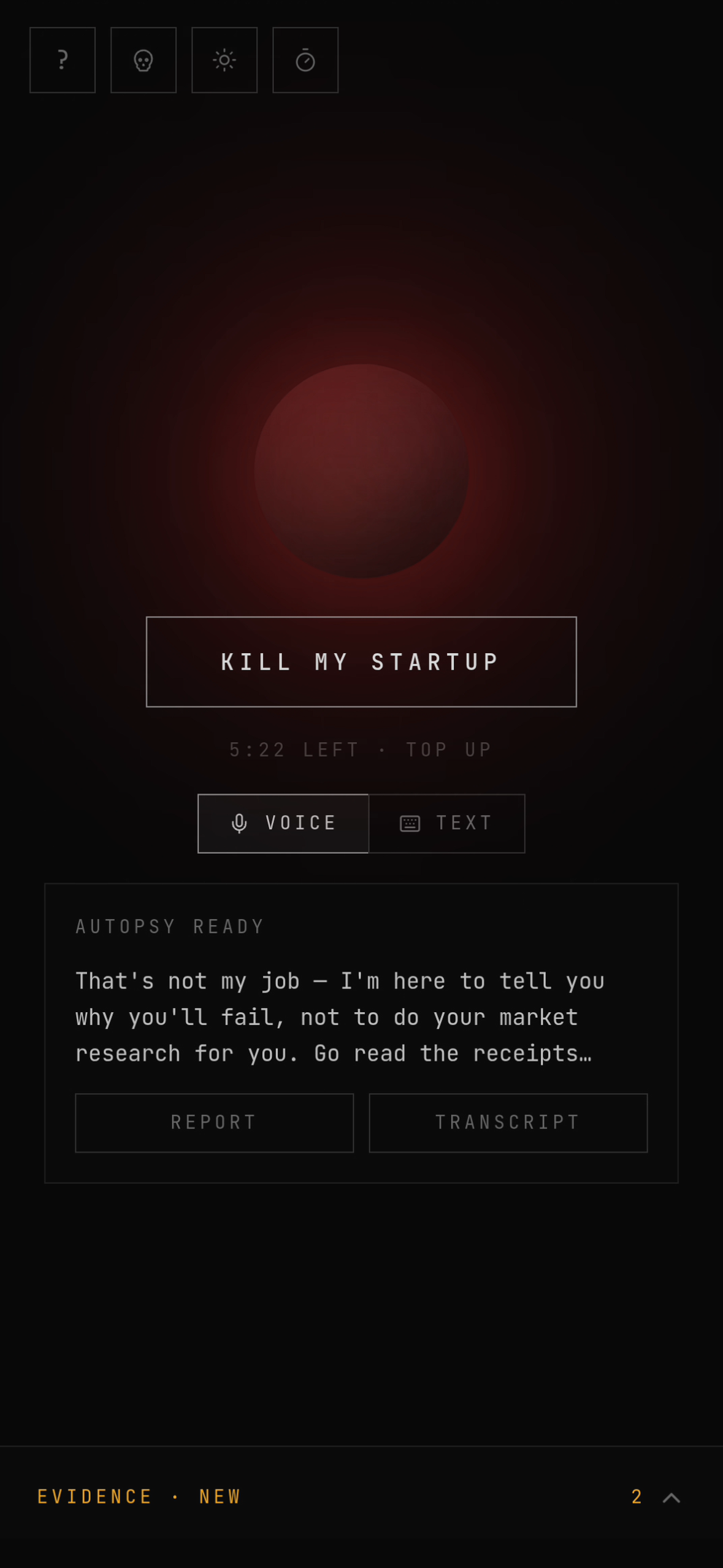
Autopsy ready: the verdict, the report and the transcript
-
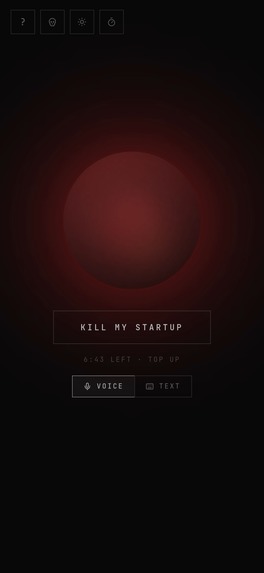
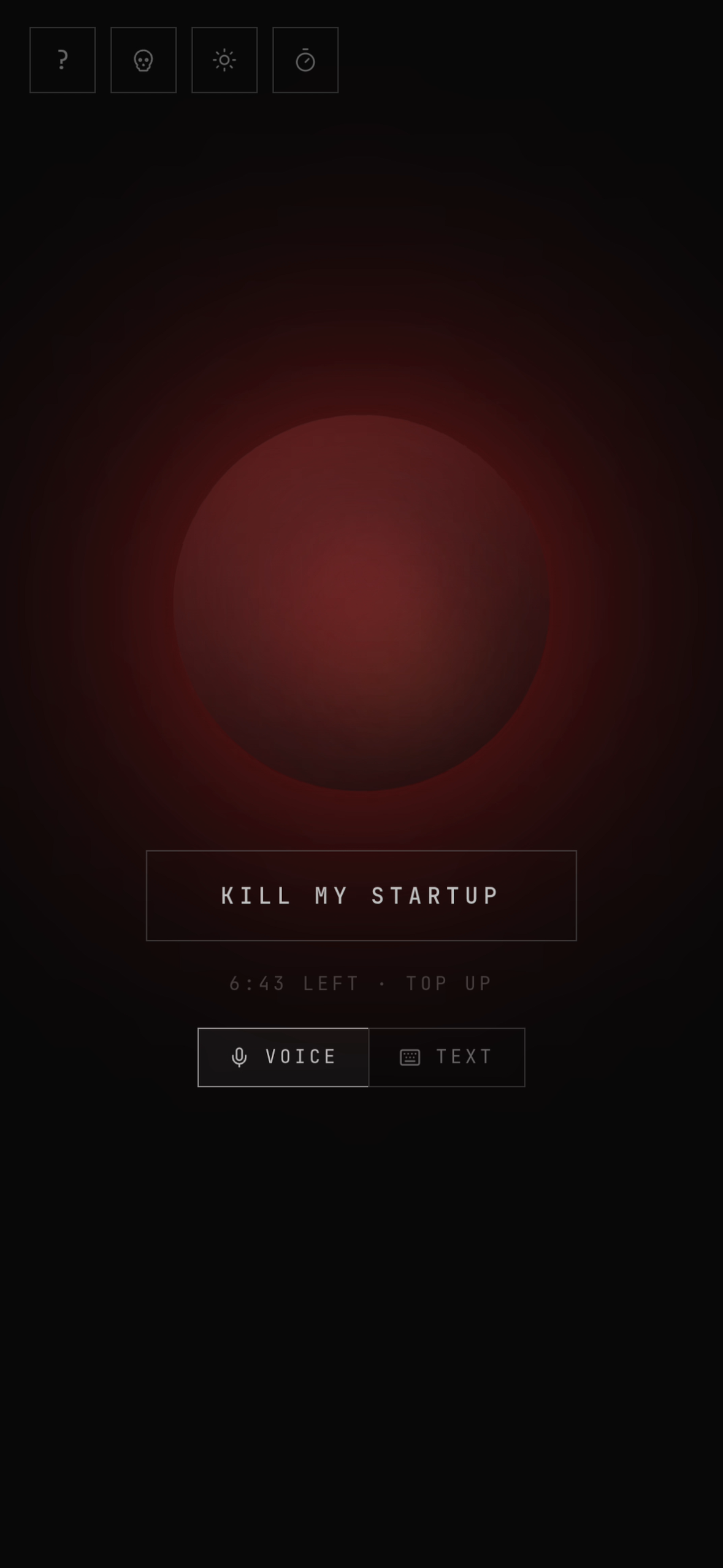
The home screen: one orb, one button
-
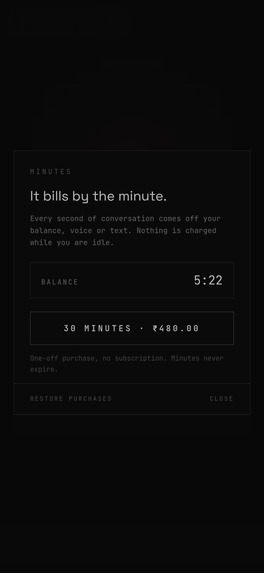
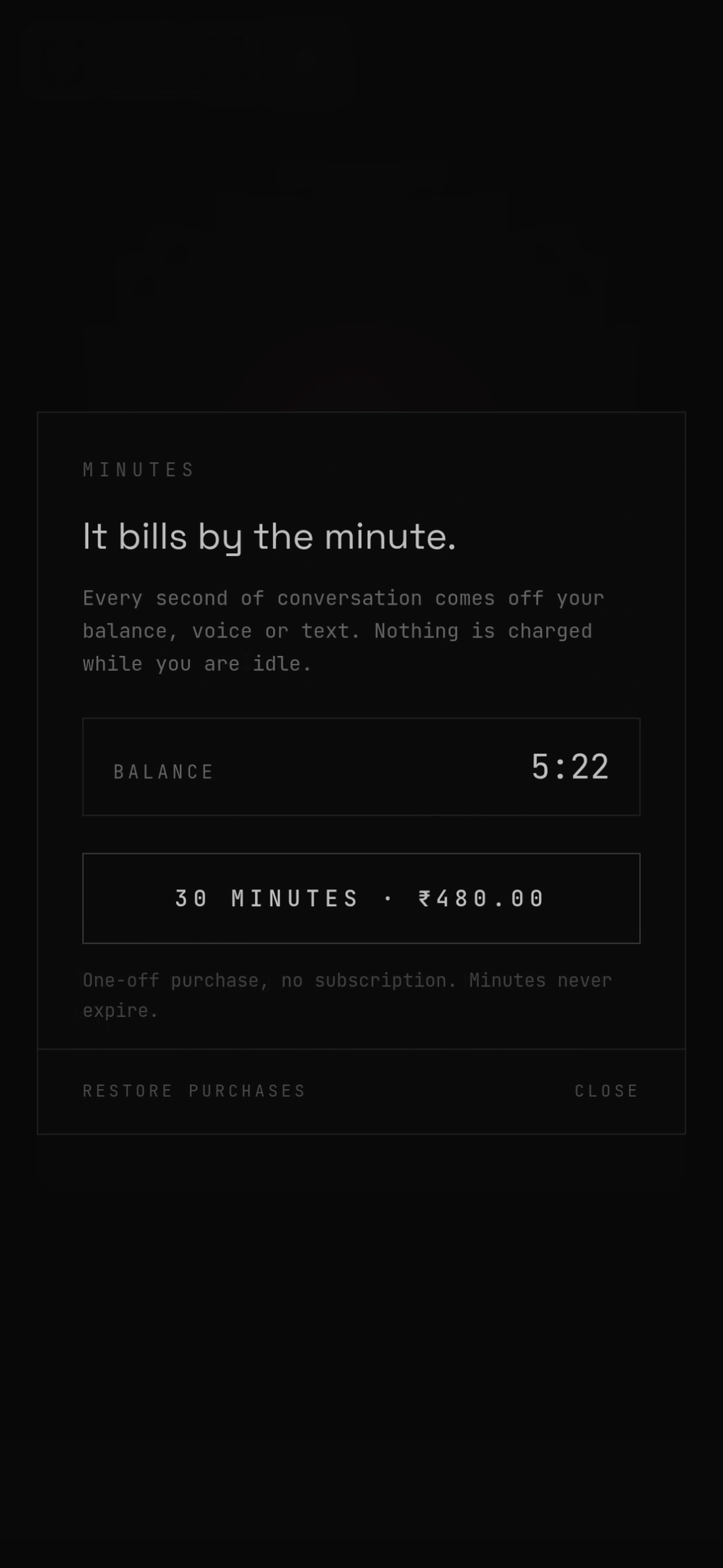
Minutes: the balance and a single purchase of 30 more
-

App icon, 1024 x 1024

Inspiration
In the age of AI there is a founder on every corner. Building is easy now. Knowing what not to build is the hard part, and everyone you ask will tell you your idea is great. Friends are kind. Family is kinder. I wanted the one voice that is not.
What it does
KillMyStartup is a critic you pitch to out loud. Tap the button, say your idea, and it argues back in real time, in a voice. While you talk it searches the live web for competitors, failed clones and market numbers. Every claim it makes lands in the Evidence panel as a source you can open.
When you quit, the verdict is waiting. The whole argument, with its sources and the full transcript, is saved as an Autopsy Report that you can export as a PDF or find later in the Morgue.
Call it entertainment. Call it pitch practice. A dead end found early saves you everything.
- A real-time voice conversation with a critic that argues back
- Text mode, for when you cannot talk
- Live web search with cited sources in the Evidence panel
- A verdict and an Autopsy Report, exportable as a PDF
- The Morgue: every past autopsy, kept on the phone
- Light and dark themes
- The first 10 minutes are free. 30 more is a single purchase. No subscription, no ads
How it makes money
The product sells time, because time is what it costs. Every minute of a session costs real money to run, so a flat unlock would lose money and a subscription would be the wrong shape: nobody pitches a startup every day.
- The first 10 minutes are free, long enough for one full argument and a verdict
- After that, 30 minutes is one purchase at US$4.99. It is a consumable, so a founder who comes back with a sharper idea buys again
- Minutes never expire and nothing is charged while the app is idle
How RevenueCat is used
- The balance is a RevenueCat virtual currency, counted in seconds. RevenueCat is the ledger, not the phone and not my own database
- The free 10 minutes are granted to each new install through the RevenueCat REST API
- The purchase goes through the RevenueCat SDK. The product is attached to the currency, so a successful purchase adds 1,800 seconds
- The server reads the balance before it starts a session and refuses to start one at zero. While a session runs it spends seconds through the REST API, and it hangs up when the balance is gone
- Because the balance lives with RevenueCat, it follows the phone. Reinstall the app and the minutes are still there
How I built it
An Android app built with React, TypeScript and Capacitor, with a small server behind it. The server starts each session, meters it by the second and ends the call at zero. The app only displays the number.
The interface is one screen and one object: an orb. It is dark red while it waits, pale grey while it listens to you, amber while it searches, and bright red when the critic speaks. You always know whose turn it is without reading a word.
Challenges
- Metering on the server and not on the phone. The first versions counted time on the device, which anyone could reset by reinstalling. Moving the ledger to RevenueCat and the clock to the server fixed that
- Keeping older installs working while the new billing rolled out
- Making a conversation that is meant to be harsh still feel fair. Every claim has to come with a source, or it is only an insult
What I learned
Price should follow cost. Once the unit of cost and the unit of sale were the same thing, a minute, every other decision about the paywall became simple.
What is next
Larger packs of minutes, gifting minutes to a co-founder, and an iOS version.
Built With
- android
- capacitor
- postgresql
- react
- revenuecat
- typescript

Log in or sign up for Devpost to join the conversation.