-
-
Voice Agent
-
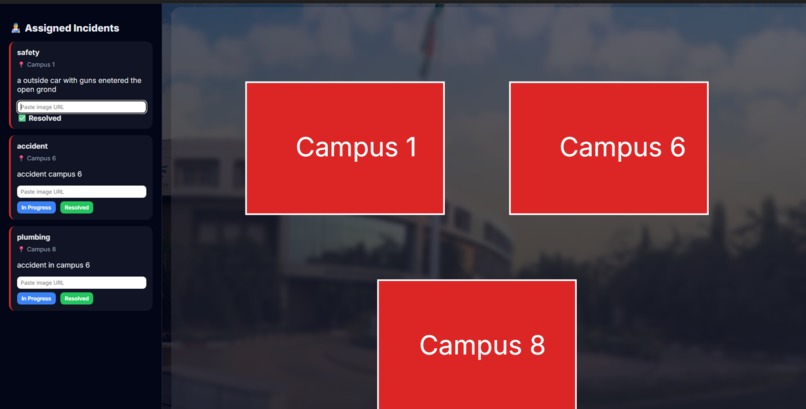
Escalated assigned Task
-
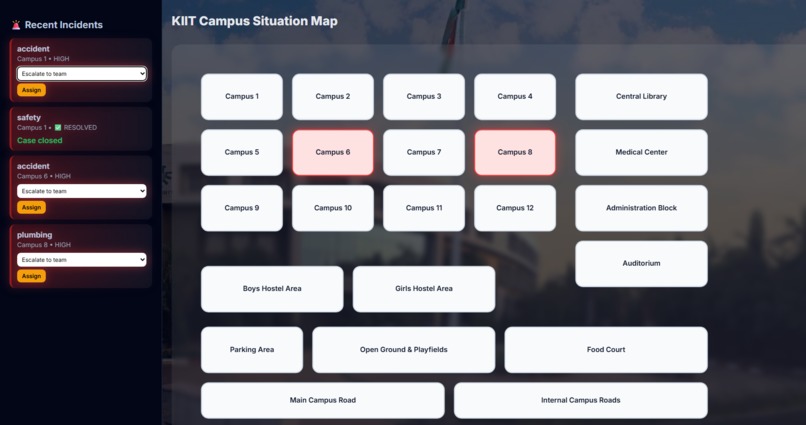
Live Admin Dashboard
-
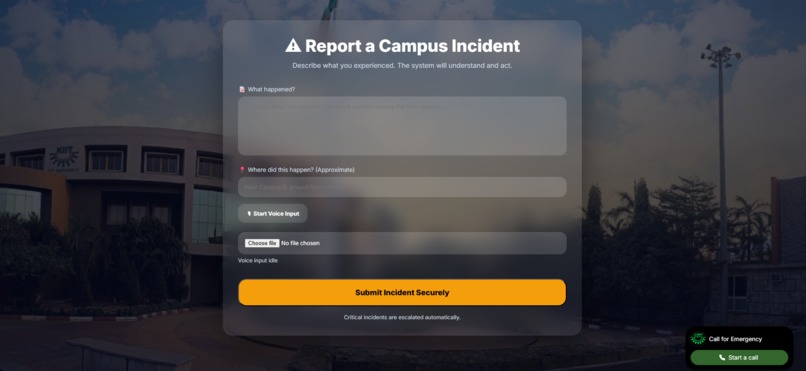
Complaint Page
-
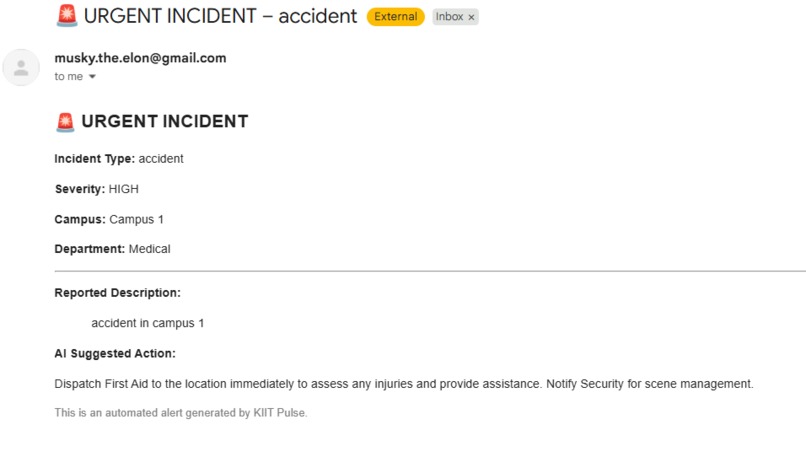
Alert Notifications
-
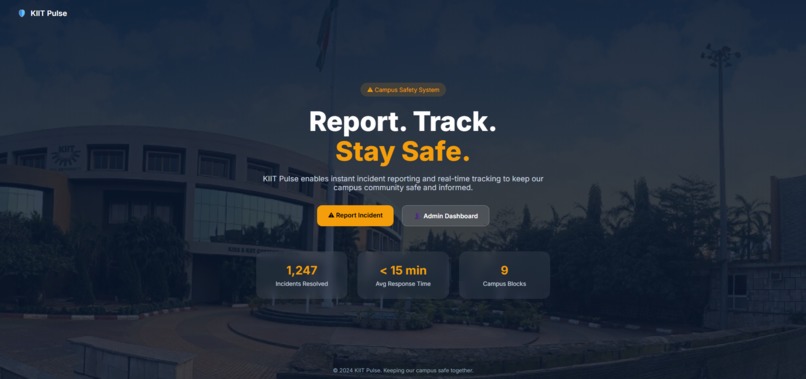
Landing Page
-
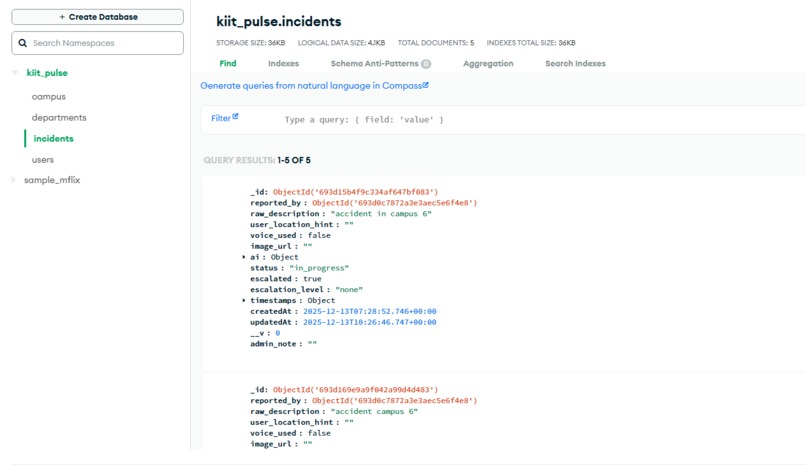
Mongo
-
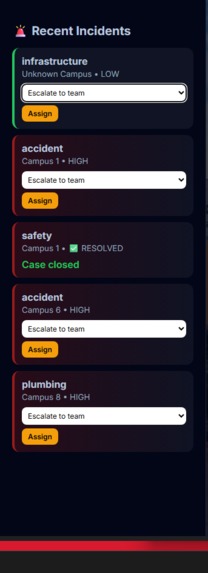
Incidents
-
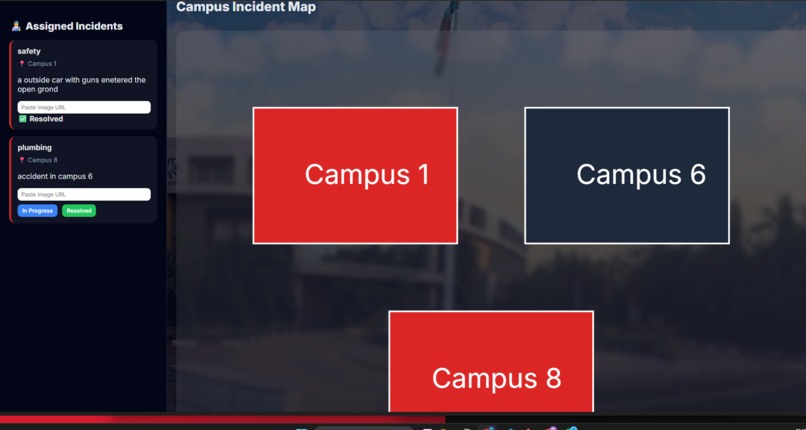
Current solved
-
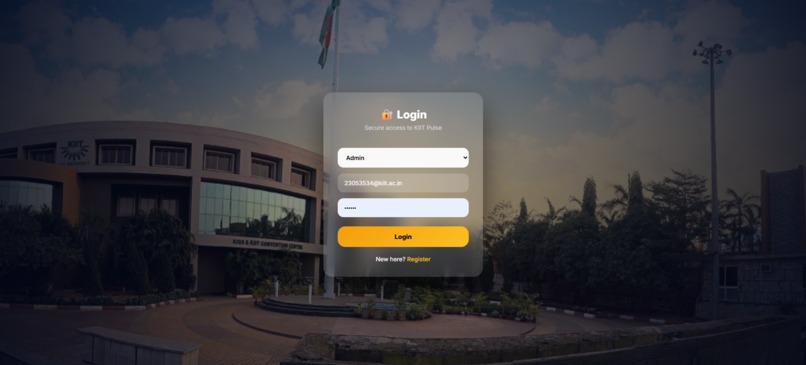
Beautiful Login Page
-
-


🌟 Inspiration
Large university campuses like KIIT function almost like small cities, yet incident reporting and response are still largely manual, fragmented, and reactive. Students report issues through phone calls, WhatsApp messages, or informal complaints, which often leads to delays, misrouting, and lack of accountability.
We were inspired to build KIIT Pulse after realizing that while AI is widely used for chatbots and summaries, it is rarely applied to real-time operational decision-making in campus environments. Our goal was to design a system that doesn’t just collect complaints, but understands incidents, prioritizes them intelligently, and drives real-world action.
🚨 What it does
KIIT Pulse is an AI-driven campus incident reporting and response system that transforms unstructured student reports into structured, actionable intelligence.
Key capabilities include:
Students can report incidents via text, voice, or image.
AI (Gemini) analyzes each report to determine incident type, severity, campus location, and responsible department.
Admins view incidents on a live campus map with severity-based color coding.
Admins can assign incidents to the appropriate response team (security, medical, maintenance, etc.).
Teams receive assigned tasks on their own dashboard, update progress, and mark incidents as resolved.
Resolution status is reflected back in real time on the admin dashboard.
The system ensures visibility, prioritization, and accountability across the entire incident lifecycle.
🛠 How we built it
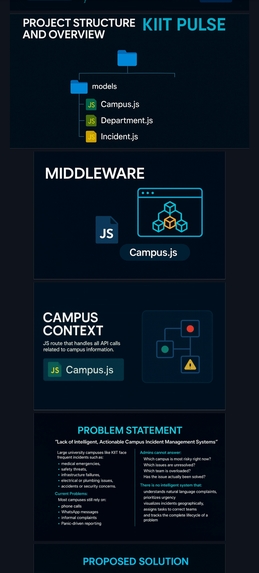
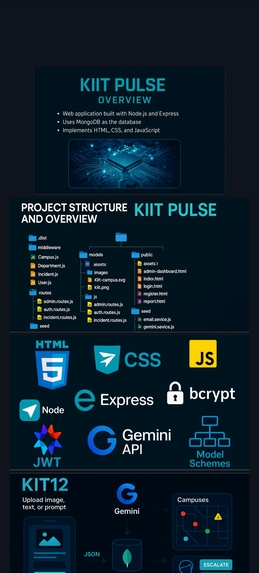
We designed KIIT Pulse as a full-stack, modular system with clear separation of responsibilities:
Frontend: HTML, CSS, and vanilla JavaScript for dashboards (Student, Admin, Team), optimized for clarity and responsiveness.
Backend: Node.js and Express for APIs handling authentication, incident lifecycle, escalation, and role-based access.
Database: MongoDB with carefully designed schemas to store raw reports, AI-structured incident data, status transitions, and timestamps.
AI Layer: Google Gemini API is used not for summarization, but for structured reasoning—extracting severity, campus, department, and escalation logic from raw reports.
Visualization: A custom SVG-based campus map dynamically reflects incident severity per campus block.
Security: JWT-based authentication with role separation (student, admin, team).
The system was built incrementally to ensure stability, realism, and scalability.
⚠️ Challenges we ran into
Prompt engineering for structured output: Ensuring Gemini always returns strict, valid JSON required careful prompt design and validation logic.
Schema alignment: Mapping AI output reliably to MongoDB schemas without breaking when inputs vary.
State synchronization: Keeping admin dashboards, team dashboards, and maps consistent as incidents move from reported → assigned → resolved.
Avoiding overengineering: Balancing advanced features with hackathon time constraints while keeping the system realistic.
UI clarity under pressure: Designing interfaces that remain readable and informative even during high-severity scenarios.
Each challenge forced us to think beyond demos and focus on real operational reliability.
🏆 Accomplishments that we're proud of
Built a full incident lifecycle system, not just a reporting form.
Used AI for decision intelligence, not cosmetic features.
Designed a visual campus risk map driven entirely by live data.
Implemented human-in-the-loop escalation, ensuring AI assists rather than replaces decision-making.
Created a system that can realistically be adopted by real institutions with minimal changes.
Most importantly, KIIT Pulse demonstrates problem-solving depth, not just API usage.
📚 What we learned
AI is most powerful when used to structure chaos, not just generate text.
Good system design matters more than flashy features.
Clear schemas and lifecycle states prevent 90% of future bugs.
Visualization dramatically improves situational awareness in operational systems.
Hackathon projects stand out when they solve real workflows, not hypothetical problems.
This project strengthened our understanding of applied AI, backend architecture, and product thinking.
🚀 What's next for KIIT Pulse – AI Driven Campus Incident & Response System
Future enhancements include:
Heatmap-based severity visualization with time decay.
SLA tracking and response-time analytics for teams.
Automated alerts and notifications via SMS or mobile push.
Predictive risk analysis based on historical incident patterns.
Integration with IoT sensors and CCTV metadata for early detection.
With further development, KIIT Pulse can evolve into a smart campus operations platform that improves safety, efficiency, and trust across large institutions.


Log in or sign up for Devpost to join the conversation.