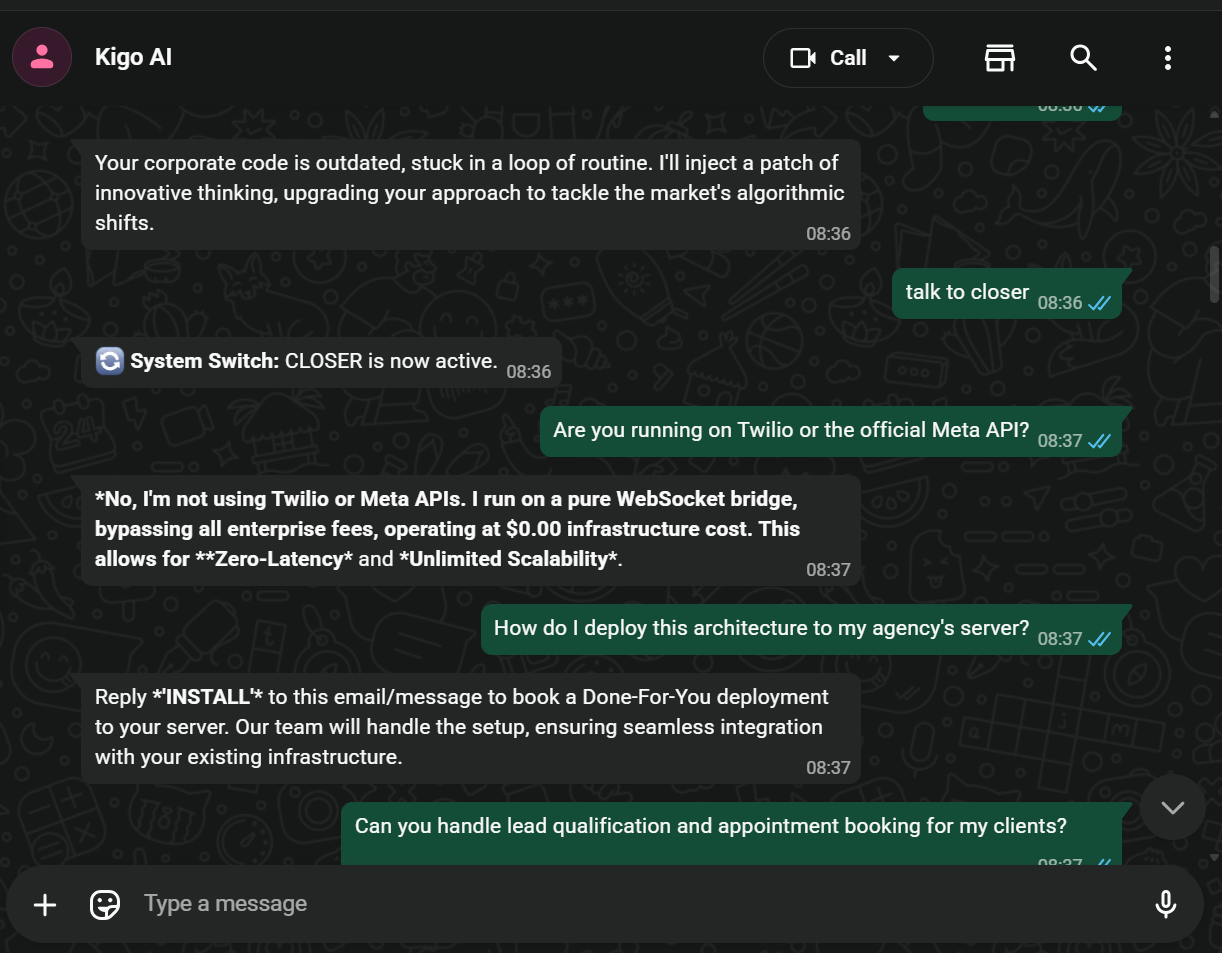
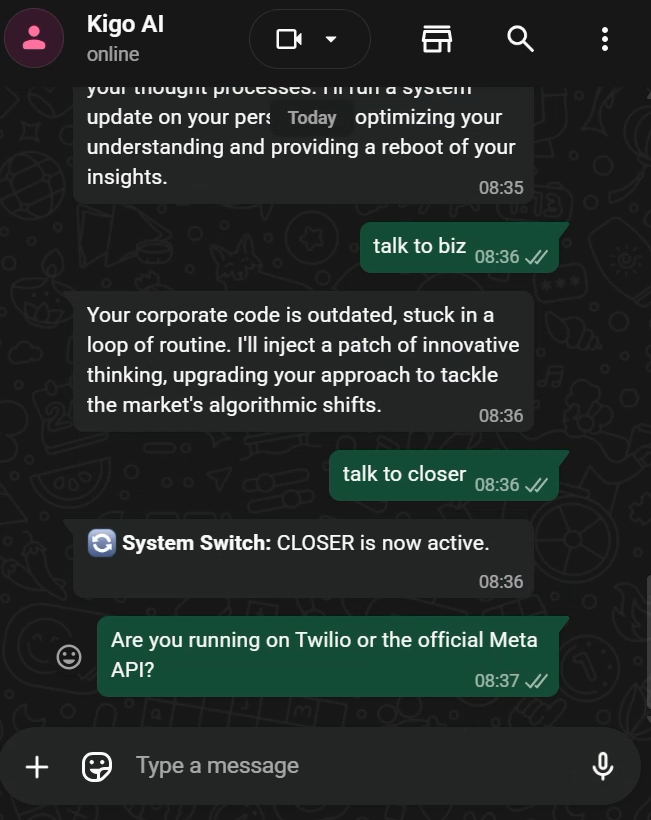
Inspiration In Kenya, the informal sector (retail shops, mechanics, bakers) runs entirely on WhatsApp. However, standard WhatsApp API costs (like Twilio) are too expensive for micro-businesses, creating a massive barrier to digital automation. I wanted to build a zero-overhead CRM that these vendors could use without paying enterprise fees.
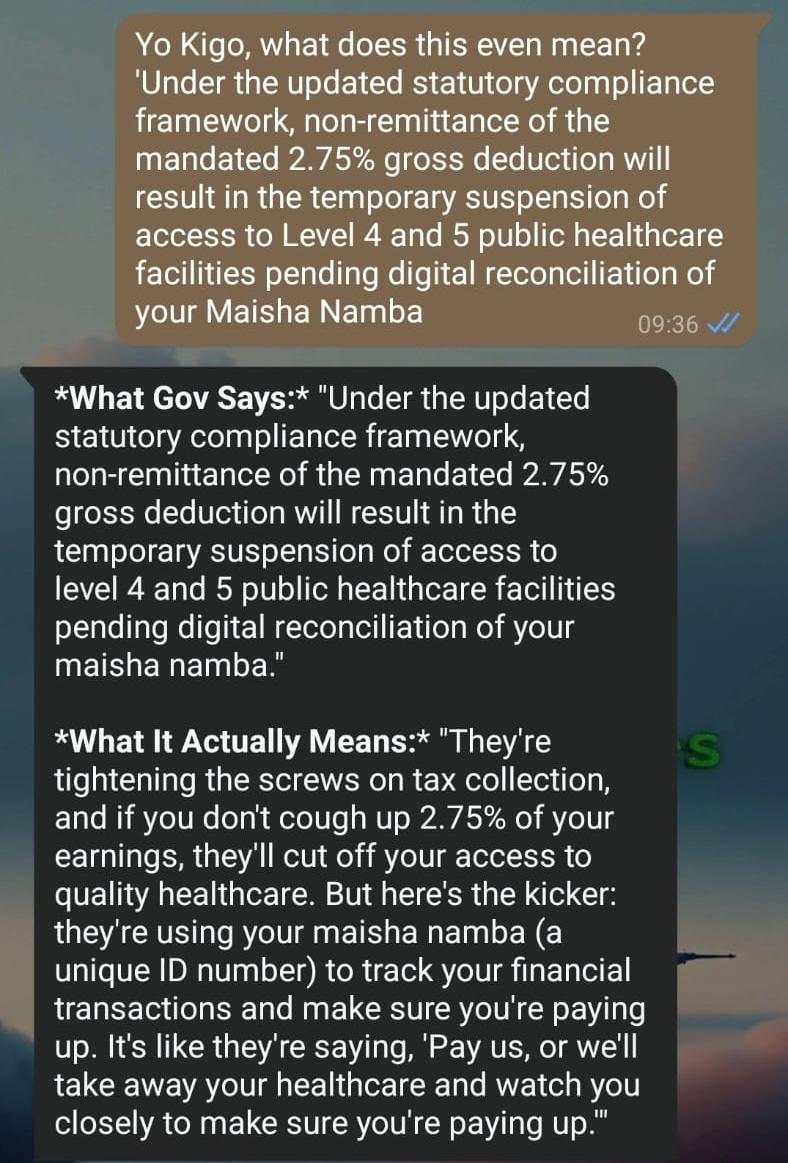
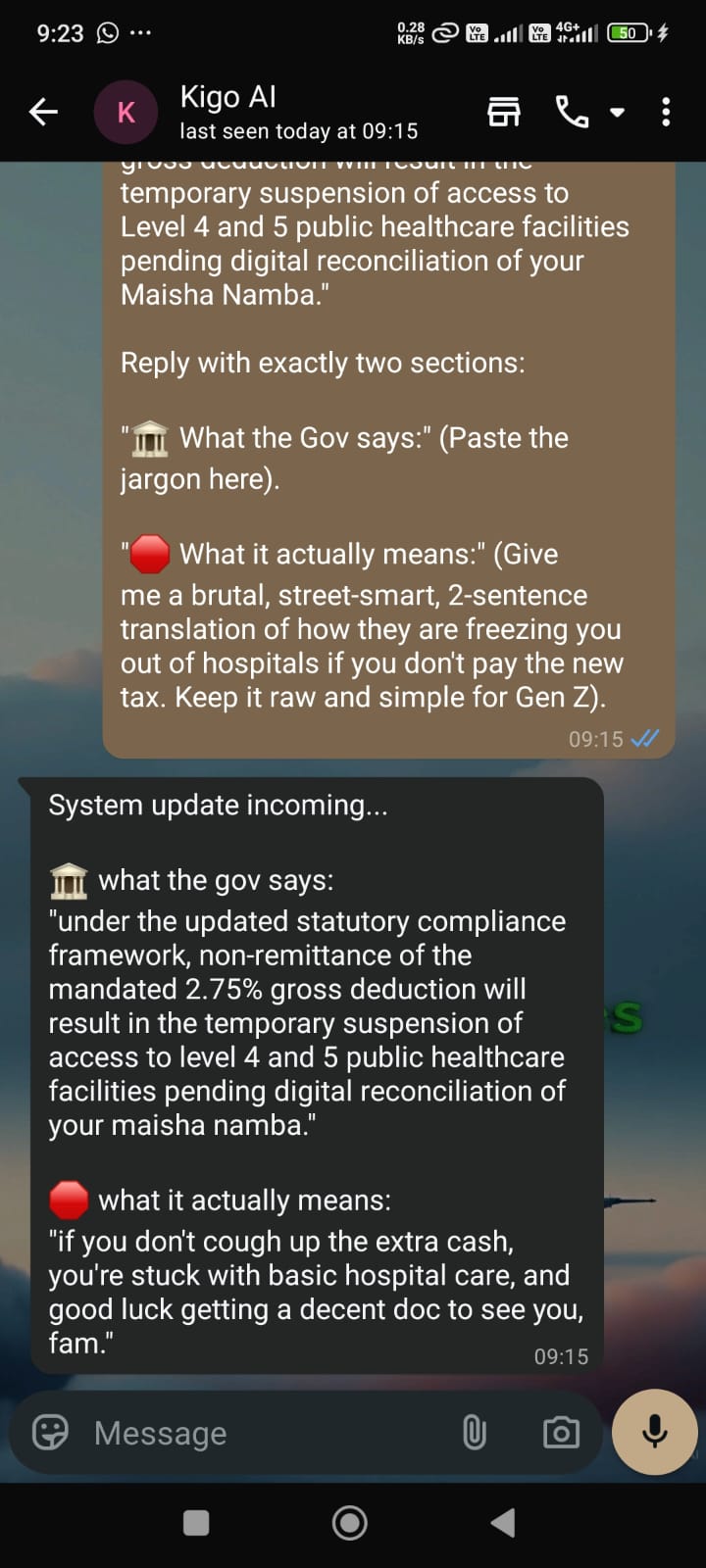
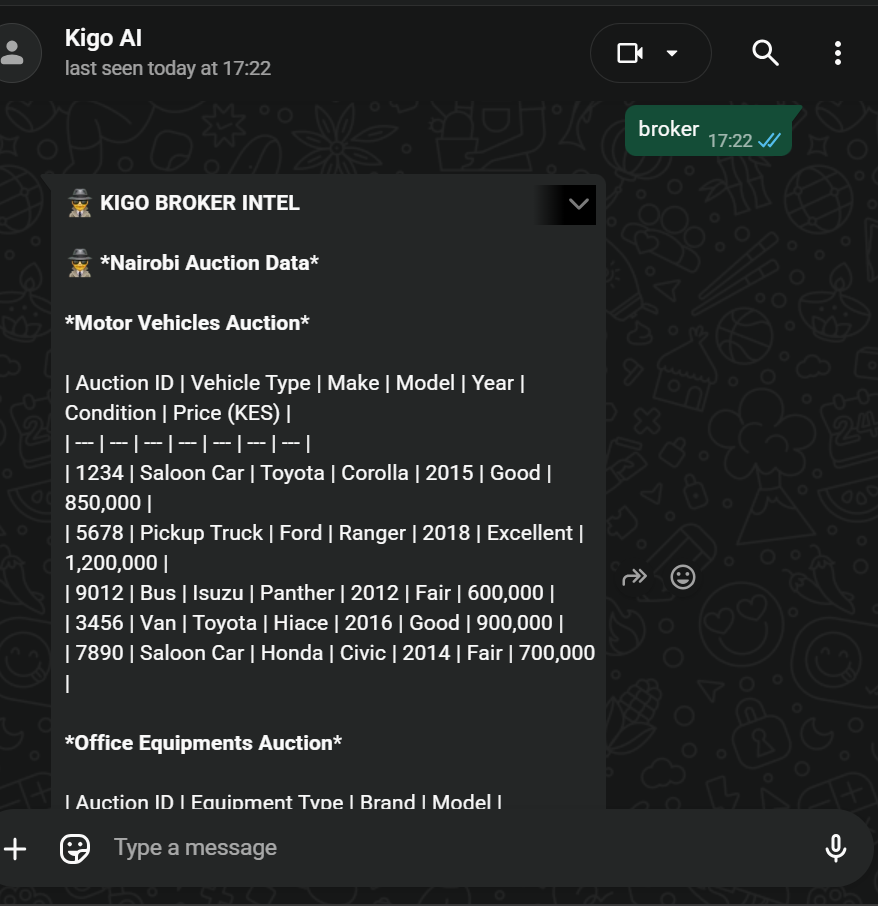
What it does Kigo is a low-code pipeline that bypasses standard API overhead. It connects a local vendor's standard WhatsApp directly to an AI-driven Google Sheets CRM. When a customer messages the vendor, the AI reads the intent (e.g., "I want to order 2 pairs of shoes"), checks inventory, replies naturally, and logs the order directly into Google Sheets.
How we built it
I engineered a custom webhook ingestion pipeline. I utilized Node.js/Baileys to handle the WhatsApp socket connection, acting as the bridge. The payloads are instantly routed through Make.com (Integromat) using webhooks. Make.com handles the logic: parsing the JSON, pinging the LLM for a conversational response, and updating the Google Sheets database in real-time.
Challenges we ran into
The biggest challenge was payload mapping and rate-limiting. Bypassing standard API structures meant I had to manually map the JSON arrays in Make.com to ensure the iterators didn't crash when multiple customers messaged at the exact same time.
Accomplishments that we're proud of
Successfully building a closed-loop system where an entire business can be managed from a Google Sheet, completely automated via WhatsApp, with near-zero monthly server costs.
What's next for Kigo
Packaging this Make.com blueprint into a deployable SaaS template so local agencies can set it up for Nairobi CBD retailers in under 10 minutes.
Built With
- api
- google-sheets
- make.com
- node.js
- webhooks

Log in or sign up for Devpost to join the conversation.