-
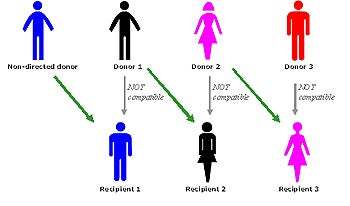
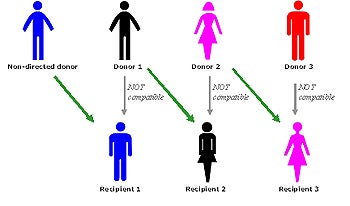
Kidney donation chain (National Kidney Foundation)
-

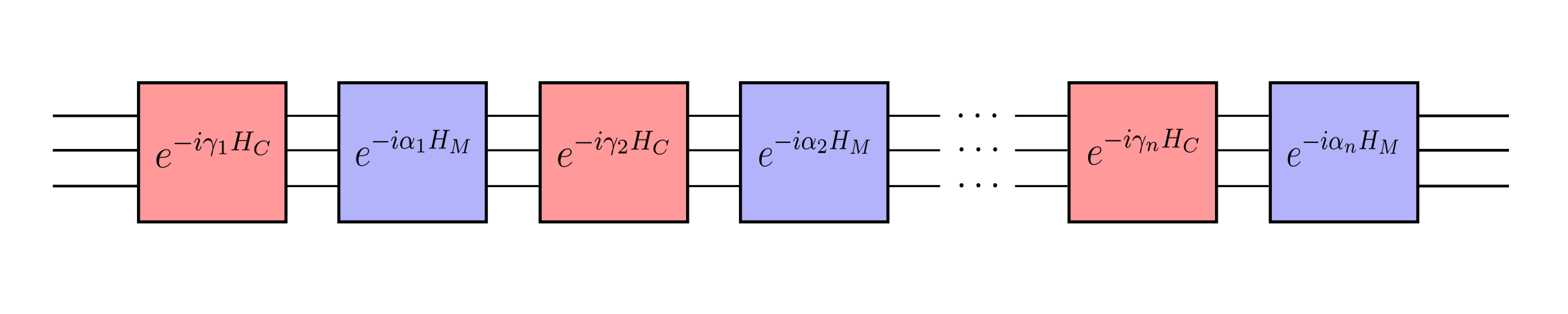
QAOA circuit (PennyLane)
Inspiration
We were looking into applications of linear programming and found kidney donation chain optimization in a textbook.
What it does
We use a quantum algorithm, QAOA, to solve the kidney exchange problem. We think we achieved exponential speedup.
How we built it
We downloaded datasets from the internet, modernized the provided parser, wrote our own pruner and problem generator, used OpenQAOA to convert the BIP to an Ising model, used PennyLane to simulate QAOA, used the CPLEX Python bindings, PuLP, and CBC to get classical solutions, used PuLP to filter the quantum output, and used Matplotlib to generate charts.
Challenges we ran into
Classiq requires manual verification of new accounts, so we had to switch tools. OpenQAOA's DOcplex to Ising model converter threw obscure errors. Performance constraints of quantum simulation on classical computers prevented us from using datasets with more than 30 donor-recipient pairs, even with unbalanced penalization to reduce variable count. Additionally, pruning optimizations made predicting model size from dataset size challenging.
Accomplishments that we're proud of
We implemented a working quantum algorithm that may have exponential speedup.
What we learned
We learned a lot about the applications, implementation, and analysis of quantum optimization algorithms.
What's next
We could add support for success probabilities and altruistic donors.
Built With
- matplotlib
- openqaoa
- pennylane
- pulp
- python

Log in or sign up for Devpost to join the conversation.