Inspiration
The newer generations of the Tibetan Diaspora, especially in the West, have struggles with language fluency. Increased assimilation leads to fewer instances of using Tibetan.
What it does
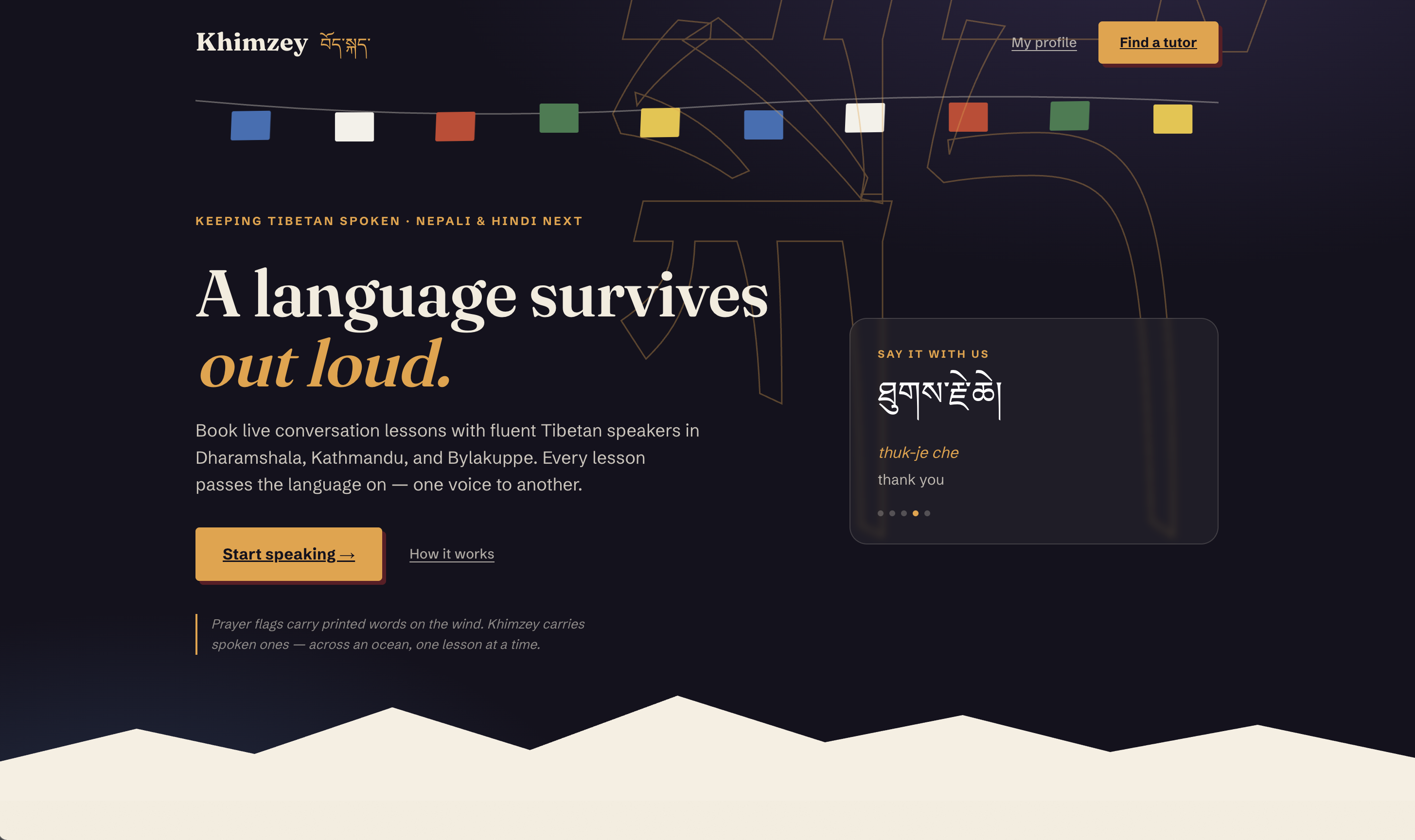
Khimzey connects Tibetan learners in the diaspora with fluent Tibetan speakers in India and Nepal for live 1-on-1 video conversation lessons. A learner picks their language and level — including a dedicated track for the most common starting point in the diaspora, "I understand Tibetan, but I can't speak it" — then browses tutors matched by dialect (Ü-Tsang, Amdo, or Kham), books a time slot, and lands in a live video lesson room with a phrasebook alongside the call. It's built specifically for people who already understand Tibetan and just need somewhere to actually speak it out loud.
How we built it
We used Claude to produce the Next.js, Typescript, and CSS for the front end to meet our design principles. We chose Vercel to host the site.
Challenges we ran into
Choosing defining features for our MVP within the time frame. For example strong features like a live video connection, although a key part of our site, are capable of being shown with an animation.
Accomplishments that we're proud of
The website has a good flow from end to end. We are proud of the design motifs that have strong ties to Himalayan culture and identity.
What we learned
We learned a lot about scoping honestly for a hackathon: deciding early what to fake (payments, tutor accounts) versus what had to be real (the video call itself) kept us from running out of time before anything worked.
What's next for Khimzey
Wiring up a real backend for accounts and persisted bookings, and adding real payments through Stripe Connect. Beyond that: opening tracks for other Himalayan languages (Nepali, Hindi, and eventually Sherpa, Ladakhi, and Dzongkha), and expanding past conversation into the parts of culture like traditional singing, instruments like the dranyen, and storytelling.
Built With
- css
- next.js
- vercel


Log in or sign up for Devpost to join the conversation.