
Inspiration
The inspiration for KhetiDekho came from witnessing the unfair treatment of local farmers in my community. I saw hardworking farmers selling their fresh tomatoes for just ₹20 per kg to middlemen, while consumers were paying ₹60 for the same produce in stores. This 200% markup was hurting both farmers who couldn't make decent profits and families who were paying high prices for basic food. I realized technology could bridge this gap and create a fair, sustainable food system where farmers get what they deserve and consumers access fresh, affordable produce directly from the source.
What it does
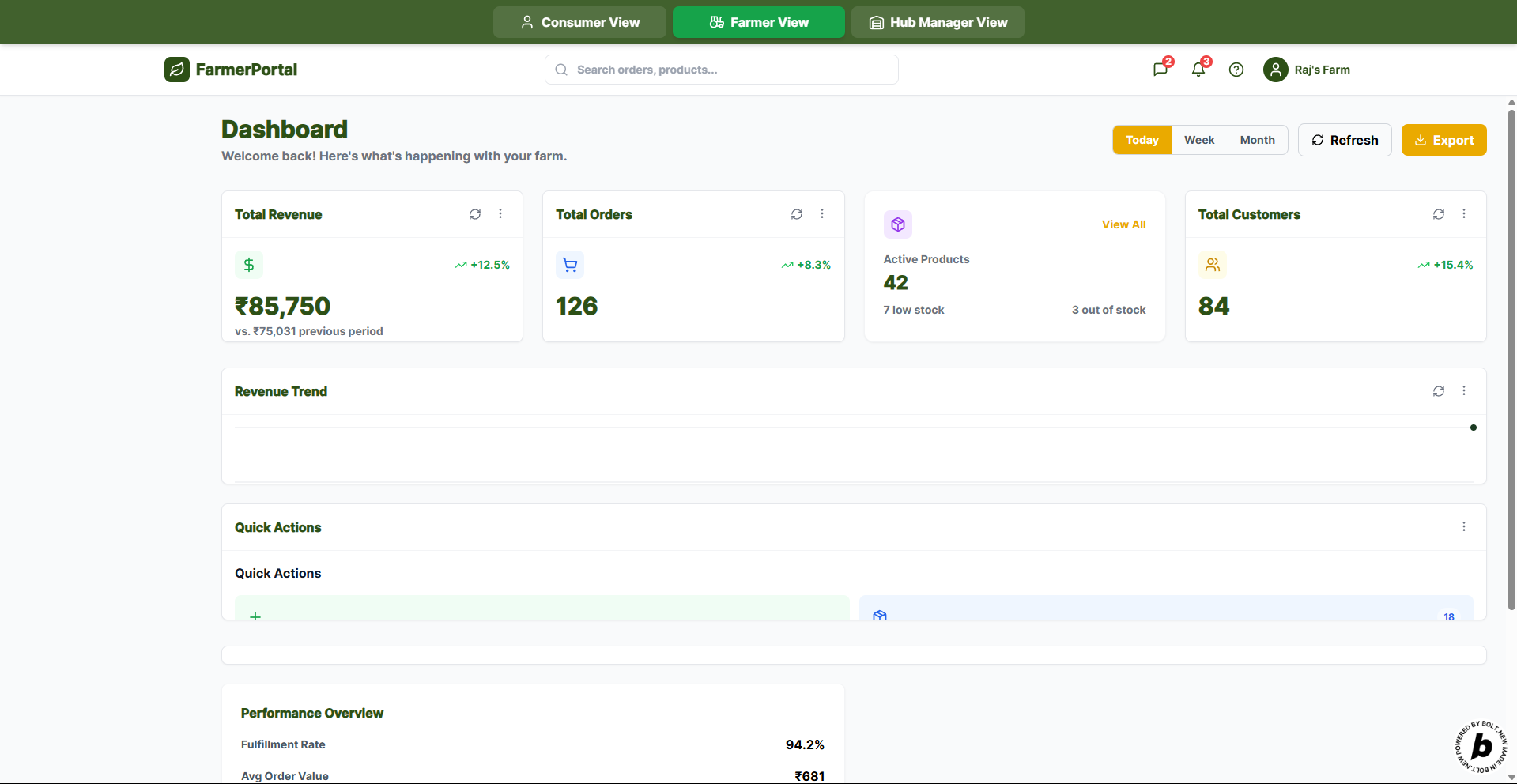
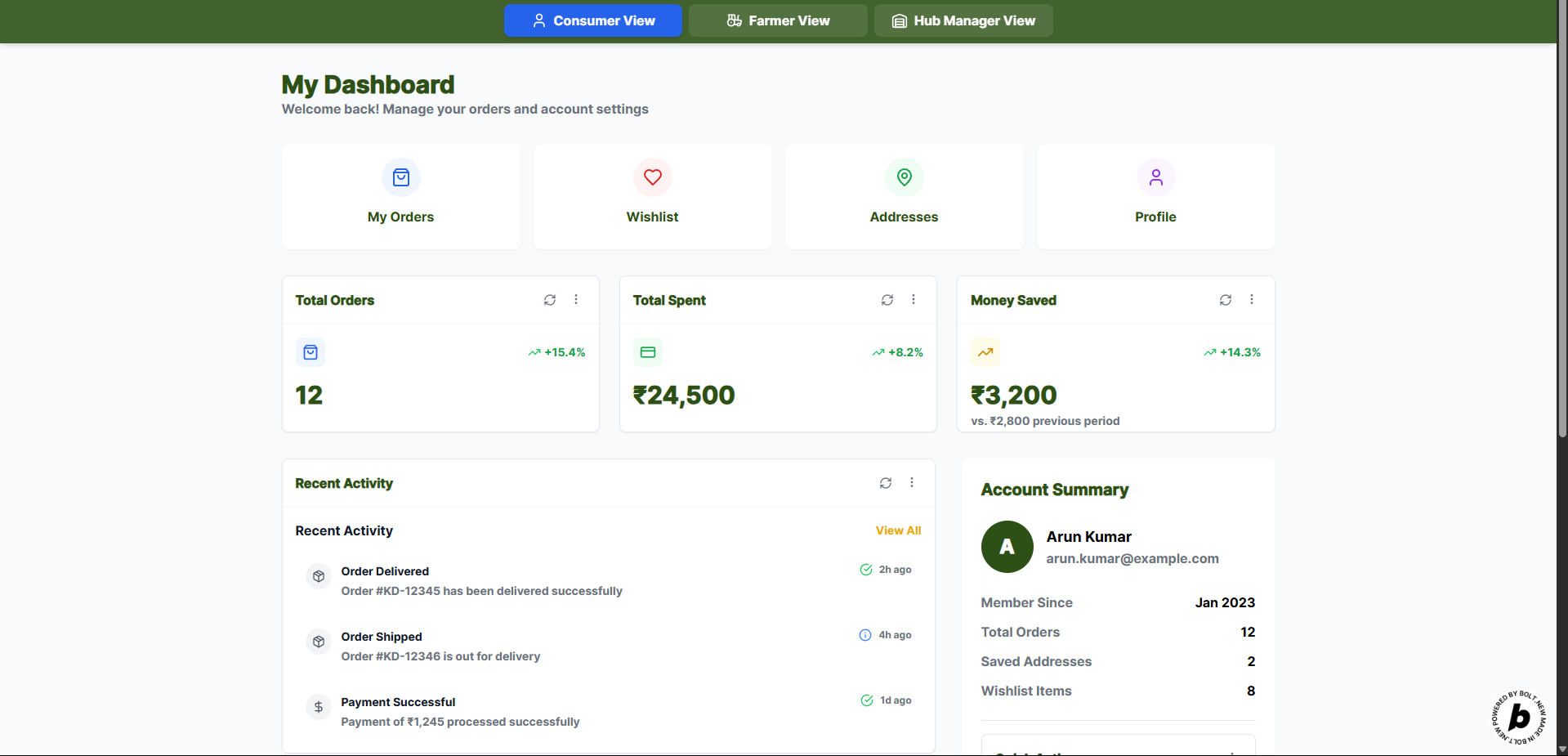
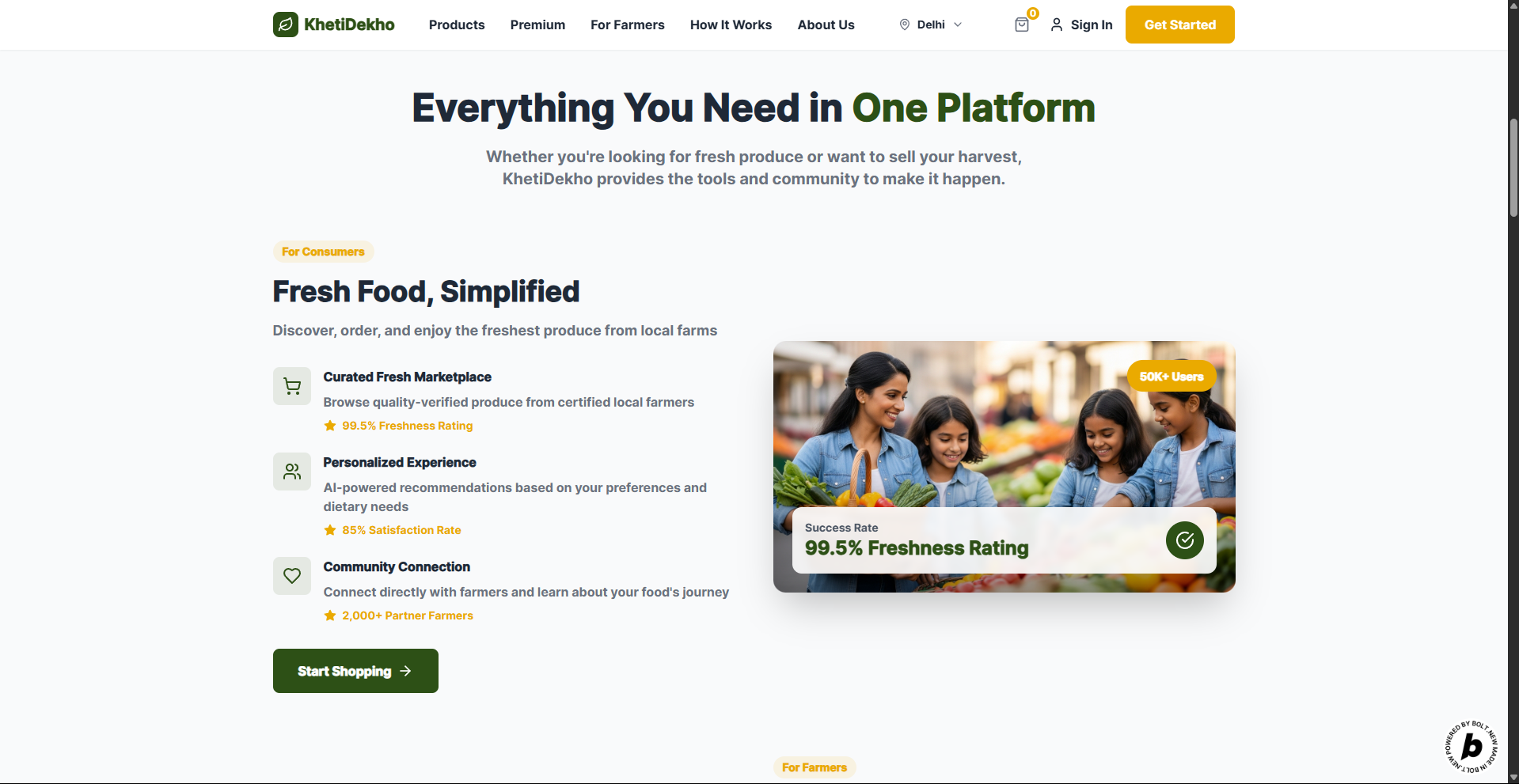
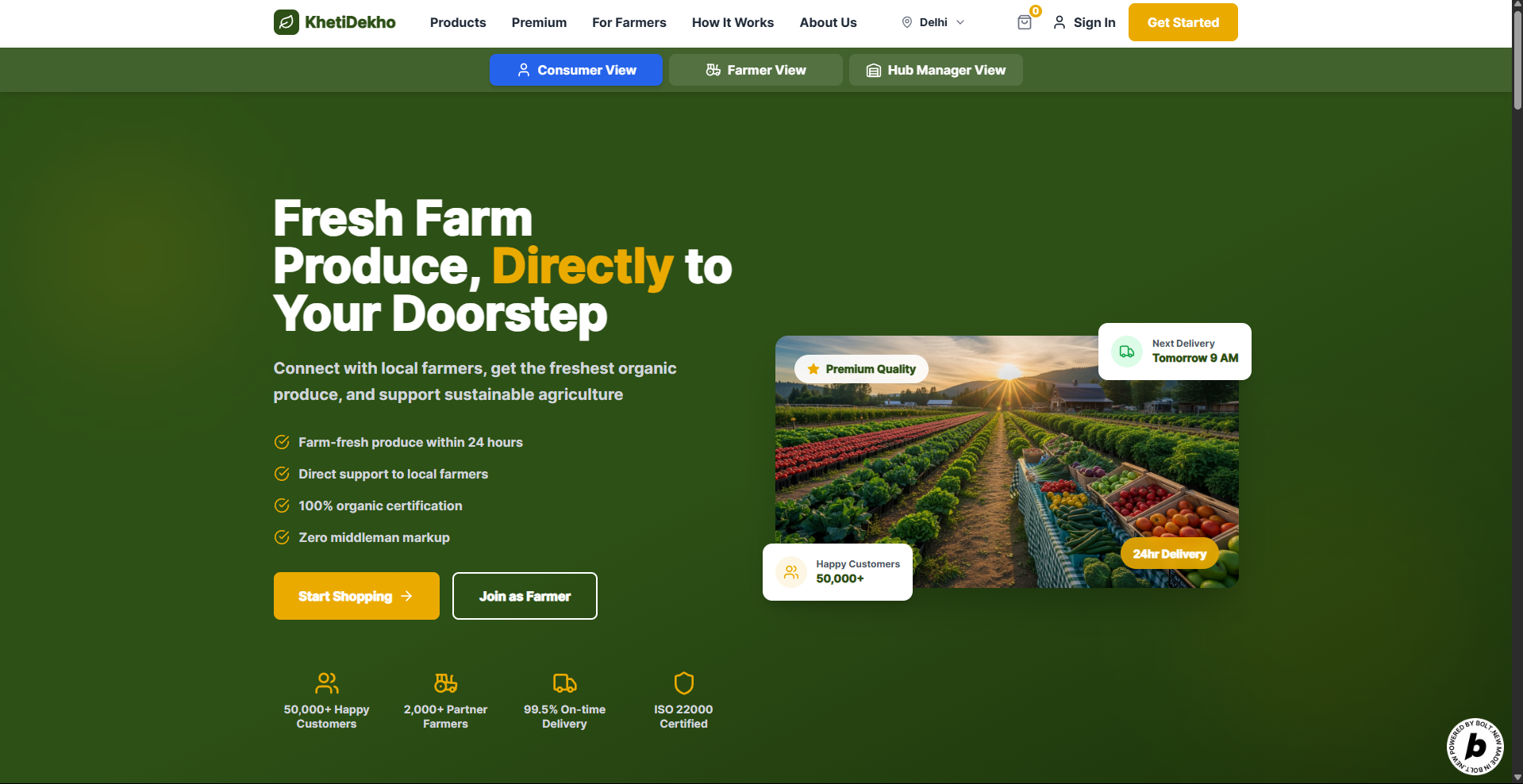
KhetiDekho is a comprehensive farm-to-consumer platform that eliminates middlemen from the agricultural supply chain. Farmers can create profiles, list their fresh produce with detailed descriptions and photos, manage inventory, and track their earnings. Consumers can browse products, filter by organic options, view farmer profiles, place orders, and track deliveries in real-time. The platform features separate dashboards for both user types, a complete checkout system with delivery scheduling, order management, and financial tracking. It creates a transparent marketplace where farmers can sell directly at fair prices while consumers get fresher produce at lower costs.
How we built it
I built KhetiDekho using modern web technologies focused on performance and user experience. The frontend is powered by React with TypeScript for type safety and better development experience. Tailwind CSS handles all styling with utility-first approach, while Framer Motion adds smooth animations throughout the interface. Zustand manages application state efficiently, and React Router handles navigation between different pages. I used Lucide React for consistent iconography and date-fns for date manipulation. The entire application is built with Vite for fast development and optimized builds, with ESLint ensuring code quality throughout the development process.
Challenges we ran into
The development journey was incredibly challenging and tested my persistence. Over 30 days, I attempted to create this project multiple times, but each version failed for different reasons - sometimes due to configuration issues, other times because of architectural problems. Just when I was about to give up, I finally got a working version, but it came with a massive problem: 140+ errors flooding my console. The project had grown so complex that debugging became a nightmare. I spent countless hours manually fixing each error one by one, going through component files, checking imports, fixing TypeScript issues, and resolving dependency conflicts. It was exhausting, but I refused to quit this close to the deadline.
Accomplishments that we're proud of
Despite all the setbacks, I'm incredibly proud of what KhetiDekho has become. I successfully created a full-featured, responsive web application that addresses a real-world problem affecting millions of farmers and consumers. The platform includes over 15 different pages with complex functionality, from product management to order tracking. I'm proud of the clean, intuitive user interface that works seamlessly across devices. Most importantly, I'm proud of not giving up when faced with 140 errors - the persistence to debug and fix each issue manually taught me more about development than any tutorial could. The project demonstrates both technical skills and real social impact potential.
What we learned
This project taught me invaluable lessons about full-stack development, project management, and persistence. Technically, I mastered React with TypeScript, learned advanced state management with Zustand, and became proficient with modern CSS through Tailwind. I learned the importance of proper project architecture and how small issues can compound into major problems. More importantly, I learned that debugging is a crucial skill - manually fixing 140 errors taught me to read error messages carefully, understand component relationships, and think systematically about problem-solving. I also learned about the agricultural supply chain and how technology can create social impact.
What's next for Khetidekho
The immediate next step is implementing a robust backend with database integration to make KhetiDekho fully functional. I plan to add user authentication, payment processing, real-time notifications, and a logistics management system. I want to integrate with mapping APIs for delivery tracking and implement a rating system for quality assurance. Long-term goals include mobile app development, AI-powered crop recommendation systems, and partnerships with local delivery services. I also plan to add features like bulk ordering for restaurants, seasonal produce predictions, farmer training resources and farmer onboarding. The ultimate vision is to scale KhetiDekho nationwide and create a sustainable ecosystem that truly empowers farmers while providing consumers with the freshest, most affordable produce.


Log in or sign up for Devpost to join the conversation.