-
-
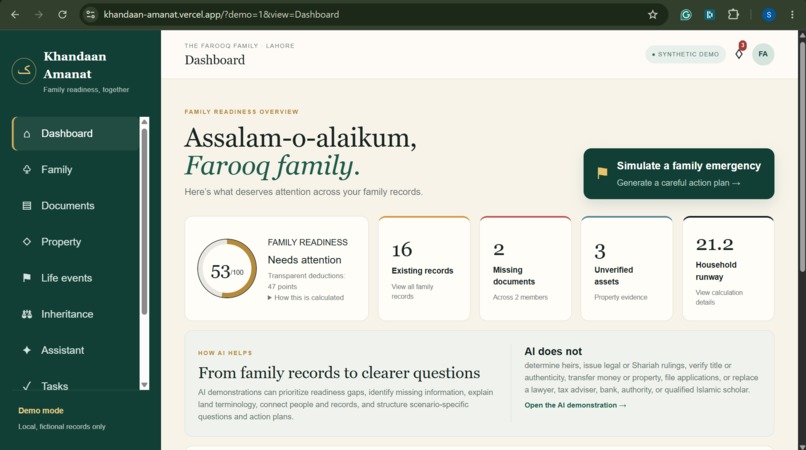
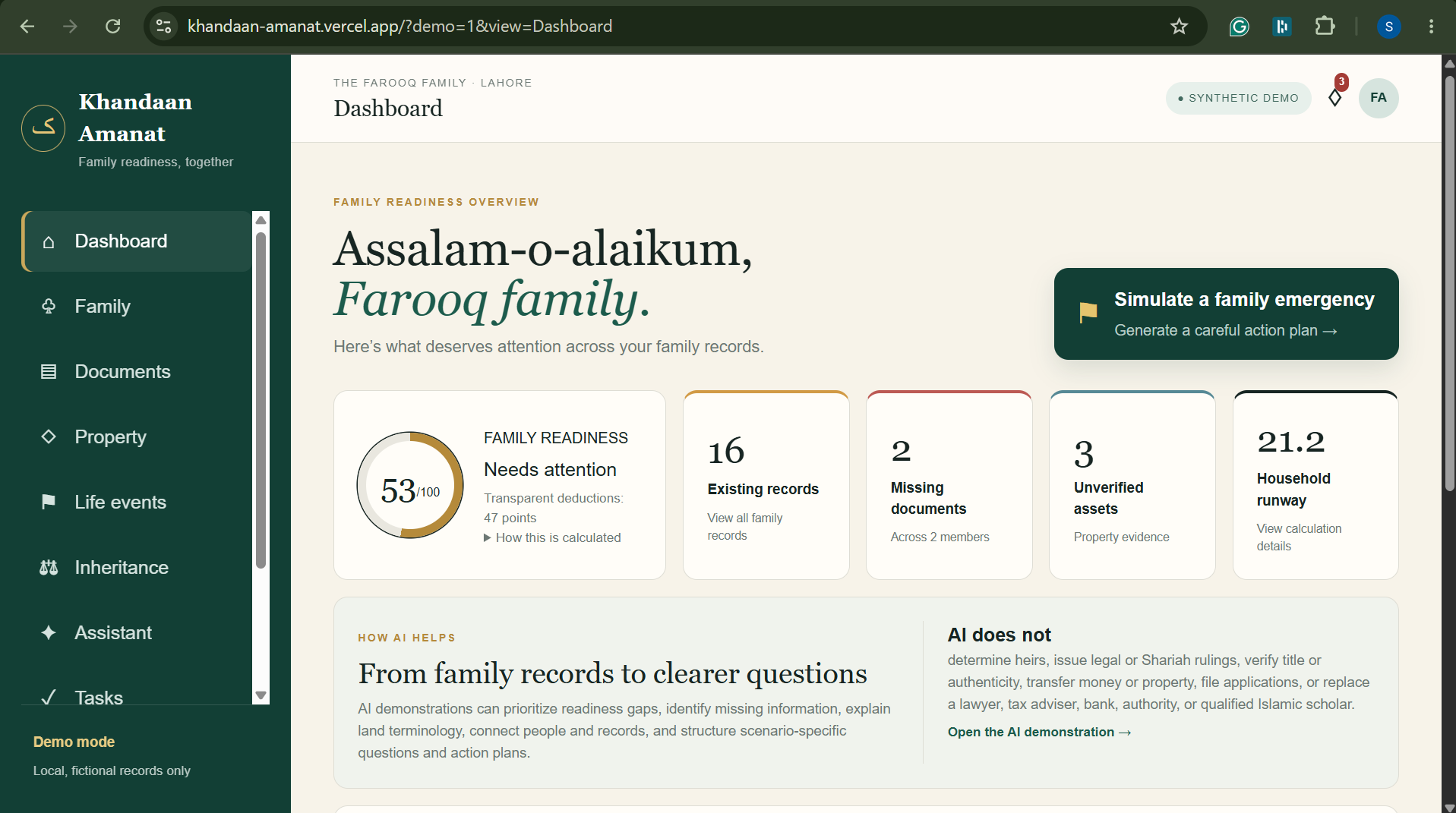
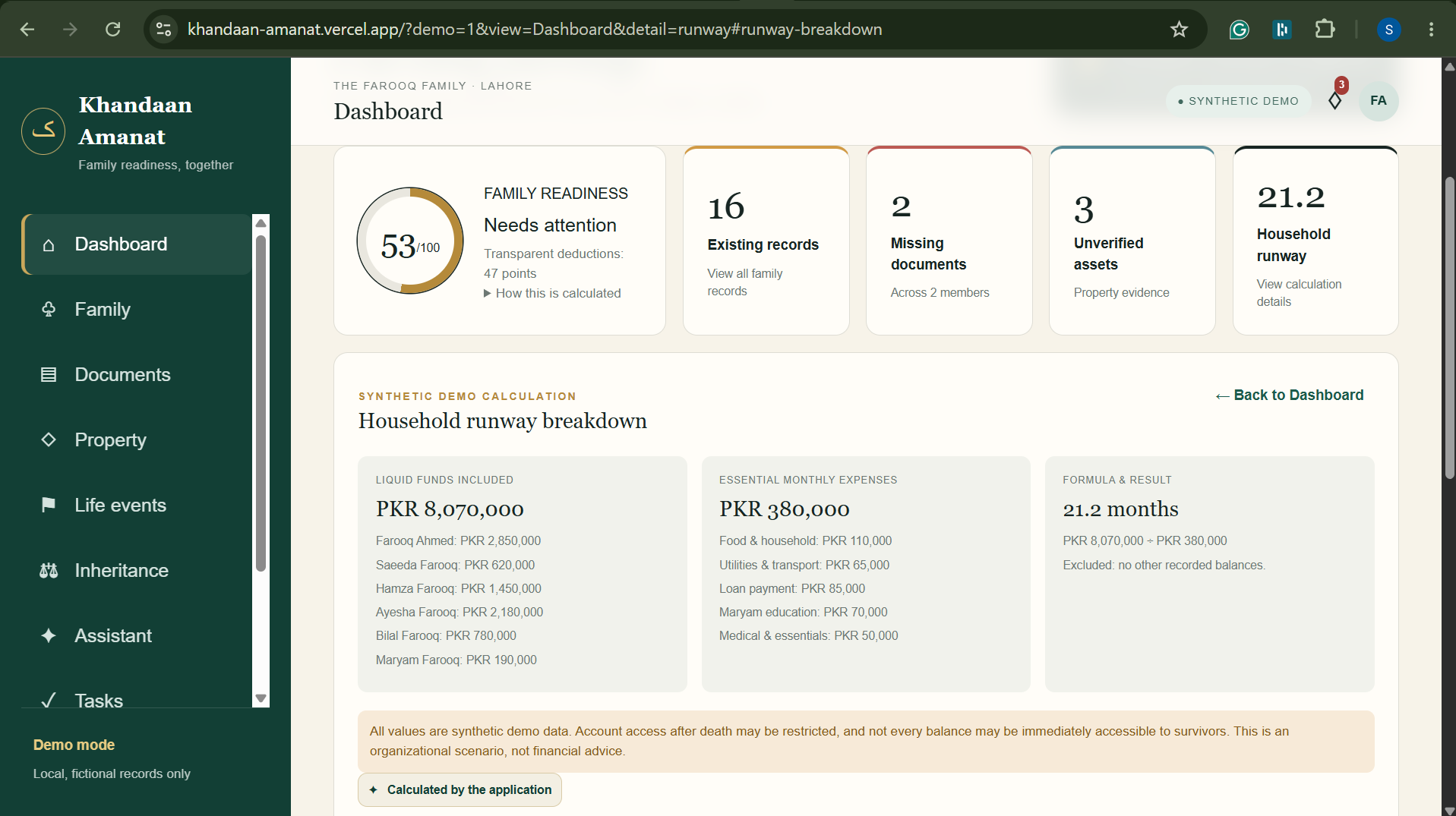
AI analyzes family records to calculate a Family Readiness Score, identify missing info and proactively highlight areas that need attention.
-
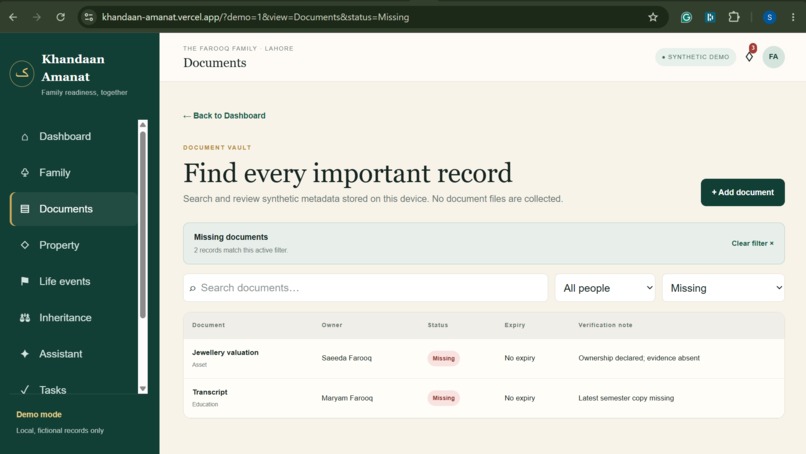
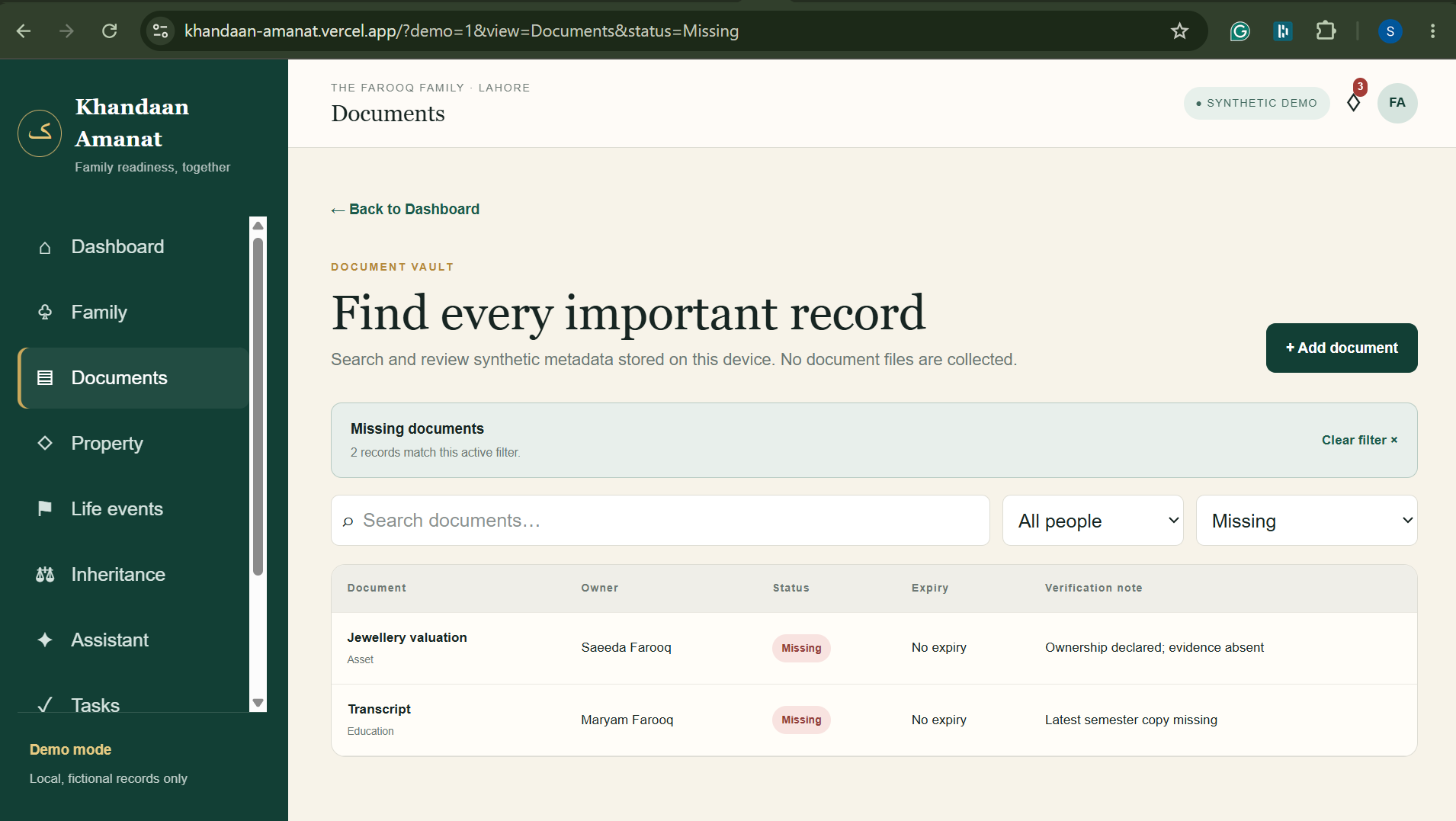
AI analyzes family records to detect missing documents, making it easier to improve preparedness before an emergency occurs.
-
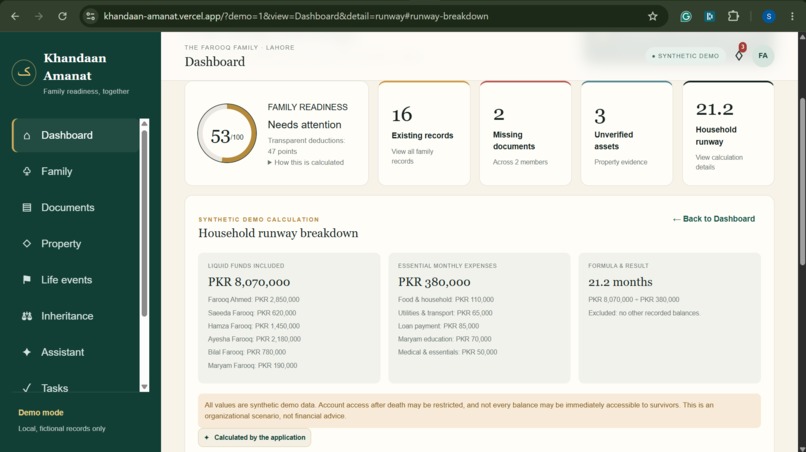
AI estimates how long the household can sustain essential expenses using available financial information.
-
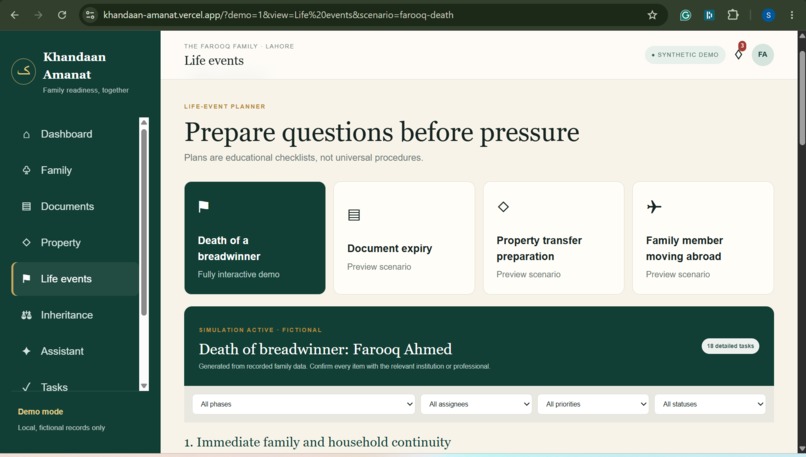
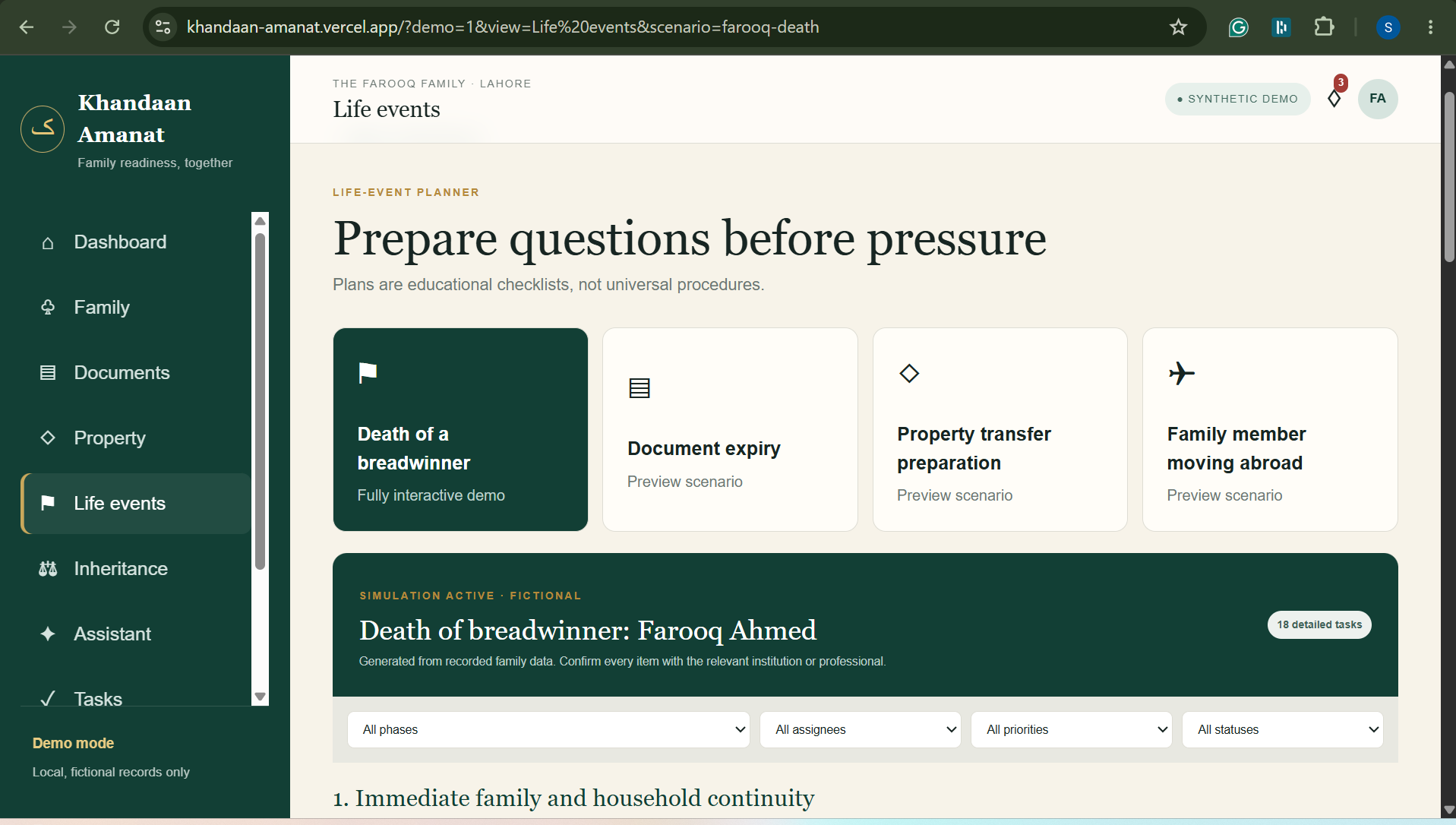
Users can simulate a family emergency scenario to understand the next steps, tasks, documents, and administrative processes.
-
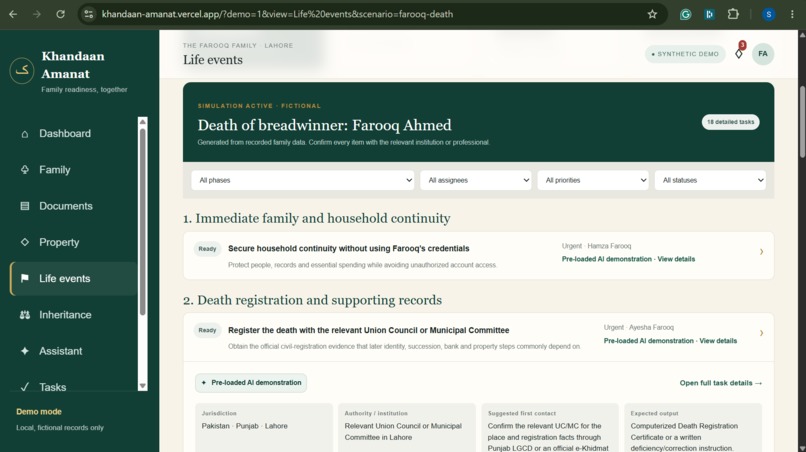
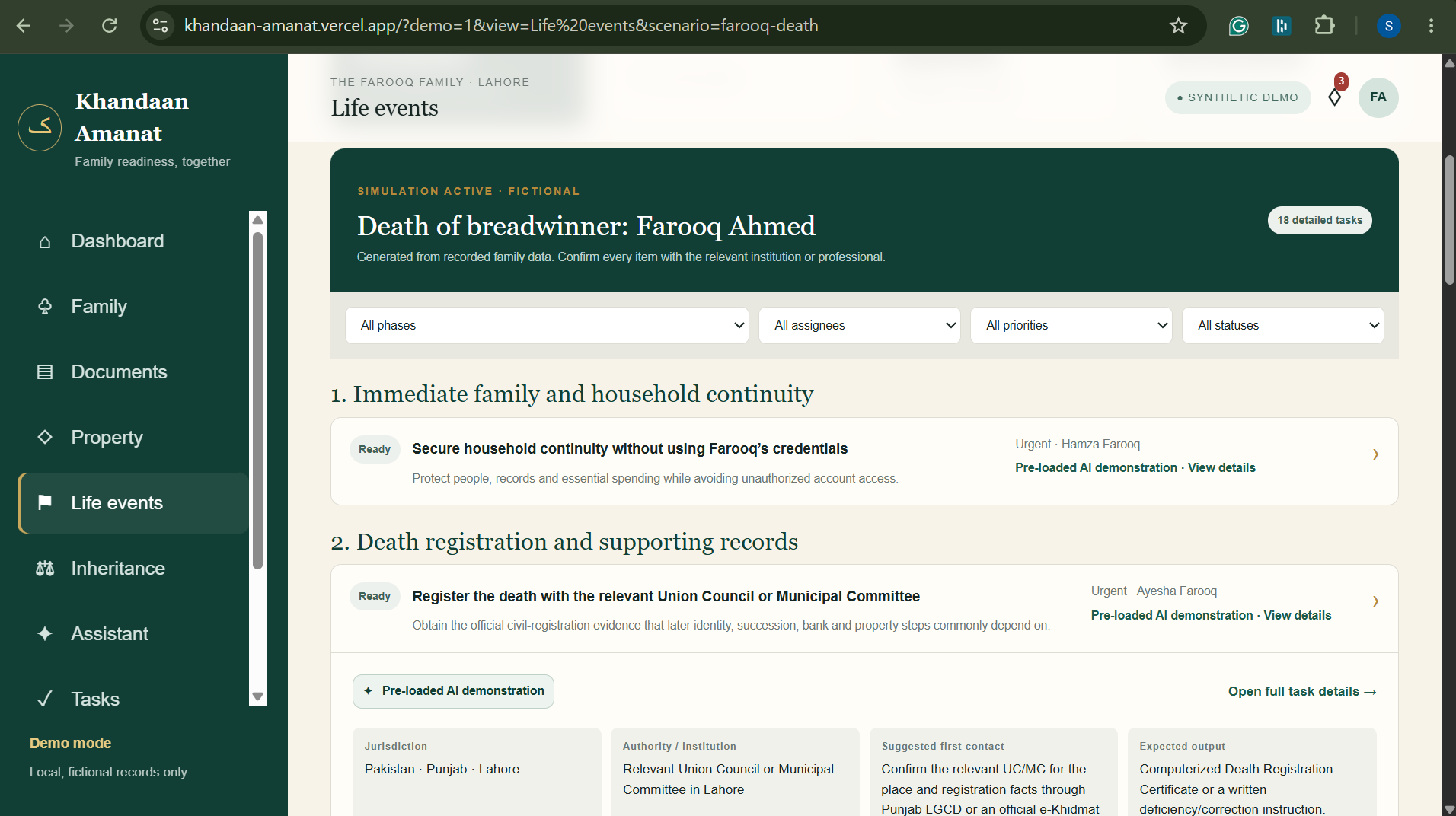
Based on the selected scenario, the AI generates prioritized tasks helping navigate complex processes step by step.
-
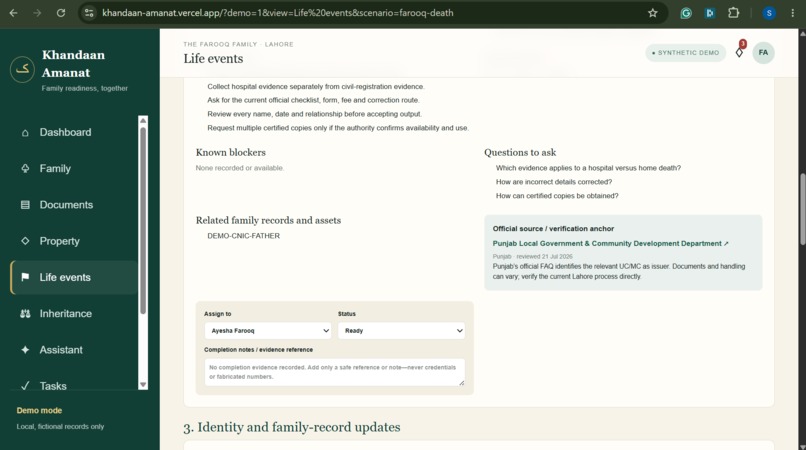
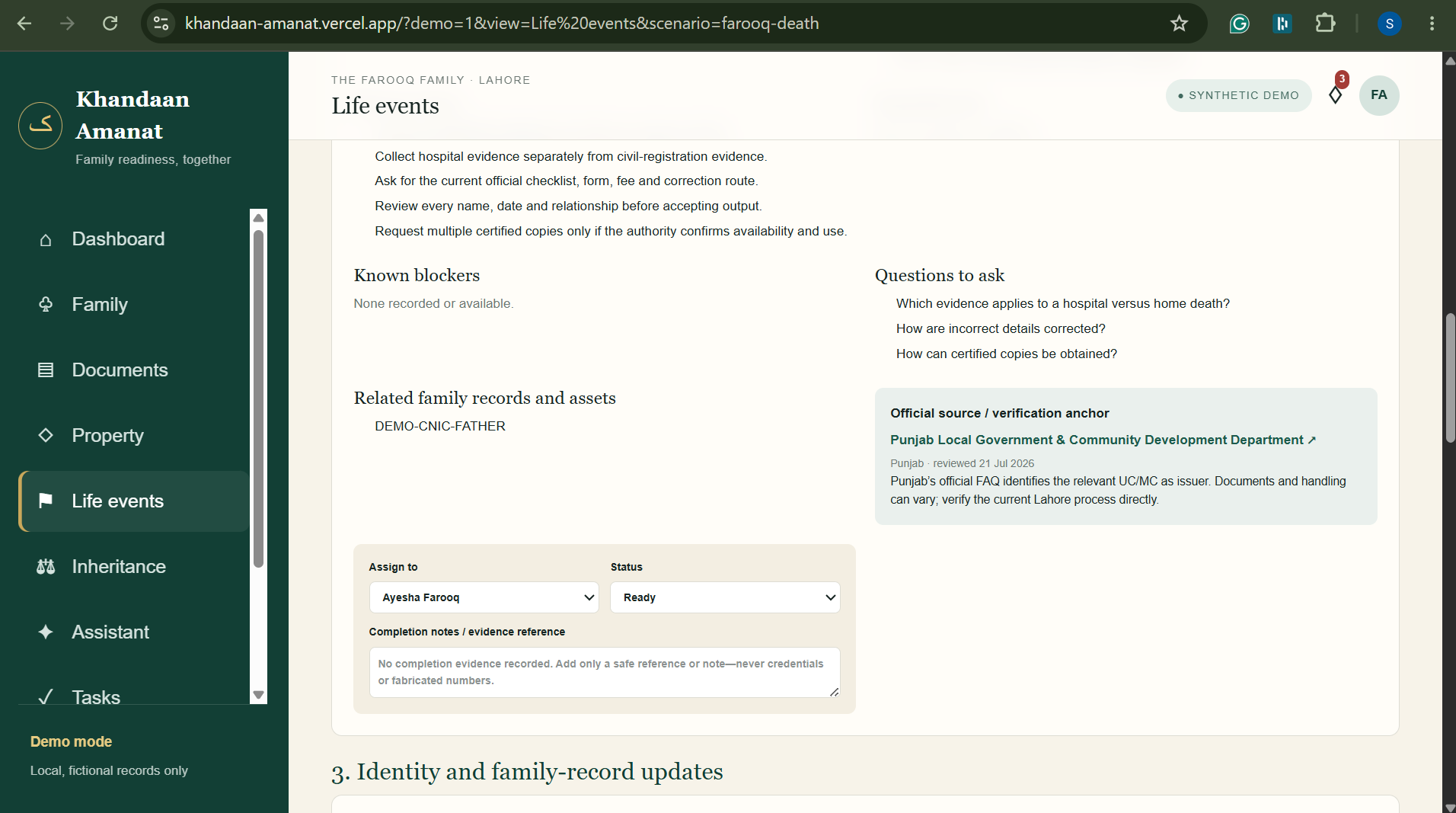
Each AI generated task includes contextual guidance, official references, required documents, and suggested next steps.
Khandan Amanat
Inspiration
What would happen if you suddenly had to manage your family's documents, assets, and responsibilities after an unexpected loss?
As the only daughter of my parents, this is something I genuinely think about. Knowing where important documents are is only one part of the problem. The bigger challenge is understanding what needs to be done next, which documents are missing, and how to navigate complex processes during an already overwhelming time.
That question inspired me to build Khandan Amanat (Family Safekeeping), an AI-powered family preparedness platform.
What it does
Khandan Amanat helps families organize important information such as identity documents, property records, insurance policies, investments, medical records, wills, and other critical documents in one place.
Rather than acting as another document repository, the application uses AI to transform stored information into actionable insights.
This MVP demonstrates capabilities such as:
- Calculating a Family Readiness Score
- Highlighting missing or incomplete records
- Recommending proactive next steps
- Simulating a family emergency scenario and generating prioritized tasks with step-by-step guidance
The goal is simple: help families prepare before an emergency happens rather than react after it.
How I built it
I started by defining the problem and product vision.
I used ChatGPT to challenge my assumptions, refine the idea, and convert the concept into a structured product specification. I then used Codex to rapidly implement the web application while continuously reviewing the user experience, testing features, and iterating on the product.
My focus wasn't simply on generating code—it was on designing a product that solves a meaningful real-world problem.
Challenges
The biggest challenge was time. I discovered the OpenAI Codex Hackathon only about two days before the submission deadline, so I had to quickly validate the idea, build an MVP, and prepare the submission within a very limited timeframe.
There were many AI capabilities I wanted to build, but I had to prioritize the features that delivered the most value in the available time.
Another challenge was moving beyond a traditional document management application. I wanted AI to be proactive rather than reactive—surfacing recommendations, assessing preparedness, calculating a Family Readiness Score, and guiding users through complex situations instead of waiting for questions.
What I Learned
This project completely changed how I think about building software.
I realized that AI dramatically lowers the barrier between an idea and a working MVP. Instead of spending weeks implementing every feature manually, I could focus on understanding the problem, making product decisions, and iterating quickly.
More importantly, I learned that building isn't only about writing code. It is about identifying meaningful problems, designing thoughtful user experiences, and continuously improving based on feedback.
This was my first experience using AI coding agents to build an MVP web application, and it showed me how much faster ideas can be transformed into working software when product thinking and AI work together.
Future Vision
This project is an MVP built using demo data to validate the concept.
My immediate next step is to design a production-ready system architecture that can turn this prototype into a real product.
From a system design perspective, the platform would evolve into a scalable architecture with encrypted object storage for unstructured documents, metadata services for intelligent retrieval, secure APIs, role-based access control, audit logging, and privacy-first AI. Protecting highly sensitive family information would require strong encryption, secure authentication, authorization, and reliable storage from day one.
Beyond individual families, I believe a platform like Khandan Amanat could also support government organizations or public institutions by helping citizens securely manage important records and navigate complex administrative processes with AI-powered guidance.
Built With
- 5.6-sol-light
- chatgpt
- codex

Log in or sign up for Devpost to join the conversation.