-
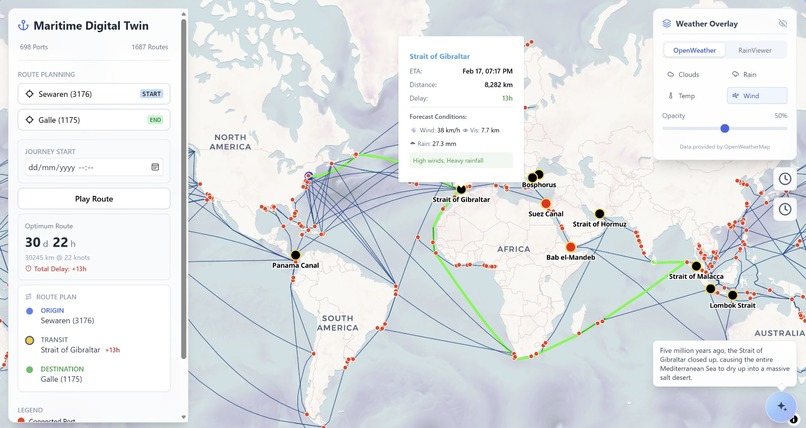
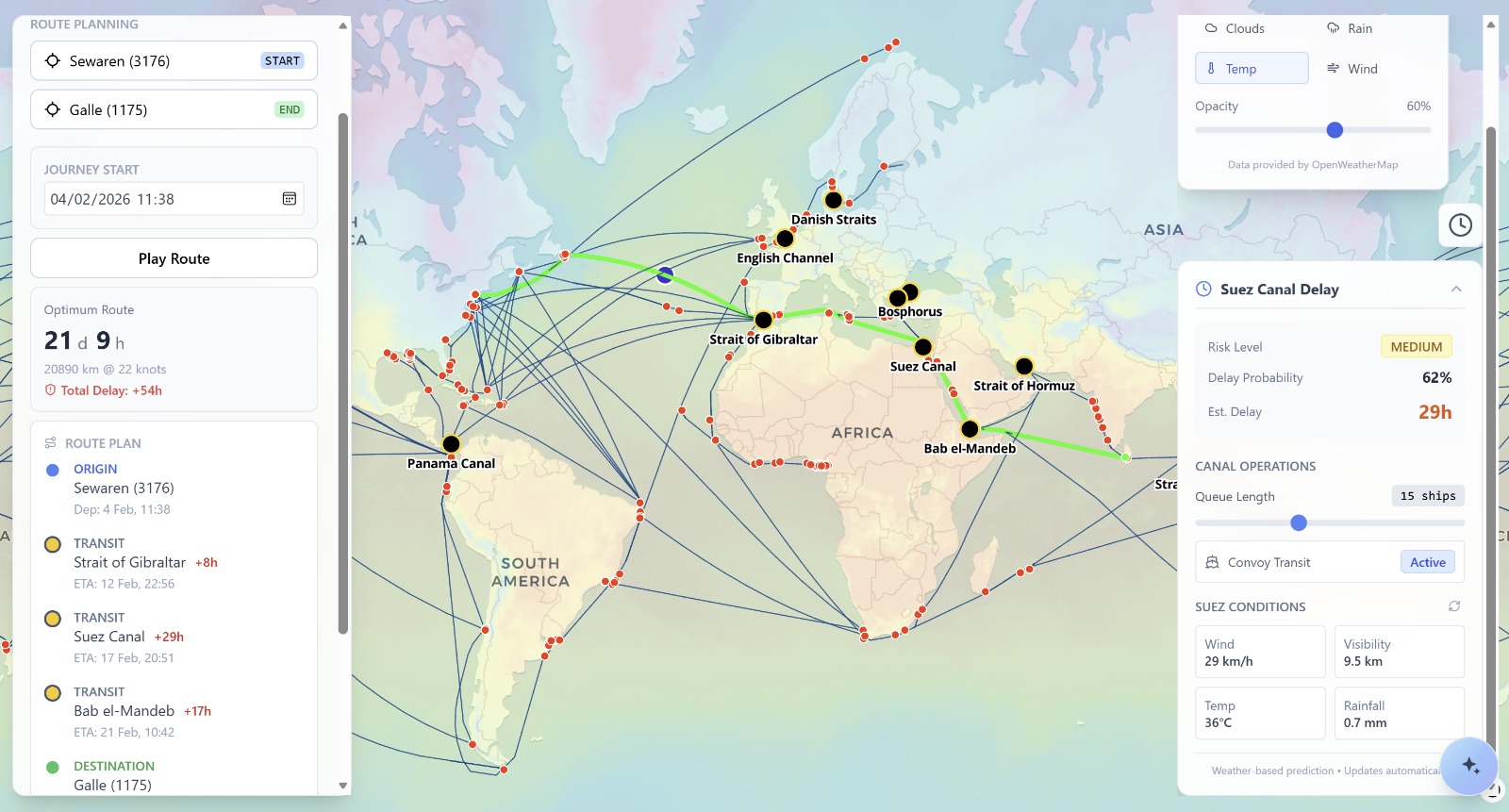
Overview
-
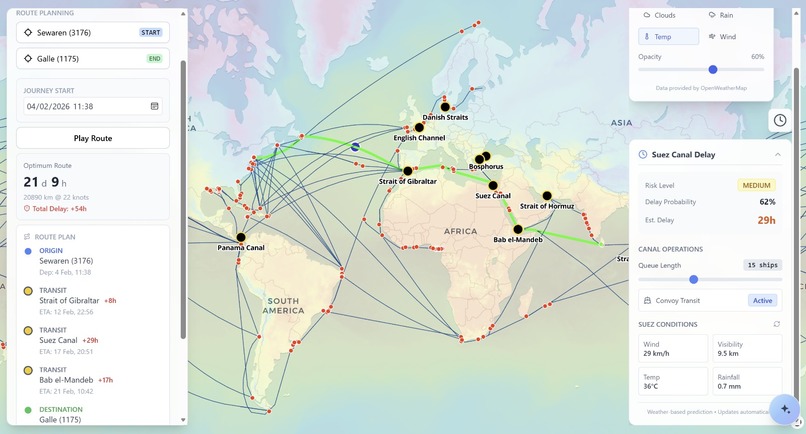
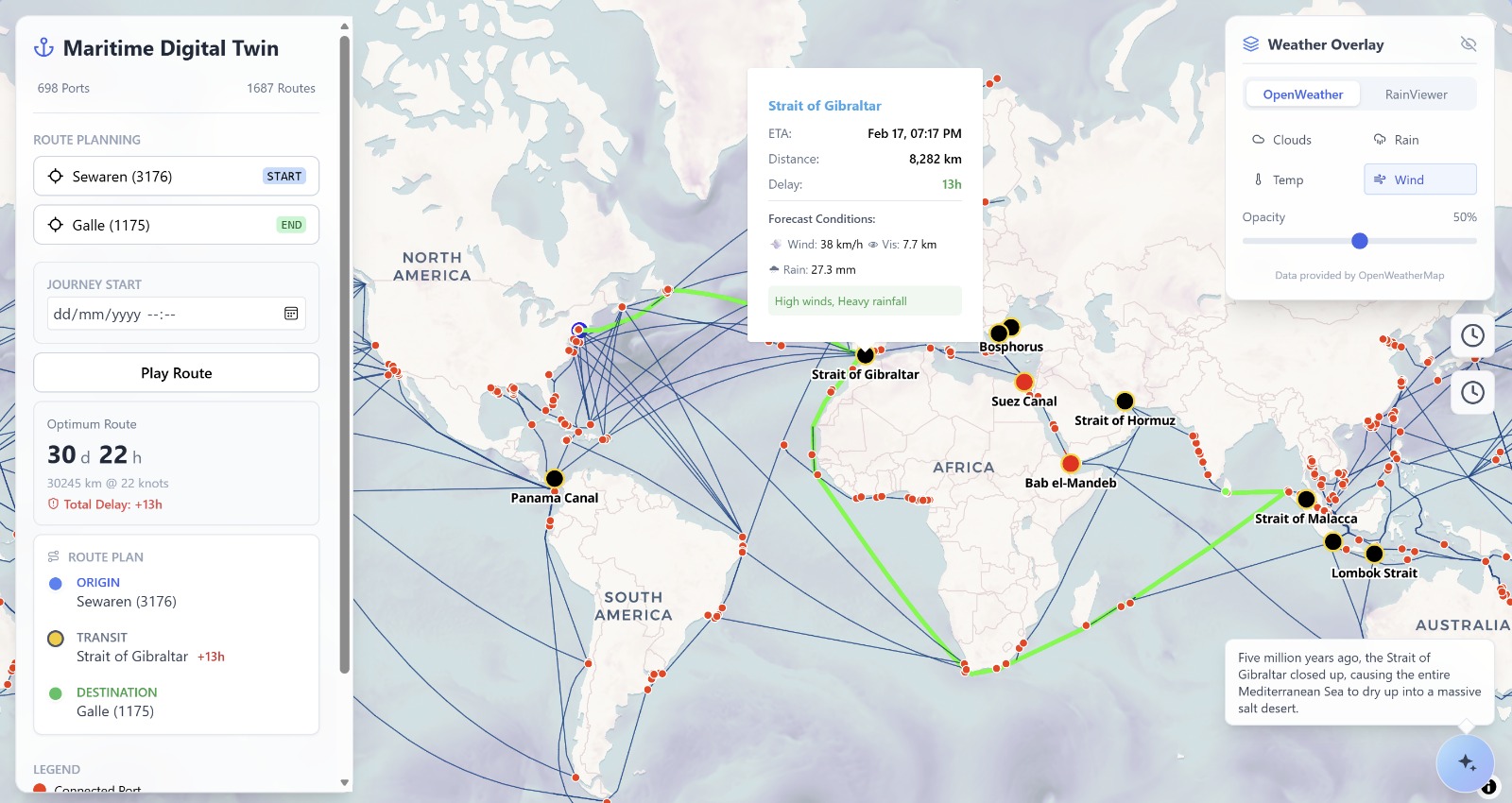
Weather overlay view
-
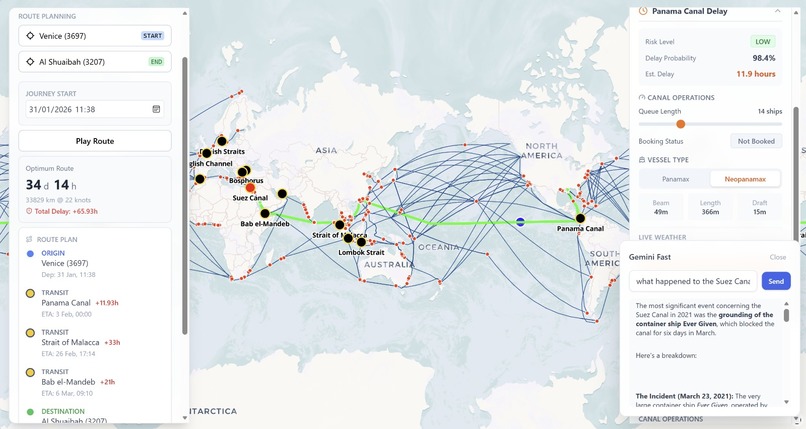
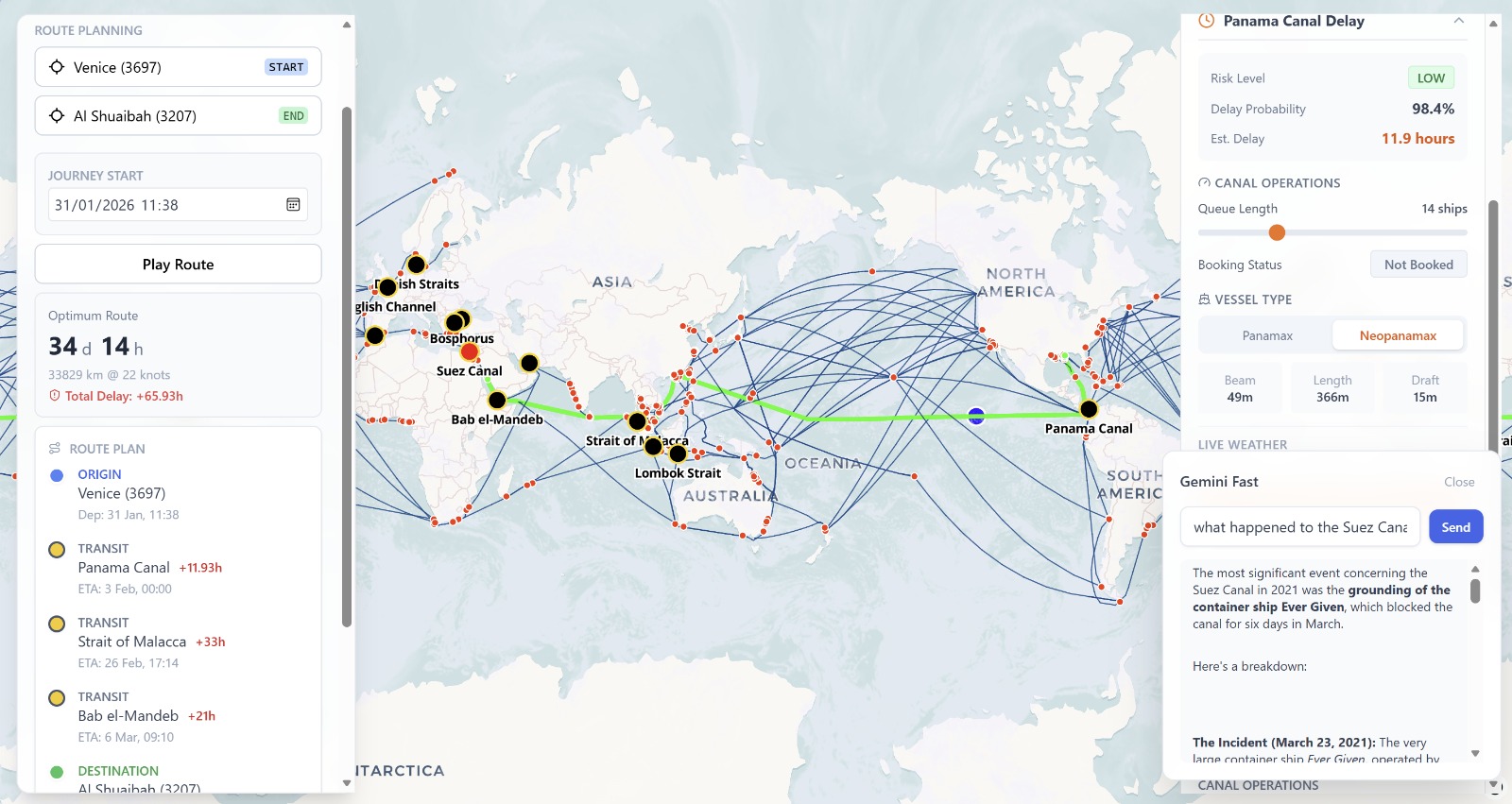
Gemini Chat on past supply chain disaster
-
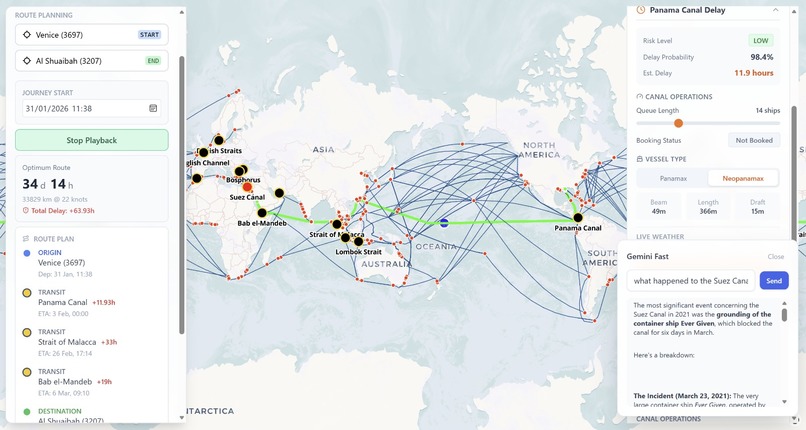
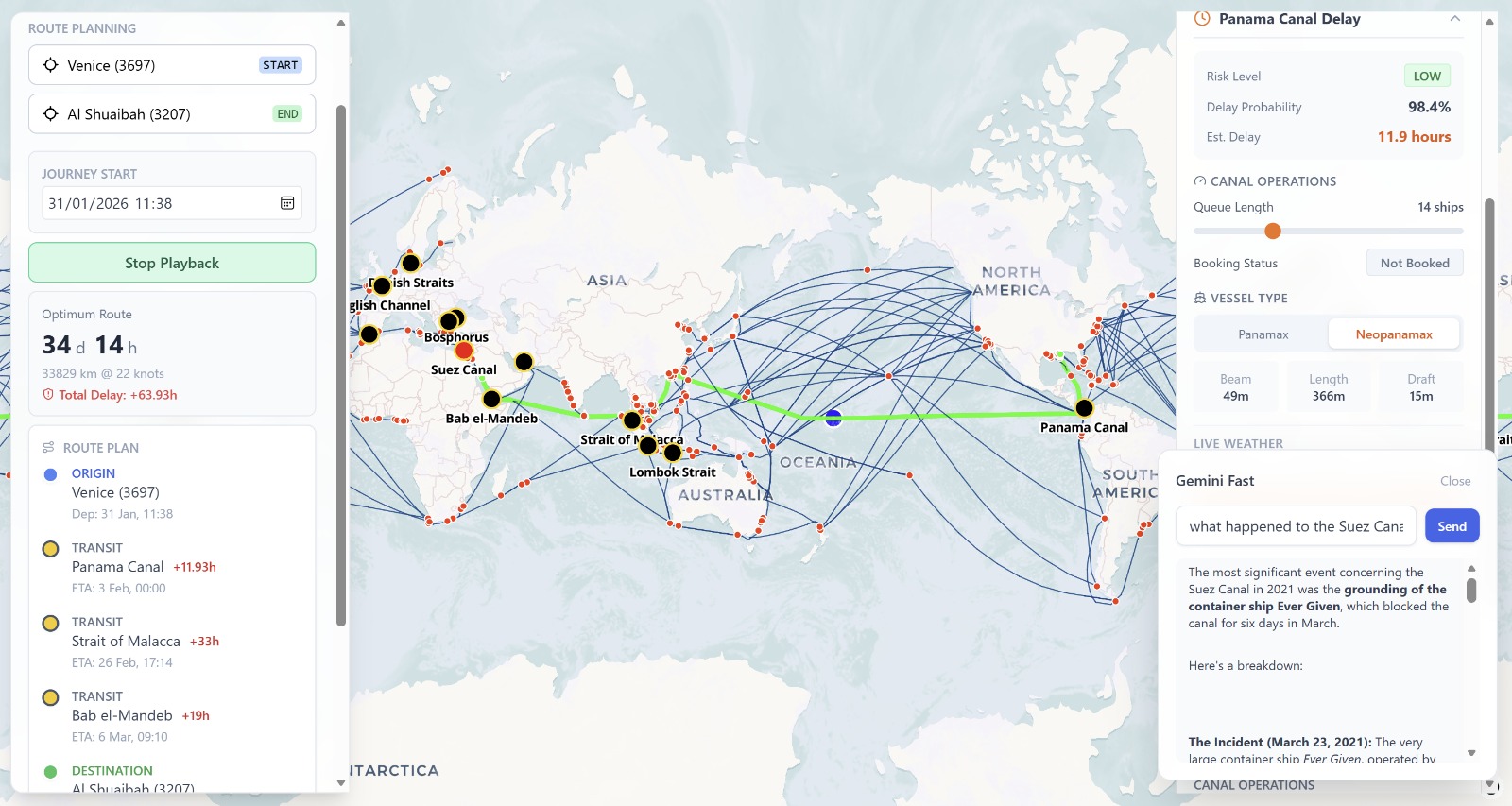
Predicted live ship movement
Inspiration
Global supply chains lose billions annually due to unexpected delays at critical maritime chokepoints like the Suez and Panama Canals. When a single canal blockage occurs, thousands of shipments face cascading delays, but companies often don't know whether rerouting is worth the extra cost and time until it's too late. We were inspired by Ligentia's challenge to move supply chain teams from reactive to predictive. WE wanted to better equip these teams with the tools they need to achieve this. We asked ourselves: what if we could simulate the future impact of disruptions before they affect your cargo, and intelligently recommend whether rerouting makes sense?
What it does
Our platform uses an interactive digital twin to help maritime logistics teams navigate supply chain disruptions in real-time. When major canals or straits become blocked, the digital twin visualizes alternative routes and uses machine learning to recommend whether rerouting or waiting is more cost-effective. We predict transit delays at critical chokepoints like the Panama and Suez Canals by combining XGBoost models with real-time congestion data and weather patterns. The digital twin provides supply chain operators with an immersive view of global maritime operations, enabling them to anticipate delays before they impact deliveries and make informed decisions that minimize costs and keep cargo moving.
How we built it
- Historical shipping data from Kaggle, https://www.marineinsight.com/, https://www.supplychaindive.com/ and https://en.wikipedia.org/wiki/
- Weather APIs (Open-Meteo) for marine weather forecasting
- Gemini API to equip users with facts about major canals and allow to ask questions the have about past and present delays and disasters.
Challenges we ran into
- Data Scarcity: Finding the comprehensive real-time and historical maritime data we needed was difficult. We pivoted to using our own complied historical datasets and simulated real-time scenarios in some cases because the data simply was not accessible. We had to engage in very intensive research to achieve this.
- Time Constraints: Building both the simulation engine AND prediction models in 24 hours required careful prioritisation of features.
- Sponsor Interactions: We were disappointed that the sponsors left quite early as after the ideation process we needed assistance in terms of certain aspects of our project which only they could provide but were simply left to our own devices.
Accomplishments that we're proud of
- Created a working digital twin that can simulate multiple supply chain routes accurately based on current blockages.
- Learned how to implement digital twins, create comprehensive datasets and integrate machine learning models to existing interfaces during the hackathon
- Successful implementation of Gemini API within the chat and for the interesting facts.
- Well integrated weather map that overlays nicely over the routing map.
- Perceived walkthrough of ships journey
What we learned
- Multivariate forecasting: We dove deep into time series analysis and learned how multiple data streams can predict supply chain disruptions.
- Supply chain complexity: The global shipping industry has far more variables than we initially realized but this challenge definitely gave us appreciation for the scale of Ligentia's work.
- Trade-offs matter: Sometimes the "optimal" route on paper isn't worth the operational complexity of rerouting.
- New technolgies: First use of Gemini API integration, typescript and historical weather apis.
What's next for Vibes Only
We hope to be able to continue adding to the project to allow it to cover more routes across more ports as currently over 3700 commercial sea ports exist within the world and there after we will attempt to make it work for other parts of the supply chain such as cargo travel by road and rail.


Log in or sign up for Devpost to join the conversation.