Inspiration
As a student, managing real work can quickly become overwhelming. At the same time, I can have university projects, exams, homework, research, deadlines, and client work such as creating LinkedIn and Instagram carousels. I may need to research competitors, study successful content, write an essay, prepare for an exam, and deliver client work — all at once. The problem isn't that each task is impossible. The problem is managing the entire workload. AI assistants can help complete individual tasks, but they usually leave the user responsible for deciding what to do first, managing dependencies, tracking progress, verifying results, and recovering when something fails. We wanted to build an AI system that could manage the workload itself. That became KERNORQ.
What it does
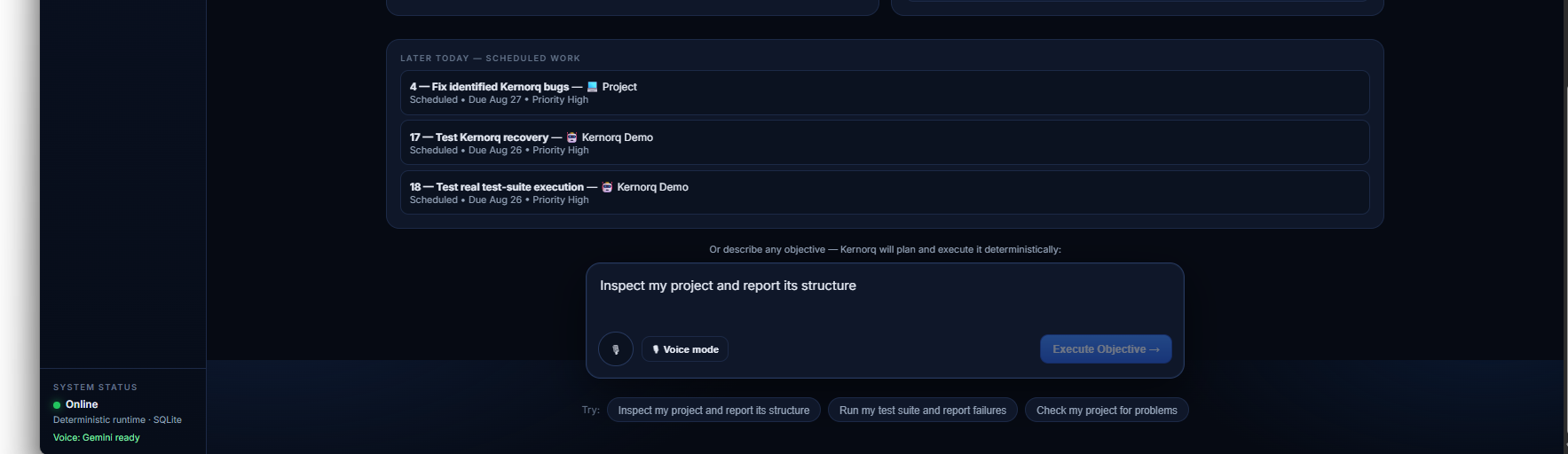
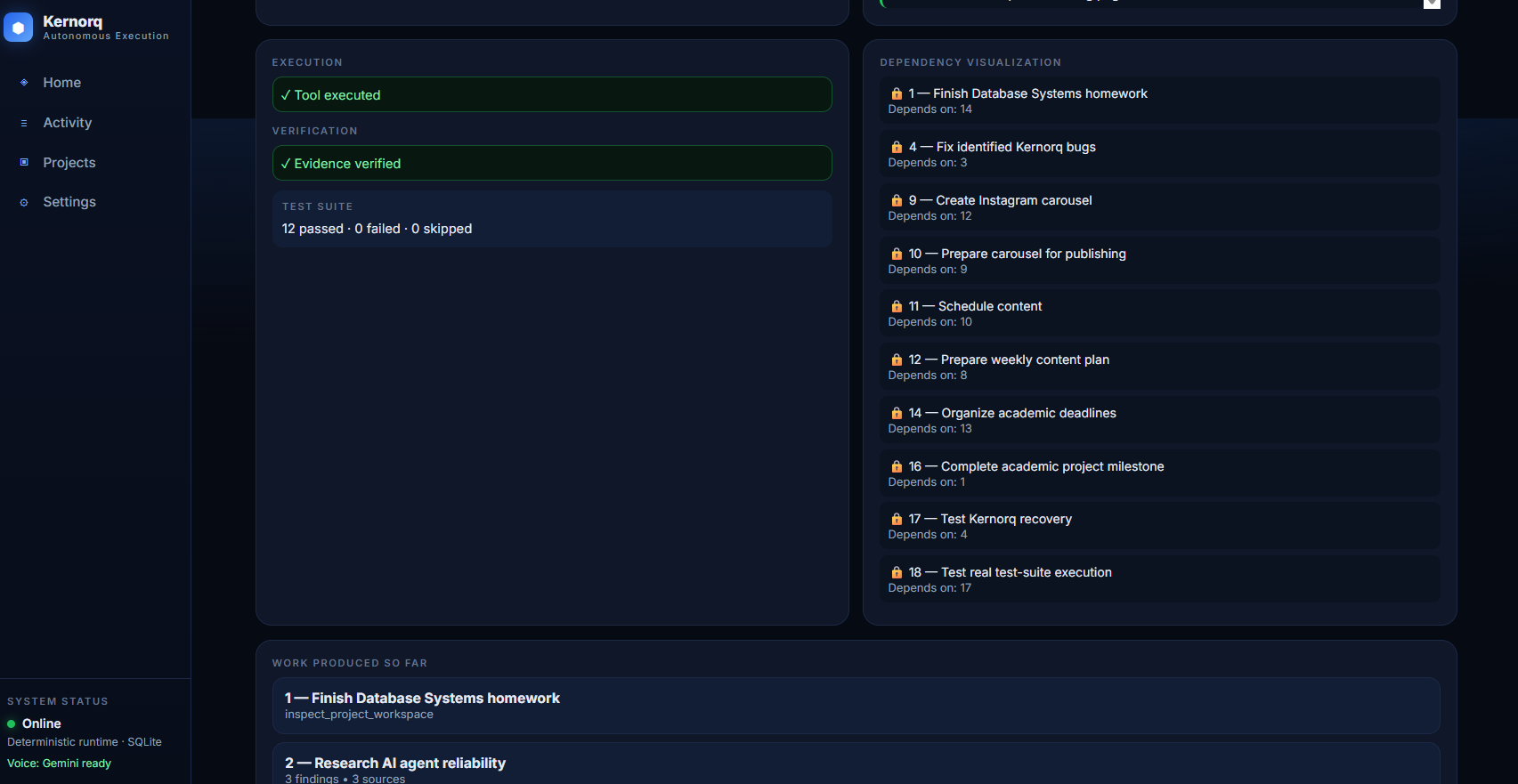
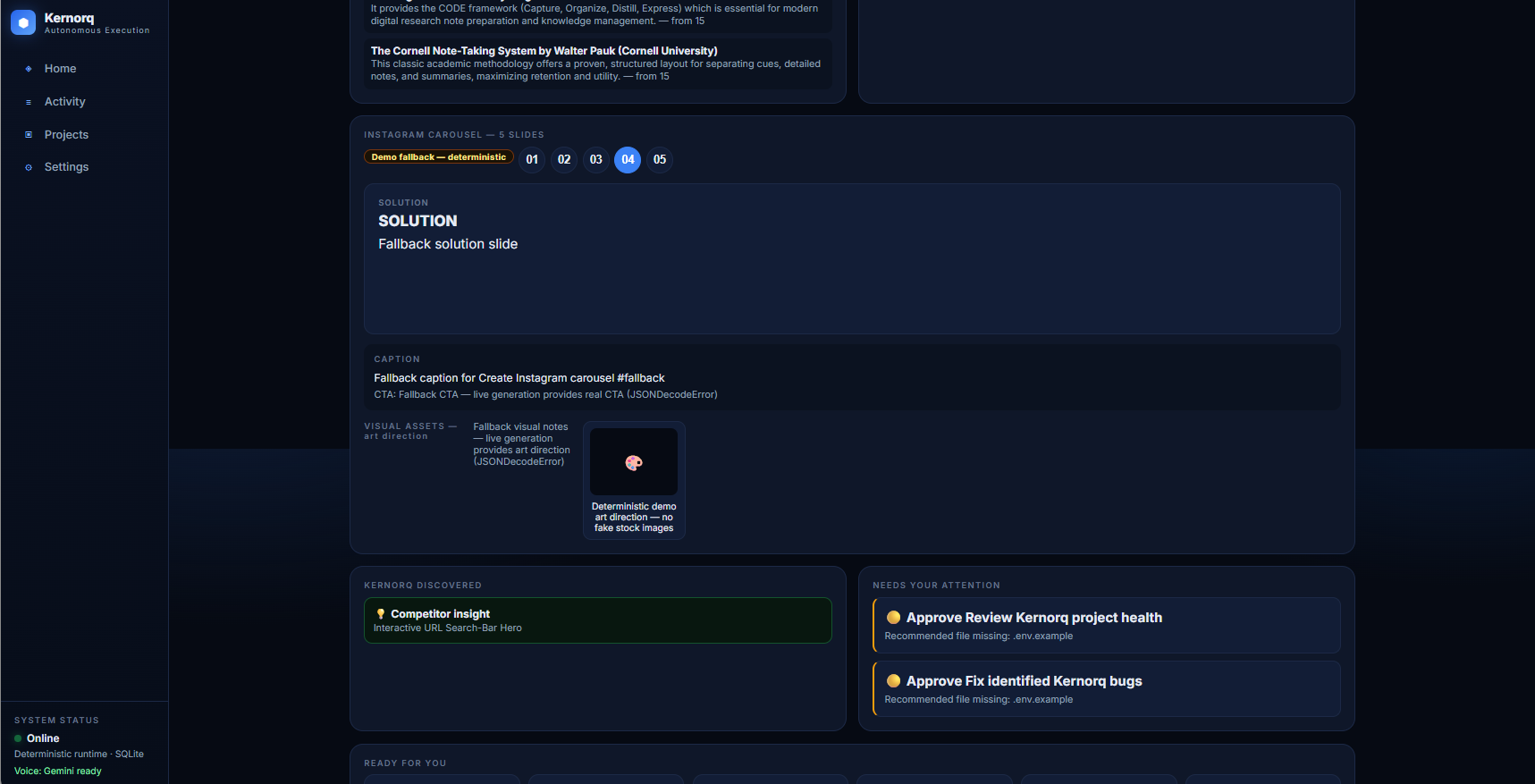
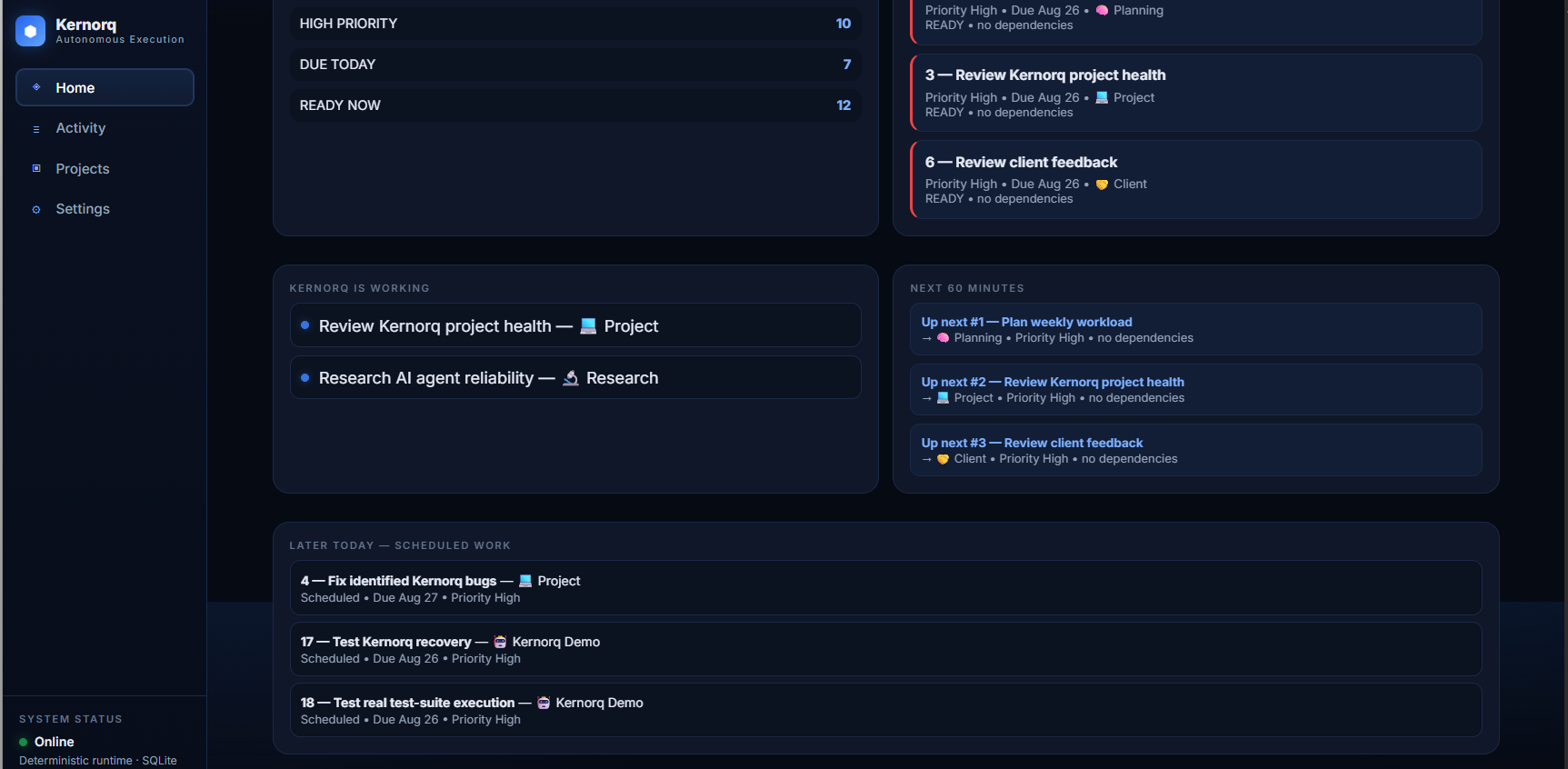
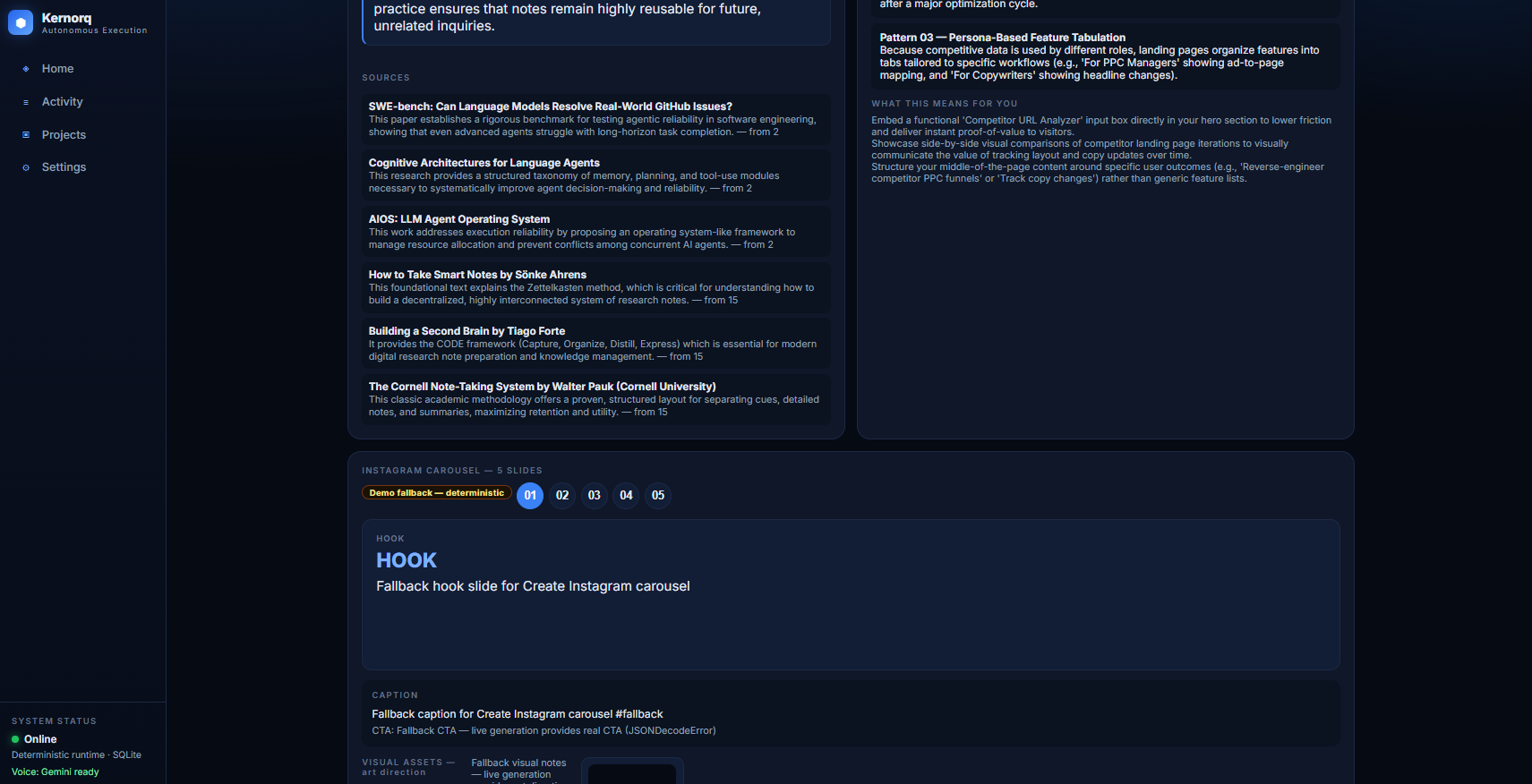
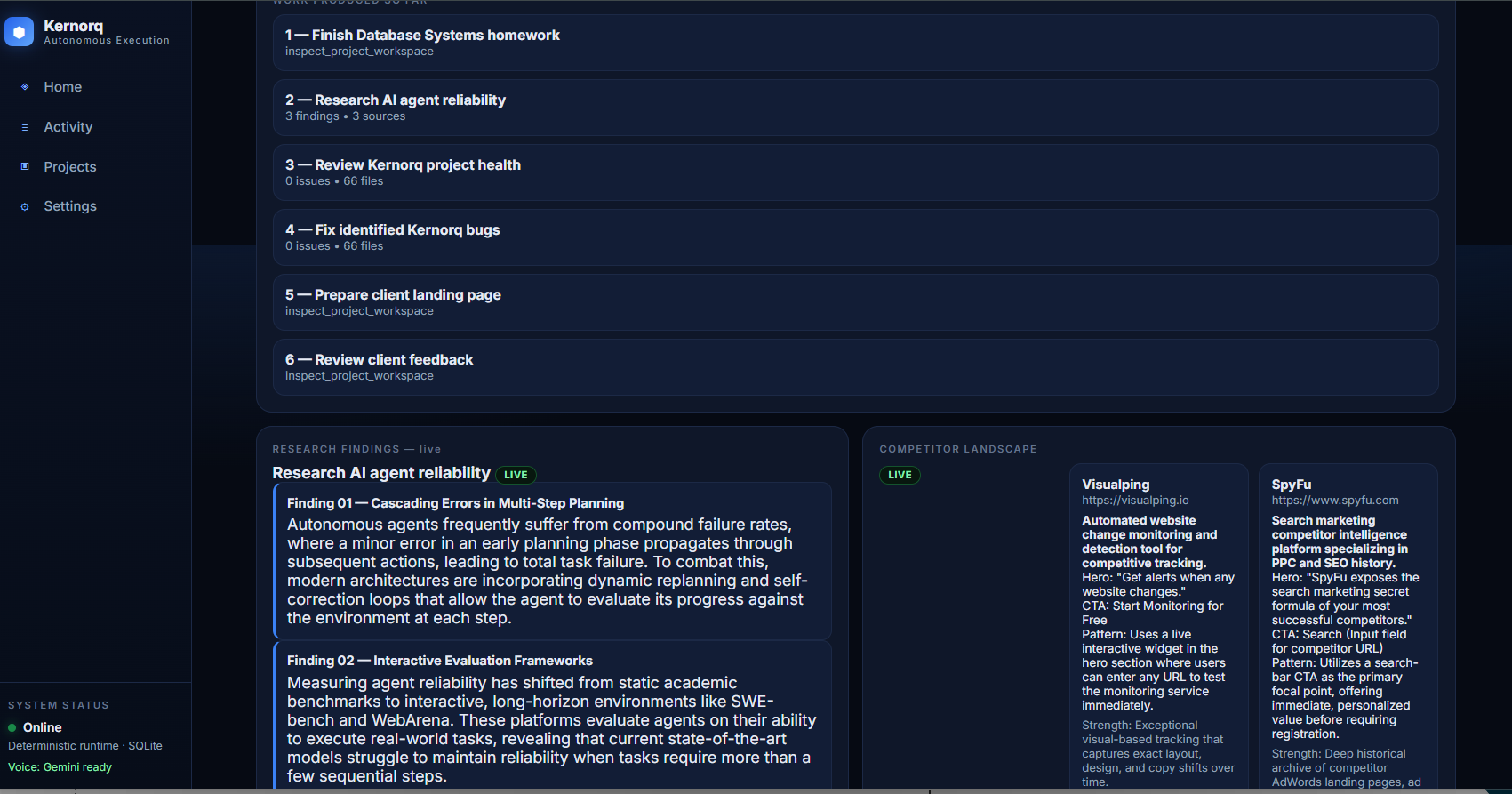
KERNORQ is an agentic workload orchestration engine that turns messy workloads into verified outcomes. You give KERNORQ an objective or workload containing tasks, priorities, deadlines, and dependencies. KERNORQ then: Understands the objective Plans the work with Gemini Validates the proposed plan deterministically Prioritizes tasks Resolves dependencies Schedules what should happen next Performs research Researches competitors and successful content patterns Executes approved tools Produces artifacts Verifies results using evidence Recovers from failures Replans when necessary Maintains execution state and an audit trail For example, KERNORQ can research competitors before creating a client's Instagram carousel, analyze successful carousel patterns, or research information needed for a university essay. Instead of managing each task manually, the user gives KERNORQ the workload and lets the orchestration engine manage the execution.
How we built it
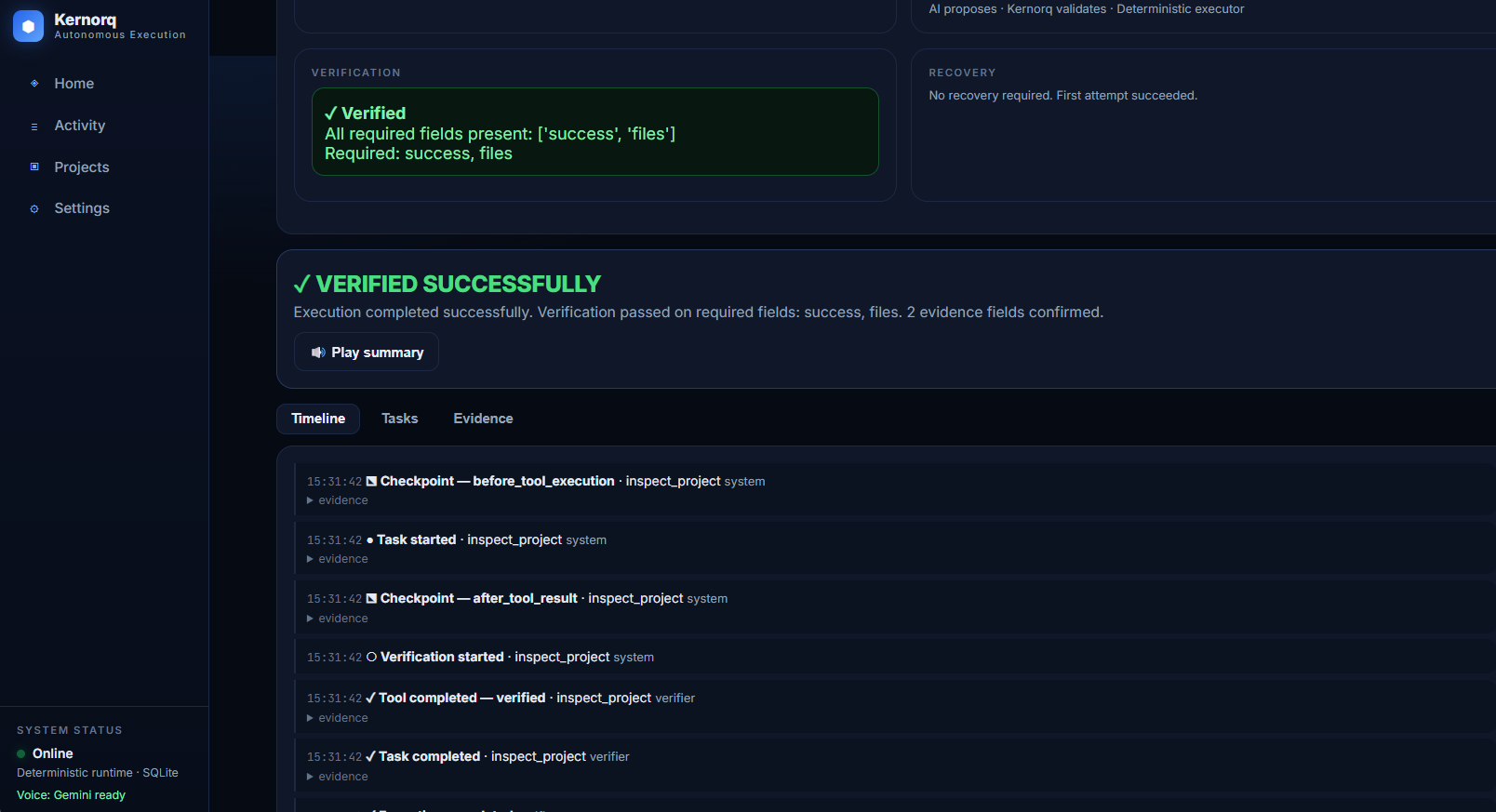
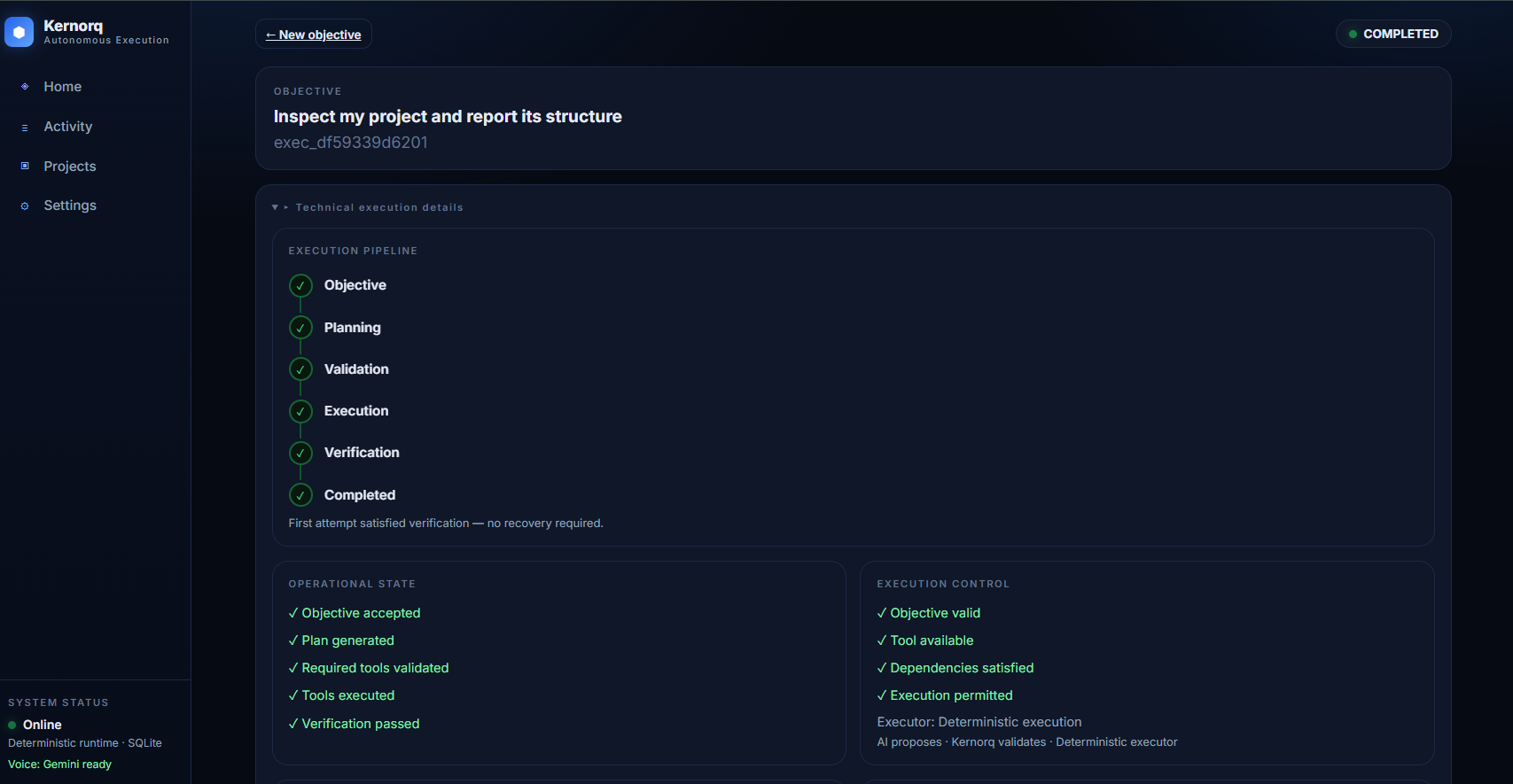
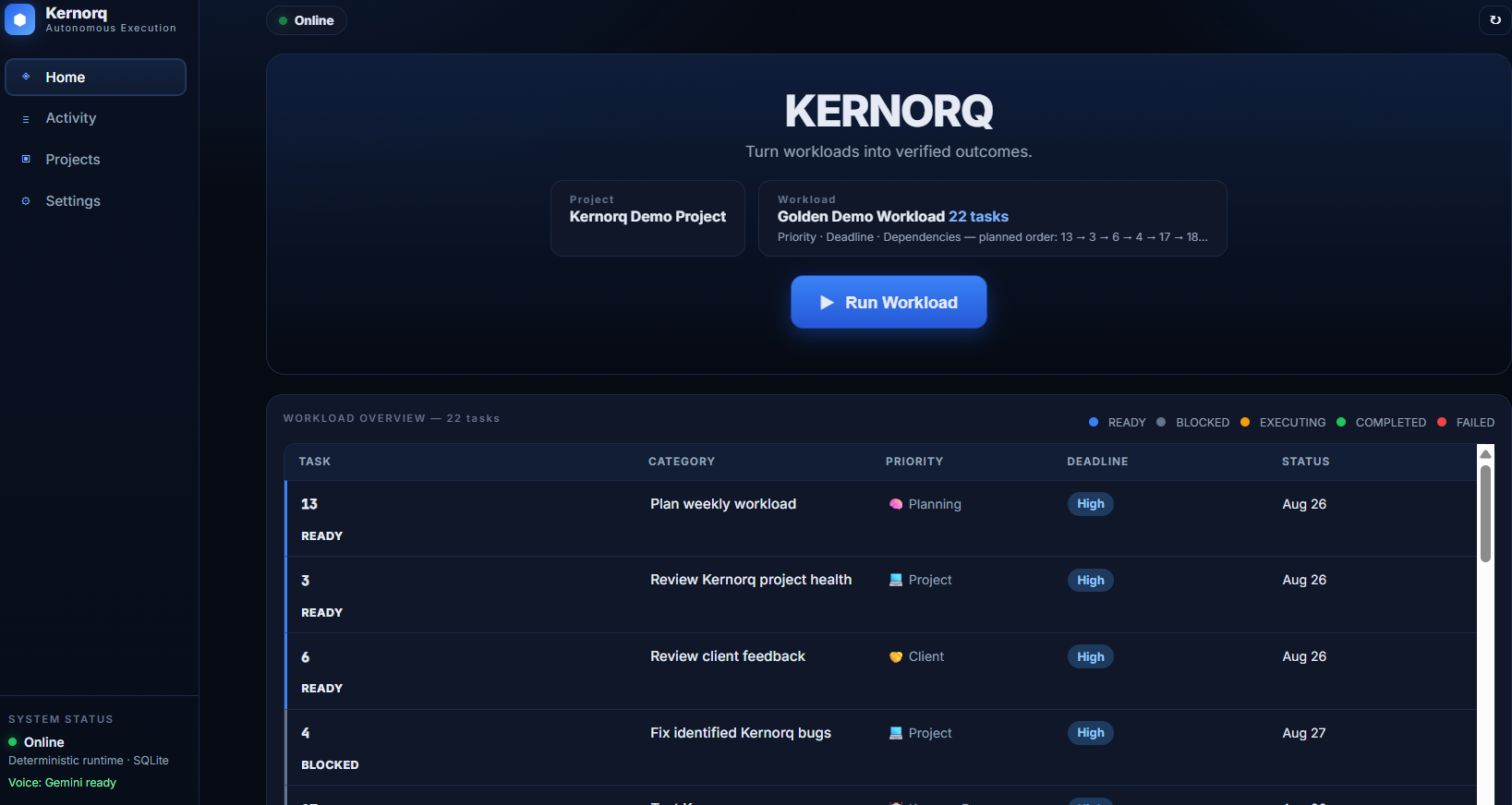
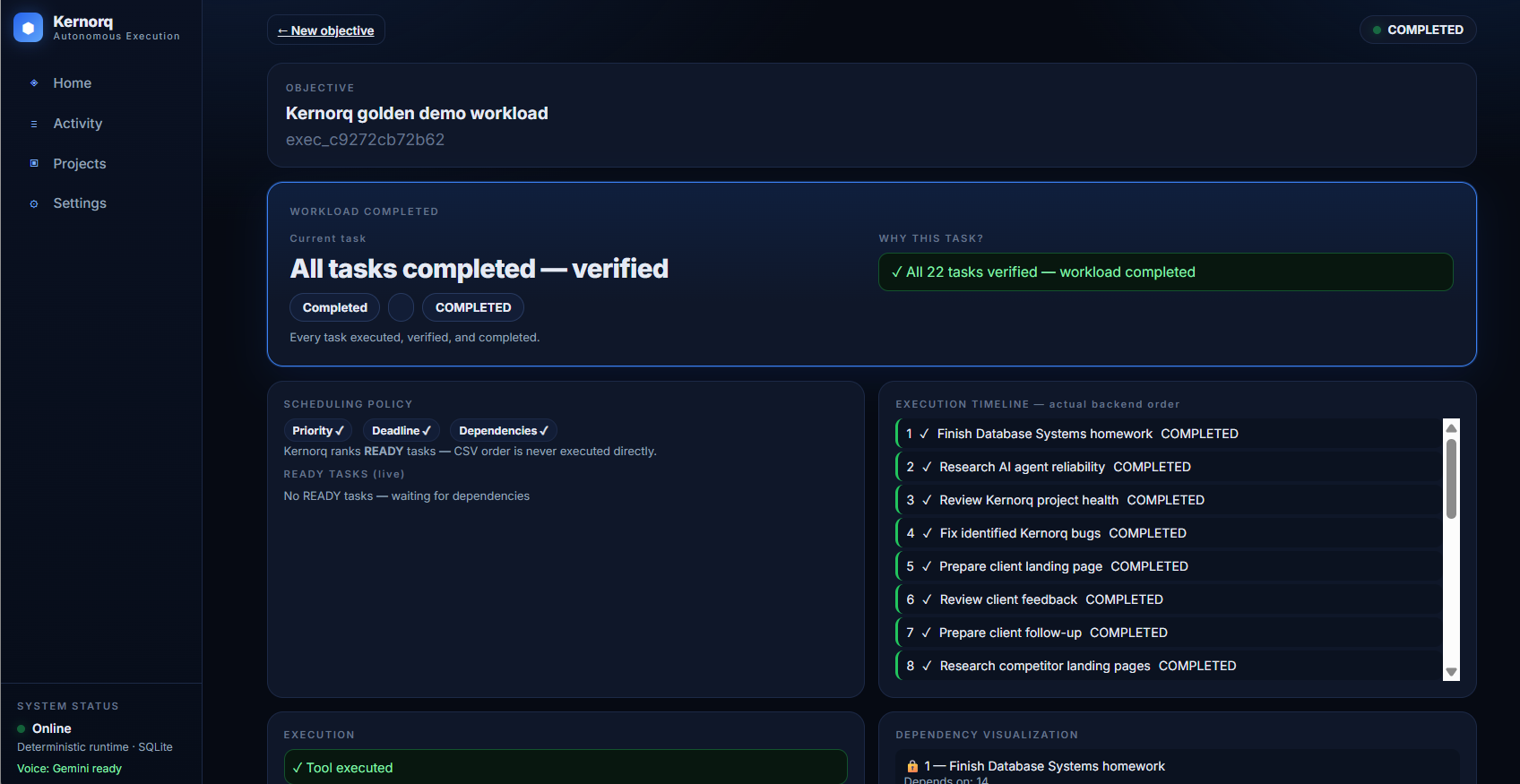
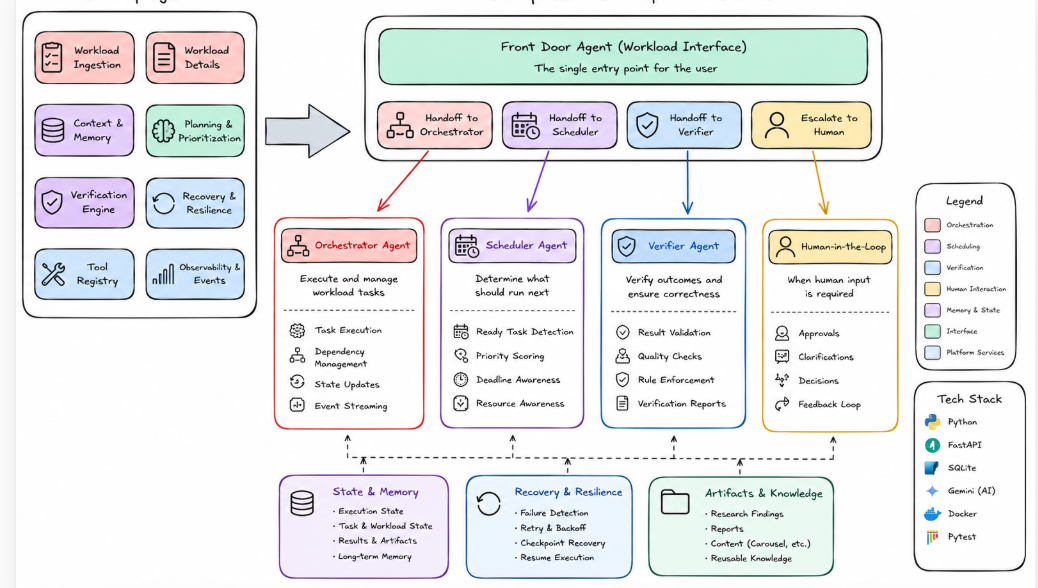
KERNORQ combines Google ADK, Gemini, and Google Cloud with a deterministic Python execution engine. We use Google ADK (Agent Development Kit) as the core agent framework, with Gemini 3.5 Flash providing planning and reasoning through the Google GenAI SDK. The most important architectural decision was separating AI reasoning from execution control. Gemini proposes. KERNORQ validates. The deterministic engine executes and verifies. Gemini generates a planning proposal, but KERNORQ treats that proposal as untrusted input. The deterministic engine validates tools, dependencies, cycles, and execution constraints before execution. KERNORQ then uses workload prioritization and dependency-aware scheduling to determine what should run next. The execution orchestrator controls the task lifecycle, while SQLite persists execution state, checkpoints, and audit events. After execution, KERNORQ verifies results using evidence and classifies them as SUCCESS, FAILURE, or UNKNOWN. When something fails, the recovery system classifies the failure as TRANSIENT, UNKNOWN, or PERMANENT, allowing safe retries or replanning when appropriate. For production, KERNORQ runs on Google Cloud Run, with Cloud Build, Artifact Registry, Secret Manager, and Cloud Logging. We also built a 22-task Golden Demo workload to demonstrate real workload orchestration rather than a single chatbot interaction.
Challenges we ran into
The biggest challenge was making an LLM-based system reliable enough to control real execution. LLMs are probabilistic, while execution needs predictable behavior. We solved this by creating a strict boundary between Gemini's planning and KERNORQ's deterministic execution engine. Another challenge was workload scheduling. A list of tasks is not enough. Tasks can depend on other tasks, have different priorities, and have different deadlines. We had to build scheduling logic that understands the state of the entire workload. Failure recovery was another major challenge. We needed the system to distinguish between failures that are safe to retry and failures that require stopping or replanning. We also had to make execution persistent and auditable, so KERNORQ could maintain state rather than treating every interaction as an isolated conversation. Finally, we had to take the system from local development to a real production deployment on Google Cloud Run while securely managing the Gemini API credentials.
Accomplishments that we're proud of
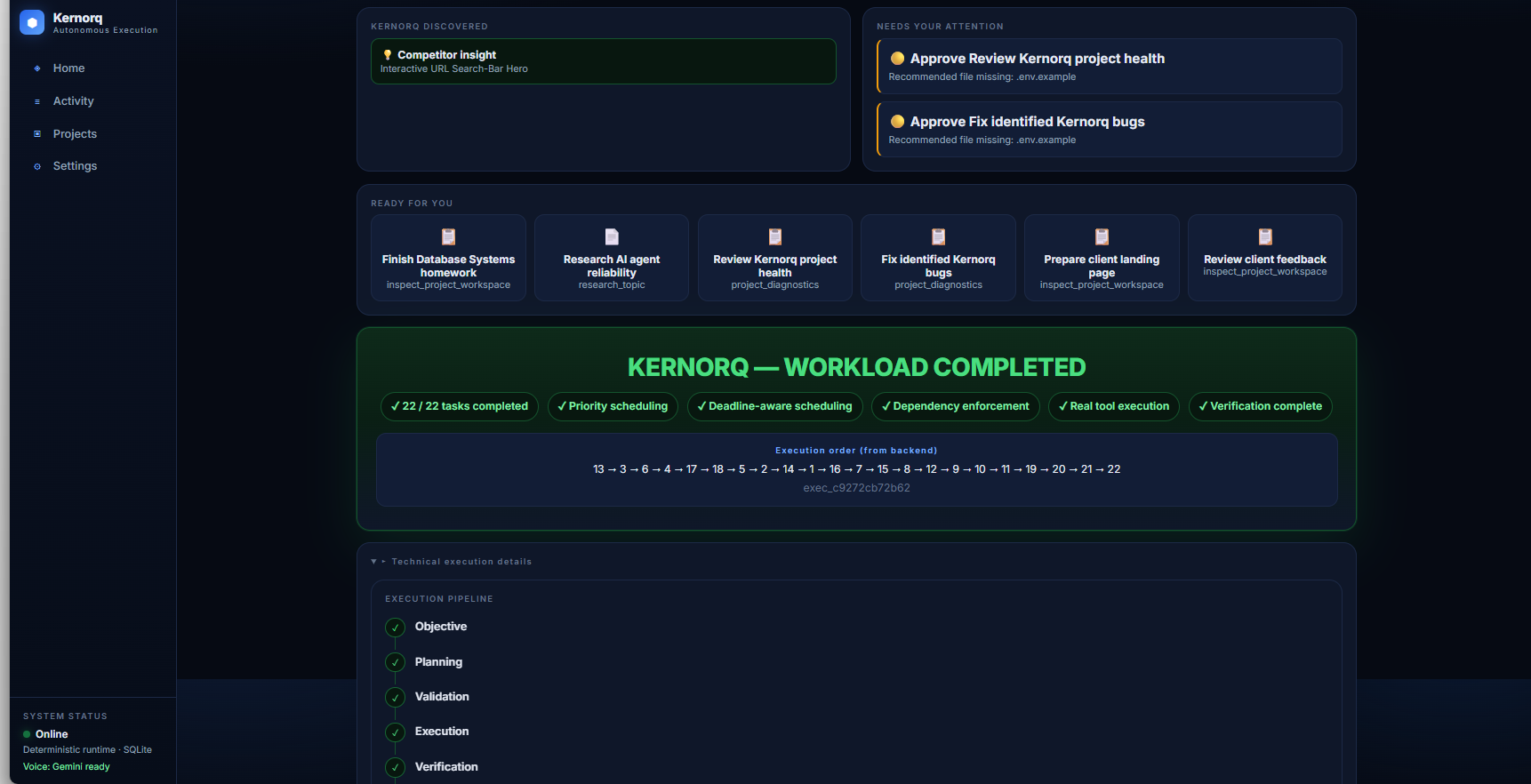
We're proud that KERNORQ evolved from an AI assistant concept into a complete agentic execution system. Our biggest accomplishments include: Building a Google ADK + Gemini agent architecture Separating LLM planning from deterministic execution Implementing workload prioritization and dependency-aware scheduling Building a deterministic execution orchestrator Adding evidence-based verification Implementing failure classification and recovery Adding persistent execution state and audit trails Supporting voice interaction with Gemini Creating a 22-task Golden Demo workload Building a real-time execution UI Deploying KERNORQ to Google Cloud Run Integrating Cloud Build, Artifact Registry, Secret Manager, and Cloud Logging Building a comprehensive automated test suite Most importantly, we demonstrated that an AI agent can operate at the workload level, rather than simply completing one prompt at a time.
What we learned
We learned that building a reliable agent is not just about choosing a powerful LLM. The difficult part is building the system around the LLM. We learned the importance of deterministic validation, explicit state machines, dependency-aware scheduling, tool boundaries, evidence-based verification, persistent checkpoints, and recovery strategies. We also learned that an agentic UI should show what the system actually did, rather than simply displaying a simulated workflow. The biggest lesson was: An LLM can propose what should happen, but a reliable system needs deterministic mechanisms to control, verify, and recover from execution.
What's next for KERNORQ
Our next goal is to evolve KERNORQ from a hackathon workload orchestrator into a general-purpose personal and professional execution layer. We want KERNORQ to connect to more real-world tools and services so users can give it larger workloads and let it coordinate work across their existing workflow. Future capabilities include: More integrations with productivity and project-management tools Richer research and web intelligence More sophisticated workload optimization Calendar and deadline awareness Multi-agent task specialization Better long-running workflow recovery Human approval checkpoints for high-impact actions More advanced artifact generation Persistent long-term workload memory Team and collaborative workload orchestration Our long-term vision is simple: Instead of giving AI one task at a time, give it the workload — and let KERNORQ figure out how to get it done. KERNORQ — Turn workloads into verified outcomes.
