Inspiration
Infrastructure troubleshooting often requires engineers to jump between multiple dashboards, analyze metrics and traces, and manually identify problems. I wanted to build an AI system that could investigate infrastructure issues autonomously, just like an experienced engineer, while providing evidence-backed findings.
That idea became Inquest.
What it does
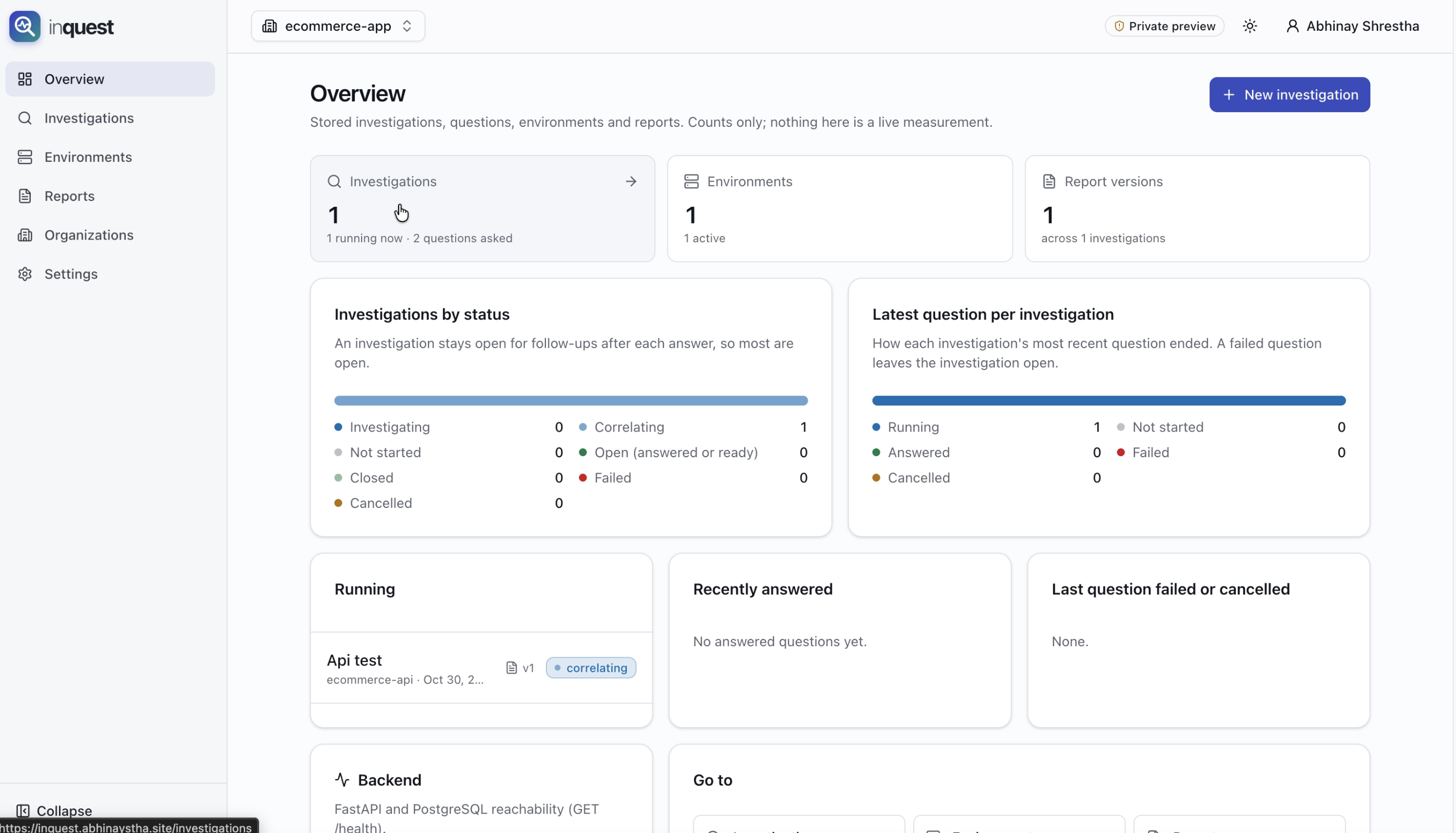
Inquest is an AI-powered infrastructure investigation platform that helps engineers diagnose application performance issues.
Users can describe a problem in natural language, and Inquest automatically collects telemetry, analyzes possible causes, and generates evidence-backed reports.
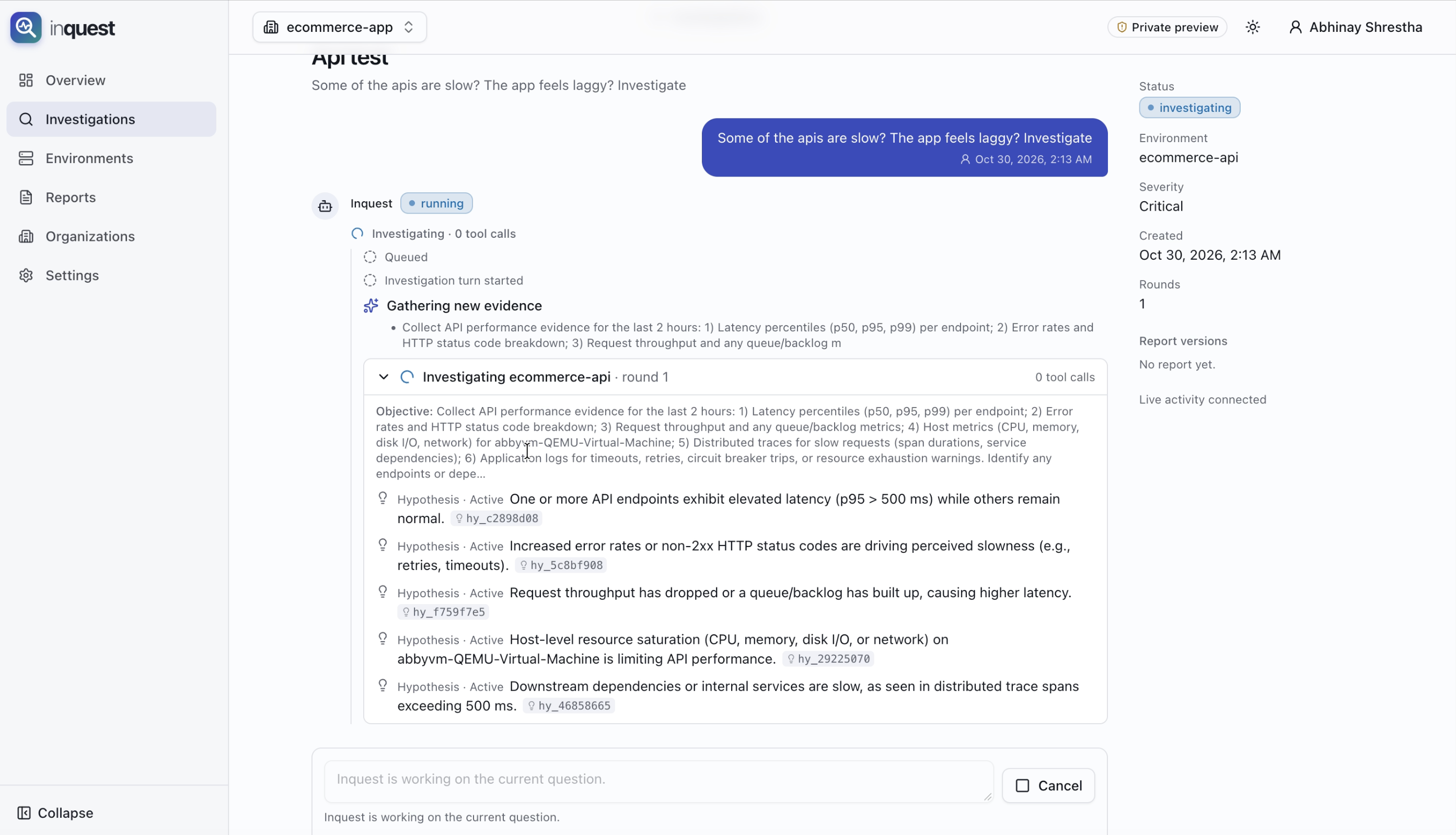
Unlike traditional monitoring tools, Inquest supports continuous, conversational investigations, allowing users to ask follow-up questions without losing previous investigation context.
How we built it
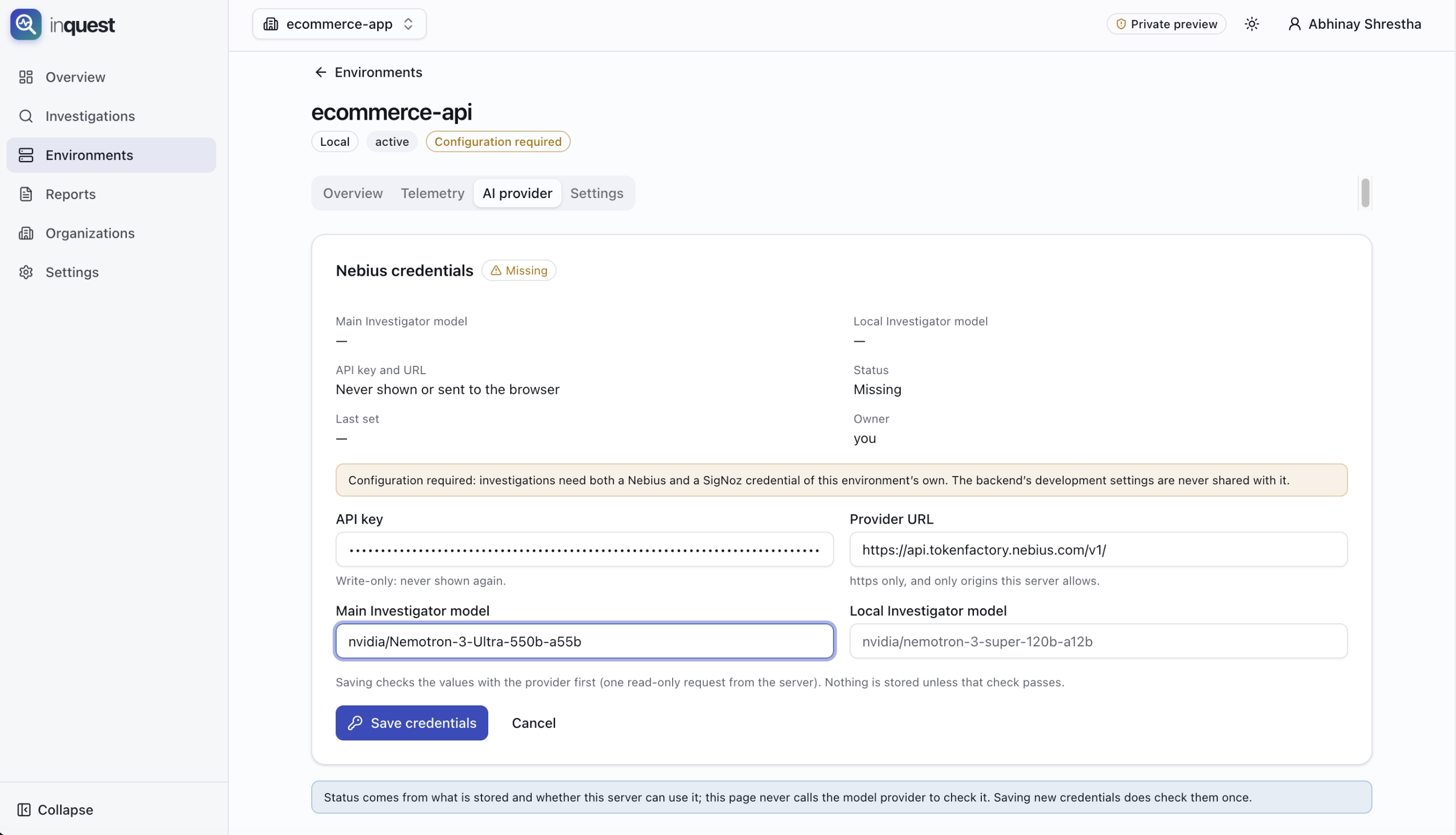
I built Inquest using NVIDIA Nemotron models through Nebius Token Factory for AI reasoning and investigation.
The backend uses Python, FastAPI, PostgreSQL, and AI agent orchestration. MCP provides structured, read-only access to investigation tools.
OpenTelemetry collects application and infrastructure telemetry, while SigNoz stores metrics and traces. The frontend provides a live investigation canvas, reports, and organization management.
Challenges we ran into
The biggest challenge was connecting AI reasoning with real infrastructure telemetry while ensuring accurate, evidence-based results.
Building the OpenTelemetry and SigNoz pipeline, coordinating multiple investigation rounds, managing persistent context, and preventing unsupported AI conclusions required significant effort.
Developing the entire platform independently within the hackathon timeframe was another major challenge.
Accomplishments that we're proud of
I'm proud of building a working end-to-end prototype that investigates real application performance issues.
Inquest can collect telemetry, execute investigation tools, generate evidence-backed reports, and continue investigating through conversational follow-ups.
I also built a live investigation canvas that makes the AI's investigation process visible and understandable.
What we learned
I learned that building reliable AI agents requires much more than connecting an LLM to tools.
Effective agent systems need structured orchestration, persistent memory, reliable evidence, and controlled tool execution.
This project also strengthened my understanding of OpenTelemetry, observability infrastructure, MCP, and integrating Nemotron models into real-world applications.
What's next for Inquest
I plan to expand Inquest with AWS CloudWatch integration, automated incident detection, multi-environment investigations, and historical incident analysis.
My long-term goal is to make Inquest an open-source, continuous infrastructure investigation platform that helps engineers troubleshoot complex systems faster and with greater confidence.
Built With
- ai-agents
- distributed-tracing
- docker
- docker-compose
- fastapi
- large-language-models
- model-context-protocol
- nebius-token-factory
- node.js
- nvidia-nemotron
- opentelemetry
- opentelemetry-collector
- postgresql
- pydantic
- python
- react
- rest-api
- signoz
- sqlalchemy
- ubuntu

Log in or sign up for Devpost to join the conversation.