-
-
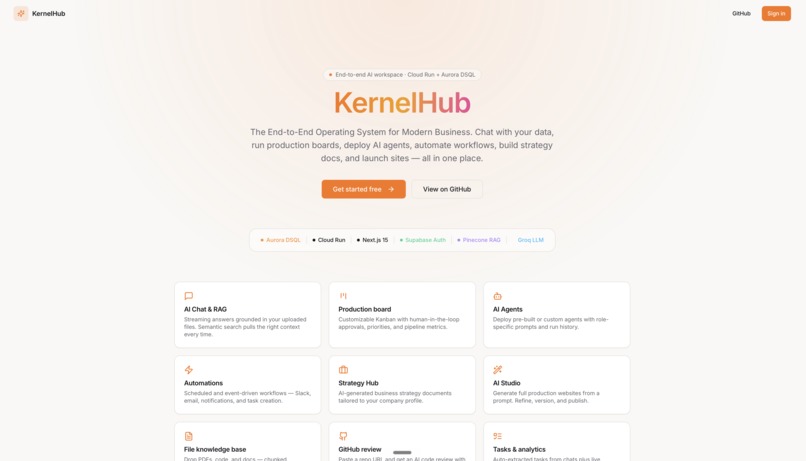
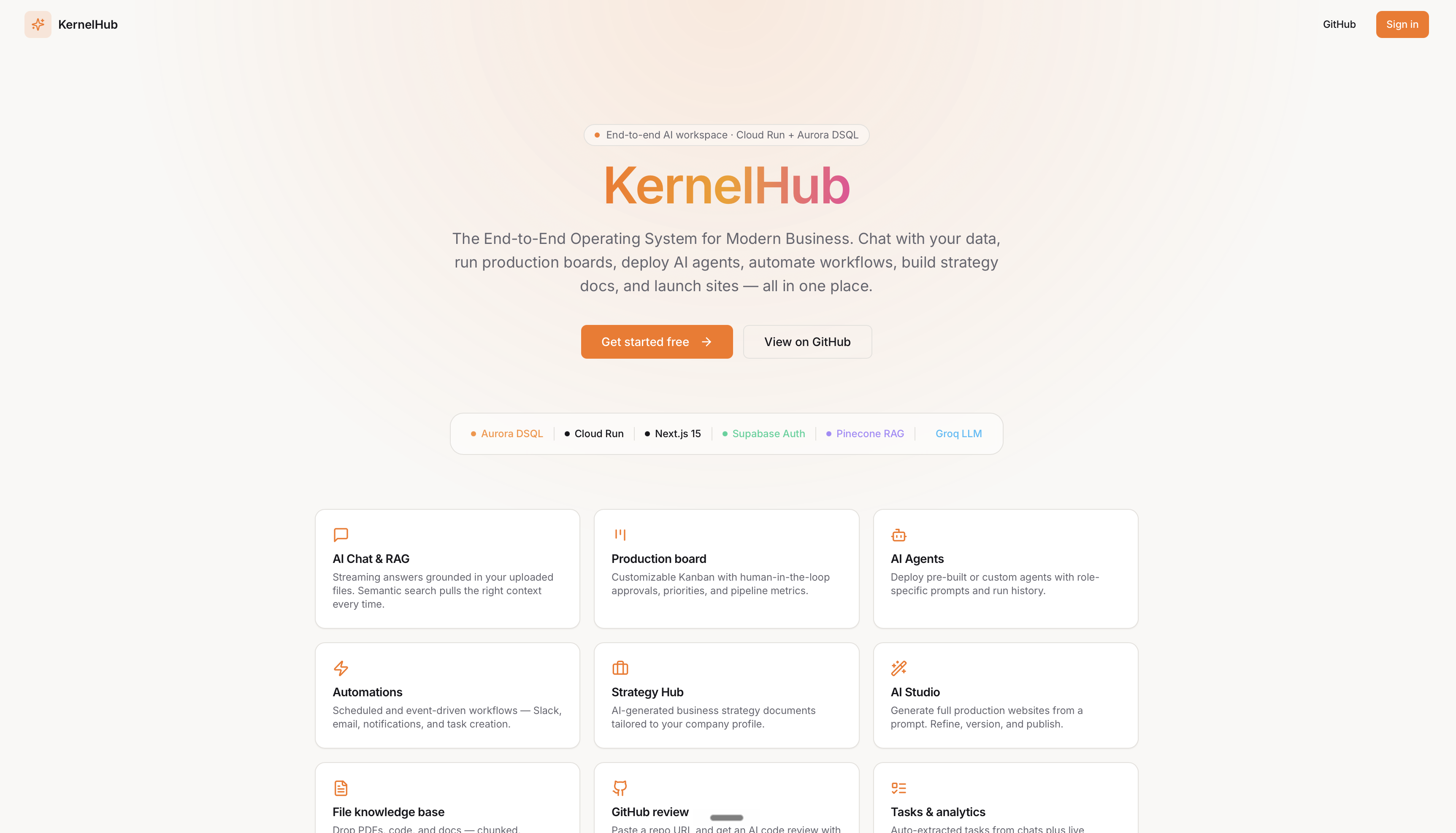
The end-to-end operating system for modern business.
-
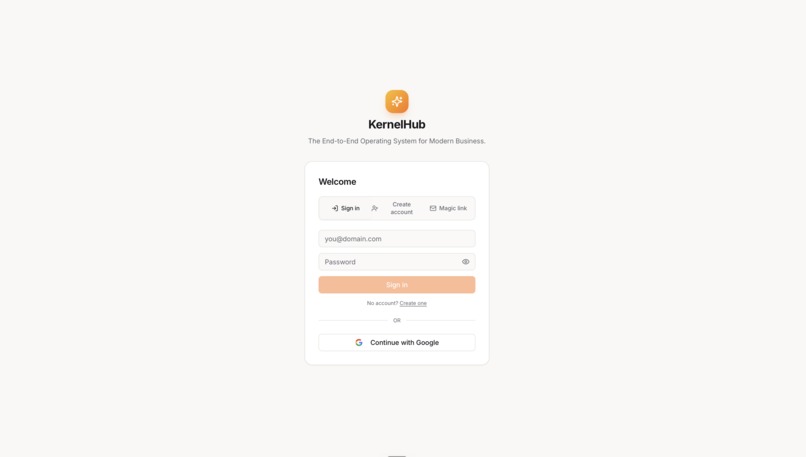
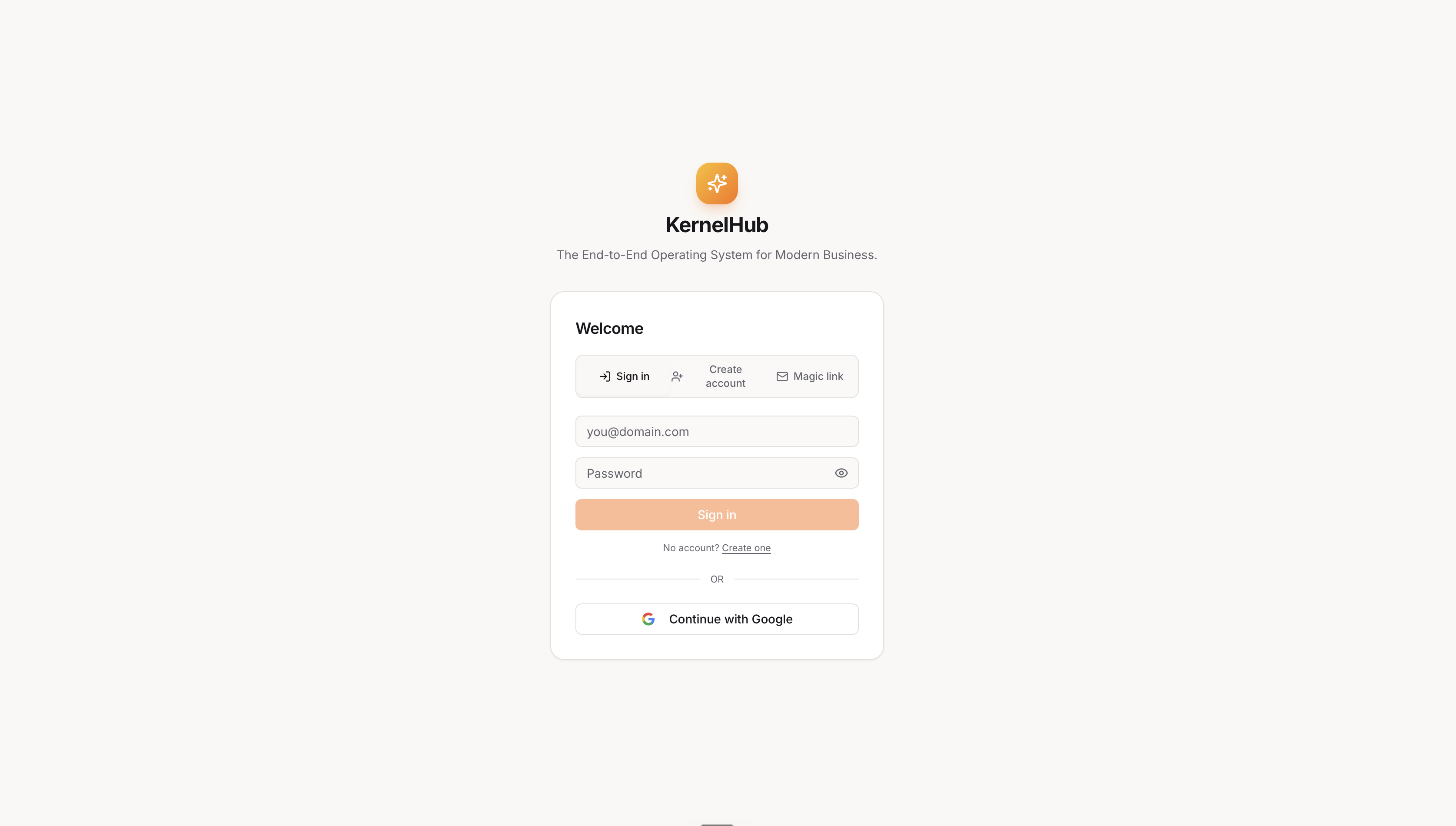
Sign in to KernelHub.
-
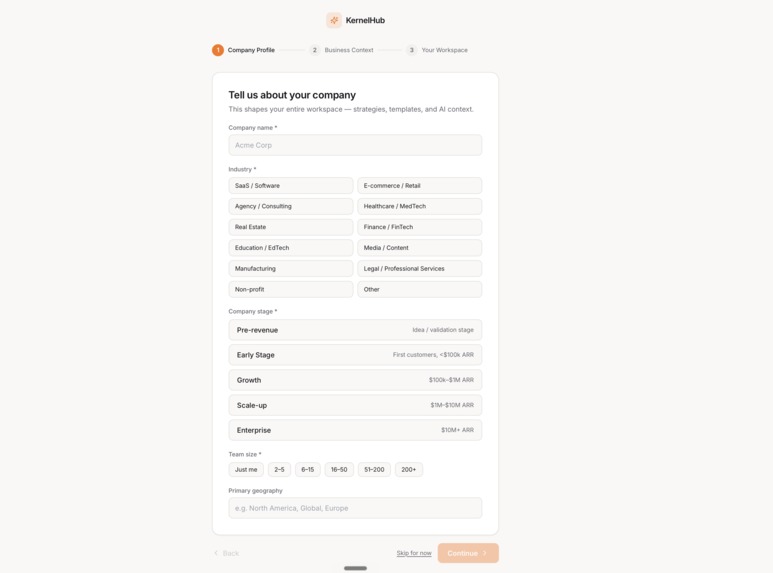
Set up your company profile.
-
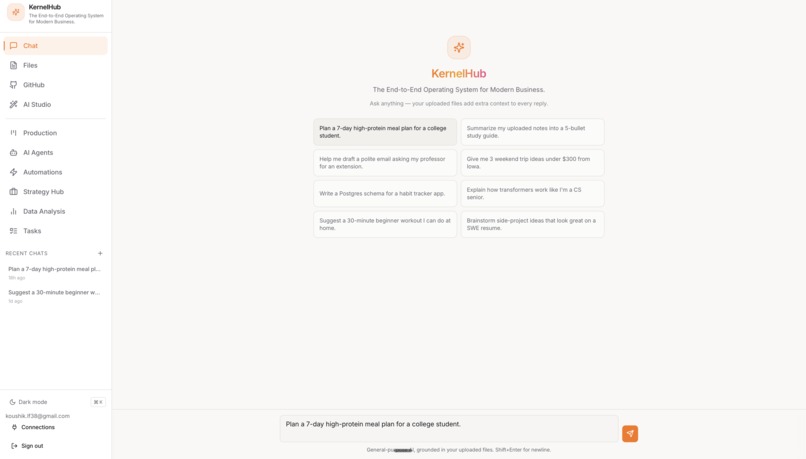
AI chat grounded in your files.
-
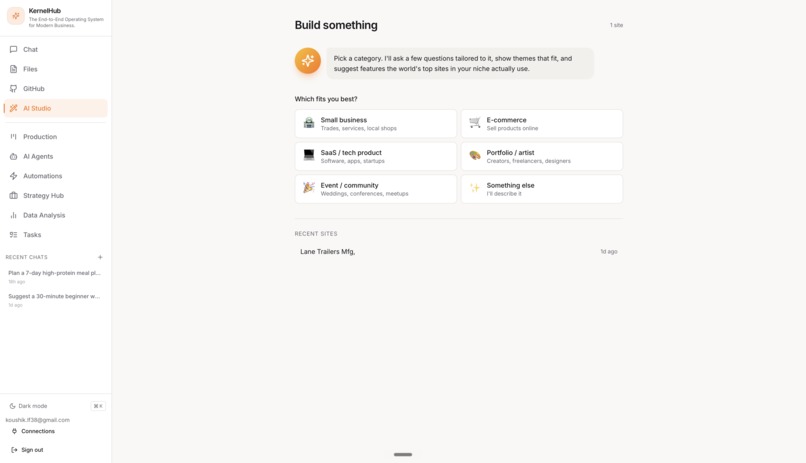
Generate websites from a prompt or more from options.
-
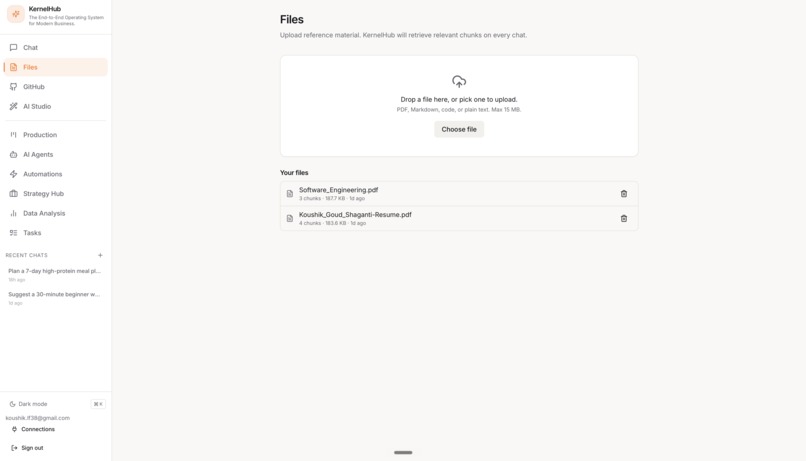
Upload documents for smarter answers.
-
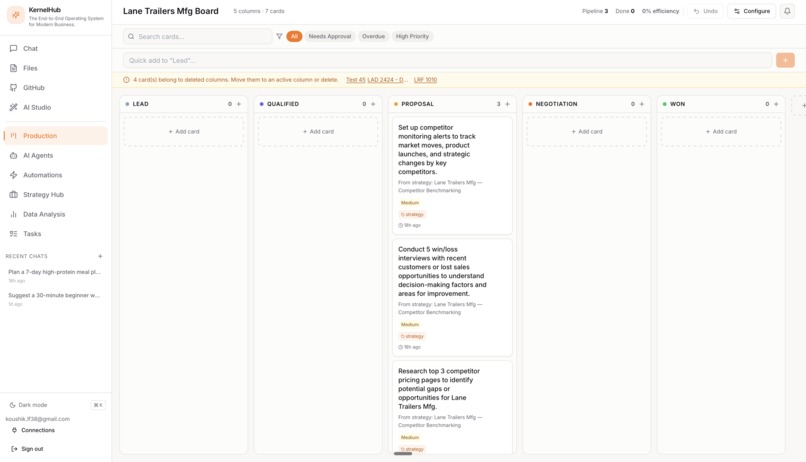
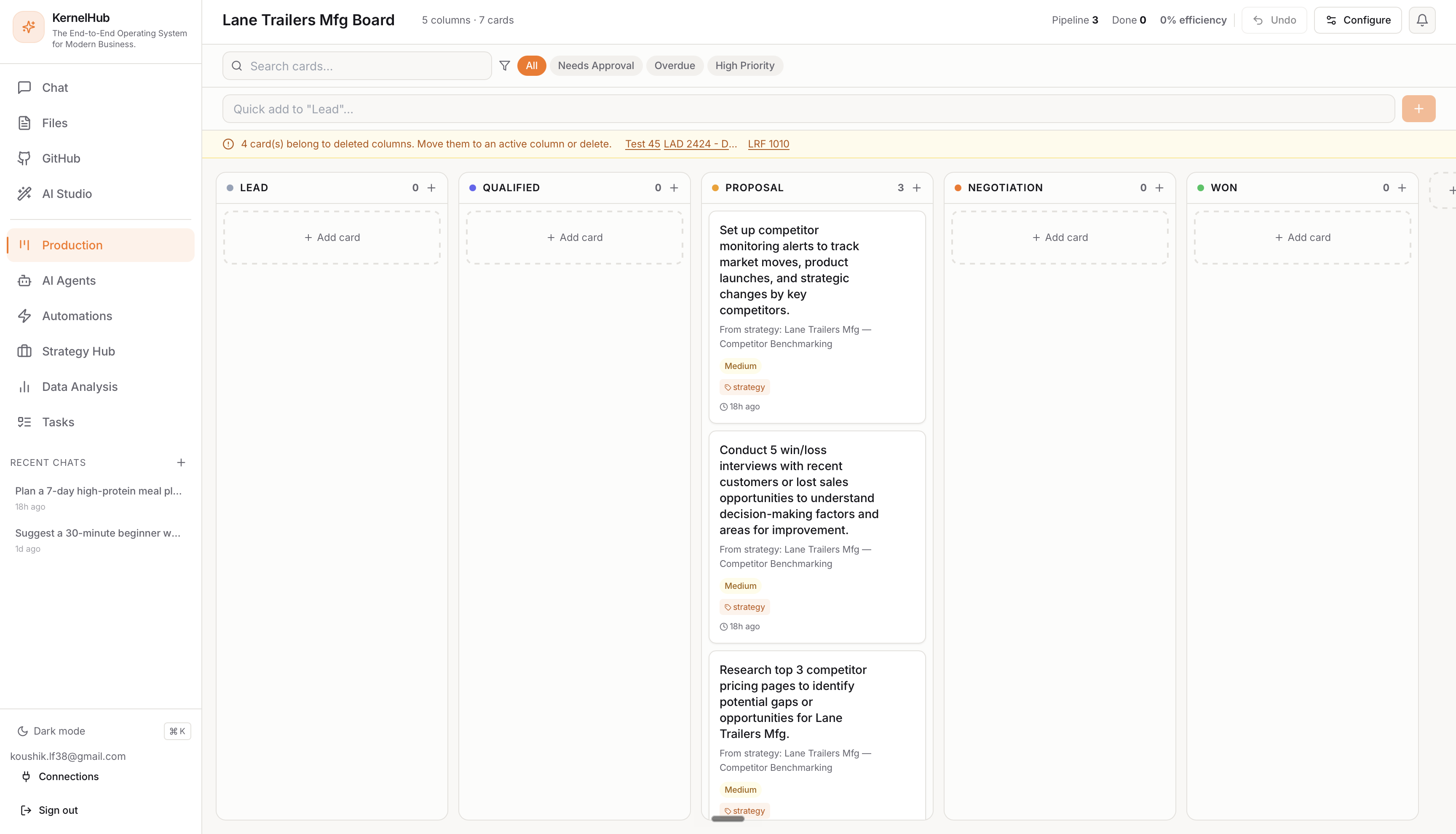
Kanban board for your team's work.
-
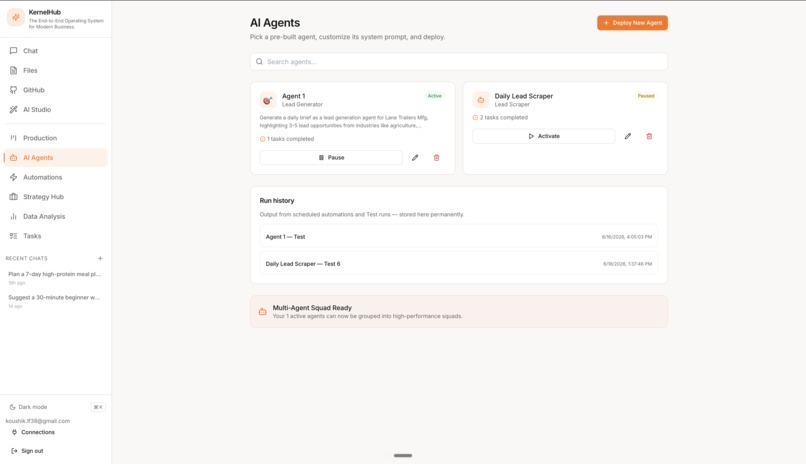
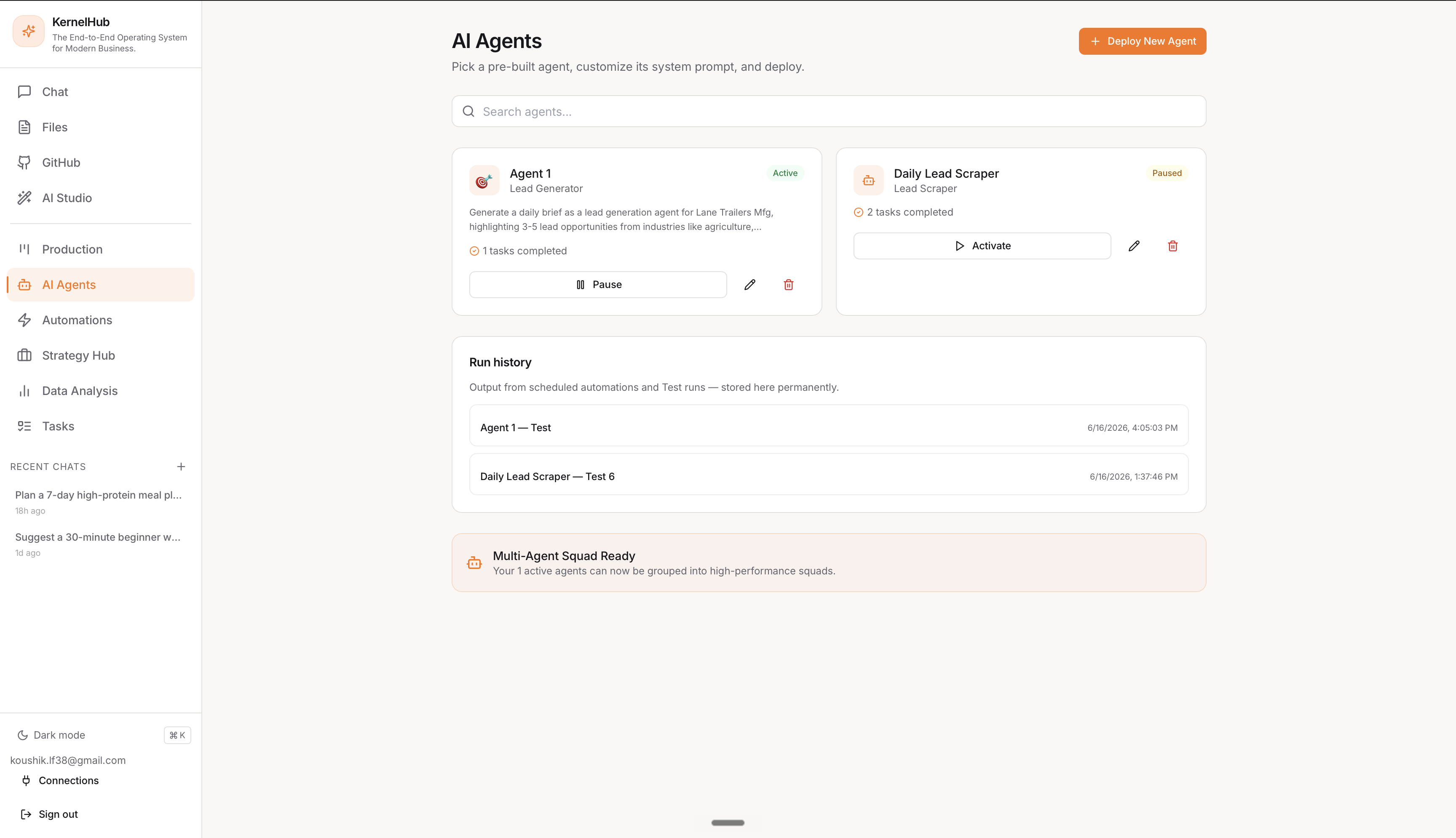
Deploy custom AI workers.
-
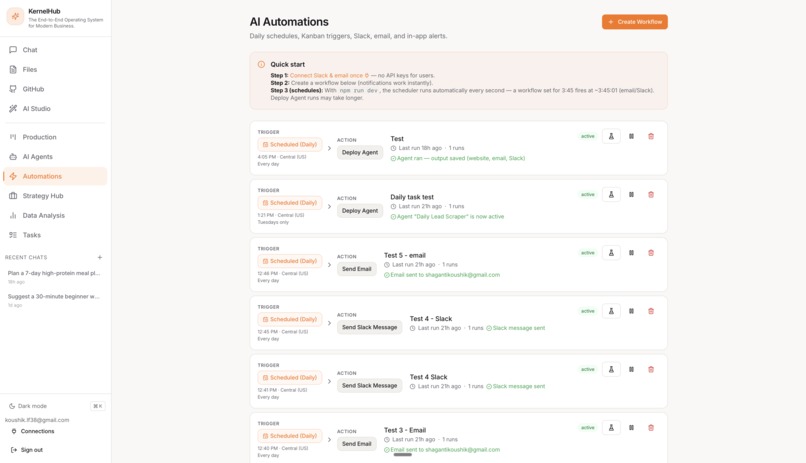
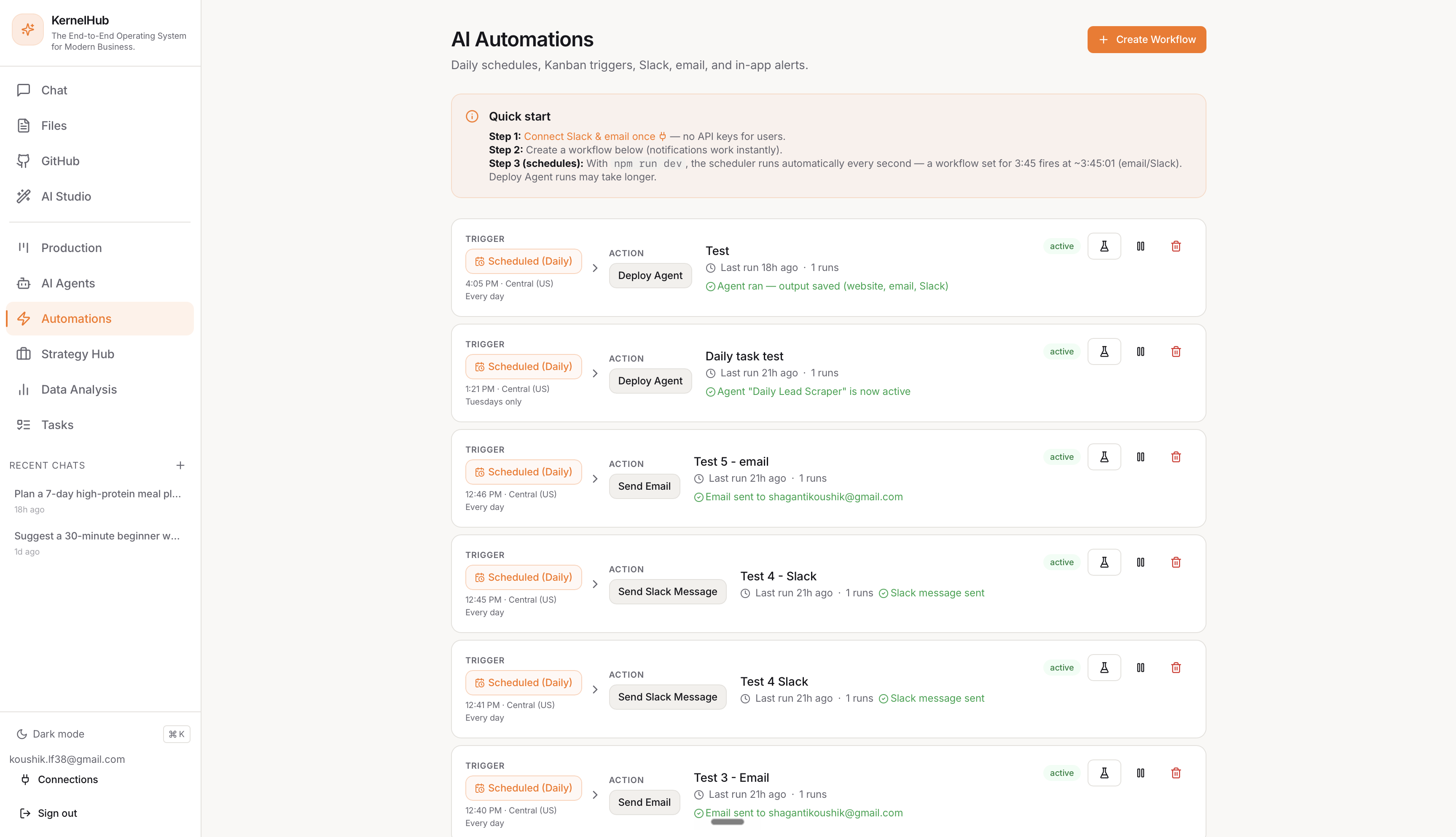
Run workflows on autopilot.
-
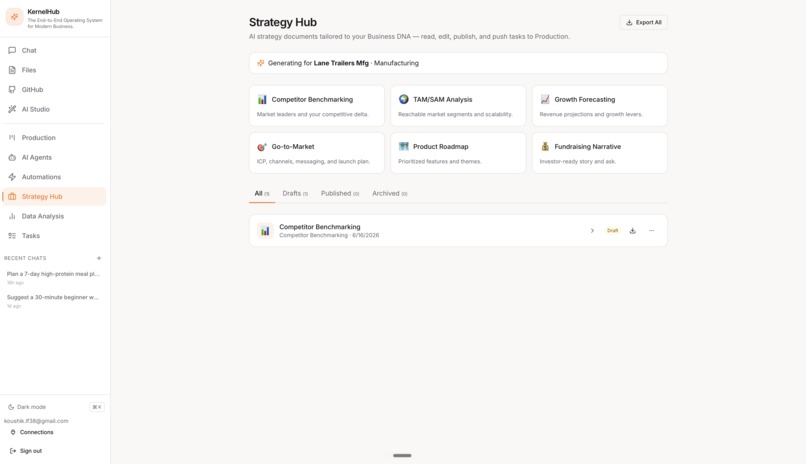
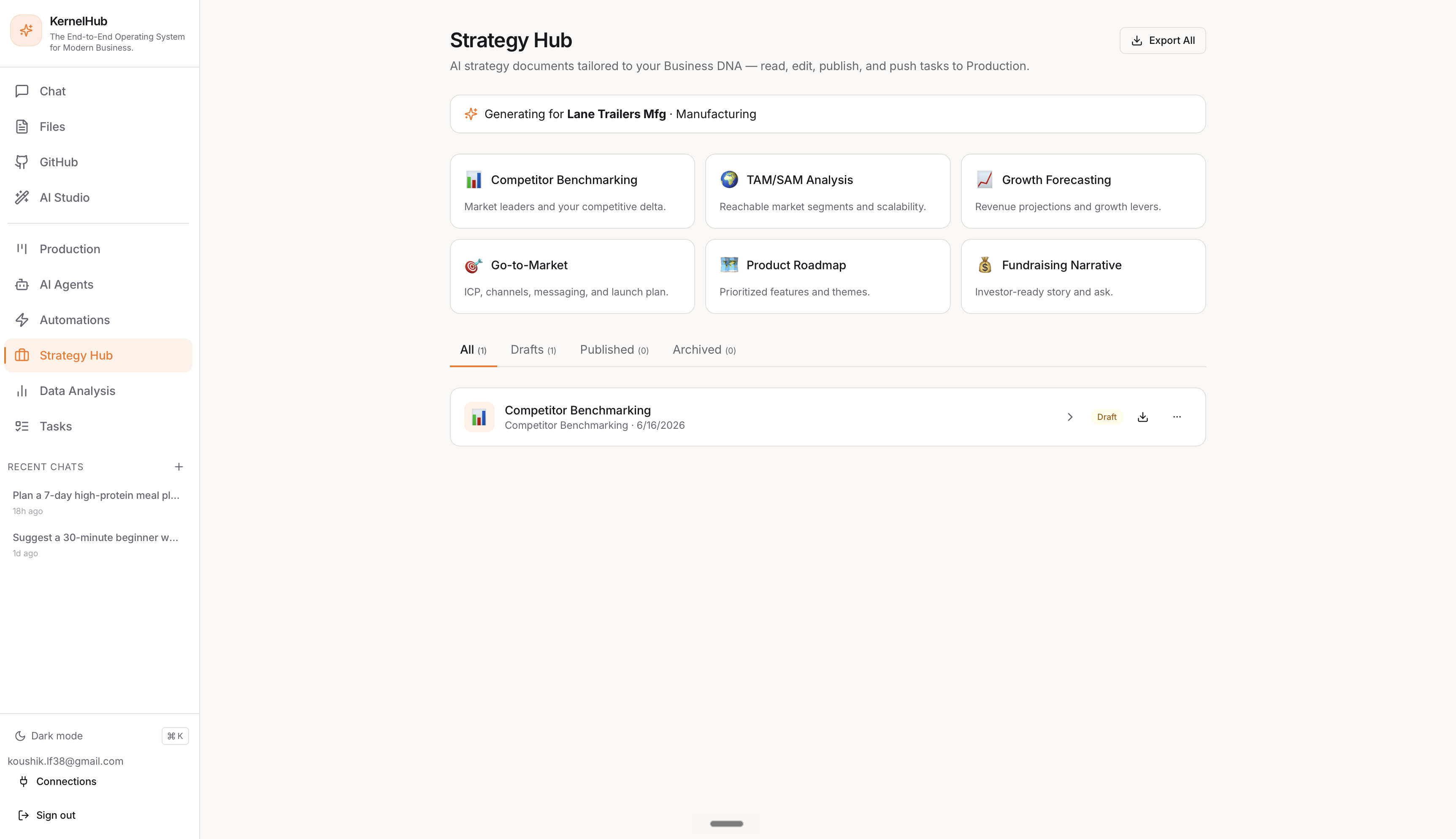
AI business strategy documents.
-
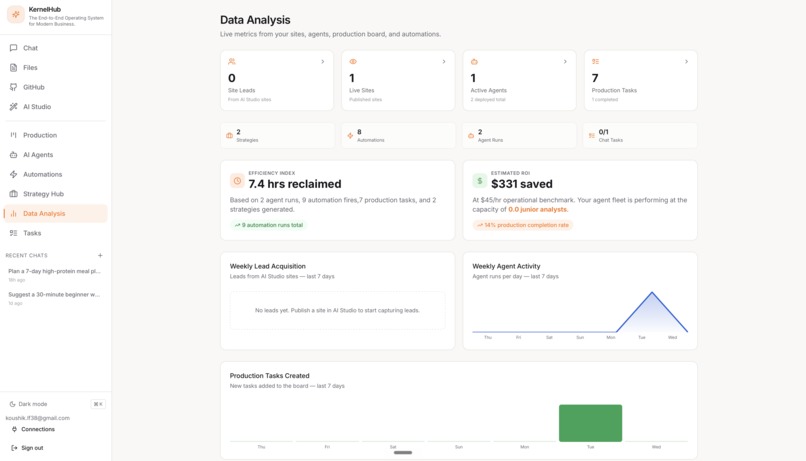
Live metrics across your workspace.
-
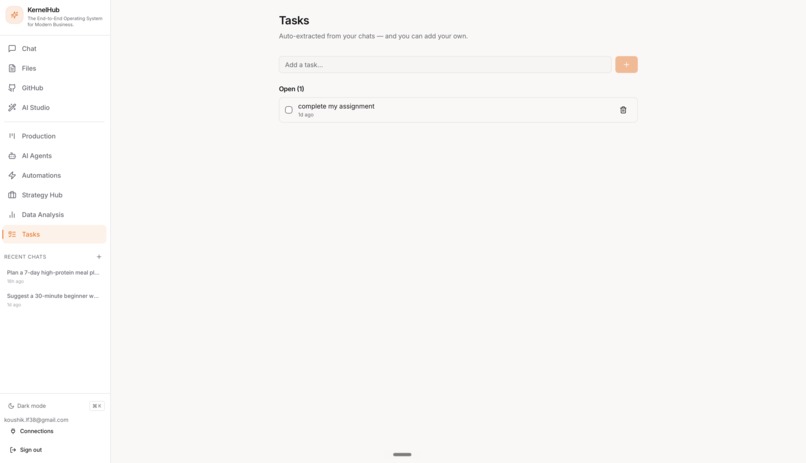
Action items from chat and manual entries.
-
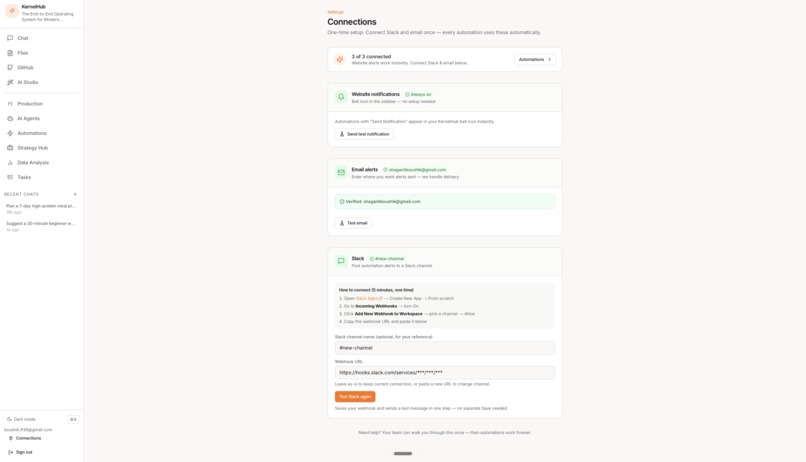
Link Slack and email for automations.
-
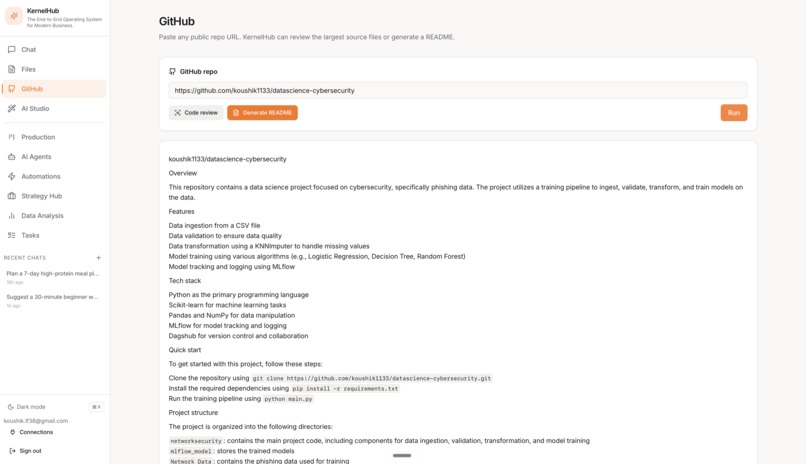
AI code review for any public repo.
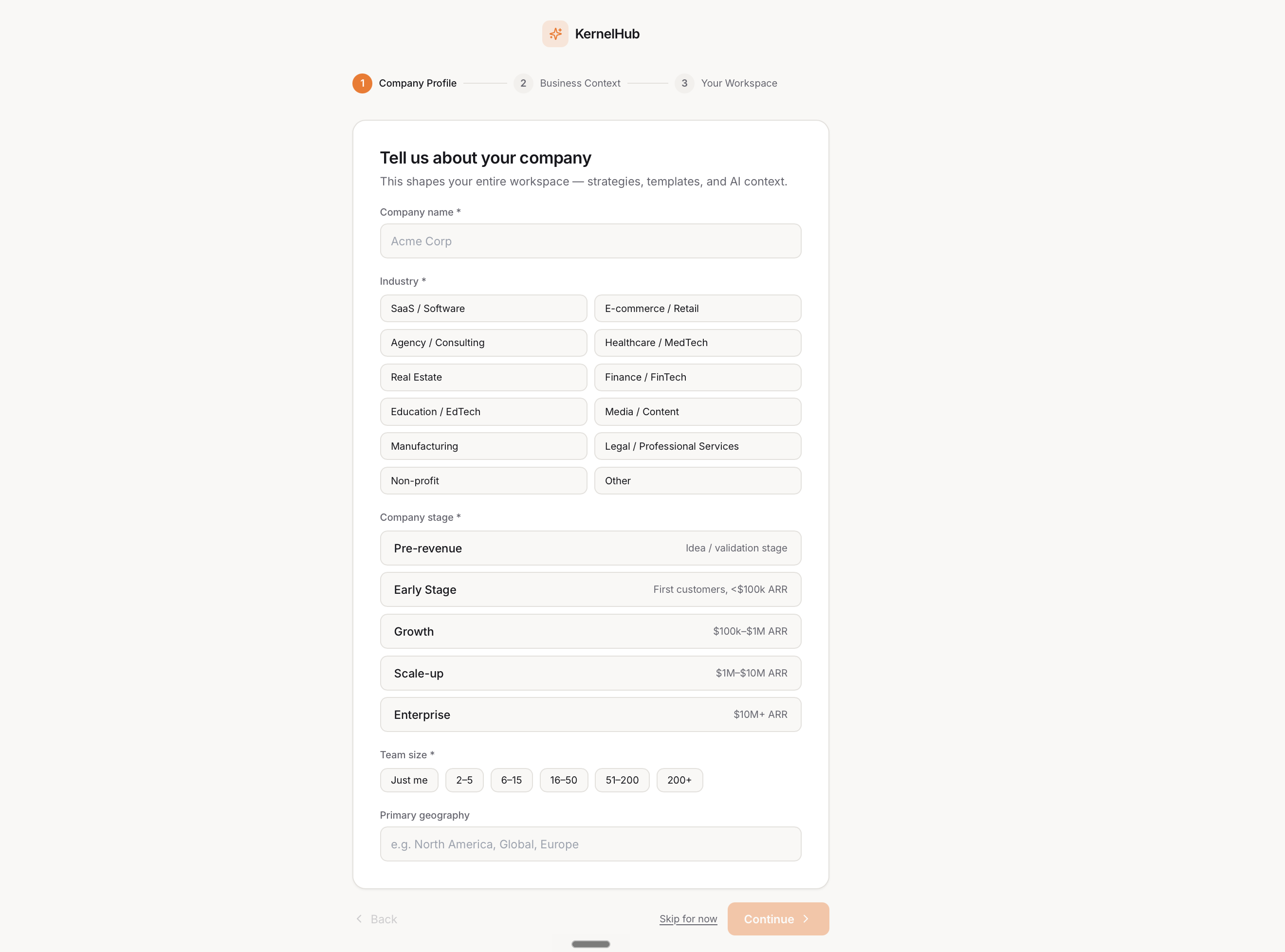
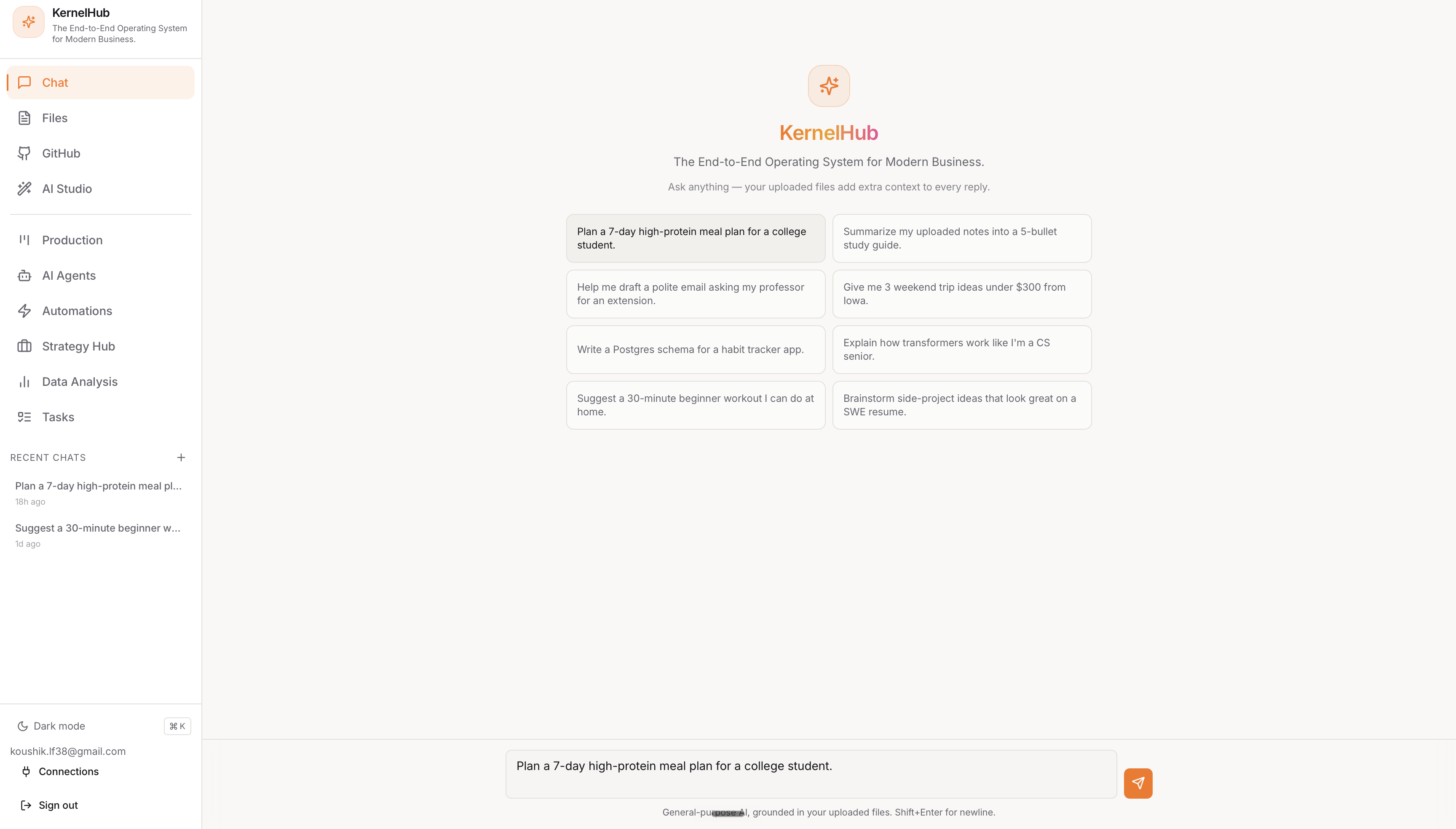
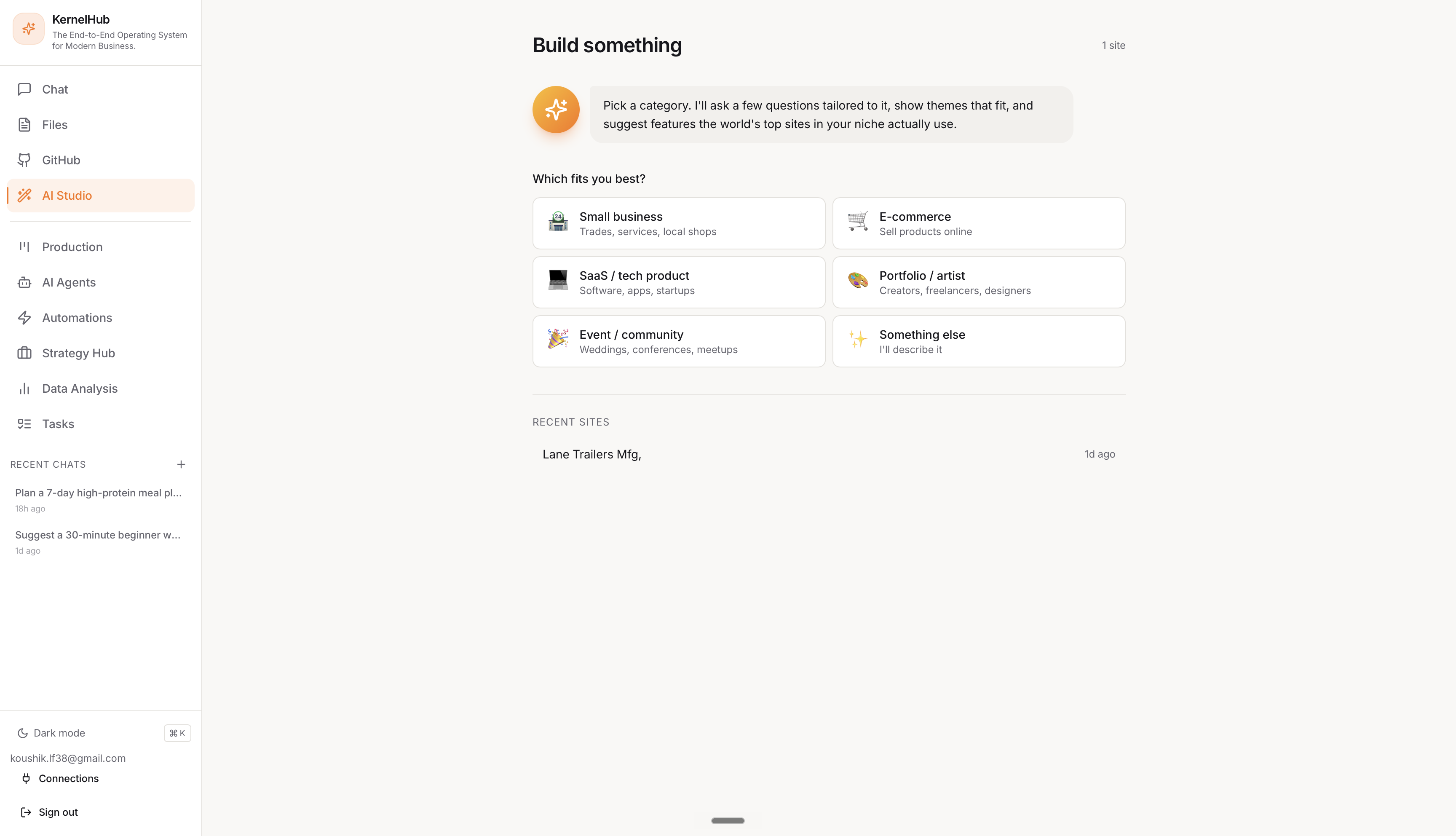
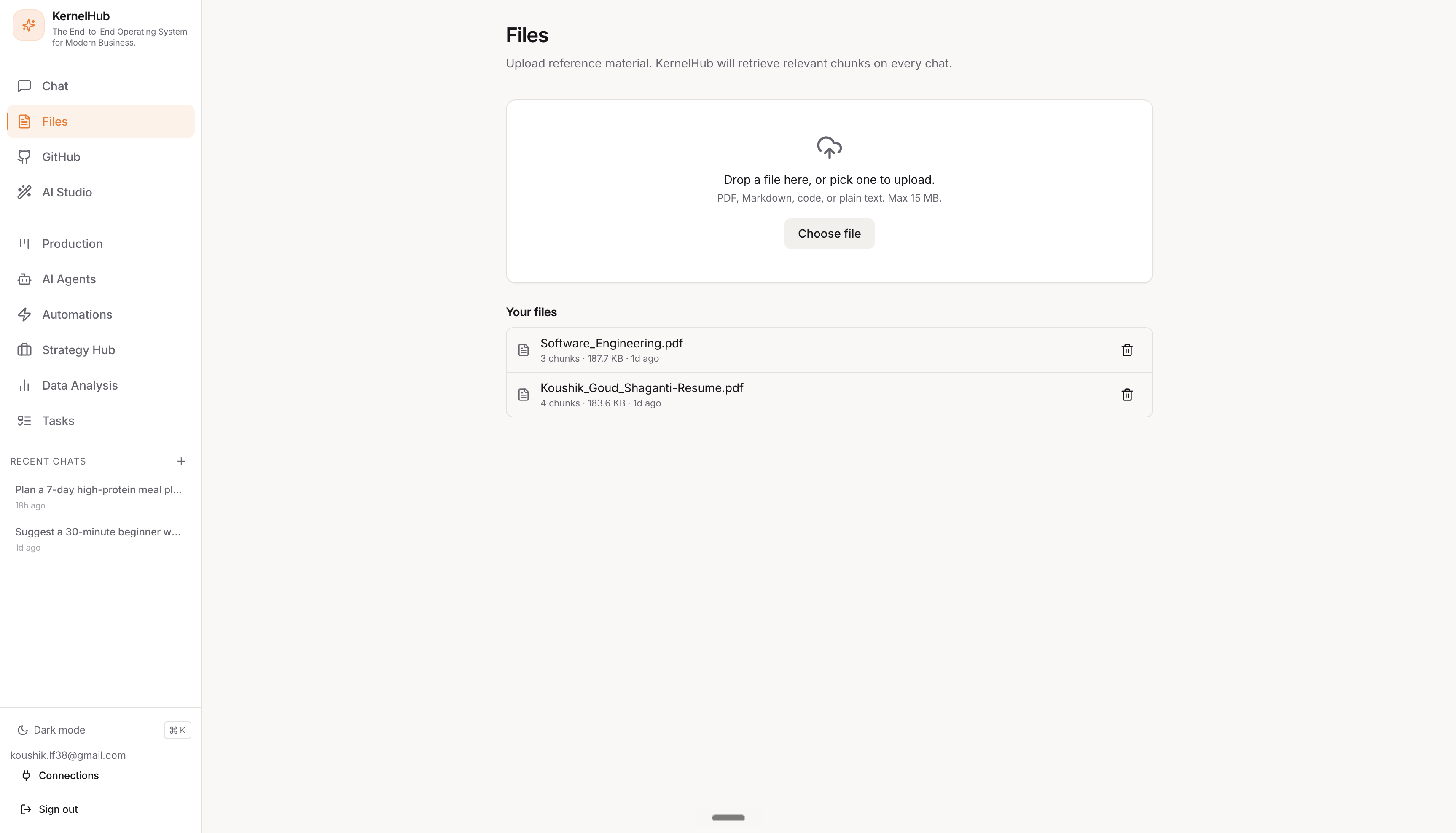
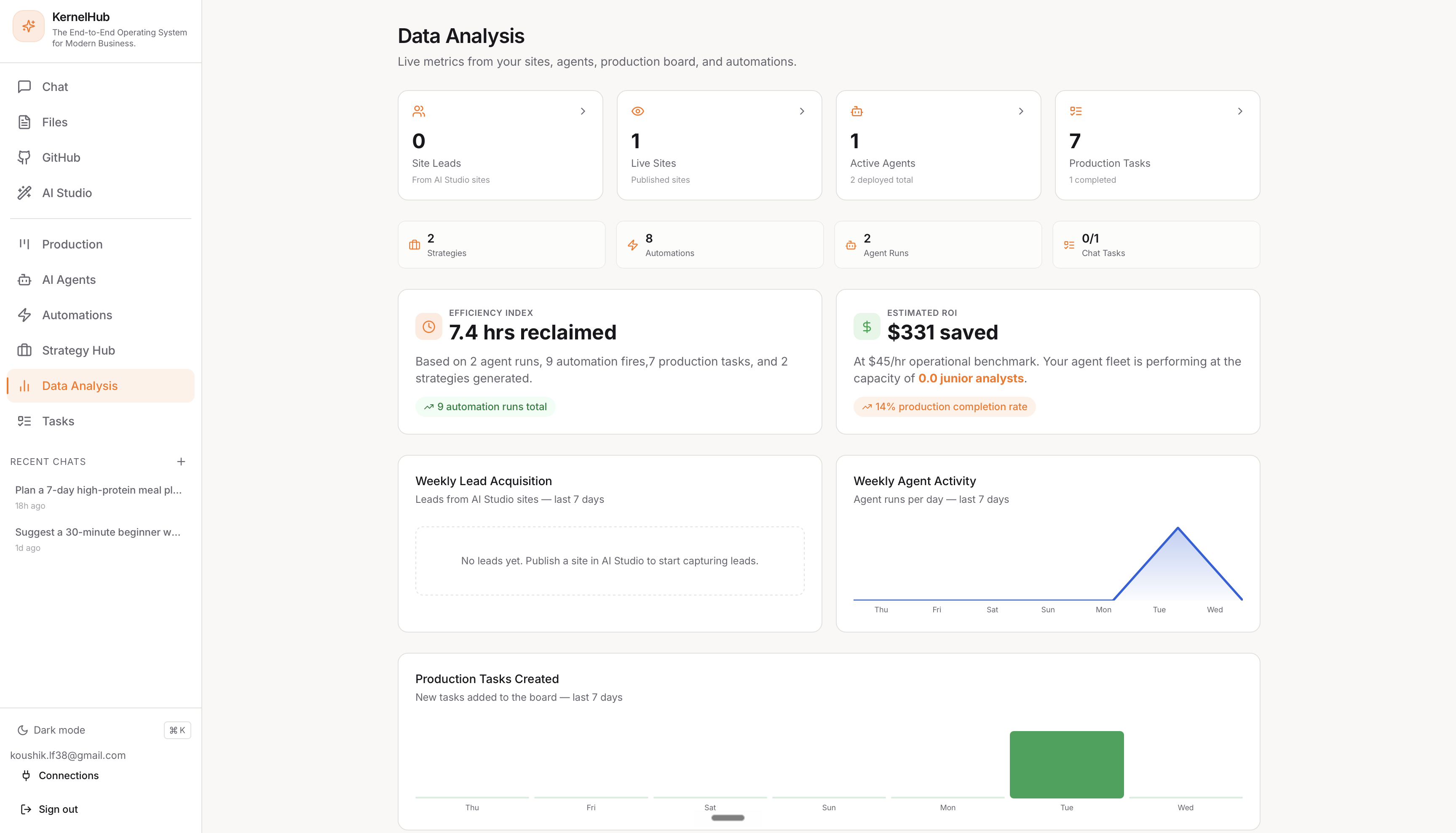
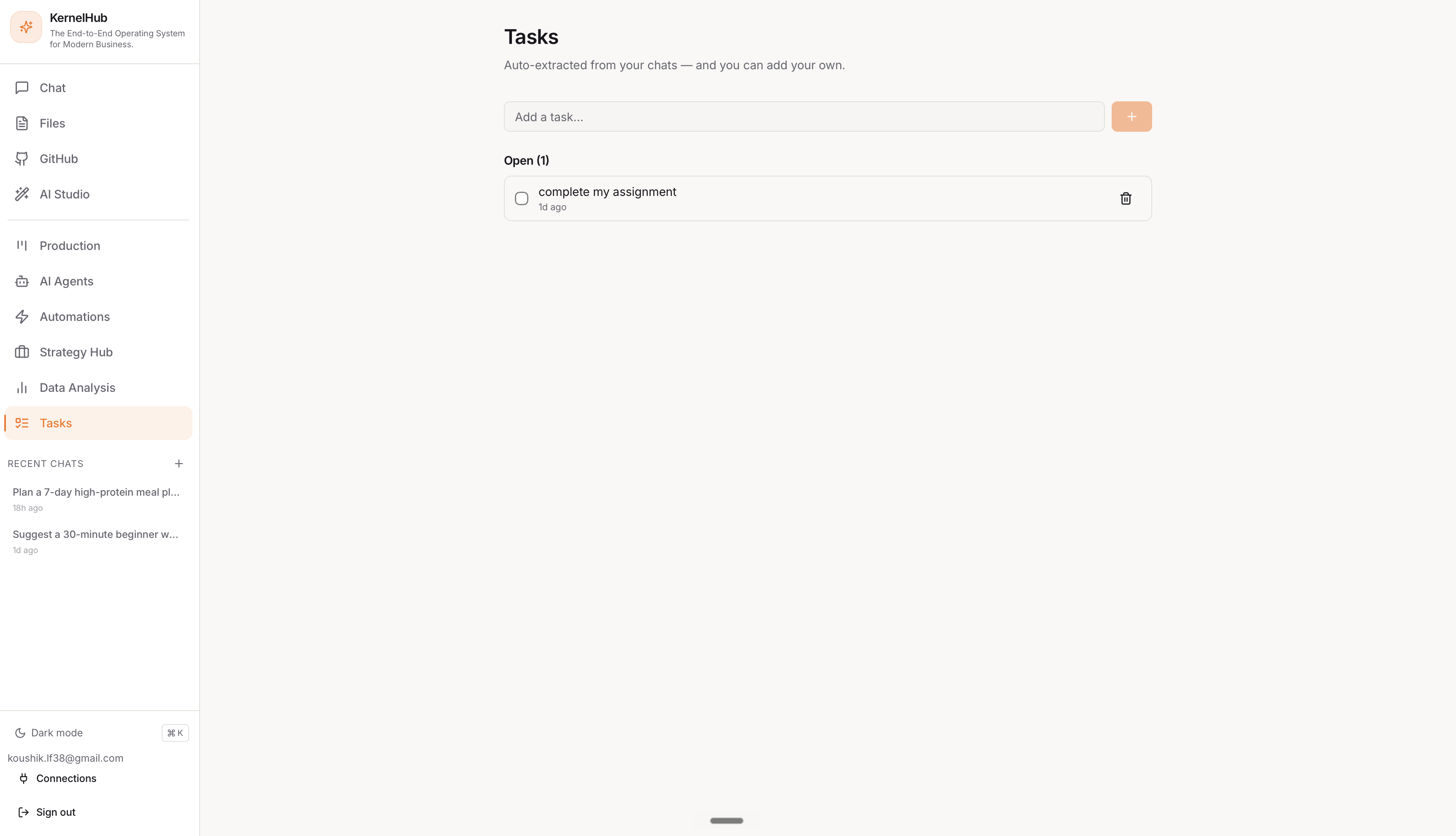
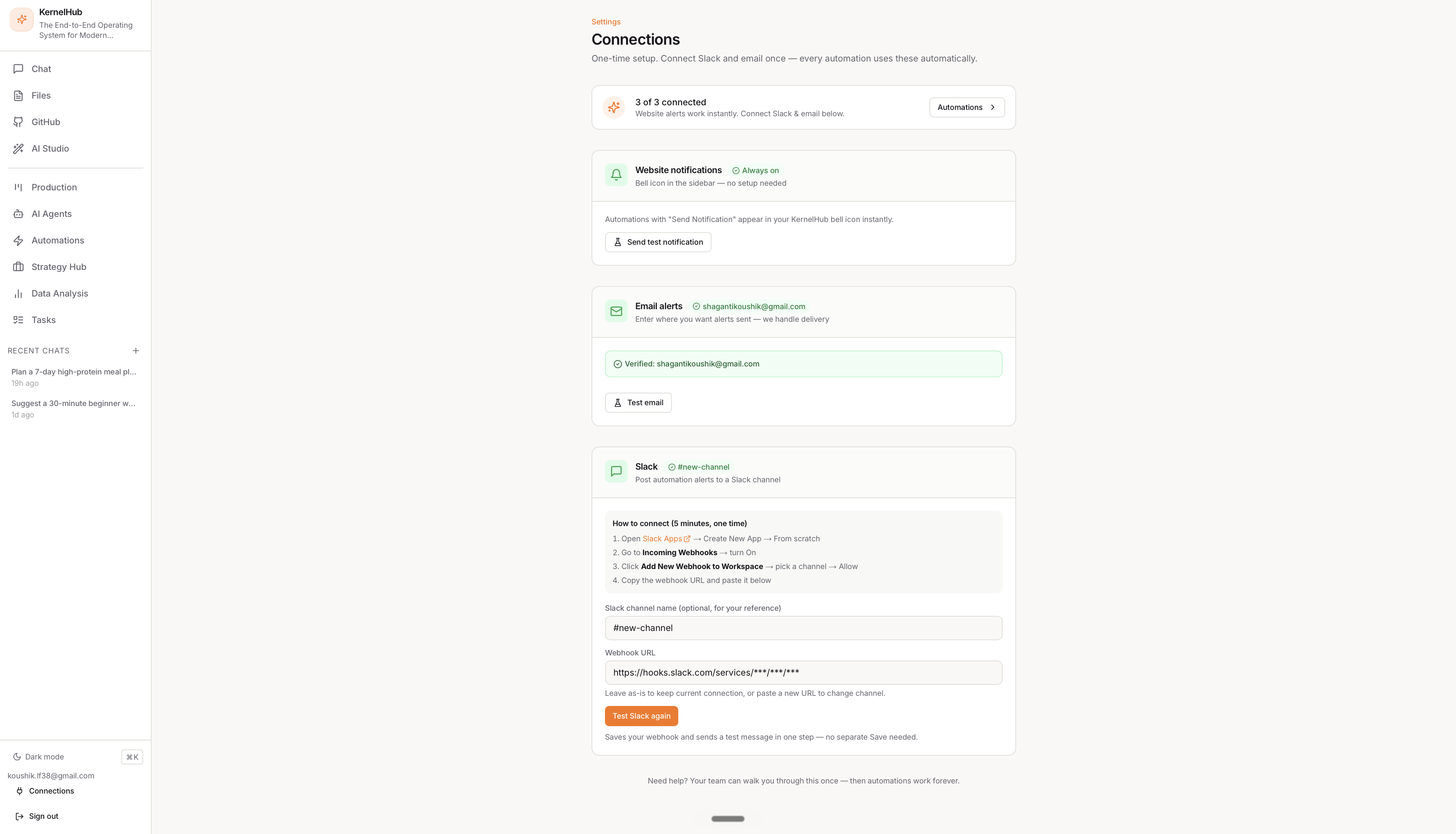
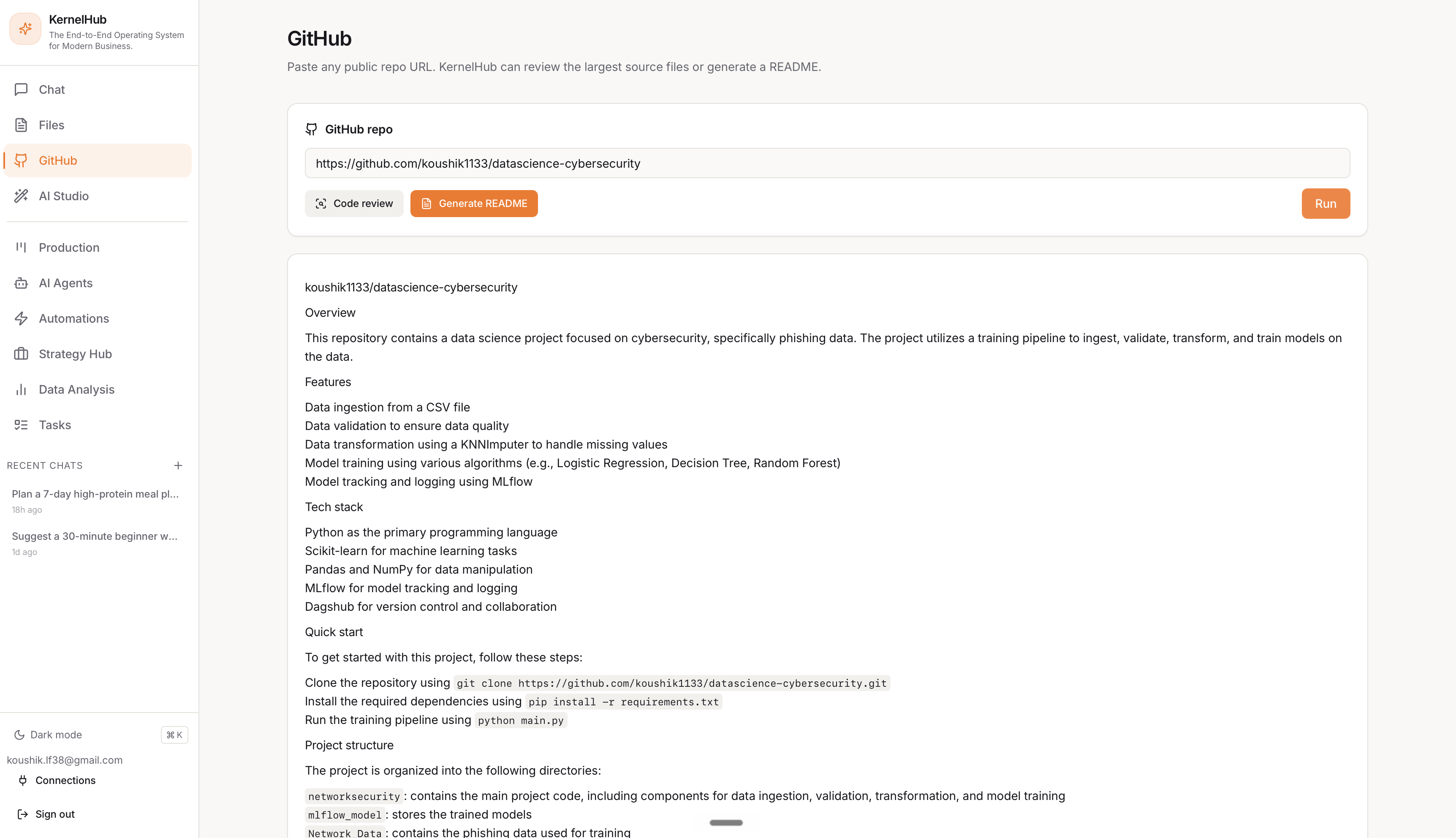
KernelHub (Javis) — The AI-Powered Business Operating System
💡 Inspiration
Modern teams are overwhelmed by SaaS fragmentation. Developers use GitHub, project managers use Kanban boards, QA testers use Slack, marketing writes on headless builders, and document searches require navigating cluttered Google Drives. We built KernelHub (Javis) to solve this: a unified business operating system that integrates chat-based RAG, codebase review, Kanban task tracking, dynamic landing page generation, and automated workflows into a single workspace.
🛠️ How We Built It
KernelHub is a full-stack Next.js 15 application utilizing a high-performance, multi-database architecture to scale different parts of the workspace:
- The Interface: Responsive React UI styled with modern CSS variables, glassmorphic card designs, and dynamic state transitions.
- Relational Core (AWS Aurora DSQL): Handles robust Postgres-compatible relations for chat metadata, tasks, page revision histories, leads, and automation configurations.
- High-Throughput Storage (AWS DynamoDB): Manages raw streaming chat messages and page analytics to keep the main SQL database lightweight.
- Vector Semantic Search (Pinecone): Hosts user reference files (PDFs, Markdown, source code) using Pinecone's serverless integrated inference (
multilingual-e5-large) for Retrieval-Augmented Generation (RAG). - LLM Engine (Groq): Powered by the ultra-fast
llama-3.3-70b-versatilemodel to stream chat responses, extract to-dos in the background, and dynamically generate website layouts. - Integrations: Slack Incoming Webhooks, Resend API for transactional email verification, and Octokit for GitHub repo parsing.
🚀 Challenges We Faced & Overcame
- Database Partitioning: Balancing fast write speeds for streaming chat history with complex database relations for workspace boards. We solved this by designing a hybrid architecture—storing heavy chat streams in DynamoDB while retaining structured relations in Aurora DSQL.
- RAG Vector Cluttering: We encountered an SDK v7 mismatch where deleted files remained active in Pinecone because the SDK expects an options object
{ ids }instead of a raw array. We modified the Pinecone integration to purge old vectors correctly during file deletion, preventing context pollution. - Sandboxed Integrations: Testing transactional emails on the Resend API sandbox silently dropped emails sent to real users while returning a false positive
200 OK. We implemented a polling mechanism that queries Resend's delivery events, ensuring judges get honest, detailed warnings when sandbox limitations are active. - Speed Bottlenecks: Initially, trigger-based Kanban automations fired sequentially. We optimized this by pre-fetching credentials and executing all actions concurrently using
Promise.allSettled().
🧠 What We Learned
We learned how to orchestrate multi-database serverless architectures, manage complex LLM workflows (including background JSON schema extraction), and build lightweight Next.js standalone servers ready for seamless deployment on Vercel.


Log in or sign up for Devpost to join the conversation.