-
-
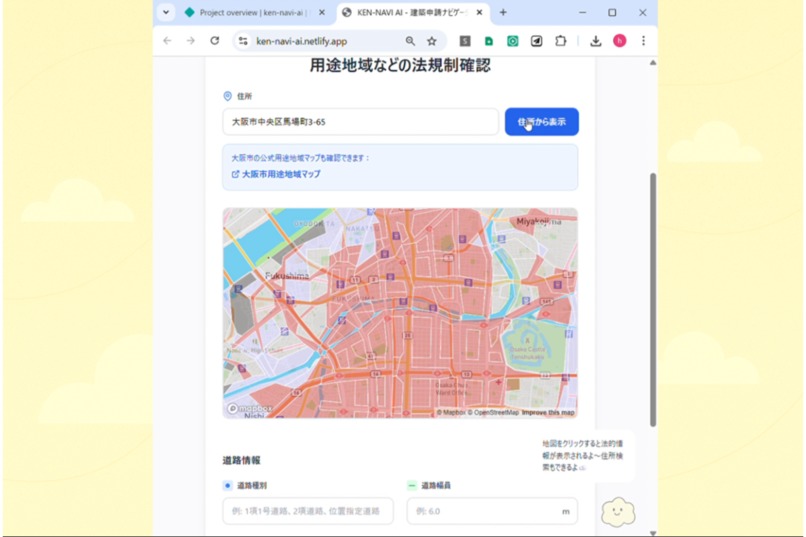
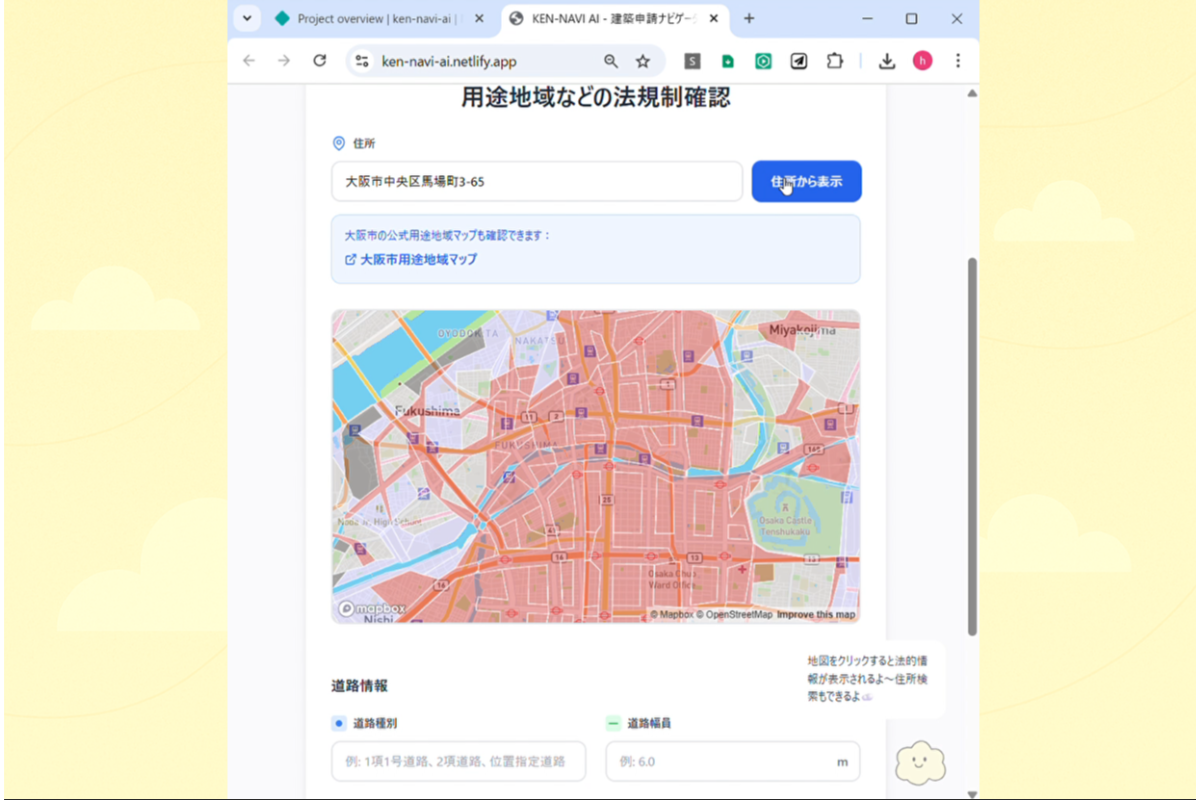
Zoning and Regulation Map Display: Instantly view zoning classifications and legal restrictions by simply entering the project address.
-
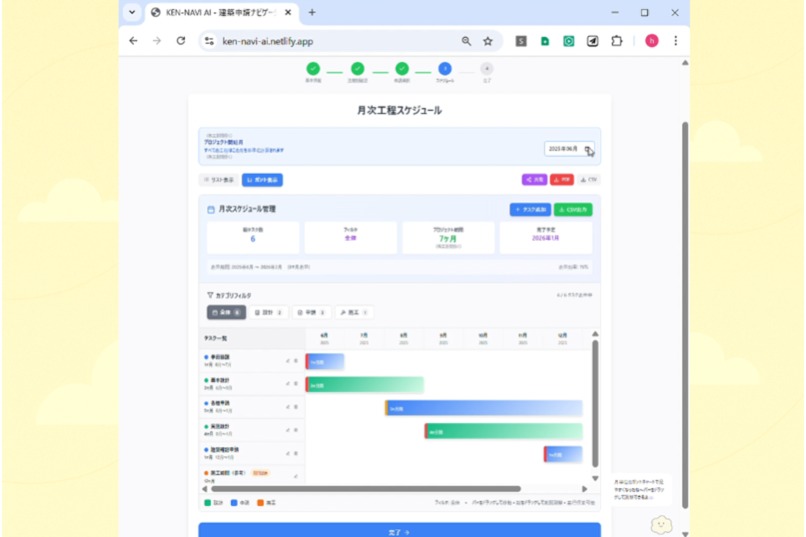
Application Schedule: Auto-generates a timeline of consultations and submissions to help architects plan their projects more clearly.
-

Product Overview Visual: "Let KEN-NAVI AI handle the hassle" — our key visual that captures the product's concept for architects.


Inspiration
In Japanese urban planning, confirming necessary approvals before an architectural project is time-consuming and requires navigating multiple websites and regulations.
As an architect, I often wished for a tool to check these early-stage requirements more smoothly.
What it does
KEN-NAVI AI helps architects check site information and early-stage application requirements before starting design.
It also allows users to add custom approvals and automatically visualizes the schedule to streamline planning tasks.
How we built it
We used Bolt for the frontend, and used Mapbox JSON data instead of Google Maps to visualize zoning and other planning conditions.
We also used GPT-3.5 (o3) for legal logic and prompt-based processing, optimizing UI in Bolt Studio.
The timeline is generated based on entered data, with logic for phase durations and automatic task sorting.
Challenges we ran into
The hardest part was displaying the planning map data correctly and responsively.
We also had to simplify the logic, limiting our scope to Osaka City.
Layout tuning, prompt testing, and file linking all required significant effort.
What we learned
We learned how difficult it is to unify regional planning requirements and visualize them without overloading the UI.
We also realized the importance of communicating design constraints clearly, especially in early-stage collaboration.
Accomplishments that we're proud of
We created a prototype that aligns with real architectural workflows and are confident that professionals will appreciate its usefulness.
What’s next for KEN-NAVI AI 建築申請ナビゲーター
We plan to expand to more cities and integrate this tool into actual architectural practice.
In the future, we hope to link with official submission systems to achieve further automation.
Built With
- bolt
- gpt-3.5-(o3)
- html/css
- javascript
- mapbox

Log in or sign up for Devpost to join the conversation.