-
-
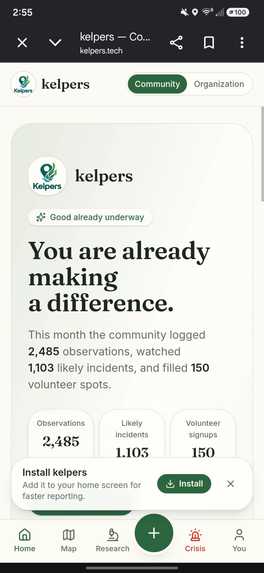
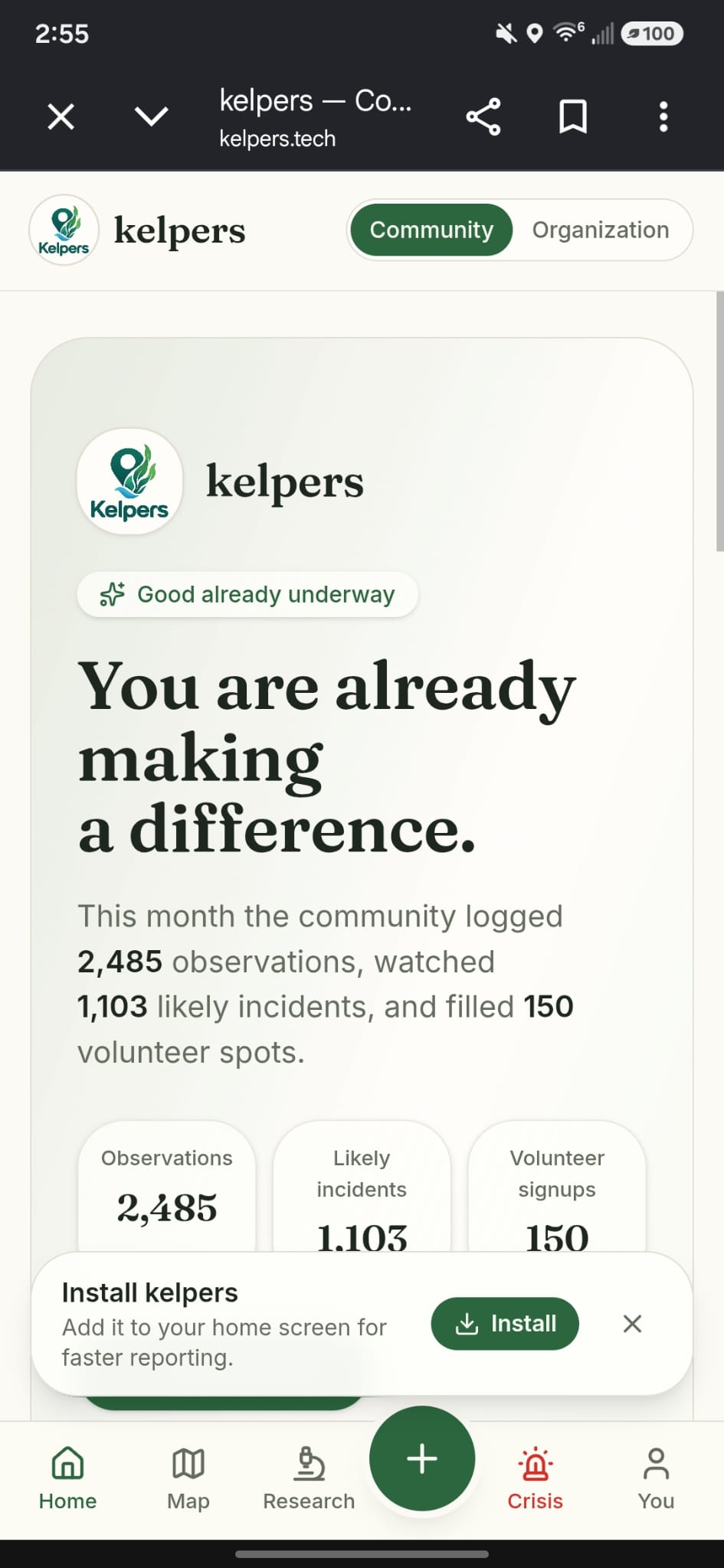
Home page on a mobile application
-
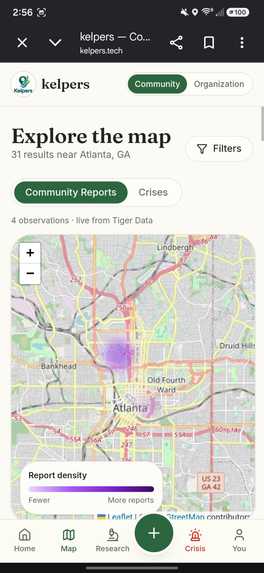
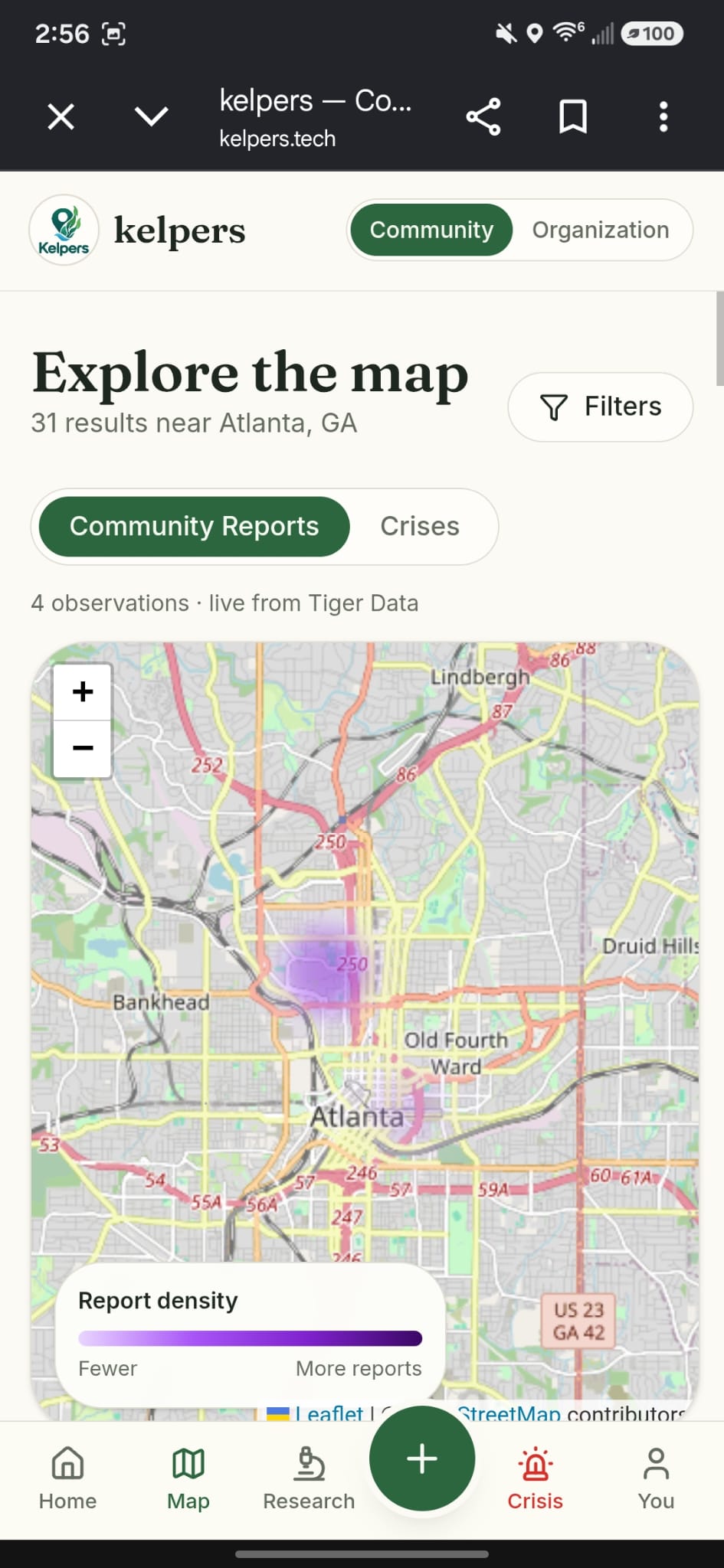
Heat map tracking observation reports on a mobile application
-
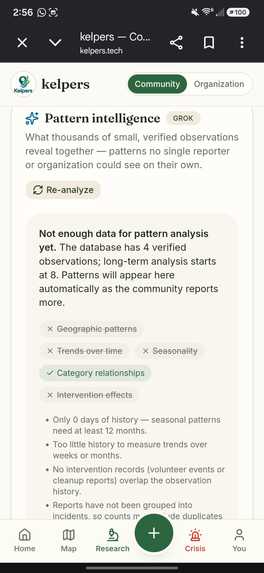
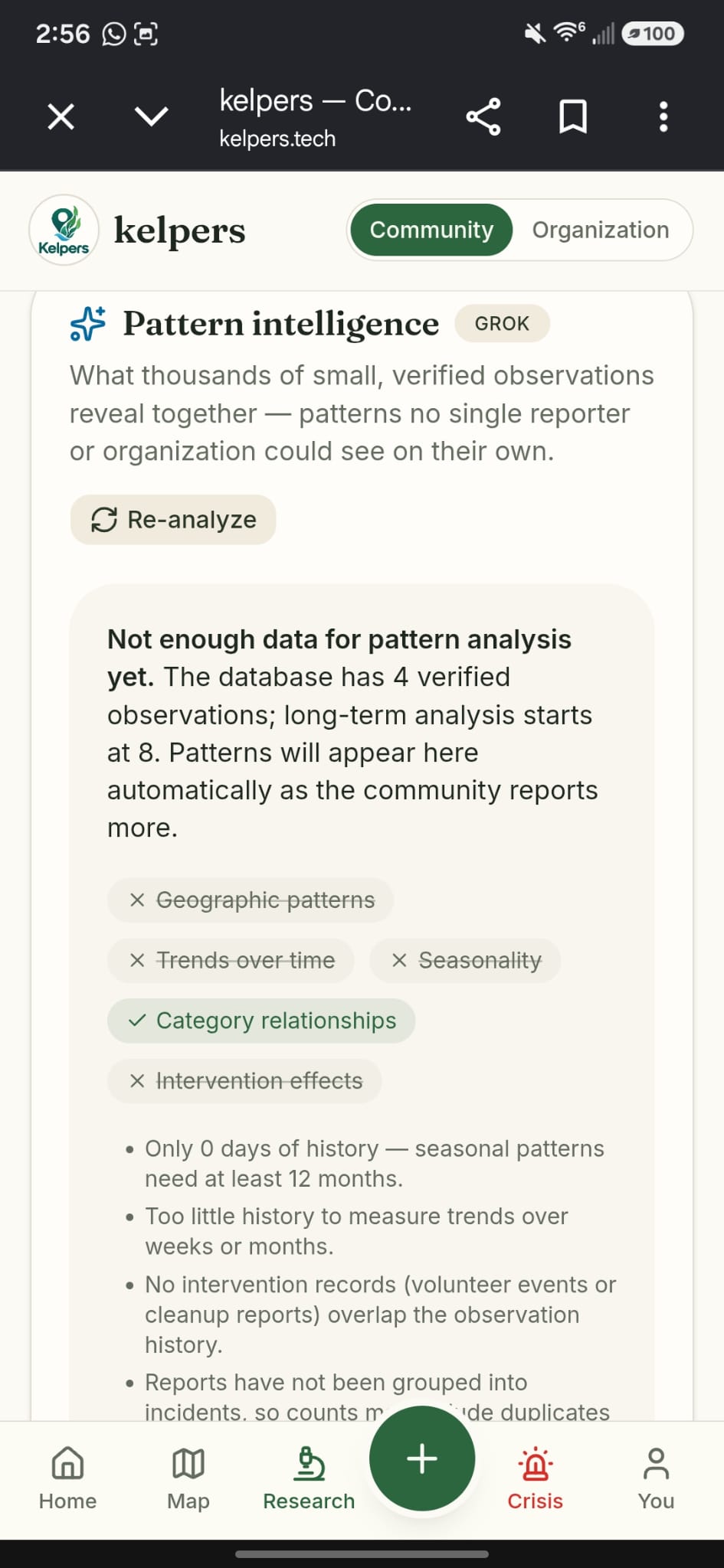
Research page Grok conclusion report on a mobile application
-
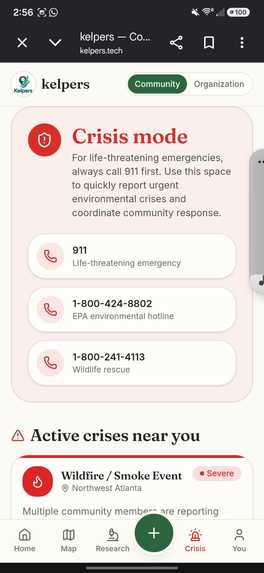
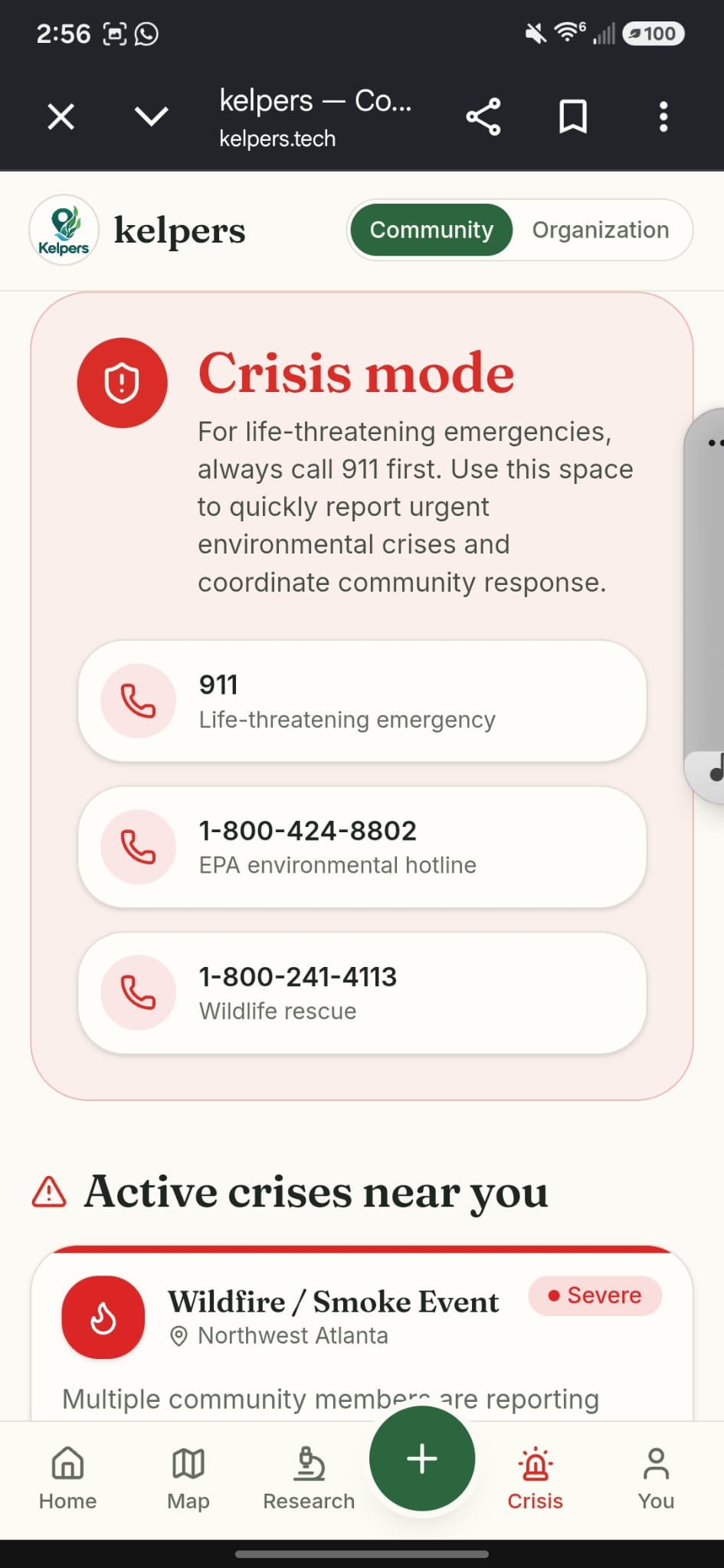
Crisis page on a mobile application
-
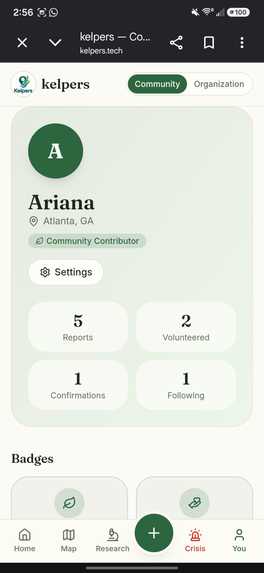
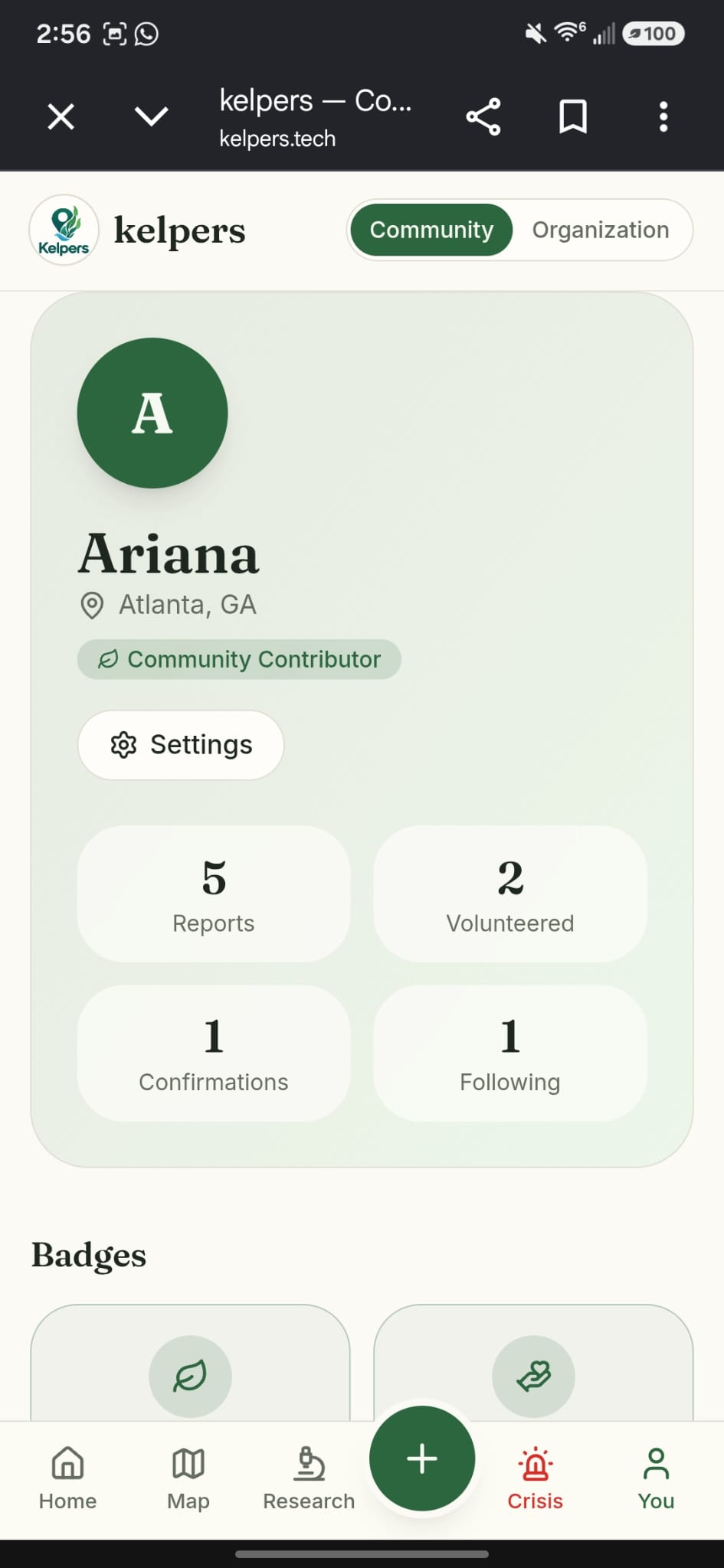
Account on a mobile application
-
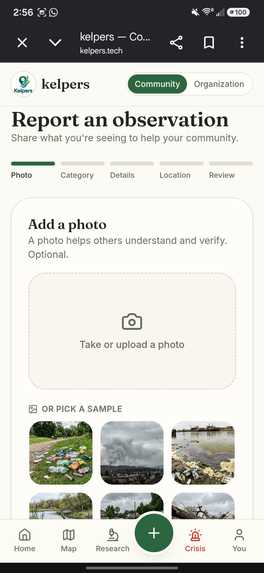
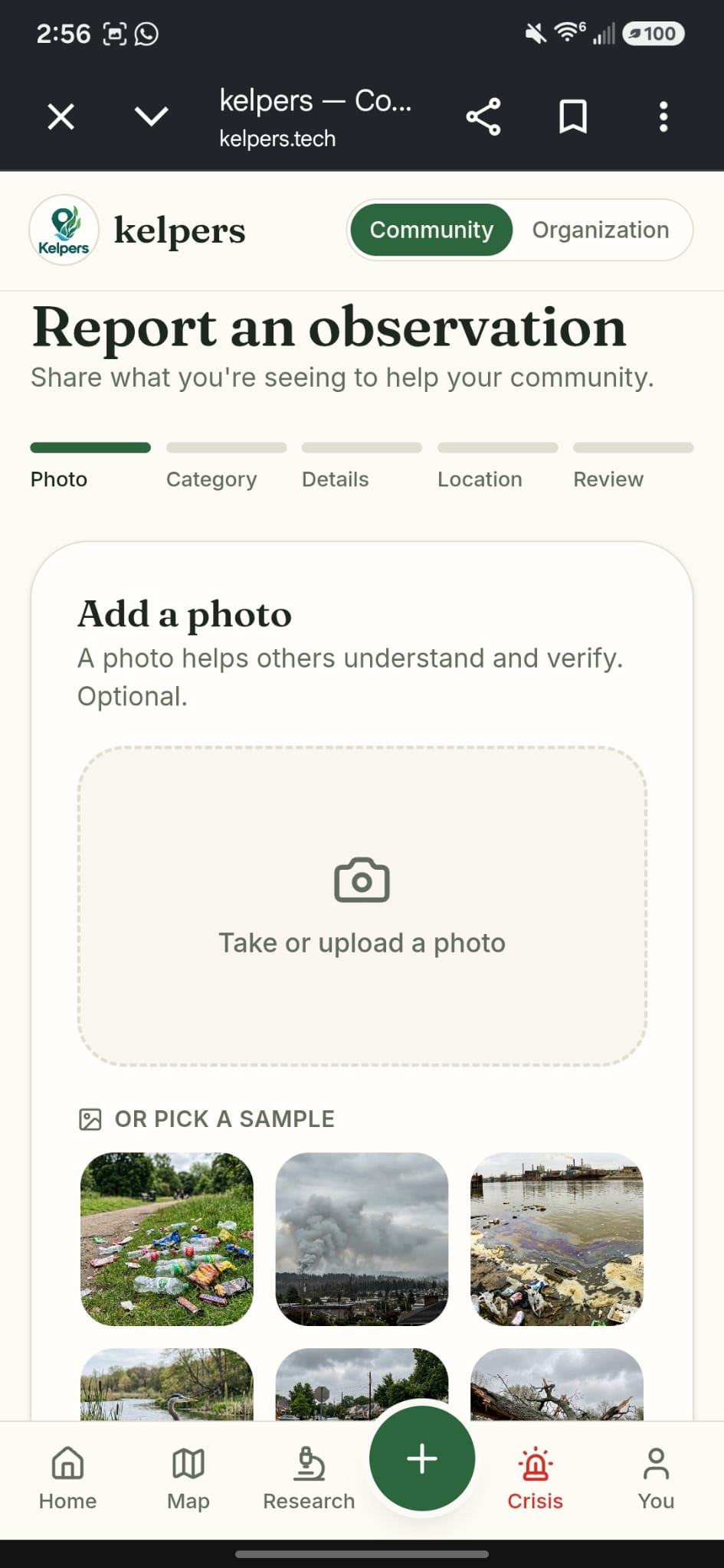
Observation report page on a mobile application
-
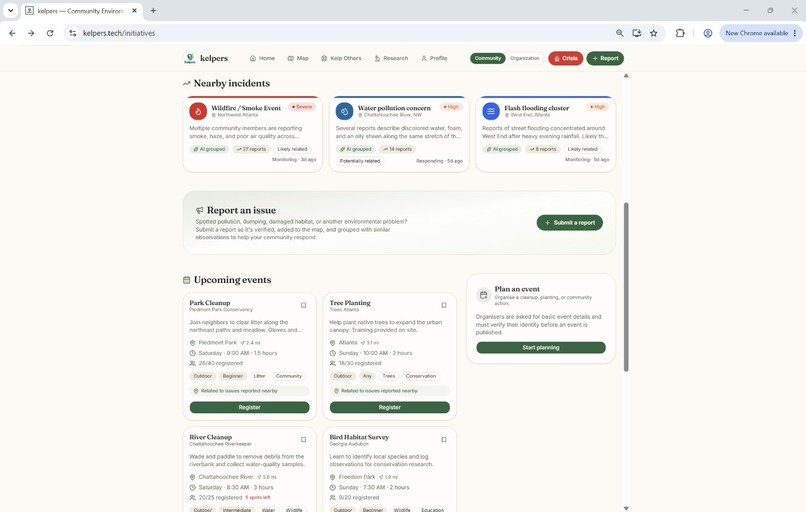
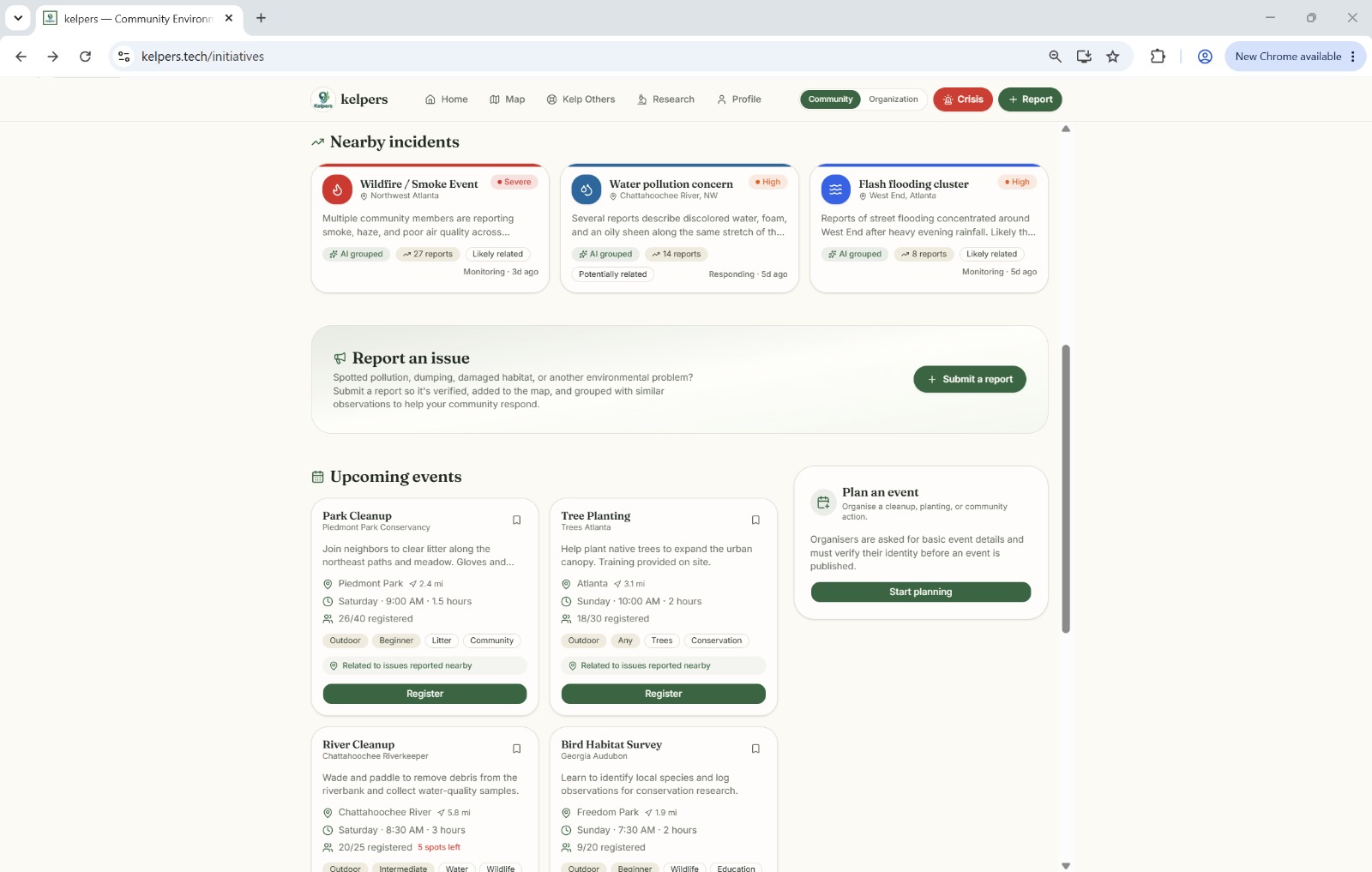
Take Initiative page on the online website
-
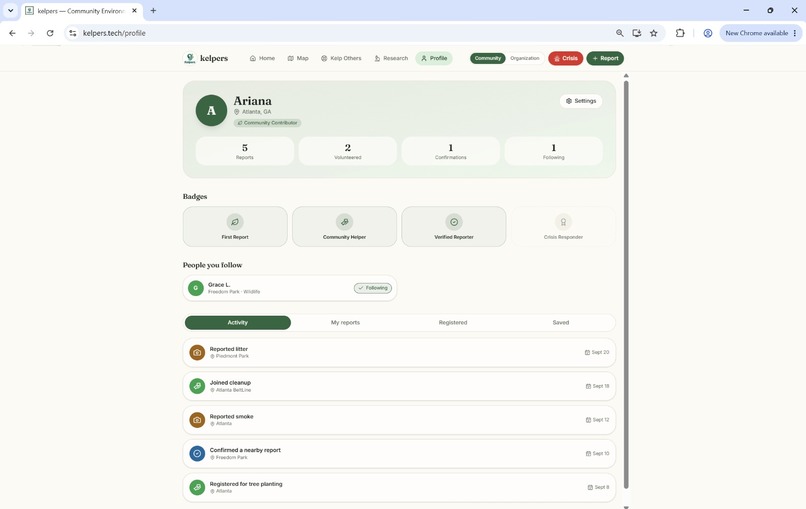
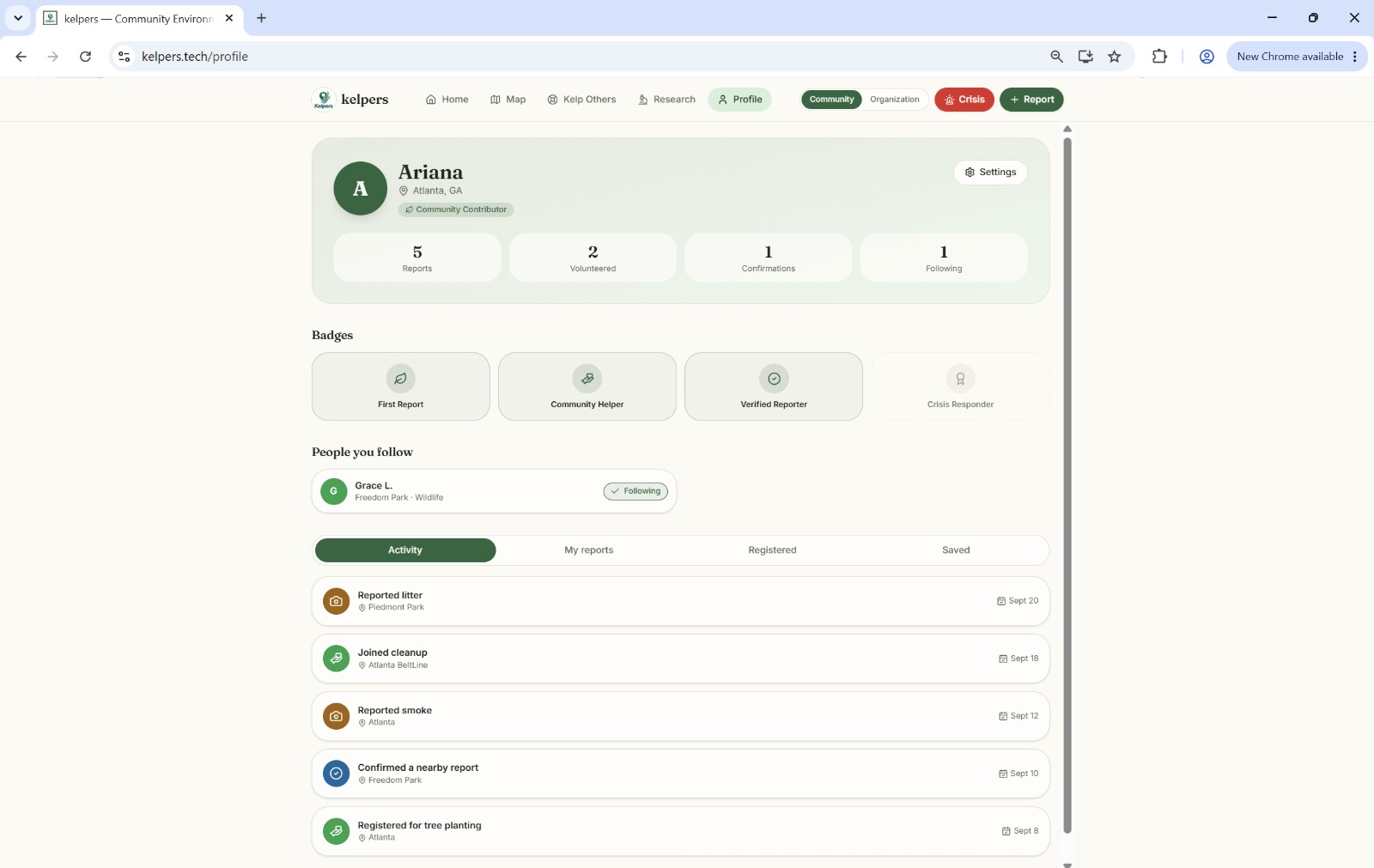
Profile page on the website
-
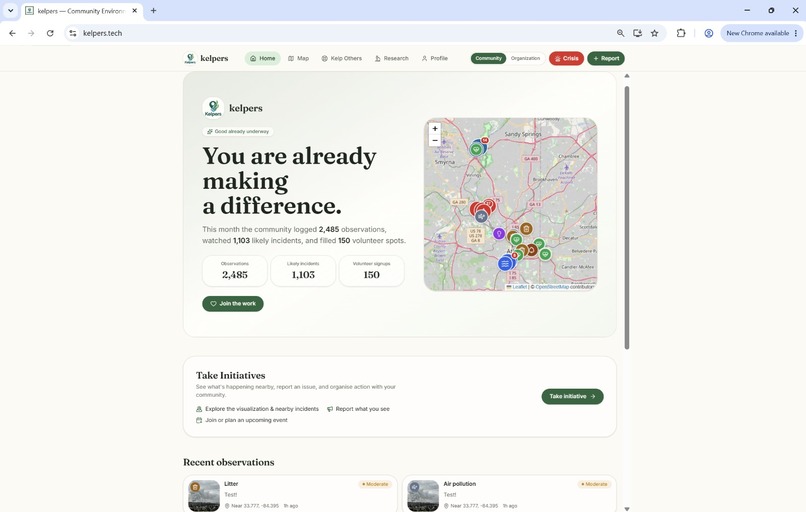
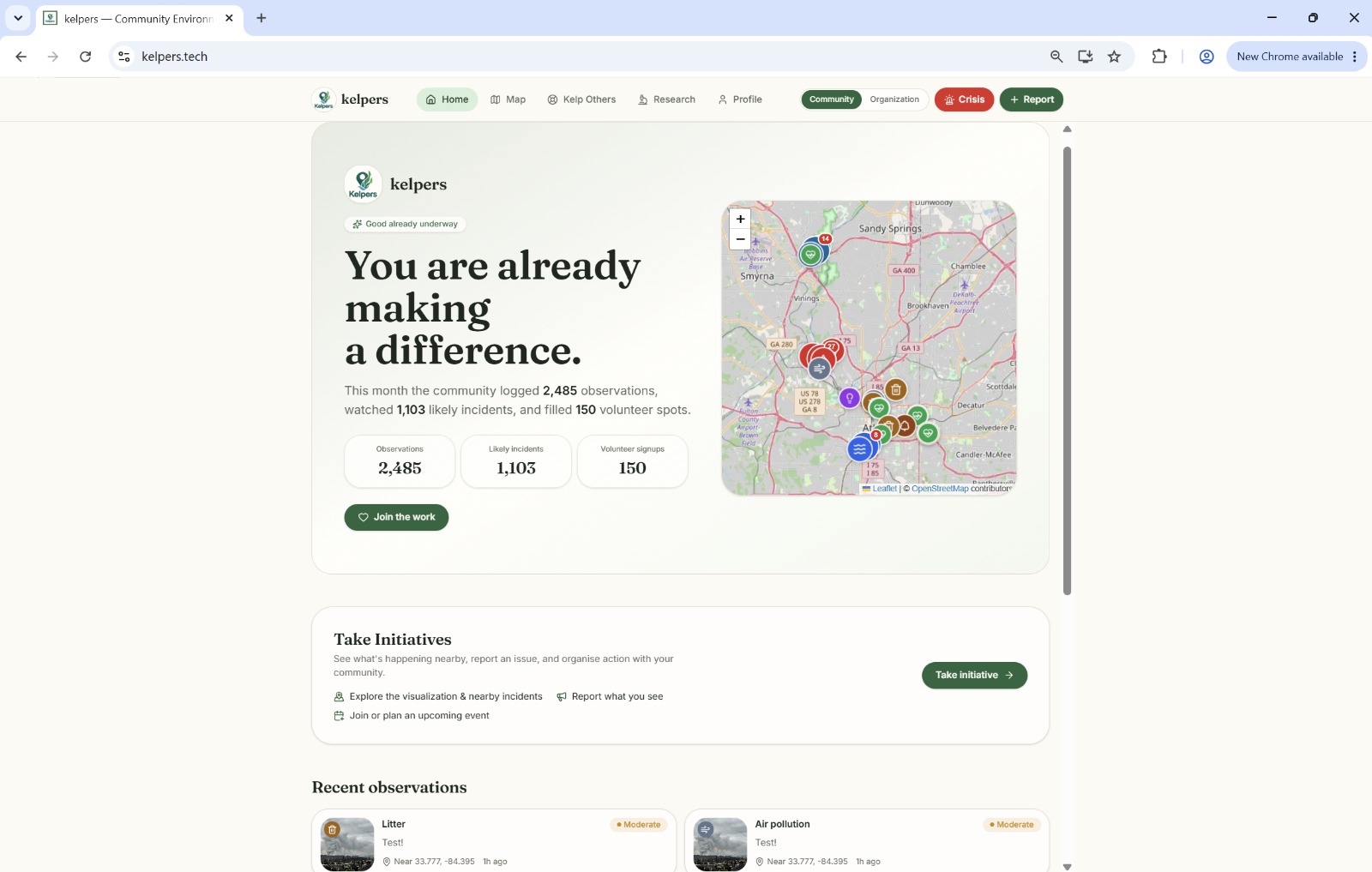
Home Page on the online website
-
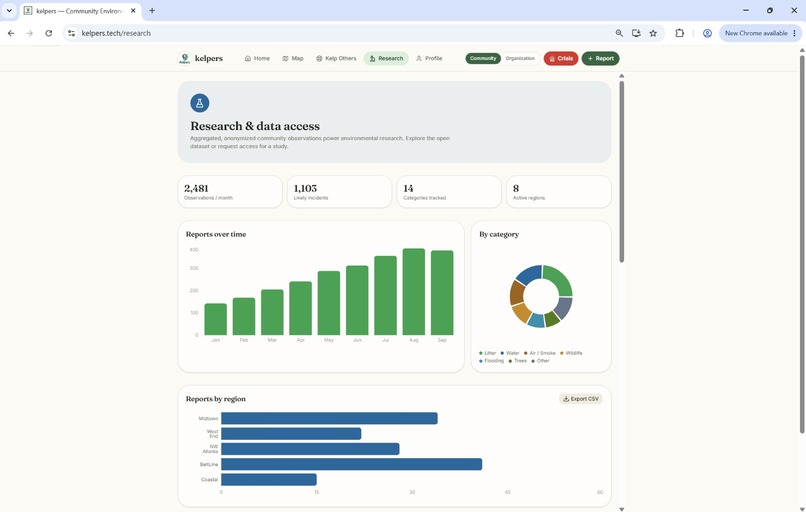
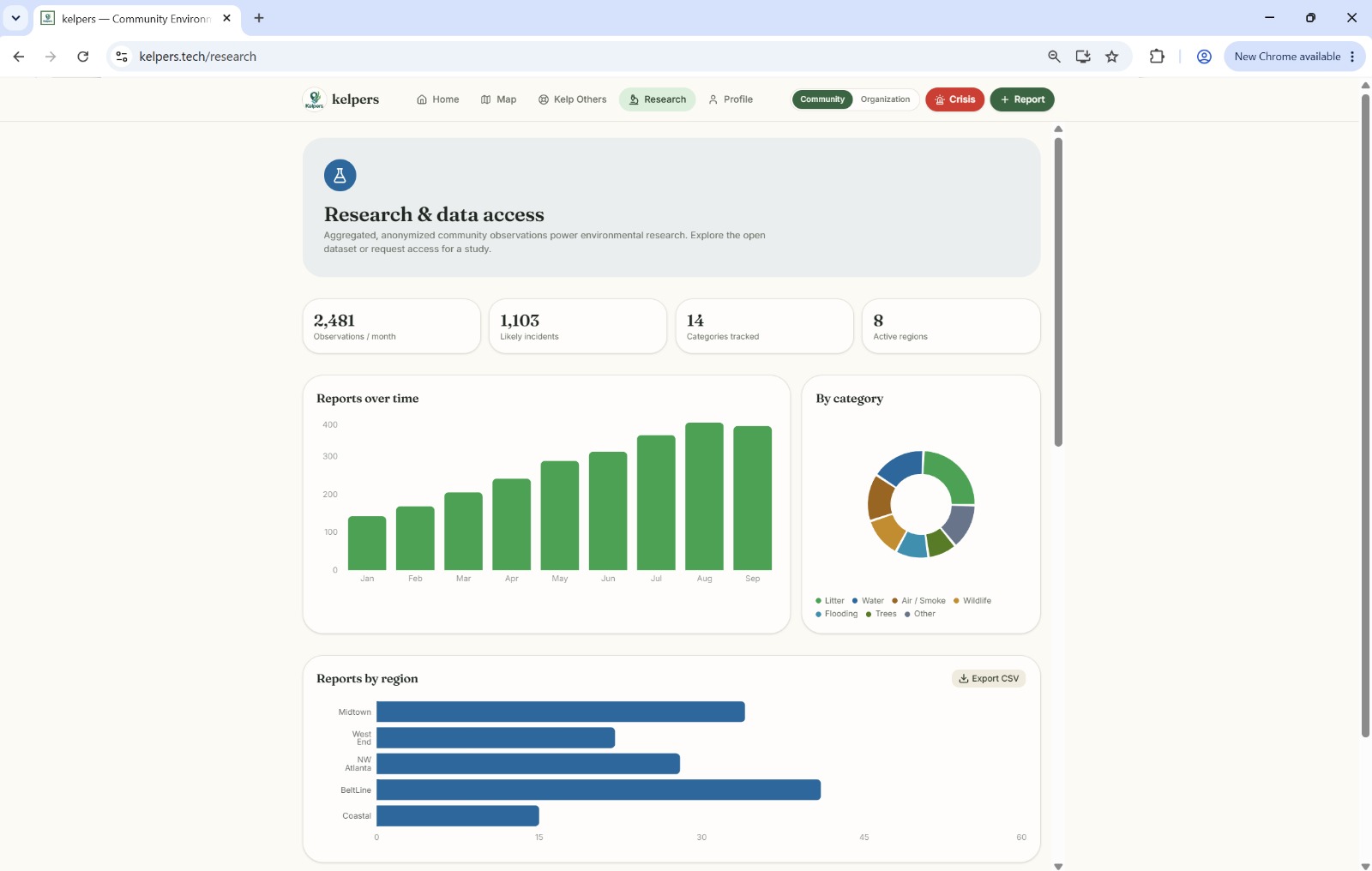
Research page that shows statistics from the reports
-
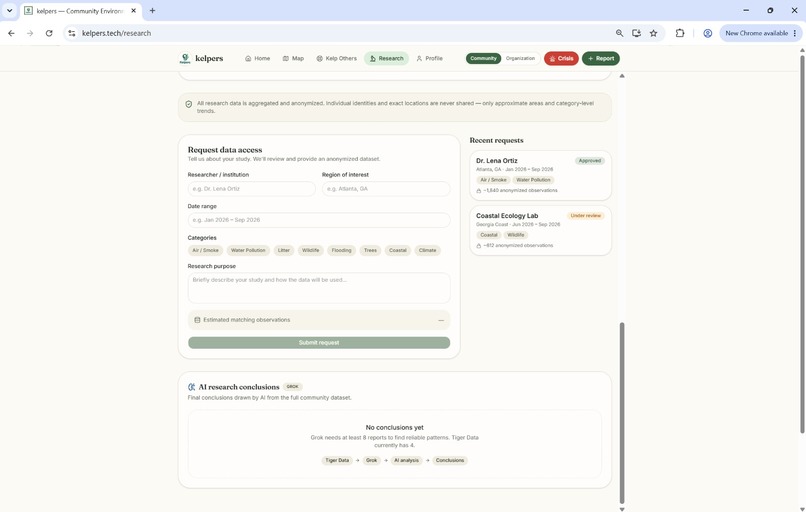
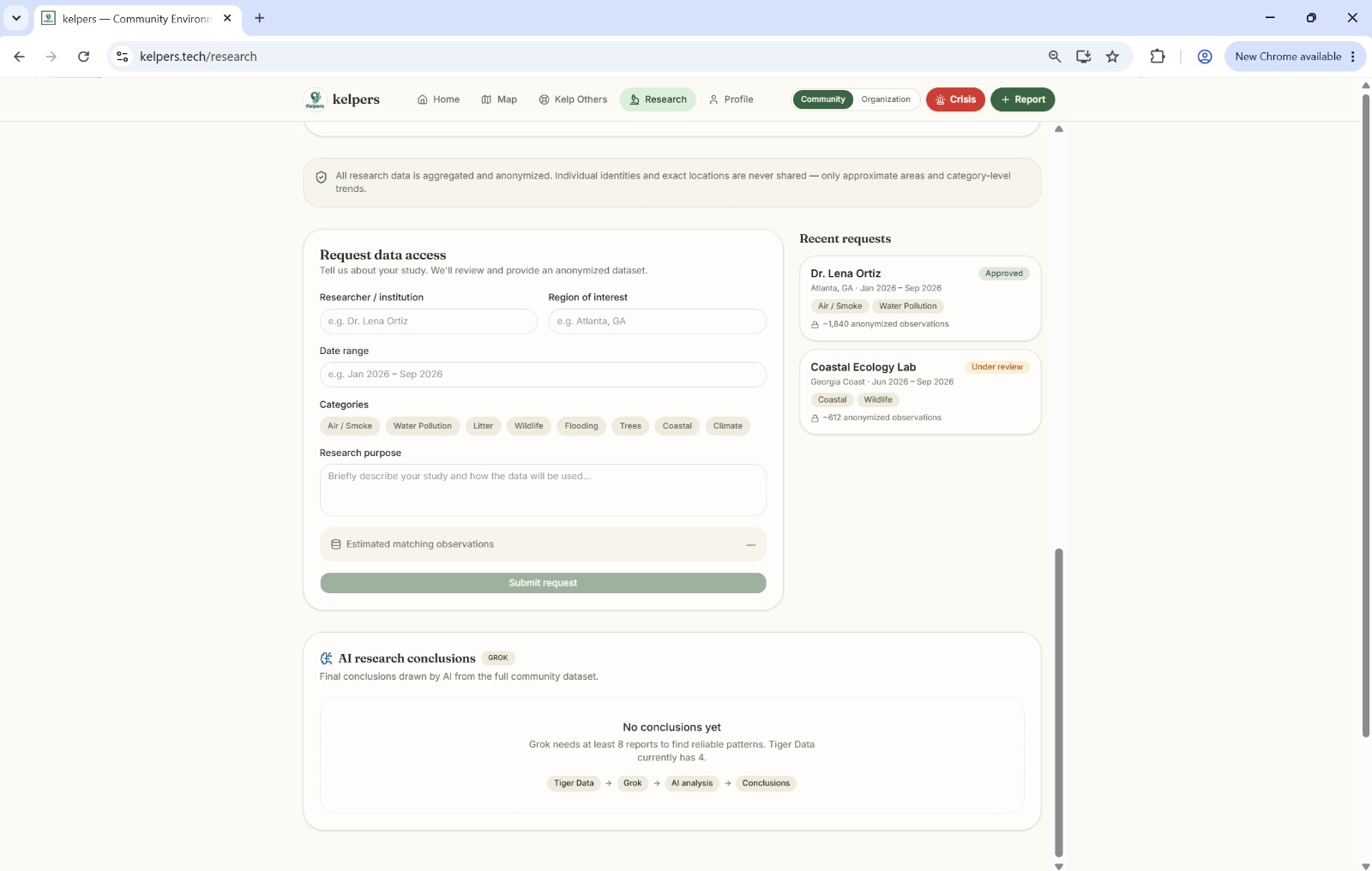
Individuals and groups can request data that was collected from local groups for their purposes
-
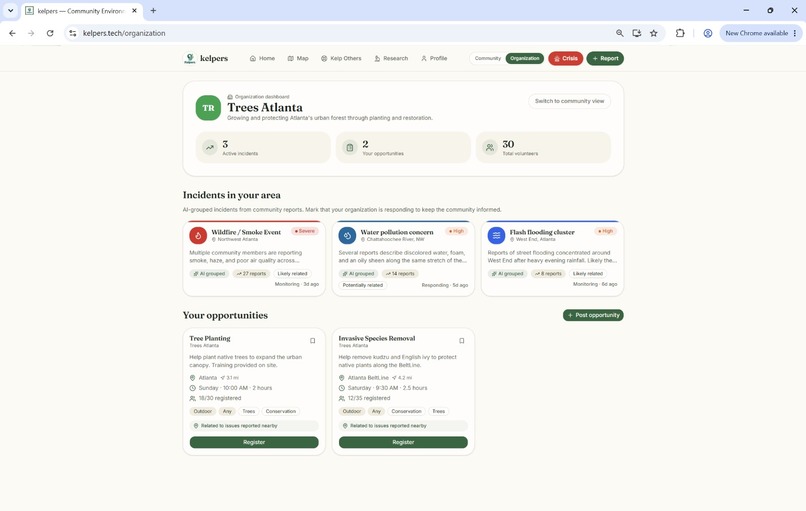
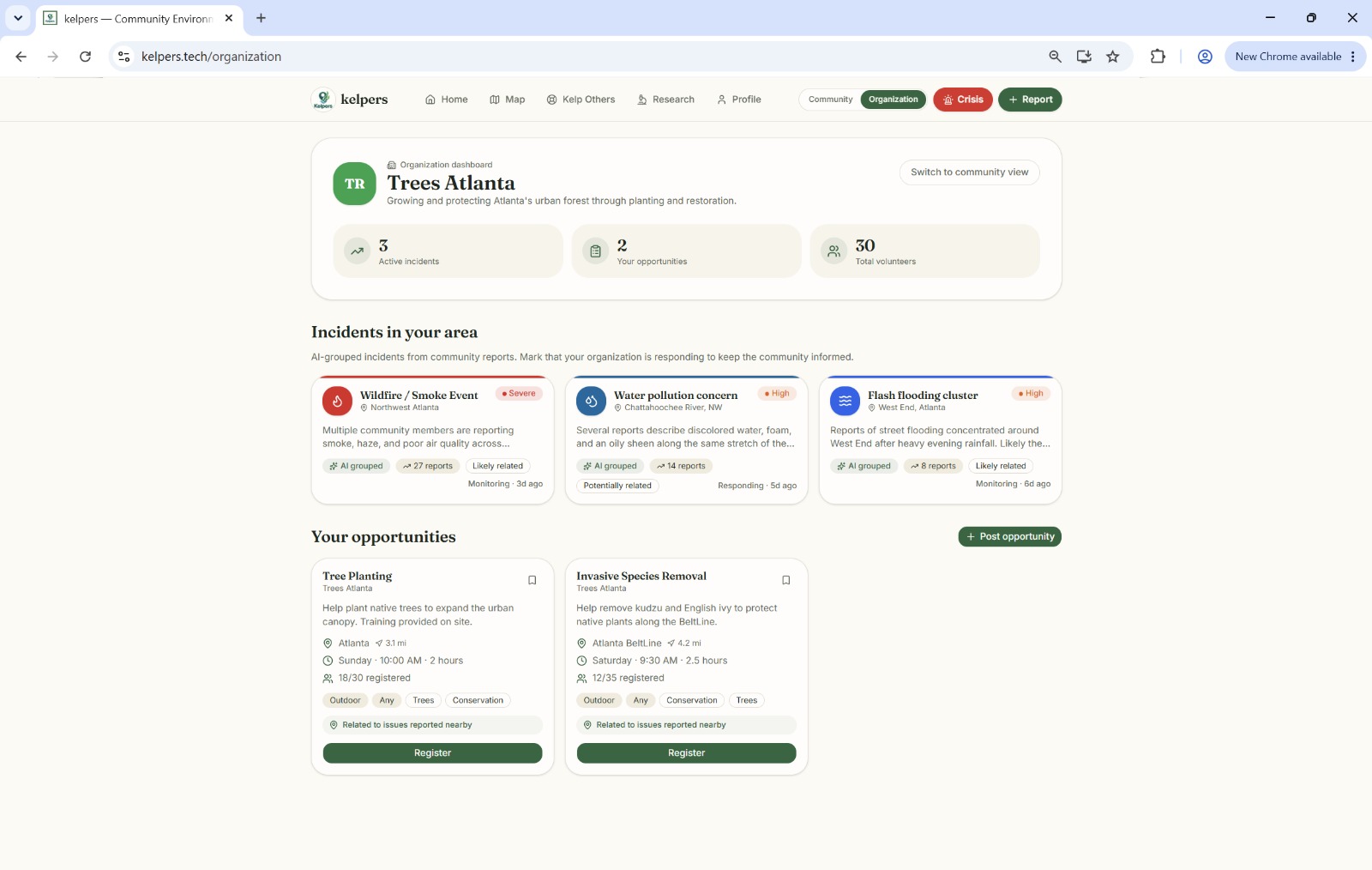
Organization page on the website listing the various groups formed for a variety of purposes
-
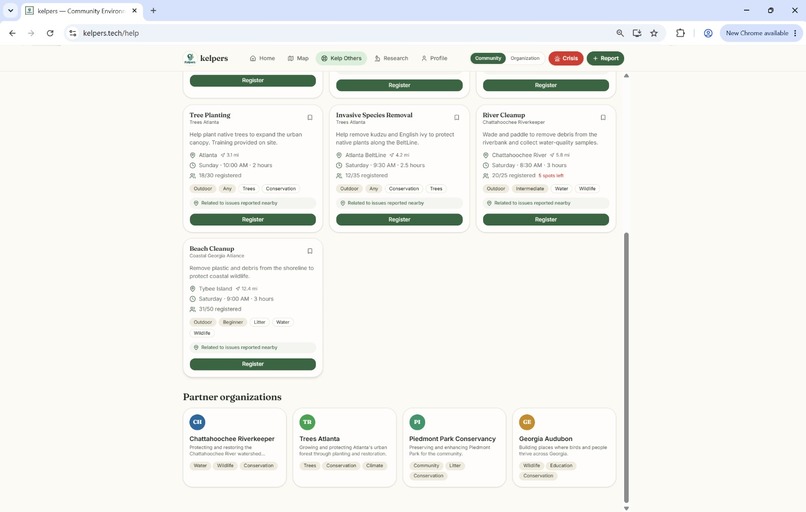
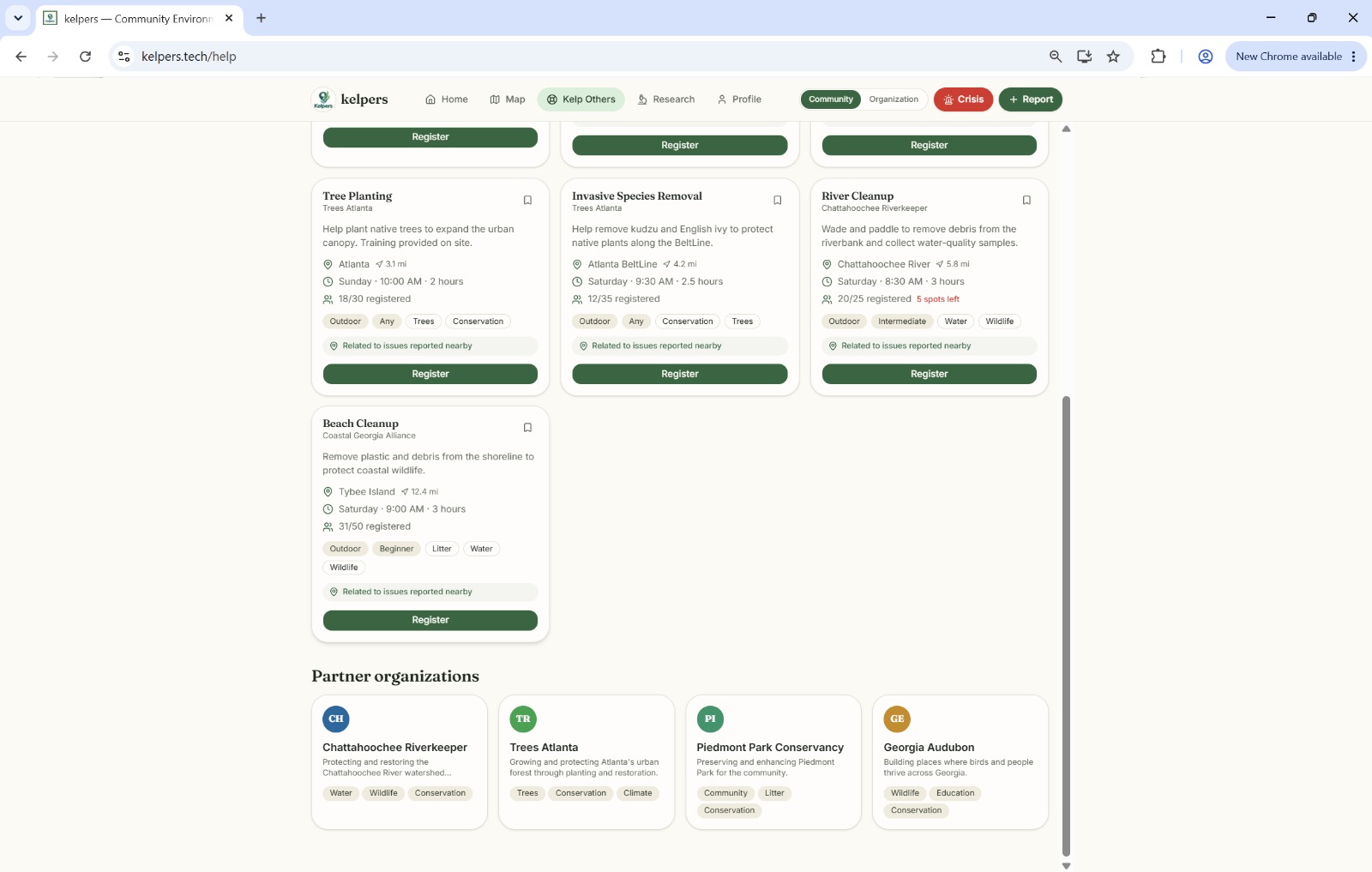
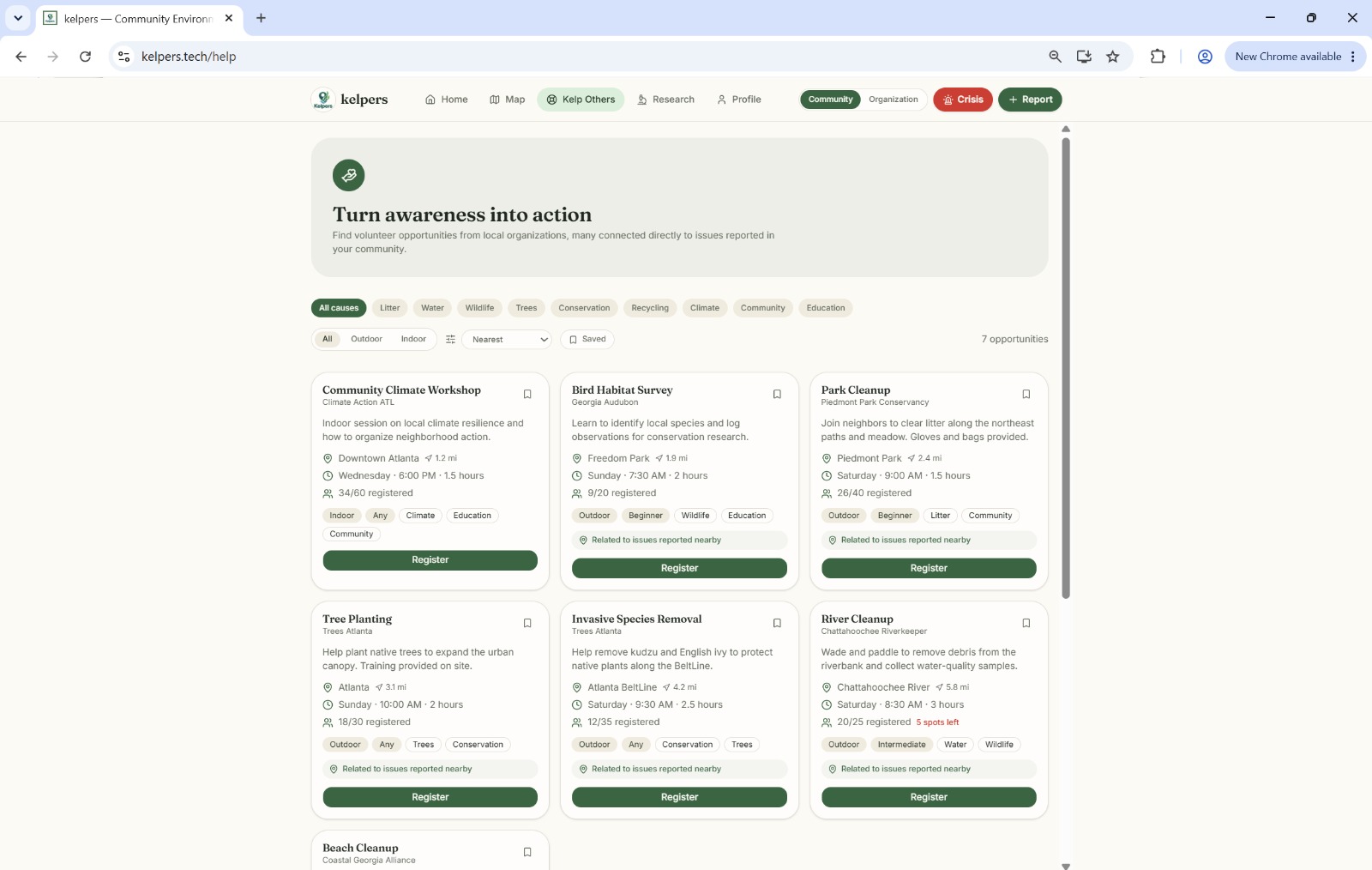
A page that allows you to connect with resources to help others (or **kelp** others)
-
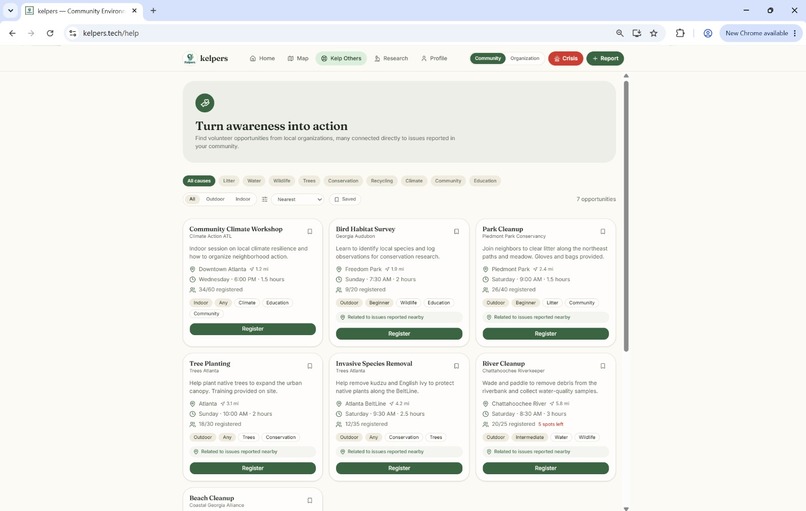
Page where all future collaborative events are listed
-
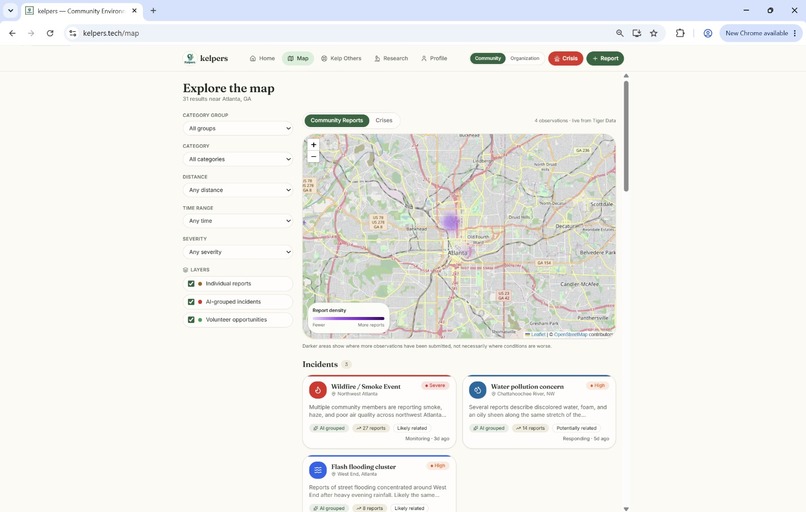
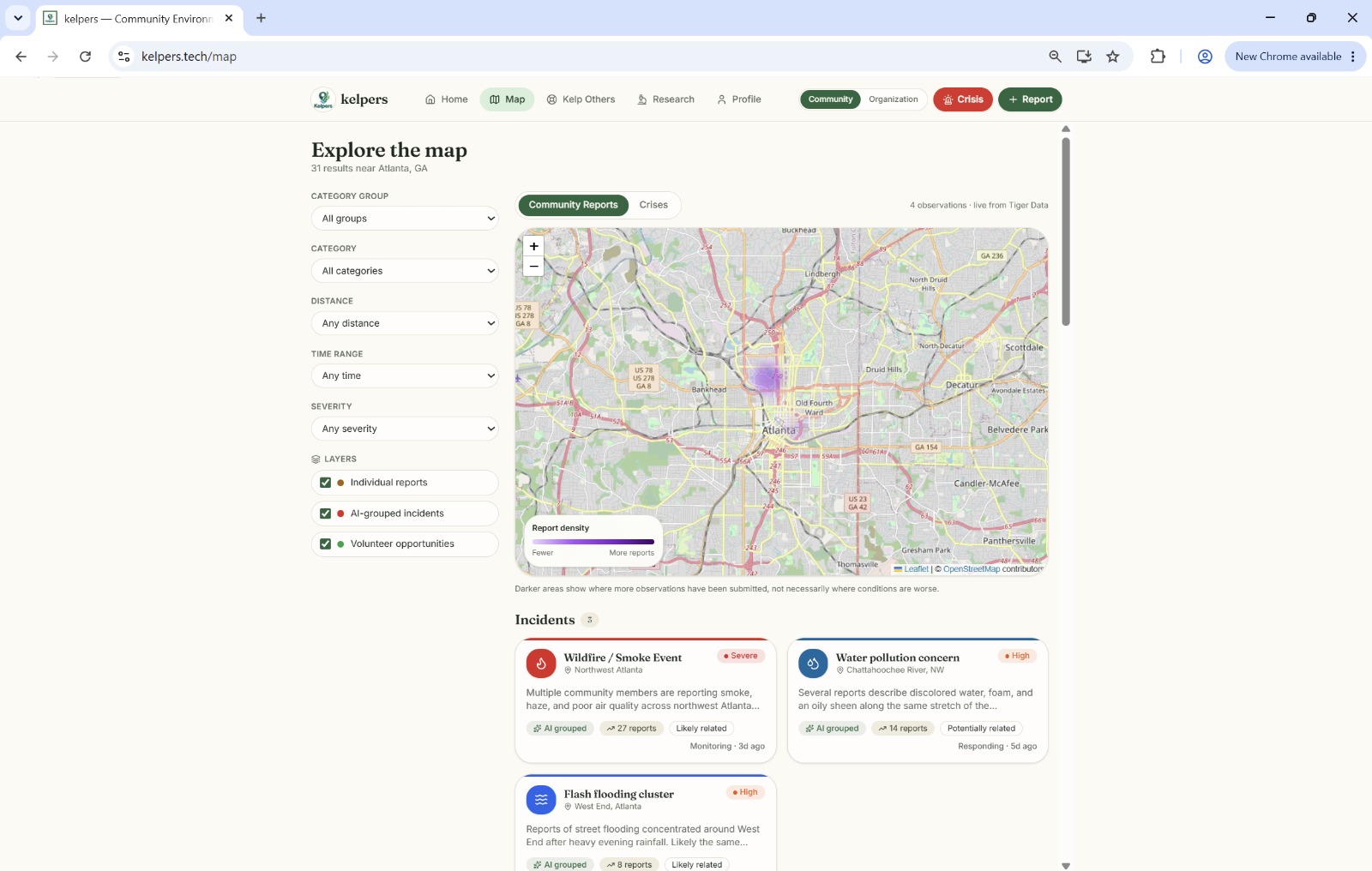
Complete Heat map featuring both reports and crisis online
Inspiration
While brainstorming how we could combine AI, sustainability, and data management, we explored a lot of different directions. What unexpectedly helped us narrow our focus was our team name.
We started brainstorming around ideas like hedgehogs and grassroots movements. Someone jokingly suggested “help”, since we were thinking about creating a platform that could connect people with assistance. We eventually came back to that idea and started thinking about the community we wanted to build: a community of helpers.
That evolved into Kelpers, inspired by kelp, which plays an important role in supporting marine ecosystems. The name felt fitting for a project centered around individuals contributing small observations that can collectively support something much larger.
That became the foundation of our idea:
What if small, local observations from a community could become meaningful data for understanding and addressing larger problems?
What It Does
Kelpers is a crowdsourced data collection PWA designed to turn local observations into actionable insights for social good.
Users can submit a wide variety of observations, ranging from major events or crises to everyday environmental issues like littering. The platform can also collect measurements and observations related to weather and other local conditions.
These submissions are stored in our database and passed through an AI-powered quality-control pipeline. Gemini analyzes submitted reports to assess the consistency and quality of the information and identify potential issues or duplicates. This helps us organize and improve the quality of our crowdsourced dataset for further analysis.
Our verified data can then be analyzed by Grok to identify patterns, recurring issues, anomalies, and other relationships that may not be immediately visible from individual reports.
Our core pipeline is:
Community observations → Verified data → Pattern recognition → Insights → Potential solutions
For example, a single litter report may not tell us much. But thousands of localized observations collected over time could reveal recurring problem areas, seasonal trends, resource gaps, or other patterns that organizations could use to investigate and develop longer-term solutions.
The goal isn't simply to collect more data. It is to make every individual observation more useful by connecting it to the larger picture.
How We Built It
We built Kelpers as a full-stack web application with a crowdsourced reporting system connected to a database for storing and analyzing environmental observations.
Our AI pipeline uses multiple models for different stages of the process:
- Gemini quality-checks and verifies submitted observations.
- Grok analyzes the collected data to identify larger-scale patterns and trends.
- ElevenLabs provides accessible text-to-speech functionality.
We integrated these technologies into a single workflow so that an observation submitted by one person can move through the system from collection and storage to verification and analysis.
This architecture also gives Kelpers room to grow. As more observations are collected, the dataset can support additional forms of analysis and new social-good applications.
Challenges We Ran Into
One of our biggest challenges was getting all of our different systems and resources to work together.
Different members of our team contributed different technologies and components, so creating a working ecosystem between the frontend, backend, database, and AI services took some trial and error. Integrating multiple external AI services into one reliable workflow also came with a learning curve.
Ultimately, getting the full pipeline working was one of the most valuable parts of the process. We had to think not only about whether individual features worked, but also about how they worked together as one system.
Accomplishments We're Proud Of
We are most proud of turning what started as a broad idea into a working end-to-end system with multiple potential applications.
One of our biggest accomplishments was getting the complete data workflow working:
Receive → Store → Verify → Analyze
Seeing a community report move through our application, become structured data in our database, get quality-checked by AI, and then become part of a larger analysis was especially rewarding.
We also designed Kelpers with flexibility in mind, so the underlying data collection and analysis infrastructure can potentially support applications beyond the environmental use cases we explored during the hackathon.
What We Learned
This project taught us how to balance creative possibilities with a focused goal.
There were countless directions we could have taken with AI, crowdsourcing, sustainability, and data analysis. A major challenge was figuring out which ideas could actually contribute to the same central purpose instead of turning Kelpers into a collection of unrelated features.
We learned to think about the project as a system rather than as individual features: every component needed to contribute to the larger pipeline of collecting, verifying, analyzing, and using data.
We also learned a lot about integrating different technologies, coordinating multiple requirements, and making technical decisions under hackathon time constraints.
What's Next for Kelpers
We designed Kelpers so that its underlying functionality can be adapted and integrated into other social-good applications.
One of the areas we're most interested in exploring is how the growing collection of localized, verified data can be used beyond the applications we developed during the hackathon.
Because the data is community-generated, localized, and filtered through a verification process, it could potentially support applications such as:
- Identifying recurring environmental issues
- Detecting local resource gaps
- Assisting nonprofit organizations with research
- Identifying emerging or recurring patterns
- Supporting longer-term community interventions
- Providing localized datasets for future research and AI applications
We also see opportunities to expand the platform's analytical capabilities while continuing to think carefully about privacy, responsible data use, and appropriate anonymization.
Ultimately, our vision for Kelpers is to make every individual observation more valuable by connecting it to thousands of others.
One observation may describe an event. A community of observations can reveal a pattern. And a pattern can help people decide what to do next.

Log in or sign up for Devpost to join the conversation.