Inspiration
We started with a simple question: how can technology help older adults stay independent for longer without forcing them to learn another complicated interface?
During Origin Weekend, we spoke with older adults and family caregivers around USC. A pattern kept coming up: family members often play an important role behind the scenes, whether that means teaching technology, sharing reminders, or helping coordinate everyday needs. We also heard that simplicity matters. One mother–daughter pair specifically preferred personalized spoken reminders over disruptive alarms.
That pushed us toward a voice-first product rather than another app full of menus.
What it does
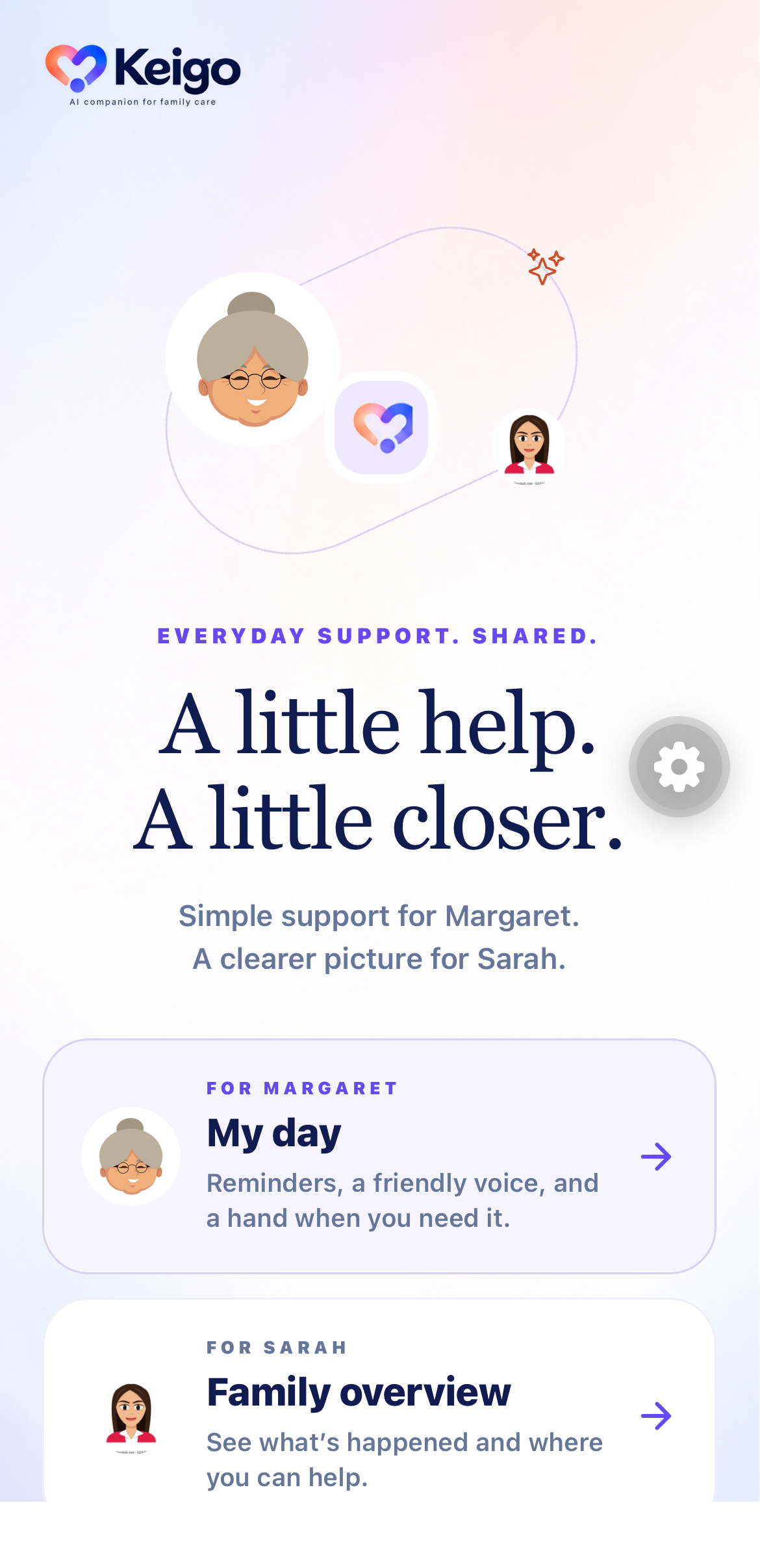
Keigo is a voice-first AI companion and family coordination platform for older adults.
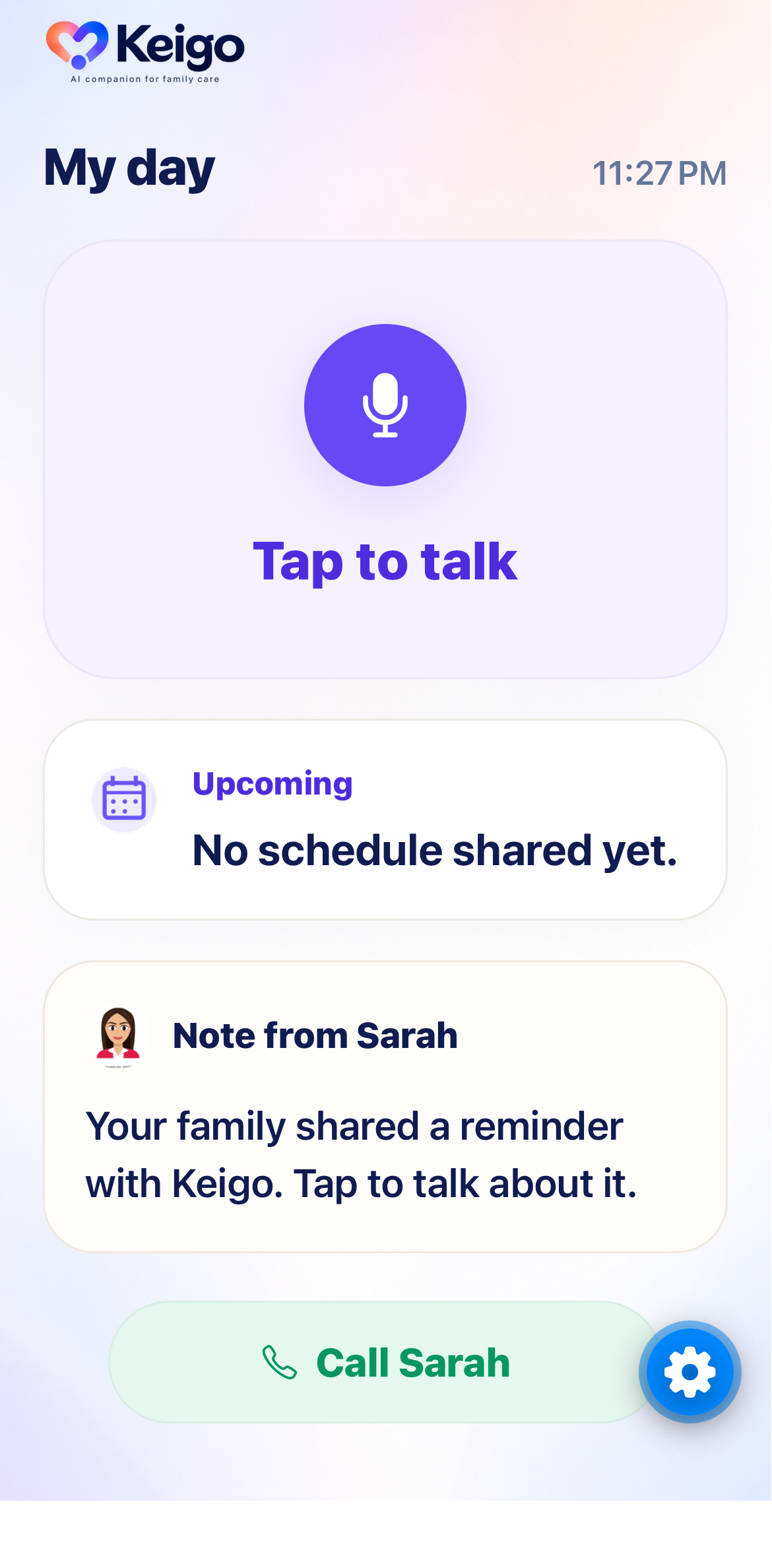
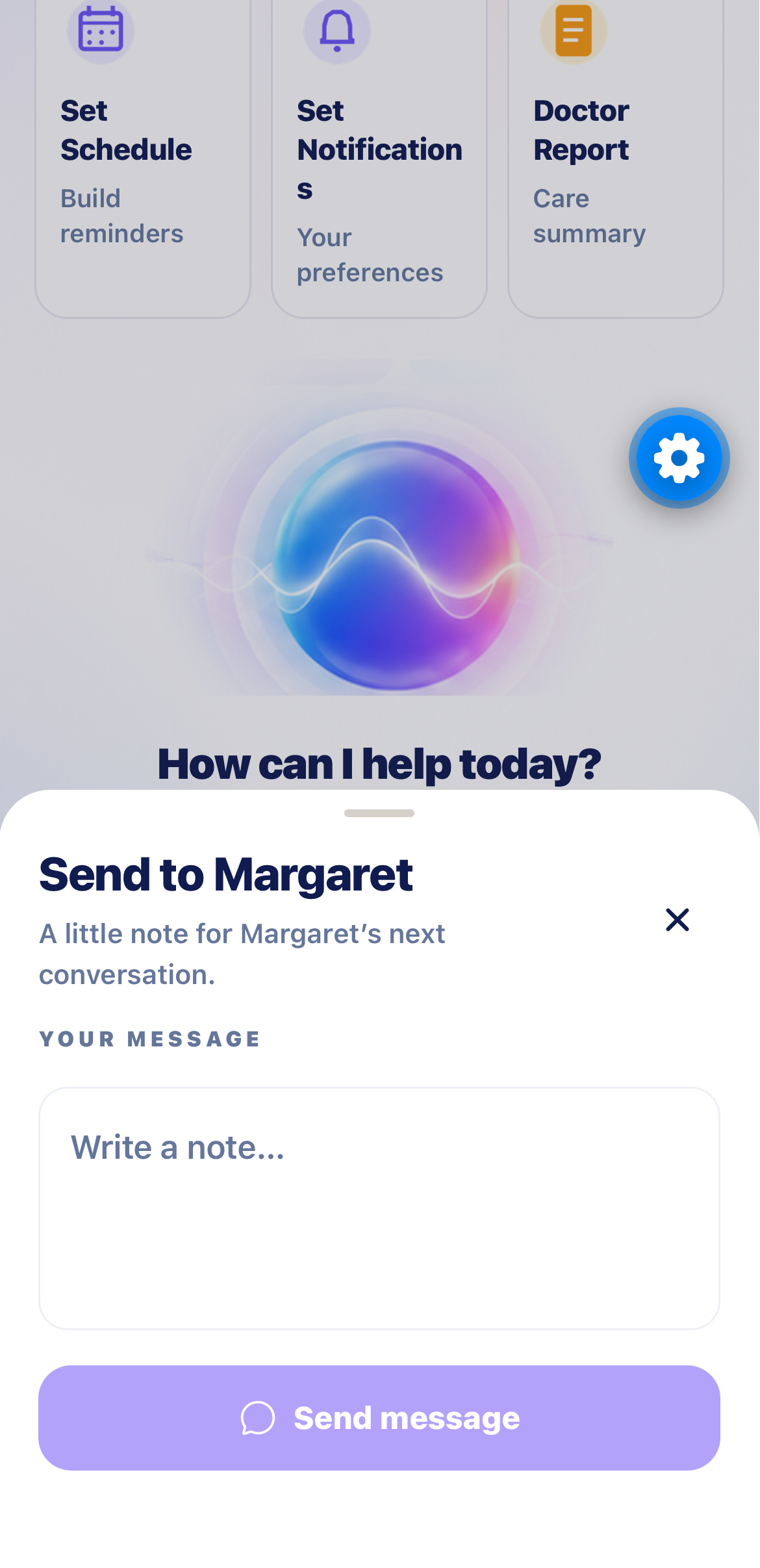
For the older adult, Keigo acts like a personal secretary. They can speak naturally to ask about their schedule, hear family messages, access remembered personal context, receive reminders, and ask for help with everyday needs.
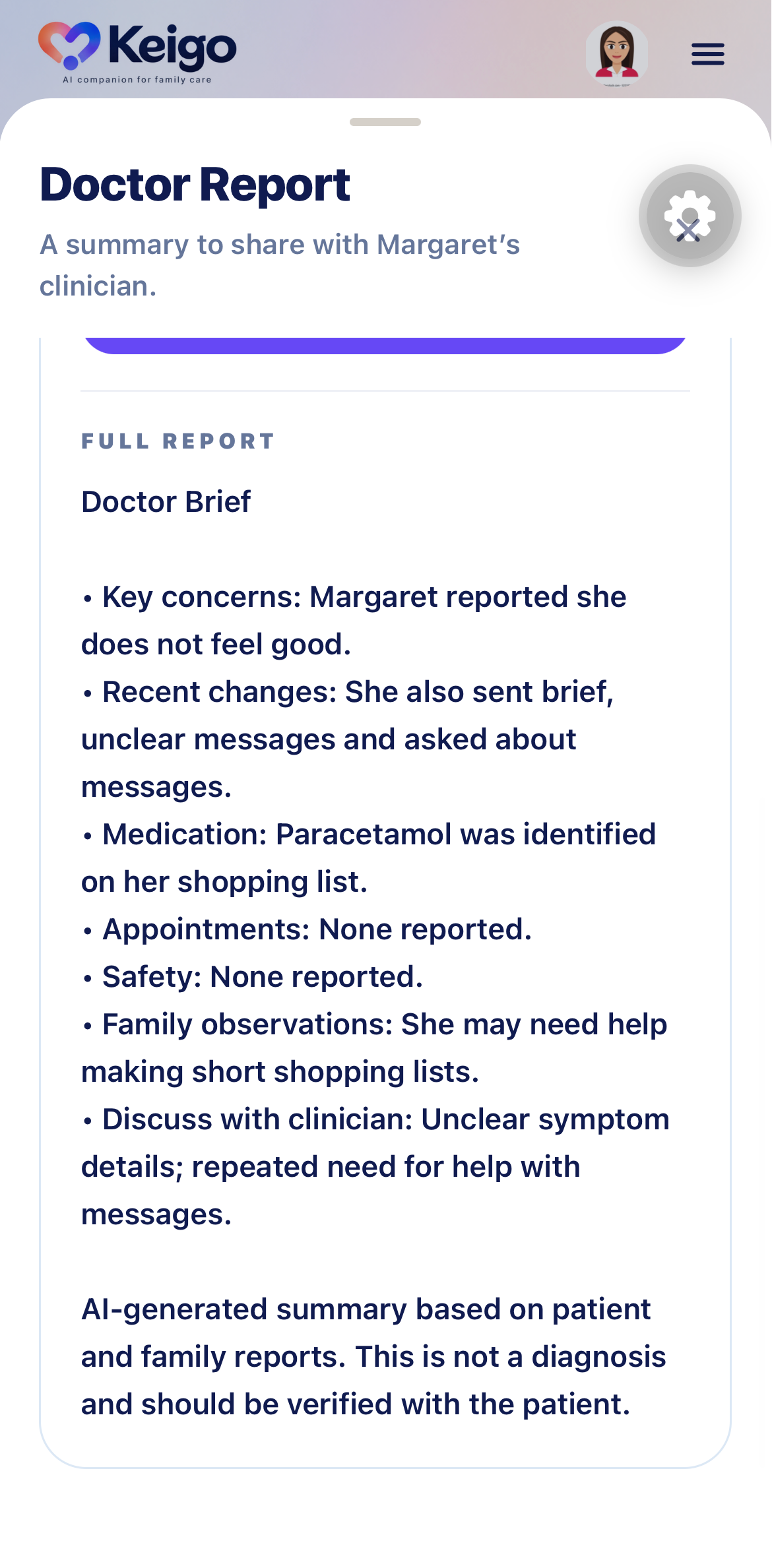
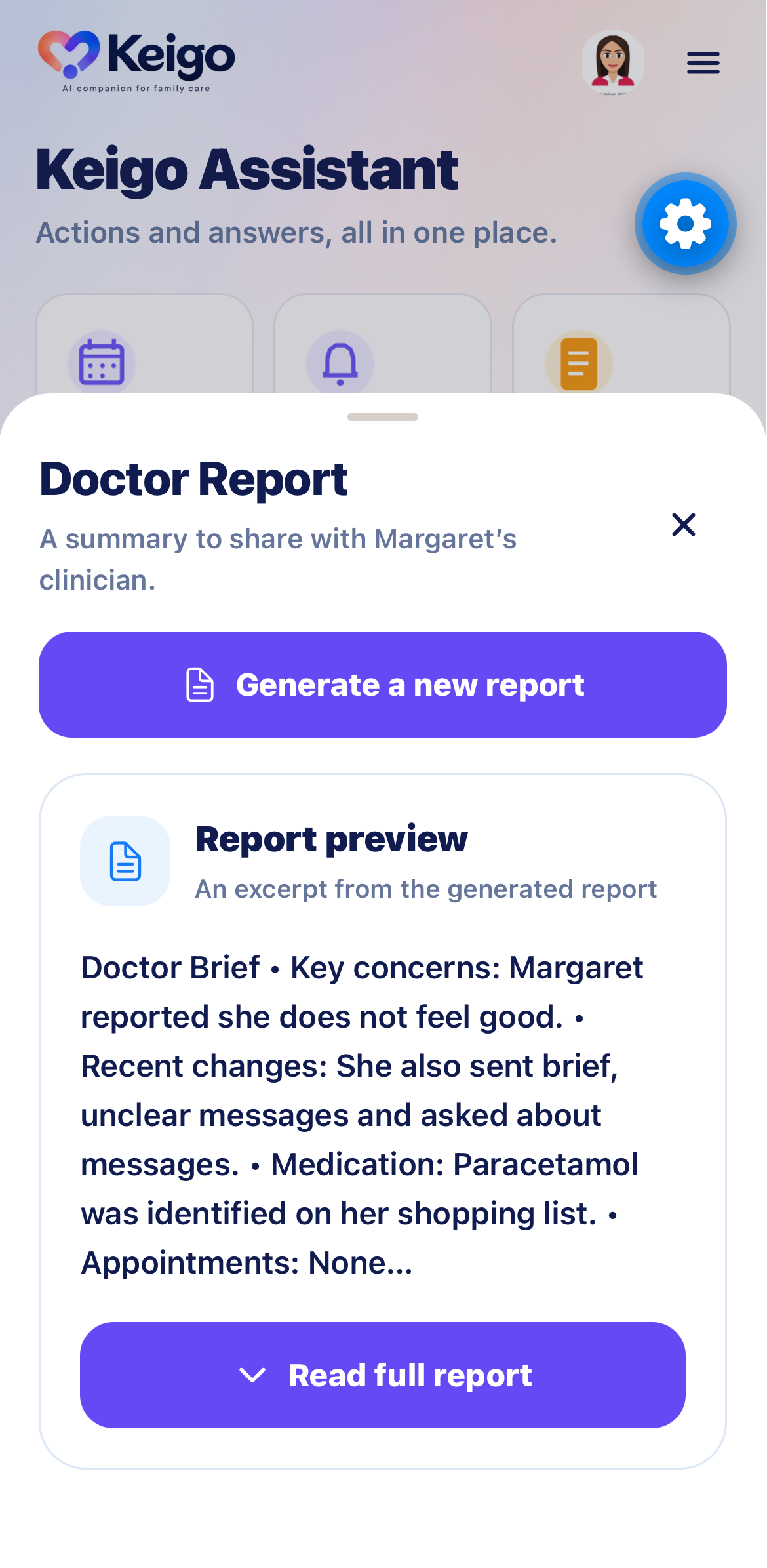
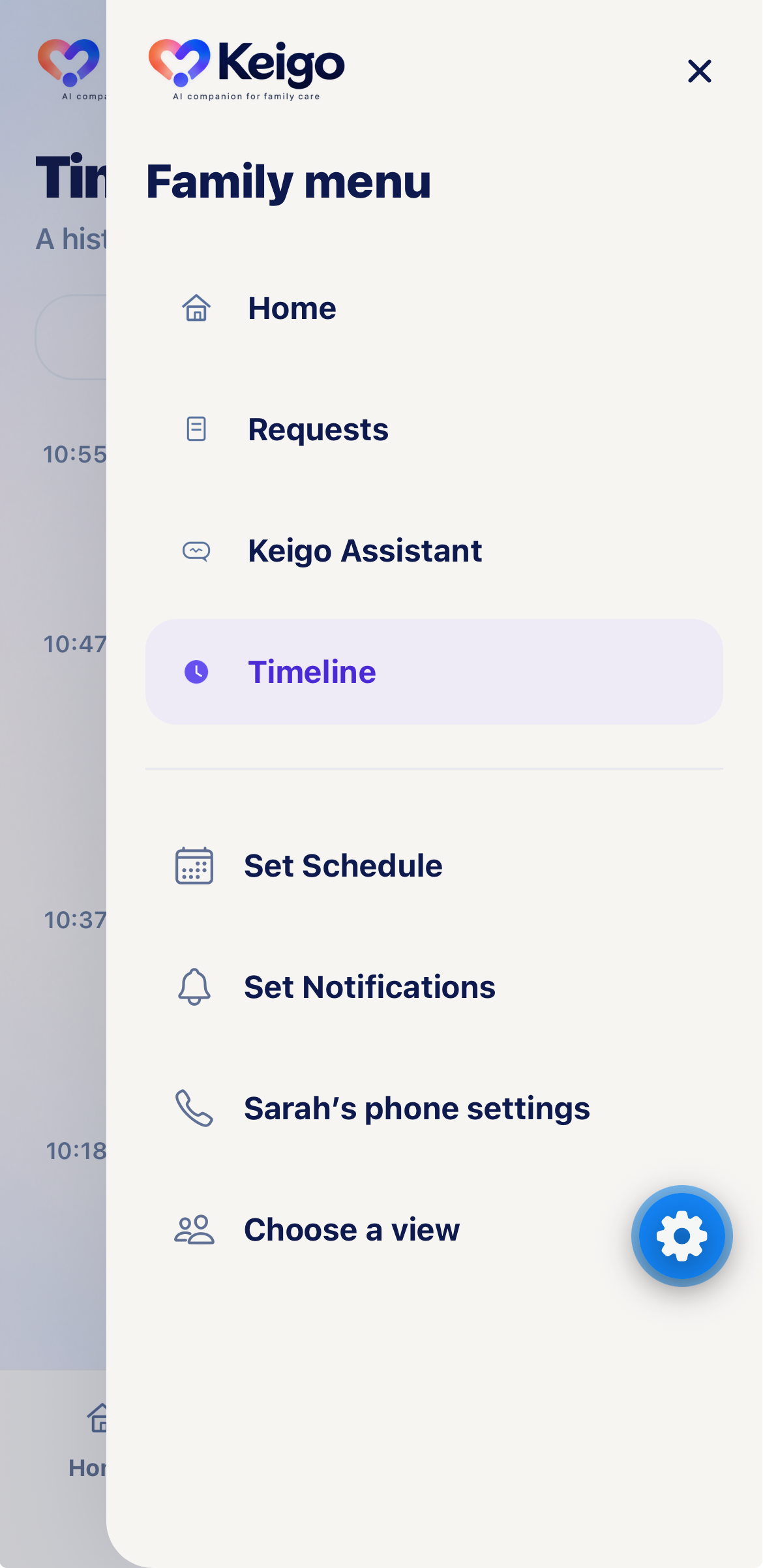
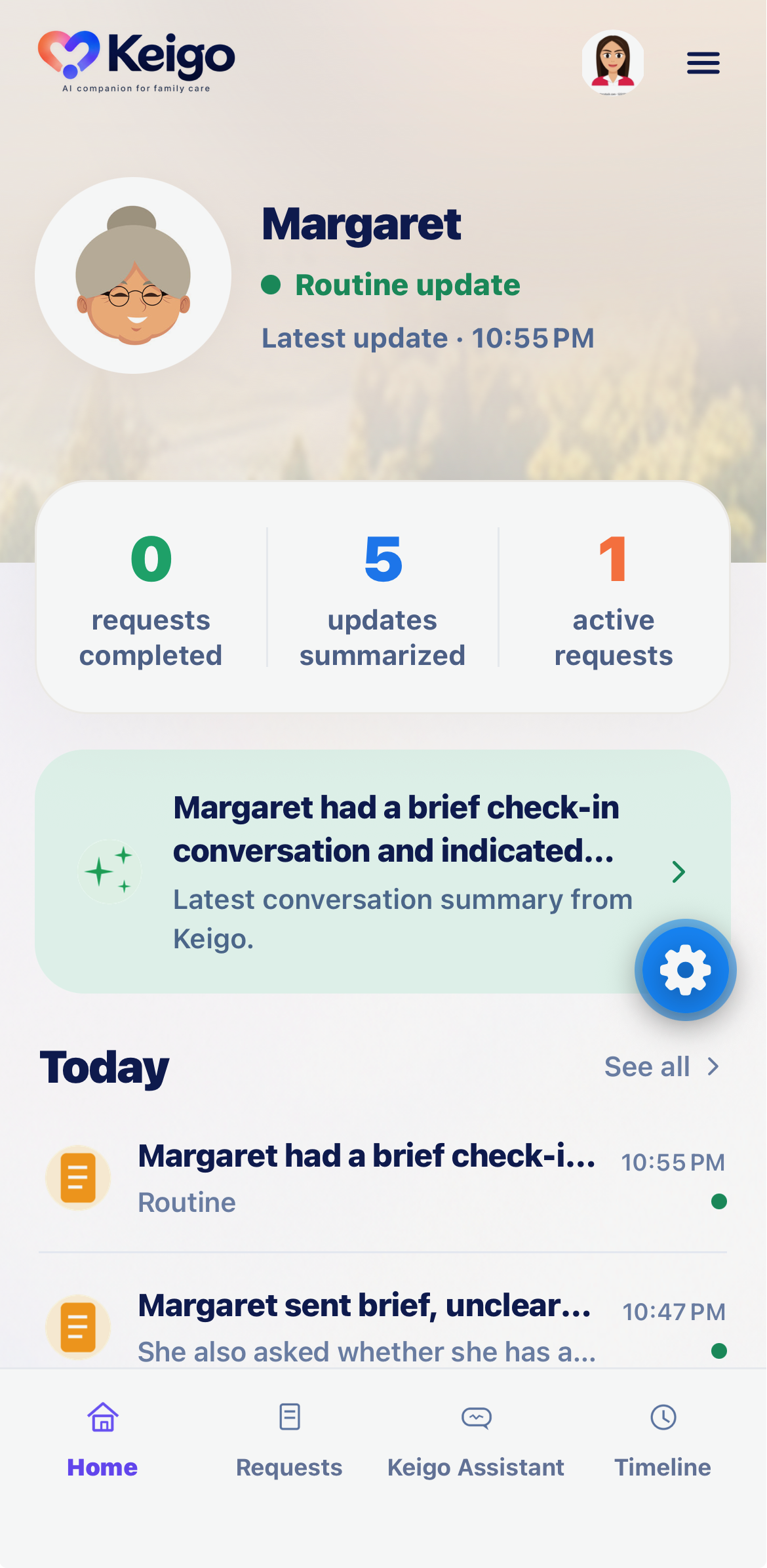
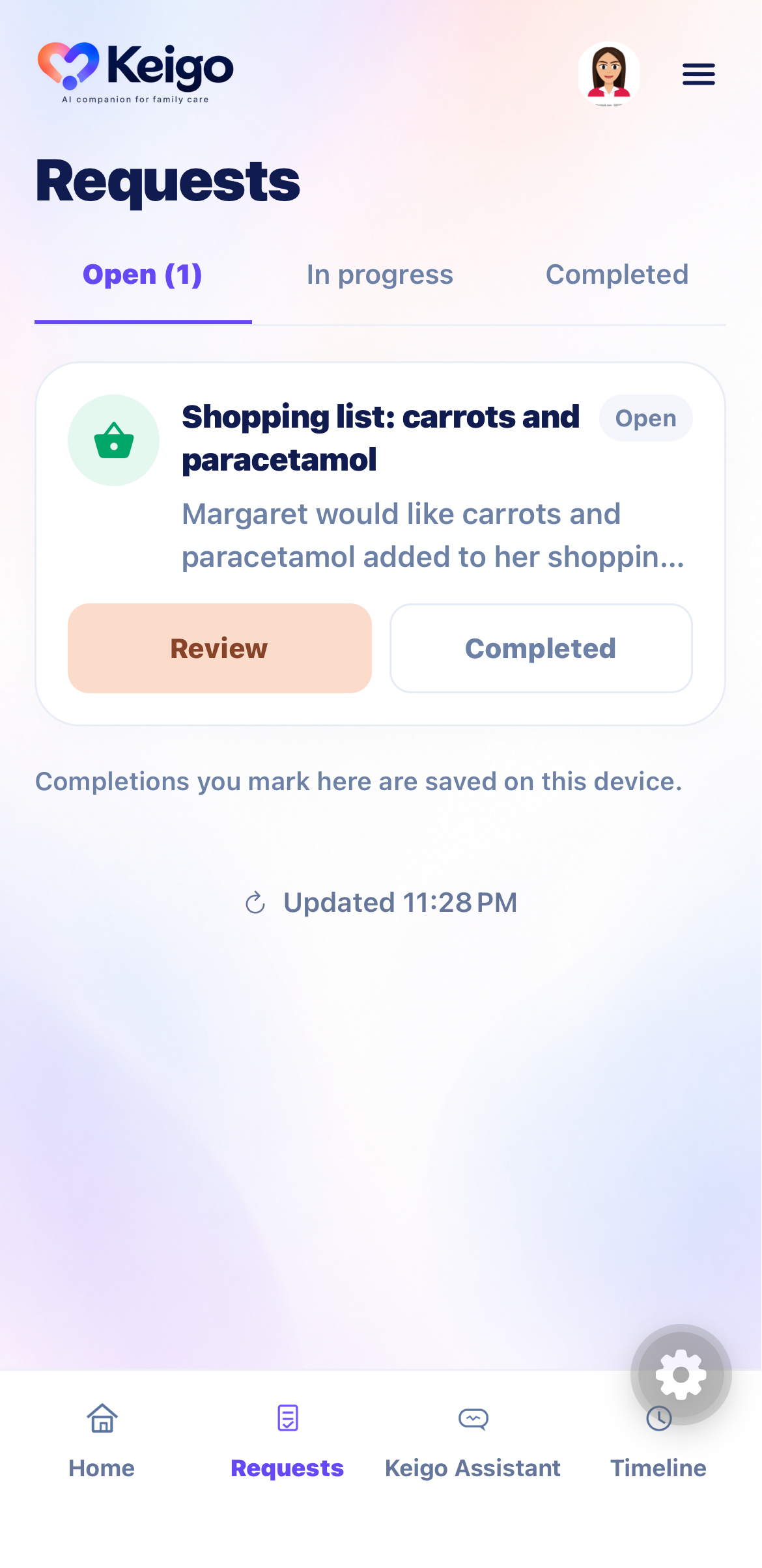
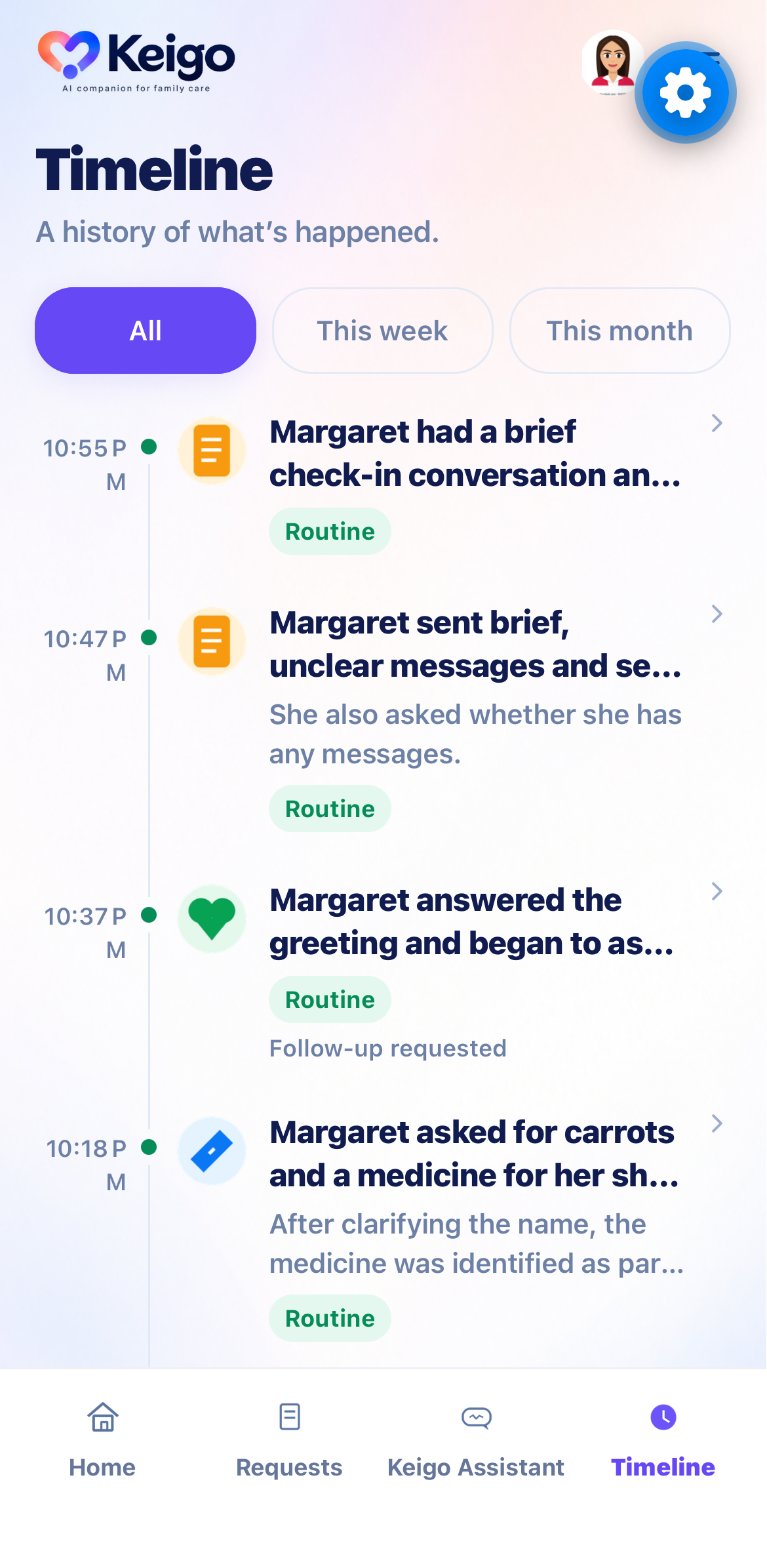
For family members, Keigo provides a separate dashboard where they can see requests, updates, recent activity, and important information without constantly calling or checking in.
Keigo can also turn conversations into useful follow-up. Instead of being just a chatbot, the system can summarize conversations, surface actionable requests, and flag information that may need family attention.
We also built device actions. For example, an older adult can ask, “Where are my keys?” and Keigo can send a real command to a registered device receiver to make it flash and play a sound.
Our goal is simple:
Handle → Summarize → Escalate
Keigo handles everyday interactions when it can, summarizes what matters, and brings family in when follow-up is needed.
How we built it
Keigo is built as a connected voice and mobile system.
- Expo / React Native — main mobile experience
- Vapi — real-time voice conversations
- n8n — workflow orchestration and backend actions
- Supabase — persistent profiles, memories, events, requests, messages, notifications, device commands, and other user data
The older-adult experience and family experience share the same persistent backend, so conversations can create meaningful updates rather than disappearing when a call ends.
We also created a browser-based device receiver for item finding. A voice request can trigger a backend device command, which the receiver detects and turns into a visual and audible locator signal.
Our reminder and notification flows are also part of the prototype, with persistent scheduling and delivery behavior continuing to be refined.
Challenges we ran into
The hardest part was making the system actually take actions instead of only sounding intelligent.
For example, it is easy for an AI assistant to say, “I’ll remind you,” even when no reminder has actually been saved. We had to separate conversational responses from real backend actions so Keigo only claims something happened when the corresponding action succeeded.
We also had to think carefully about urgency versus actionability. A grocery request may require family follow-up without being an emergency, while other events may deserve immediate attention.
Another challenge was maintaining useful personal context across conversations while keeping the interaction simple enough for an older adult to use naturally.
What we learned
Our biggest lesson was that the older adult is only one side of the product.
Independence often depends on another person quietly doing work behind the scenes. That changed how we thought about Keigo: instead of building only an AI companion, we built a system that connects the older adult’s everyday conversations with family follow-through.
We also learned that adding more features is not necessarily the answer. The people we spoke with repeatedly emphasized simplicity, understandable communication, privacy, and peace of mind.
What's next
Next, we want to test Keigo with more older-adult and family pairs and measure whether it actually reduces repetitive caregiver follow-up.
We also want to continue improving:
- persistent reminder scheduling and delivery
- Bluetooth-based item finding
- multilingual voice support
- appointment assistance
- scam / caller screening
- privacy and sharing controls
- usability for older adults with different levels of technical comfort
Our long-term goal is to make advanced AI feel less like new technology an older adult has to learn and more like a simple, familiar assistant they can talk to.
Built With
- expo.io
- n8n
- react-native
- supabase
- vapi

Log in or sign up for Devpost to join the conversation.