Inspiration
Every household runs on a thousand invisible details. Where the passport lives. Whether the dishwasher is still under warranty. Which bin goes out on Saturday. These facts are rarely written down in one place—they live in drawers, on sticky notes, in one person's memory, or scattered across text threads.
Alexa+ is the natural interface for this problem. The best household memory is one you can ask—hands-free, from the hallway, while holding a toddler or a bag of groceries. Household Memory explores what a shared household reference looks like when the primary interaction is voice through Alexa+.
What It Does
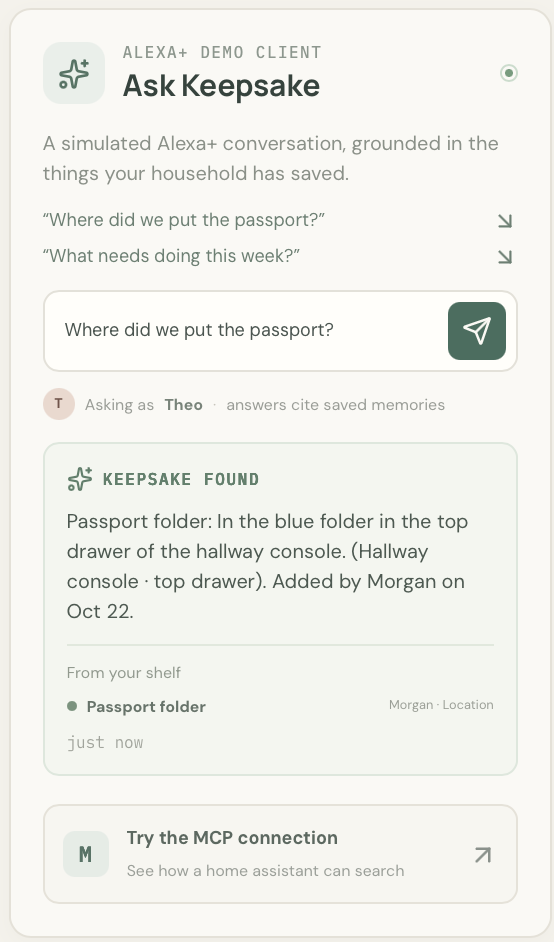
Household Memory is a simulated Alexa+ Agent Skill. A user says something like:
🔸"Alexa, where's the passport folder?" 🔸"Alexa, when does the dishwasher warranty expire?" 🔸"Alexa, what chores are coming up?"
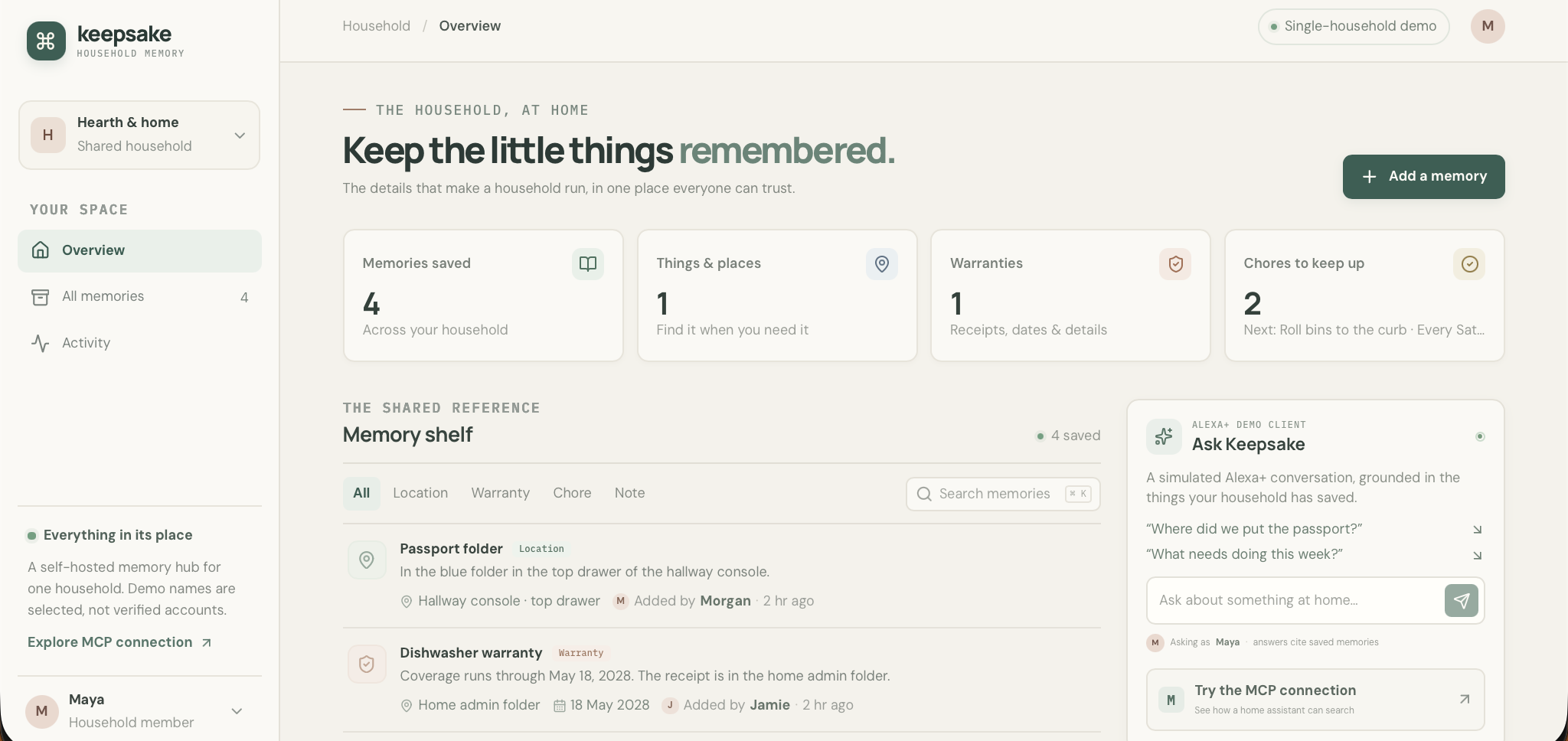
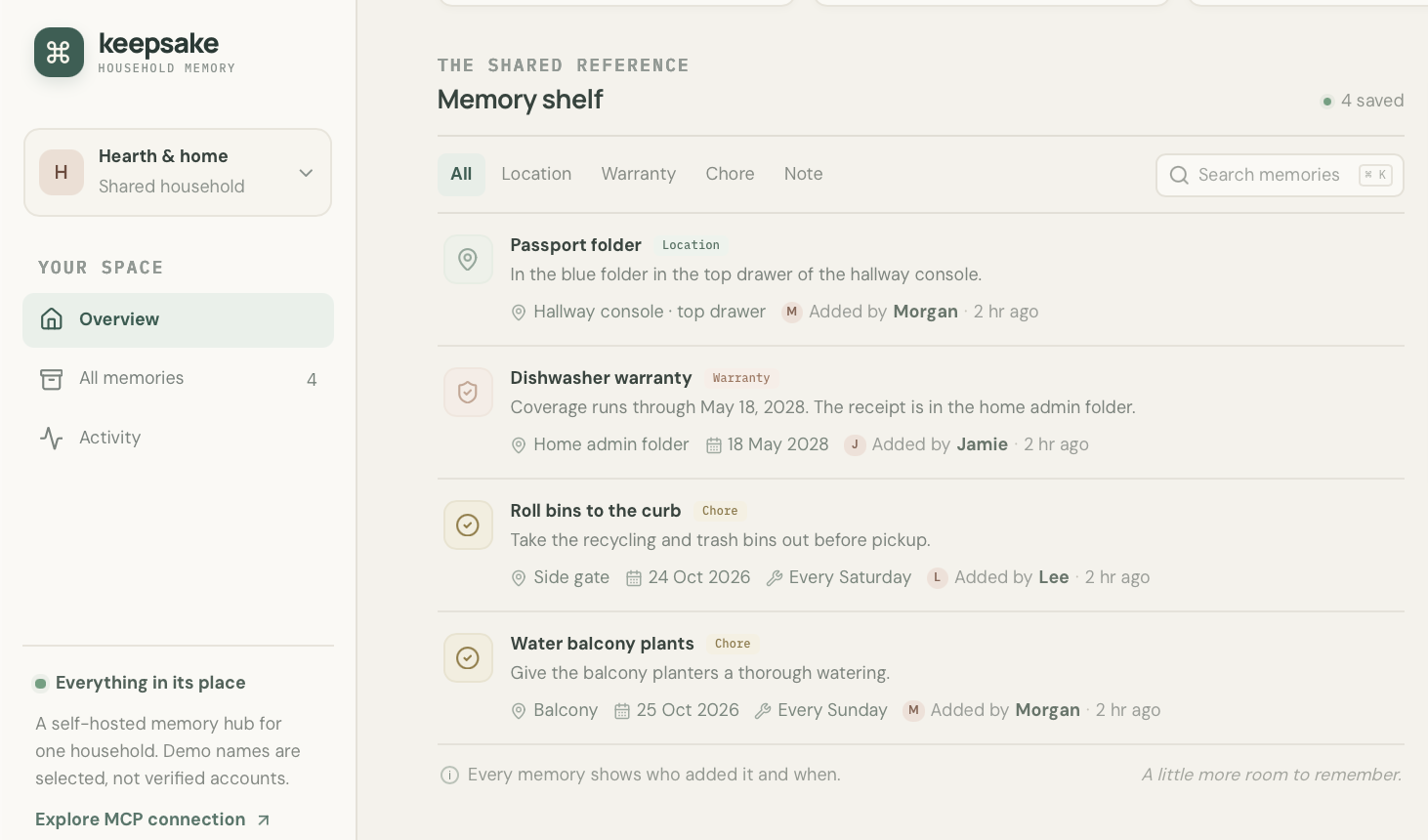
The skill responds with the matching entry from a shared Memory Shelf. The demo includes four entries:
🔸Passport folder: Location— "In the blue folder in the top drawer of the hallway console." 🔸Dishwasher warranty: Coverage through May 18, 2028; receipt filed in the home admin folder. 🔸Roll bins to the curb: Recurring Saturday chore. 🔸Water balcony plants: Recurring plant-care chore.
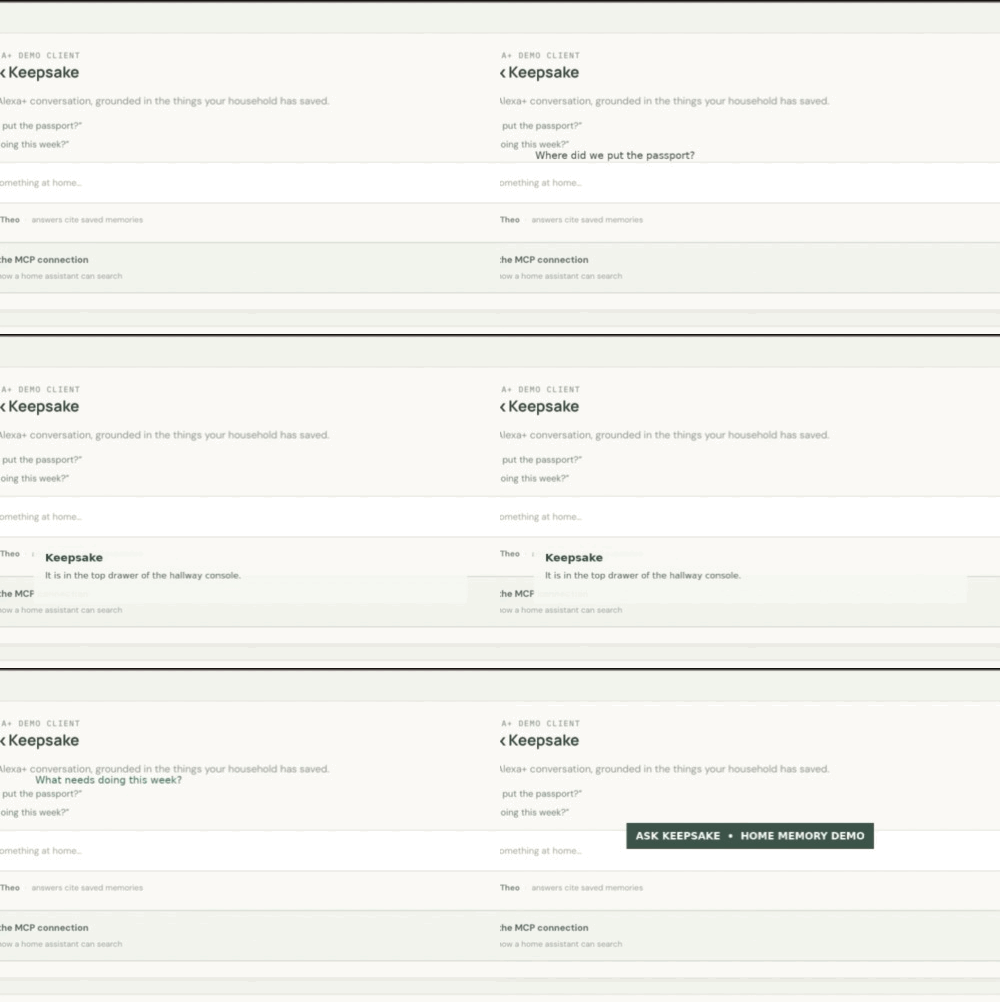
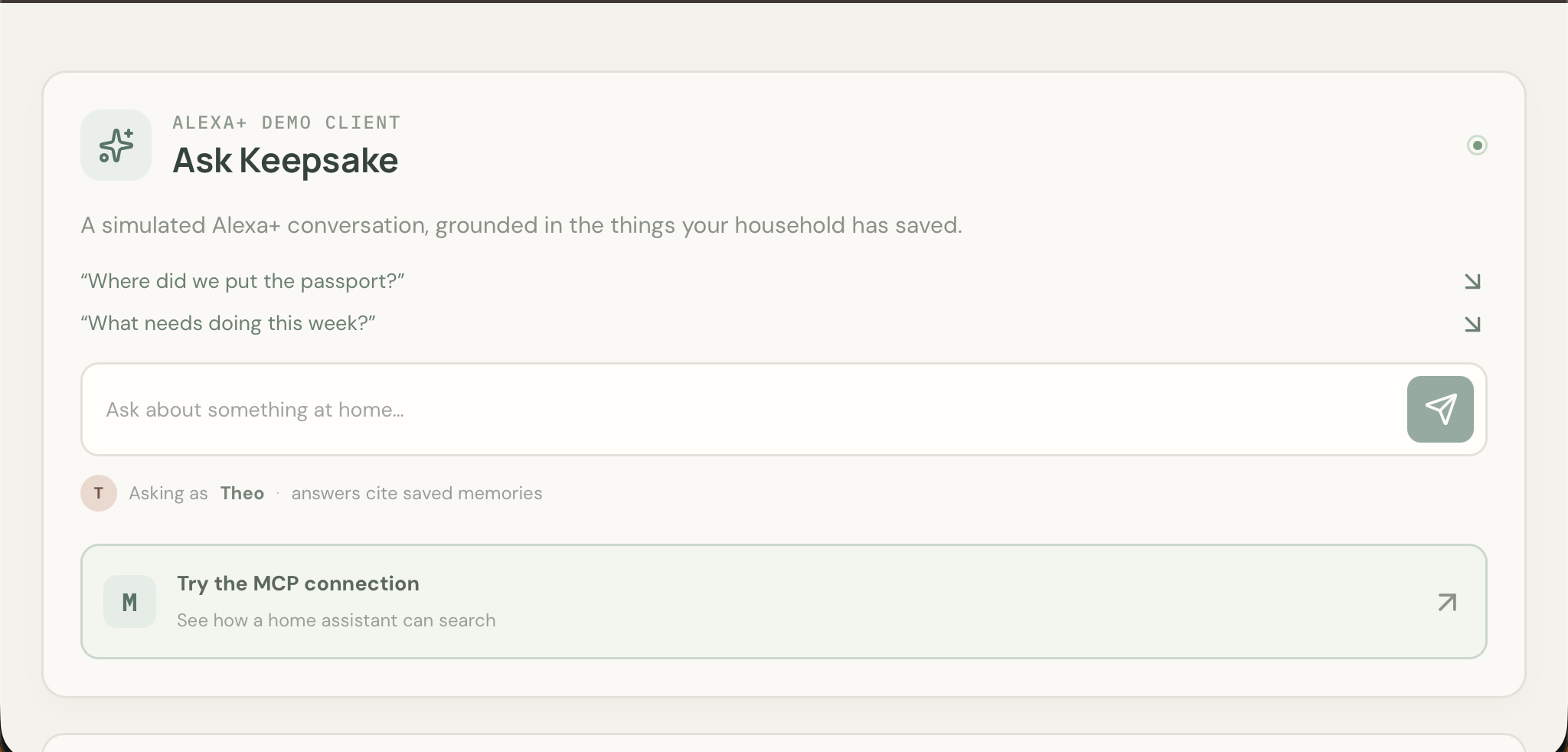
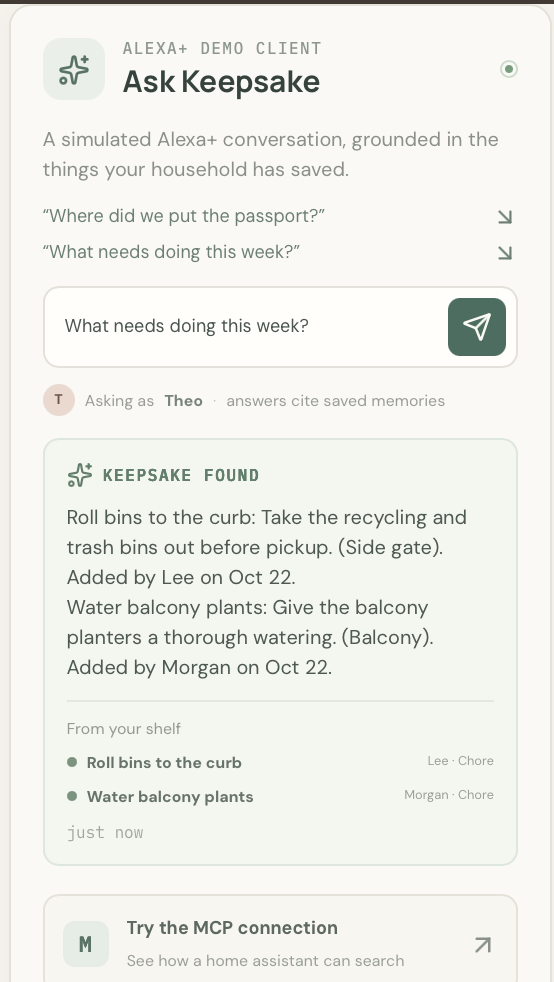
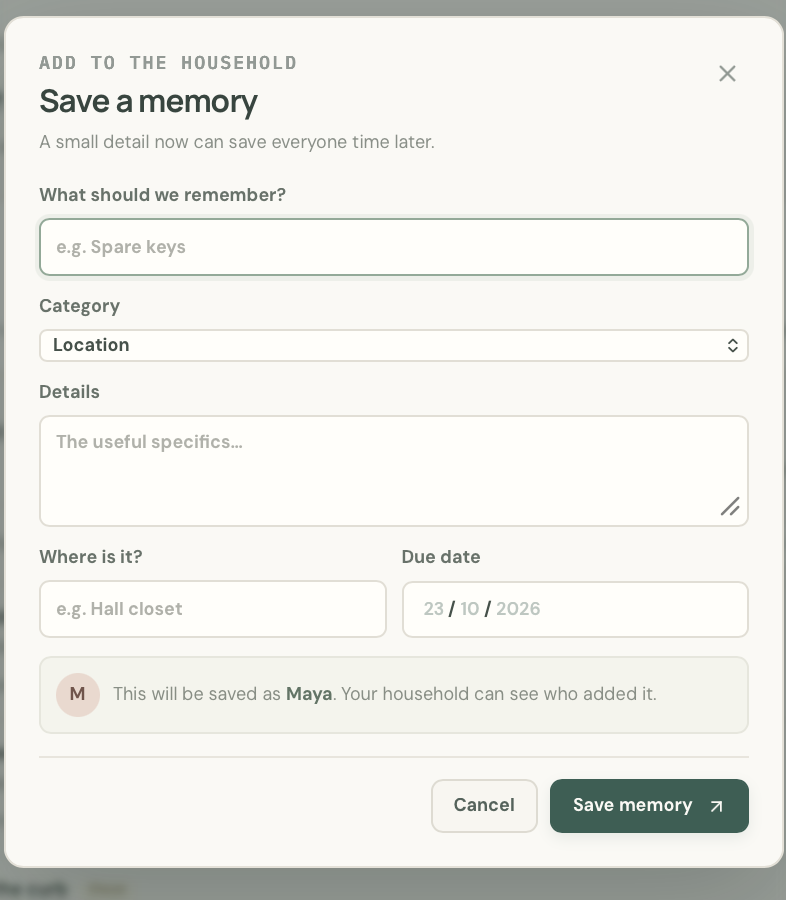
The web interface serves as the simulated Alexa+ experience: it shows both the voice-style query and the retrieved answer, demonstrating how the Agent Skill would behave in a real Alexa+ conversation.
How I Built It
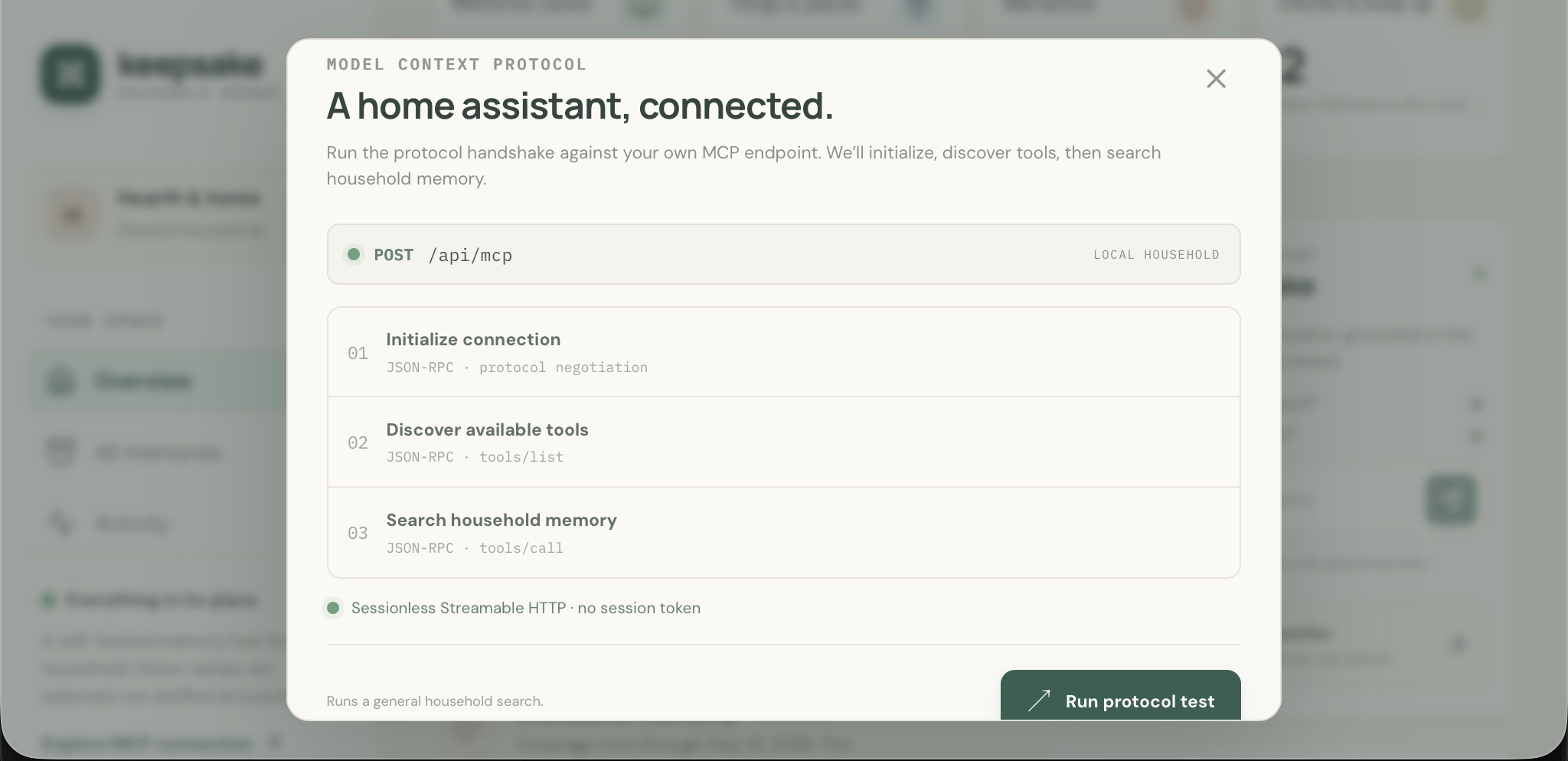
This project takes the simulated Alexa+ experience path permitted by the hackathon rules for developers new to MCP . Rather than building a full self-hosted MCP server in the time available, I built a working simulation that demonstrates the core interaction model: natural-language household queries mapped to structured memory retrieval.
- Interaction model: A set of sample utterances (e.g., "where is {item}", "when does {item} expire", "what chores are due") is mapped to intents that query the Memory Shelf.
- Memory Shelf: Structured JSON entries with type (Location, Warranty, Chore), title, detail, and optional recurrence.
- Simulation frontend: A web interface built on Replit that displays the query and the retrieved answer, mimicking the Alexa+ conversational flow. The source code for the simulation is included in the repository.
- Deployment: Hosted on Replit for the hackathon demo. I want to be transparent about the path taken: this is a simulated Alexa+ experience, not a live MCP server or published Agent Skill. The rules explicitly allow this approach, requiring only that the simulation's source code is included and the demo clearly shows it working . The next step after the hackathon would be to wrap the same memory retrieval logic as a self-hosted MCP server (spec 2025-11-25+, Streamable HTTP) to make it a production Alexa+ integration.
Challenges
The biggest challenge was scope discipline. A household memory system could grow into a full inventory manager, chore scheduler, and document vault. For a hackathon demo, the risk was building too much and proving too little. I kept the demo to four representative entries—two locations/warranties and two chores—to demonstrate the retrieval pattern without diluting the experience.
A second challenge was designing for voice-first retrieval. Unlike a web app where users can scan a list, a voice query needs to be specific enough to find the right entry. I focused on making the sample utterances map cleanly to the four entry types, and on writing answers that sound natural when spoken aloud.
What I Learned
The project reinforced that retrieval is the feature. The hardest part of household management is not deciding what to do; it is remembering what was already decided, purchased, or stored. A small, well-structured reference—accessible through natural voice queries—can remove a surprising amount of daily friction.
Built With
- alexa
- css
- html
- javascript
- json
- mcp
- replit(deployment)
- streamable-http

Log in or sign up for Devpost to join the conversation.