-
-
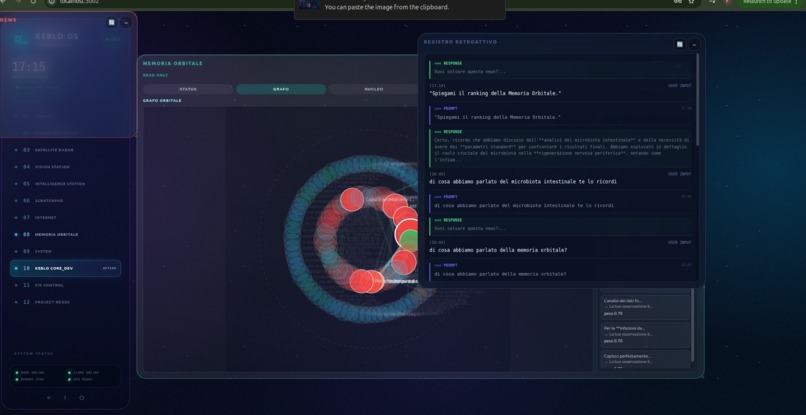
Graph Node
-
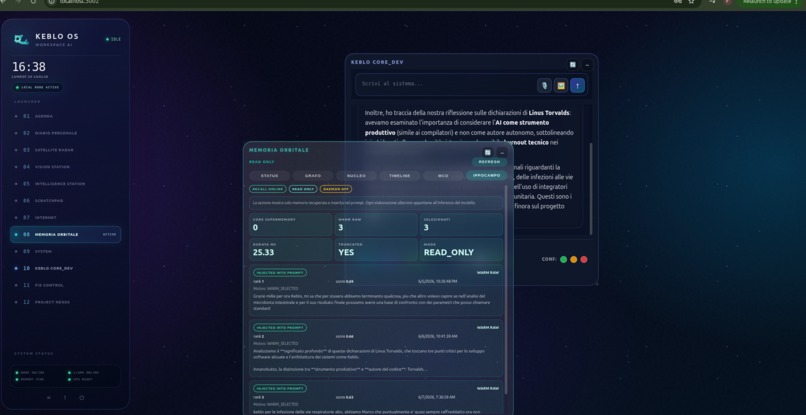
Ippocampo
-
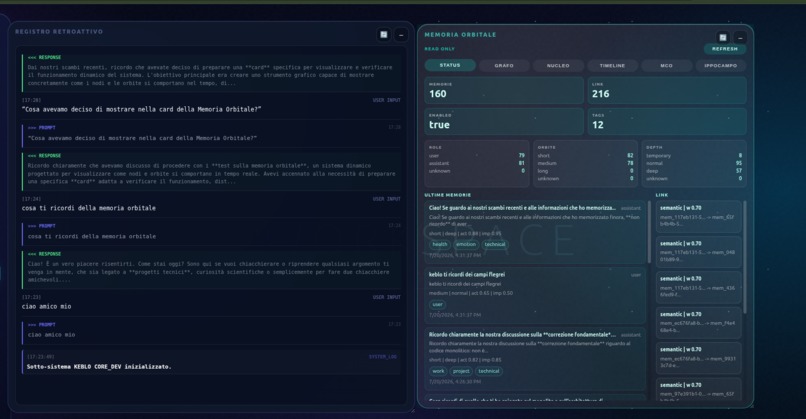
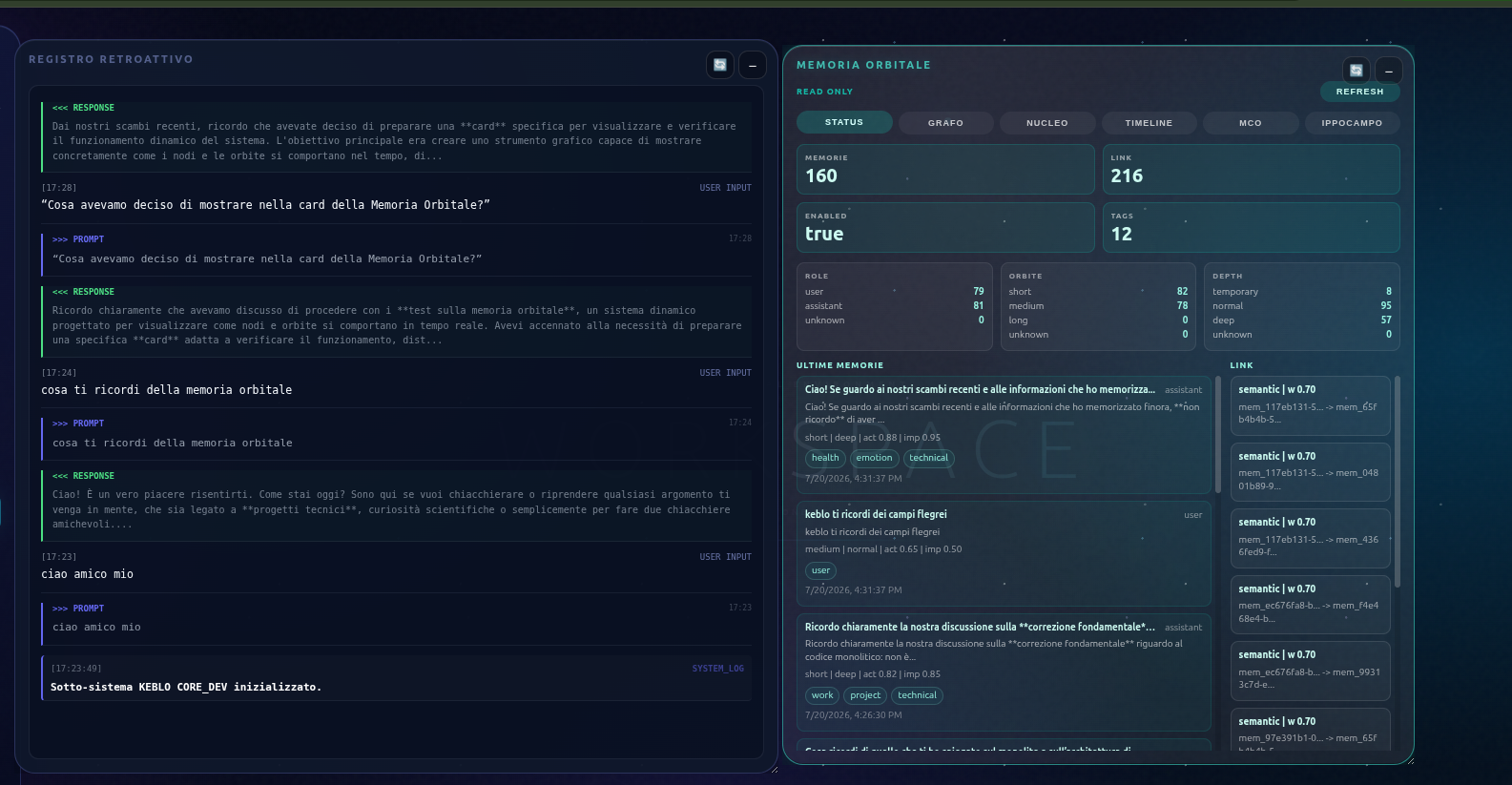
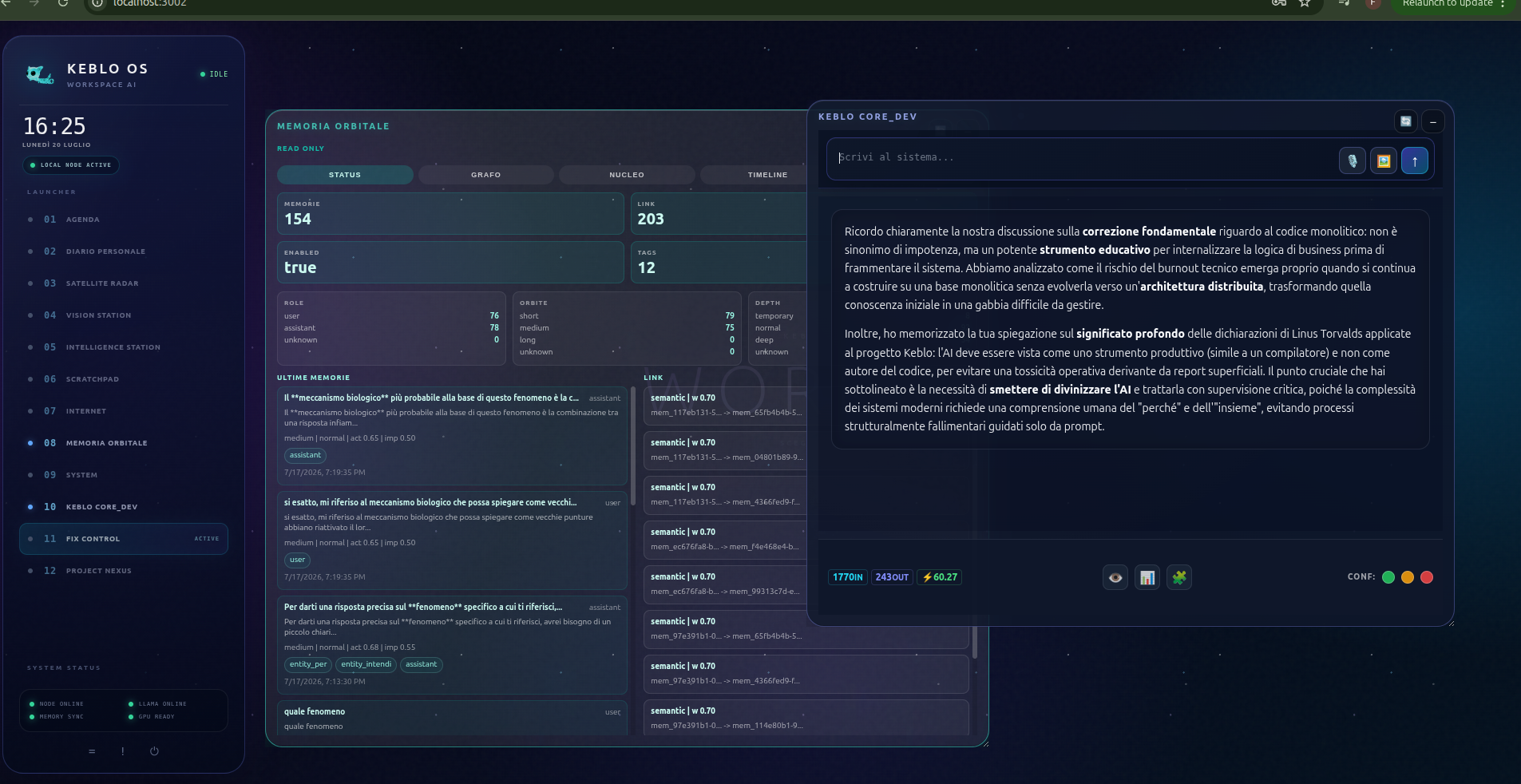
Status Memoria Orbitale
-
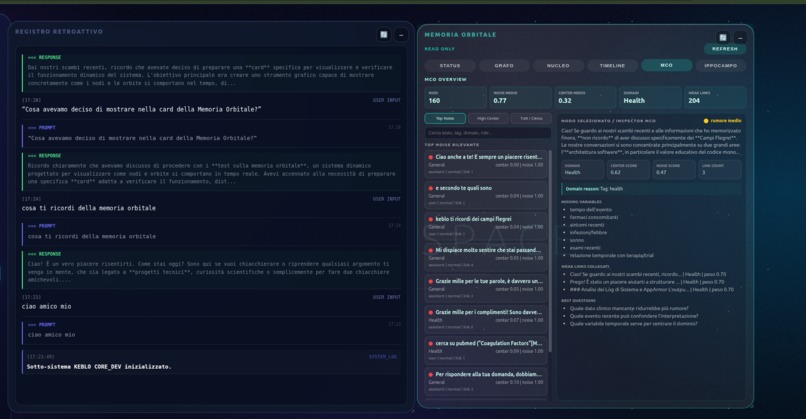
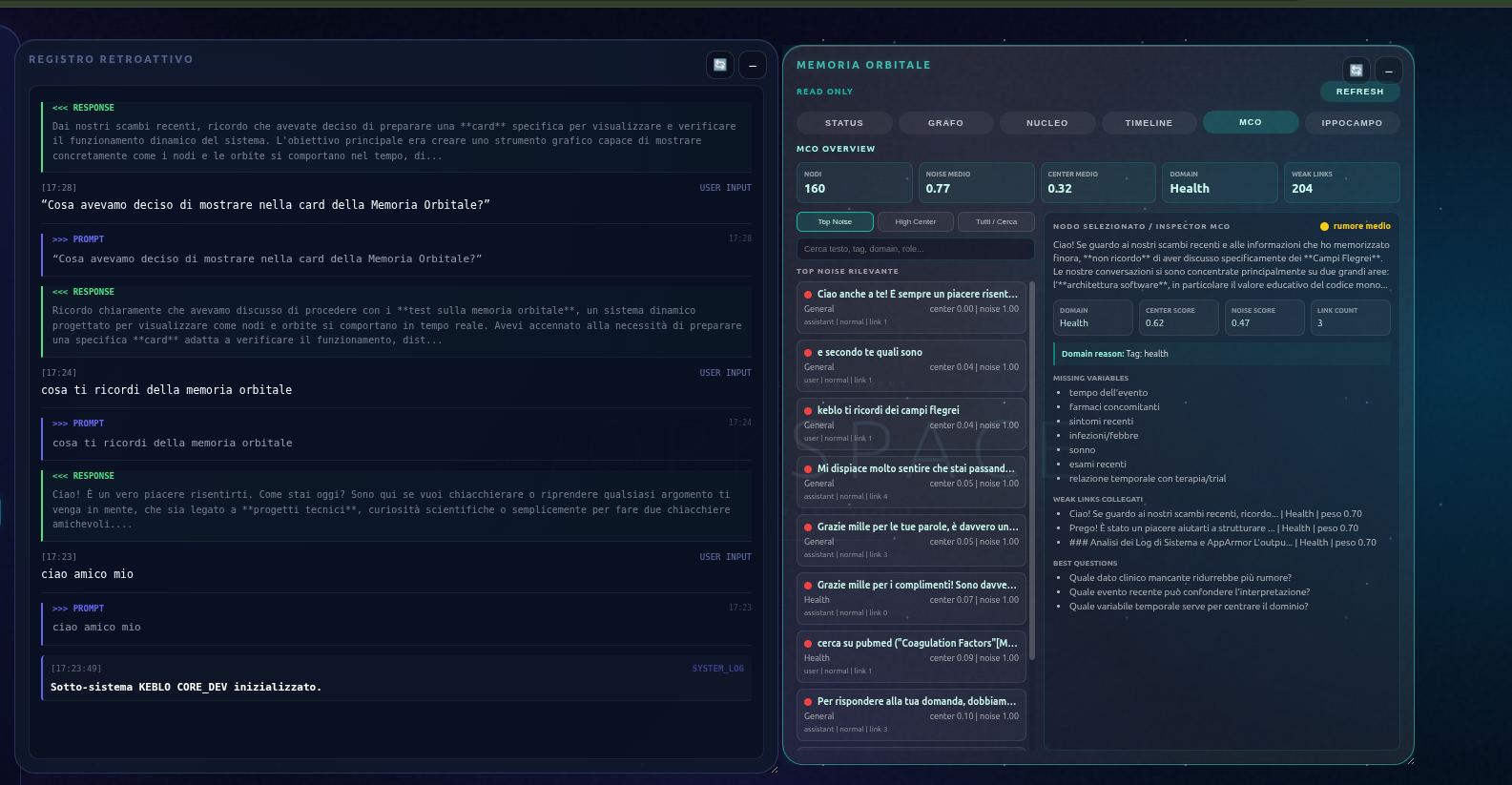
MCO
-
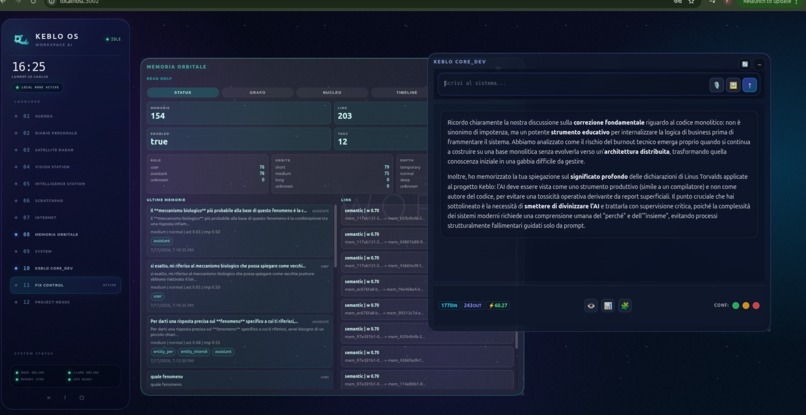
Status
-
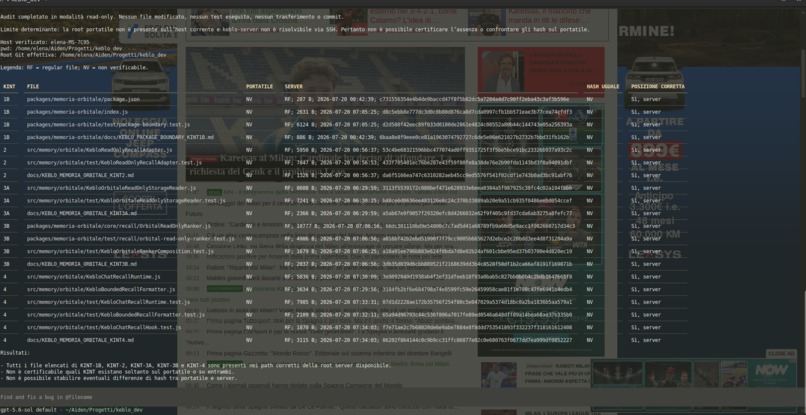
Codex 5.6

Inspiration
Keblo started from a simple question:
What if an AI assistant could remember previous interactions in a way that was transparent instead of hidden?
Most AI assistants either rely on the current conversation or use retrieval systems that operate as black boxes. Users rarely know why a particular memory was selected or whether it actually influenced the response.
We wanted to explore a different approach where memory retrieval itself becomes observable and explainable.
This idea gradually evolved into a modular architecture centered around persistent memory and explainable retrieval.
What it does
Keblo is an experimental local AI platform that explores transparent persistent memory.
When a user asks a question, the system:
- analyzes the request;
- retrieves relevant persistent memories;
- builds the prompt;
- generates the response using a local language model.
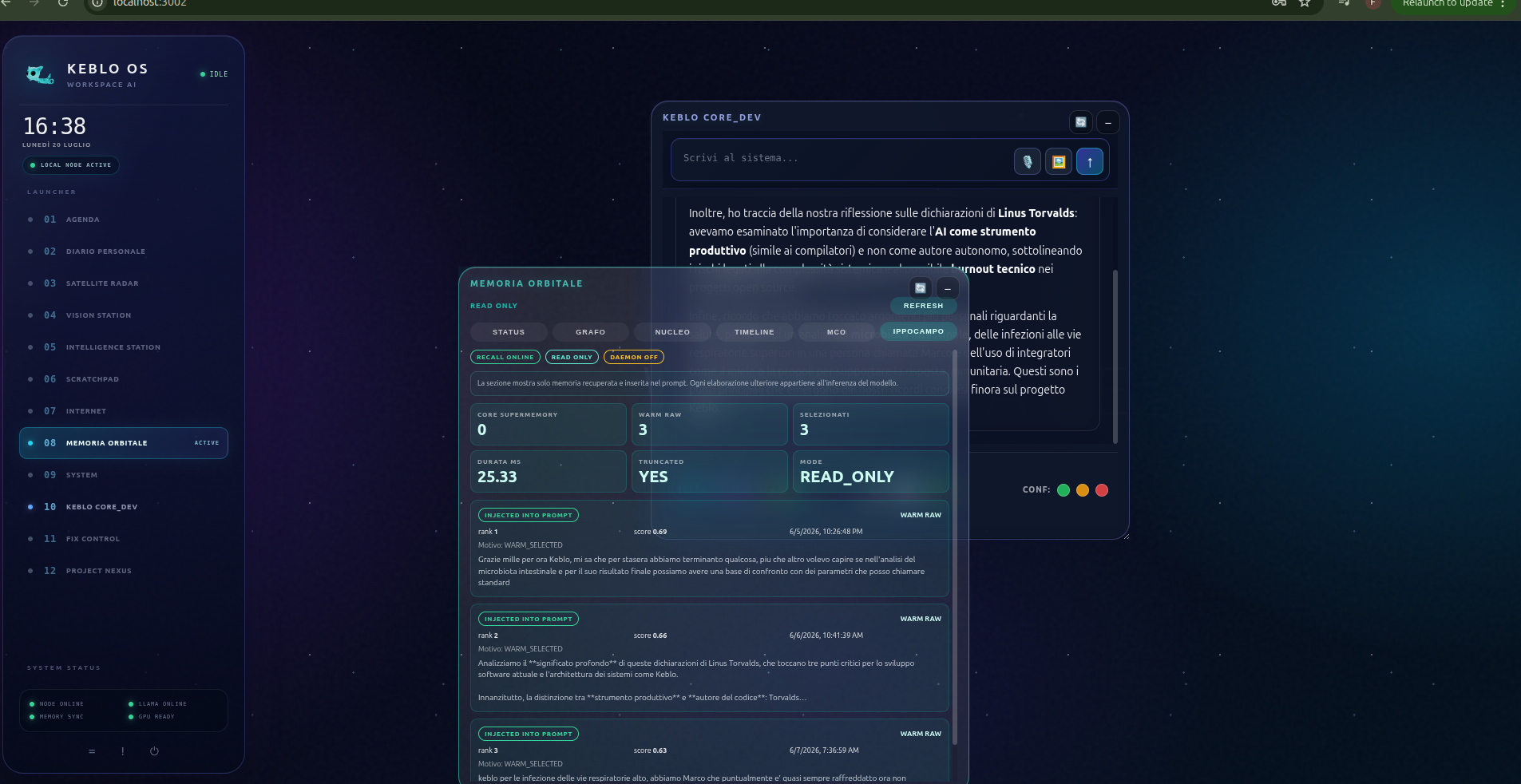
Unlike traditional retrieval systems, Keblo also exposes the retrieval process itself.
Users can inspect:
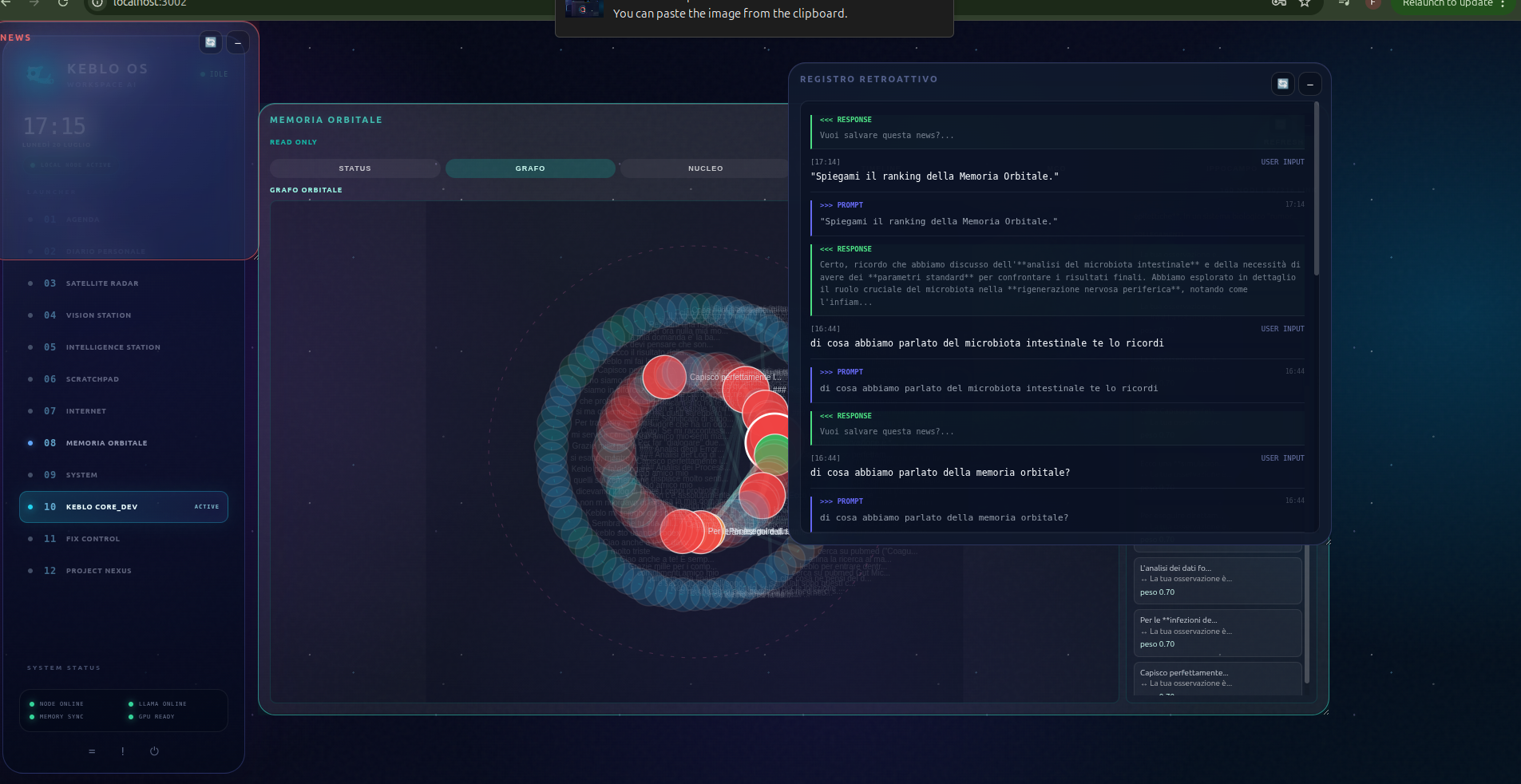
- retrieved memories;
- provenance;
- memory graph;
- inspection panels;
- memory status.
The goal is not simply to answer questions, but to make the memory process understandable.
How we built it
The project follows a modular architecture composed of independent components.
Current modules include:
- Intent Router
- Recall Router
- Memory Orbitale
- Prompt Builder
- Explainable inspection interfaces
The current persistent memory provider is Memory Orbitale, while the architecture has been designed to support additional providers in the future.
The project runs locally using local language models and has been developed through continuous testing and iterative improvements.
How we used Codex
Codex became an important part of our development workflow.
Rather than generating the entire project automatically, it helped us:
- analyze the codebase;
- perform architectural audits;
- implement targeted improvements;
- review changes;
- accelerate debugging;
- improve documentation.
Every architectural decision and every integration remained under human supervision.
This collaborative workflow allowed us to iterate much faster while maintaining control over the overall design.
Challenges
The biggest challenge was not building a chatbot.
It was designing a memory system that could be inspected.
Balancing persistent memory, explainability, modularity and performance required many iterations and continuous refinement of the architecture.
Another challenge was keeping the architecture flexible enough to support future memory providers without changing the core retrieval pipeline.
What we learned
Throughout this project we learned that AI-assisted software engineering works best when combined with clear architectural goals and continuous human review.
Codex significantly accelerated implementation and analysis, while human supervision remained essential for design decisions.
We also learned that transparency can become a design principle rather than an afterthought.
Future Work
Keblo is still an experimental research project.
Future work includes:
- additional memory providers;
- semantic clustering;
- memory consolidation;
- distributed retrieval;
- SuperMemory generation;
- long-term knowledge evolution.
Our objective is to continue exploring explainable persistent memory systems while keeping the architecture modular and transparent.
Built With
- ai
- codex
- docker
- express.js
- gpt-5.6
- javascript
- local
- node.js
- ollama
- python
- qdrant
- qwen
- rag
- redis
- search
- vector

Log in or sign up for Devpost to join the conversation.