-
-

KaziiGo Logo
-

Logo
-
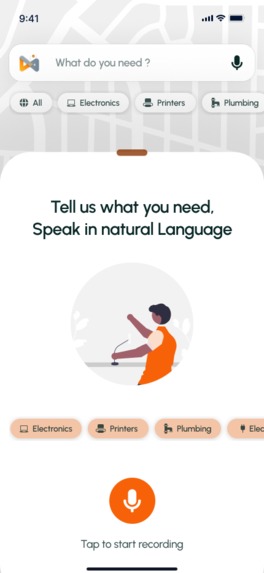
Speak to search
-
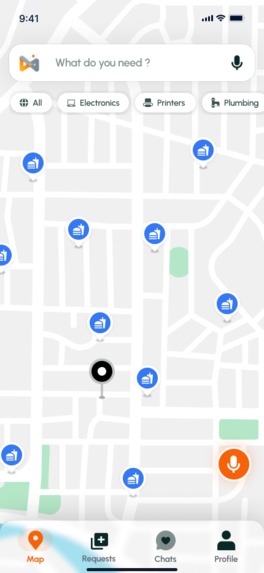
Maps Overview
-
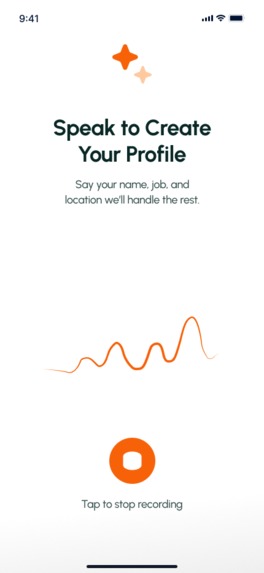
Speak to create profile


Inspiration
In Cameroon and many other African cities and communities, informal workers such as artisans, repair professionals, and small-scale service providers form the backbone of daily life. These skilled individuals ranging from electricians and plumbers to shoemakers and appliance repairers often operate without a reliable way to connect with potential clients. Many wait days or even weeks for customers who never arrive. At the same time, people who need urgent help struggle to find trustworthy and accessible service providers. Traditional word-of-mouth networks have become insufficient in growing urban environments where population mobility and communication barriers complicate connections.
This disconnect inspired the creation of KaziiGo. We saw an opportunity to empower local workers by providing them with visibility and a direct channel to customers. Our goal is to revive trust in neighborhood services, support economic activity in the informal sector, and make it easy for clients to find reliable help nearby. We wanted to design a simple yet powerful platform that adapts to the realities of African cities, including limited connectivity and multilingual needs.
What it does
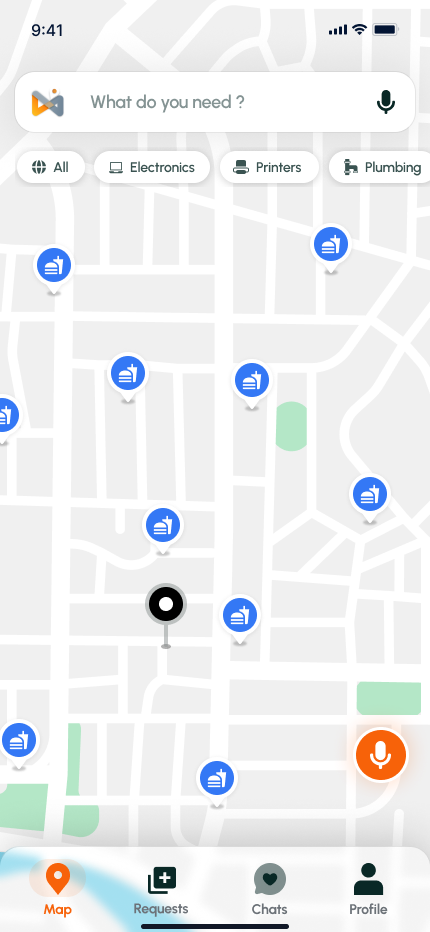
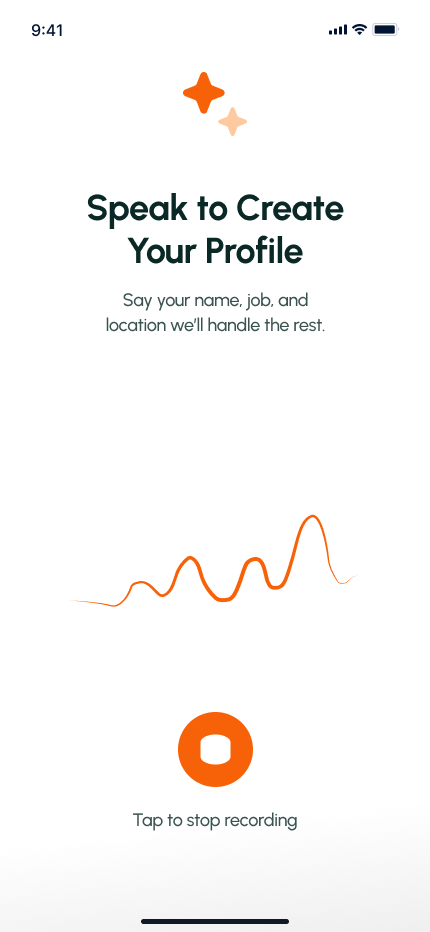
KaziiGo is a mobile-first platform that connects local artisans and repair professionals with clients in their community. Users can quickly create profiles using their voice and natural language or text, simply speaking their name, trade, and location or fill out a short form. The app builds a professional profile complete with photos, skills, availability, and location. Clients, on the other hand, can describe their needs via voice or text, and KaziiGo will intelligently match them with trusted providers nearby.
Key features include:
- Interactive map with real-time provider visibility, filters by skill or proximity
- Simple profile creation through speech
- Client request posting with voice/text support
- Voice-enabled assistant (mobile/WhatsApp) for navigating the experience
- Review and rating system to build trust within the platform
KaziiGo keeps the experience lightweight, intuitive, and multilingual from onboarding to task matching so users with varying literacy and digital access levels can still benefit.
How we built it
KaziiGo is currently in its prototype phase. The visual and interaction design of the app has been crafted and finalized, and ensures a clean, intuitive user experience. In parallel, some core APIs including voice-to-text transcription, user authentication, and geolocation logic are still being implemented and tested.
We began with user-centric design, using Figma to create wireframes and mockups to map out the minimal, frictionless experience we envision. A full UI flow has been implemented in Figma, prioritizing clarity, speed, and local usability. Several key features such as login, voice-based profile creation, and request creation are currently being implemented in the backend, with some core APIs already written and tested. The map display and geolocation flow are being prototyped in parallel. Meanwhile, the AI-powered matching system and assistant interface are still in the early stages of development, with initial design logic in place and technical exploration ongoing. We’re building the system incrementally, we validate each step with real-world constraints in mind.
Tech stack and infrastructure
| Layer | Tools & Technologies |
|---|---|
| Frontend | React Native (cross-platform mobile app) |
| Backend | FastAPI (Python) for RESTful API |
| Database | PostgreSQL with PostGIS extension (for geospatial queries and distance-based matching) |
| Authentication | Firebase Auth SMS-based OTP login |
| Voice AI | Whisper API (speech-to-text), Gemini API |
| Maps & Location | Google Maps API for map rendering, markers, and proximity filters |
| Version Control | Git + GitHub |
| Containerization & Deployment | Docker, with plans for cloud deployment (GCP/AWS) |
| Media Storage | Google Cloud Storage |
| Notifications | Firebase Cloud Messaging (push), Twilio (SMS) to be added in future milestones |
Challenges we ran into
Building a product that speaks directly to the realities of the African informal sector is a complex task. One of the biggest challenges was designing an experience that works fluidly in low-tech environments where users may have limited literacy, unreliable internet, or older devices. We had to prioritize accessibility, simplicity, and performance in every design choice.
Another challenge was voice input and language diversity. Capturing meaningful speech in English, French, and local languages required testing multiple voice recognition tools and adapting prompts to ensure clarity and usefulness.
From a technical perspective, integrating geospatial logic into our matching flow brought both design and backend complexities. Balancing performance, accuracy, and scalability while still being prototype-ready required iterative validation. Finally, managing different user roles (clients vs. providers, or both) on the same platform introduced UI/UX complexity, especially in request and map flows.
Accomplishments that we're proud of
- We defined a real-world problem, translated it into a usable product, and developed a complete prototype in a short time.
- We created a fully thought-through end-to-end user experience tailored for local realities — with Figma designs covering all major screens and flows.
- We developed core backend APIs for OTP login, profile creation, and request logic, including early testing of voice-to-text and geolocation-based features.
- We aligned the platform design with both mobile-first usability and WhatsApp integration, ensuring a clear path from prototype to scale.
What we learned
We learned how critical it is to design with empathy putting ourselves in the shoes of users who may not be tech-savvy, literate, or always connected. This shaped how we structured voice-first input, simplified navigation, and minimized cognitive load.
We also deepened our understanding of voice recognition systems and AI-assisted matching, learning how to design systems that balance automation with trust. On the technical side, working with PostGIS for spatial logic and Dockerized microservices helped us structure a robust, scalable backend.
More importantly, we learned how to scope realistically. Given the challenges of informal-sector digitization, every small design decision from colors to copy matters in building trust and clarity.
What's next for KaziiGo
KaziiGo is still under active development. The prototype helped us validate key flows, define our visual identity, and clarify our product direction. Now, we are focused on bringing the system to life, step by step.
In the coming weeks, we aim to:
- Implement the full UI/UX in code based on the finalized Figma designs
- Finish backend development for all core features:
- Profile management
- Request creation and listing
- Reviews and ratings
- Map filtering and provider discovery
- Profile management
- Integrate key services, including:
- Voice-to-text transcription
- Geolocation and map rendering
- Firebase OTP authentication
- Voice-to-text transcription
- Connect frontend to backend via secure API routes
- Test and refine the flow for both clients and service providers
- Deploy a working MVP on Android for pilot testing in local neighborhoods
- Begin light usability testing with real users to gather feedback
We’re not rushing to scale. Our focus is on building something functional, relevant, and usable especially for communities that are often underserved by traditional platforms. KaziiGo’s vision is ambitious, but we’re grounded in real-world progress.


Log in or sign up for Devpost to join the conversation.