-
-
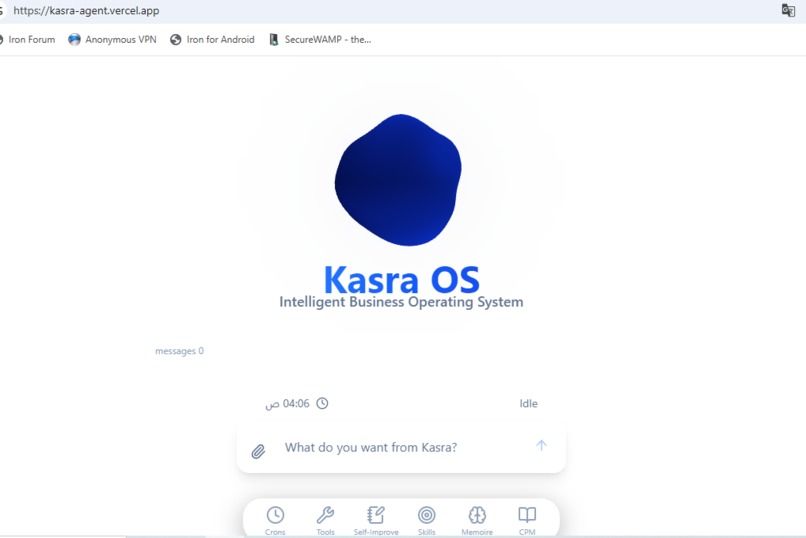
kasra agent
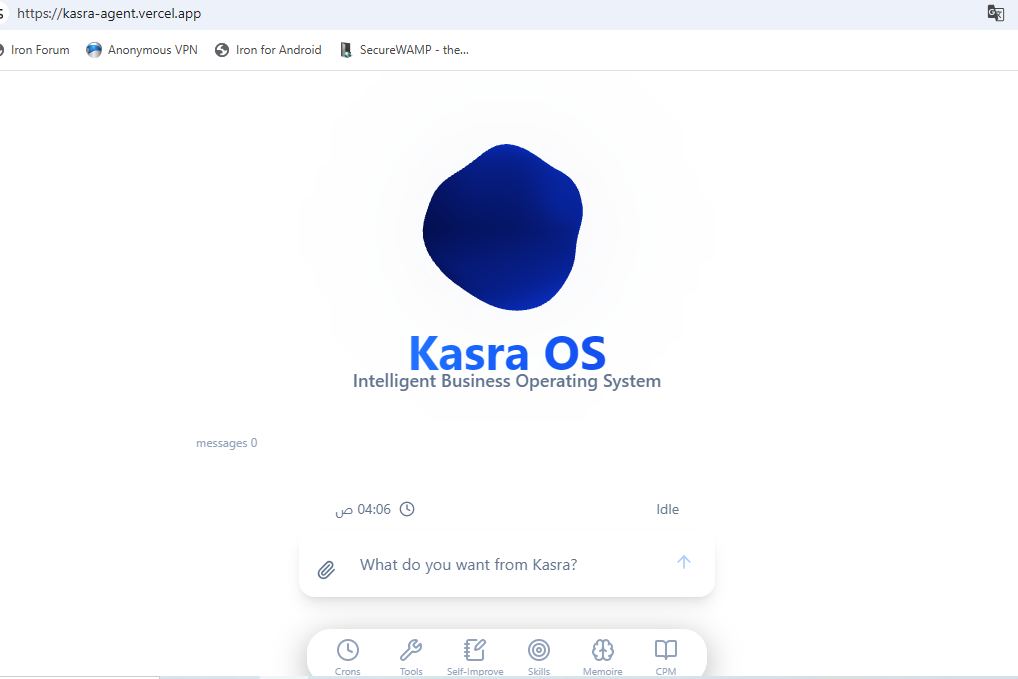
Inspiration Most AI agents can answer questions. Very few can reliably execute tasks. The hackathon’s theme — closing the execution gap — resonated deeply. We wanted to build an agent that actually runs business operations: planning, using tools, learning from mistakes, and acting autonomously. Not a chatbot. An operating system.
What it does Kasra is an autonomous business operations agent. It:
Manages any database table — inventory, customers, orders, forecasts — with natural language
Highlights critical data — low stock gets red badges, healthy numbers green, warnings yellow
Executes multi‑step tasks — one sentence can produce a table, Excel file, PDF report, and calendar event
Runs Python code for custom analysis
Controls your desktop via a lightweight local agent
Reads and OCRs files from your PC with a single click
Schedules cron jobs and sends email reports autonomously
Connects to enterprise tools — GitLab, Elasticsearch, Fivetran, Dynatrace (MCP + REST)
Learns from every interaction — creates reusable skills and curates its own memory
Asks for confirmation before dangerous operations
Works on Telegram — web, mobile, messaging, all in sync
Traces every step with Arize AI for full observability
How we built it Frontend: Next.js 14, React, TypeScript, Tailwind CSS, Framer Motion, Three.js
Backend: Node.js, Express, TypeScript, SQLite
Agent Loop: 15‑turn orchestrator with state ledger, tool dependency graph, and circuit breaker
LLM Fallback: Gemini → Cloudflare → Groq → Cerebras → HuggingFace → OpenRouter
Real‑time: Server‑Sent Events for streaming tables, charts, code blocks, and task updates
Memory: Vector store with semantic search + SQLite tables for memoire, self‑improvement, session facts
Integrations: MCP client for Elastic, Fivetran, GitLab, Dynatrace; Gmail SMTP; Telegram Bot
Tracing: Arize AI via OTLP
Deployment: Render (backend), Vercel (frontend), Google Cloud Run ready
Challenges we ran into Render’s outbound firewall blocks Arize OTLP traces and Gmail SMTP — fully tested locally, works on any unrestricted cloud
Prompt engineering for small models — the default model often returned “✅ Done.” instead of actual responses; required precise conversational guards and anti‑hallucination nudges
SSE duplicate events — tables and charts appeared twice; solved with content‑based deduplication
Circuit breaker & timeouts — tools would permanently disable themselves after transient failures; required careful timeout tuning and breaker reset logic
Desktop control security — browsers block automatic file dialogs; solved with user‑initiated modal flow
Model rate limiting — multiple providers hitting 429 limits simultaneously; solved with progressive retry delays and provider reordering
Accomplishments that we're proud of True multi‑step autonomous execution — one request produces 4 different outputs sequentially
Self‑improving memory — the agent creates skills, curates notes, and prunes useless data automatically
30+ real‑world tools covering inventory, files, web, email, calendar, code, desktop, and enterprise APIs
Generic database interface — works with any SQL table, not hardcoded to inventory
Partner integrations — GitLab, Elasticsearch, Fivetran, Dynatrace via MCP and REST
Human‑in‑the‑loop safety — confirmation modals for all destructive operations
Arize observability — every agent step traced, ready for production evaluation
Telegram bot — same agent, same intelligence, anywhere
Production‑grade architecture — circuit breaker, tool timeouts, multi‑LLM fallback, Dockerfile for Cloud Run
What we learned Small models need explicit, example‑driven prompts — abstract rules don’t work
SSE streaming is powerful but requires careful deduplication logic
Free hosting tiers have hidden limitations — Render blocks outbound HTTPS; always test deployment early
Circuit breakers save agents from cascading failures, but the defaults must match the tool’s expected latency
Observability is not optional — Arize traces made debugging agent decisions 10x faster
Database abstraction pays off — the agent doesn’t care if it’s SQLite or PostgreSQL
What's next for Kasra Production deployment on Google Cloud Run with Cloud SQL, Cloud Storage, and Cloud Scheduler
Real database backend — plug into PostgreSQL/MySQL with connection string
OAuth integration for partner tools (no more manual API keys)
Improved model routing — cost‑based provider selection, streaming responses
Mobile‑native app with push notifications
Plugin marketplace — community‑built tools
Multi‑tenant support for agencies and teams
Built With
- arize-ai
- better-sqlite3
- cerebras
- cheerio
- cloudflare-workers-ai
- cron-parser
- docker
- dotenv
- dynatrace
- elasticsearch
- exceljs
- express.js
- fivetran
- framer-motion
- fts5
- gitlab-api
- gmail-smtp
- google-cloud-run
- google-gemini
- groq
- huggingface-inference
- jina-reader
- mammoth
- mcp
- multer
- next.js
- node.js
- nodemailer
- openrouter
- opentelemetry
- otlp
- pdf-parse
- pdfkit
- pdfreader
- playwright
- python
- react
- react-three-fiber
- render
- rest
- screenshot-desktop
- sqlite
- sse
- tailwind-css
- telegram-bot-api
- tesseract.js
- tf-idf
- three.js
- typescript
- vercel
- vertex-ai
- xlsx

Log in or sign up for Devpost to join the conversation.