💡 Inspiration
Township communities across South Africa face everyday challenges that technology can help solve: writing professional CVs, crafting business messages for spaza shops, and understanding complex job or bursary opportunities. KasiAssist AI was born from a simple question: How can we make AI practical, accessible, and culturally relevant for the people who need it most?
This project is personal. Growing up in a township, I've seen talented, hardworking people held back not by lack of skill, but by lack of access to tools that could help them communicate professionally and unlock opportunities. KasiAssist AI bridges that gap.
🛠️ What it does
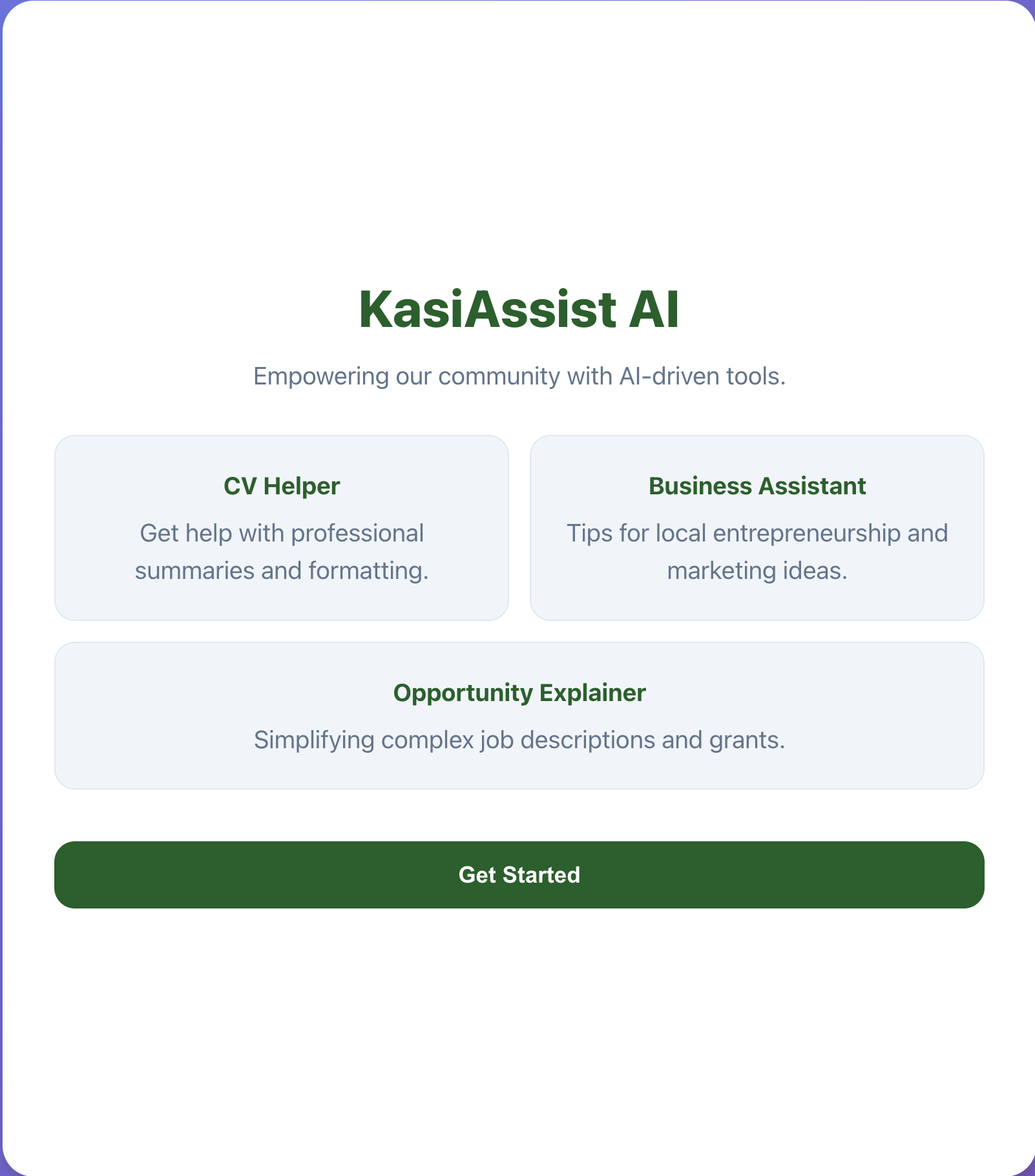
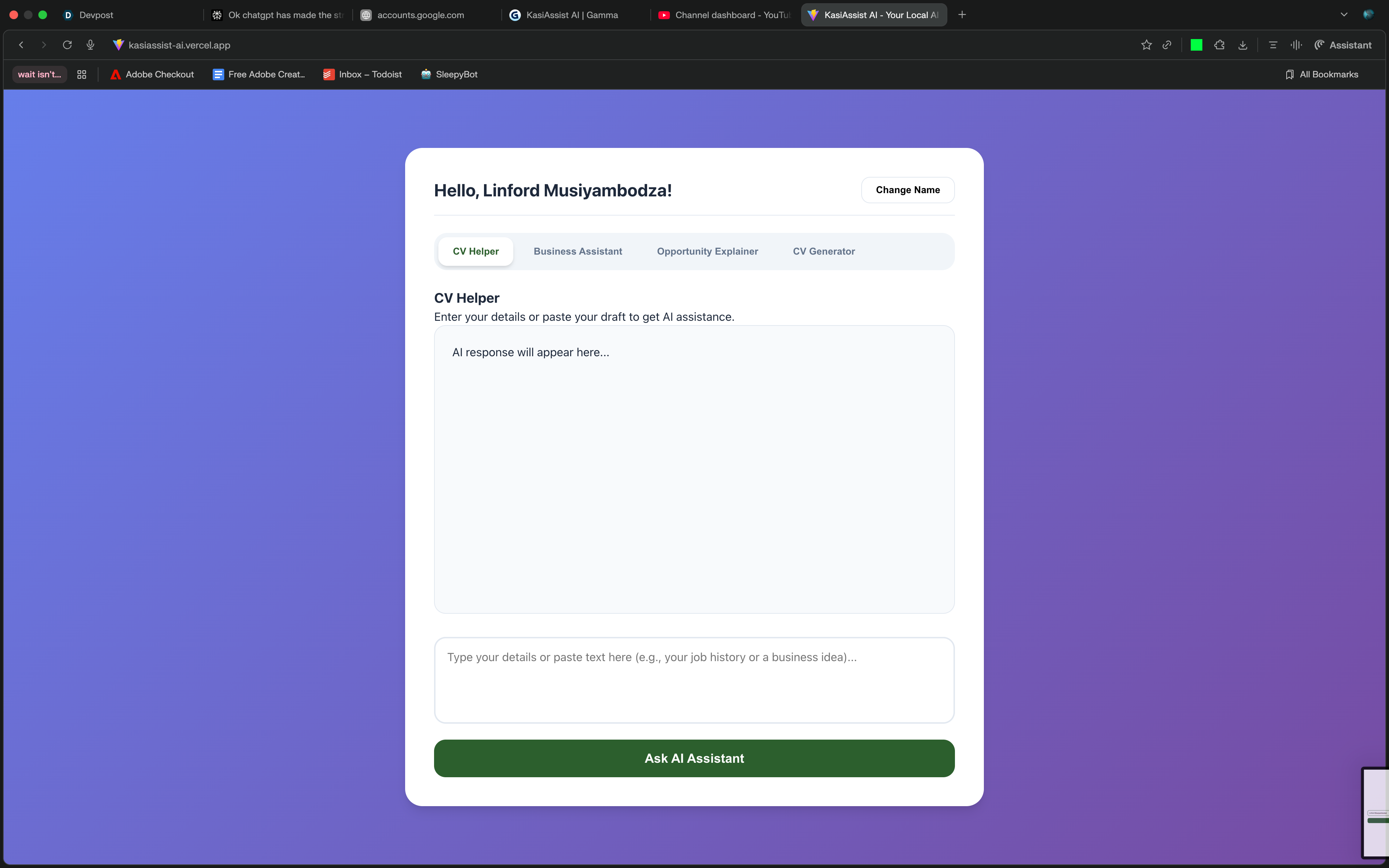
KasiAssist AI is a web application with four powerful modes:
1. CV Helper
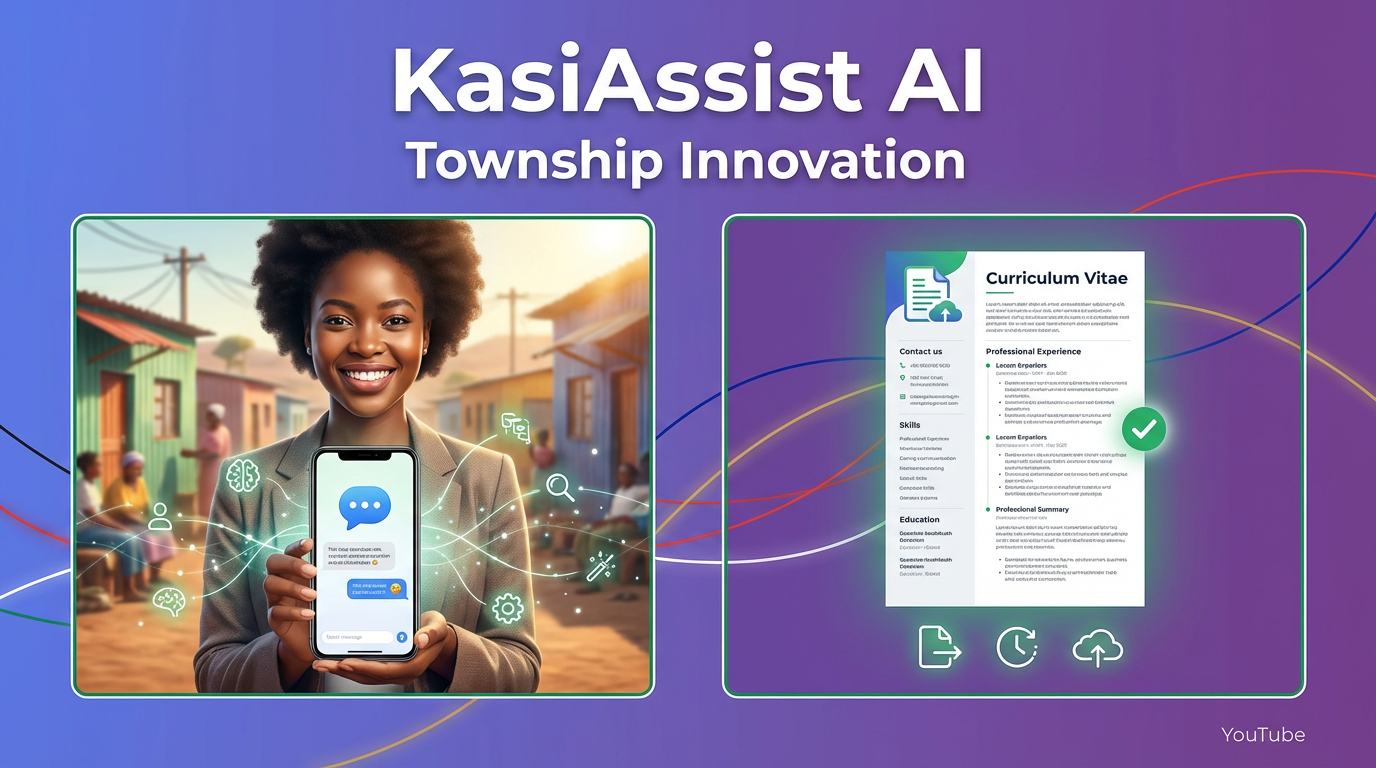
Users describe their education, skills, and experience in simple language. The AI generates professional CV text tailored for the South African job market-ready to copy or download.
2. Business Assistant
Spaza shop owners and small business entrepreneurs get help writing WhatsApp messages, promotions, and customer communications that are clear, friendly, and effective.
3. Opportunity Explainer
Users paste job posts, bursary applications, or training opportunities, and the AI breaks them down into simple language: What is it? Who is it for? What do you need? How do you apply?
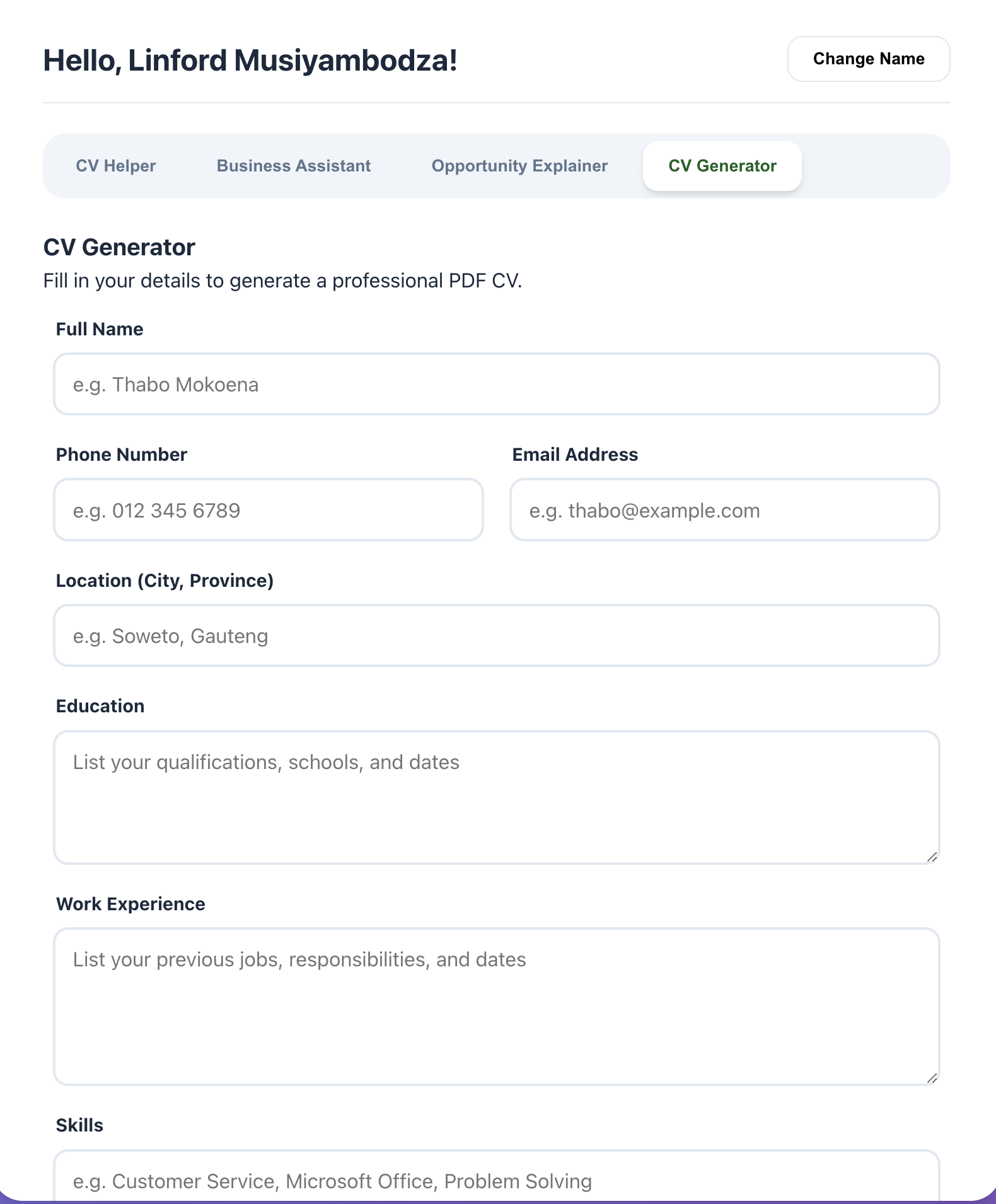
4. CV PDF Generator (Bonus Feature)
Users fill in a simple form and generate a professionally formatted CV as a downloadable PDF. With the AI Enhancement toggle, the tool can automatically improve the content to be more impactful and employer-friendly.
🚀 How we built it
Tech Stack:
- Frontend: React + Vite (for fast, modern UI)
- Backend: Vercel Serverless Functions (Node.js)
- AI: Google Gemini API (text generation)
- PDF Generation: jsPDF library
- Styling: Custom CSS with mobile-first responsive design
- Deployment: Vercel (with environment variable management for API security)
Development Process:
- Planning: Identified real problems faced by township youth and small businesses through community conversations.
- Prototyping: Built the landing page, authentication flow, and core AI modes using React components.
- API Integration: Connected the Gemini API via a secure serverless backend to keep API keys safe.
- Feature Expansion: Added the CV PDF generator with optional AI enhancement for maximum real-world value.
- Testing: Tested all modes with real-world prompts to ensure outputs are culturally relevant and practical.
- Deployment: Deployed on Vercel with continuous integration from GitHub.
Tools Used:
- JetBrains WebStorm for development
- Junie AI Agent for code assistance and refactoring
- GitHub for version control
- Vercel for hosting and serverless functions
🧗 Challenges we ran into
1. ES6 Module Import Issues
Initially, we used vanilla HTML/CSS/JS with inline onclick handlers, but switching to ES6 modules for the Gemini API caused event listeners to break. Solution: Converted the entire project to React, which handles module imports cleanly.
2. API Key Security
We couldn't expose the Gemini API key in frontend code. Solution: Built a Vercel serverless function (/api/gemini) that securely calls the Gemini API, keeping the key server-side.
3. Mobile Responsiveness
The original design wasn't optimized for mobile users (the primary audience). Solution: Rebuilt the UI with a mobile-first approach using Flexbox, CSS Grid, and responsive breakpoints.
4. PDF Generation & Parsing
Generating clean, professional CVs from user input required careful layout design in jsPDF. The AI enhancement feature also needed robust parsing to extract structured sections from AI responses. Solution: Iteratively tested layouts and built fallback logic for parsing failures.
🎓 Accomplishments that we're proud of
✅ Real social impact: This isn't just a demo-it's a tool people can actually use today.
✅ AI used responsibly: Gemini is used to empower, not replace, human effort.
✅ Beginner-friendly but powerful: The app is simple enough for anyone to use, yet delivers professional results.
✅ Portfolio-ready project: Built with modern tools (React, Vercel, serverless APIs) that showcase real-world development skills.
✅ Culturally relevant: Designed with South African township communities in mind-from language to examples.
📚 What we learned
- User-centered design matters: Every feature was tested with real use cases from township life.
- AI is a tool, not magic: Prompt engineering and output parsing are critical to making AI useful.
- Security first: Never expose API keys in frontend code; always use backend proxies.
- Mobile-first design: Most users will access this on smartphones-designing for mobile from day one was essential.
- Iterative development: Building fast, testing early, and refining based on feedback leads to better products.
🔮 What's next for KasiAssist AI
Short-term (Next 3 months):
- Add support for Zulu, Xhosa, and Afrikaans (multilingual AI prompts)
- Integrate voice input for users who prefer speaking over typing
- Build a job matching feature that suggests relevant opportunities based on user CVs
Long-term (6-12 months):
- Partner with NGOs and community centers to distribute the tool in underserved areas
- Add SMS/WhatsApp bot version for users without reliable internet
- Expand to other African countries (Kenya, Nigeria, Ghana) with localized content
- Develop offline mode for areas with poor connectivity
KasiAssist AI is just the beginning. Our vision is to create a full ecosystem of practical AI tools that help township communities access opportunities, grow businesses, and thrive.
🌍 Impact
KasiAssist AI is designed to address real barriers faced by township youth and small business owners:
- Unemployment: Professional CVs increase job application success rates
- Business growth: Clear, effective messaging helps spaza shops attract more customers
- Access to opportunities: Simplifying complex information makes bursaries and training programs accessible
This is technology for the people, by the people. 🇿🇦
Built with ❤️ for the Intwana Yase Kasi – Innovation Challenge 2026

Log in or sign up for Devpost to join the conversation.