Inspiration
Inspired by the challenge of unreliable and expensive power in Africa, Kasi Power was built to make energy management smarter and more efficient. Our goal is to reduce dependency on costly diesel generators by intelligently optimizing the use of renewable sources like solar.
What it does
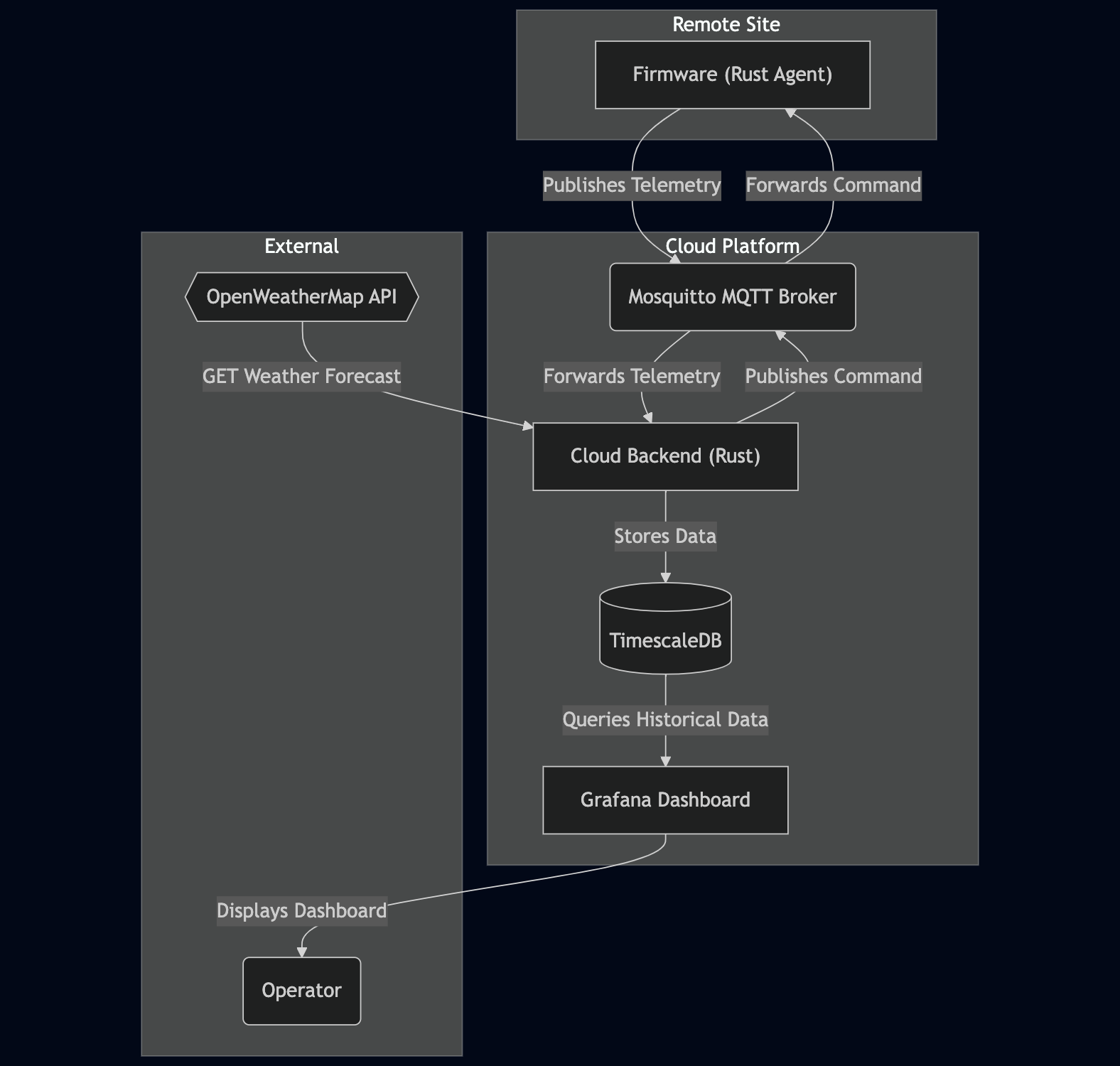
Kasi Power is an IoT platform that remotely monitors and controls hybrid energy systems. It uses a cloud backend to analyze real-time device data and live weather forecasts, then sends commands back to the device to automatically optimize its power usage—for example, running a generator only when absolutely necessary to save fuel.
How we built it
The system was built using a robust, modern tech stack:
- Core Logic: High-performance, reliable services written in Rust.
- Infrastructure: Containerized with Docker and Docker Compose.
- Communication: MQTT for efficient device-to-cloud messaging.
- Database: TimescaleDB for storing time-series data.
- Dashboard: Grafana for live data visualization.
- Intelligence: An external Weather API to power smart decision-making.
Challenges we ran into
We overcame a series of real-world obstacles, including missing system dependencies (libssl-dev), complex build-tool errors with Cargo workspaces, file permission issues from sudo misuse, and a final, elusive state management bug caused by a device ID mismatch.
Accomplishments that we're proud of
Our biggest accomplishment is the successful implementation of the full, end-to-end smart control loop: the cloud backend analyzing weather data and verifiably changing the remote device's behavior. We are also proud of building a professional, production-ready architecture using industry-standard tools, not just a simple script.
What we learned
This project was a masterclass in systems programming. We learned three key lessons: 1.The importance of details: A single mismatched ID or permission can halt the entire system. 2.The power of Rust: The compiler's strictness, while tough, gave us immense confidence in the final code's reliability. 3.The value of Infrastructure-as-Code: Docker was essential for maintaining a clean and reproducible environment through every debugging cycle.
What's next for kasi power
The successful PoC is just the beginning. The roadmap ahead includes:
- Hardware Integration: Deploying the firmware onto a real embedded device (like a Raspberry Pi) connected to actual sensors.
- Predictive Analytics: Building the engine to predict equipment failures and detect anomalies like fuel theft.
- Fleet Management: Scaling the platform to monitor and manage thousands of sites from a single dashboard.
Built With
- grafana:
- mosquitto:
- mqtt
- openweathermap
- rust
- timescaledb
- tokio


Log in or sign up for Devpost to join the conversation.