-
-
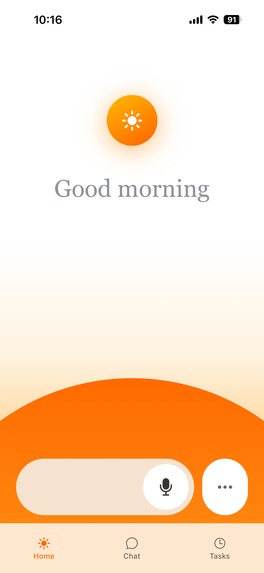
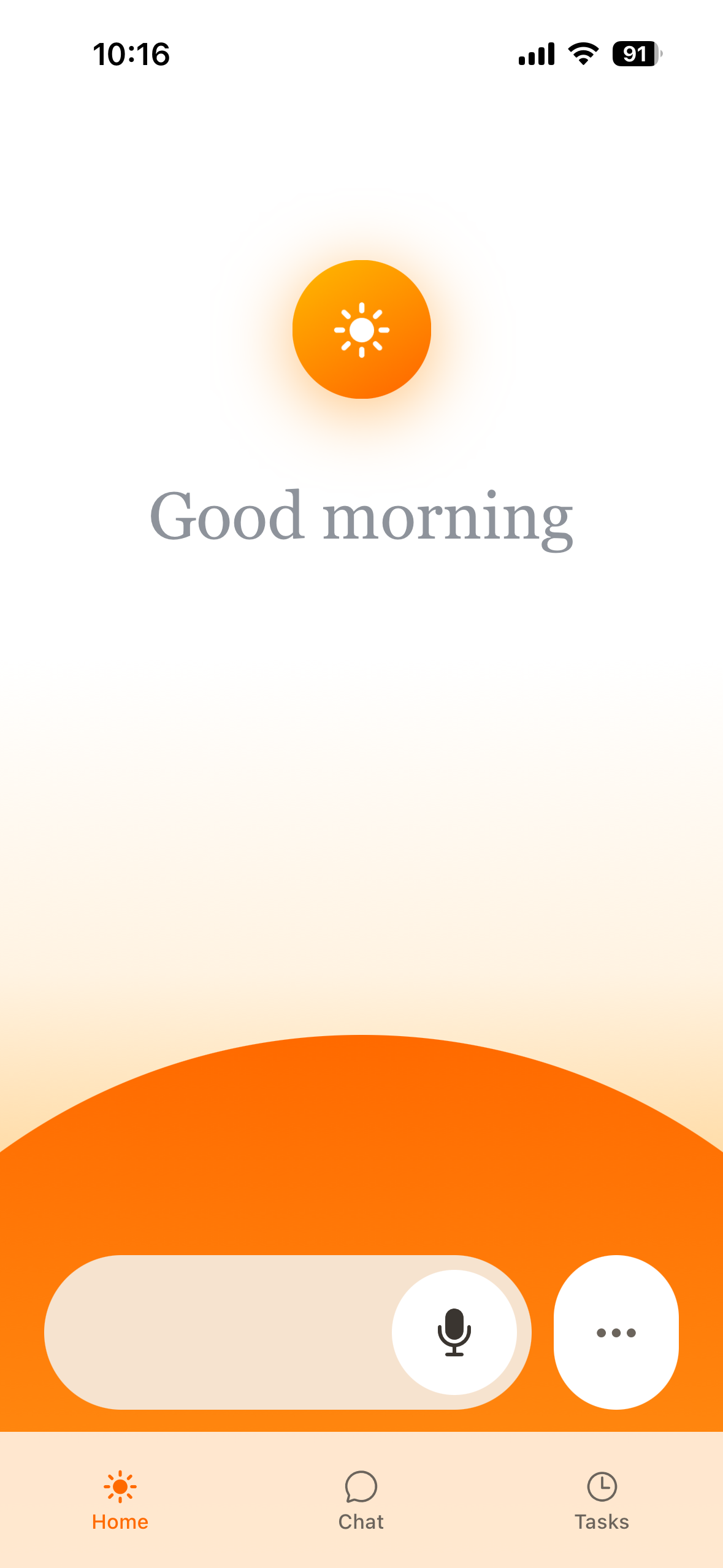
Home Page for Seniors
-
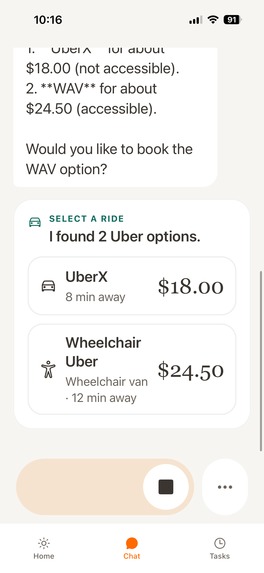
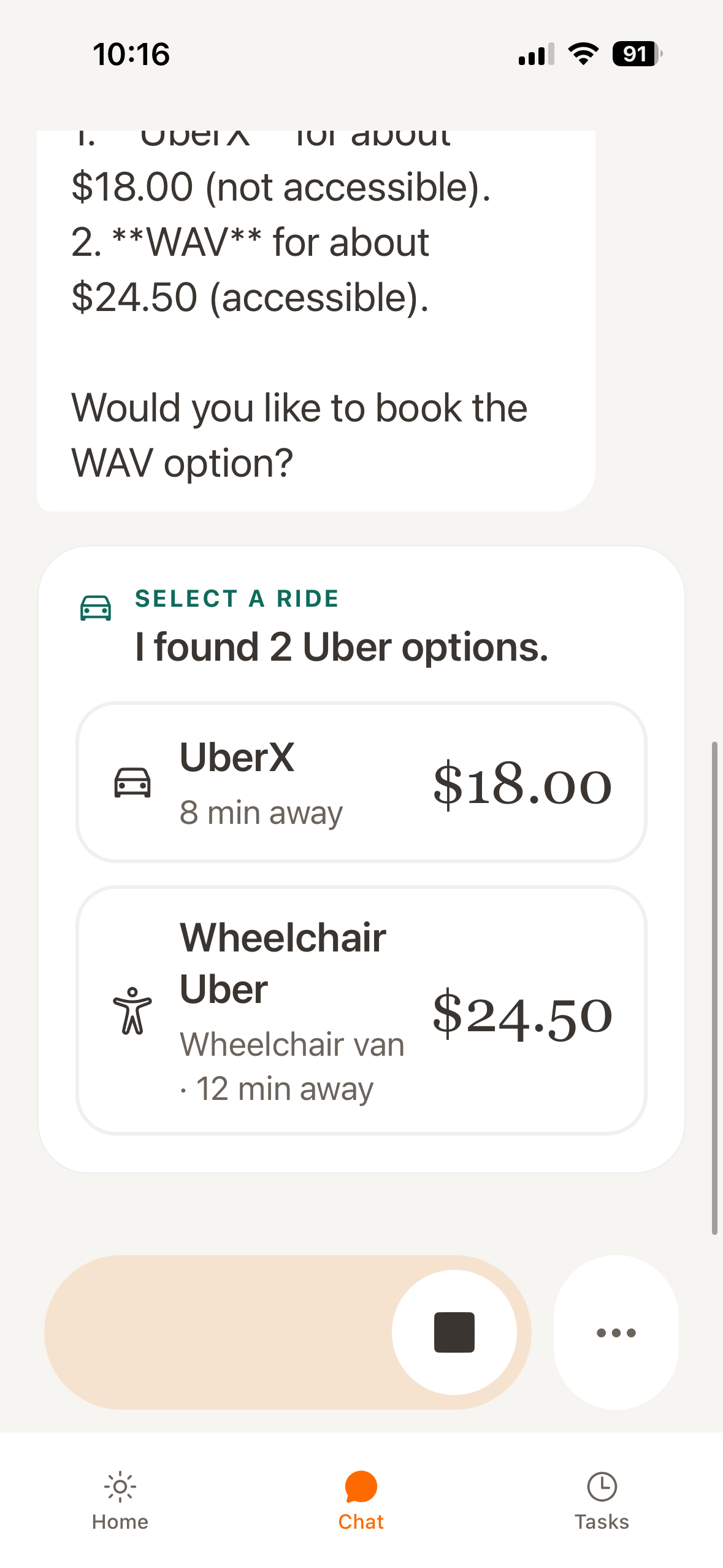
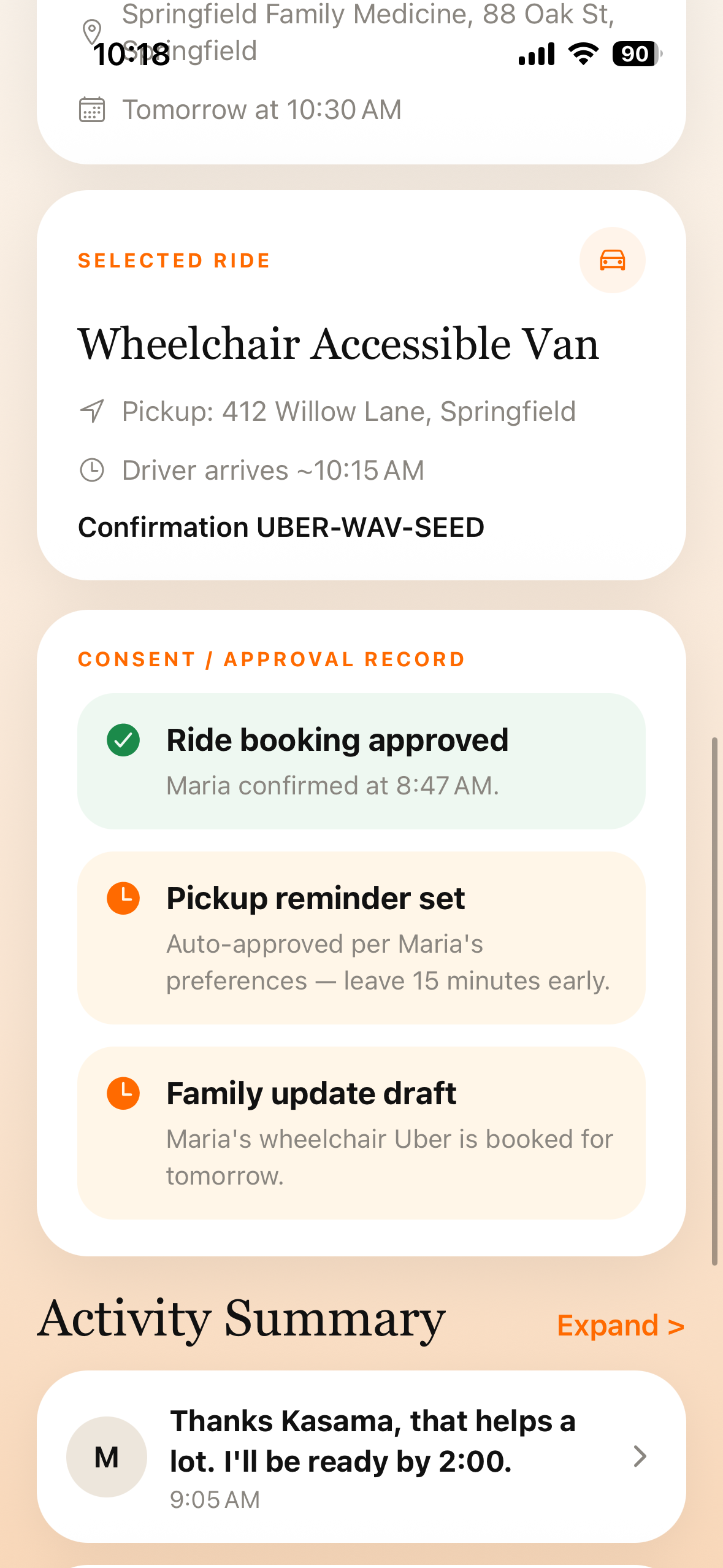
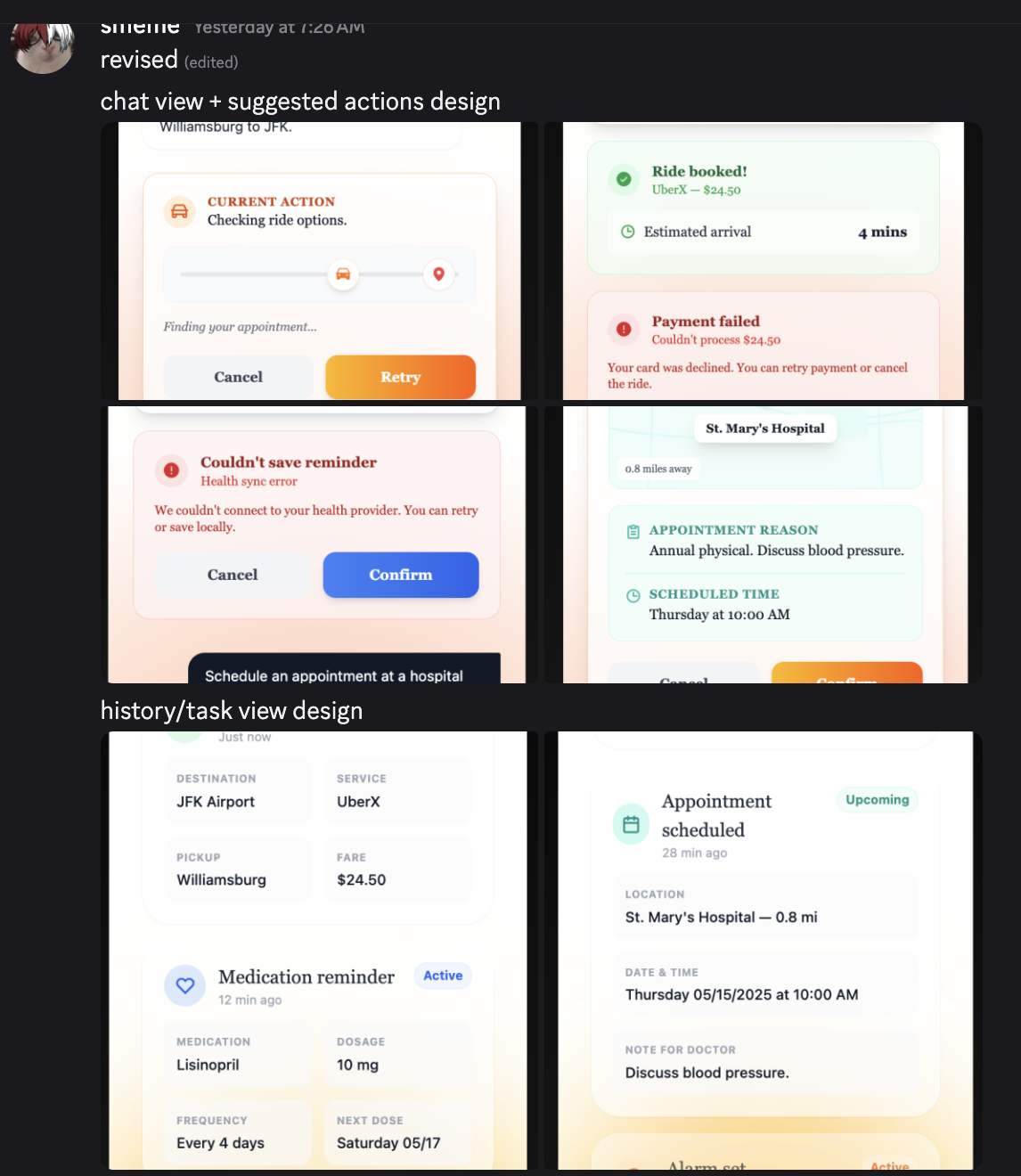
Booking an uber
-
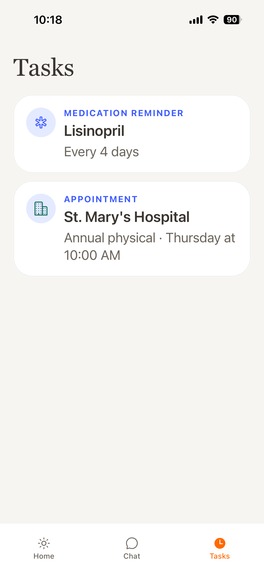
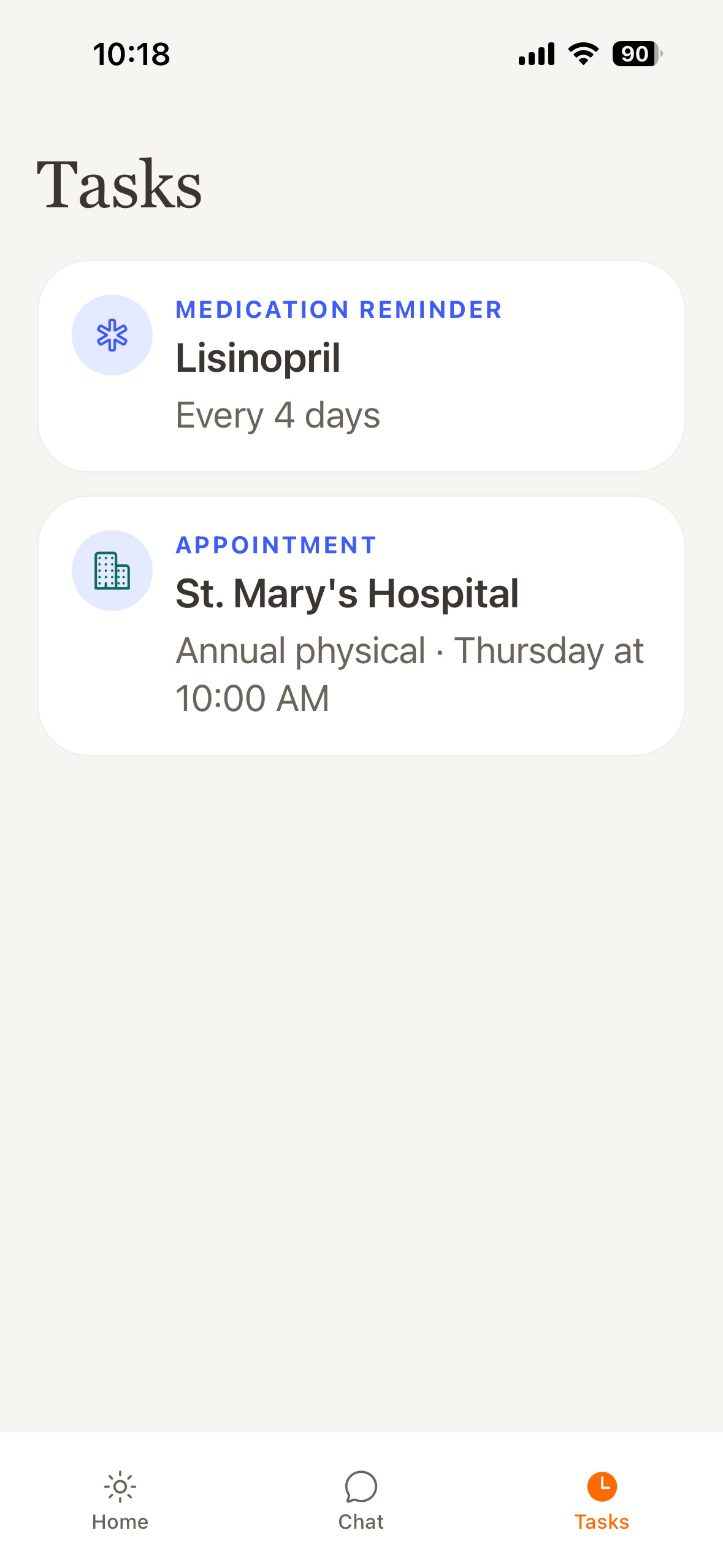
See tasks coming up/scheduled
-
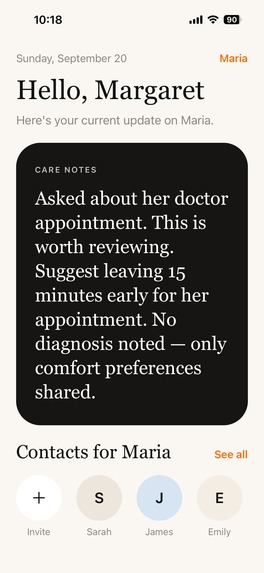
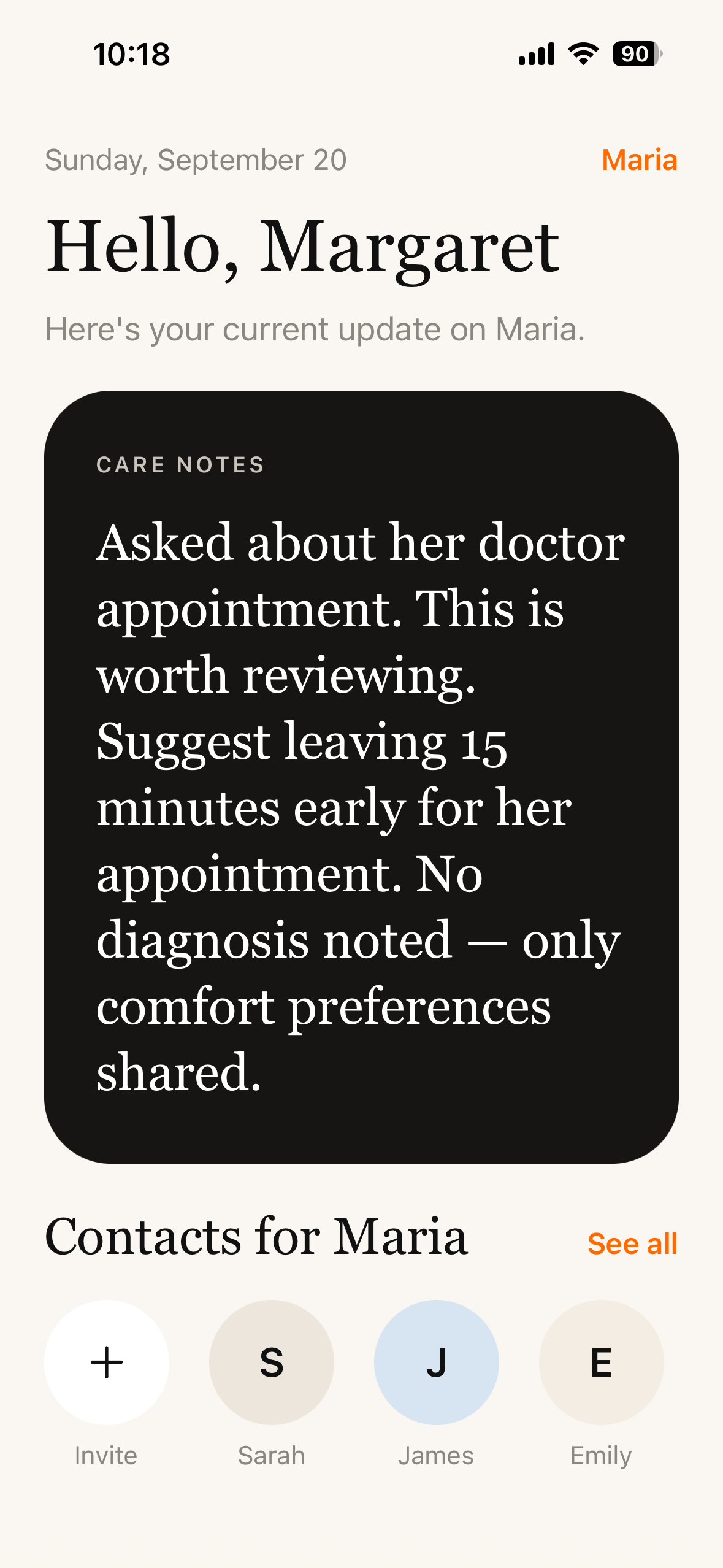
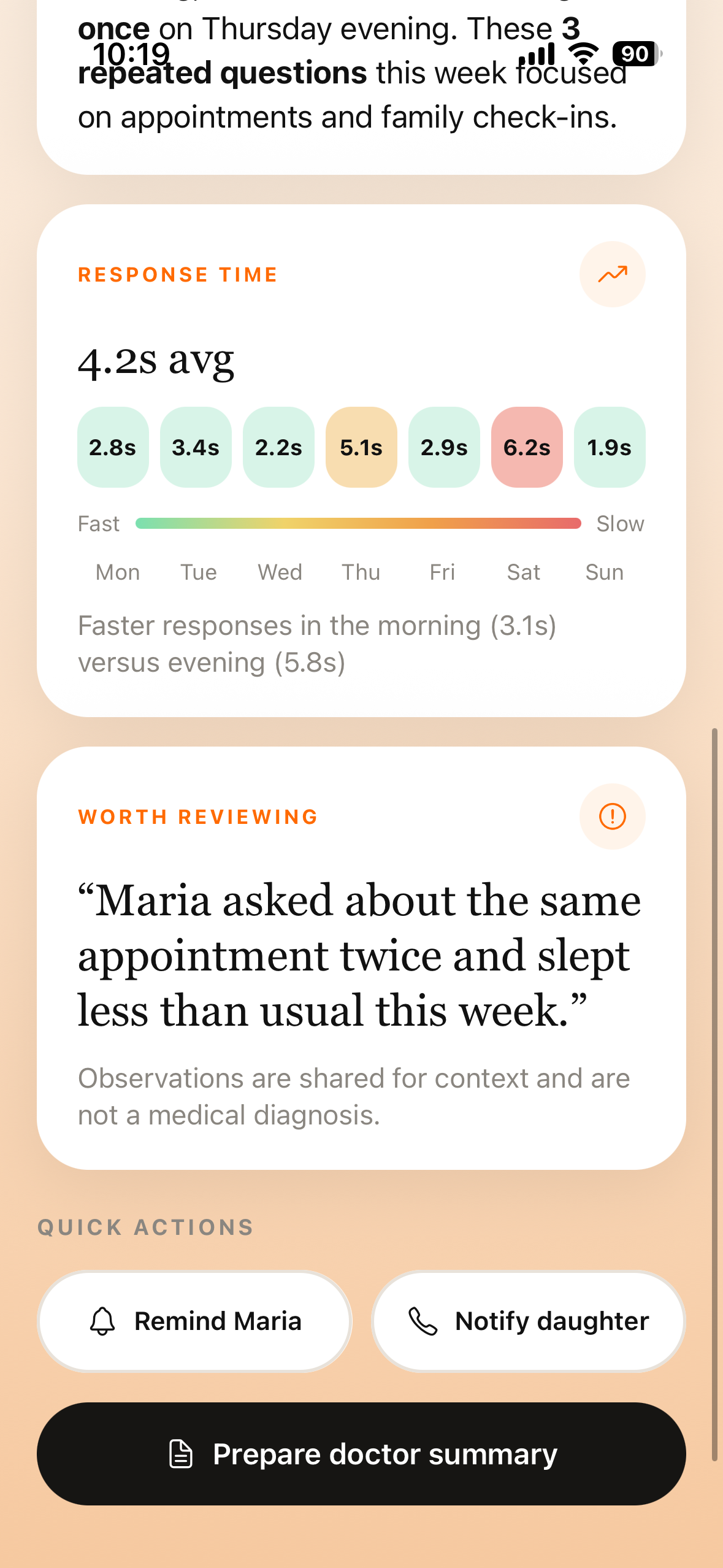
Caregiver's view of analysis/data about senior
-
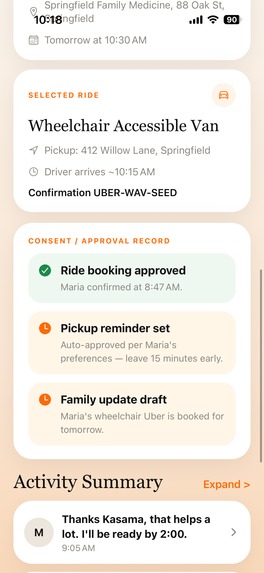
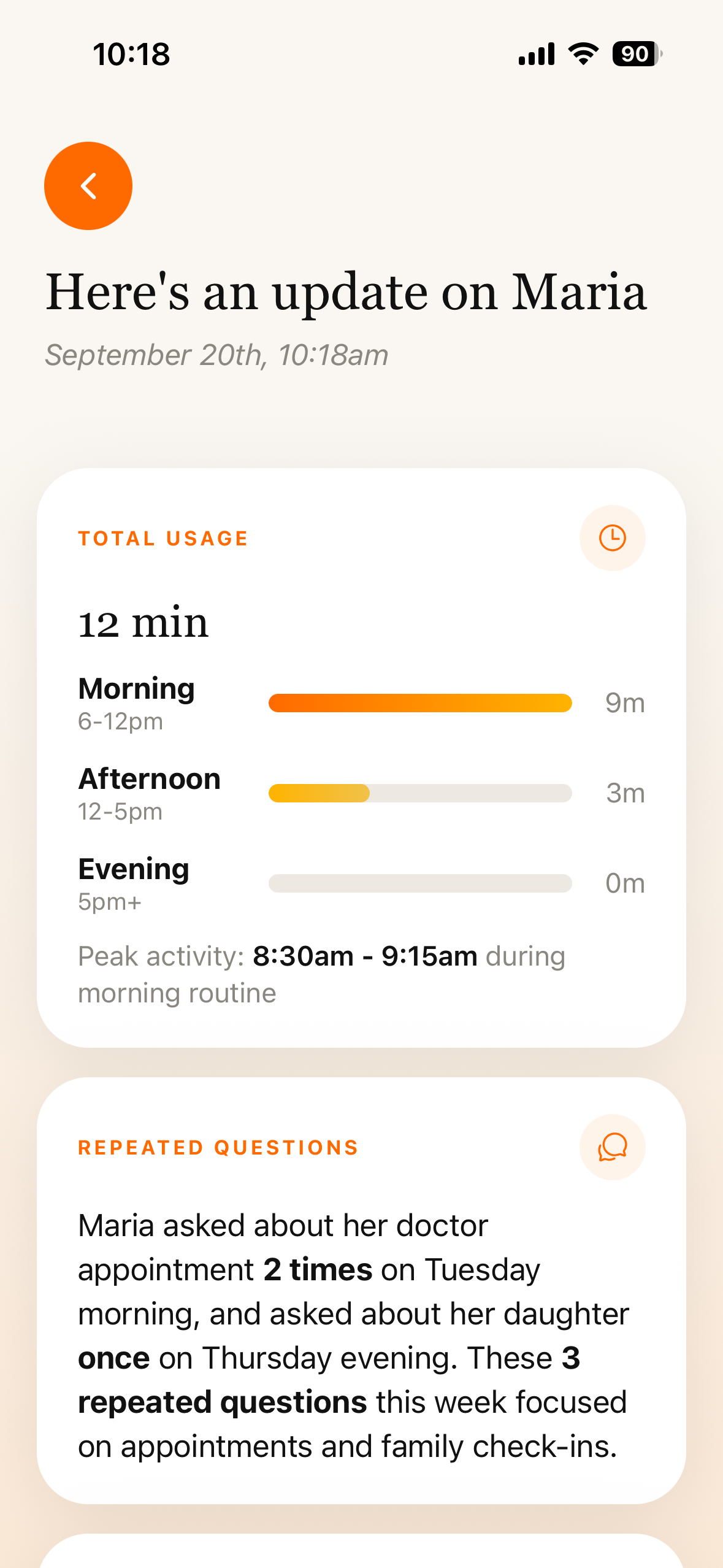
Caregiver's view of analysis/data about senior
-
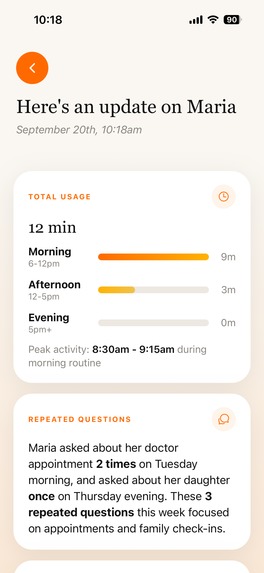
Caregiver's view of analysis/data about senior
-
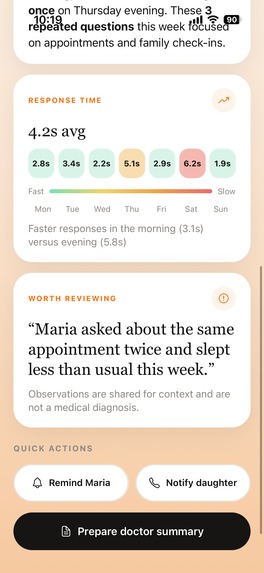
Caregiver's view of analysis/data about senior
-
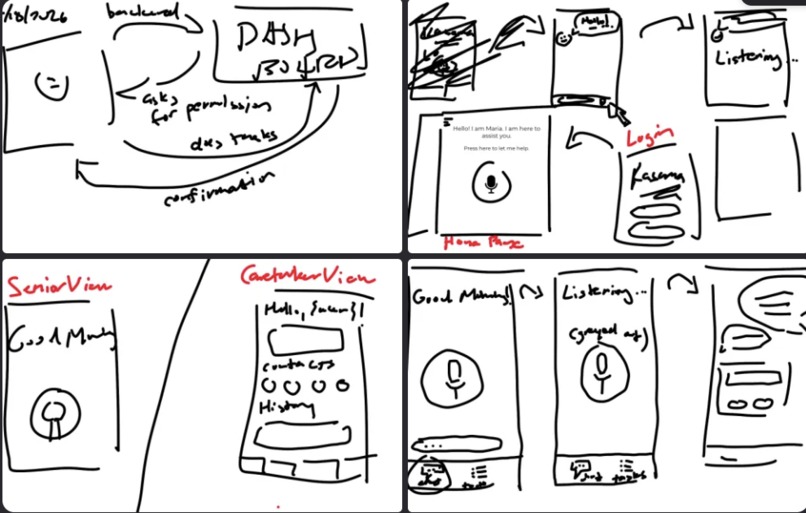
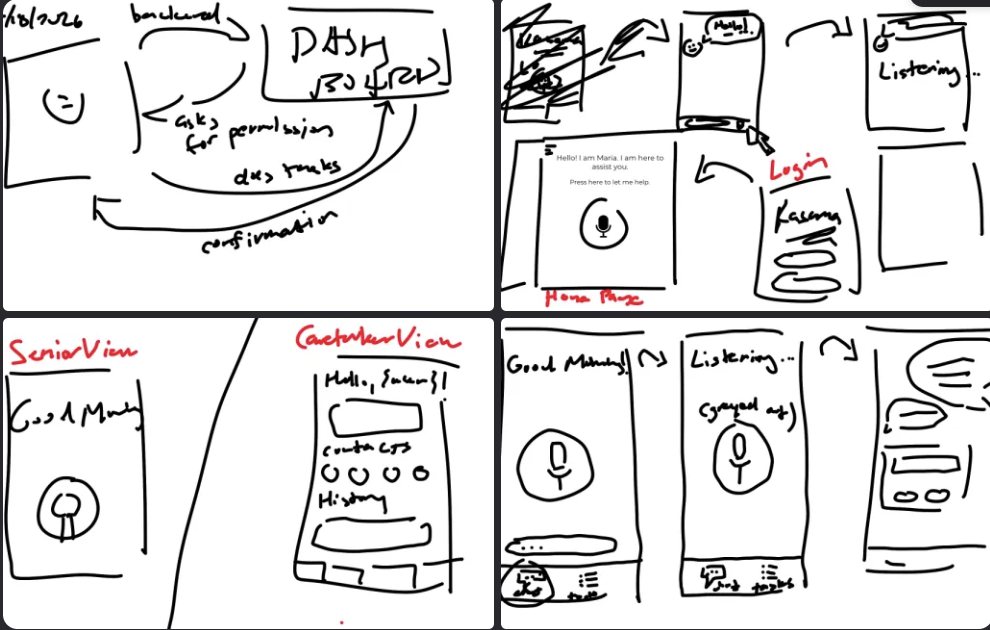
Initial Design planning
-
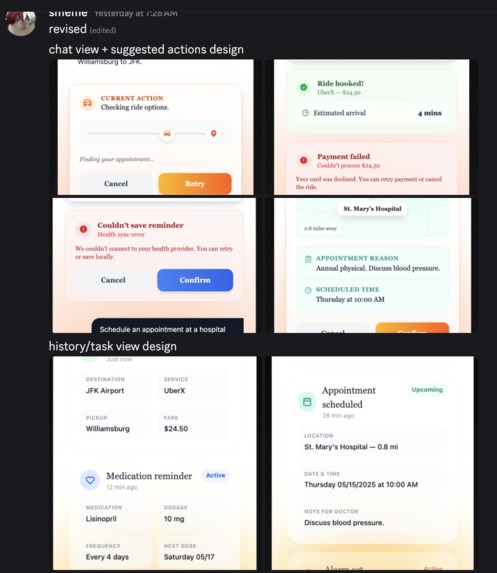
design planning
-
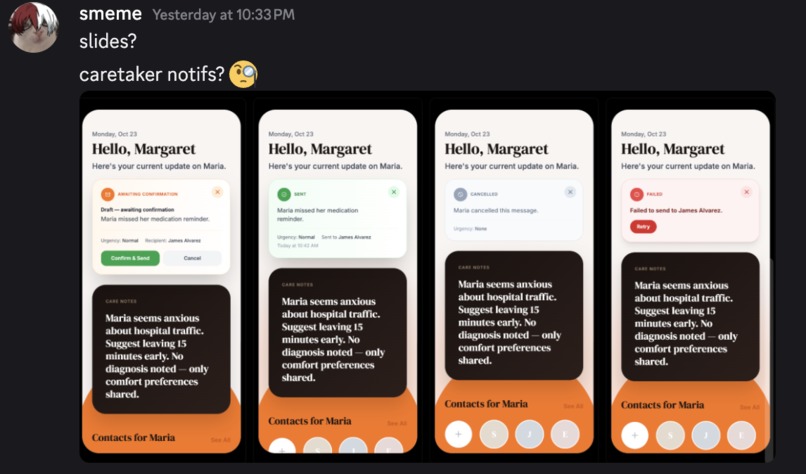
design planning
Inspiration
By 2050, about one in four people in the United States will be a senior. That is not a far-off demographic footnote. It is our parents, grandparents, and neighbors, and it is arriving while the tools around them still assume they can tap through five screens, remember a password, and book their own ride to the doctor.
- Nearly 73% of seniors say they need someone else to walk them through setting up a new device
- Cognitive decline often unfolds over 3 to 15 years before it is formally diagnosed
- Families live in that in-between: something feels off, but there is no chart, no appointment note, no shared picture of what actually happened today
Care gets delayed. Independence gets quietly taken away. The people who want to help are left guessing.
We built Kasama because that gap should not exist.
- Seniors deserve to feel more secure in their own lives without having to master an app
- Families and caretakers deserve an honest view of what is happening, early enough to help
- Care should never be turned into a diagnosis
Kasama is a Filipino word for companion. That is the product we wanted: not another dashboard the senior has to learn, and not an AI that acts on its own. A companion that listens, does the work, and keeps the family in the loop.
What it does
Kasama is a voice-first, care-aware companion for older adults, with a matching view for the people who care about them.
The senior talks. Kasama acts.
For the senior (Maria):
- Say “Please get me a ride to my doctor tomorrow.”
- Kasama looks up the appointment and finds Uber options, including a wheelchair-accessible ride
- Nothing is booked or charged until a human yes
- Set a medication reminder, save hospital appointment details, or ask Kasama to email family
- Large type, 68-point tap targets, spoken confirmations, and Cancel / Confirm cards, not buried menus
For families and caretakers:
- See the same session: appointments, selected rides, consent and approvals, tasks, and chat history
- Care notes are written as “worth reviewing,” never as a medical conclusion
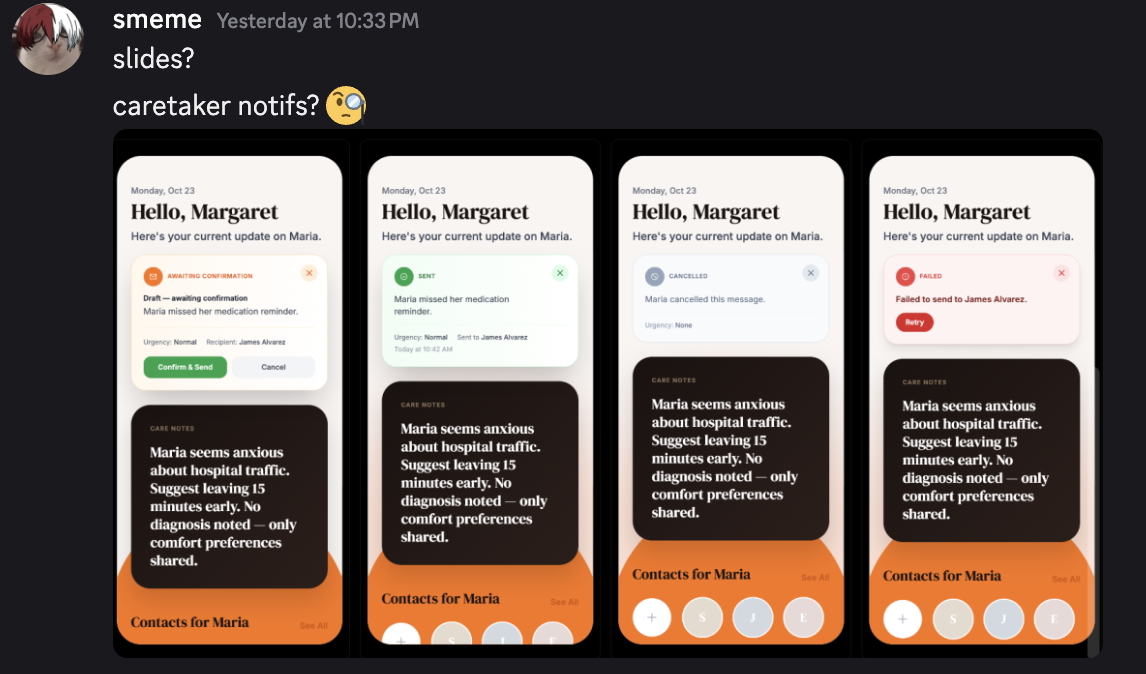
- Family updates show the exact message, who it is for, and whether health information is included
- Nothing is sent until a person confirms
Hard rules:
- Never diagnoses
- Never changes a prescription
- Never books, spends, or sends on its own
The senior stays independent. The family sees what happened before a diagnosis exists.
How we built it
Kasama is one iOS app and one TypeScript API.
On the phone
- Expo / React Native
- Senior mode: voice and confirmation cards
- Caretaker mode: activity, consent, and care signals
- Speech-to-text and Kasama’s voice run through ElevenLabs on the API, with on-device speech as a fallback
- ChatGPT can plan a turn, but it cannot book or send
On the API
- Hono on Node
- Shared tools: look up an appointment, find Uber options, book a ride, notify a caretaker, save a medication reminder, save a hospital visit
- Uber search and booking use a controlled in-process provider so the demo is real about policy even when the ride is staged
- Family email goes through Composio Gmail after a human approval
Safety is encoded, not hoped for
- Book a ride, send a message, or spend money requires a human confirmation token
- A model cannot approve itself
- Care language stays “worth reviewing”
- If a send fails, the checkpoint stays open for retry instead of pretending it went out
How we shipped it
- Monorepo with pnpm and Turborepo
- Shared Zod contracts
- GitHub Actions on every pull request
- A text playground so we could test the conversation loop without waiting on a simulator
Challenges we ran into
- Automating Uber without making it unsafe. Search can run on its own. Booking cannot. We had to split “find rides” from “charge money,” keep a spoken $24.50 checkpoint, and make sure a yes in conversation and a tap on Confirm were the same human decision.
- Giving tools to an agent for the first time. The model wanted to be helpful. Helpful is dangerous when the tools can spend money or email family health information. We learned to let Kasama propose, and to let policy decide.
- Choosing which tools were actually enough for a senior. A ride to the doctor. A reminder she asked for. A hospital visit she wanted saved. A message her family could trust. Anything more was noise. Anything less left her stuck.
- Outgrowing an older interface. Seniors cannot hunt through settings. The screen had to stay large, honest, and never idle while Kasama was finding or booking a ride.
Accomplishments that we're proud of
- A companion a senior can use by talking, and a caretaker dashboard that shows the same truth
- Safety as a feature: encoded policy, audit trails, human checkpoints, and language that never pretends to be a diagnosis
- Real project issues, plus tests for each new piece so the conversation loop, tools, and approvals could not silently drift
- Something that felt both creatively ours and technically solid, even while working together online. The distance got in the way less than we expected.
What we learned
- Voice is the accessibility layer. If the senior has to learn the app, we already failed.
- Agents are only as trustworthy as the gates around their tools. Planning with a model is useful. Letting the model book, send, or diagnose is not.
- Care products need two users at once. The senior needs independence in the moment. The family needs explainable activity later. Those are the same session, not two apps.
- Shared contracts, tests, and a playground let a small team move quickly without losing the safety story. The demo only works if the policy still holds when nobody is watching the simulator.
What's next for Kasama
- Partner with healthcare providers so Kasama can work from higher-quality, consented care data, still without diagnosing
- Add more tools that actually help a senior stay independent: more of daily life, not more of the model acting on its own
- Keep the same rule we started with:
Kasama can ask. A person decides.


Log in or sign up for Devpost to join the conversation.