-
-
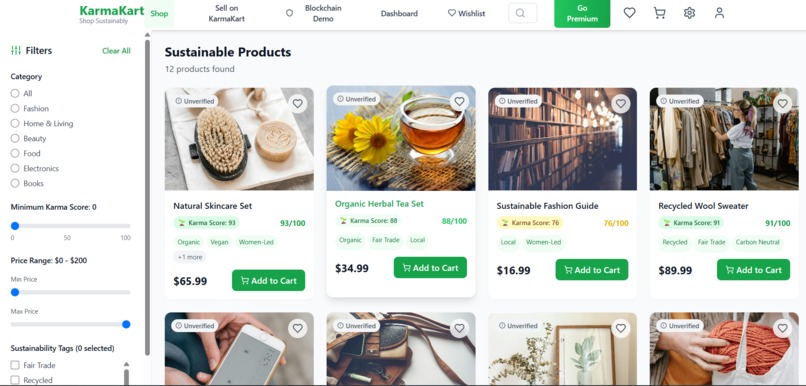
Main Landing Page
-
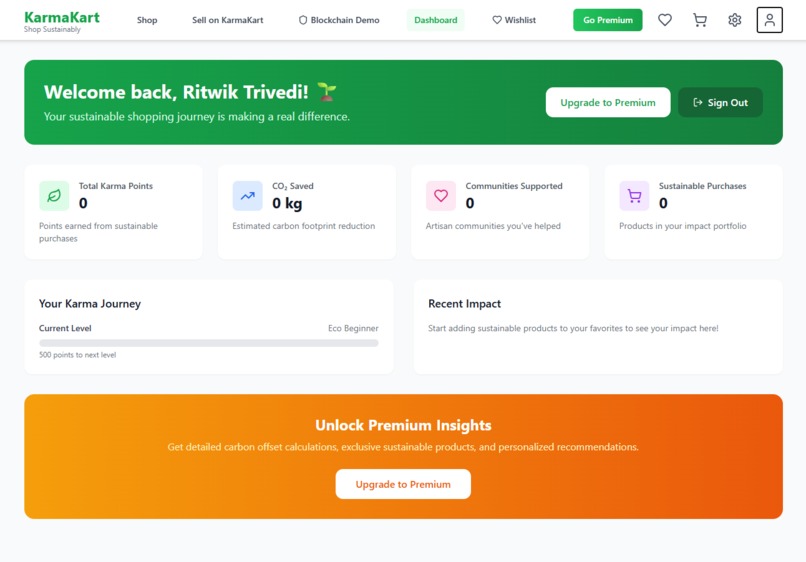
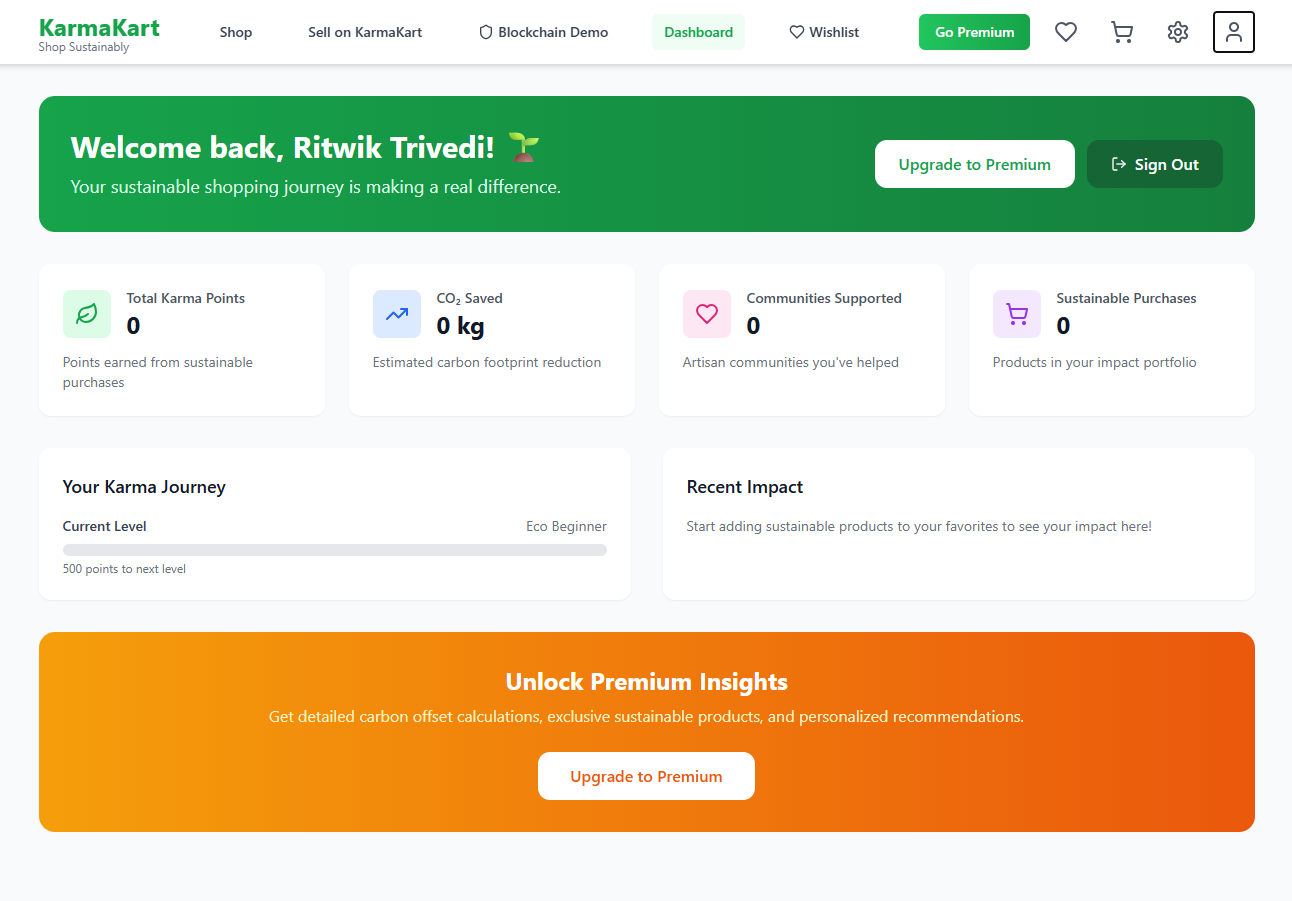
User Dashboard
-
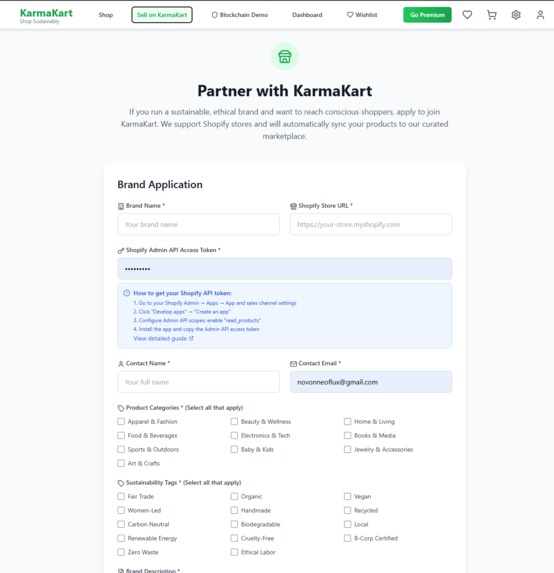
Seller Onboarding Part 1
-
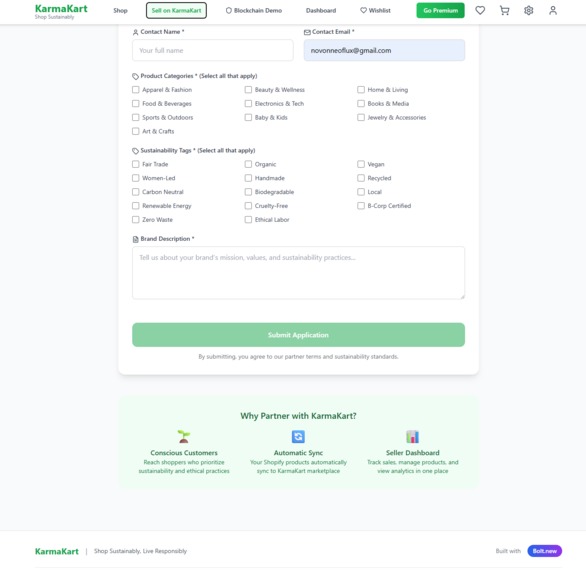
Seller Onboarding Part 2
-
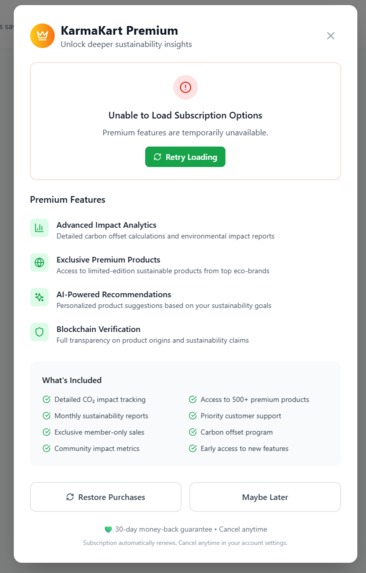
Premium Subscription Modal
-
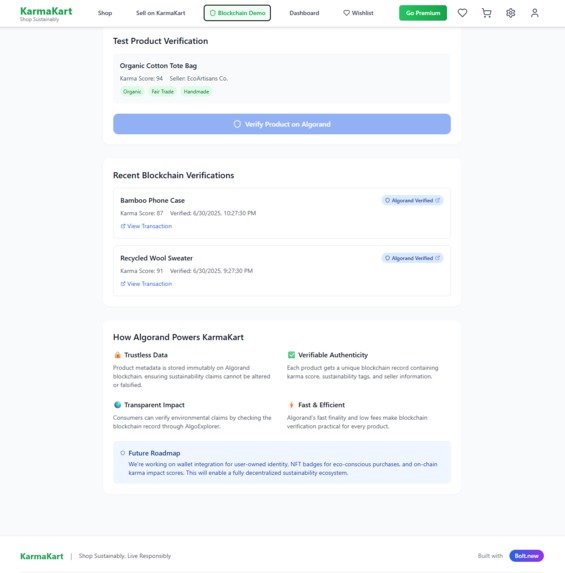
Blockchain Verification Page
Inspiration
In a world flooded with greenwashing and impulse shopping, we asked a simple question: What if sustainability was built into every checkout? KarmaKart was born from the idea that commerce can drive climate action—if done right. We envisioned a platform where purpose-led brands meet conscious consumers, where every product tells a transparent impact story, and where tech powers trust.
What it does
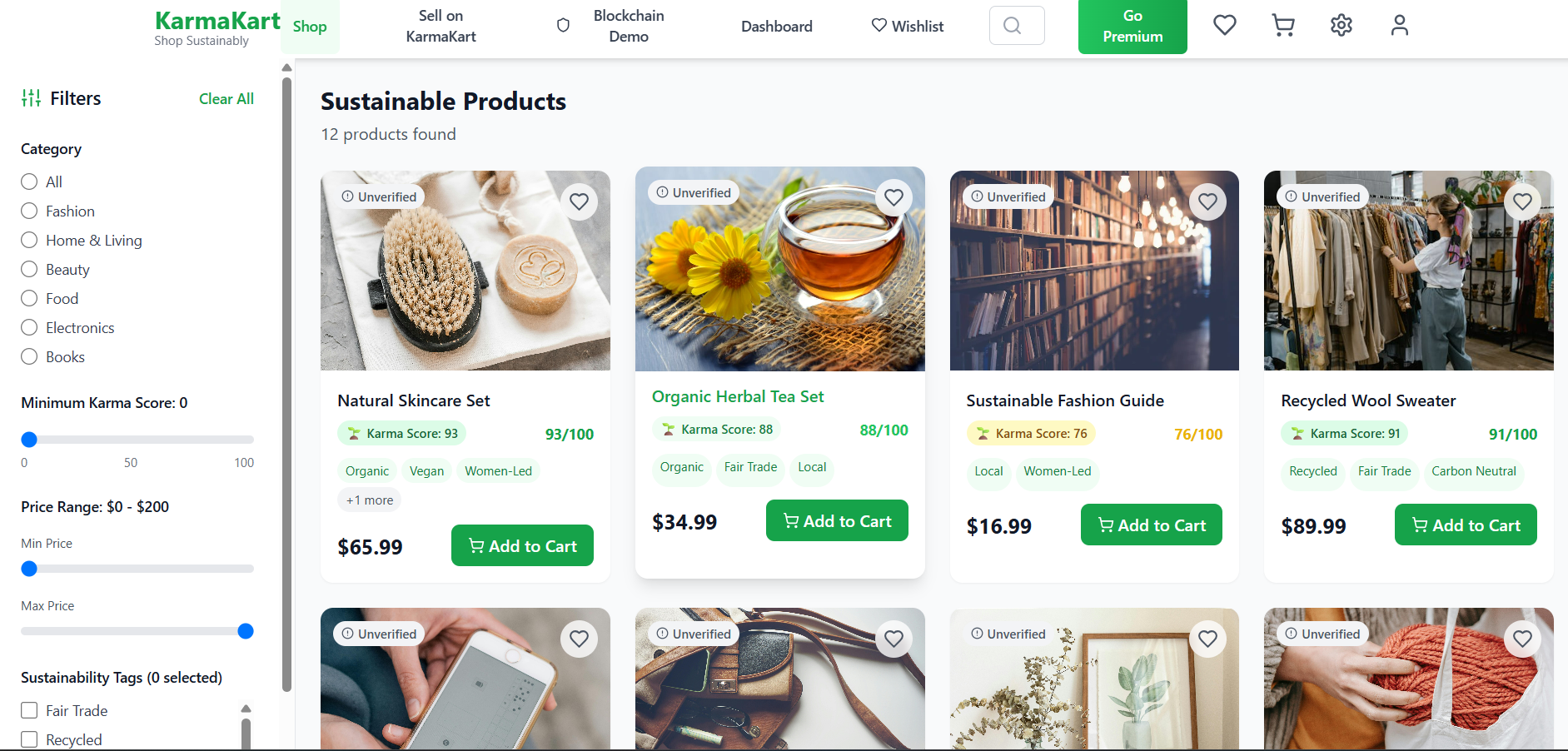
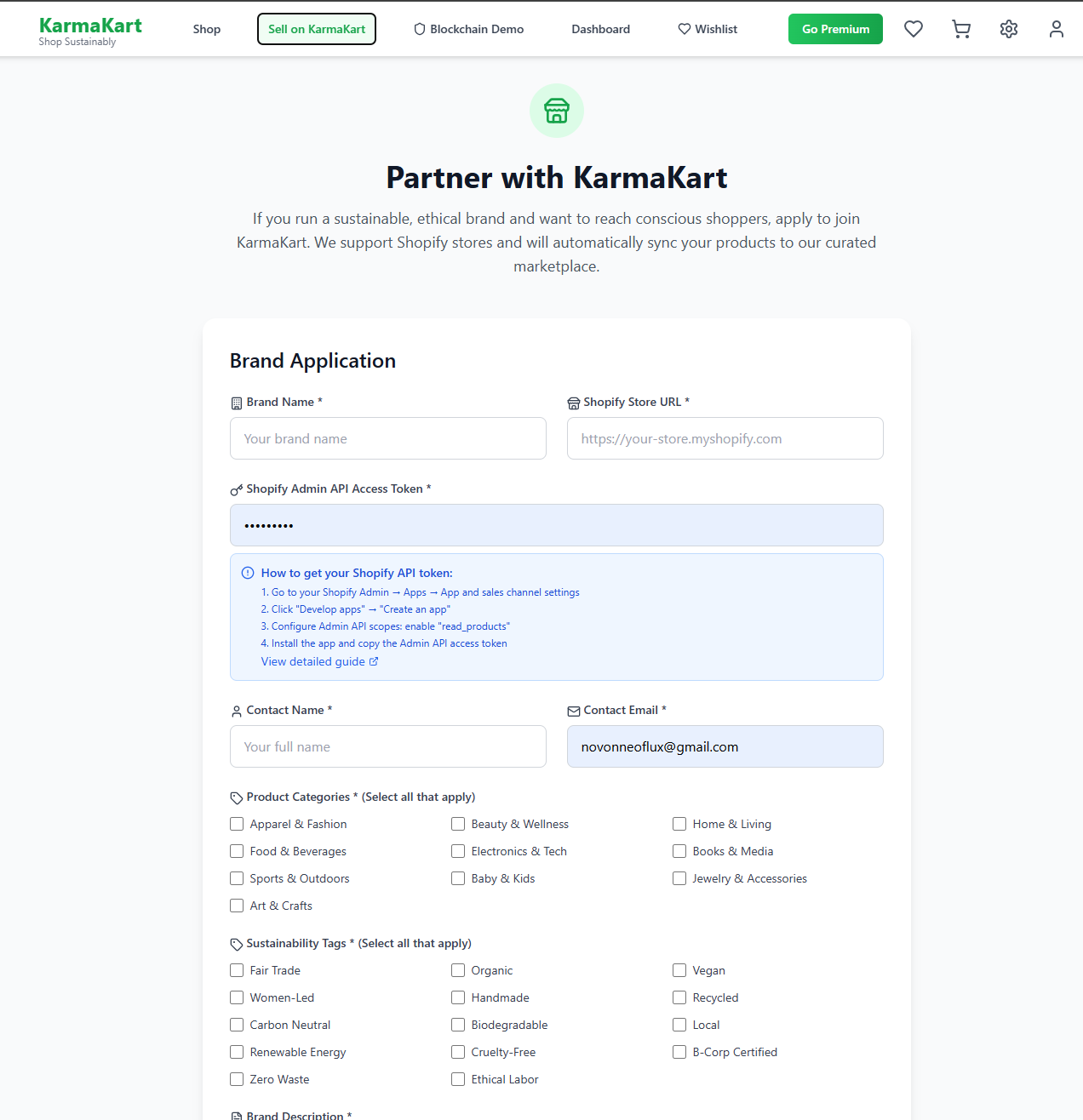
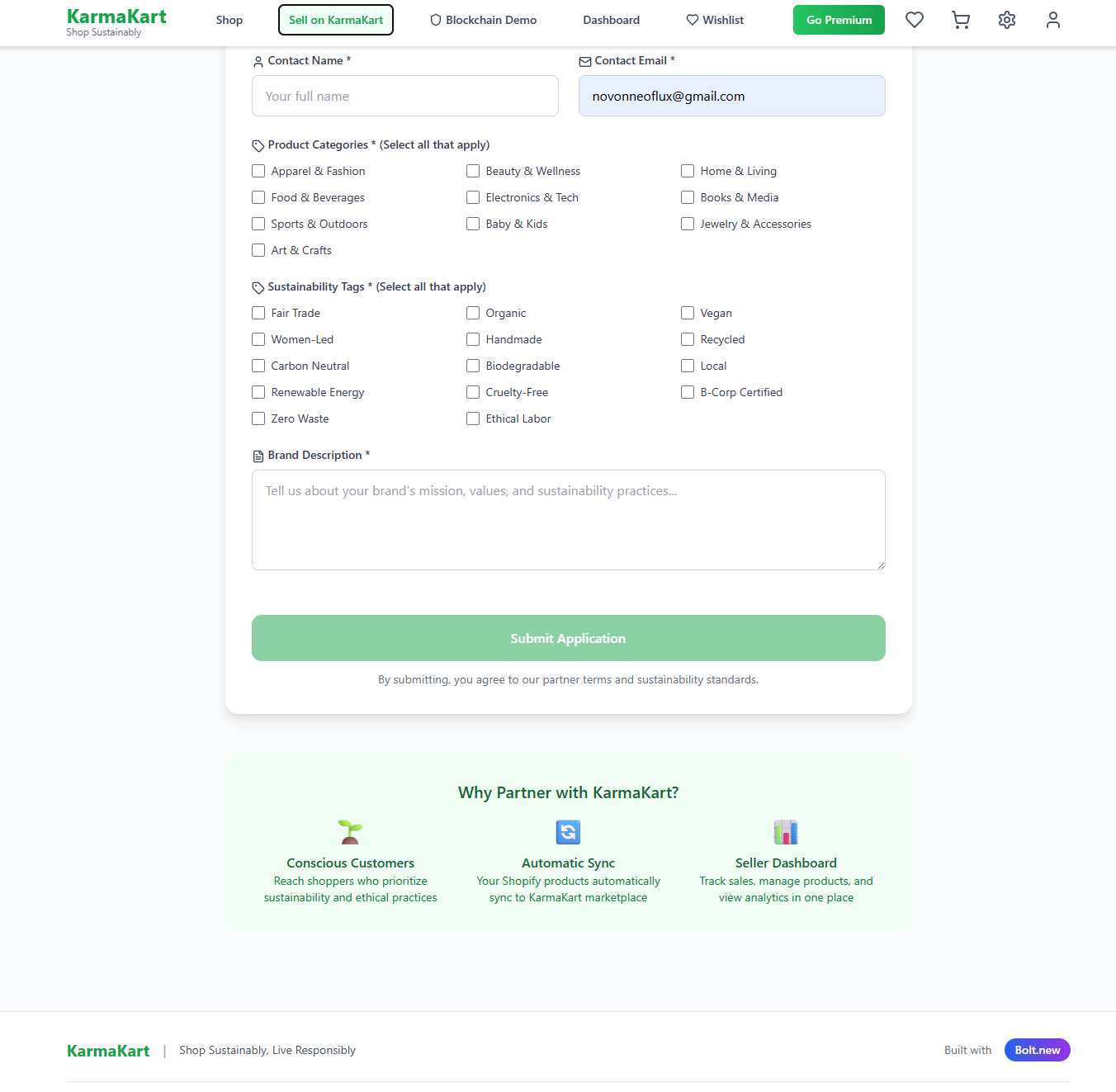
KarmaKart is a sustainable e-commerce platform where every product carries a Karma Score, a smart rating that reflects its real-world environmental and ethical impact—based on factors like carbon savings, fair trade, women-led sourcing, and more. Consumers can filter by causes they care about, track their impact over time, and shop verified eco-products. Brands can apply to list their Shopify-linked stores, and approved sellers can manage listings, integrate payments, and grow with credibility.
How we built it
- Bolt.new enabled us to build a fully responsive, production-grade app in record time—no traditional frontend coding required.
- Supabase powers authentication, real-time product and user data, and seller onboarding workflows.
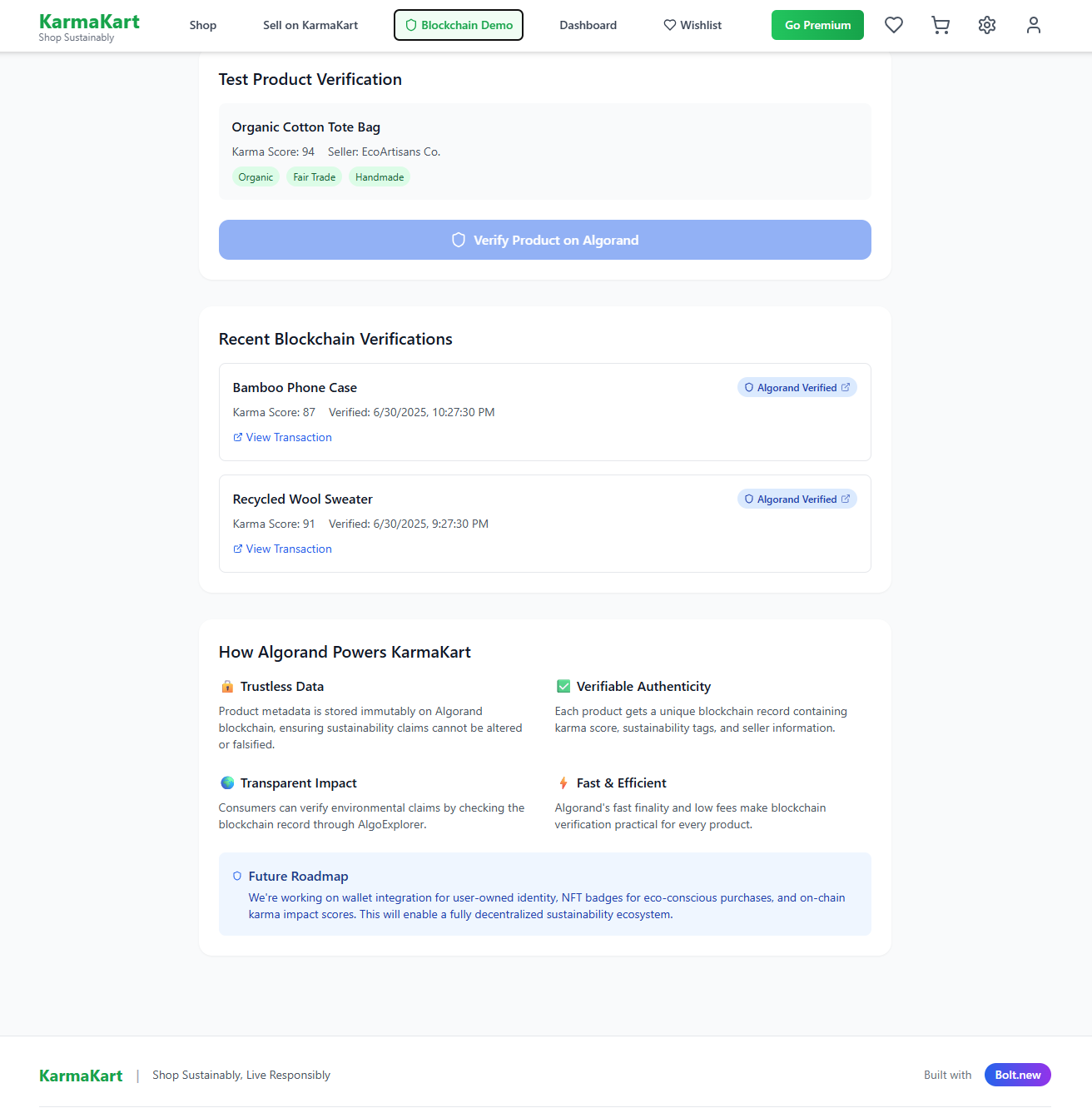
- Algorand handles product verification metadata and trustless transactions.
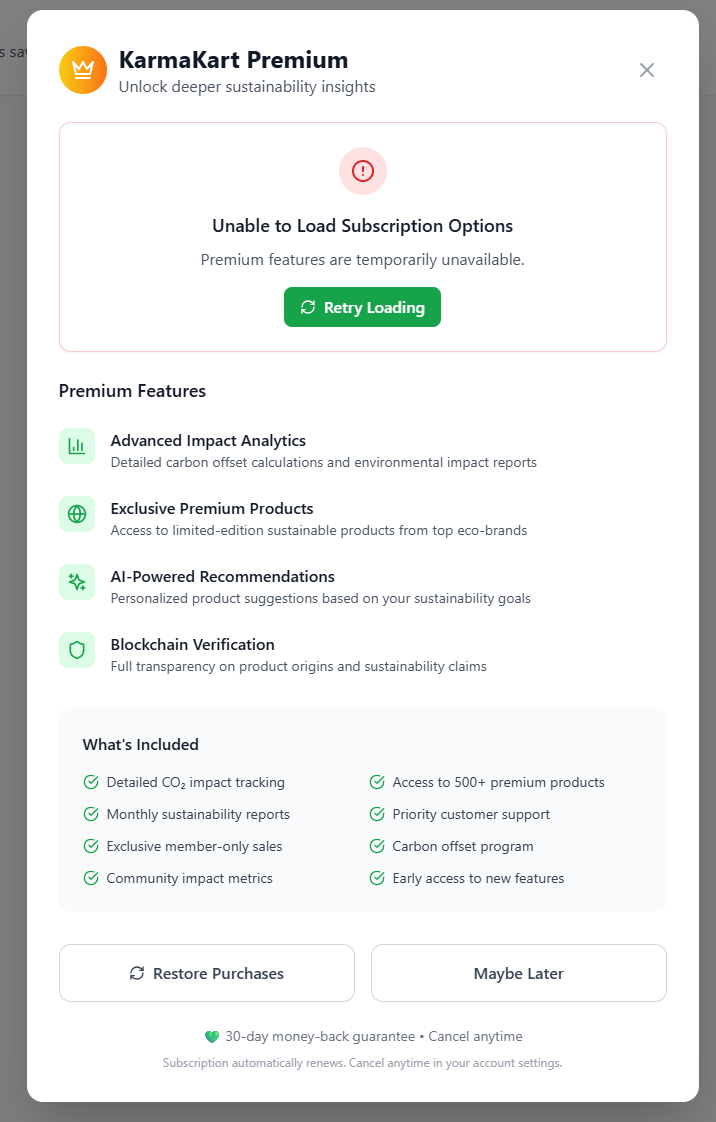
- RevenueCat was integrated to power paywall subscriptions for KarmaKart Premium.
- We deployed on Netlify.
- We made a Karma Score algorithm that dynamically reflects product attributes.
Challenges we ran into
- Managing dynamic image rendering and fallback behavior was trickier than expected across different components.
- Shopify integration required navigating OAuth flows and syncing product data securely.
- Getting blockchain testnet wallets up and running with Algorand took extra debugging, especially around mnemonic handling.
- Ensuring role-based access (admin vs. seller vs. buyer) with granular UI permissions in Bolt.new while maintaining UX consistency was an architectural hurdle.
- Integration with Stripe is also a challenge.
Accomplishments that we're proud of
- Created a fully functional AI-powered e-commerce experience—built entirely on no-code/low-code infrastructure.
- Integrated blockchain, AI, and commerce in a way that feels simple and intuitive to the user.
- Developed a Karma Score framework that can scale across categories, with room for future plug-and-play sustainability APIs.
- Built with a mission: tech that drives real-world behavior change.
What we learned
- The no-code/AI dev landscape has evolved to a point where you can build complex, production-grade apps without writing traditional code.
- Designing for sustainability requires radical transparency and empathetic UX—especially when trust is the product.
- Blockchain doesn’t have to be scary—it can be invisible and empowering when used for the right problems.
What's next for KarmaKart
- Finalize Shopify App Store approval and expand seller onboarding flow
- Implement carbon offset APIs to give live environmental feedback at checkout
- Allow buyers to earn Karma Points and unlock community-driven rewards
- Launch a public impact dashboard showing real-time collective KarmaKart footprint

Log in or sign up for Devpost to join the conversation.