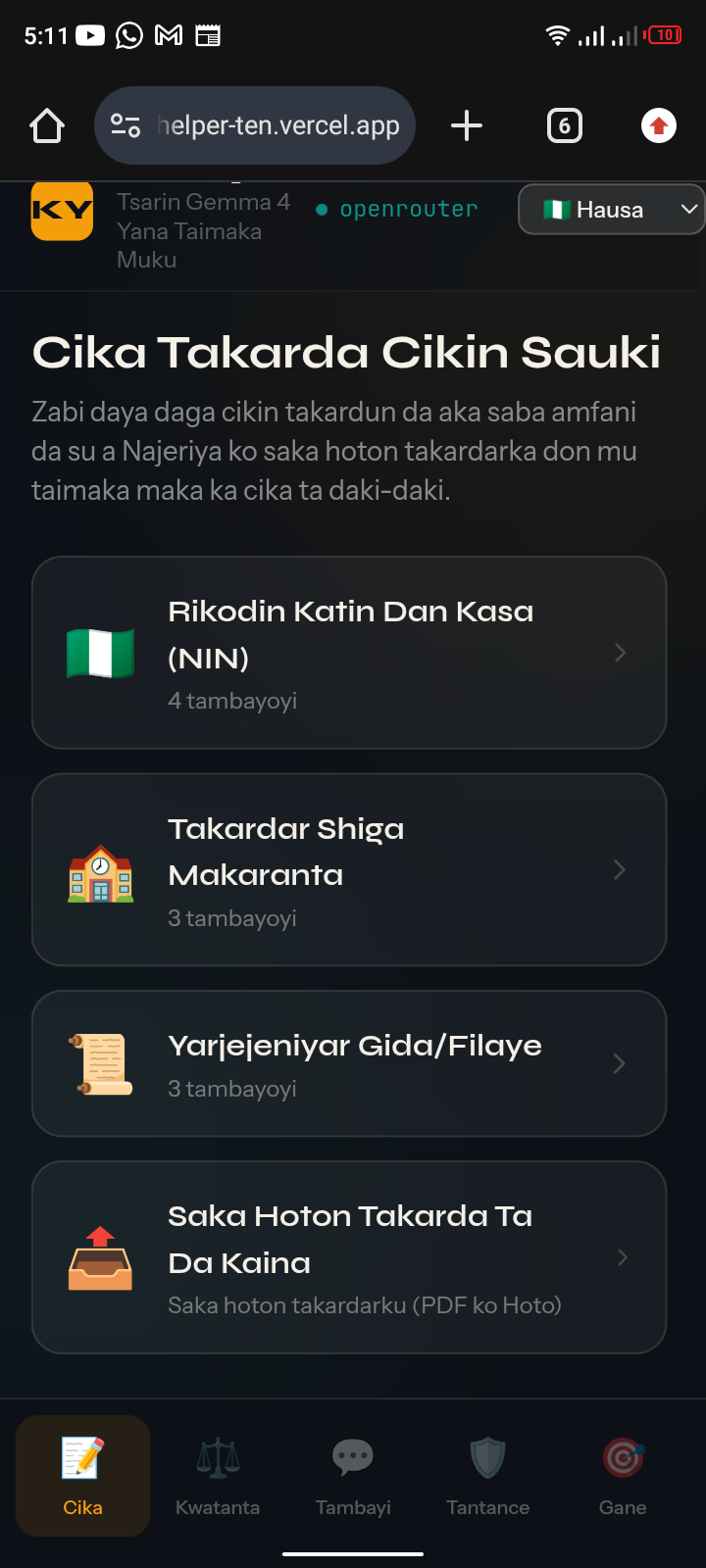
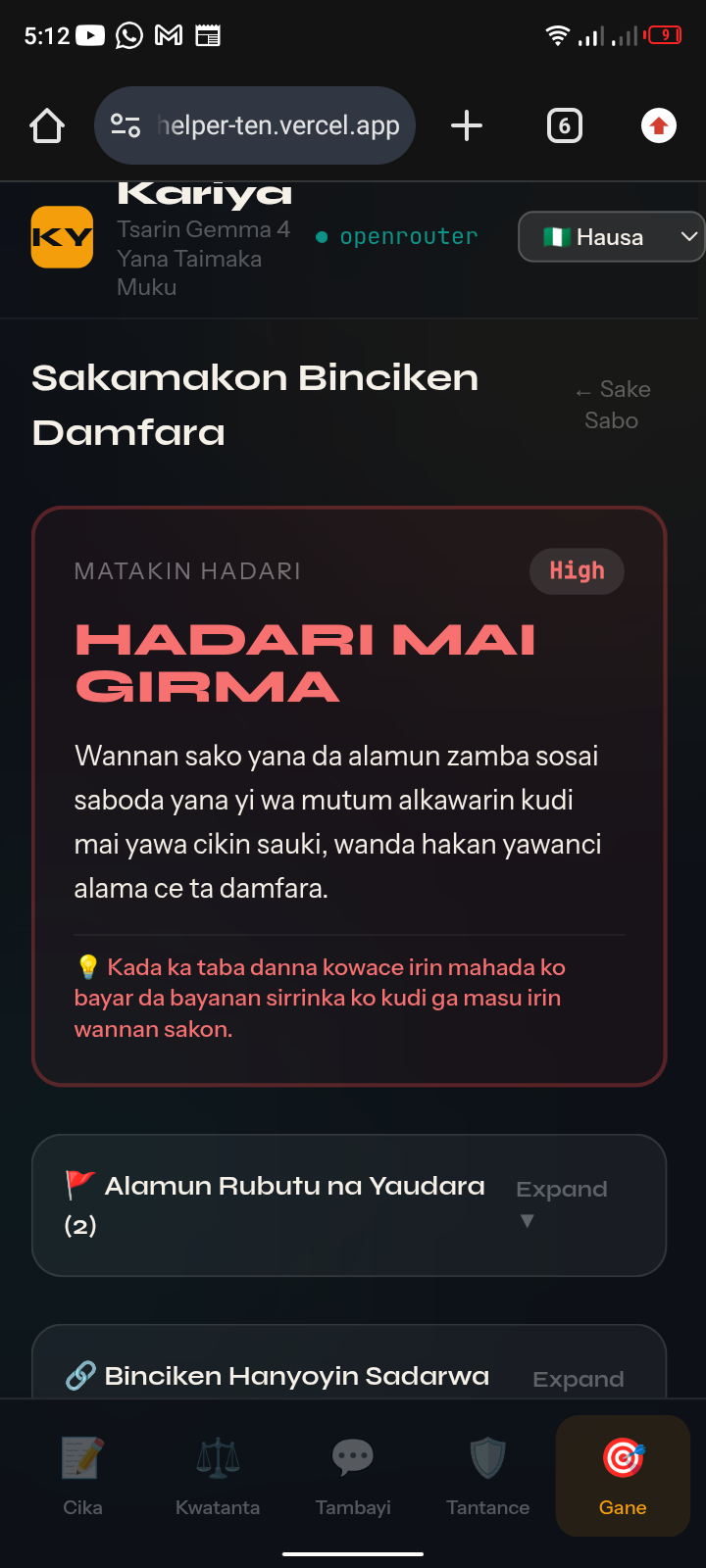
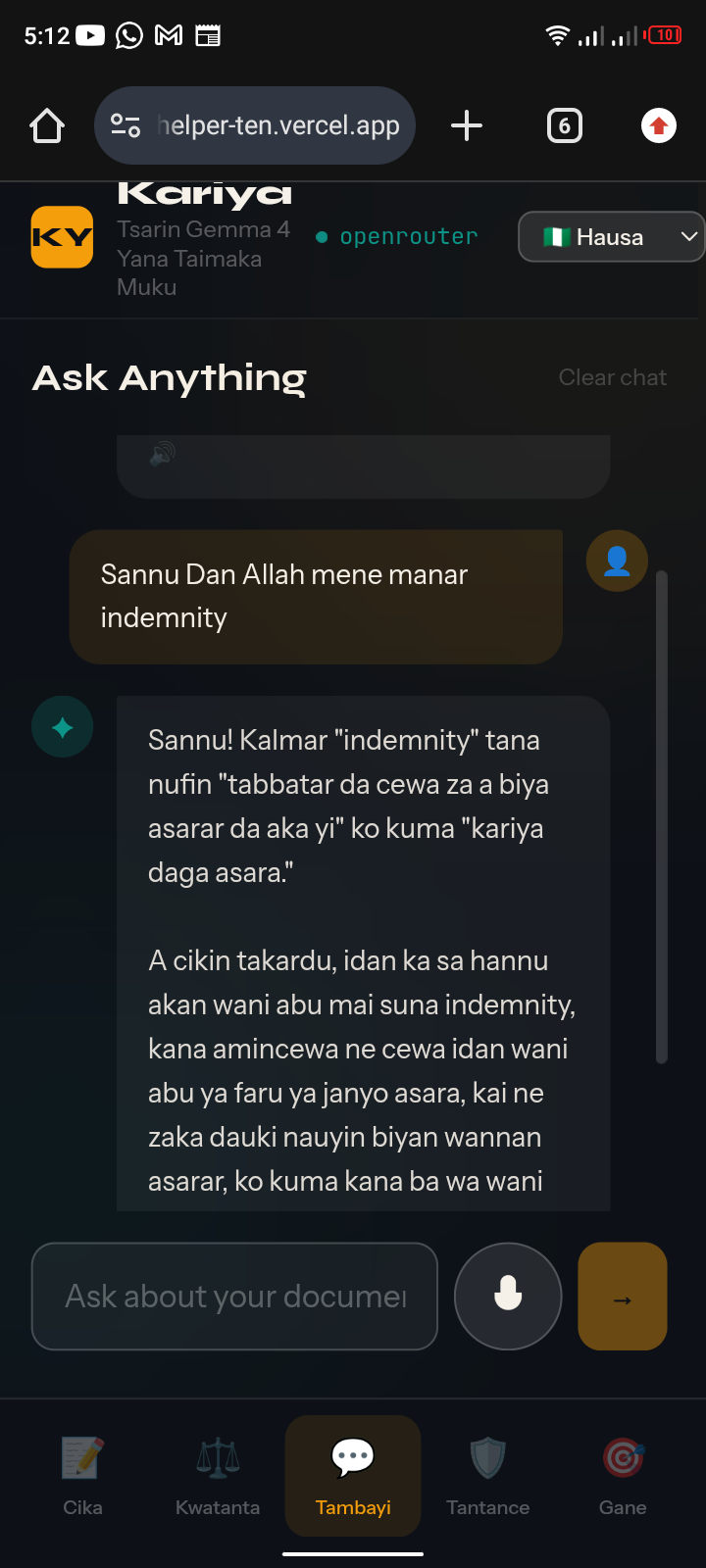
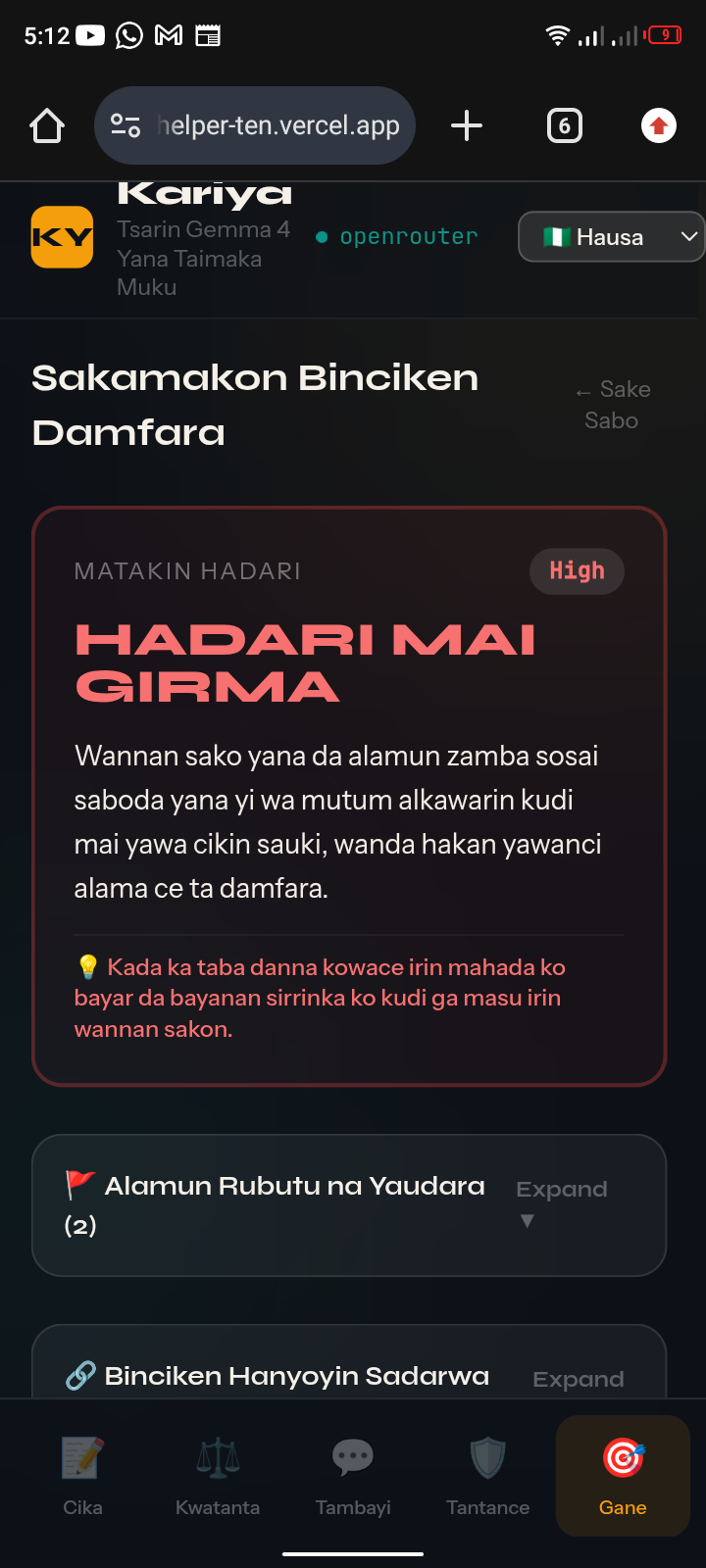
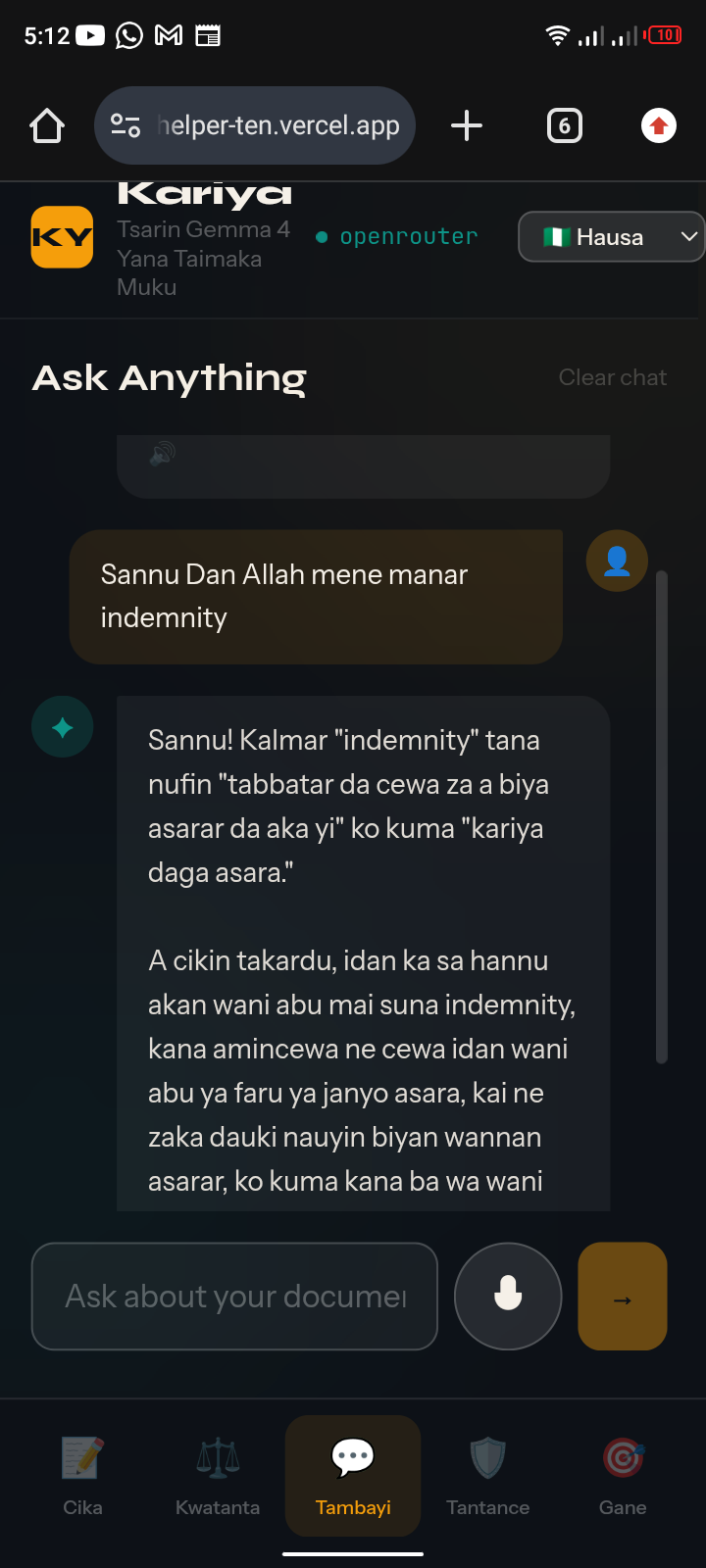
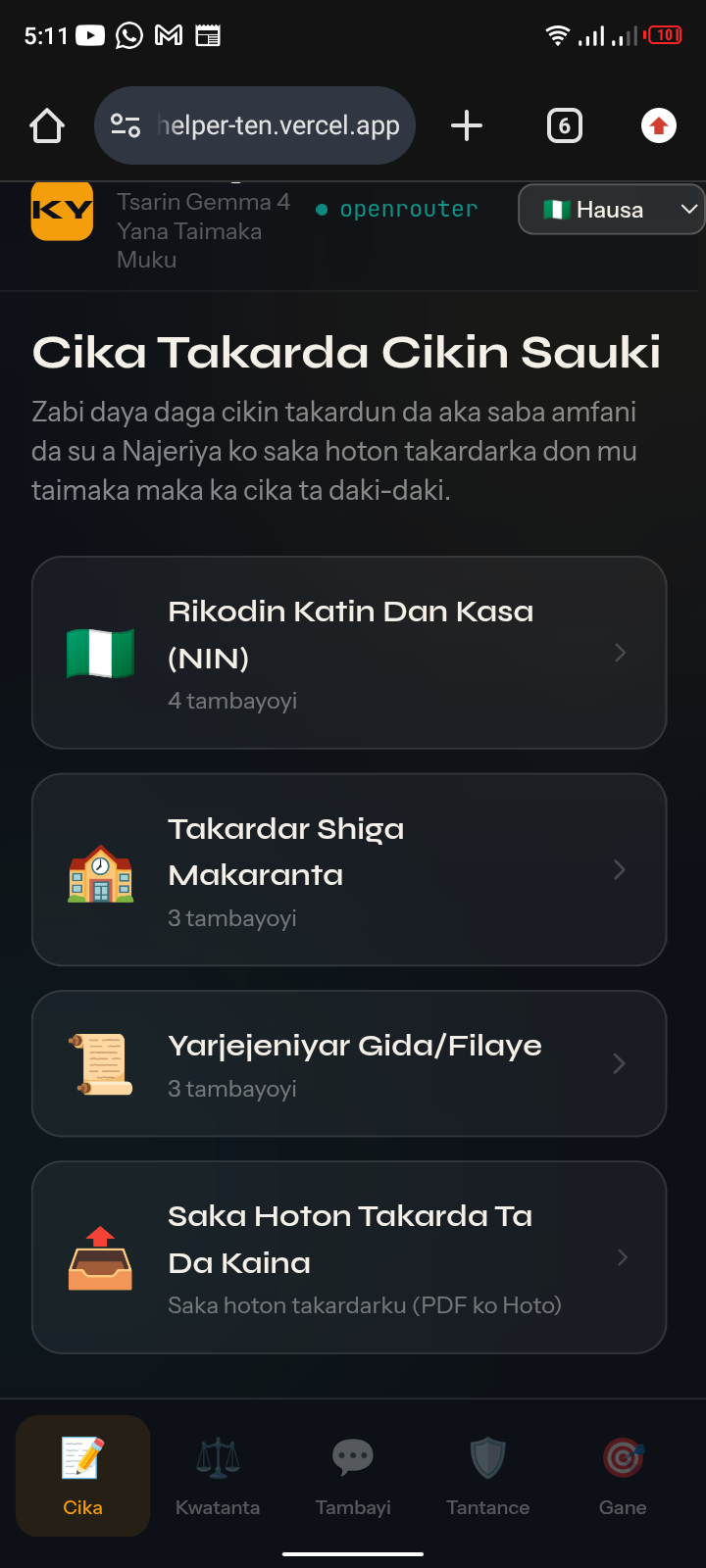
Inspiration Millions of Hausa-speaking Nigerians are excluded from official processes they interact with every day — opening a bank account, filling out a school admission form, understanding a tenancy agreement — because those processes assume English fluency and reading ability they don't have. That gap gets exploited. People hand sensitive paperwork to "helpers" who sometimes take advantage of them. Someone gets a text saying they've won a loan or a job, with no one nearby to ask "is this real?" before sending money they don't have. A graduate submits a certificate for a job application that turns out to be forged, not because they lied, but because they never had a way to check it themselves. None of this is rare. It's daily life for people who are capable and deserving, but excluded by language and literacy barriers, and often exploited because of it. Most digital tools assume English fluency, reading ability, and someone trustworthy nearby to help. We wanted to build something that assumes none of that. What it does Kariya is a voice-guided assistant, built Hausa-first, that helps people fill out forms, verify whether a document is genuine or forged, and check suspicious messages for scams — in Hausa, Pidgin, or English. Cika Takarda (Form Filling) reads out form questions aloud and fills them in as the user answers, validating things like phone numbers and dates along the way. It can also extract details straight from a photographed physical document to auto-fill a digital form. Tantance Doc (Document Verification) takes a photo of a certificate, admission letter, or ID and returns a plain-language explanation of whether it looks genuine, edited, AI-generated, or a repeatedly re-shared copy, along with a confidence level and a recommendation rather than a scary absolute claim. Gane Algush (Scam Check) takes a pasted or spoken message and breaks down specifically what's off about it — and just as importantly, tells the user when a normal message is actually fine instead of flagging everything by default. Kwatanta Takardu (Document Comparison) puts two documents side by side, like two tenancy agreements or two loan offers, and highlights differences in cost, terms, and risky clauses. Tattaunawa da Kariya AI (Chat Assistant) handles any document or legal question that doesn't fit neatly into the structured flows above. How we built it The document verification pipeline doesn't ask an AI model to just look at an image and guess. Classical, well-established forensic techniques run first: error level analysis, frequency-domain artifact detection, noise consistency mapping, text-line alignment checks, stamp and signature isolation, and recompression analysis. These tools only extract raw numeric signals — none of them make a judgment call on their own. Gemma 4 handles the part that actually requires reasoning: weighing several weak, sometimes-conflicting signals together, distinguishing a genuinely edited document from one fabricated from scratch, and explaining that reasoning in words a non-technical person can understand and trust. The same principle carries through the scam-checking flow — URL structure and linguistic red flags get extracted as raw features, and Gemma decides what they mean in context, which is also why the app doesn't blanket-flag normal links or messages just because they exist. The stack: React 18 and Vite for the frontend, Tailwind CSS for styling, Canvas API, fft.js, and OpenCV.js (WebAssembly) for client-side forensics, Gemma 4 via OpenRouter with Gemini as a fallback, vite-plugin-pwa and Workbox for offline support, IndexedDB and localStorage for local caching, and the Web Speech API for speech-to-text and text-to-speech. Challenges we ran into Getting the forensic pipeline to run entirely client-side without a heavy backend meant finding JavaScript-native equivalents for techniques that are usually done in Python — replacing OCR-based font analysis with contour-based text-line alignment checks, and swapping wavelet denoising for a Laplacian-based noise consistency map. Keeping the AI reasoning step calibrated and non-alarmist was just as hard as the forensics itself — it's easy to build something that flags everything as suspicious, and much harder to build something that stays quiet when a document or message is genuinely fine. Accomplishments that we're proud of Building a document forensics pipeline that runs fully in the browser, with no server round-trip for the heavy lifting, and having it feed into an AI reasoning layer that explains its findings in plain language instead of a binary verdict. We're also proud that the app defaults to Hausa rather than treating it as an afterthought translation layer. What we learned That the hardest part of building a trustworthy verification tool isn't detecting problems, it's calibrating a system that doesn't cry wolf on things that are actually fine. A tool that flags everything as suspicious is just as useless as one that misses real forgeries. What's next for Kariya Expanding the verified document-type library beyond certificates and admission letters, adding more Nigerian languages beyond Hausa and Pidgin, and pursuing a native-speaker linguistic review with a university Hausa department to validate phrasing and cultural accuracy across all voice-guided flows.
Built With
- fft.js
- opencv
- vite
- webtts

Log in or sign up for Devpost to join the conversation.