-
-
Kardia Logo
-
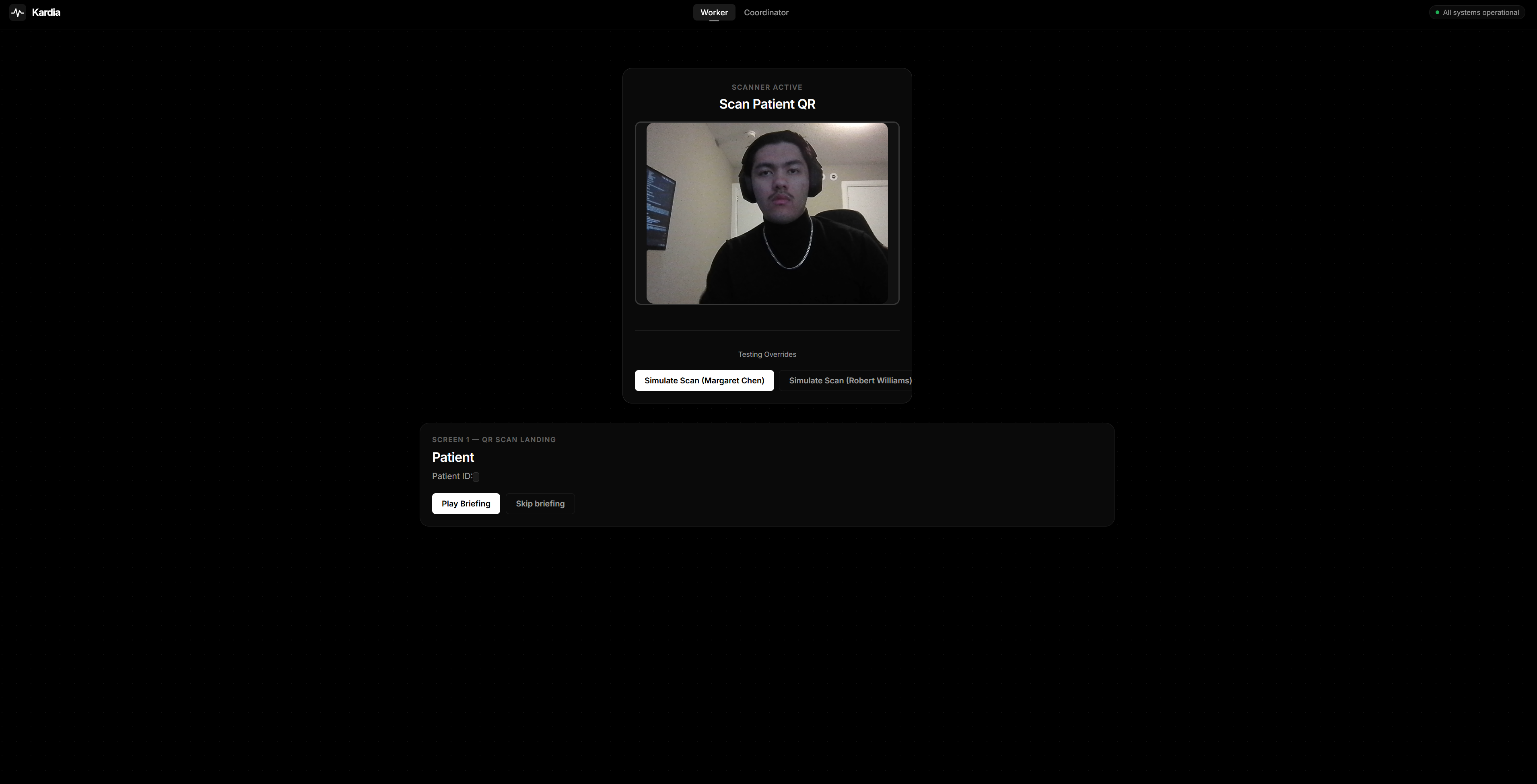
QR Scan
-
Notes Regarding Patients
-
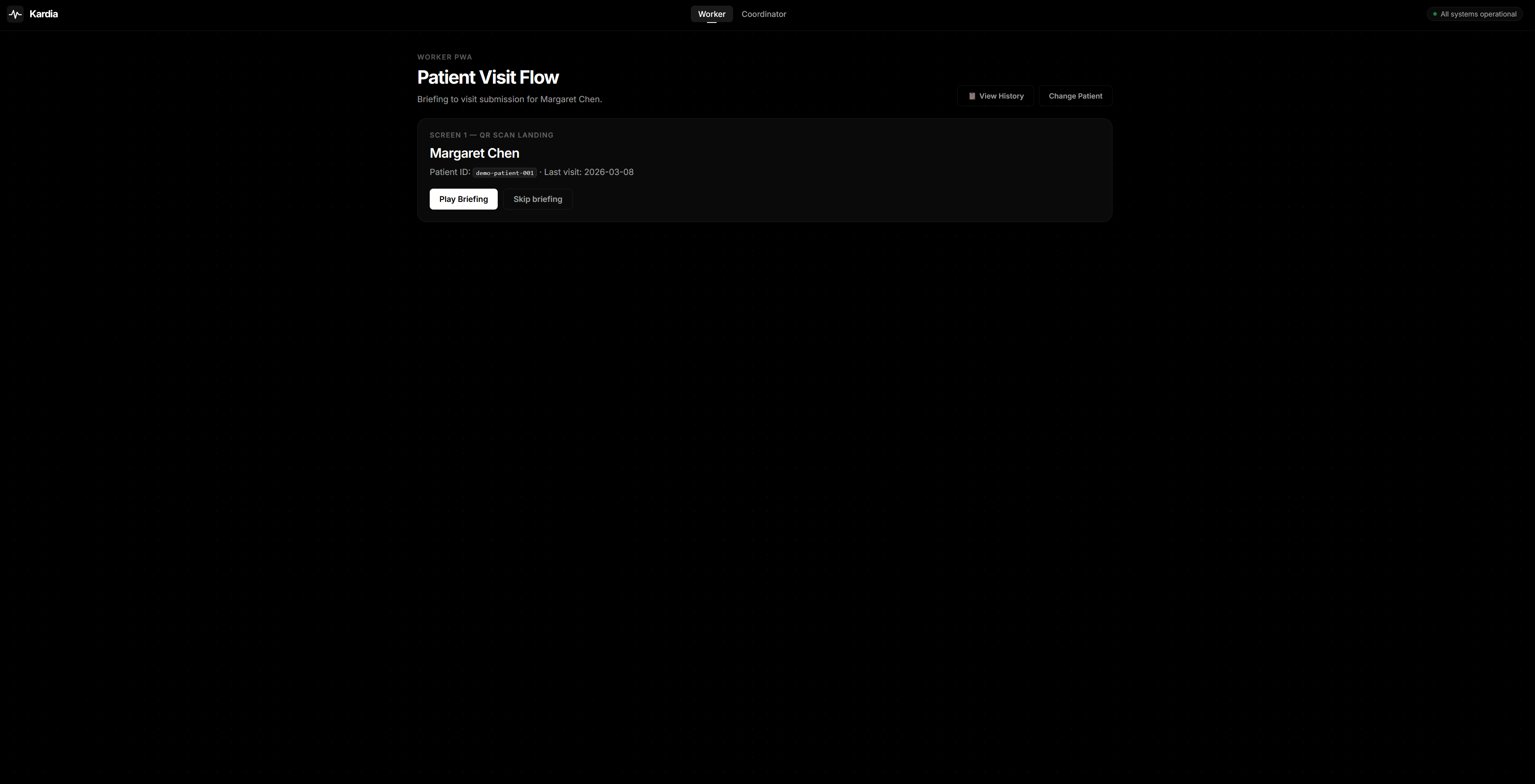
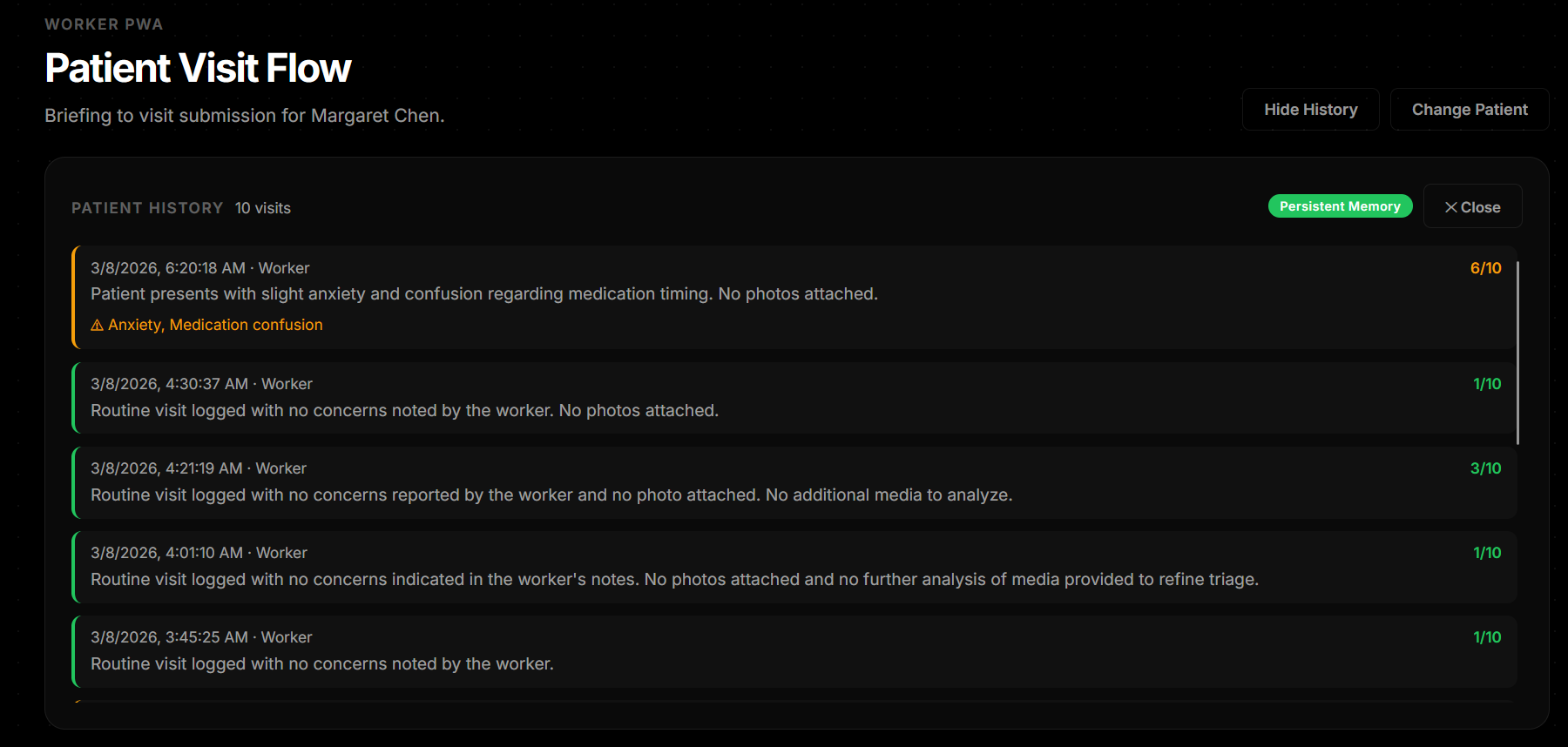
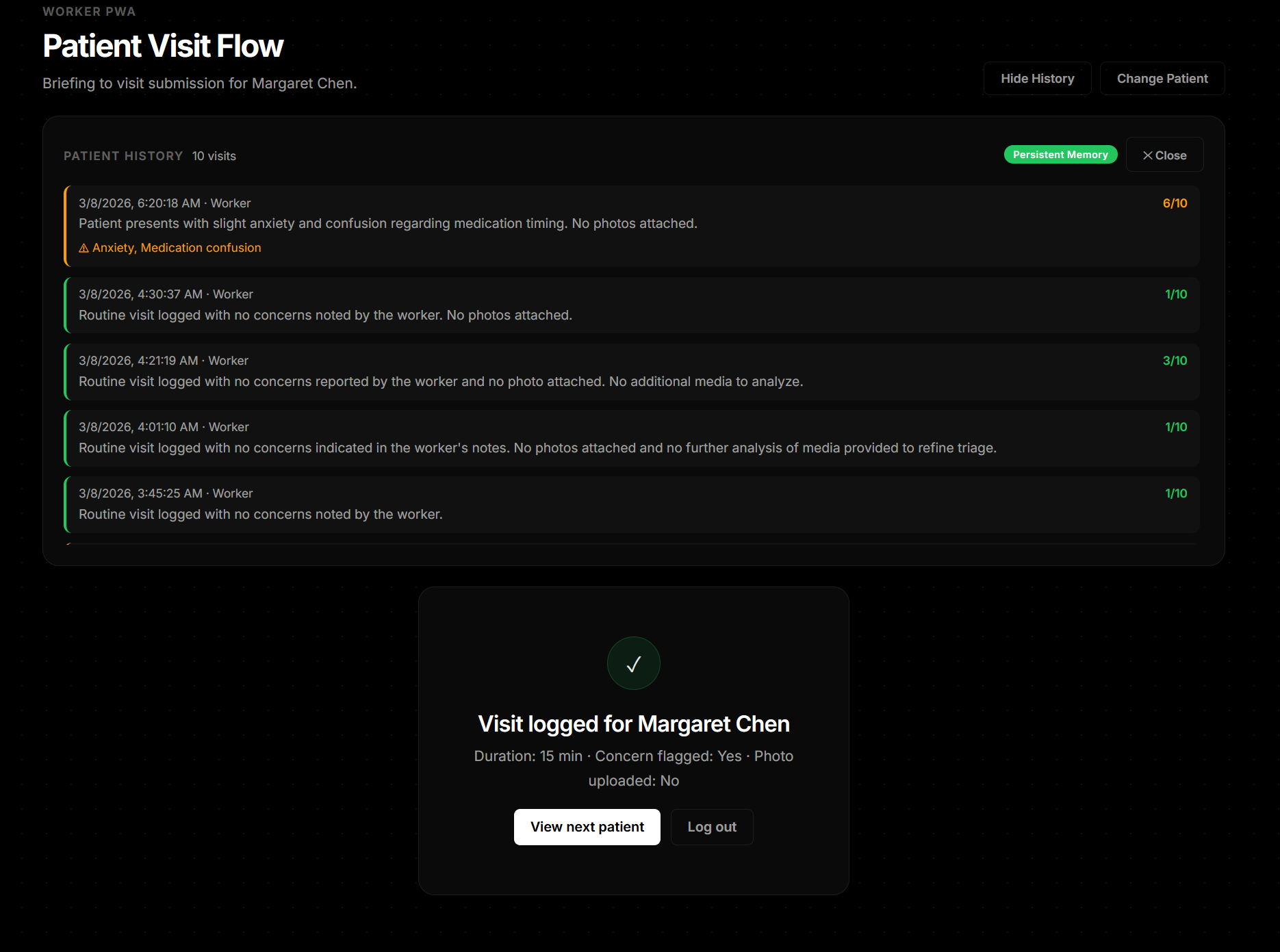
Patient History
-
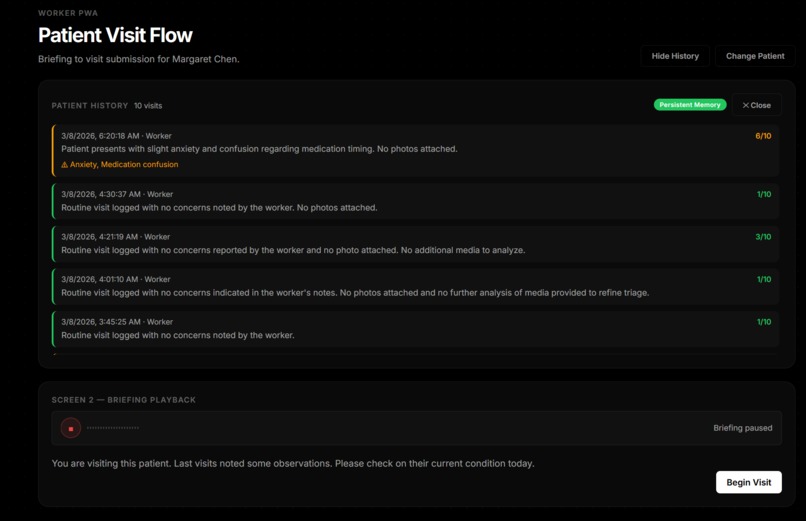
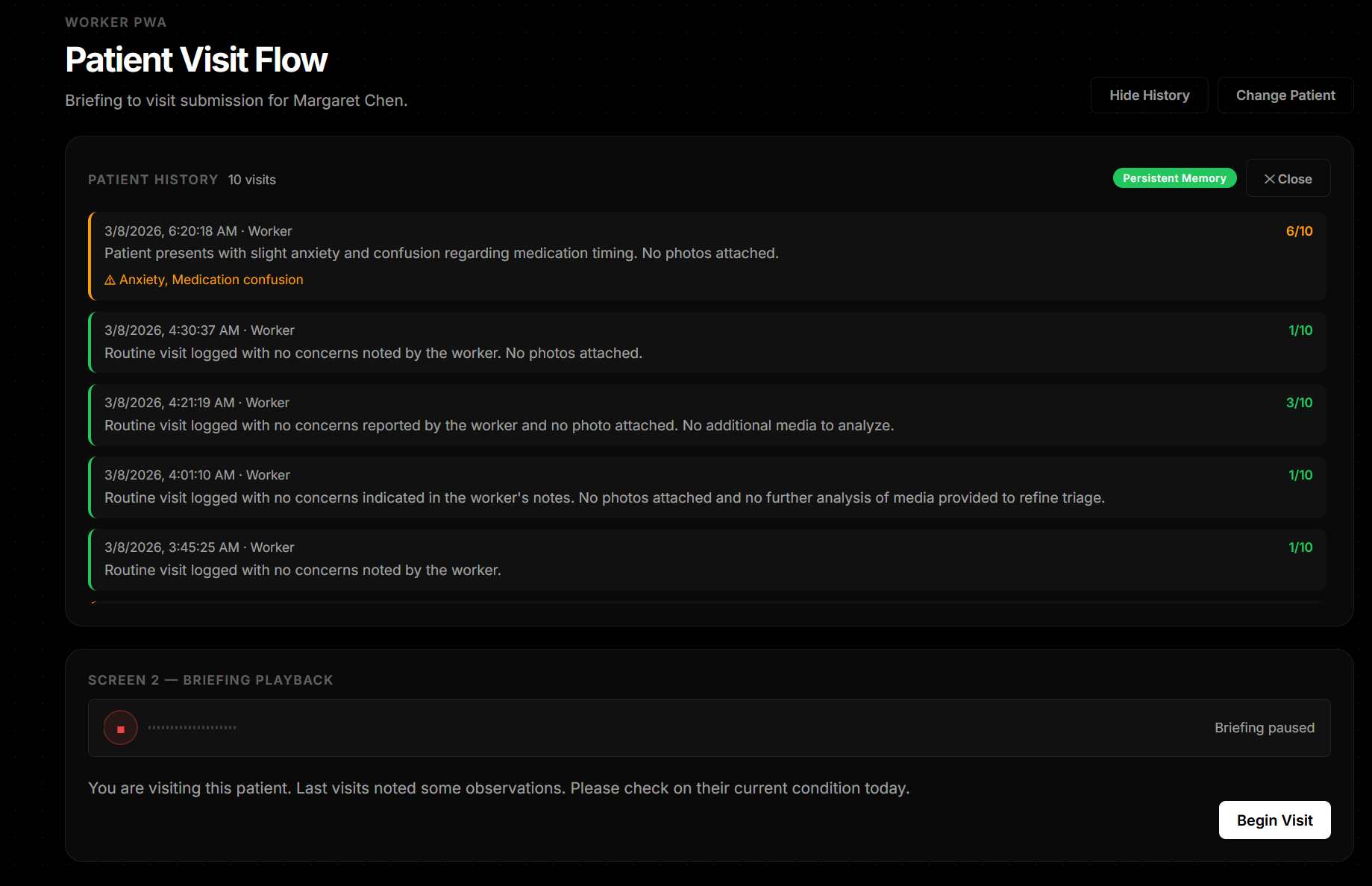
Voice Note Playback
-
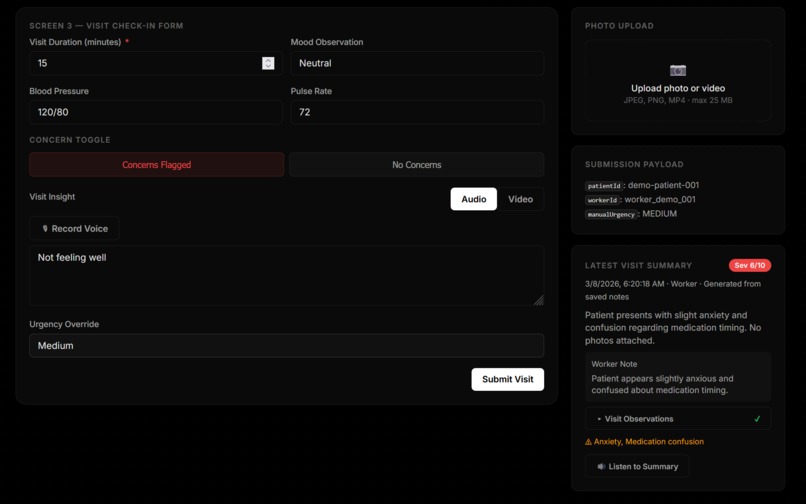
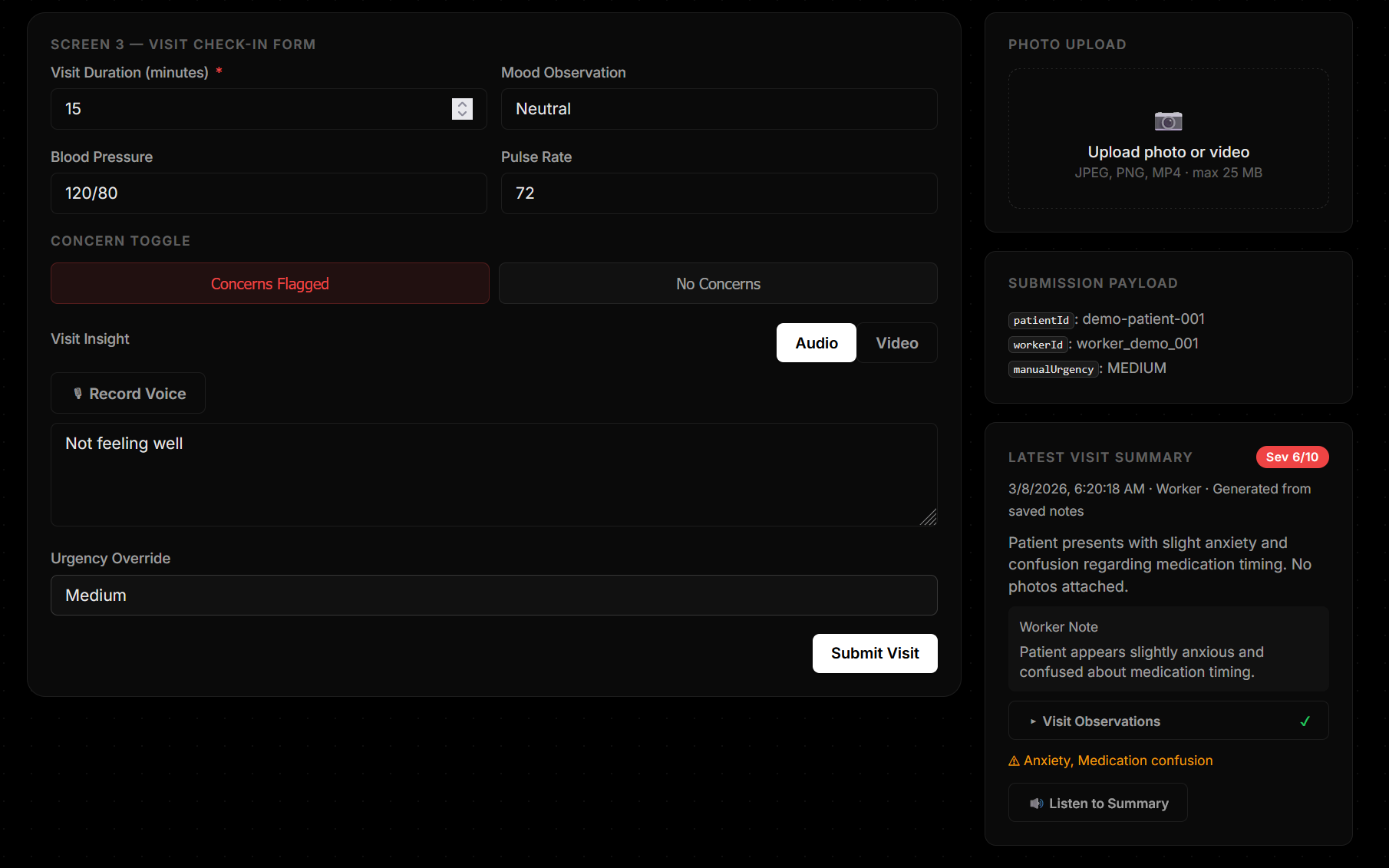
Create Patient Note
-
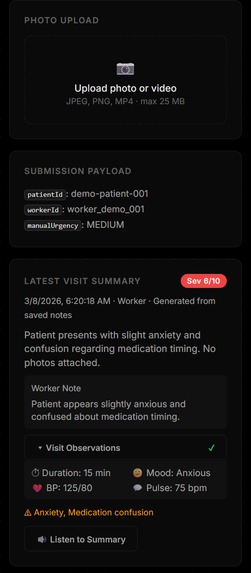
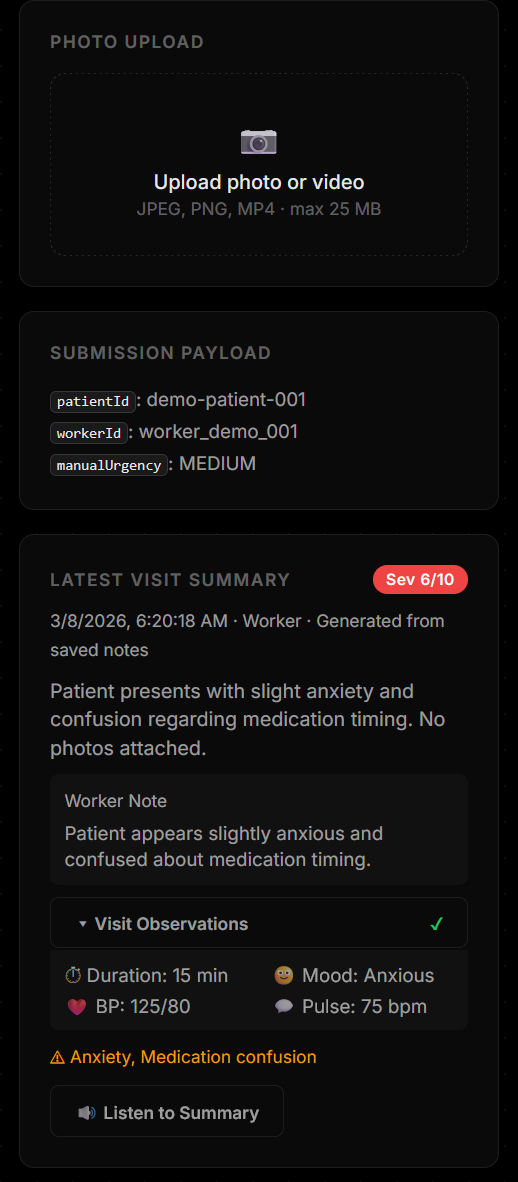
Mobile View
-
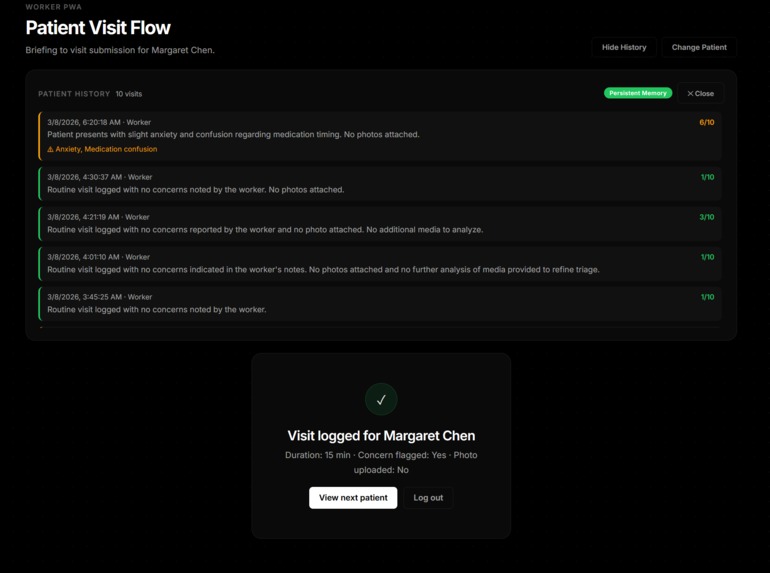
Logging Visit
-
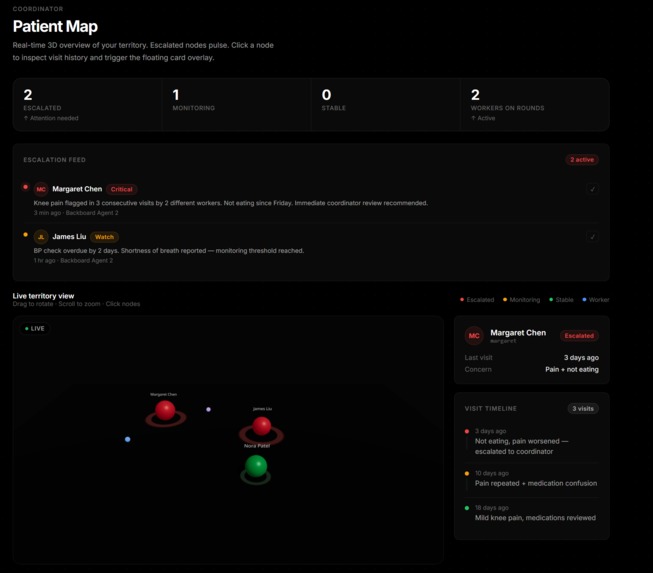
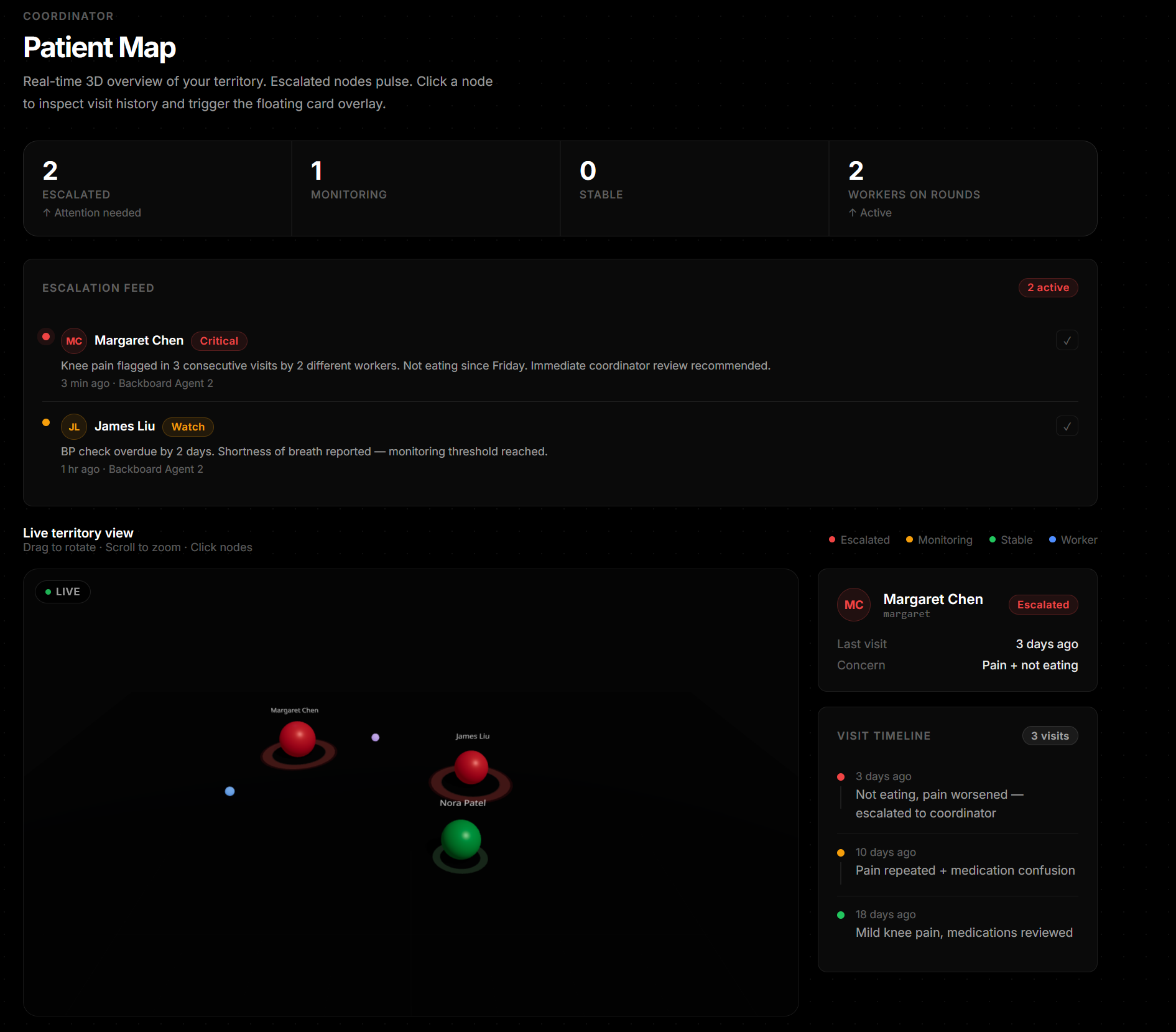
Coordinator Overview
-
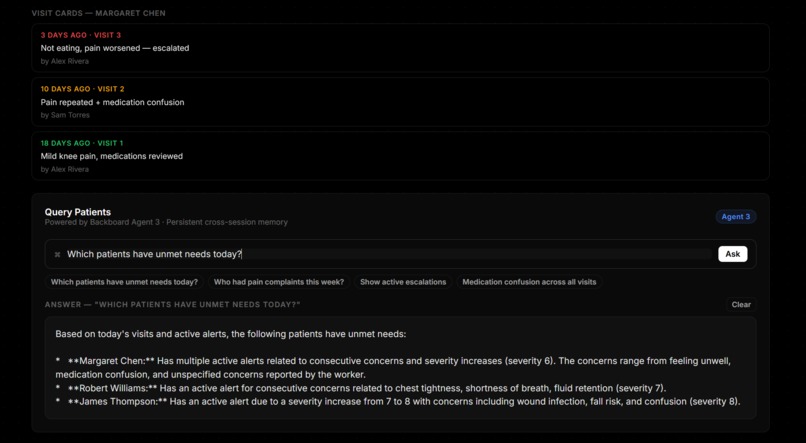
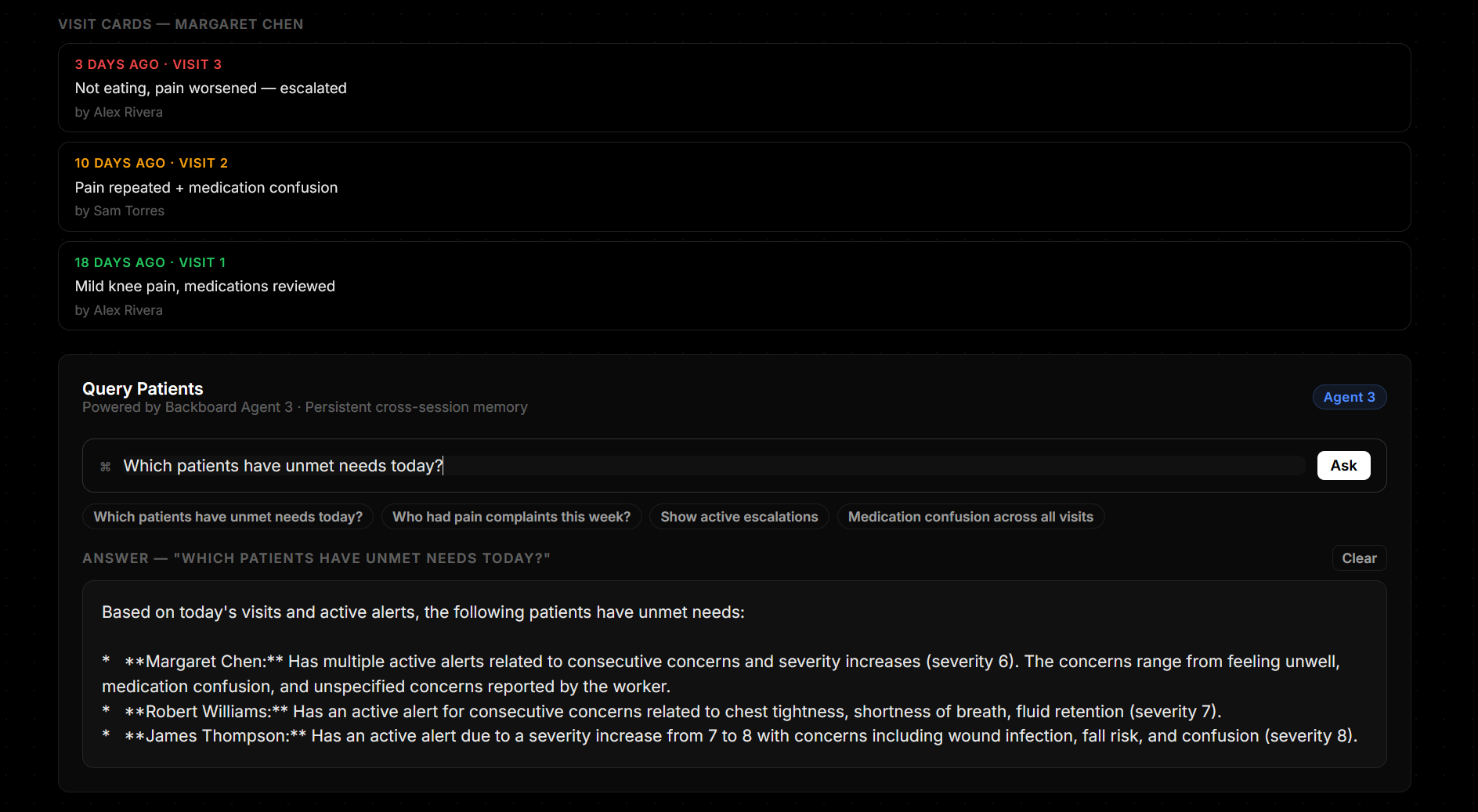
Optimized Query with Backboard
-
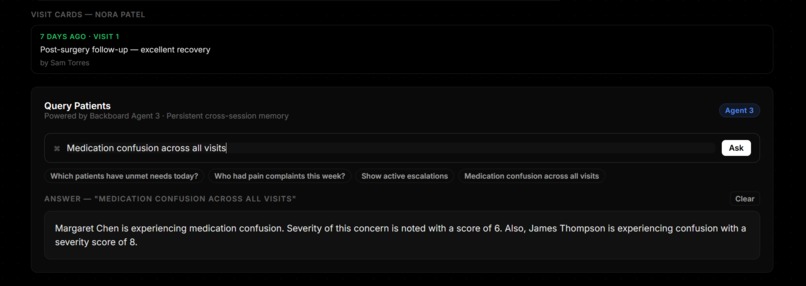
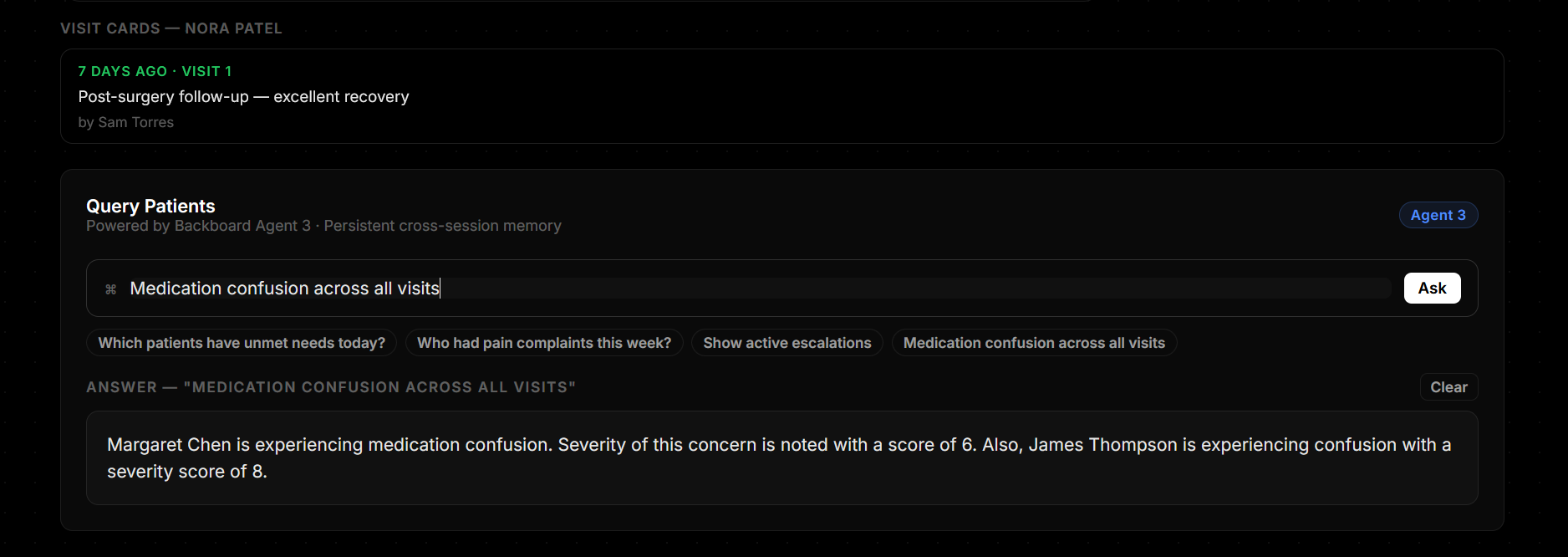
Query Example
-
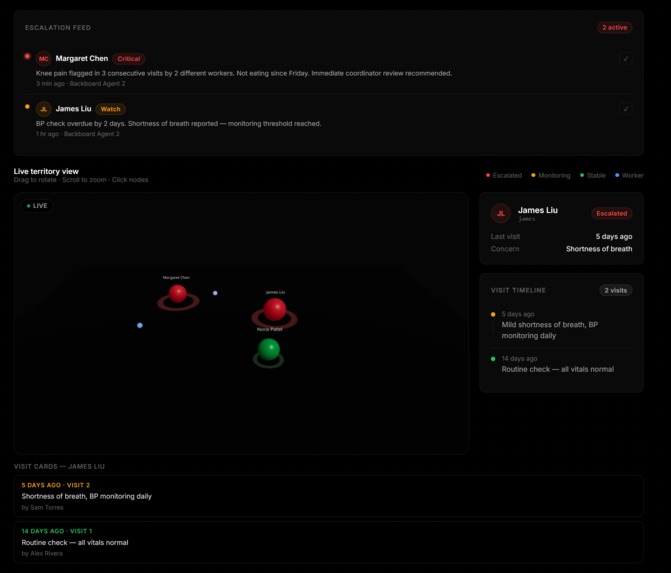
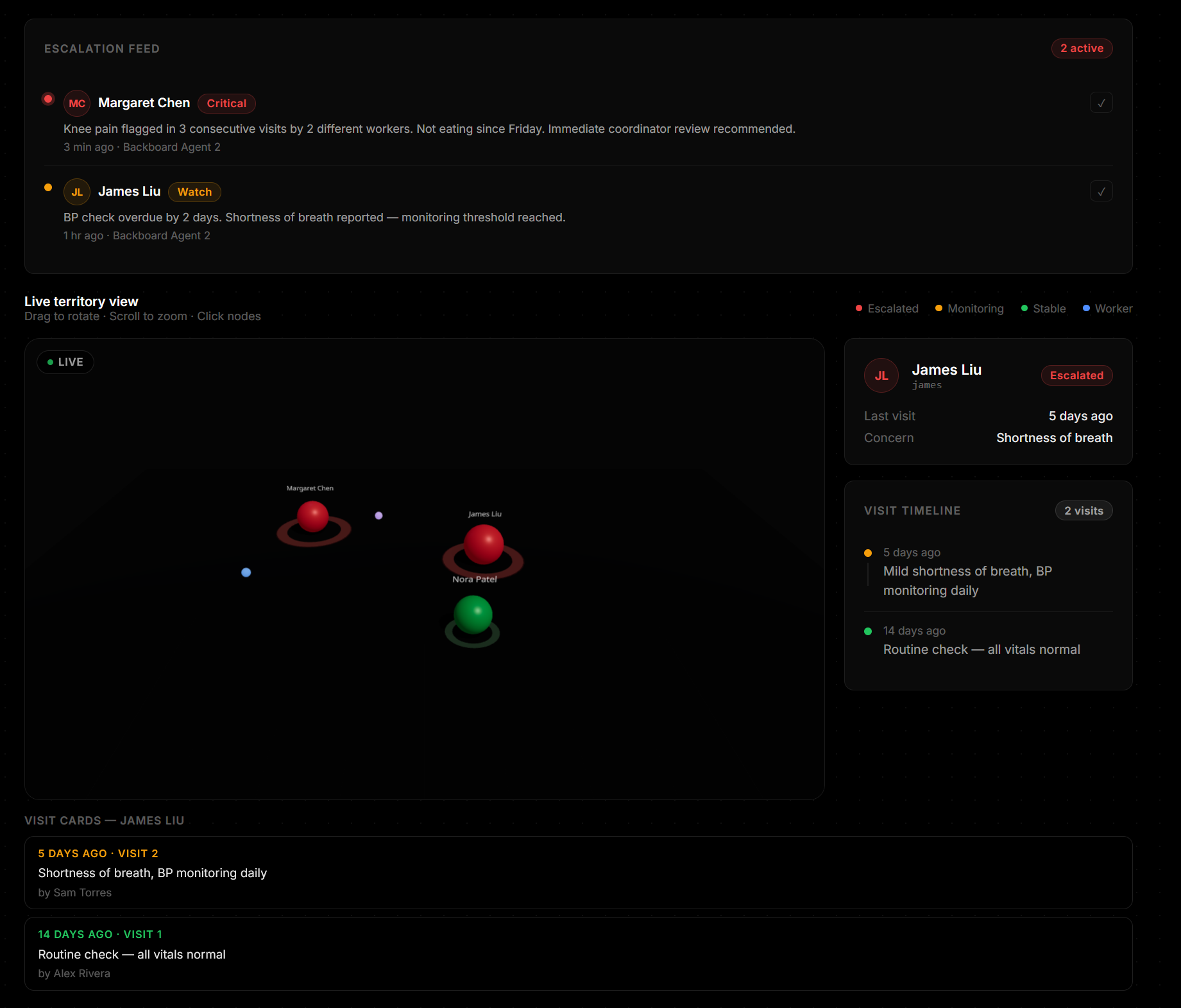
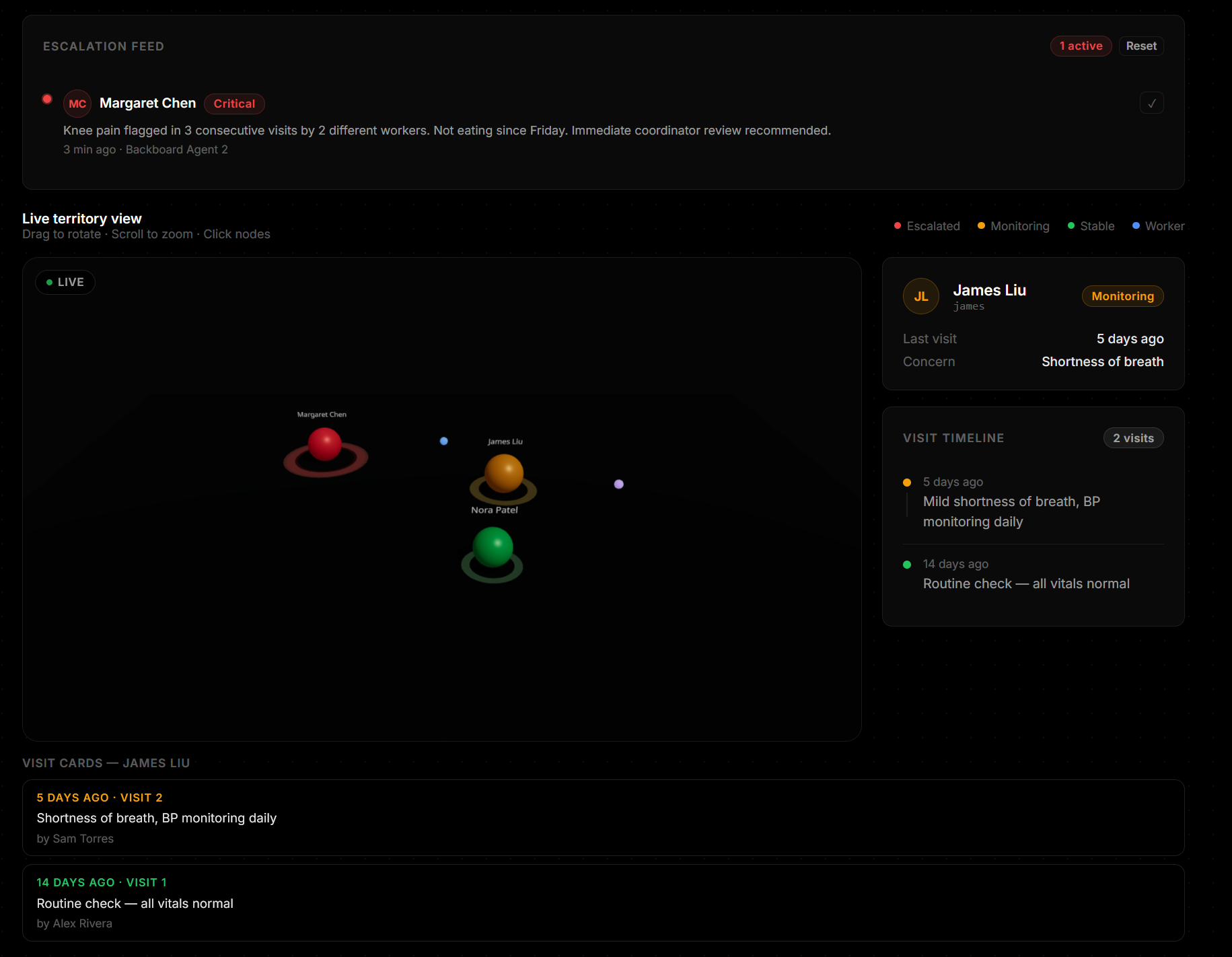
3D Map
-
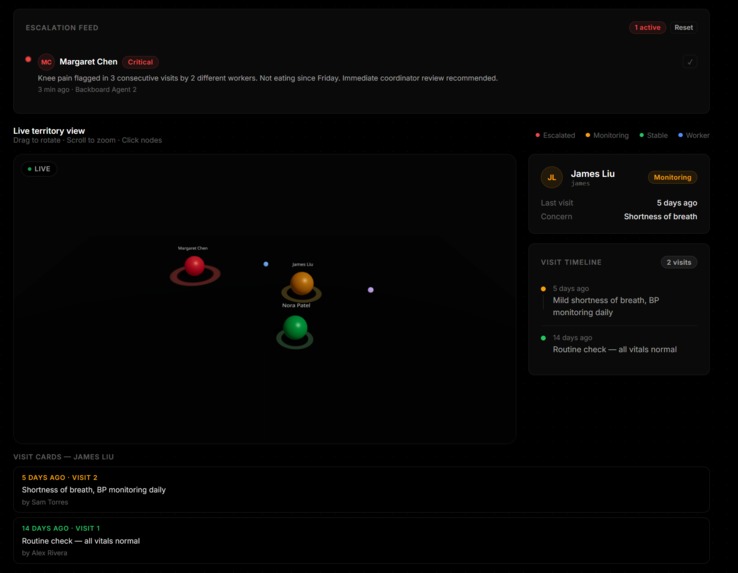
3D Map (Different Patient)
Inspiration
One of our teammates has family members who rely on home care. Talking about their experience made us realize how fragmented the system can be. A single patient may see multiple care workers in a week, yet each worker walks in with only a partial picture of what happened before. Small signals get scattered across visits. Knee pain mentioned on Monday. Medication confusion on Wednesday. Refusing food on Friday. Each worker documents their piece, but no one connects the story in real time.
That gap felt important. Canada has roughly 500,000 home care workers caring for more than 1.2 million patients. If patterns between visits go unnoticed, a preventable issue can quietly escalate into an emergency.
We started asking a simple question. What if patient memory was continuous instead of fragmented? What if every worker walked in already knowing the full story of the last few visits?
Kardia grew out of that idea.
What it does
Kardia is an AI coordination layer for home care organizations that connects observations across workers and across time.
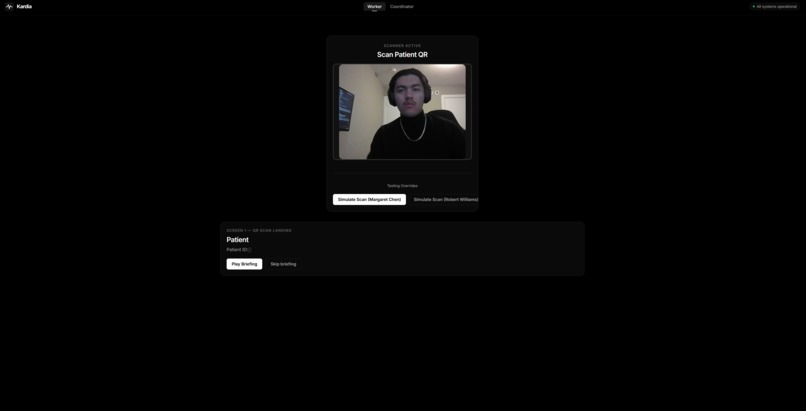
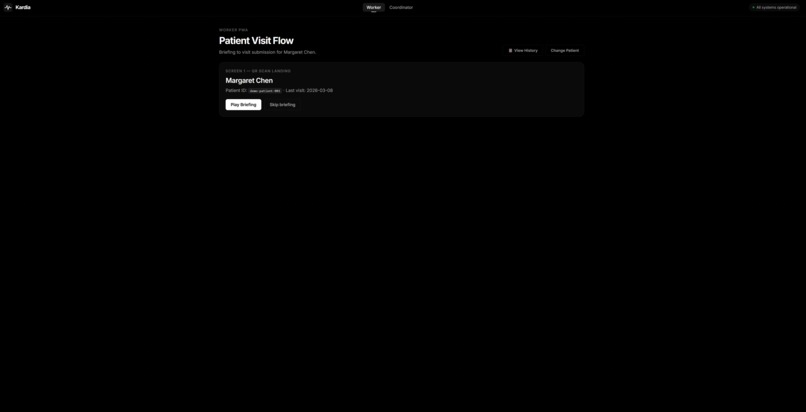
When a worker arrives at a patient’s home, they scan a QR code on the door. This opens a Progressive Web App instantly in their browser with no download required. Before entering, the worker taps Play Briefing and hears a spoken summary of recent visits generated from Kardia’s persistent memory and voiced through ElevenLabs. In under a minute they understand what the previous workers noticed.
After the visit, the worker records a short voice note. Gemini transcribes and structures the note into organized data that includes mobility observations, medication concerns, and severity indicators. If photos are uploaded, Cloudinary processes them and runs AI based severity detection.
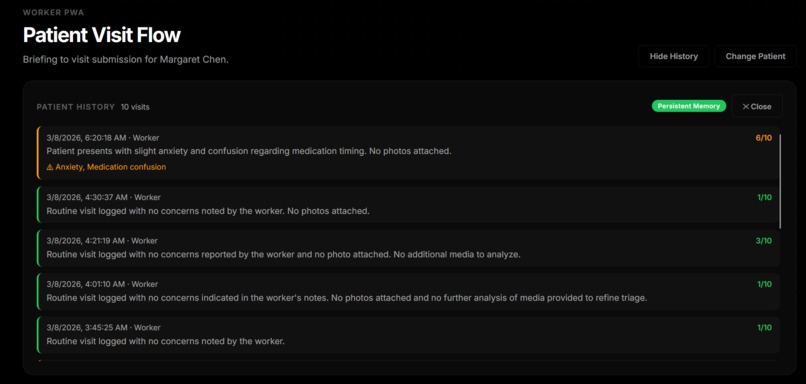
Every observation becomes part of a permanent patient history. The system does not just store information for one worker. It stores it for every future worker who interacts with that patient.
On the coordinator side, a live 3D dashboard built with React Three Fiber shows all patients and workers in real time. When the system detects the same concern appearing across multiple visits from different workers, it escalates automatically. The coordinator hears an alert, sees the patient node pulse red on the map, and can immediately review the visit history.
Instead of isolated notes, the system builds a continuous story of care.
How we built it
We built Kardia in 36 hours on Windows using React, Node.js, and Express hosted on Vultr.
The worker interface is a Progressive Web App that launches through a QR code scan so it works instantly on any phone. This allowed us to avoid app stores and remove device restrictions during the hackathon.
Gemini handles transcription and converts worker voice notes into structured JSON that includes observations and concern flags. Cloudinary manages image uploads and runs AI transformations to estimate severity for visual conditions such as bruising or swelling.
All visit data is stored in Backboard’s persistent memory system under each patient ID. Three agents power the coordination logic. One agent records each visit. Another agent reviews the cross visit history to detect patterns such as recurring symptoms or increasing severity. A third agent answers natural language queries from coordinators who want to explore their entire patient population.
The coordinator interface is built with React Three Fiber to visualize the system spatially. Patient nodes float in 3D space and change color based on status. Escalations update live through Socket.io. Clicking a patient node reveals a full timeline of visits and observations.
ElevenLabs provides voice generation for two moments in the experience. One voice delivers calm pre visit briefings for workers. Another voice delivers clear escalation alerts for coordinators.
The demo environment runs over a Tailscale network with a Funnel endpoint exposing the public API.
Challenges we ran into
One of the hardest problems was designing the prompt logic for the memory agents. The system needs to reason across multiple visits from different workers rather than only looking at the current message. Getting the escalation detection reliable required testing many prompt variations and tuning how much historical context the agent received.
The React Three Fiber dashboard also required careful optimization. Rendering many objects in a real time scene while receiving live Socket updates caused performance issues on lower powered devices. We had to simplify geometry and reduce unnecessary re renders to keep the experience smooth.
Another challenge was coordinating the data pipeline. Voice transcription, image processing, and memory storage all needed to happen in the correct order. We built fallback logic so the system continues functioning even if one step temporarily fails.
Accomplishments that we're proud of
We are proud that Kardia feels like something that could realistically exist outside a hackathon. The escalation demo works end to end. When two different workers report the same concern across multiple visits, the system detects the pattern and alerts the coordinator automatically.
The pre visit audio briefing became our favorite product moment. Sitting in a car before entering a patient’s home and hearing a calm spoken summary of the last few visits feels surprisingly powerful. It turns fragmented documentation into something human and actionable.
We are also proud that the coordinator interface provides clarity instead of complexity. Managing dozens of patients can easily become overwhelming in a spreadsheet. Seeing patient status spatially in a 3D environment made patterns and urgency much easier to understand.
What we learned
Building with persistent memory changes how you think about product design. Instead of treating every interaction as a separate request, you start thinking about identity, history, and patterns that unfold over time. That shift opened up many ideas for coordination and early detection.
We also learned that choosing a Progressive Web App was one of the best decisions we made. It removed platform friction, allowed instant testing across devices, and let us focus entirely on the experience instead of mobile deployment logistics.
Most importantly, we learned that healthcare coordination problems are often not about missing data. The data already exists. The real challenge is connecting it in time for someone to act.
What's next for Kardia
Our next step is integrating Kardia with provincial care management systems through standard REST APIs so organizations can use it alongside their existing tools.
We also want to add scheduling intelligence so the system can recommend additional check ins when patterns indicate a patient may need attention sooner.
Other planned features include French language support, a family portal that allows relatives to view simplified visit summaries, and stronger analytics for coordinators managing large patient populations.
Ultimately, we hope to pilot Kardia with a real home care organization in Canada and test whether connecting these small signals earlier can help prevent larger crises later.
Built With
- auth0
- backboard
- cloudinary
- elevenlabs
- express.js
- gemini
- javascript
- node.js
- progressive-web-app
- react
- react-three-fiber
- socket-io
- tailscale
- three-js
- vultr
- webxr


Log in or sign up for Devpost to join the conversation.