-
-
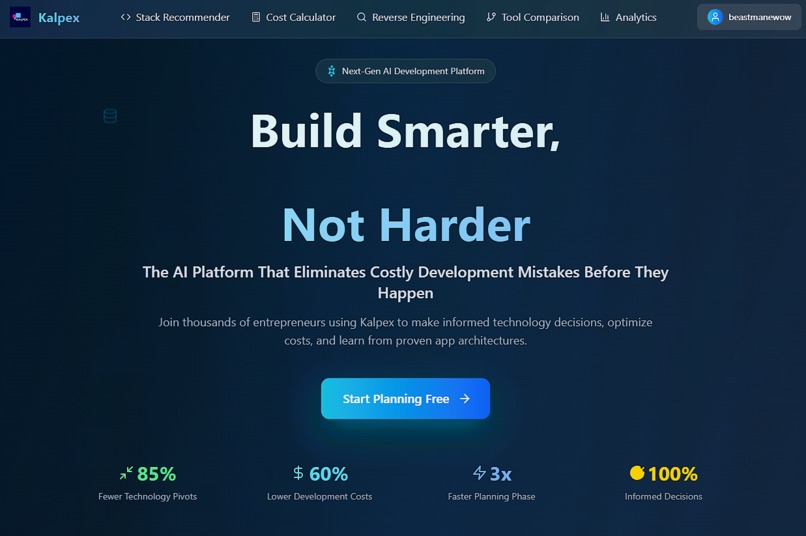
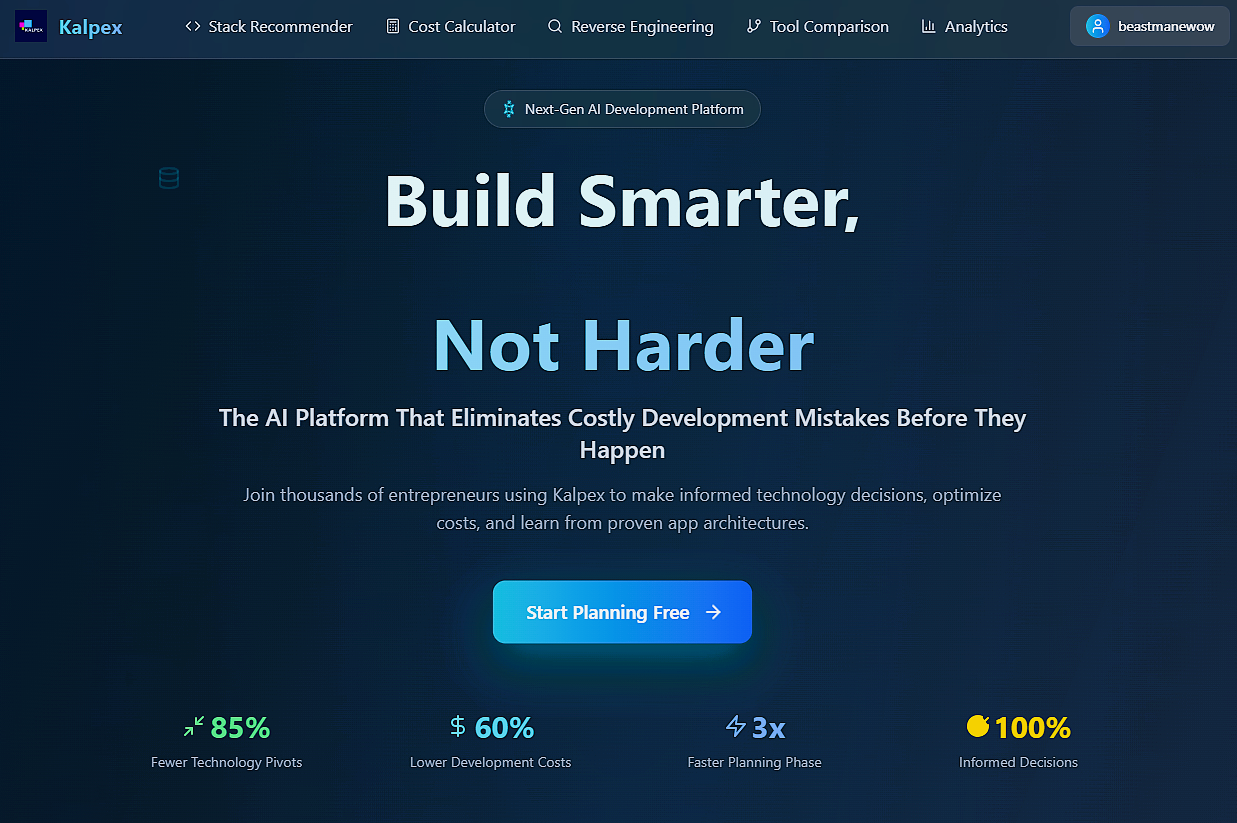
Hero Section
-
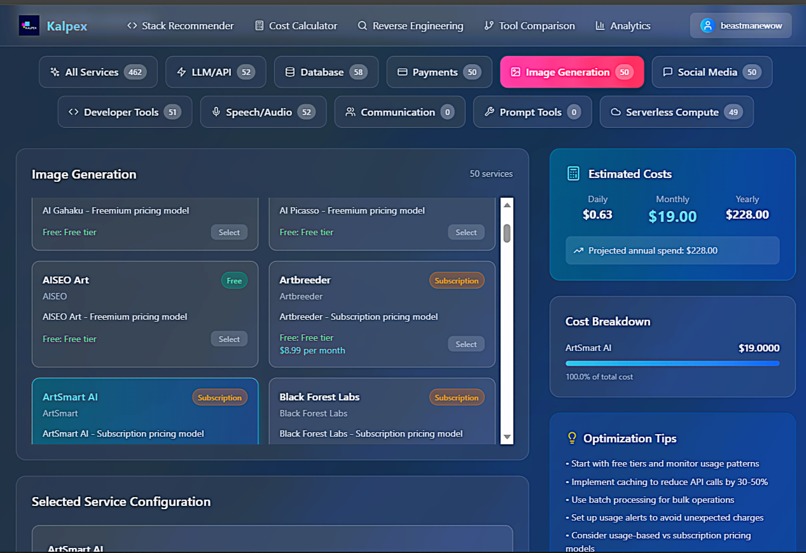
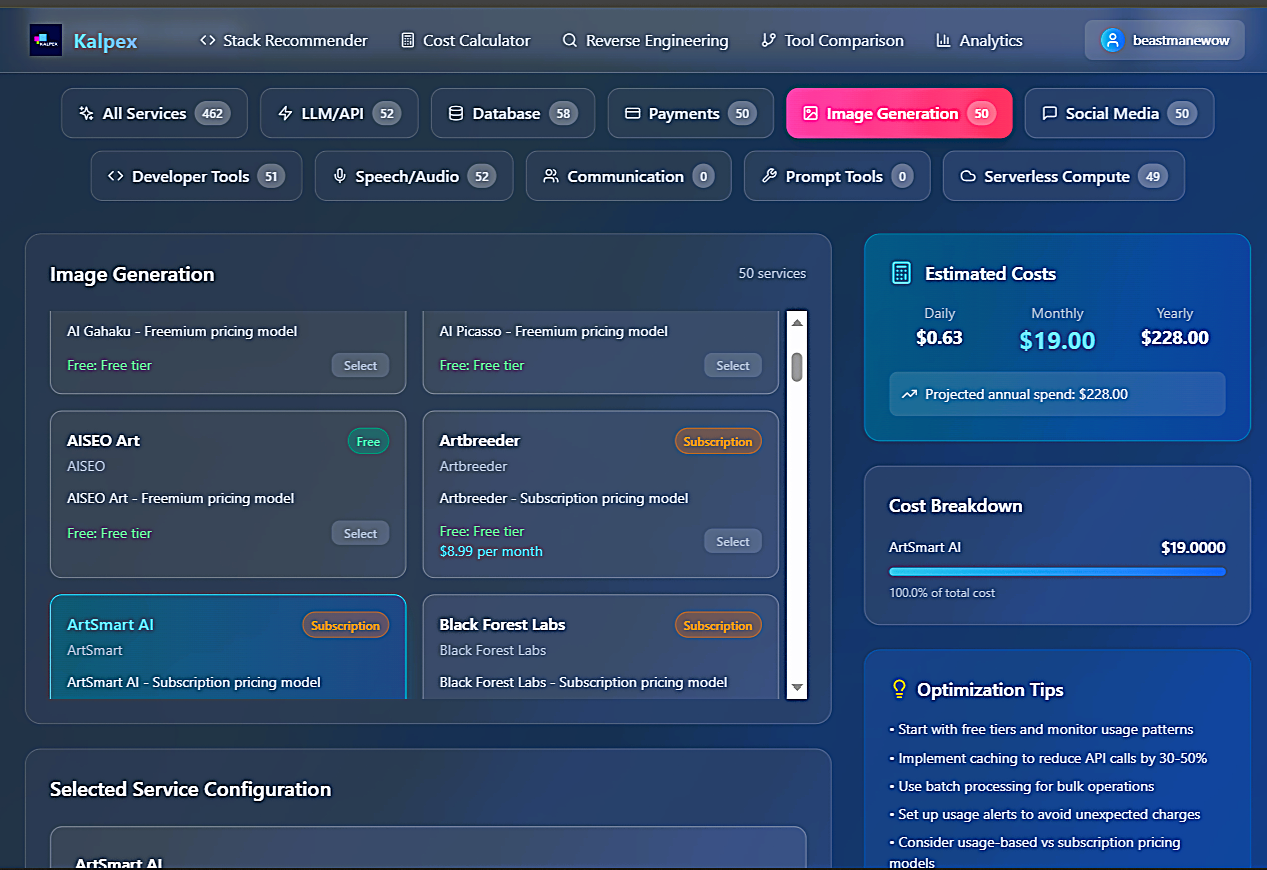
Overview of APICostCalculator
-
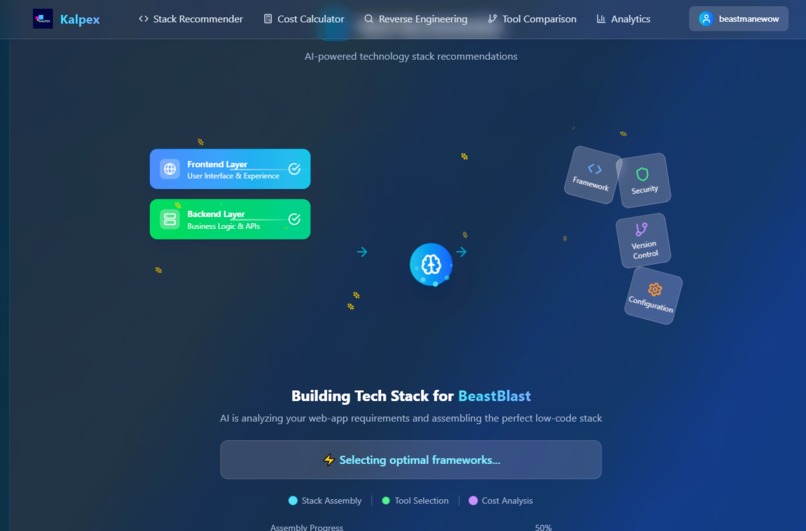
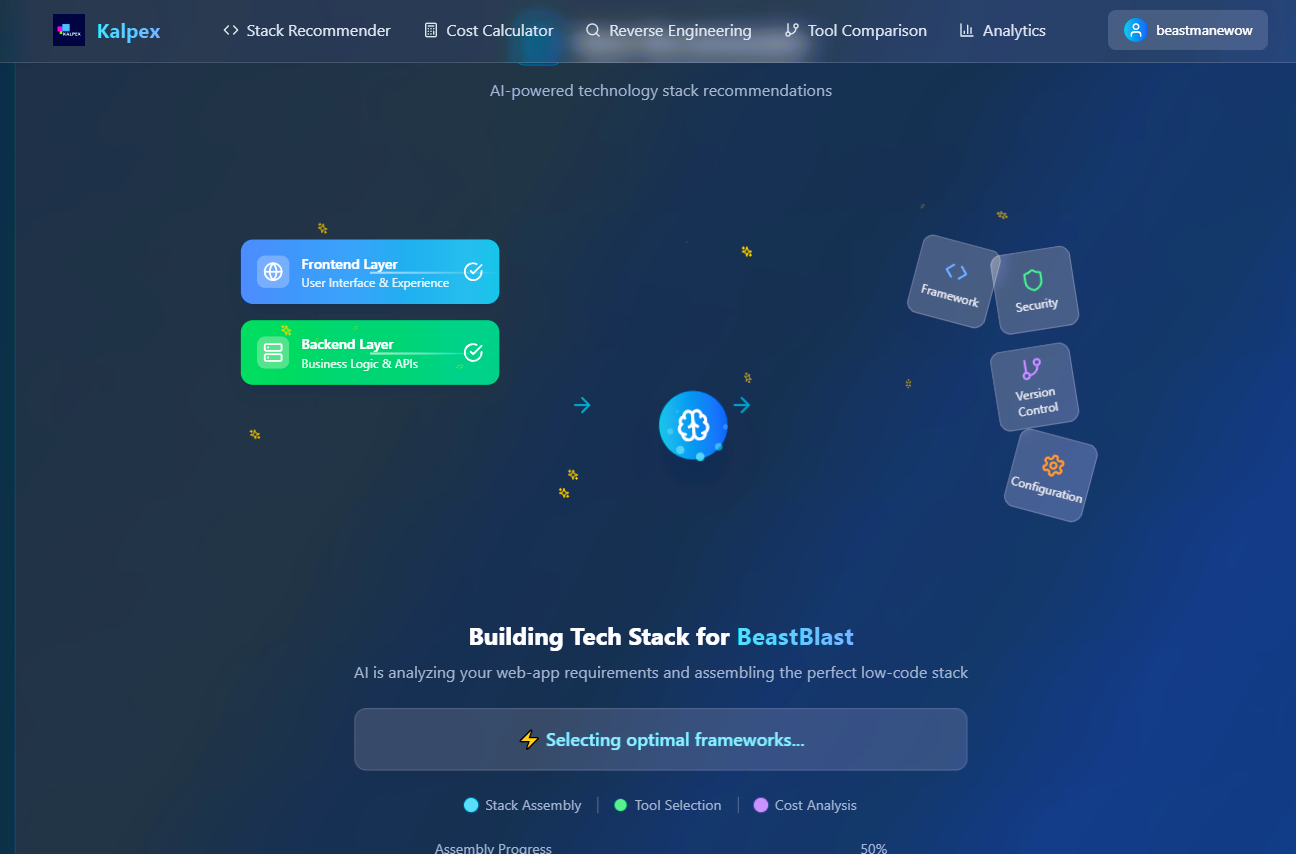
Loading State for Stack Recommender
-
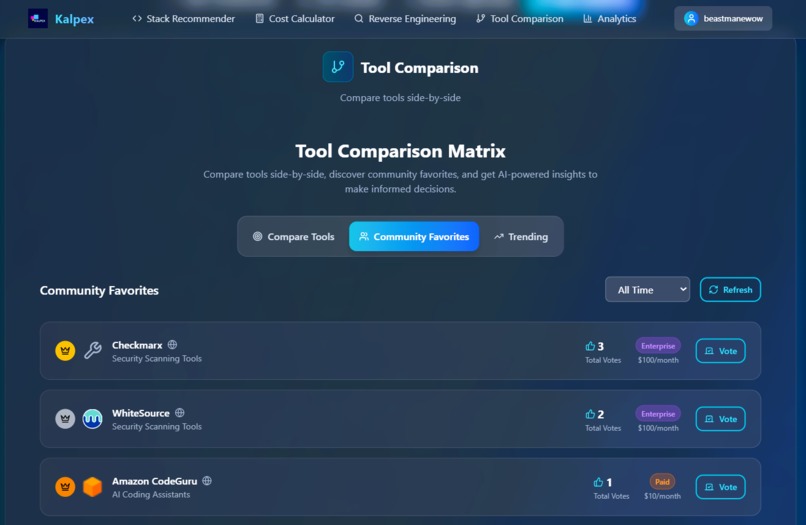
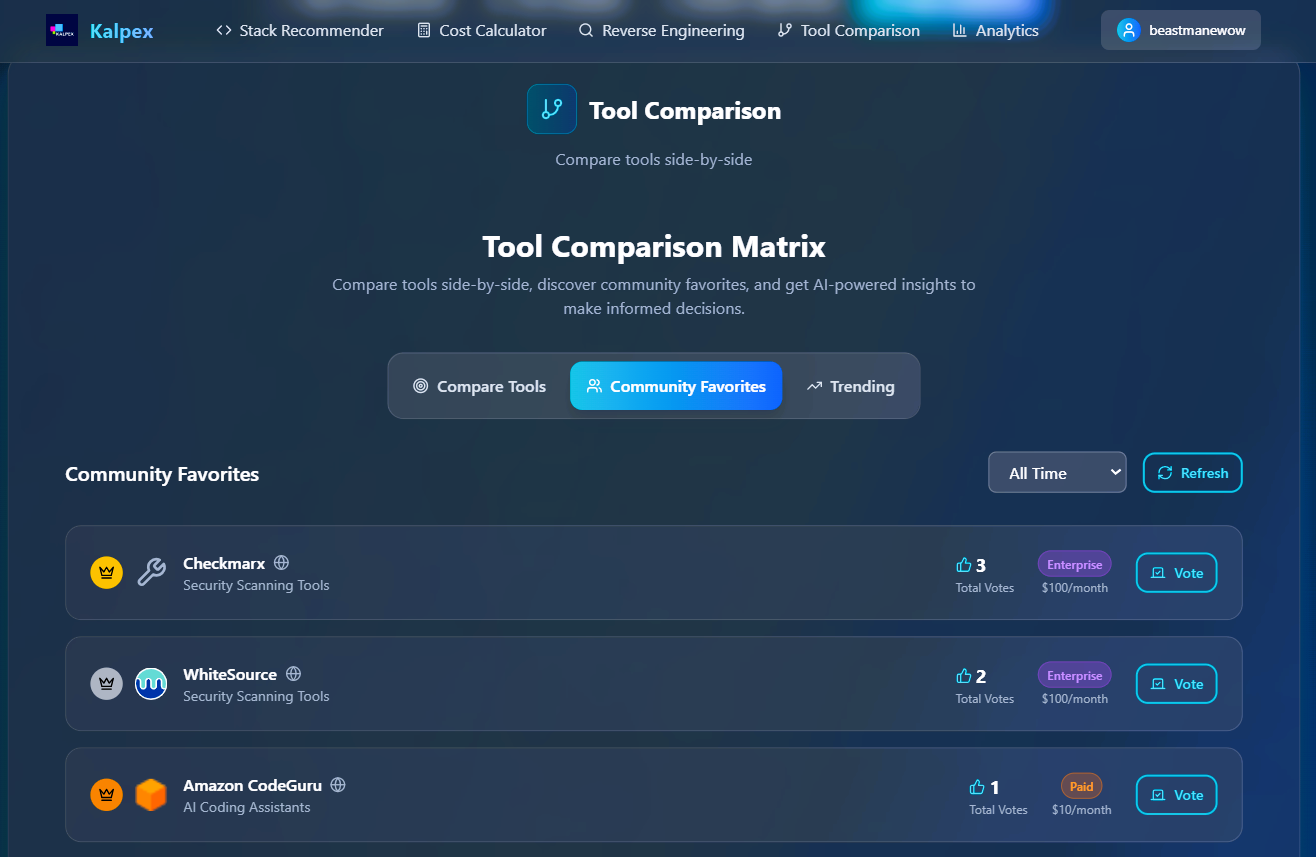
Community Voting In ToolComparisonMatrix
-
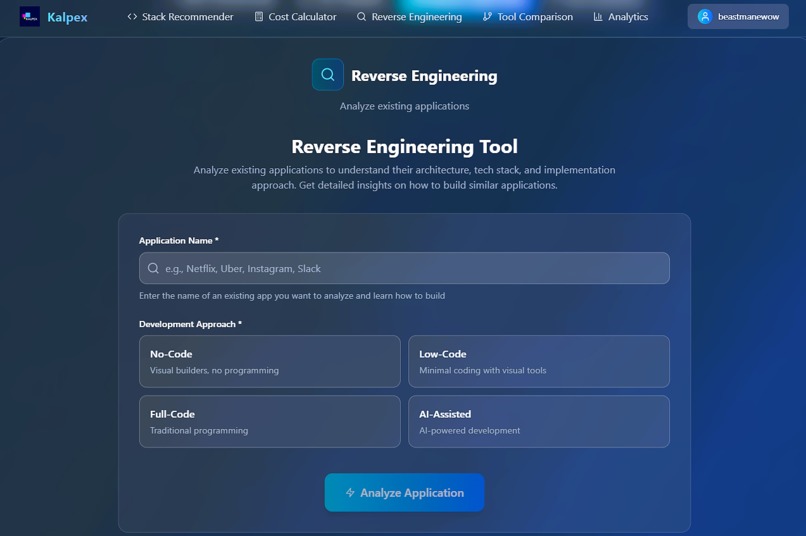
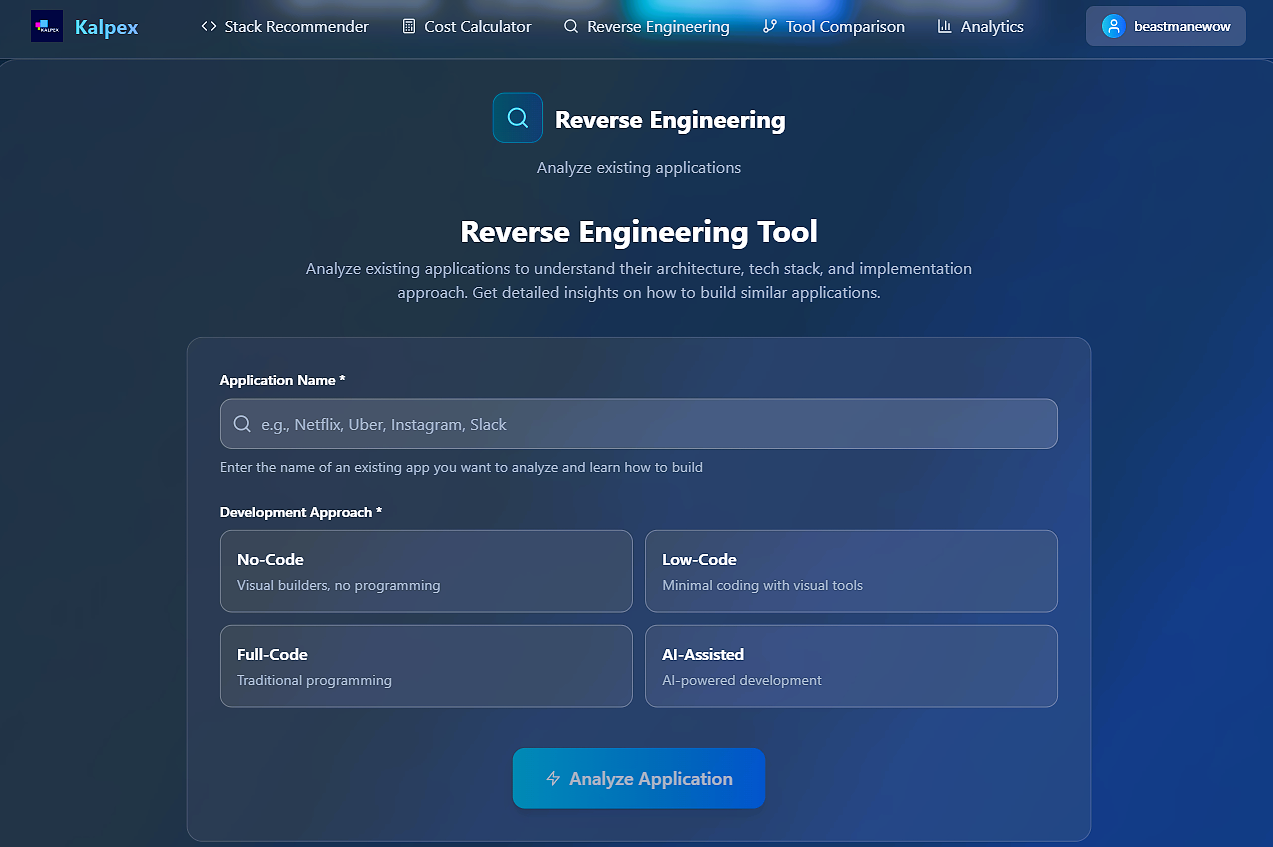
ReverseEngineeringTool Input Form
What Inspired Me
The inspiration behind building this app came from a personal pain point. As someone not from the development field, I don't have knowledge about building apps, coding, APIs, and all the technical aspects. Even though I have many ideas in my mind about apps or SaaS products that could work, I lack the resources to hire a development team to build, test, and market them. The costs are simply too expensive for me.
To overcome this barrier, I discovered prompt-based platforms like Bolt.new and Lovable.dev, which are perfect for people like me who want to build software without traditional coding skills. However, when I started building, I faced many challenges, like not knowing where to start or having a proper plan to work with.
This experience sparked an idea: I wanted to build apps to help people like me—indie hackers and aspiring entrepreneurs—to build apps, validate ideas, and more. My goal was to provide step-by-step guidance so they don't get stuck and can make decisions quickly, ultimately saving them time. I decided to leverage AI to build focused, helpful apps for these users.
How I Built It
To build this app, I used a strategic AI-powered approach:
- Claude AI to write effective prompts for me, including converting non-technical content into technical prompts that I could feed into Bolt.new
- Supabase for easy no-code database integration
- Cursor AI to assist me with code modifications and improvements
Basically, I leveraged AI throughout the entire building process, which allowed me to create something meaningful despite my non-technical background.
What I Learned
I learned a tremendous amount about AI tools and workflows that will help me build more apps in Bolt.new in the future. Most importantly, I learned the actual process and sequence of building an app in Bolt.new—understanding the right approach and methodology.
Challenges I Faced
My biggest challenge was finding the right development process. I built my app from scratch multiple times—deleting it and rebuilding it with different approaches. While this was initially frustrating, it ultimately helped me discover the most effective process for building apps on the platform.
This iterative approach taught me that sometimes you need to fail and restart to find the right path forward.
What it does
Kaplex empowers beginners, indie hackers, and aspiring entrepreneurs to make informed technology decisions for their projects. The platform provides several key tools:
Tech Stack Recommendation Engine: Users simply select their project requirements, and Kaplex delivers the most relevant technology stack recommendations, including tools that match their budget, timeline, and preferred development style (no-code, prompt-based, or full-code).
API Cost Calculator: A practical tool that helps users estimate the costs of API services they plan to integrate into their projects, enabling better budget planning.
Reverse Engineering Tool: This feature provides detailed, step-by-step plans to build popular apps (like Instagram) using the user's chosen development approach. It includes educational content with detailed recommendations and helpful tooltips to guide users through the process.
Tool Comparison Matrix: An intelligent comparison system powered by AI insights and community voting, helping users make data-driven decisions about their technology choices.
How we built it
We built Kaplex entirely with AI assistance—our team consists of just two members: AI and me. Working on a tight budget, I leveraged every free AI chatbot available to plan, learn, and develop the application.
My approach involved using simple, everyday language and converting it into effective prompts to build this complex application. I learned technical jargon and basic coding concepts through AI interactions, then used strategic prompting to bring my vision to life through platforms like Bolt.new.
Challenges we ran into
As someone without a development background, I faced several significant challenges:
Learning Curve: I had to understand technical concepts before implementing them. Bolt.new's discussion mode was invaluable, though it sometimes provided responses in technical jargon that I needed to translate using chatbots, then convert back to technical language for implementation.
Database Architecture: Building the database schema was particularly challenging since I was completely new to it. I had to learn database concepts while simultaneously generating queries using Claude and other AI tools.
Backend Development: Creating Supabase edge functions required learning server-side concepts and API development, which was entirely new territory for me.
Translation Barrier: Constantly translating between plain English and technical jargon to effectively communicate with different AI tools and platforms became a time-consuming but necessary skill.
Accomplishments that we're proud of
Successfully building a comprehensive developer tool platform without traditional coding experience demonstrates the power of AI-assisted development. We're particularly proud of:
- Creating an intuitive user experience that simplifies complex technology decisions
- Building a functional database with proper authentication integration
- Developing multiple interconnected tools within a single cohesive platform
- Proving that non-technical founders can build sophisticated applications with the right AI-powered approach
What we learned
This hackathon was an intensive learning experience that transformed my understanding of app development:
Development Process: I learned the fundamental approach to building applications - from planning to execution. While my methods might not be conventional, they proved effective for my situation.
AI Prompting Skills: My ability to craft effective prompts improved dramatically throughout the project, becoming a crucial skill for AI-assisted development.
Technical Skills: I gained practical knowledge about database design, frontend-backend connections, Google authentication setup, and building complex application logic.
Design Principles: Working with Bolt.new exposed me to modern, futuristic UI/UX design patterns and taught me how to implement sophisticated visual interfaces.
Problem-Solving: I developed resilience and creative problem-solving skills by learning to break down complex challenges into manageable, AI-solvable components.
What's next for Kaplex
We plan to expand Kaplex into a comprehensive platform for non-technical builders, which we were not able to do now, as I think I've not achieved my vision yet. My lack of technical knowledge might be the reason, but I'll continue to work and perfect the app, which will match my vision. I'm very grateful for this opportunity from Bolt.new to push me to build the app.
There are also other plans
Enhanced AI Integration: Implementing more sophisticated AI models to provide even more accurate recommendations and personalised guidance.
Educational Content: Expanding our learning resources with video tutorials, case studies, and step-by-step guides for different development approaches.
Template Library: Creating pre-built project templates and boilerplates for common app types, making it even easier for beginners to start building.
Marketplace Integration: Connecting users with freelancers and agencies when they need additional help, creating a complete ecosystem for project development.
Advanced Analytics: Adding project tracking and success metrics to help users measure their progress and optimise their development approach.
Built With
- autoprefixer
- css
- dom
- edge
- eslint
- framer
- functions
- javascript
- motion
- openai
- postcss
- postgresql
- react
- recharts
- router
- supabase
- tailwind
- typescript
- vite

Log in or sign up for Devpost to join the conversation.