Inspiration
What it does
Inspiración
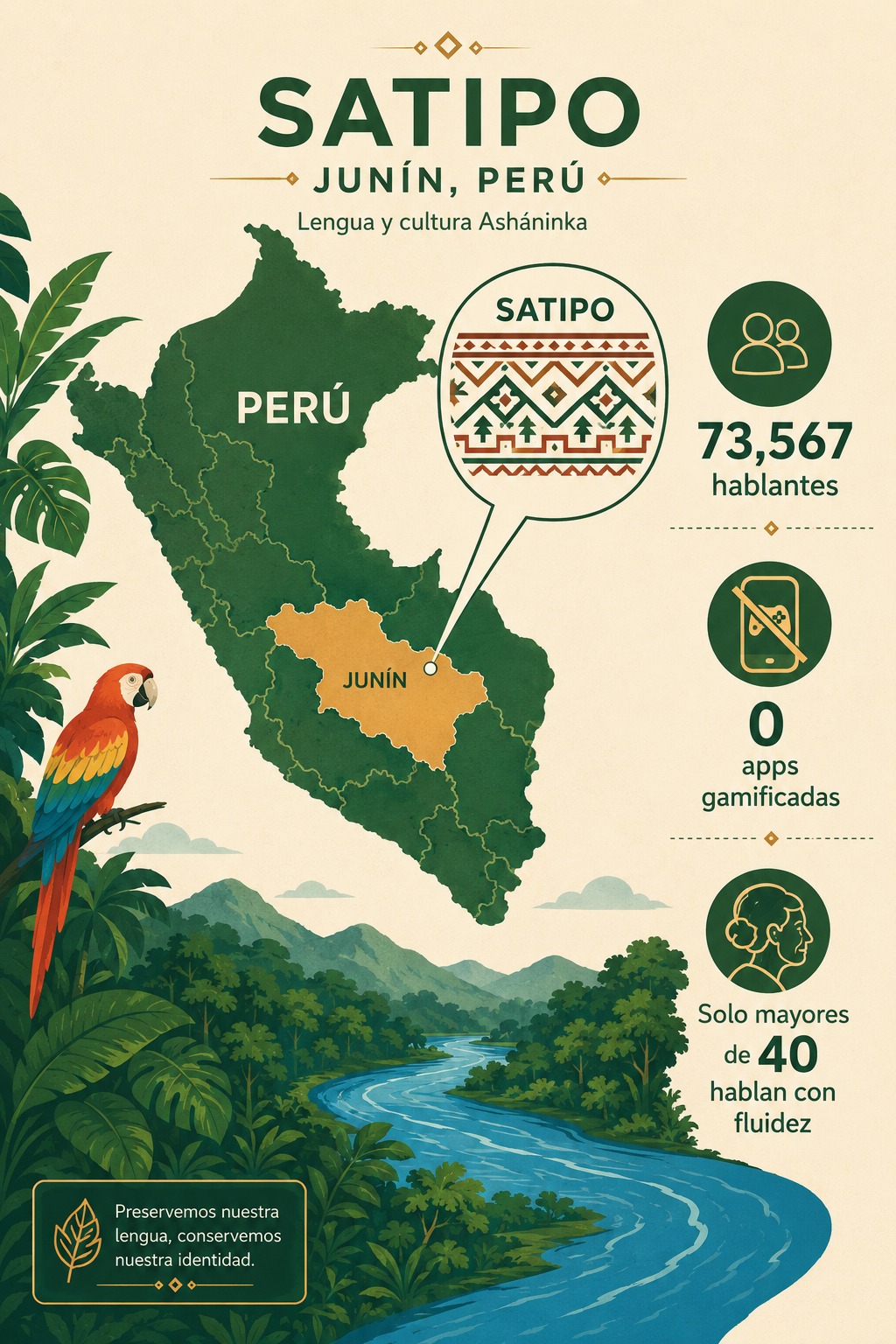
In Satipo, deep in the Peruvian Amazon, we watched something disappear in real time. Our grandparents speak Asháninka fluently. Our parents understand a little. Our generation? Almost nothing. 73,567 people learned Asháninka as their first language — yet no app exists anywhere in the world to learn it. Not one. We searched Google Play. We searched the App Store. Nothing. That silence became our mission.
What We Built
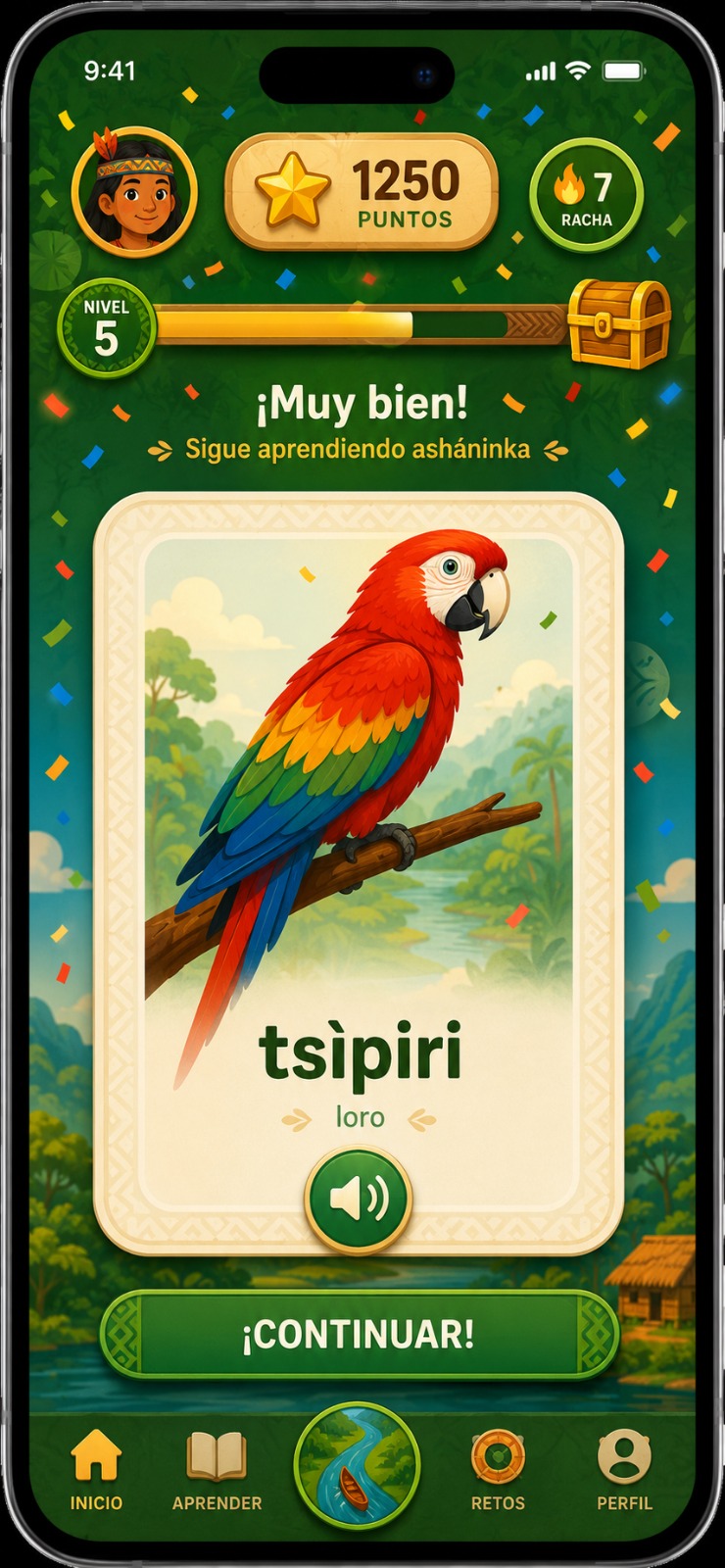
KANOJA is the world's first gamified AI mobile app to learn Asháninka — Peru's most spoken indigenous language. It works fully offline (critical in Satipo, where internet is unreliable), features audio recorded by real native speakers, vocabulary games, a points and streaks system, and AI-powered pronunciation feedback that compares the learner's voice against authentic native speaker recordings.
What makes KANOJA truly unique: our project is backed by a PhD linguist with direct access to native Asháninka speakers. No other student team in the world has that.
What We Learned
We learned that technology alone cannot save a language. The human element — elders willing to speak, a scientist willing to listen, students willing to act — is irreplaceable. We also learned that the most powerful AI applications are not the most complex ones. Sometimes the most important thing AI can do is simply help a teenager hear their grandmother's language and repeat it back, correctly, for the first time.
How We Built It
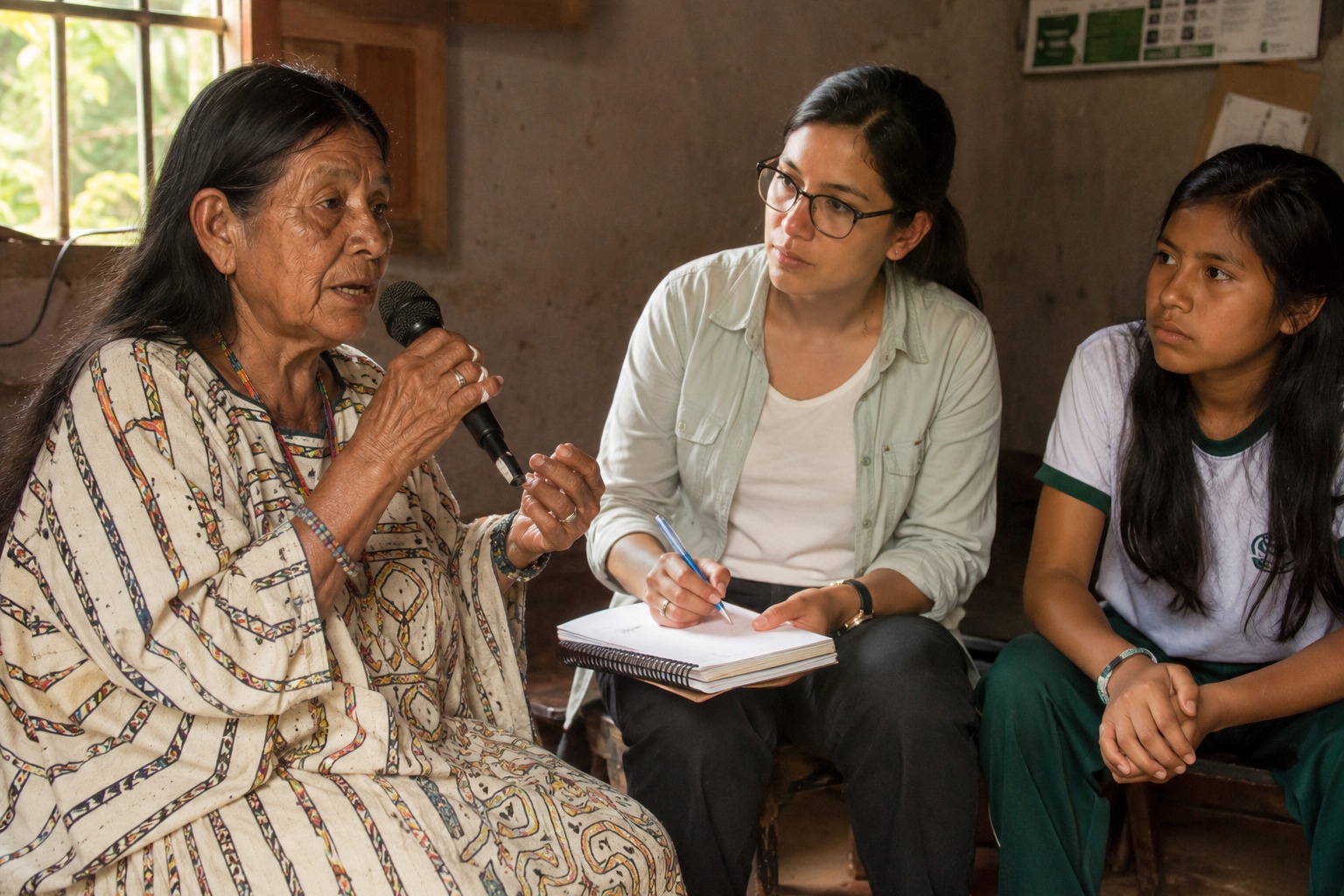
- Research phase: Field surveys with Asháninka youth in periurban Satipo to document language loss firsthand.
- Linguistic validation: Partnership with a PhD linguist who verified the Asháninka variant spoken in Satipo (ISO 639-3: cni) and curated the initial vocabulary list.
- Technology: MIT App Inventor for the offline Android prototype. Web Speech API for AI pronunciation recognition.
- Content: Audio recorded exclusively by authenticated native Asháninka speakers under informed consent protocols.
Challenges
The biggest challenge was not technical — it was trust. Convincing native speakers to record their voices for an app required genuine community relationships, cultural respect, and clear informed consent. We also faced the challenge of building AI pronunciation feedback for a language with almost no existing digital training data. That forced us to build our own dataset from scratch — which became our greatest strength.
What's Next
KANOJA v1.0 launches with 150–200 core Asháninka words. Future versions will expand vocabulary, add community-submitted content, and open the model to other endangered Amazonian languages. The goal: no indigenous language in Peru should disappear because a teenager couldn't find an app to learn it.
How we built it
Challenges we ran into
Accomplishments that we're proud of
What we learned
What's next for KANOJA
Built With
- chatgpt
- consensus
- gemini
- javascript
- lovable-ai
- mit-app-inventor
- perplexity-ai
- play
- react
- store
- web-speech-api

Log in or sign up for Devpost to join the conversation.