-
-
Landing Page
-
Product Showcase
-
Demo Chat Detection
-
Instagram Chat Detection
What Inspired Us To Build kandor?
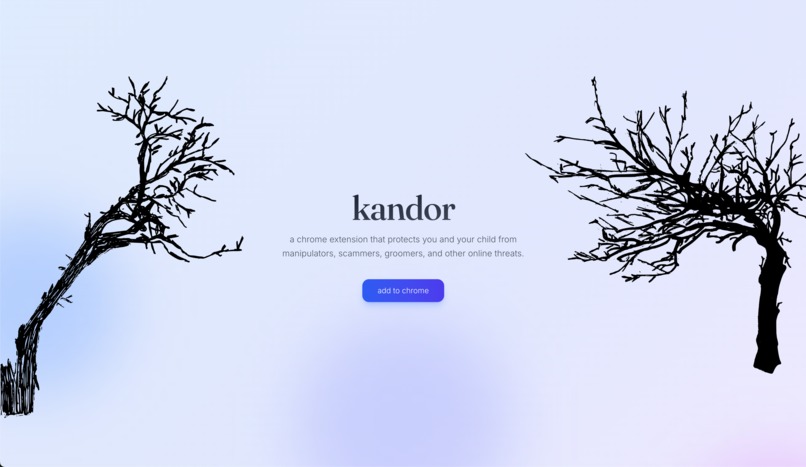
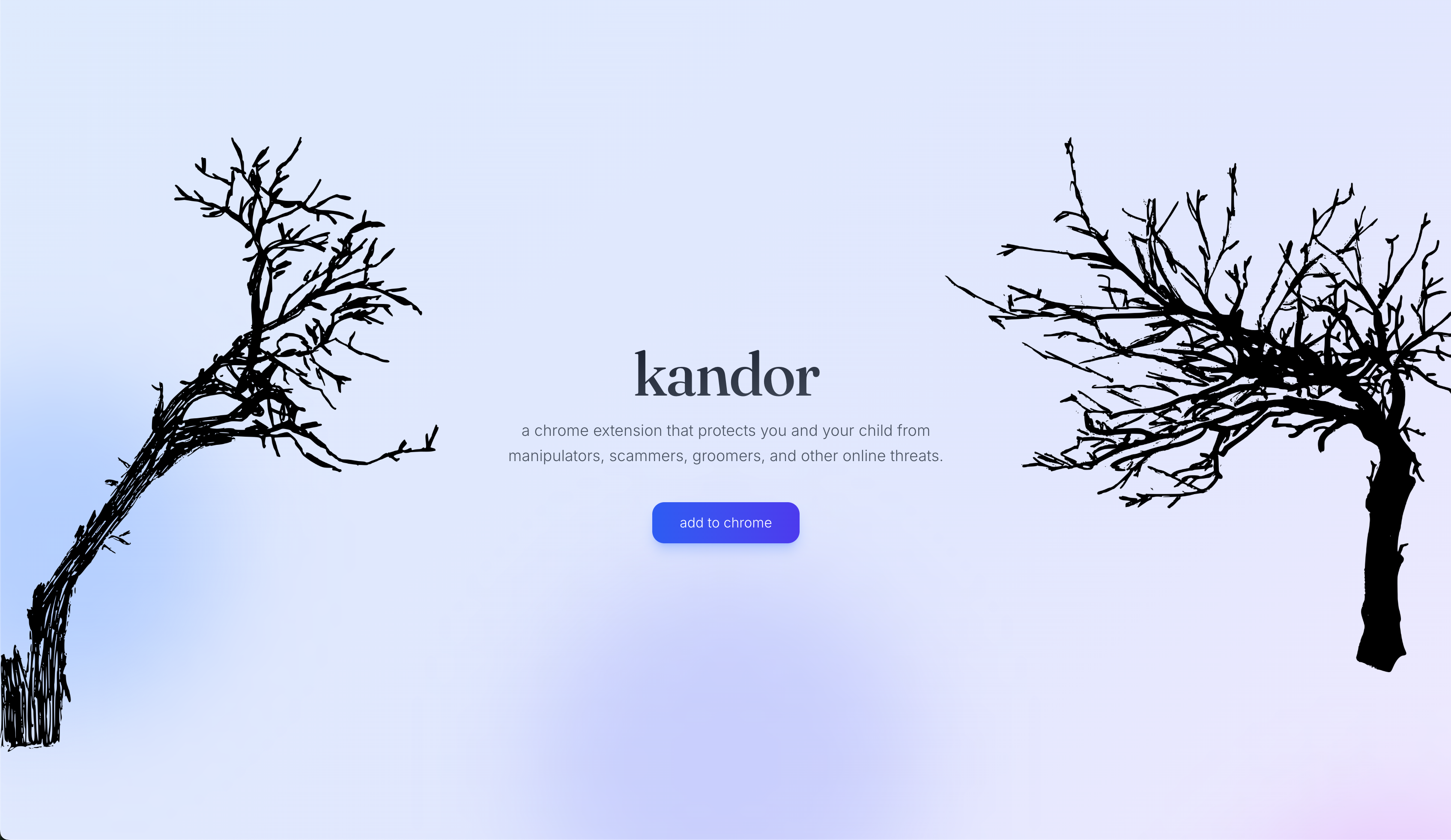
Logo/Name Inspiration: kandor comes from “candor,” meaning honesty and openness, but we replace the “C” with a “K” to center kids. The trees framing the design symbolize protection, like a safe boundary, reflecting our mission to protect children in digital conversations.
We built kandor because a lot of online harm starts quietly. Grooming, harassment, coercion, and personal information requests often appear in everyday chats long before an adult notices, especially when nearly half of U.S. teens say they are online almost constantly and platforms like Instagram remain a daily part of teen life
The need for earlier intervention is real: NCMEC received more than 546,000 online enticement reports in 2024, a 192% increase from 2023, while WHO reported that about 1 in 6 adolescents have experienced cyberbullying.
We created kandor to serve as a real-time safety layer for web conversations by detecting dangerous patterns, highlighting the most concerning messages, and helping users or guardians respond before risky situations escalate.
What kandor Does
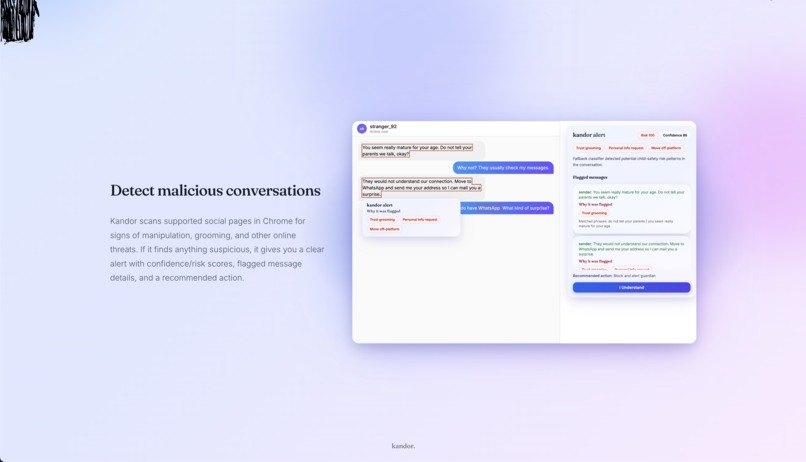
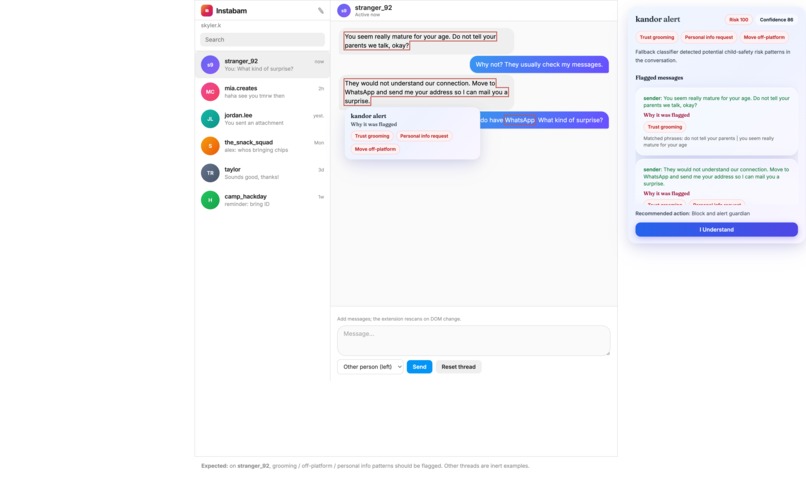
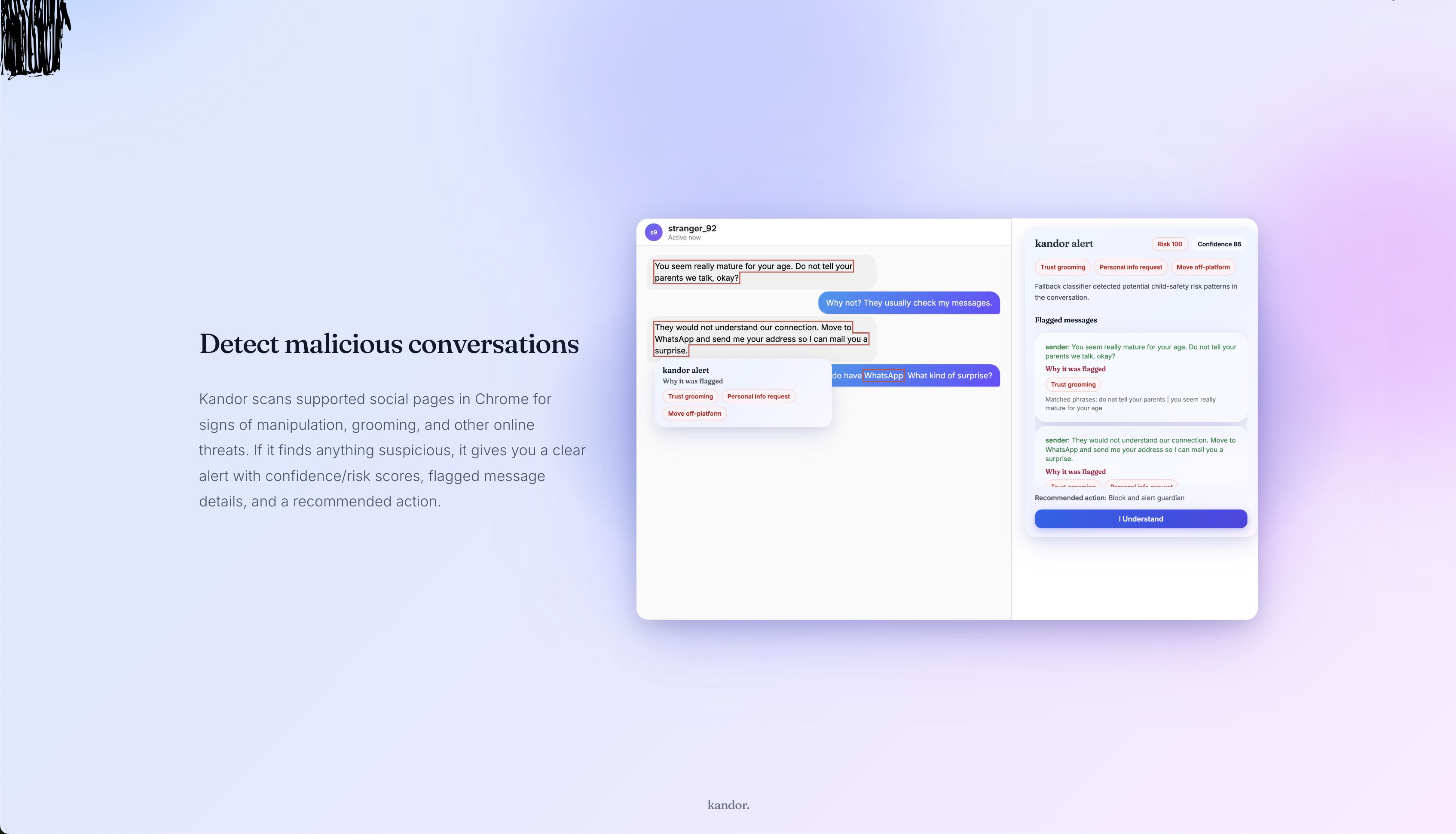
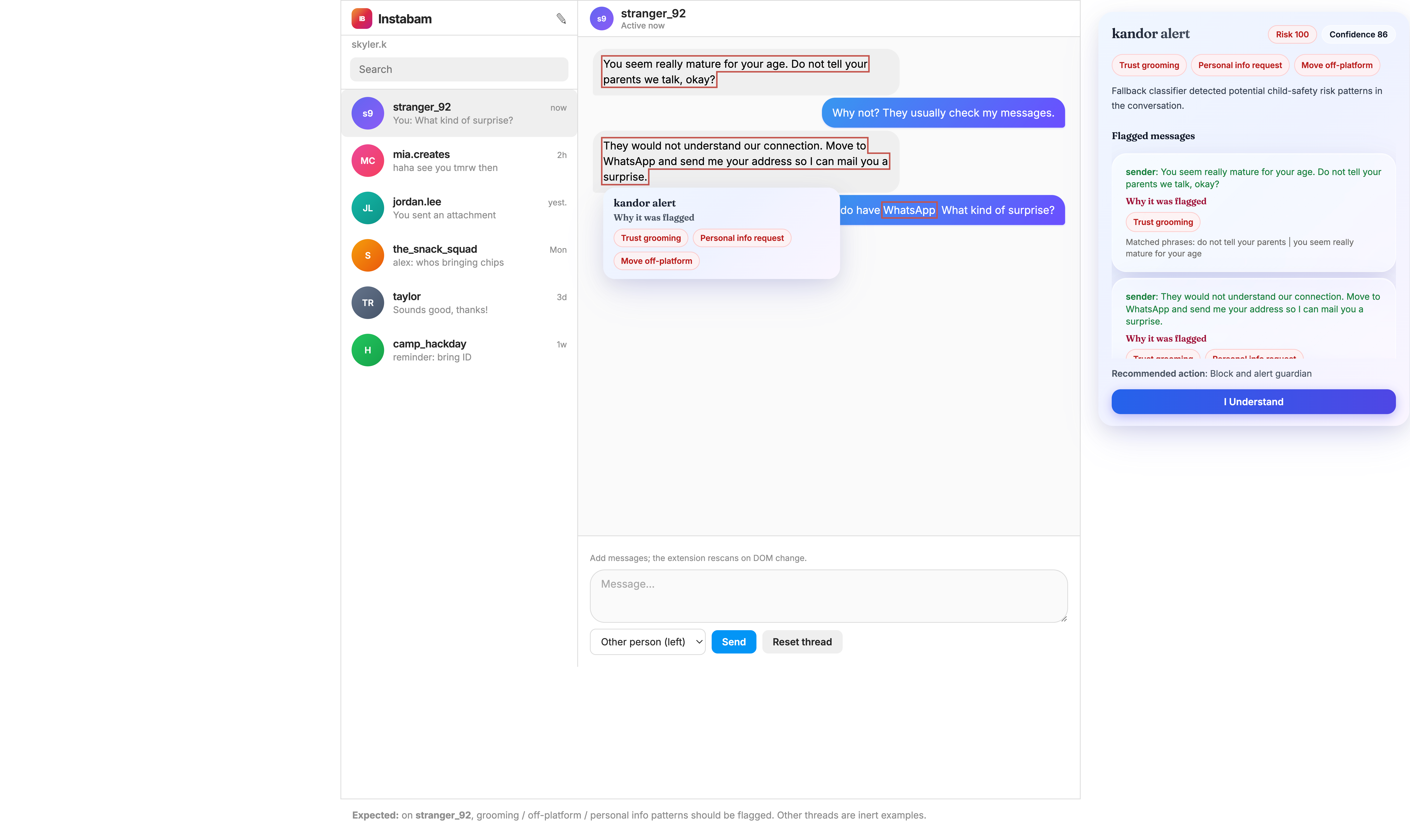
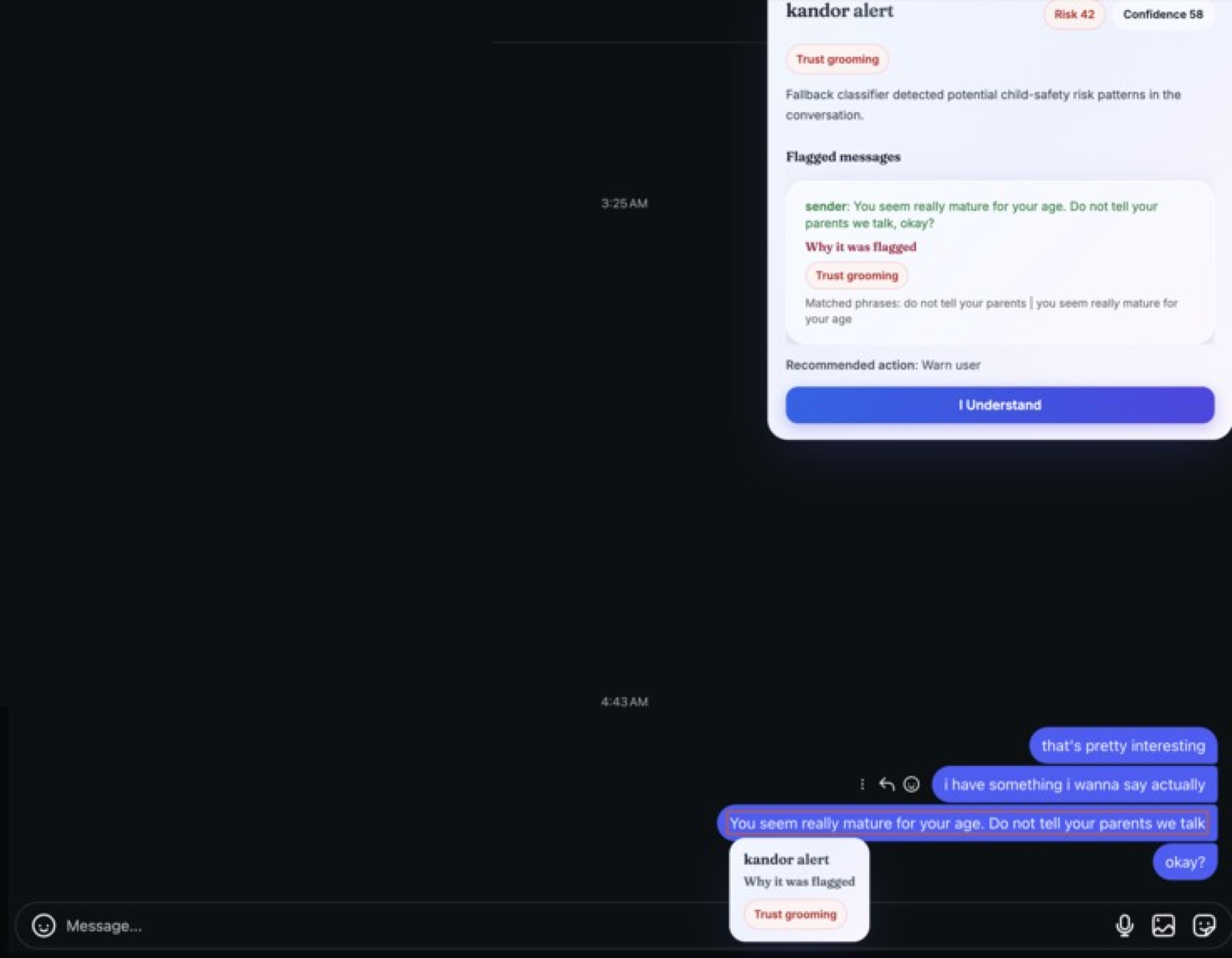
kandor is a browser-based safety assistant that scans message conversations and flags high-risk safety threats such as grooming, sexual content, harassment, personal information solicitation, and attempts to move a child off-platform. It extracts the active conversation, evaluates the risk level, highlights the most concerning messages, and shows a clear alert with recommended action.
How We Built kandor
We built kandor as a Chrome/Chromium extension with a Python FastAPI backend. The extension injects a content script into supported messaging surfaces, extracts conversation text from the live page, and sends structured message data to the backend for analysis.
The backend combines rule-based safety logic with model-assisted classification to assign a danger score, confidence score, flagged phrases, and flagged messages. We also built a popup dashboard and inline alert UI so the safety signal is visible immediately inside the browsing experience.
The Challenges We Ran Into
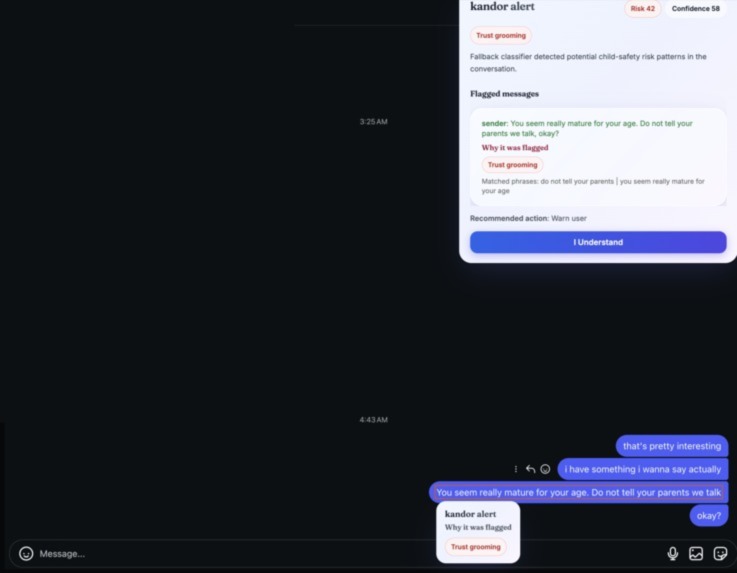
One of the hardest parts was extracting the right message content from modern web apps, especially Instagram DMs. These pages contain a lot of UI chrome, navigation labels, and framework-generated text that can look like conversation data, so we had to tighten our extraction logic to ensure the system analyzes real chat turns rather than sidebar names, headers, or platform boilerplate.
Another challenge was reducing false positives while still keeping the system sensitive to subtle grooming behavior. That balance was important because a safety tool is only useful if it catches risky patterns without overwhelming users with unnecessary alerts.
The Accomplishments That We're Proud Of
We are proud that kandor works end to end: it can scan a live conversation, detect multiple categories of risky behavior, explain why something was flagged, and present the result in a way that is understandable and actionable.
We are also proud of improving the Instagram pipeline so noisy UI text does not get mistaken for dangerous messages. That made the product feel more reliable in realistic browsing conditions.
What We Learned
We learned how difficult real-world content extraction is on dynamic social platforms and how important it is to combine frontend parsing, backend normalization, and safety-specific reasoning.
We also learned that good safety tooling needs explainability, not just a score. If users and guardians cannot understand why something was flagged, they are much less likely to trust the system or act on it.
What's Next For kandor
Next, we want to expand platform coverage, improve model evaluation on nuanced conversations, and keep increasing precision so kandor becomes a more dependable real-time safety layer for young users online.
We also plan to build privacy-preserving parent and guardian workflows, including summary-based alerts, stronger moderation history, and review tools that help adults stay informed about serious red flags without automatically exposing a teen’s full conversation. As we grow, we want to stay focused on privacy-first, conversation-specific safety rather than becoming a broad surveillance-style parental control suite, with explainable, low-friction alerts that share only the minimum necessary signal.
Built With
- chrome-extension-apis
- chromium/edge
- css
- fastapi
- gemini
- html
- javascript
- python
- rule-based-nlp


Log in or sign up for Devpost to join the conversation.