Inspiration
In Japan, children learn by writing each kana stroke by stroke on practice paper. A phone is too small for that, but a desk, a finger and a headset that sees both are perfect. I wanted to turn the table you already sit at into a Japanese writing desk.
What it does
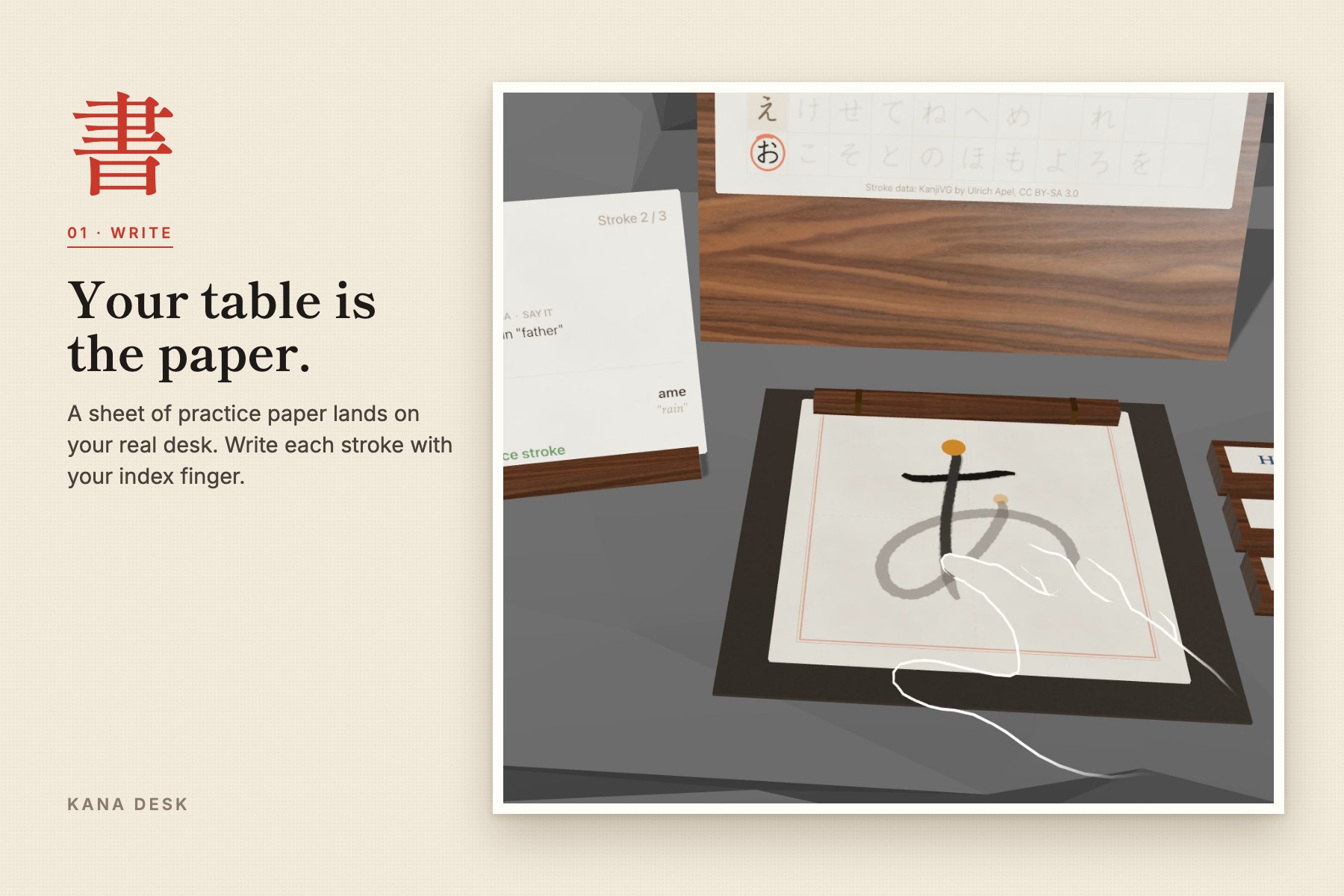
A sheet of practice paper lands on your real table. You write on it with your index finger.
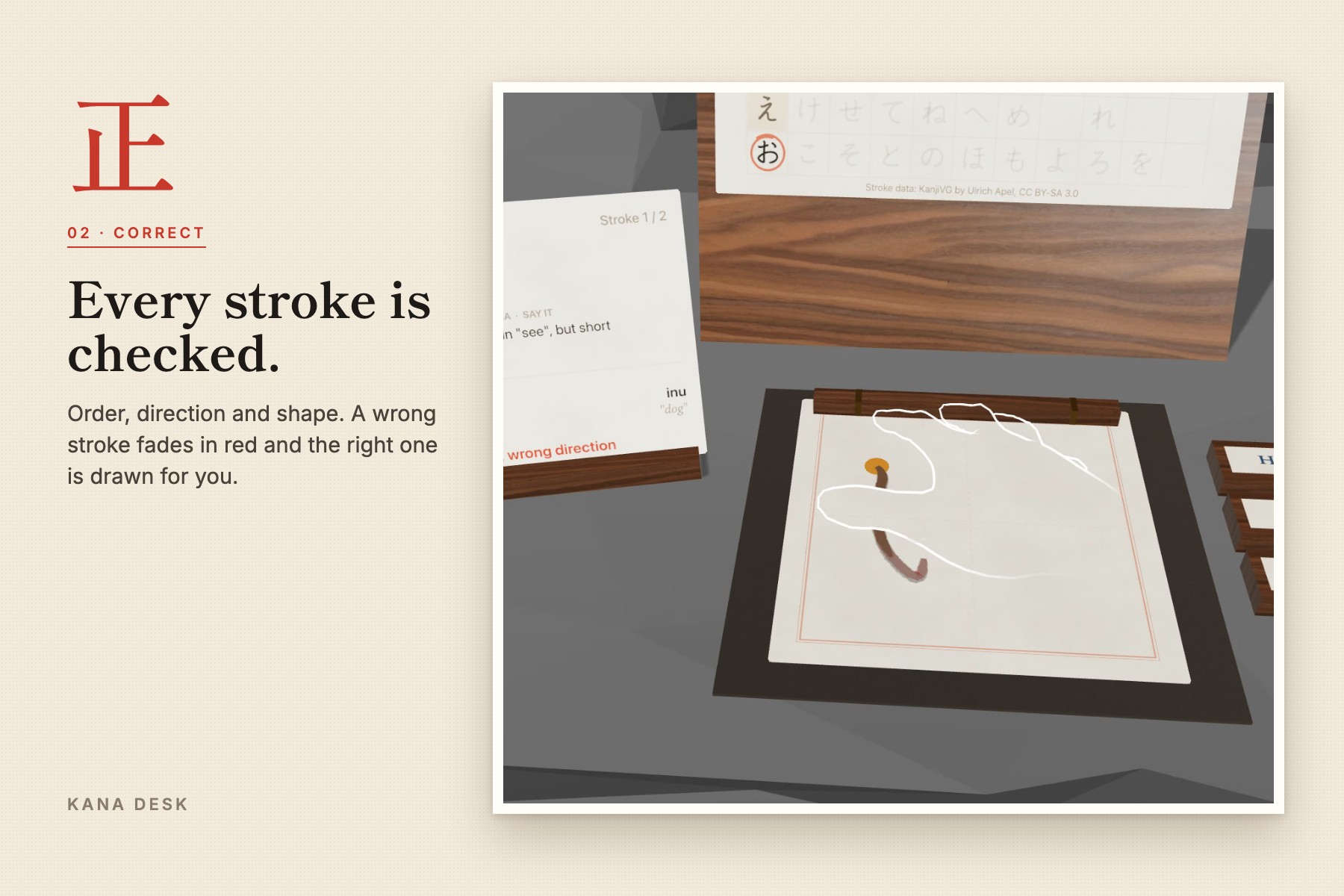
Every stroke is checked for order, direction and shape. A wrong stroke fades and the correct one is drawn for you.
The help fades as you improve: Trace, then Guide, then Memory.
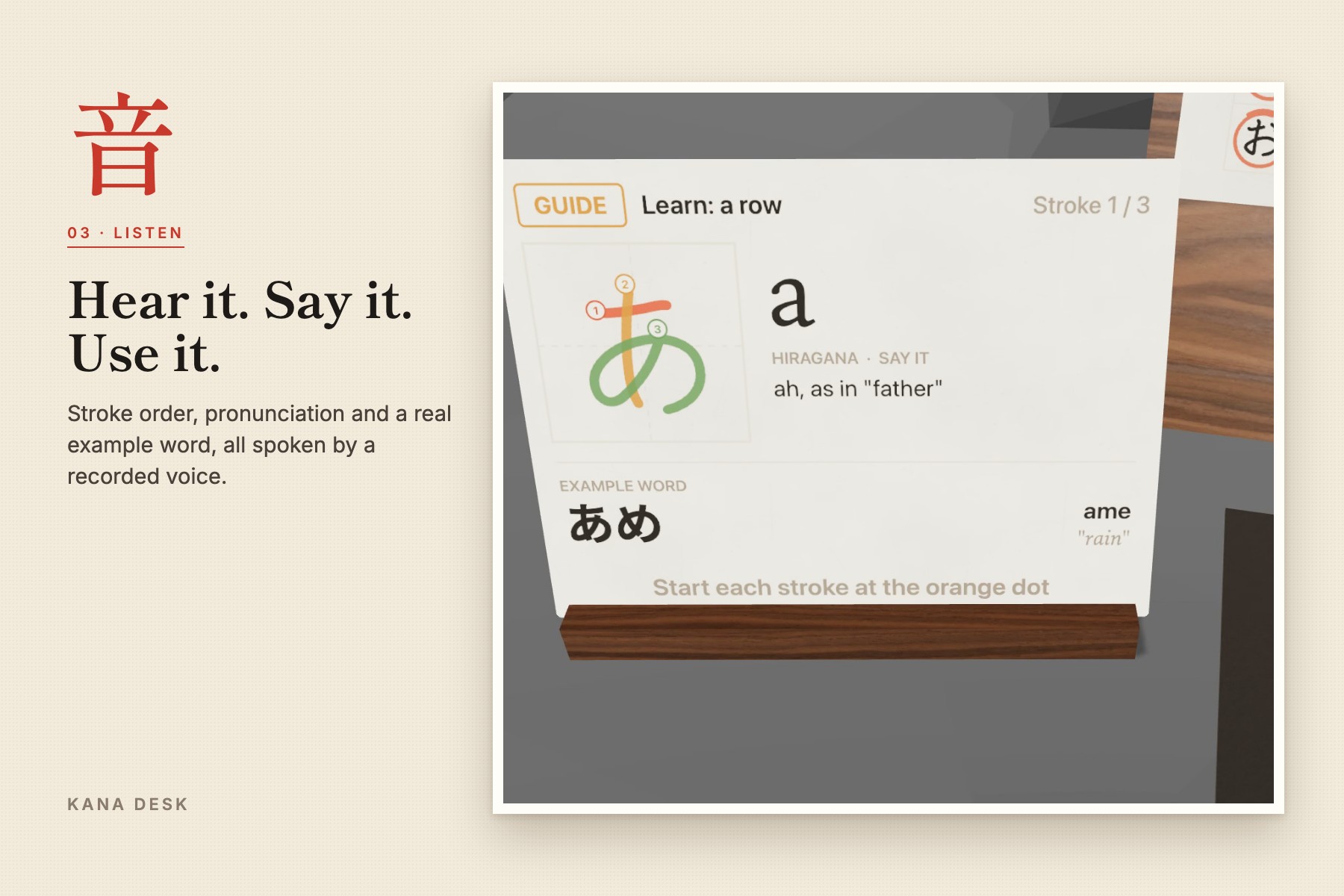
A study card shows stroke order, pronunciation and an example word, all spoken aloud.
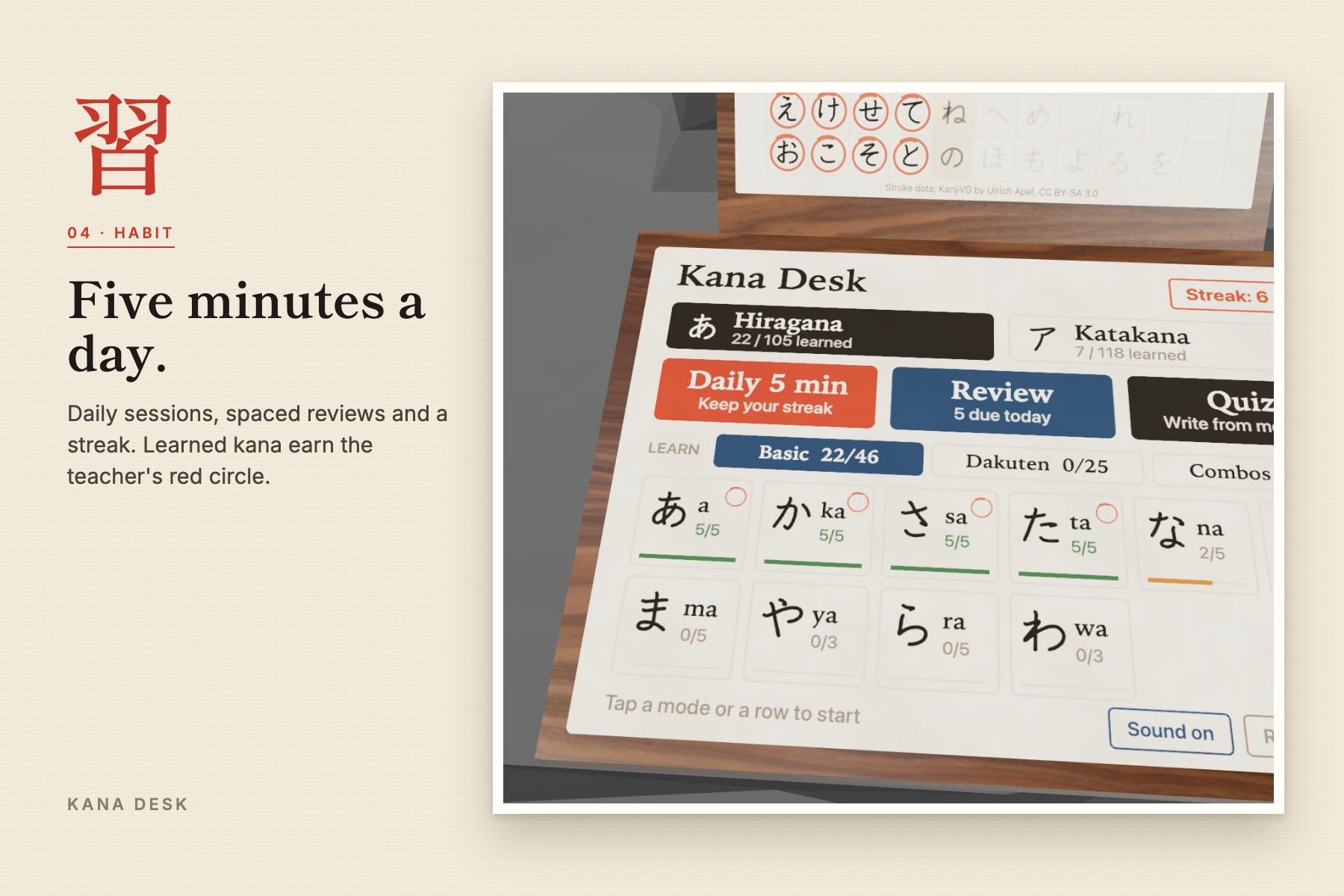
Daily 5-minute sessions, spaced reviews and a streak make it a habit.
223 kana: hiragana, katakana, dakuten and combinations. No account, progress saved on the device.
How I built it
Immersive Web SDK (three.js, WebXR, TypeScript). Stroke data from KanjiVG; a small checker compares each stroke with the model, tested on every stroke of all 223 kana. Every spoken clip was verified with a speech recogniser. Built and tested in the IWSDK emulator with emulated Quest 3 hands.
Challenges I ran into
Telling "touching the table" from "hovering over it" with hand tracking, and judging handwriting strictly enough to teach, but kindly enough for a finger on a table.
What's next for Kana Desk
- Spatial anchors, so the desk stays where you left it.
- Kanji, starting with the first-grade characters.
Built With
- cloud?are-workers
- hand-tracking
- immersive-web-sdk
- kanjivg
- mixed-reality
- passthrough
- planedetection
- three.js
- typescript
- webxr
