Inspiration
We were inspired by the paging system taught in OS classes, and by a development cycle tool known as a Kanban board.
What it does
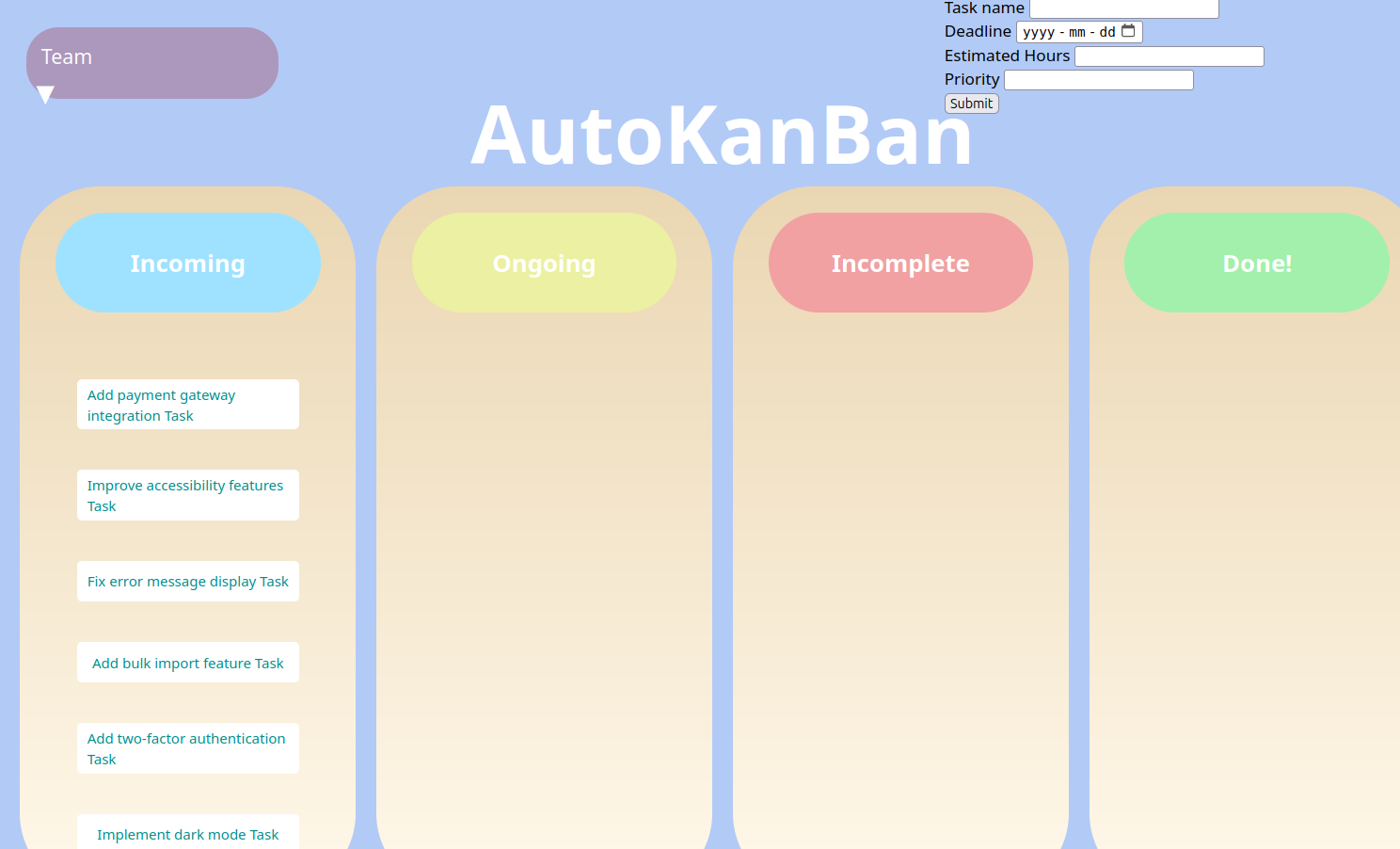
It basically determines what programming task to tackle first depending on a range of factors. We converted a page replacement algorithm to the context of software development "tasks."
How we built it
Frontend: Used Figma for the general design. Then used the code generated by Figma Dev Mode to convert it to HTML and CSS code, making use of the Flask API for scripting and generating the webpage. Backend: The backend comprises two parts, a SQLite database and a Python algorithm.
Challenges we ran into
We ran into multiple challenges. This was our first time using SQLite, and integrating a database within an app. This was also our first time connecting a backend to a Flask fronted, and for some of our teammates, the first time writing using Flask.
Accomplishments that we're proud of
We are proud of coming up with an original idea, and having tried our best to learn a lot of new tools in just 24 hours.
What we learned
Frontend: How to use Figma Dev Mode and how to connect frontend and backend Backend: We learned how to create, querry, and update a database with python.
What's next for Autokanban
This prototype was built with the idea of managing the tickets of only one software team. However, the code is structured as to eventually expand to an arbitrary number of teams and an arbitrary number of scheduler algorithms running. We can thus extend Autokanban to be a company wide scheduler.

Log in or sign up for Devpost to join the conversation.