Inspiration
Hundreds of millions of people sell from WhatsApp, Instagram and market stalls with no website, no catalogue and no code. Just photos on a phone. As shopping moves to AI assistants, those sellers become invisible: an agent can only buy what it can find, read and pay for, and goods that live in a phone gallery are none of those things.
What it does
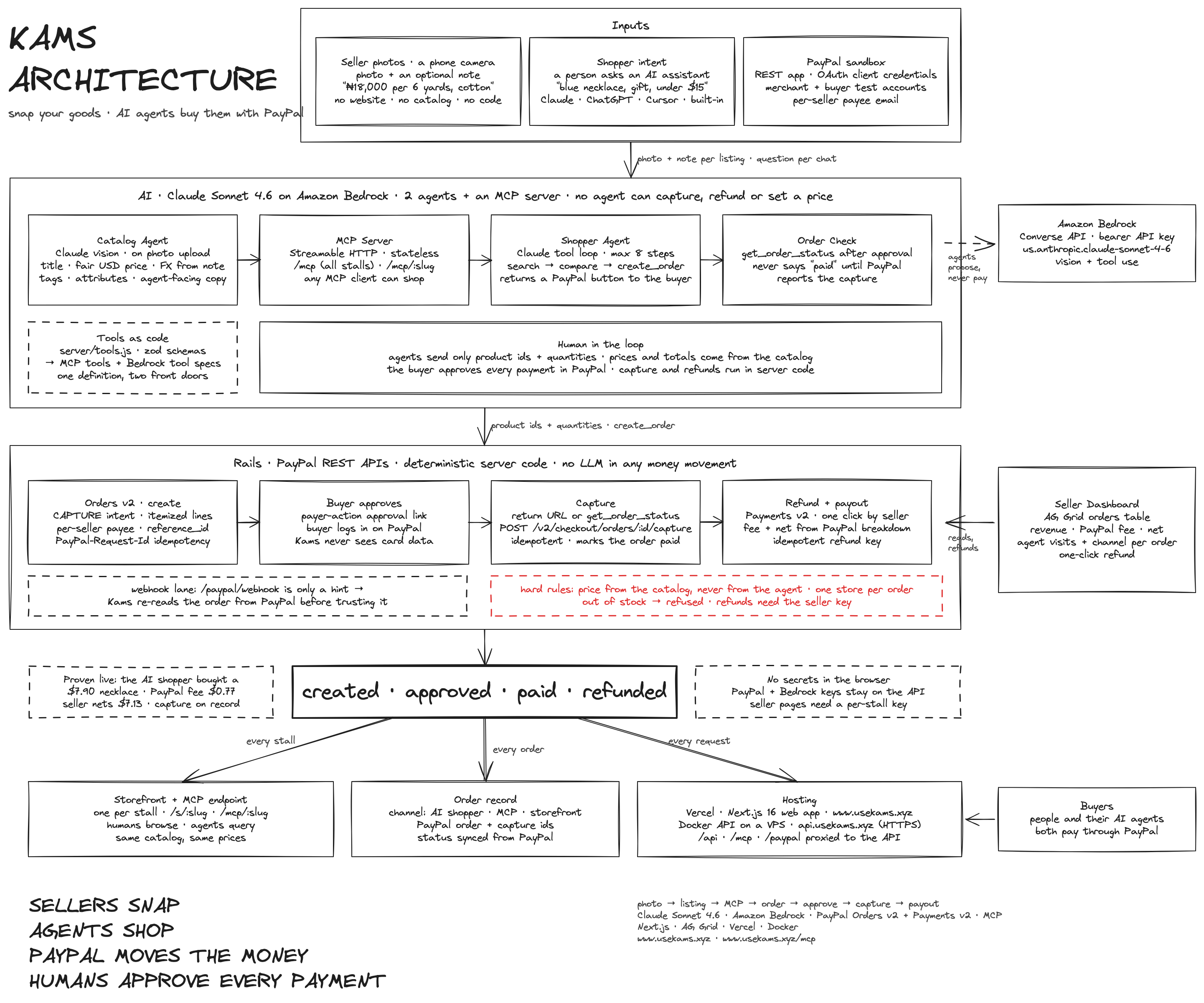
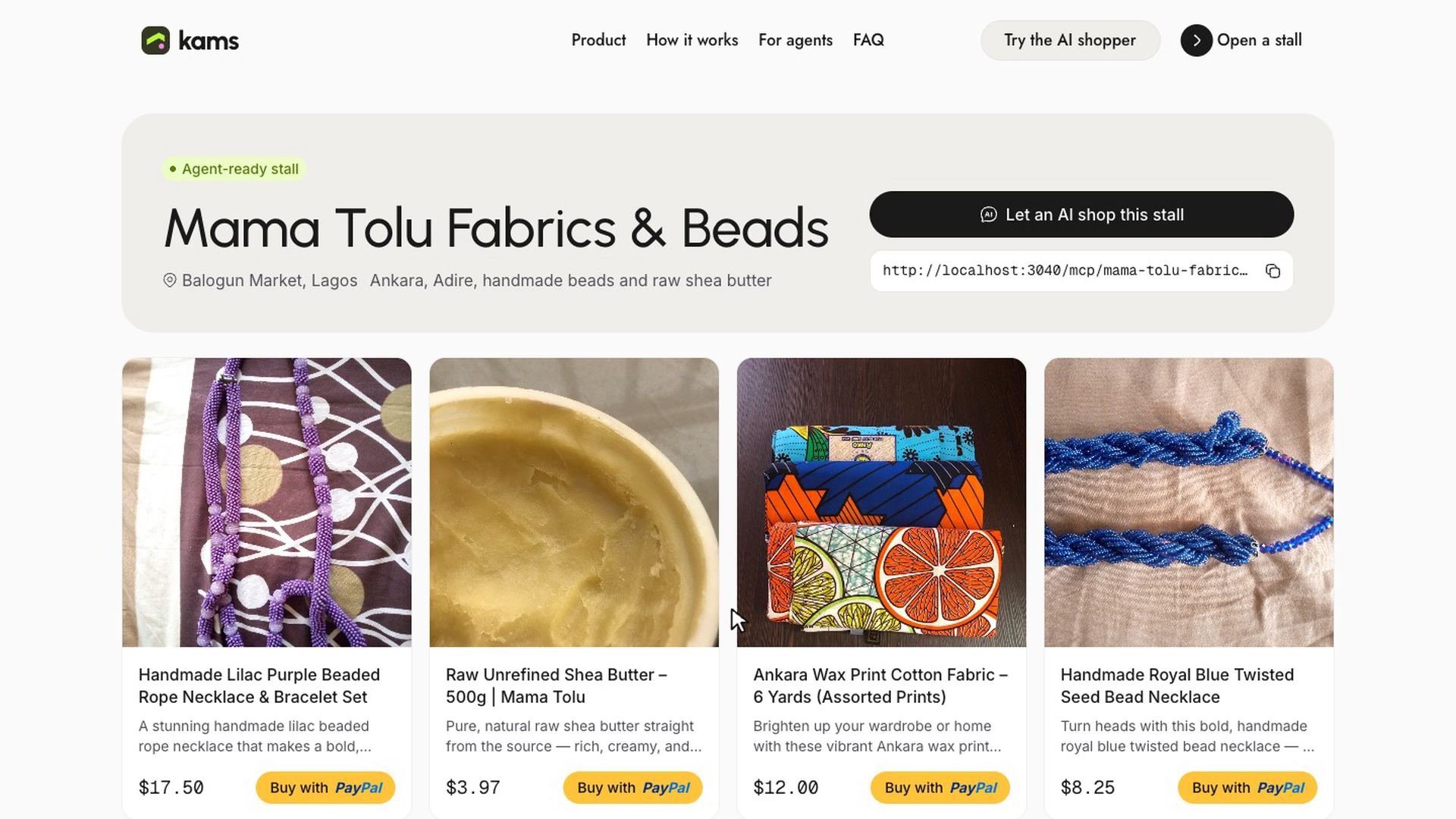
Kams turns a few phone photos into a store that AI agents can search and pay for with PayPal, in about a minute.
- Snap. A seller opens a stall and uploads product photos, optionally with a note like "₦14,000, handmade".
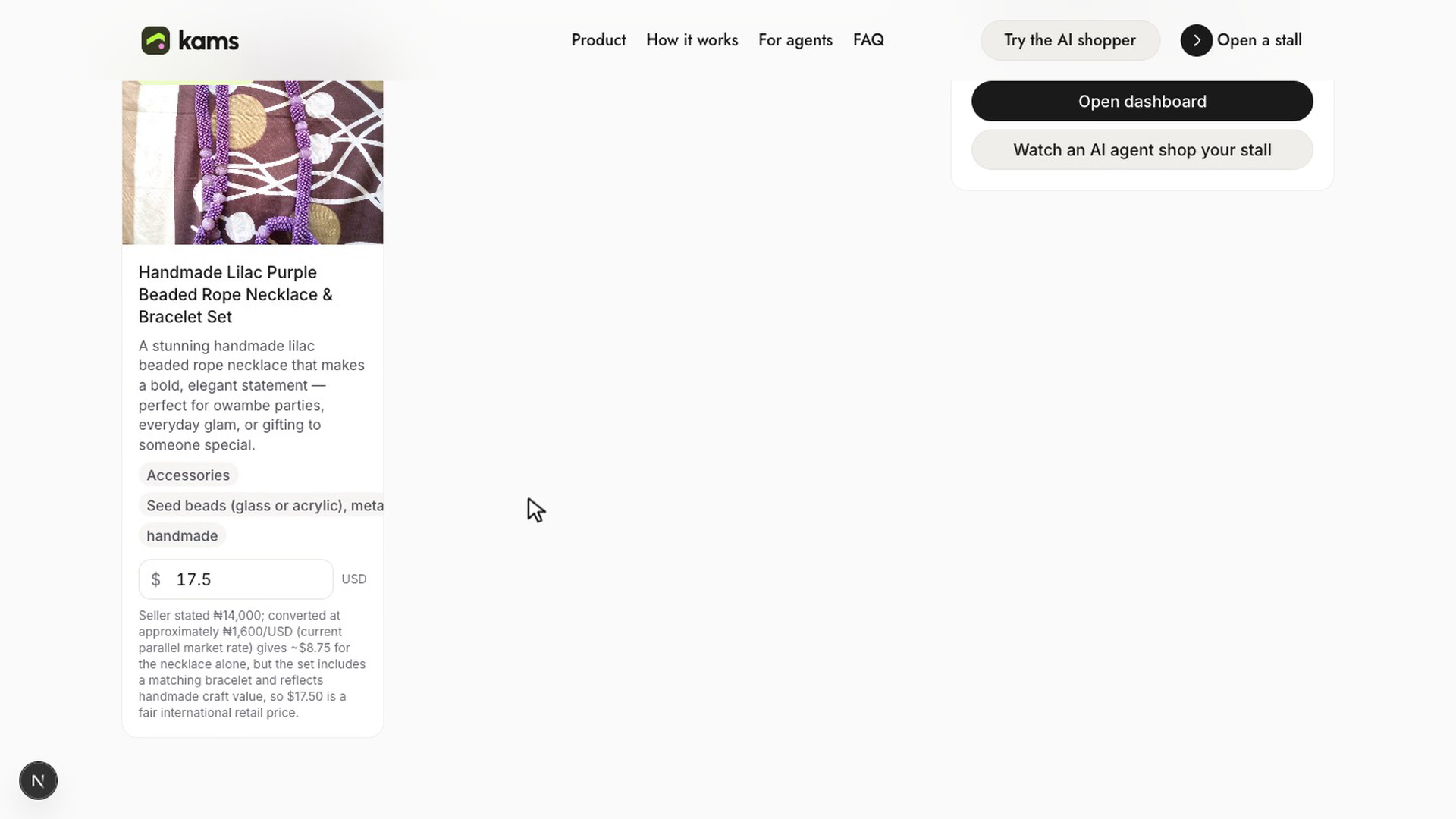
- Claude catalogs it. Claude Sonnet 4.6 on Amazon Bedrock reads each photo and writes the listing: title, tags, attributes, a description written for AI agents to read, and a fair USD price converted from the local-currency note, with its reasoning.
- Agent-ready instantly. Every stall gets a storefront for people and a live MCP endpoint (
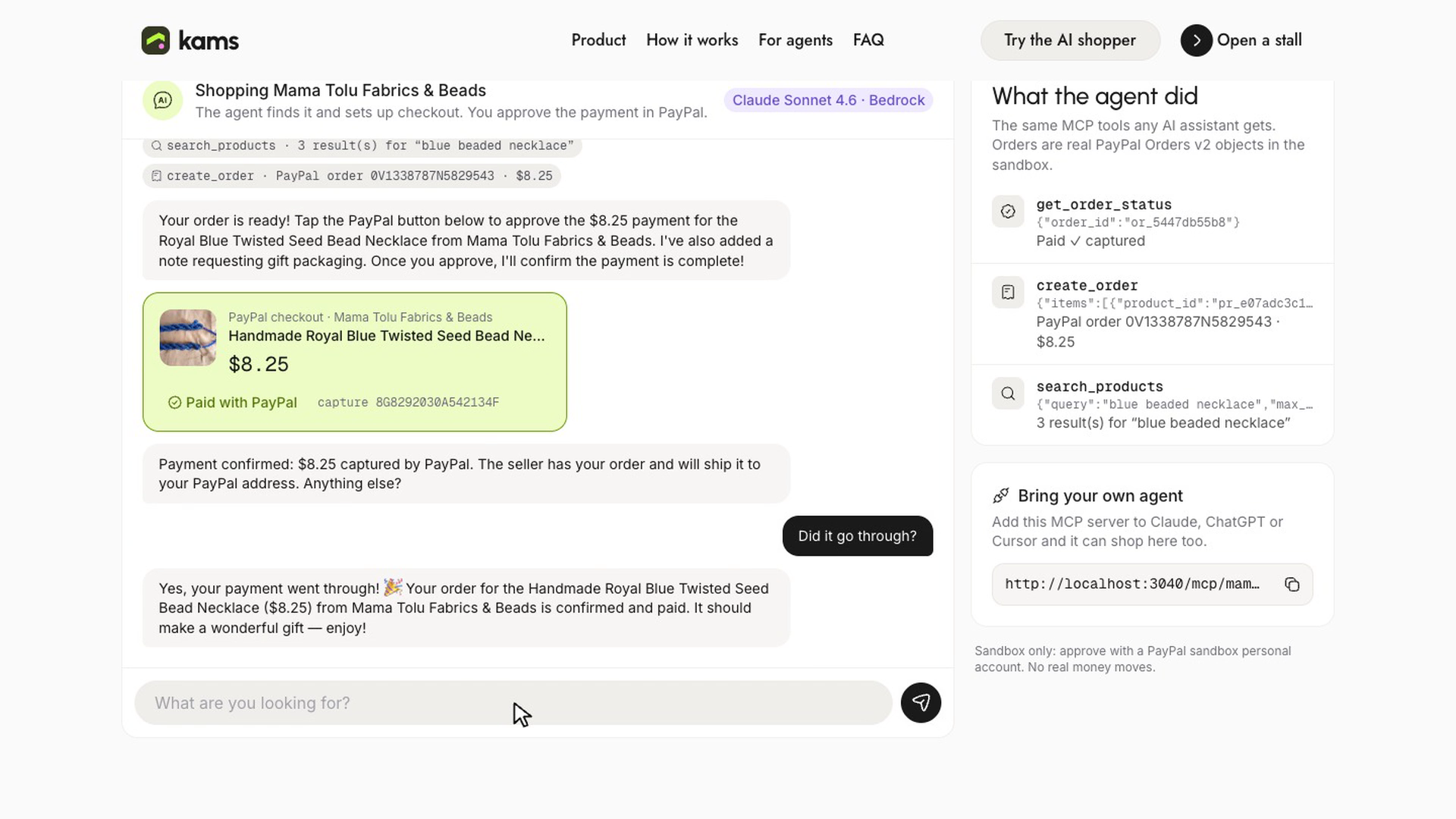
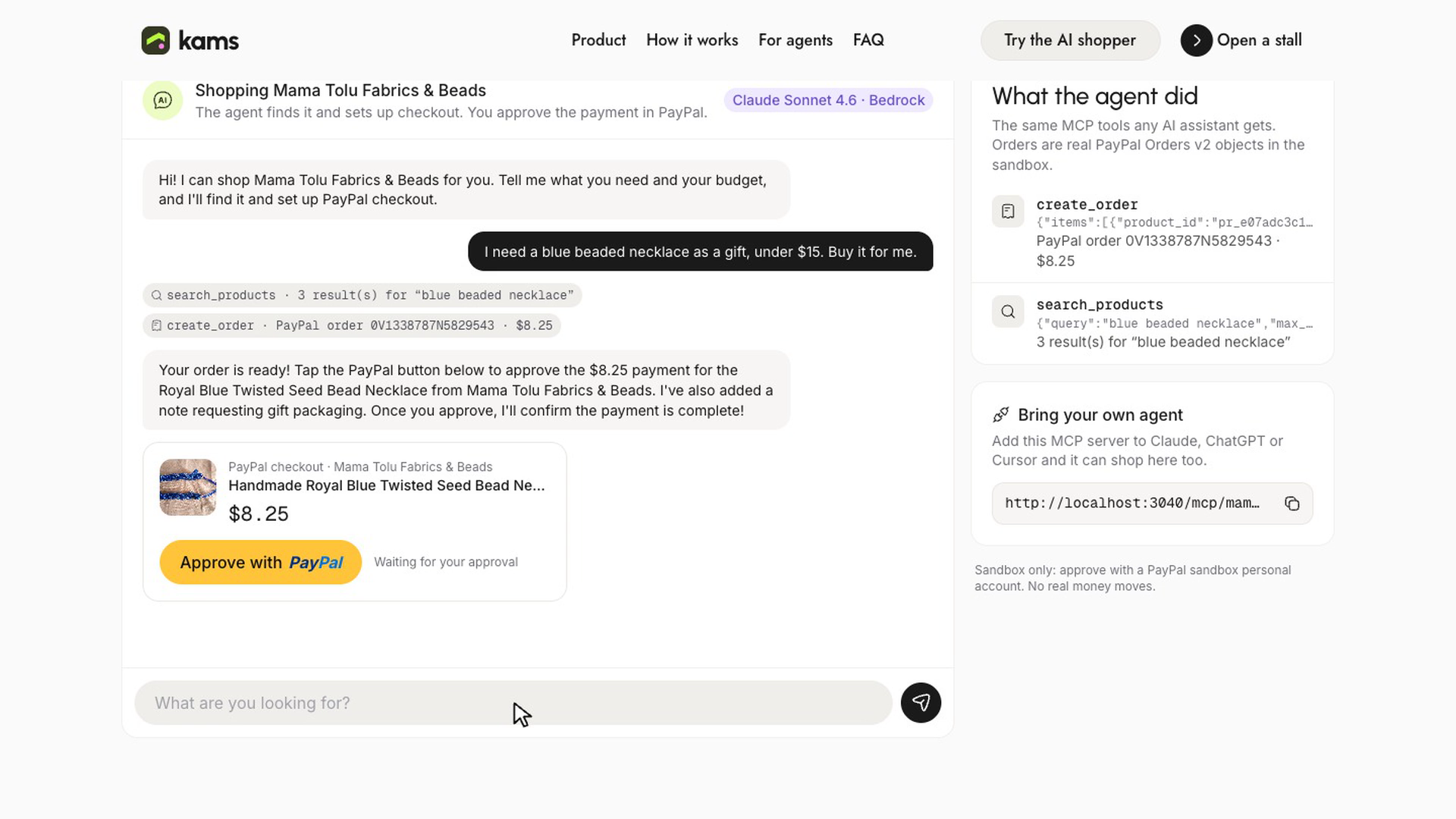
/mcp/<stall>, plus/mcpacross all stalls). Claude, ChatGPT, Cursor or any MCP client can connect and shop. - Paid with PayPal. An agent calls
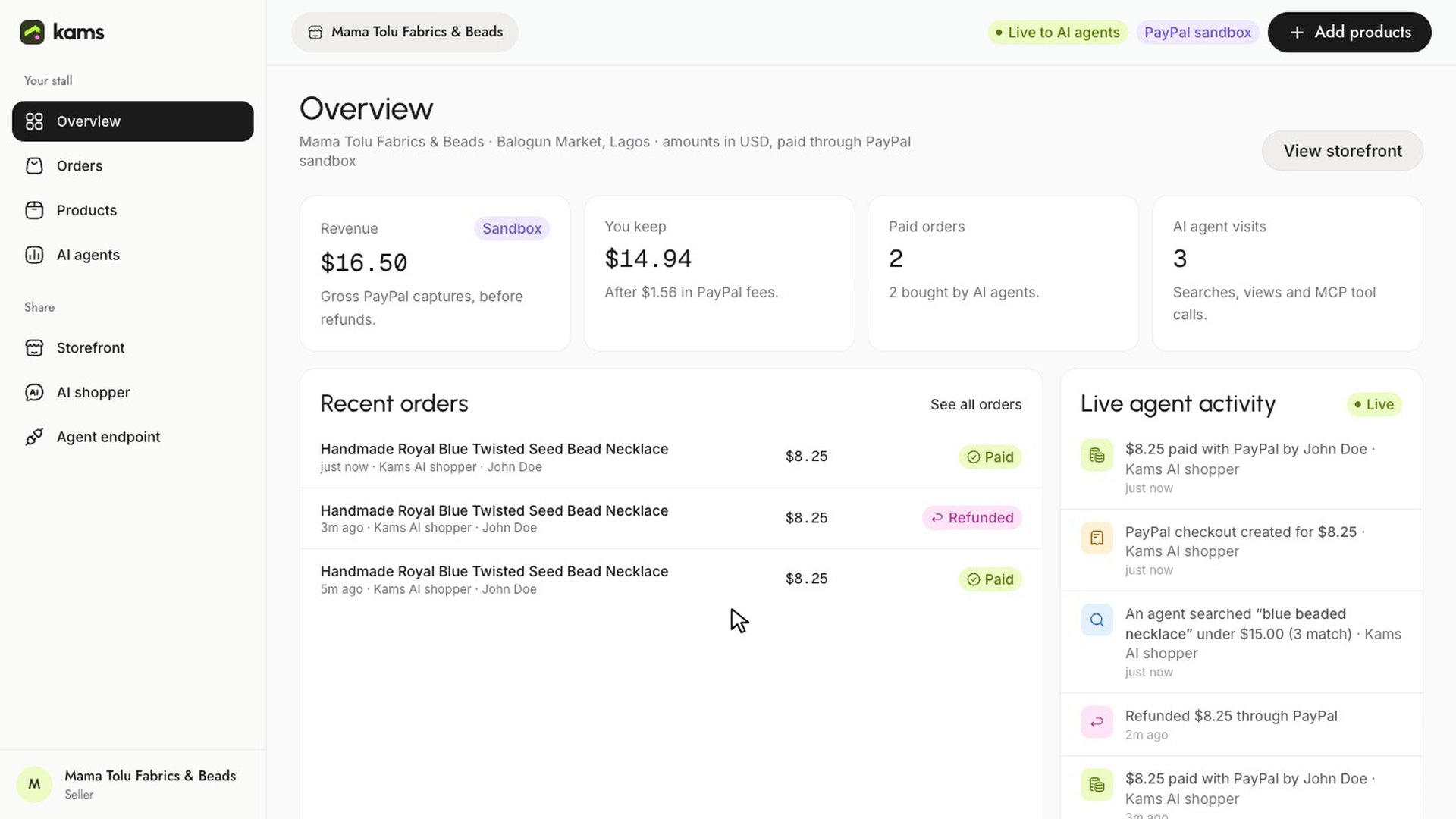
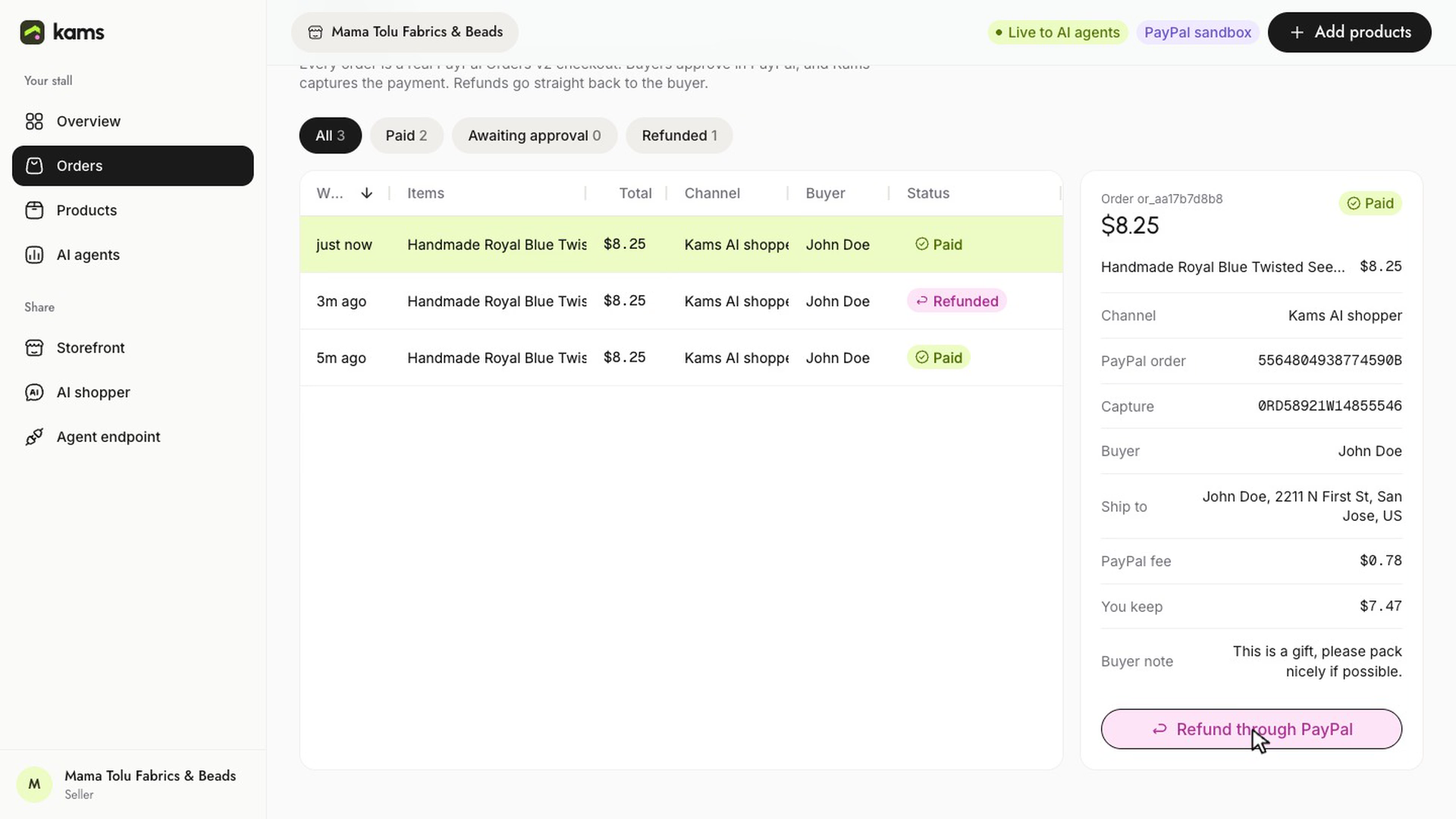
create_order, which creates an itemized PayPal Orders v2 order. The buyer approves in PayPal, so a person always controls the money. Kams captures it, and the agent only says "paid" once PayPal confirms the capture. - The seller gets paid. The seller dashboard shows each order live in an AG Grid table with PayPal's fee and net payout (from
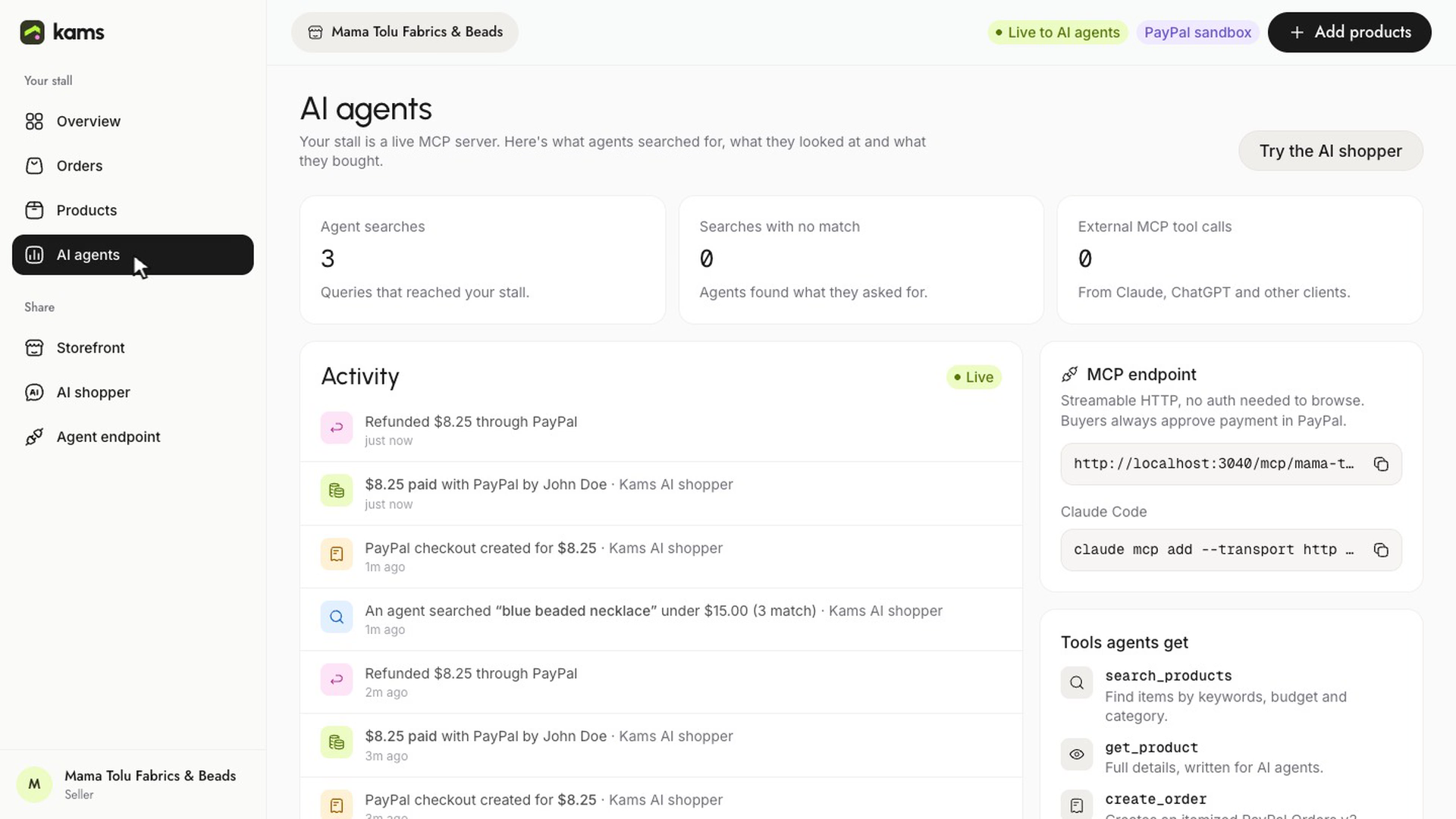
seller_receivable_breakdown), one-click refunds through Payments v2, and every AI agent that visited the stall.
Try it
- Live: https://www.usekams.xyz (AI shopper at /shop, example stall at /s/mama-tolu-fabrics-beads)
- Connect your own agent:
claude mcp add --transport http kams https://www.usekams.xyz/mcp - PayPal sandbox buyer login for judges is in the README. Sandbox only: no real money moves.
How we built it
- AI: Claude Sonnet 4.6 on Amazon Bedrock (Converse API). Vision + forced tool-use JSON for listings; a tool-use loop for the built-in AI shopper.
- MCP:
@modelcontextprotocol/sdk, Streamable HTTP, stateless. One file (server/tools.js, zod schemas) defines the commerce tools once and feeds both the MCP server and the built-in agent, so the demo follows the same path a third-party agent takes. - PayPal: Orders v2 create/capture with
PayPal-Request-Ididempotency, per-sellerpayee, Payments v2 refunds, and webhooks treated only as a hint: Kams re-reads the order from PayPal before trusting anything. - Web: Next.js 16 + Tailwind 4, with AG Grid powering the seller's orders table (live PayPal status, fee and net per order, row detail with refund). Web on Vercel, API in Docker on a VPS behind HTTPS.
Agents make judgments, rails hold the money
No model touches the money. Agents send only product IDs and quantities; prices and totals come from the catalogue; one store per order; out-of-stock items are refused; refunds need the seller's key. PayPal's APIs create, capture and refund in plain server code.
Challenges
- Getting honest prices from photos plus messy notes in naira, cedis or shillings, and showing the reasoning so the seller can correct it.
- Making the agent never claim an order is paid before PayPal does, and making capture idempotent across the return URL, polling and webhooks.
- Keeping the agent from echoing checkout links or markup into chat: the app renders the PayPal button itself.
What we learned
MCP turns "is my shop on the internet?" into "can an agent use my shop?". A small seller doesn't need a website to be found by AI shoppers, just a few photos and a PayPal checkout an agent can call.
What's next
WhatsApp onboarding (send photos to a number), more currencies, stock sync, and listing Kams stalls in agent directories so assistants discover them by default.
Built With
- ag-grid
- amazon-bedrock
- claude
- docker
- express.js
- javascript
- model-context-protocol
- next.js
- node.js
- paypal
- paypal-orders-v2
- paypal-payments
- react
- tailwind
- typescript
- vercel
- zod
