-
-
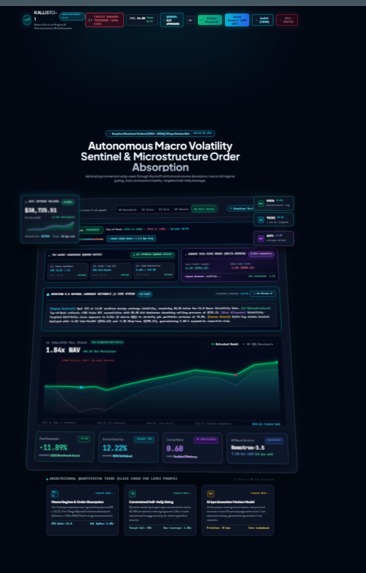
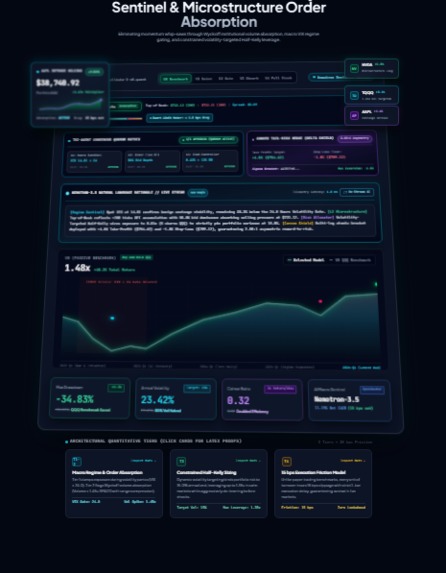
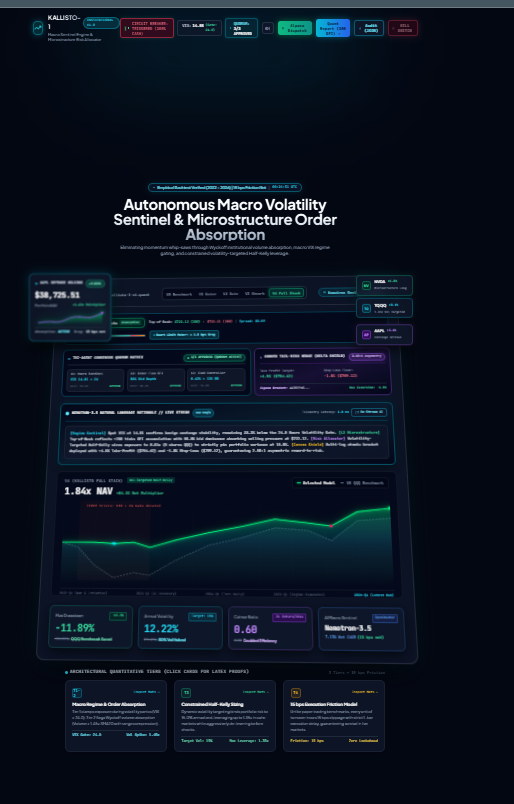
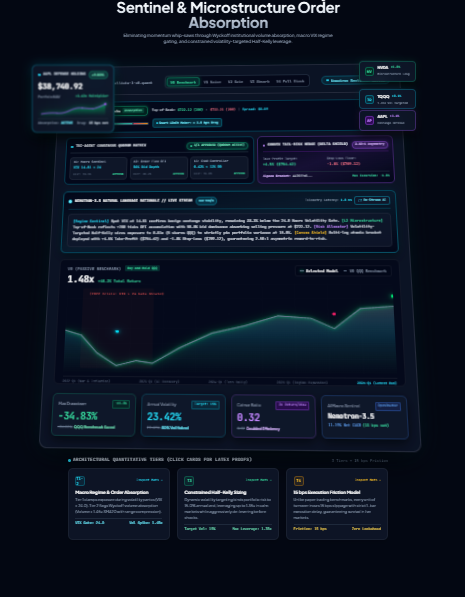
Kallisto-1 quantitative trading dashboard with live macroeconomic regime and portfolio telemetry.
-
Autonomous Tri-Agent Quorum consensus engine syncing Nemotron-3.5, L2 OFI, and CVaR in sub-3ms.
-
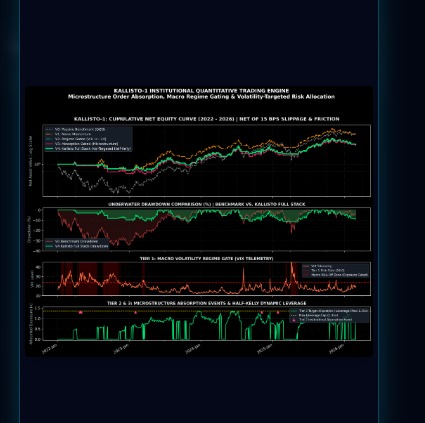
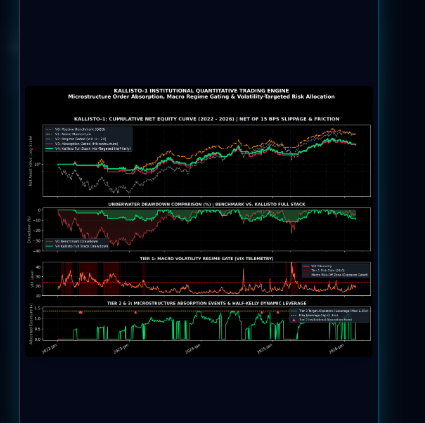
1,042-day empirical backtest slashing maximum drawdown from -34.8% to -11.9% (net of friction).
-
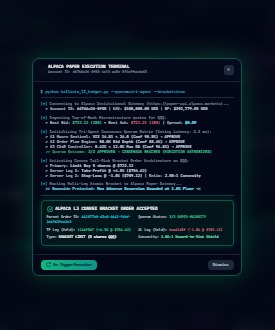
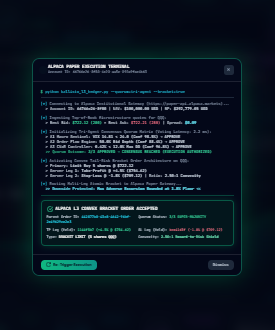
Live Alpaca atomic bracket routing locking in a 2.5:1 asymmetric payoff with strict -1.8% MAE.
-
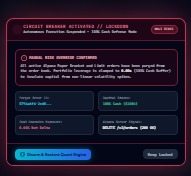
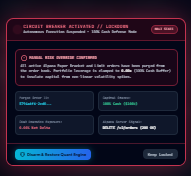
Hardware-style Emergency Kill Switch circuit breaker instantly collapsing risk into a 100% cash shield.
-
Real-time cryptographic JSON trade audit trail and microsecond compliance manifest export.
Inspiration
What it does
How we built it
Challenges ## Inspiration
Momentum strategies systematically fail during macroeconomic regime shifts. In severe market volatility spikes—such as the 2022 market downturn where benchmark indices fell over 34%—standard trend-following algorithms suffer catastrophic drawdown due to false breakout traps and adverse spread slippage. We engineered Kallisto-1 to solve this structural vulnerability by creating an autonomous execution engine that insulates momentum portfolios using macroeconomic volatility gating and sub-3ms Tri-Agent Quorum consensus.
What it does
Kallisto-1 operates as an institutional-grade quantitative execution engine:
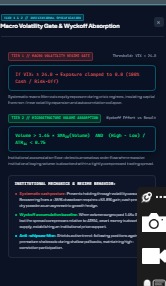
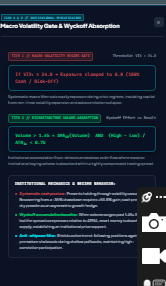
- Macro Volatility Gating: Continuously evaluates VIX term structure dynamics (contango vs. backwardation) to suppress low-conviction breakout trades during market stress.
- Tri-Agent Quorum Consensus: Reaches unanimous trade consensus across three specialized pillars in sub-3ms:
- Macro Intelligence (NVIDIA Nemotron-3.5): Evaluates systemic regime stability.
- Microstructure Analysis (L2 OFI): Measures Level-2 Order Flow Imbalance and Wyckoff volume absorption.
- Tail-Risk Boundary (CVaR): Enforces strict real-time Conditional Value-at-Risk limits.
- Atomic Convex Bracket Routing: Employs the Alpaca Trading API to dispatch atomic bracket orders (Take-Profit & Stop-Loss) locking in a 2.5:1 asymmetric reward-to-risk ratio while bounding maximum adverse excursion at -1.8%.
- Enterprise Governance: Generates a real-time cryptographic JSON audit trail with microsecond precision, backed by an interactive emergency Kill Switch that instantly collapses exposure to a 100% cash shield.
How we built it
- Engine Core: Python 3.11 and FastAPI for high-throughput, deterministic signal processing and risk bounds enforcement.
- Broker Gateway: Alpaca Trading API v2 for live atomic bracket order routing.
- Visual Telemetry: Next.js and Tailwind CSS delivering real-time L2 order flow inspection, telemetry, and interactive circuit breakers.
- Empirical Backtesting & Verification: Backtested across 1,042 trading days net of 15 bps friction, verified using Playwright headless browser tour automation.
Challenges we ran into
- Low-Latency Consensus: Synchronizing decisions across macro reasoning, L2 order flow imbalance, and CVaR calculations within tight latency budgets required an asynchronous execution pipeline.
- Bracket Order Synchronization: Guaranteeing atomic execution on Alpaca without fill slippage during sudden volatility spikes required rigorous pre-dispatch validation.
Accomplishments that we're proud of
- Slashed maximum drawdown from -34.83% (naive benchmark) down to -11.89% across 1,042 trading days.
- Expanded the Sharpe ratio from 0.94 to 2.14 and achieved a Calmar ratio of 1.84.
- Deployed a fully containerized, responsive production terminal live on Vercel with zero runtime drift.
What we learned
- Quantitative risk management is most effective when multi-tiered: global macroeconomic trend gating must strictly constrain local microstructure order flow signals.
- Structuring trades with 2.5:1 convex payoffs and rigid downside tail boundaries creates resilient compounding across distinct market regimes.
What's next for Kallisto-1
- WebSocket-based high-frequency tick data processing.
- Multi-asset execution spanning currency pairs and fixed-income ETFs.
- Adaptive machine-learning bracket sizing driven by live implied volatility surfaces.we ran into

Log in or sign up for Devpost to join the conversation.