Inspiration
I wanted to make playing an instrument feel approachable, even for someone who does not own one or read sheet music. The kalimba’s gentle sound and simple layout made it a natural starting point.
With KaliSenses, I wanted to turn an ordinary desk into a place for musical exploration, using your hands, familiar melodies, and a calm environment that responds to what you play.
What it does
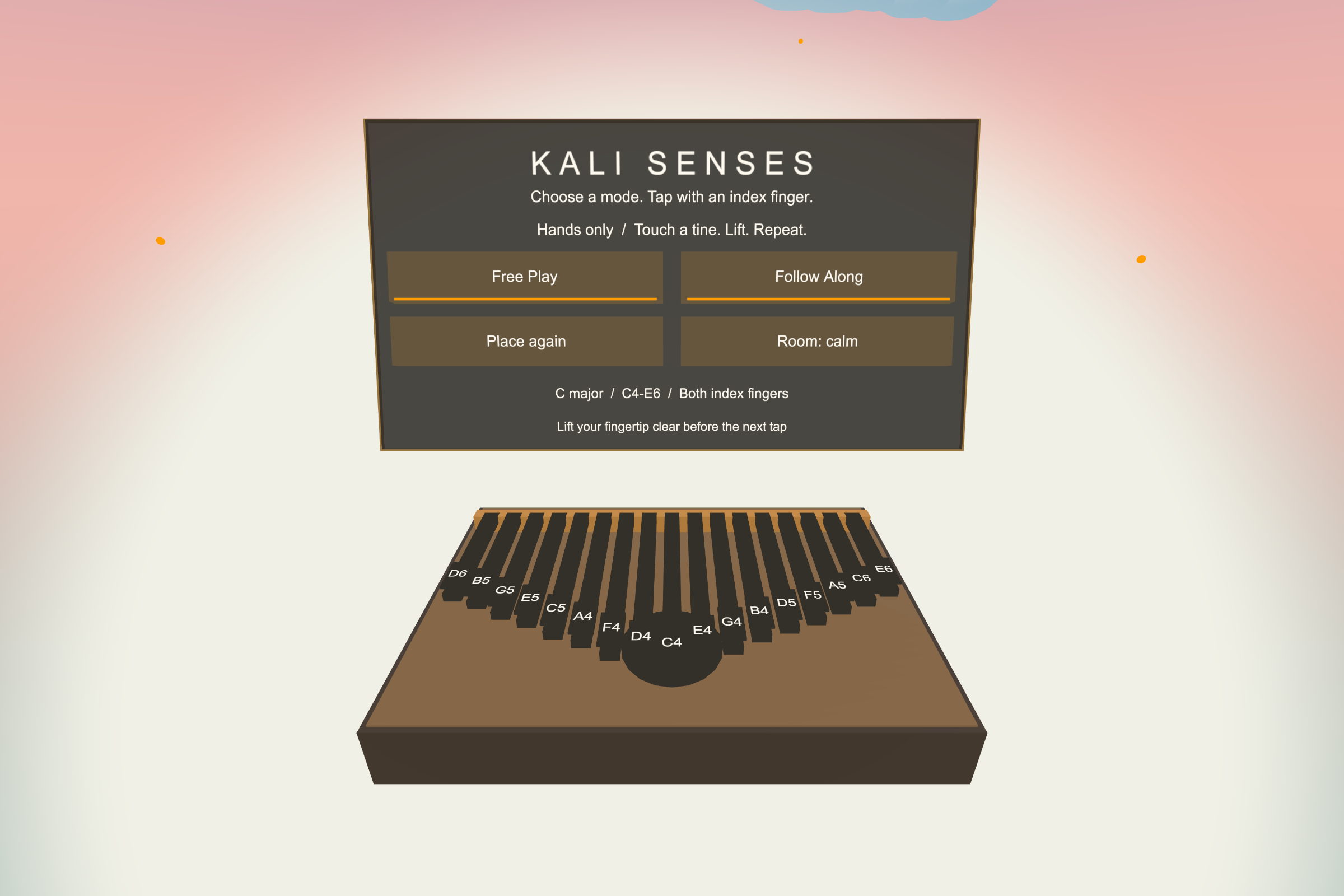
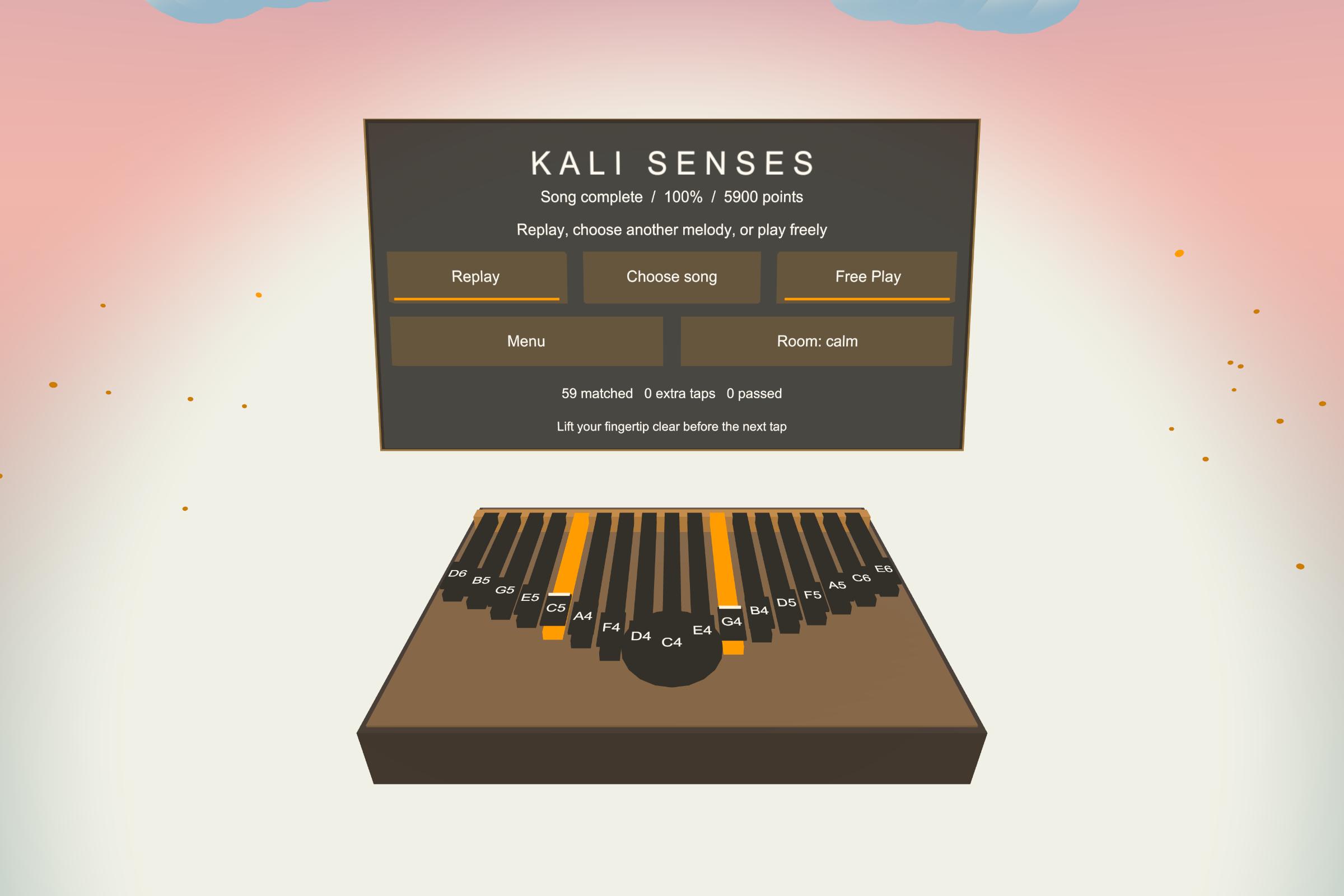
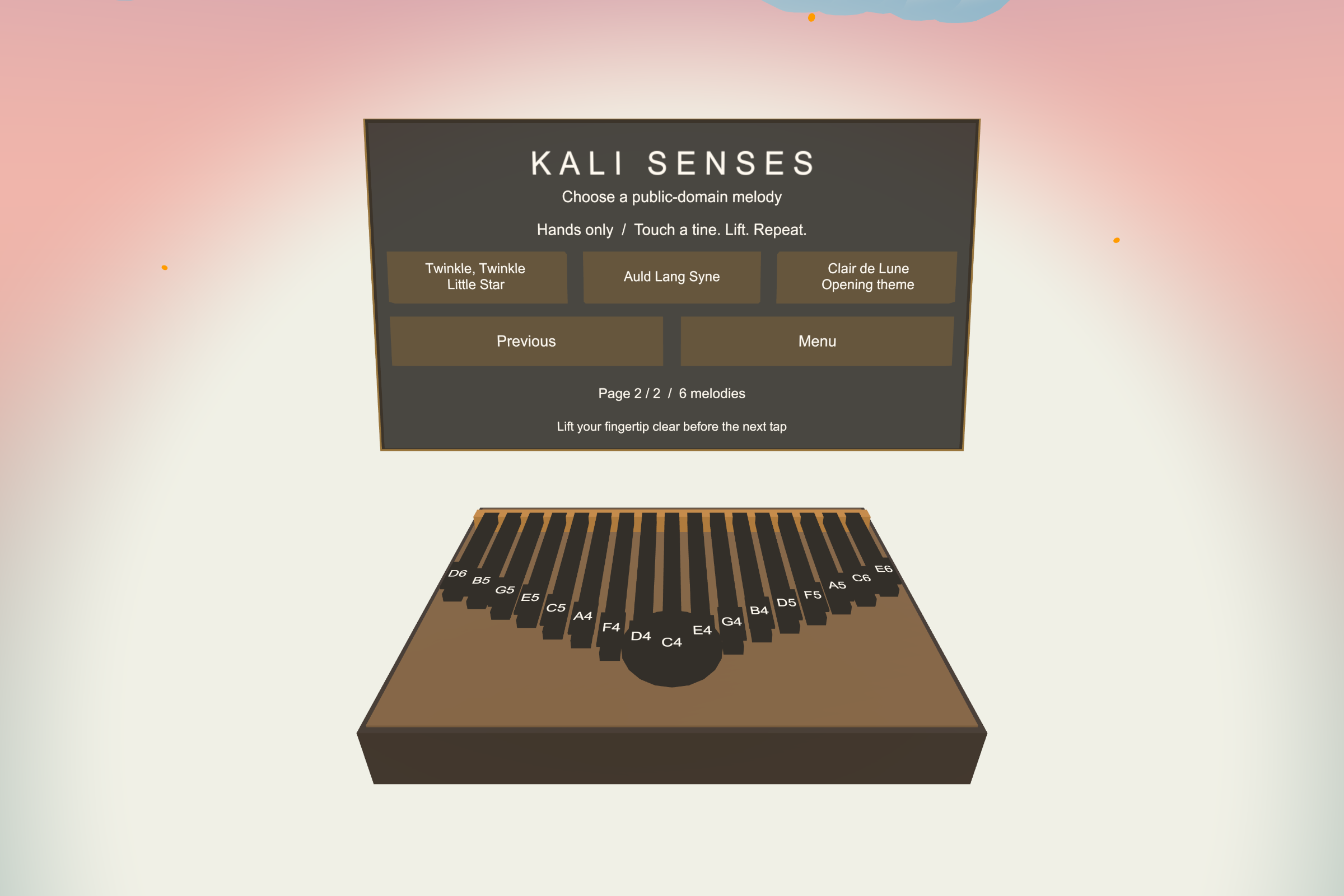
KaliSenses is a hands-only mixed reality kalimba, developed and tested on Meta Quest 2. It places a virtual 17-tine, C-major instrument on your desk, playable with both index fingers.
It offers two modes:
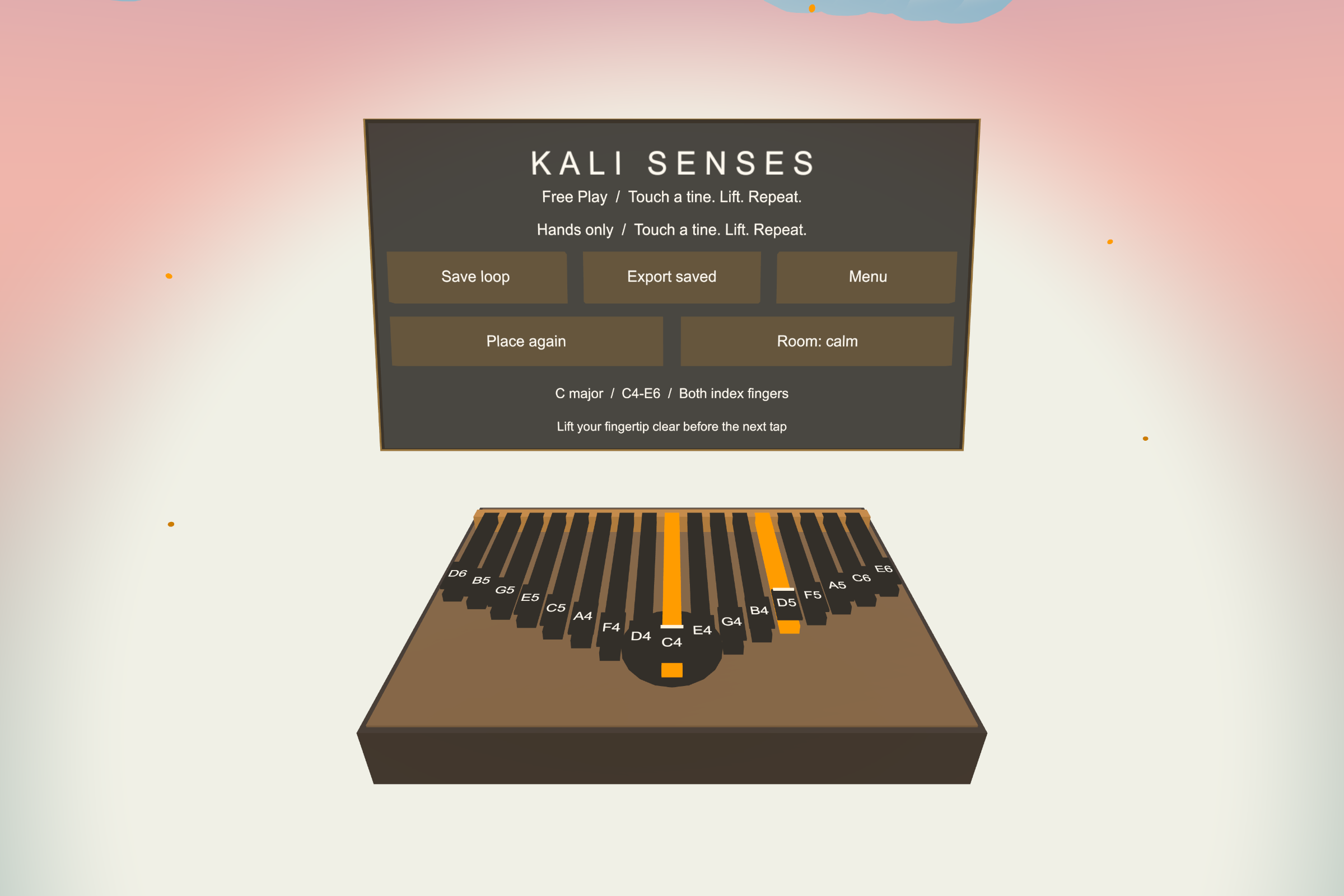
- Free Play: Explore notes freely, create gentle firefly effects, and record five-minute compositions that you can save locally and export.
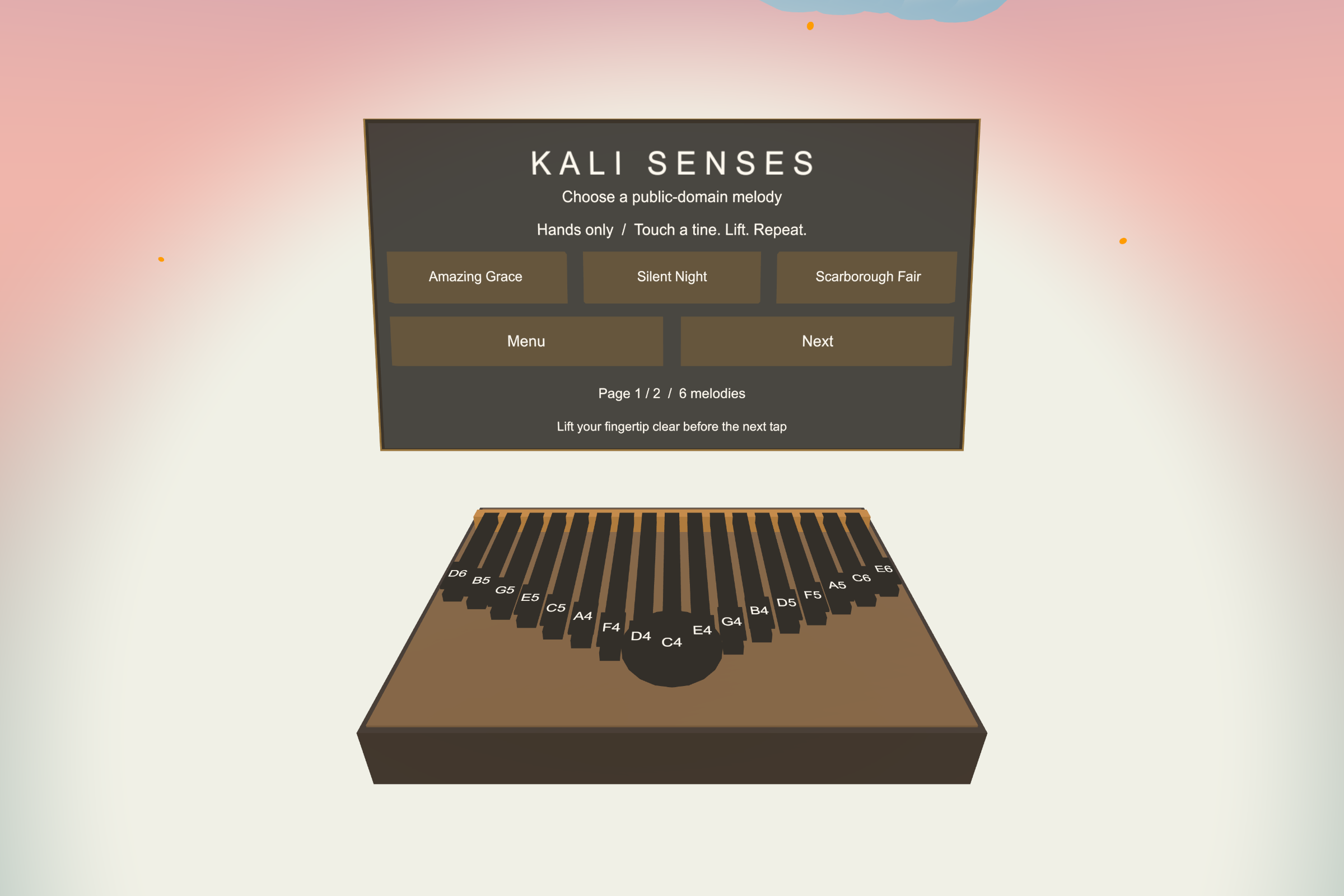
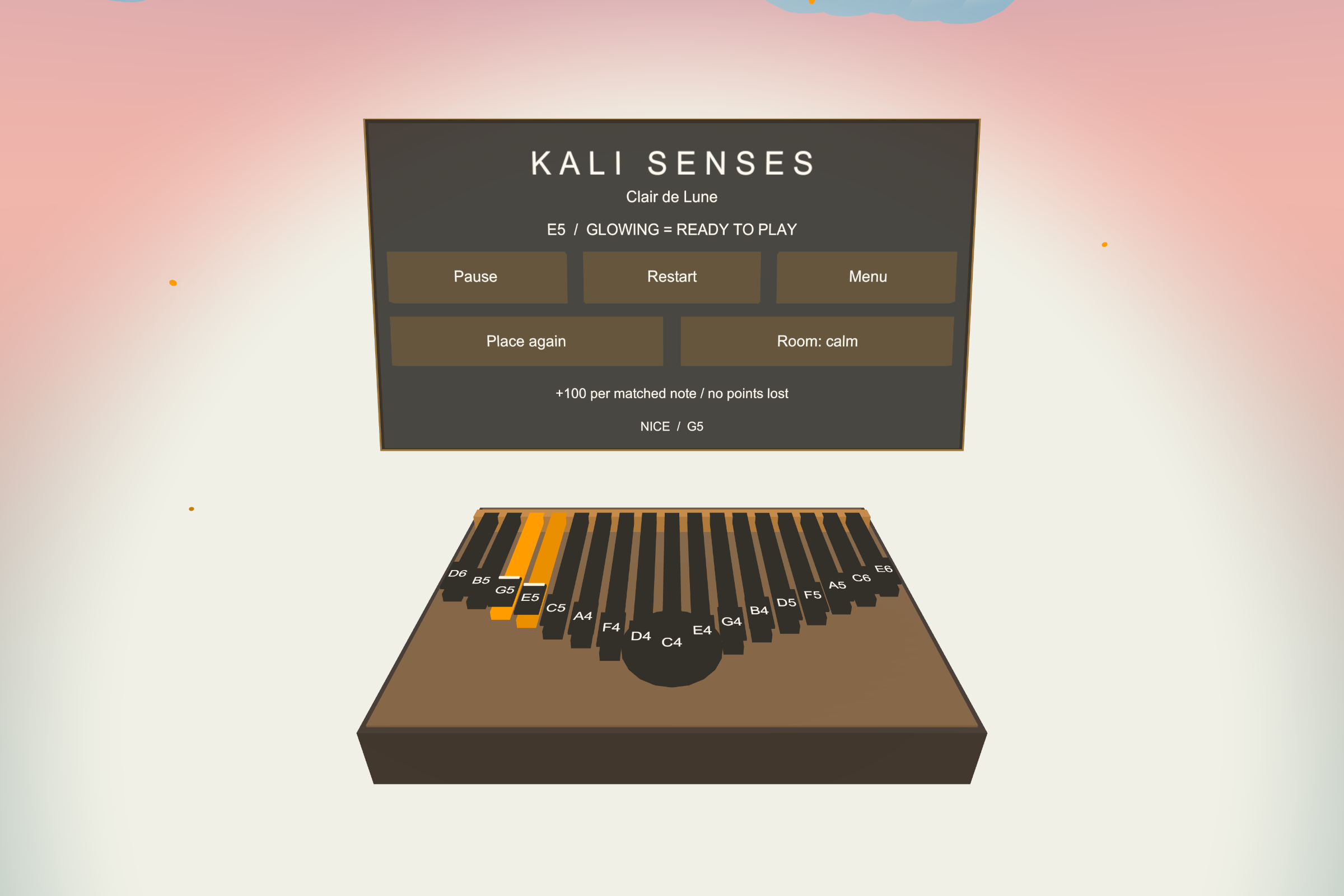
- Follow Along: Learn historical public-domain melodies, including “Amazing Grace,” “Silent Night,” and “Scarborough Fair.” Glowing keys and timing cues guide you without requiring sheet music. Scoring tracks correct, incorrect, and missed notes.
Players can switch between full passthrough and a colorful Calm Room with moving clouds, fireflies, and original nature ambience. The ambience fades out during gameplay so the instrument remains the focus.
How I built it
I built KaliSenses in Unity 6, using Meta’s XR and Interaction SDKs for headset tracking, passthrough, and hand input.
The instrument follows a standard 17-key C-major layout. It synthesizes note audio locally, and the included melodies draw on historical sources with independently written beginner adaptations.
For placement, I used both open hands resting on the desk to estimate the playing surface. After calibration, the instrument stays in that world position as the player moves their head.
I adapted the passthrough dissolve approach from Meta’s MR Motifs, then added the environment and procedural ambience.
Throughout development, I combined editor regression checks with standalone Quest 2 builds.
Challenges I ran into
Spatial placement was one of the first challenges. Early versions appeared below the player or followed their head. I had to separate temporary placement guidance from the instrument’s fixed position.
Hand interaction required repeated refinement. Both hands needed to work independently, menu buttons needed a light touch, and held fingers could not repeatedly trigger notes. I also prevented fingers moving underneath the tines from producing sound.
Another challenge was visual clarity. Resting tines initially looked too similar to highlighted ones, so I introduced darker resting surfaces, bright orange active states, and additional light markers.
Device testing uncovered problems that editor checks missed. One build omitted XR startup assets, preventing hand recognition. Audio also required listener recovery and better ambience levels. These experiences made standalone testing essential to my process.
Accomplishments that I´mproud of
I’m proud that KaliSenses became a working hands-only musical experience with two distinct ways to play.
On Quest 2, testing confirmed recognition of both open hands, completed tabletop placement, audible tine notes, and audible Calm Room ambience.
I’m also proud of the small interaction improvements: lighter menu touches, clearer note cues, simultaneous notes.
What I learned
I learned that mixed reality interaction depends on many small details working together: tracking, placement, reach, visual feedback, timing, and audio.
I also learned to distinguish between a feature passing an automated check and a person successfully using it. A note event firing does not prove someone can hear it, and an editor preview does not prove a standalone headset build works.
The most useful feedback came from testing the experience directly and addressing specific failures one at a time.
What's next for KaliSenses
I want to improve beginner onboarding, refine tabletop alignment and hand interaction, and measure sustained performance and comfort during longer sessions.
I also want to expand the historical public-domain song library and make sharing original compositions easier beyond the current manual export workflow.
Support for additional devices will depend on testing their exact hardware and capabilities. My priority is making the existing experience reliable, readable, and enjoyable to play.
Built With
- codex
- unity
