Inspiration
I began asking myself this question: could someone experience the joy of playing an instrument without owning one or knowing how to read music?
The kalimba felt like a natural starting point. Its arrangement of metal tines makes the relationship between a movement and a sound easy to understand. I wanted to bring that experience into augmented reality by placing an instrument on a tabletop and using glowing lights to guide beginners to their first melody.
This is my first Lens and my first experience building for SPECS. The Devpost Learn skill pack (https://github.com/challengepost/learn-specs) helped turn my idea into an initial design brief, giving me the foundation and direction I needed to start building.
What it does
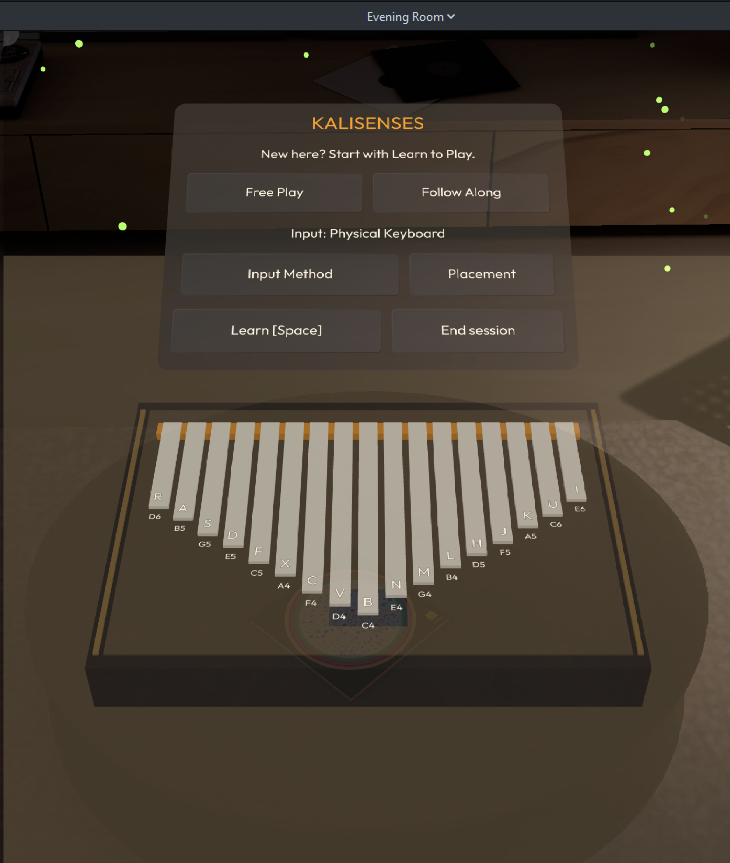
KaliSenses is a spatial AR music experience built around a virtual 17-key C-major kalimba. It offers three ways to explore music:
- Learn to Play: An eight-lesson tutorial introduces placement, input selection, playing a note, a short sequence, and an untimed arrangement of “Twinkle, Twinkle, Little Star.” Captions, narration, visual demonstrations, and unlimited retries support beginners.
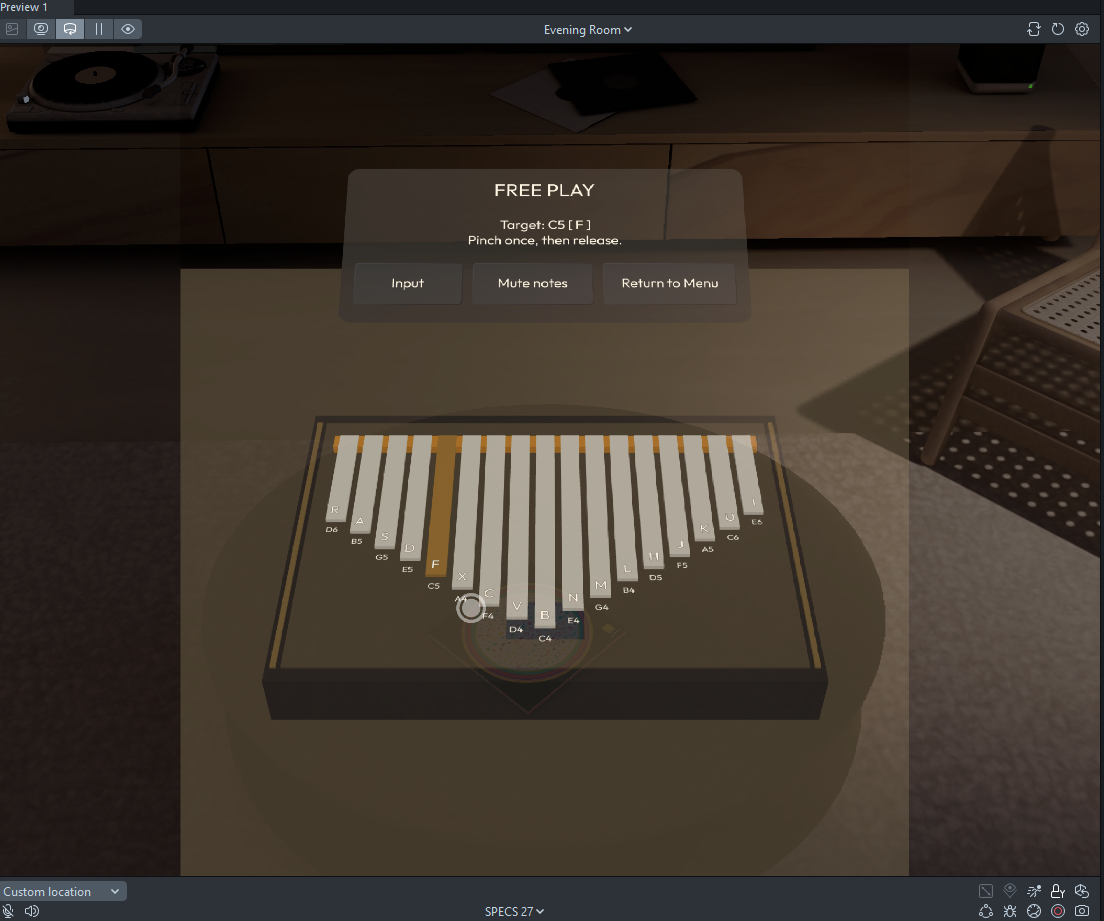
- Free Play: Users can explore notes and supported chords without timing requirements or scores.
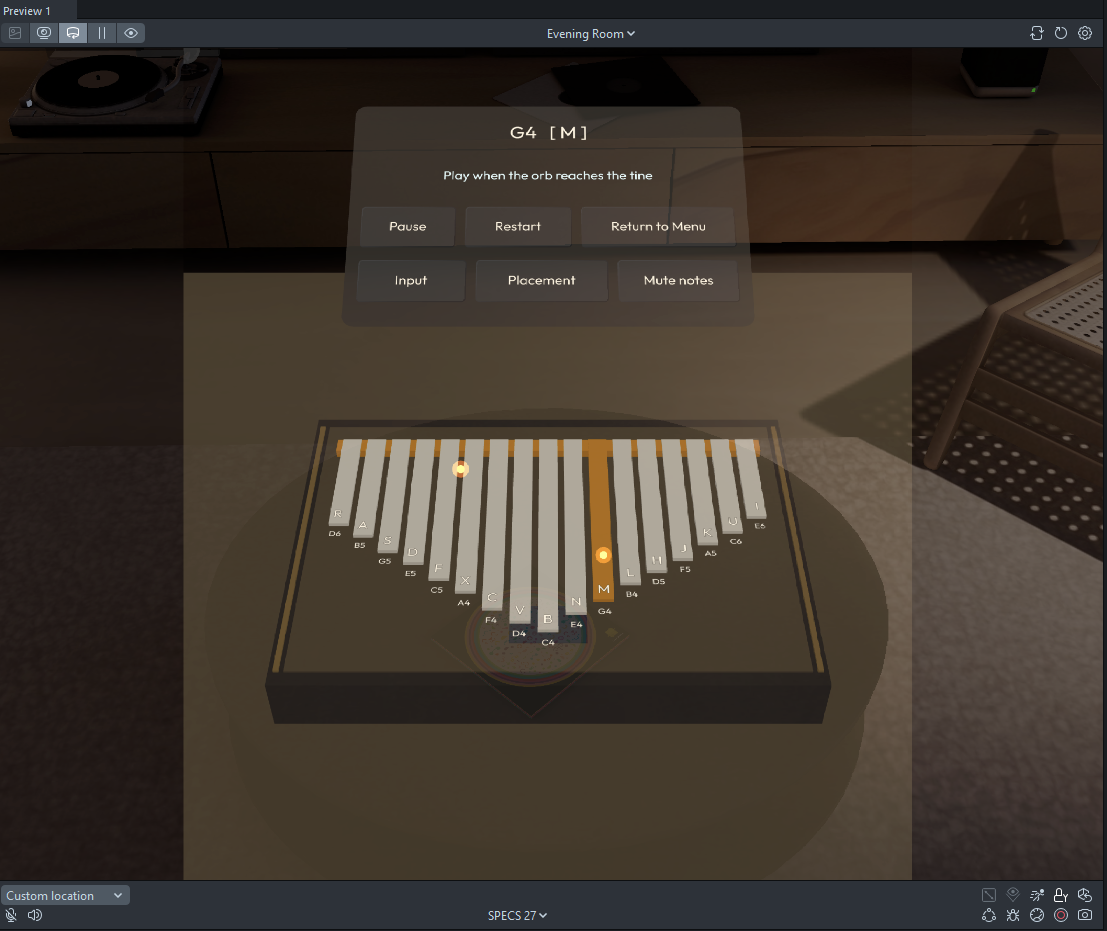
- Follow Along: Glowing orbs descend toward the tines, showing which note to play and when. Users can choose among three melodies and adjust the tempo.
Physical keyboard input supports the laptop prototype. The Lens also includes virtual note pads and a pinch interaction path. Played notes produce sound, tine highlights, and gently drifting fireflies. After a short period of inactivity on the main menu, fireflies create a welcoming visual ambience without background music.
The current experience has been validated in the laptop preview. Real surface placement, hand-tracking reliability, comfort, and performance still require SPECS hardware testing.
How I built it
I started with the design brief created using Devpost Learn skill pack. I then developed the experience incrementally in Lens Studio, using Codex and the CLAD toolkit to help translate the plan into scripts, scene elements, interactions, and tests.
The implementation uses TypeScript, Spectacles Interaction Kit, and Spectacles UIKit. The instrument, labels, controls, and note cues share a spatial frame so they remain aligned when the kalimba is repositioned or resized.
The Lens Studio MCP integration connected the coding workflow to the editor. It supported scene inspection, compilation, runtime queries, screenshots, logs, and preview interaction checks. LEAF scenarios helped verify note mappings, tutorial progression, scoring, recovery, and repeated mode changes.
HeyGen was part of the audio-production workflow. The project also includes Windows speech-generation tools for narration revisions and CLAD synthesis for the kalimba notes and count-in click. The Lens plays bundled audio files rather than depending on a live generation service.
Challenges I ran into
The biggest challenge was learning an unfamiliar platform while building the experience itself. I had to understand spatial positioning, interaction events, audio playback, and the difference between something working in a preview and something being comfortable on glasses.
Tutorial narration introduced a particularly difficult interaction problem. All controls needed to remain disabled during speech, but disabling an interactive target could interrupt its release event and leave progression waiting indefinitely. Fixing this required careful release tracking, playback monitoring, and recovery behavior.
Another challenge was simplifying the tutorial. Several lessons repeated ideas or added unnecessary steps. Through iteration, I reduced the flow from twelve to eight lessons and added blinking Input and Next controls to make the next action clearer.
Development tools also presented difficulties, including authorization problems, preview-agent failures, and test timeouts. I learned to examine logs and separate confirmed errors from suspected causes.
Accomplishments that I'm proud of
As a first-time Lens creator, I am proud of turning an initial idea into a working musical prototype with a complete beginner journey.
I am also proud of the smaller details: preserving progress when users change input, requiring release before repeated notes, keeping fireflies away from important controls, and distinguishing musical guidance from decorative feedback.
What I learned
I learned that spatial AR design involves much more than placing a menu in three dimensions. Position, depth, reach, readability, and awareness of the surrounding environment all influence the experience.
I also learned that beginner guidance needs to explain one action at a time, make success visible, and allow recovery without introducing frustration to the user. A feature can work technically while still being confusing.
Most importantly, I learned how much a structured learning workflow can do without getting frustrated being new in the AR field. Devpost Learn gave me a starting point, while using AI-assisted development helped me implement, investigate, and refine the idea. I still needed to make design decisions, question the results, and keep testing.
What's next for Kalisenses
The next priority is testing on SPECS hardware: real tabletop placement, anchor stability, pinch recognition, reachable controls, see-through readability, audio latency, and sustained performance.
I also want to explore recognizing a physical kalimba for users who own one. They could play their real kalimba while seeing AR guidance aligned with its tines. In Follow Along mode, glowing orbs would descend toward the corresponding physical tines, showing which note to play and when.
I also want users to try the experience. Automated checks can verify progression and scoring, but they cannot tell me whether someone feels confident, comfortable, or excited to continue playing. Their feedback will guide improvements to narration pacing, gesture teaching, note cues, and recovery. After strengthening those foundations, I would like to expand the melody library using public domain songs and explore more ways for people to express themselves through spatial music.
Built With
- clad
- codex
- lensstudio
