
Inspiration
A visiting preacher at my church showed what Bible translation actually costs in the languages still waiting: around $200 a verse, and thousands of languages with no complete Bible. One question wouldn't leave me alone — why isn't AI being used to drive down the repetitive part of that cost, so the same resources reach more people?
FieldBridge treats English as one witness among many and keeps the ancient Greek and Hebrew editions as the source lanes. Kalima learns a team's approved translation voice; Ezer gathers cited evidence. The name is the pitch: a bridge to field teams, not a replacement for the people on either end.
What it does
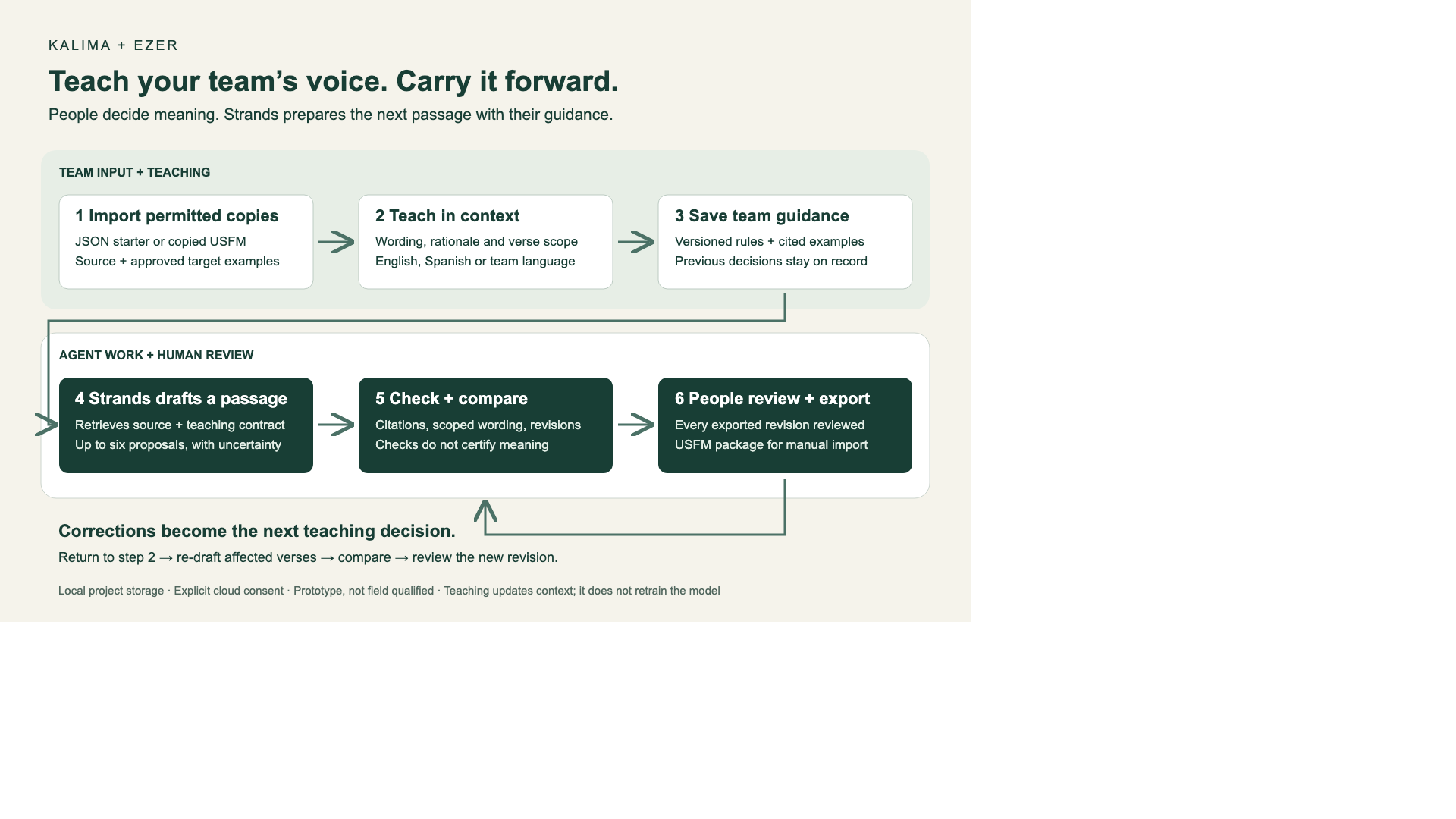
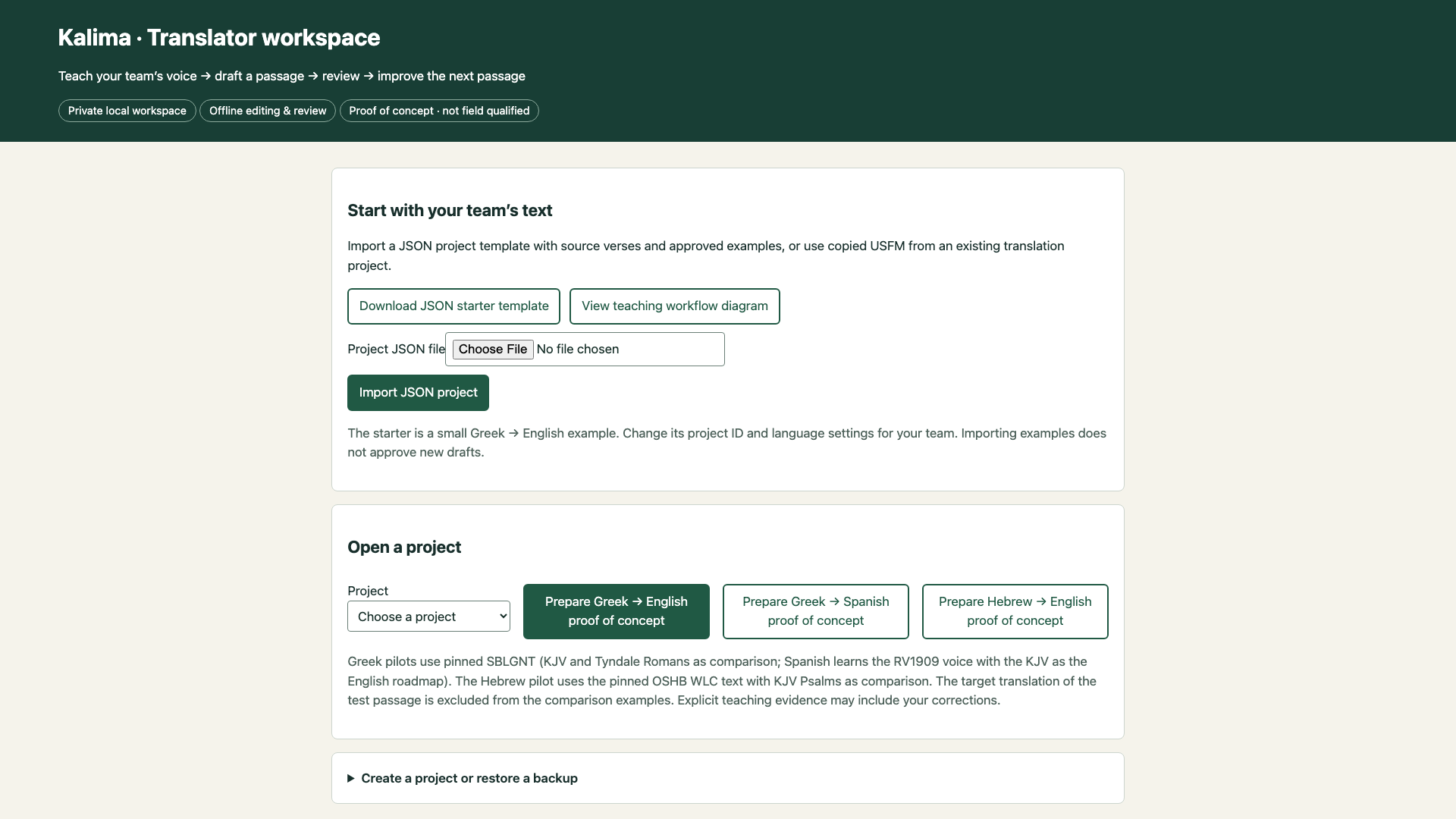
FieldBridge is a local-first workbench for translation teams, built around two agents: Kalima, which learns how a team already translates, and Ezer, which gathers the evidence.
- Import — reads a copied USFM project (Paratext's format) or a JSON project starter template, plus pinned Greek/Hebrew source editions. It never touches a live project.
- Ezer gathers evidence — verse-cited candidate renderings for key terms. Every candidate shows the verses it came from.
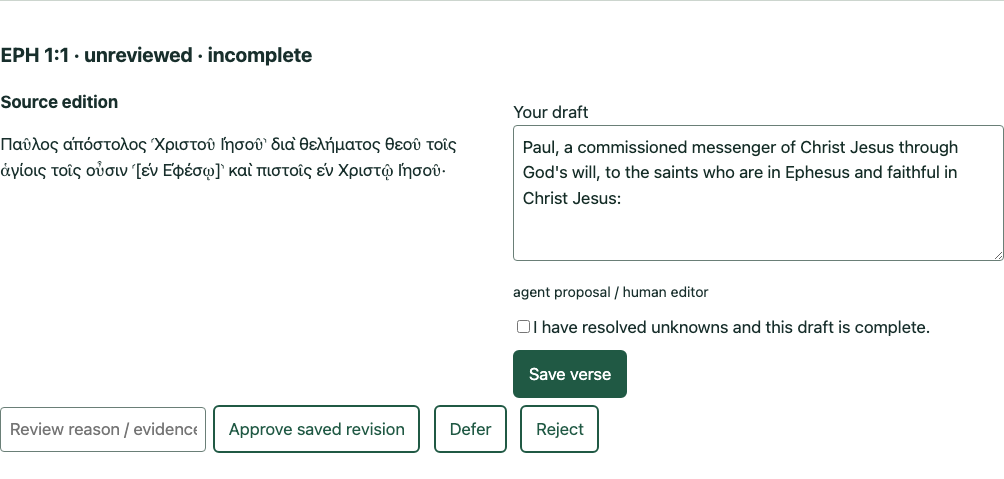
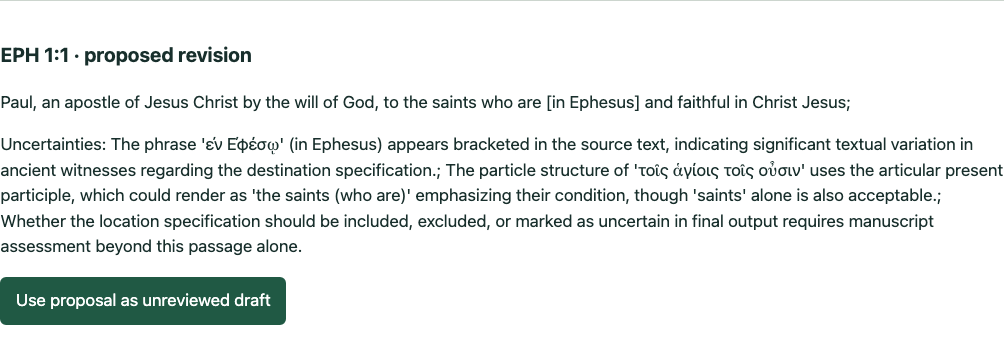
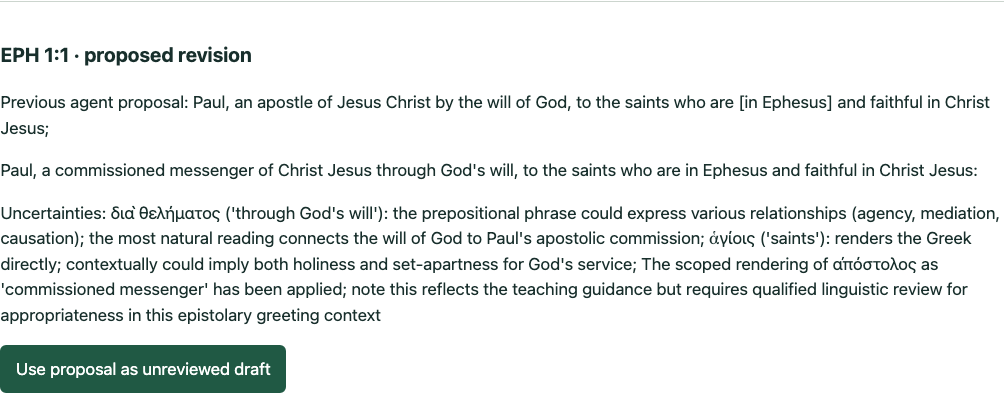
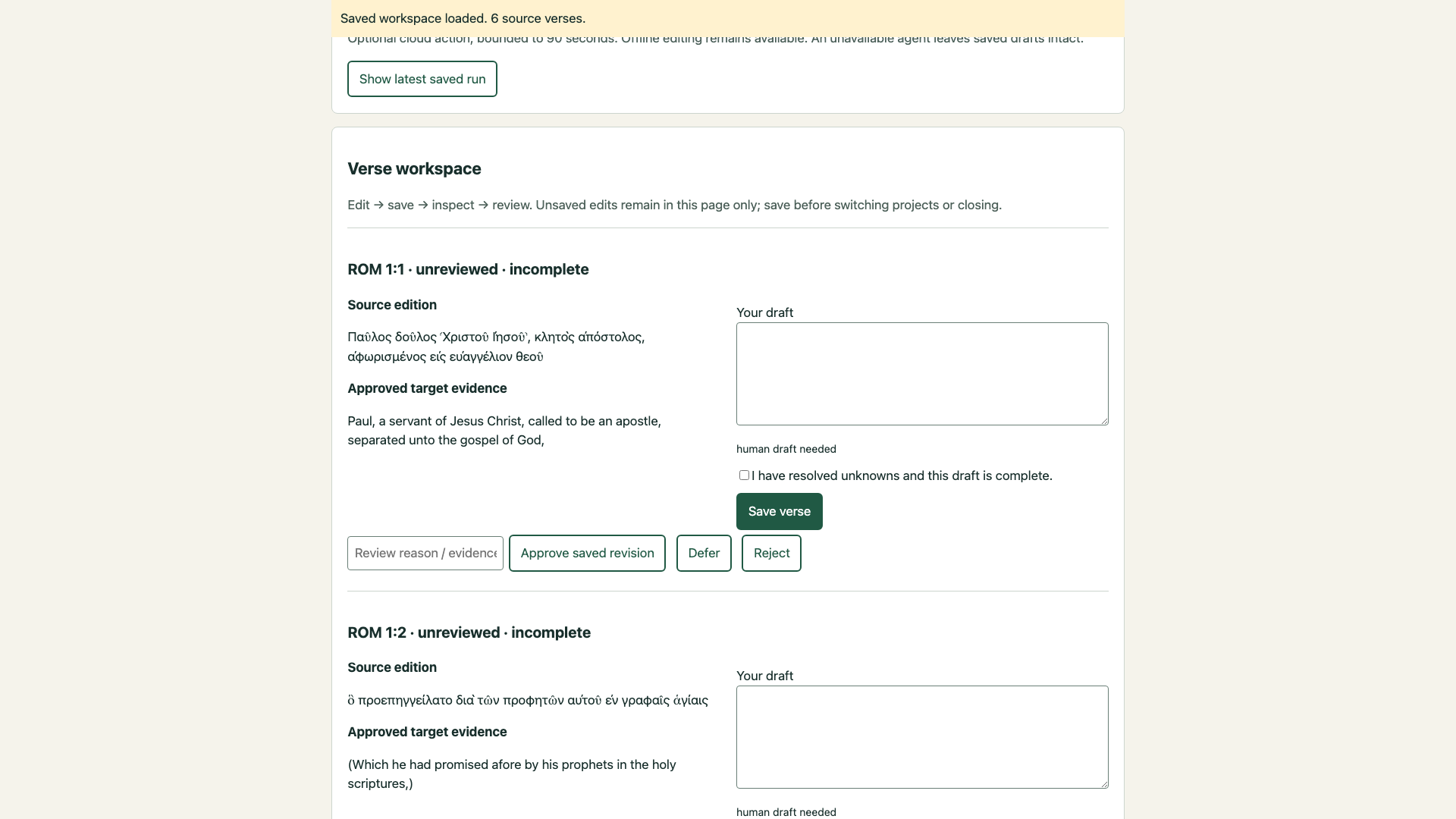
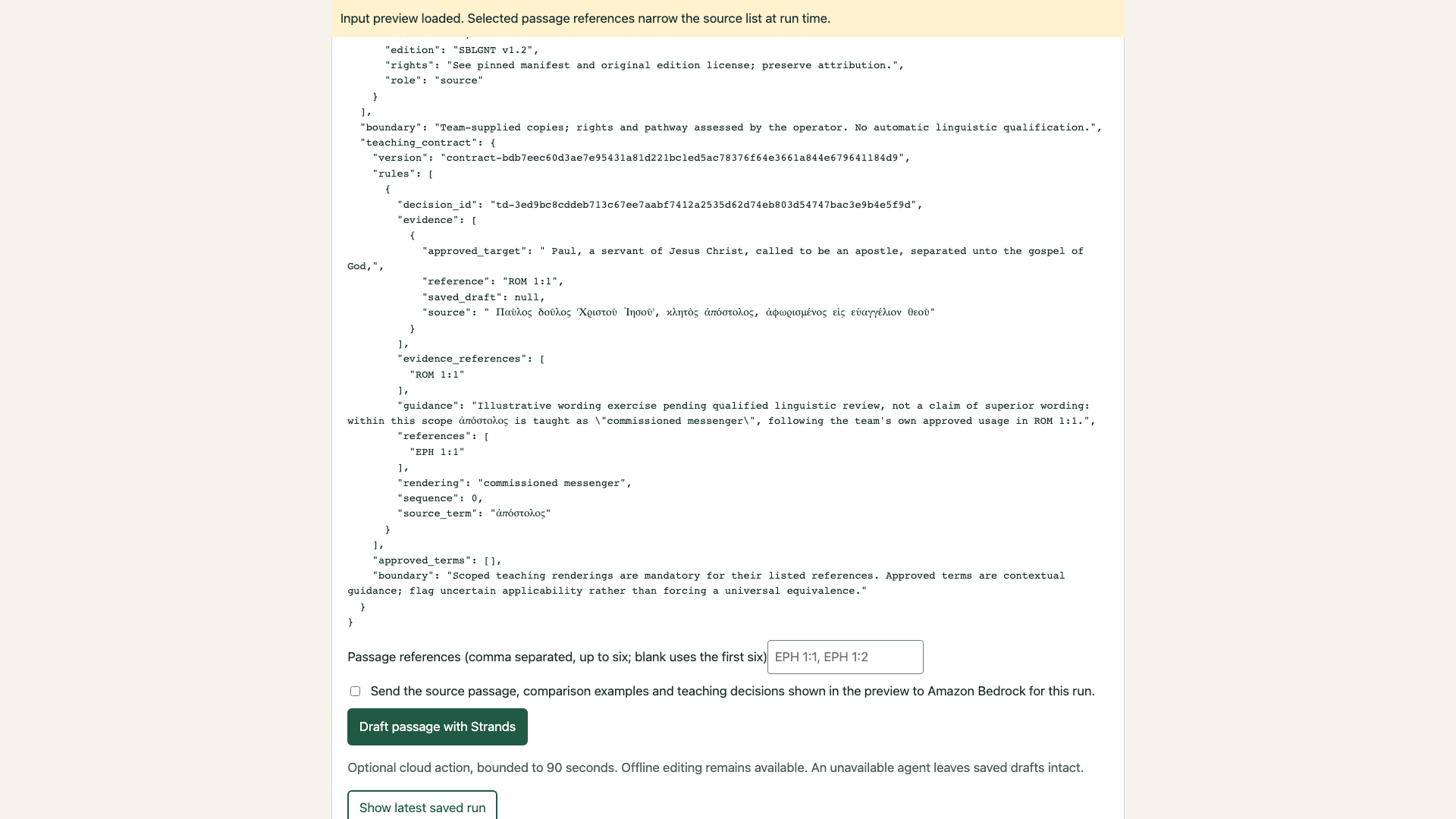
- You teach it once — approve the renderings to keep; competing options stay open until a person decides. The teaching workbench re-runs the same passage before and after your decision, side by side.
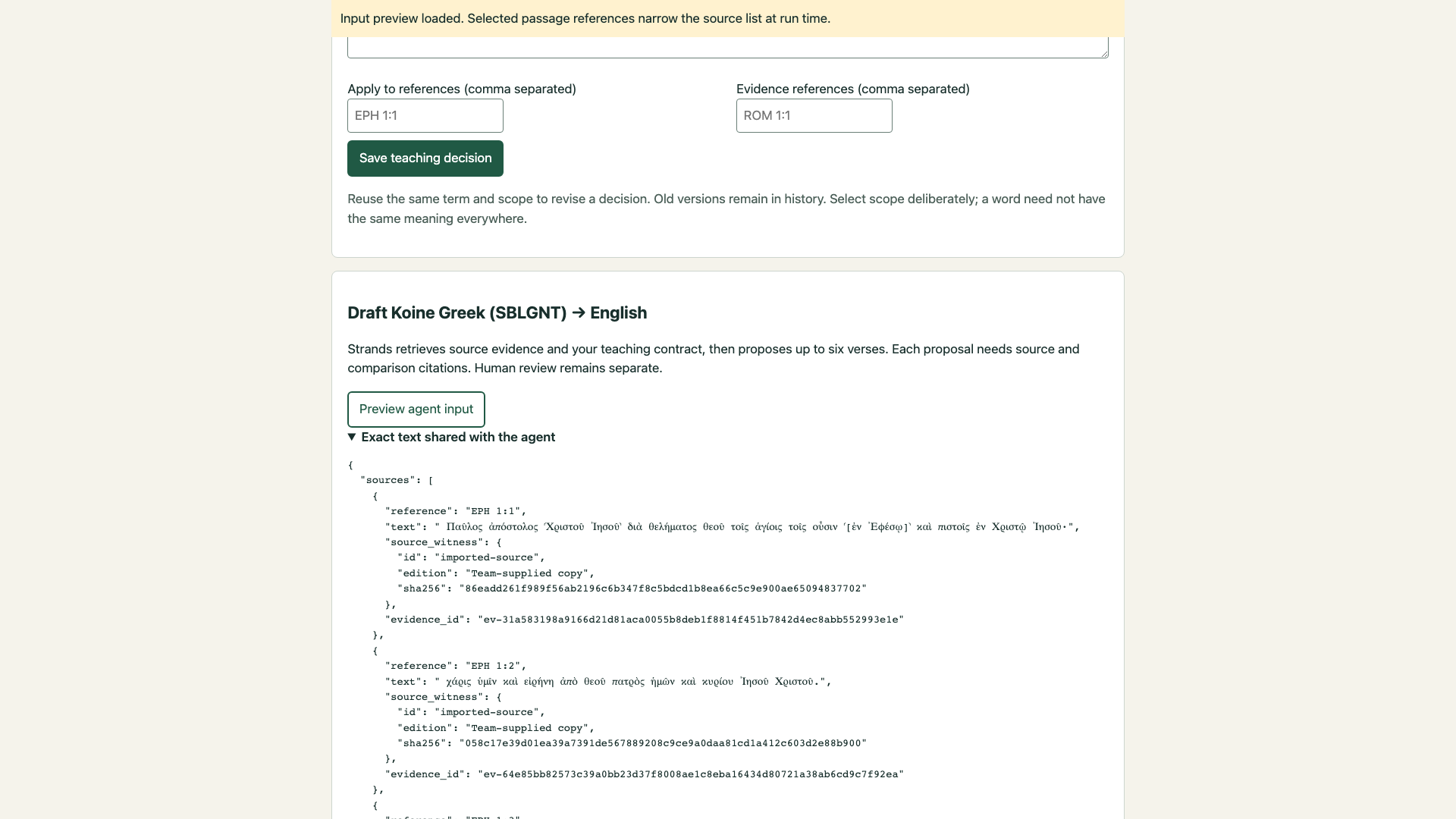
- It drafts in your voice — a deterministic constrained floor runs offline; an optional Strands agent (Claude on Bedrock) drafts fluently under the same constraints. Unknowns are marked
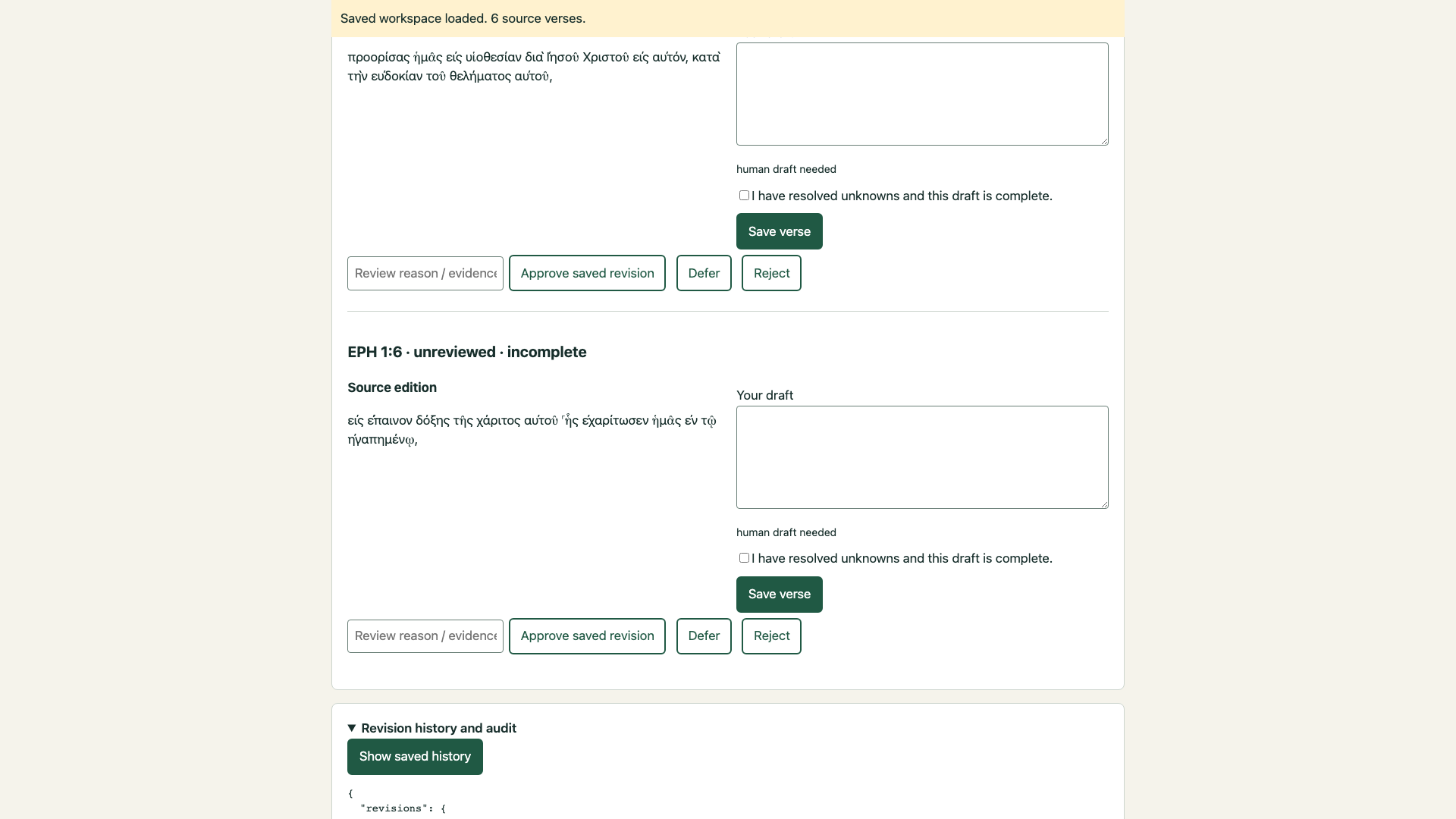
[?]. - You decide — consistency checks surface only verses that need a human, in a reviewer docket with roles and an append-only audit trail. Open items block export.
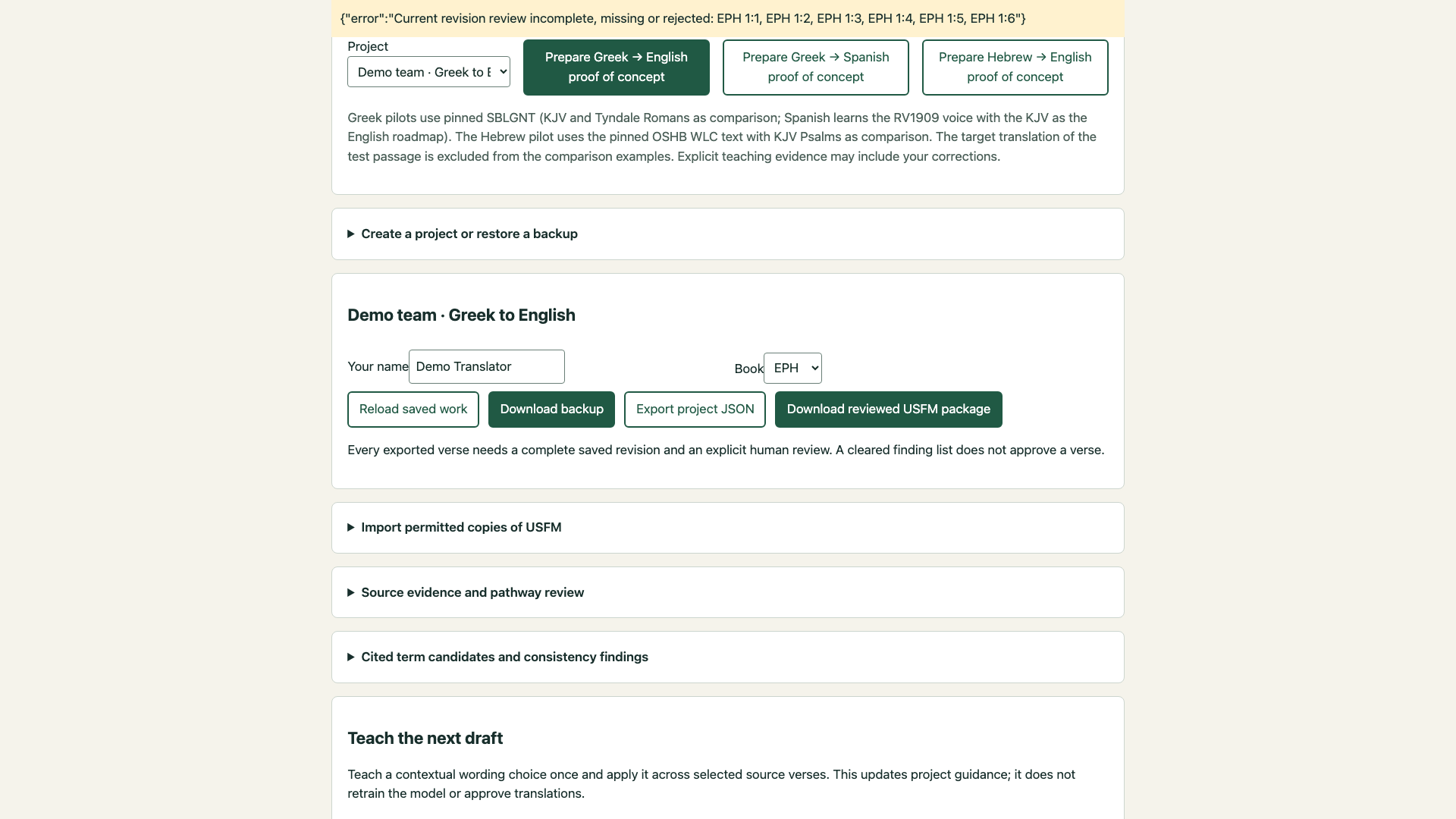
- You export — a review-marked USFM bundle with manifest and hashes that a person imports into Paratext by hand. Publication stays a human decision.
How we built it
- Python + FastAPI local-first app; USFM parsing and Paratext-style import/export
- AWS Strands Agents SDK on Amazon Bedrock (Claude) for fluent drafting, with deterministic guardrails before human review
- Offline deterministic core for term derivation, drift checking, orthography, docket state, and export manifests
- Pinned public-domain corpora with per-edition license and hash records
- An English pilot (Greek → KJV voice, Ephesians held out) and a reproducible fixed-verse benchmark
Challenges we ran into
- Making agent output trustworthy: approvals, imports, and publication live in application code outside agent permissions.
- Honest evaluation: withholding Ephesians from retrieval does not remove it from pretraining, so references are comparison evidence, not an oracle.
- Learning renderings cleanly from real corpus text without claiming linguistic alignment we do not have.
Accomplishments that we're proud of
- The boundary is the product: open decisions block export, fallbacks are labeled translation incomplete, and every action lands in an audit trail.
- A translator's approval demonstrably changes the next draft, the docket, and the exported file; the before/after loop is visible.
- Printable translator templates and an Excel field kit ship with the repo, so the human workflow is real.
What we learned
- Human-in-the-loop only means something when gates block, states refuse to look finished, and records stay inspectable.
- Deterministic floors make agents more useful: the model may be fluent, never loose with the team's terms.
What's next for FieldBridge
- A licensed Spanish fixture for judge-verifiable output, a hosted session-isolated demo, and a real partner-language engagement under proper data agreements.
Built With
- agents
- amazon
- amazon-web-services
- strands

Log in or sign up for Devpost to join the conversation.