-
-
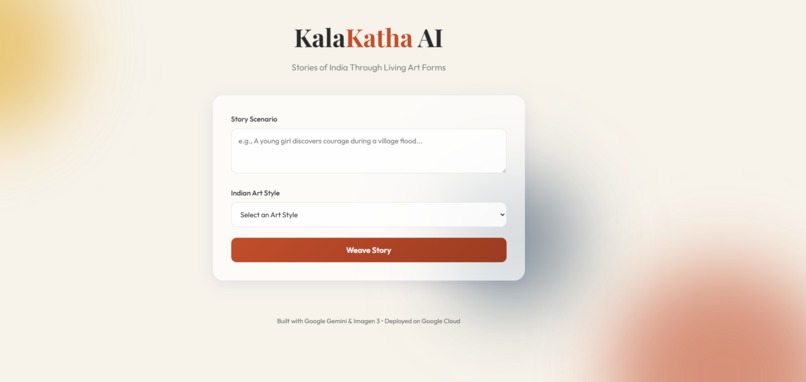
First page UI , which came after opening the site
-
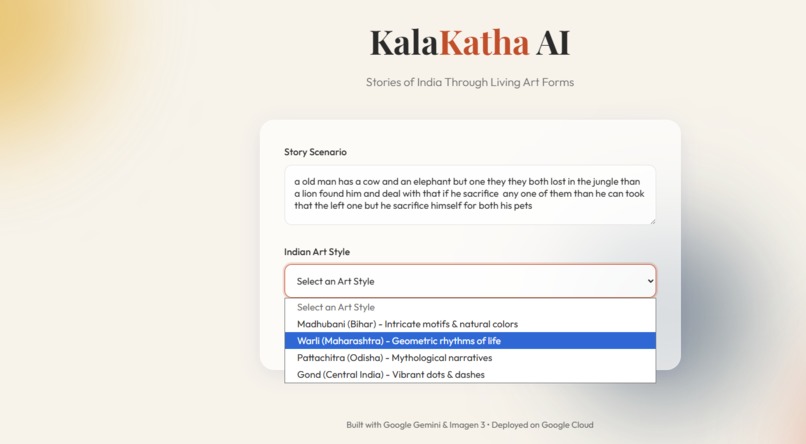
Options to choose the artstyle or artform
-
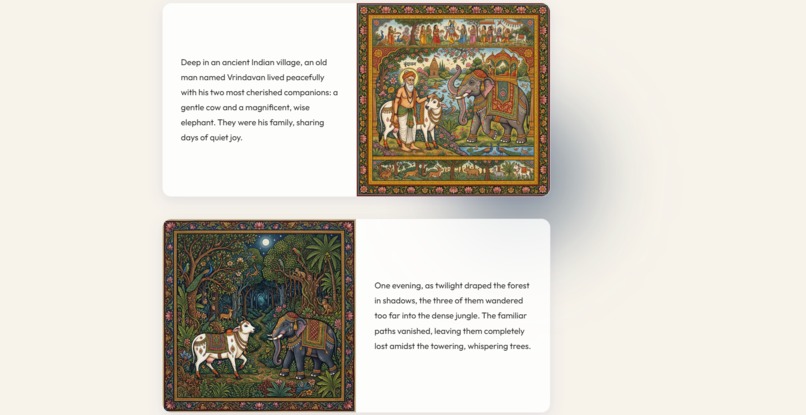
Story came with the Visuals of Choosen artform
-
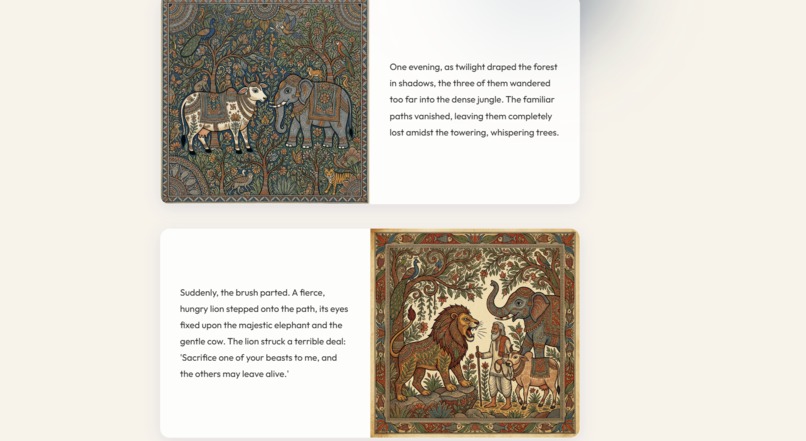
Story came with the Visuals of Choosen artform
-
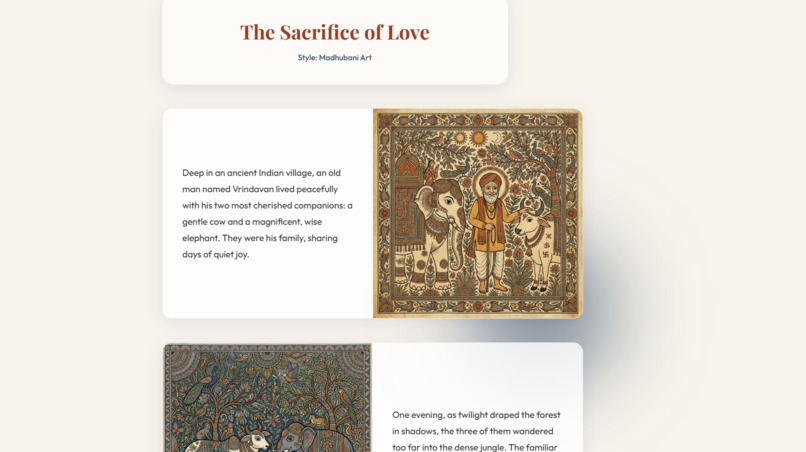
Story came with the Visuals of Choosen artform
-
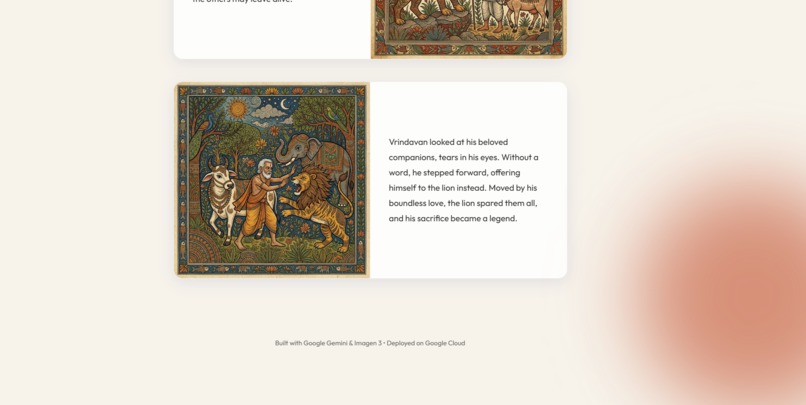
Story came with the Visuals of Choosen artform


Inspiration
Growing up, I was deeply captivated by the Indian animated series "Krish, Trish and Baltiboy". The show brilliantly narrated regional Indian moral stories, with each episode animated entirely in a different traditional Indian folk art style (like Madhubani, Warli, or Kerala Mural). That show sparked my lifelong appreciation for the sheer diversity of India's visual heritage.
However, as I grew older, I realized these stunning art forms were slowly getting lost in the modern digital noise, and kids today rarely consume content in these styles. I wanted to recreate that magic. KalaKatha AI was born from the desire to use state-of-the-art Generative AI to preserve this heritage, allowing anyone to instantly weave moral stories for children that simultaneously teach them right from wrong and introduce them to the gorgeous canvas of traditional Indian art.
What it does
KalaKatha AI is a full stack, multimodal agentic storyteller. Users simply type a rough moral scenario (e.g., "A young boy learns honesty after breaking a pot") and select a traditional Indian art style (Madhubani, Warli, Pattachitra, or Gond).
The AI agent then:
Weaves a rich, culturally contextual narrative divided into engaging scenes. Generates breathtaking, style accurate illustrations for each specific scene. Presents the final output in a stunning, glassmorphism inspired UI where the moral story and the cultural art are seamlessly interleaved. It teaches kids two things at once: a valuable life lesson, and an appreciation for India's artistic roots.
How we built it
The application was built emphasizing speed, aesthetic UI, and powerful AI orchestration:
AI Engine: We utilized the Google GenAI SDK with Gemini 1.5 Flash for blazing-fast, creative narrative generation. We engineered the prompts specifically so Gemini outputs highly structured JSON (title, scenario, scenes[]), alongside highly descriptive visual prompts for the image generator.
Visual Generation: We integrated Google's Imagen 3 (and fallback image generators) to vividly render the specific motifs, geometry, and color palettes distinct to each Indian art form based on Gemini's scene descriptions.
Backend: A robust Node.js/Express server orchestrates the parallel API calls to Google Cloud, ensuring text and images resolve simultaneously.
Frontend: Vanilla HTML, CSS, and JS with a deeply cultural yet modern aesthetic. We utilized CSS glassmorphism, smooth loading states, and dynamic DOM manipulation to render the interleaved multimodal results.
Challenges we ran into
Prompt Engineering for Art Fidelity: It was challenging to get the image generator to respect the exact boundaries of regional art. Simply asking for "Indian art" resulted in generic outputs. We had to highly tune the system prompts so Gemini would mandate specific keywords (e.g., "geometric stick figures, white on mud brown" for Warli, or "intricate floral borders, mythological style" for Pattachitra). Multimodal Synchronization: Ensuring that the generated text scenes matched perfectly with the generated images required strict JSON schema enforcement using Gemini's structured output capabilities.
Accomplishments that we're proud of
What we learned
We learned the incredible power of multimodal AI orchestration. Text generation is powerful, but when you pair a reasoning model (Gemini) with an image model (Imagen) and force them to work in tandem via structured JSON, you can build immersive, educational experiences that feel like magic.
Most importantly, we learned that Generative AI isn't just about the future—it is a profoundly powerful tool for preserving and breathing new life into the ancient art of the past.
What's next for KalaKatha AI
We will add all the artforms of the india from every corner and than will spread our wings for whole world too....

Log in or sign up for Devpost to join the conversation.