-
-

icon apps
-
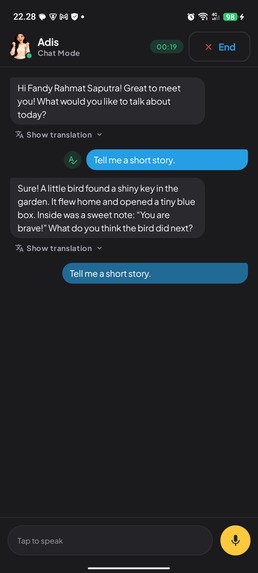
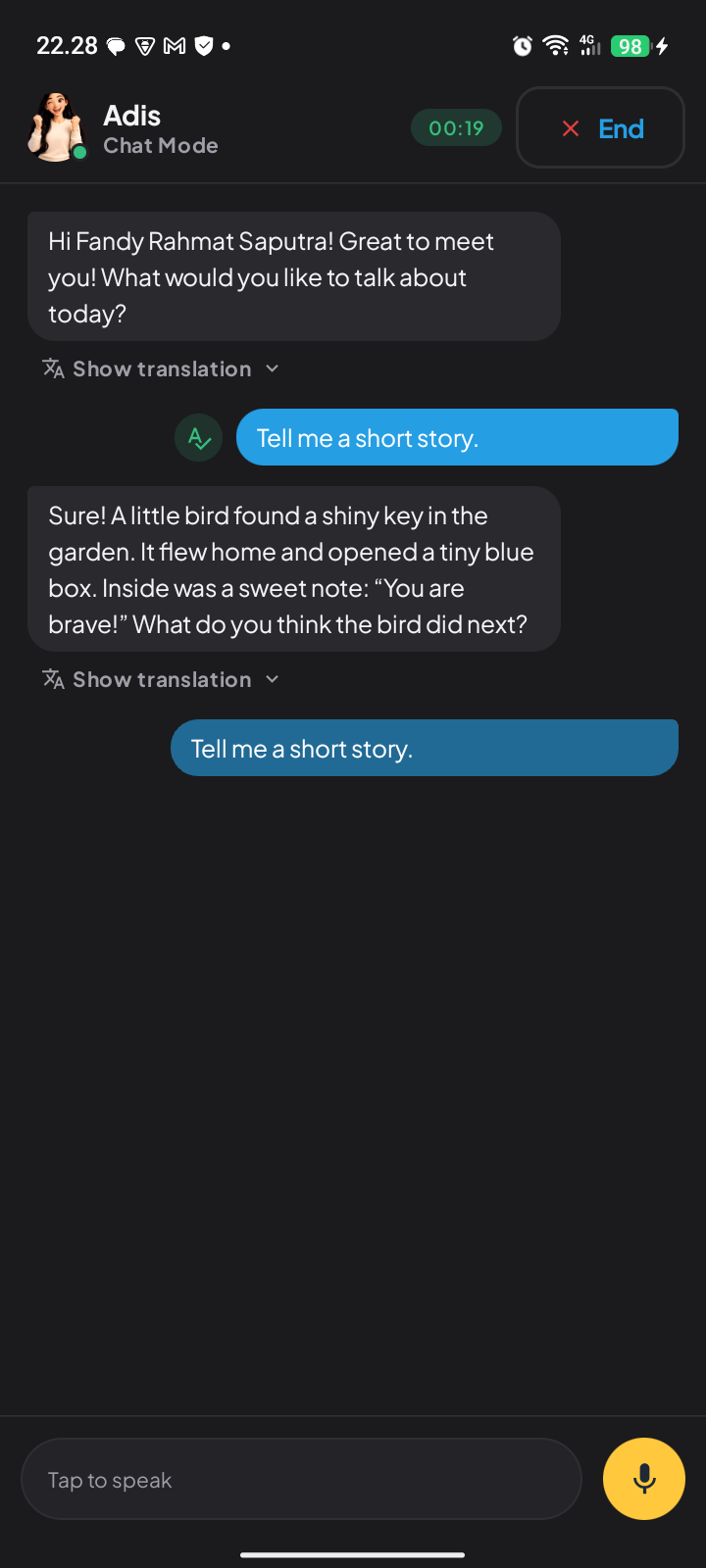
conversation activity
-
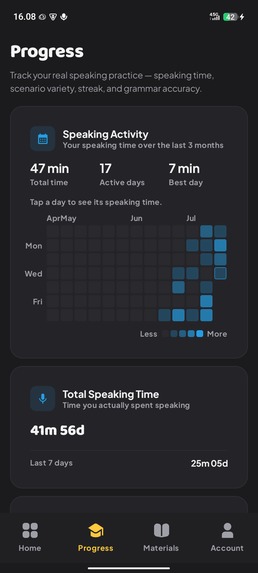
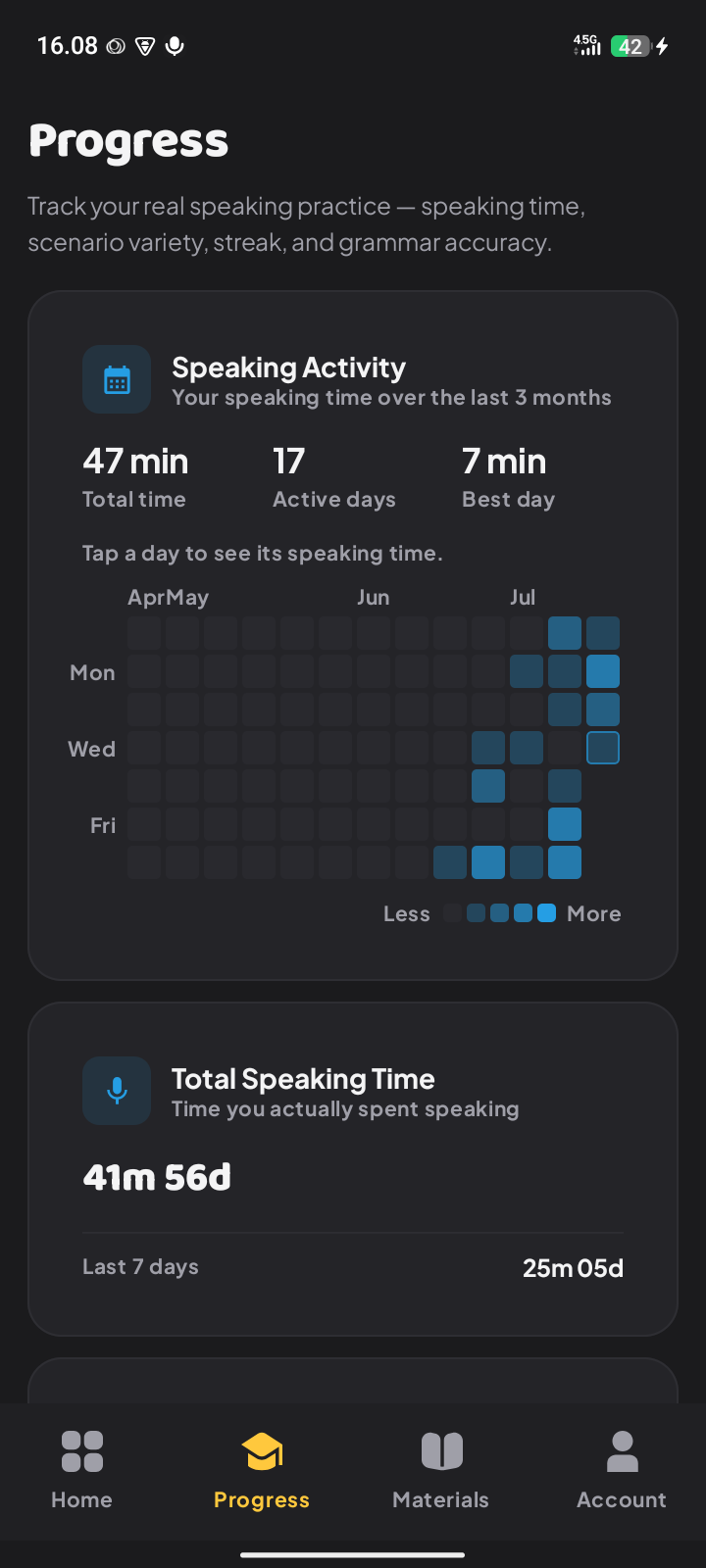
user's progress
-
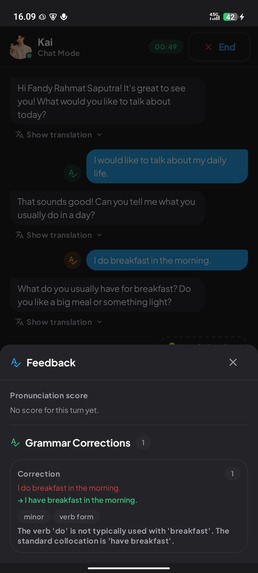
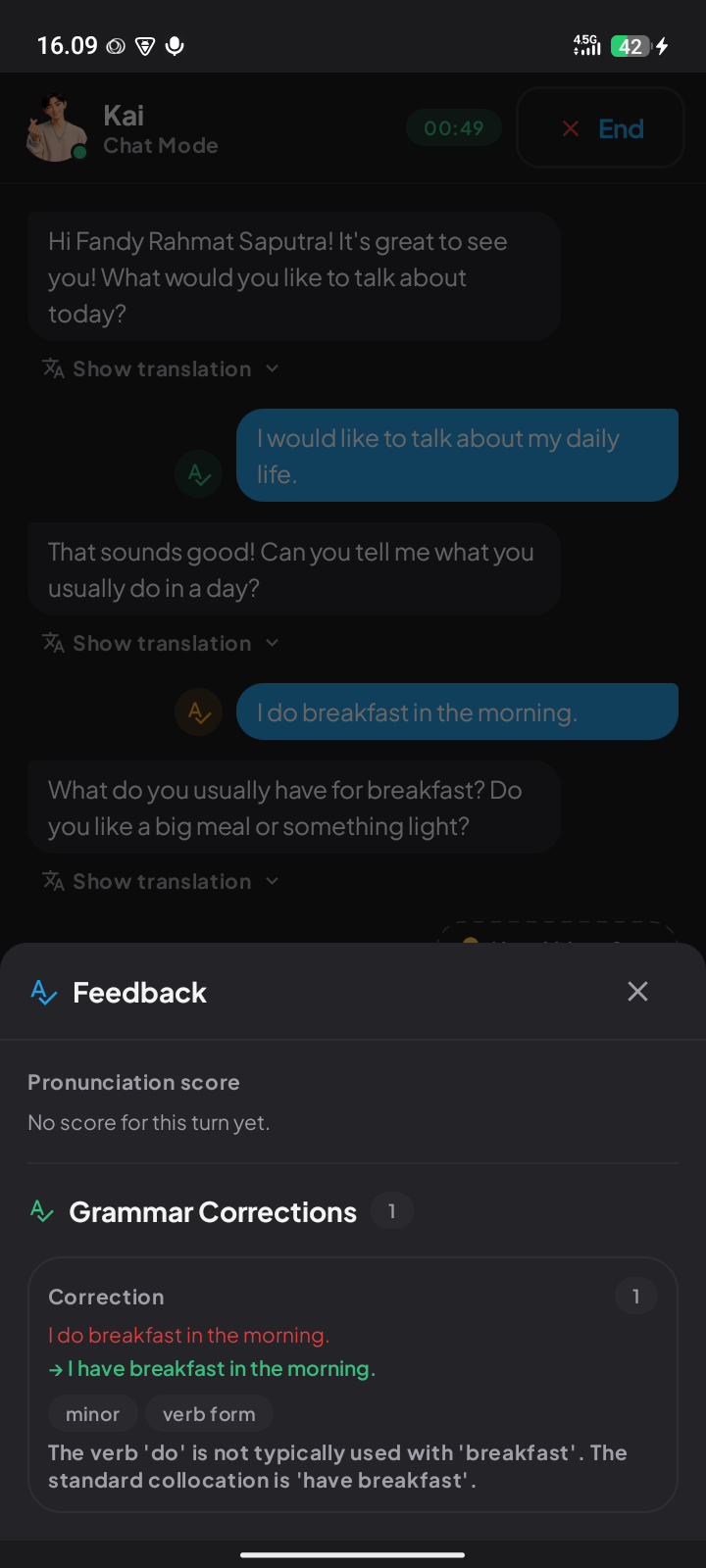
speaking correction
-
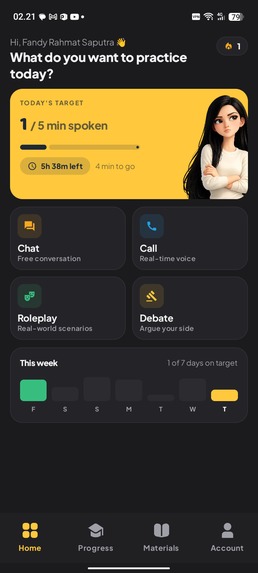
user's dashboard
-
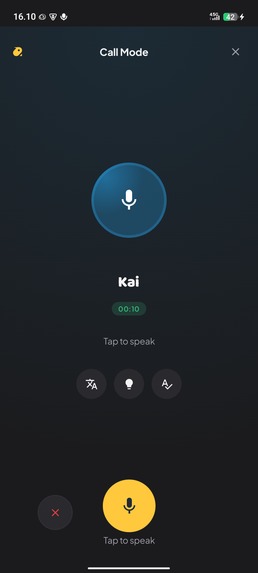
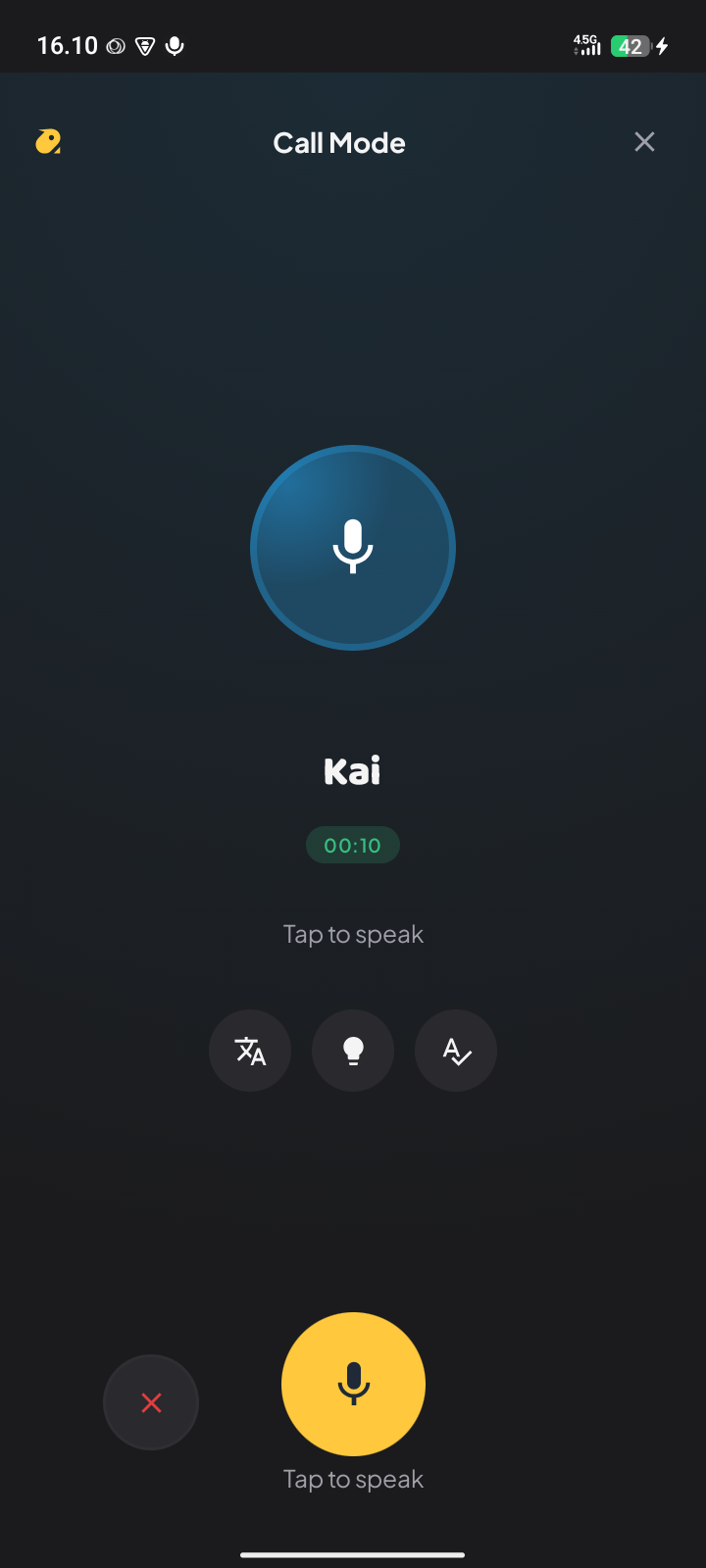
call mode

Kaktua
Inspiration
Many people struggle to learn languages not from lack of motivation, but because traditional methods don't provide real-time feedback during natural conversations. Professional tutors are expensive and require scheduling, while traditional apps focus on written exercises rather than speaking practice. We wanted to create an accessible solution that gives everyone access to conversational practice with instant, personalized feedback.
What it does
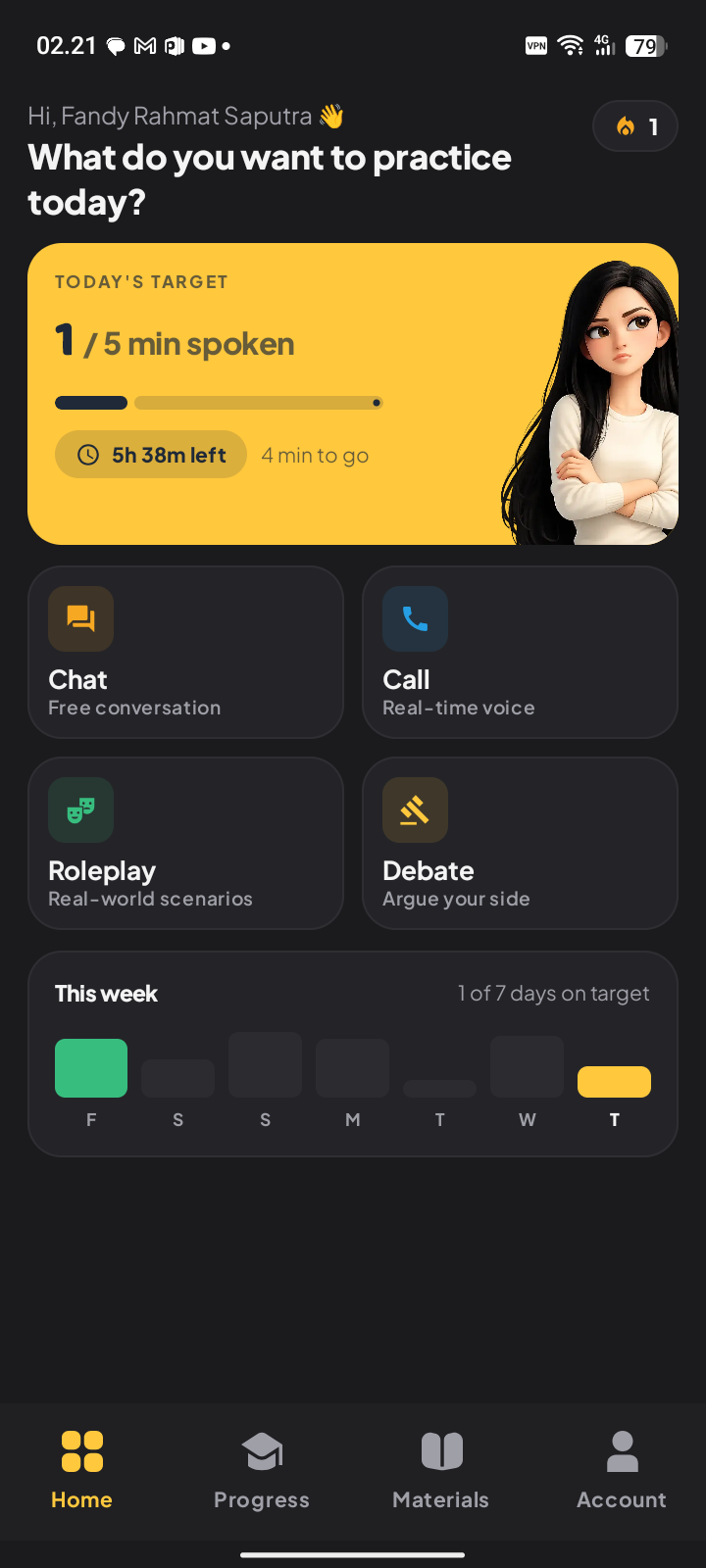
Kaktua is a language learning app that lets users practice speaking through AI-powered conversations. Users select a conversation scenario, speak into their phone, and receive natural responses with gentle corrections on grammar and pronunciation. The app supports multiple languages and scenarios including casual conversation, job interviews, travel situations, and business contexts.
How we built it
We built Kaktua using native mobile development for optimal performance. The Android app uses Kotlin, while iOS uses Swift. The backend runs on Node.js with Express, connected to a PostgreSQL database for storing user data and conversation history.
For AI capabilities, we integrated Google Cloud services: Speech-to-Text API converts voice to text, Gemini 2.5 Flash Lite generates conversational responses and identifies learning opportunities, and Text-to-Speech API creates voice responses. The entire pipeline is hosted on Google Cloud Platform using Cloud Run for scalable infrastructure.
Challenges we ran into
The biggest technical challenge was reducing response latency. Initial delays of 3-5 seconds made conversations feel unnatural. We solved this by implementing streaming audio processing and optimizing the API call sequence, reducing latency to under 1 second.
Balancing correction frequency was another challenge. Too many corrections frustrated users and broke conversation flow, while too few didn't help learning. We developed logic that prioritizes conversational flow while showing corrections as non-intrusive visual cues that users can review without interrupting their speech.
Speech recognition accuracy for non-native speakers was also difficult. Learners with strong accents or pronunciation errors initially had poor recognition rates. We improved this by fine-tuning recognition parameters and handling common learner speech patterns.
Accomplishments that we're proud of
We successfully built a real-time voice processing pipeline that completes the full cycle (speech-to-text, AI processing, text-to-speech) in under 1 second. This creates natural conversation flow that feels responsive and engaging.
The app has attracted hundreds of active users with organic growth only, achieving 15% conversion from free to paid subscriptions. Users report feeling more confident speaking and appreciate the judgment-free practice environment.
We've also validated that AI-powered language learning can be economically sustainable at accessible price points, with healthy unit economics even as a solo founder operation.
What we learned
AI requires careful prompt engineering and iterative refinement to produce educational value. Simply using powerful models doesn't automatically create good learning experiences. We learned to design prompts that balance natural conversation with pedagogical effectiveness.
Real-time systems require different architectural thinking than batch processing. We had to design for streaming data, partial results, and graceful degradation when network conditions vary.
Language learning is as much about building confidence as acquiring knowledge. Users need psychological safety to practice without fear of judgment. This insight shaped our decision to use AI rather than connecting users with human partners.
Mobile constraints like battery life and bandwidth actually drove better design decisions, forcing us to optimize aggressively and create a more efficient system than we would have with unlimited resources.
What's next for Kaktua
In the short term, we plan to expand language support beyond English to include Spanish, Mandarin, Japanese, and French. We'll also add more specialized scenarios for business, medical, and technical vocabulary.
We're exploring B2B opportunities with corporations and universities that need scalable language training solutions for employees and students.
Longer term, we want to build features for group conversations where users can practice with multiple AI personas or other learners in real-time. We're also investigating offline capabilities so users can practice without internet connectivity.
Our ultimate goal is making high-quality language learning accessible globally, helping break down communication barriers that limit economic and social opportunities.
Join us on this journey
Try Kaktua today:
- Download: Google Play Store
IOS - Website: kaktua.com
Contact:
- Email: halo@kaktua.com
- LinkedIn: Fandy Rahmat Saputra

Log in or sign up for Devpost to join the conversation.