-
-
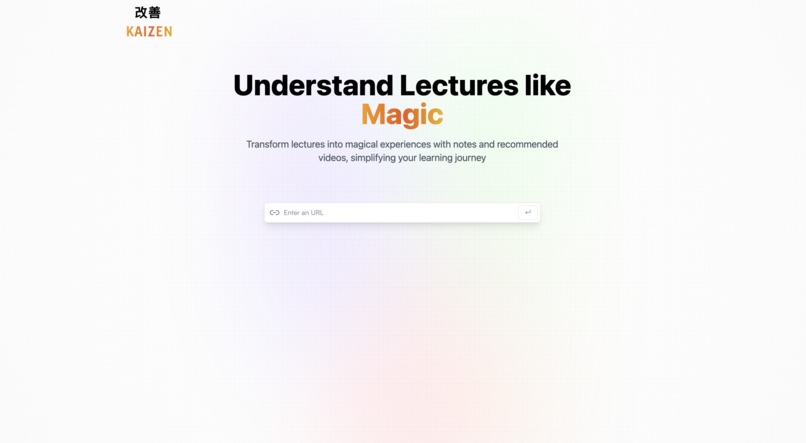
Before API call
-
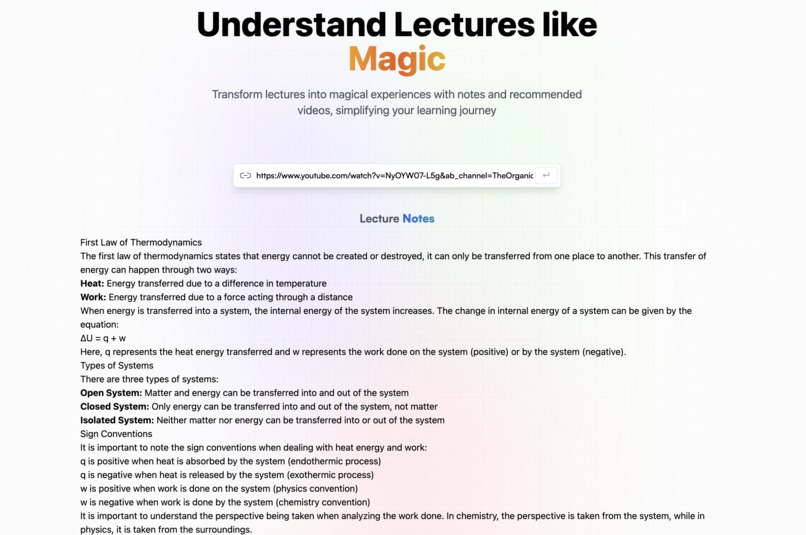
Result
Inspiration
We want to simplify lecture videos and provide an easier way to handle the pre exam information crunch for students .
What it does
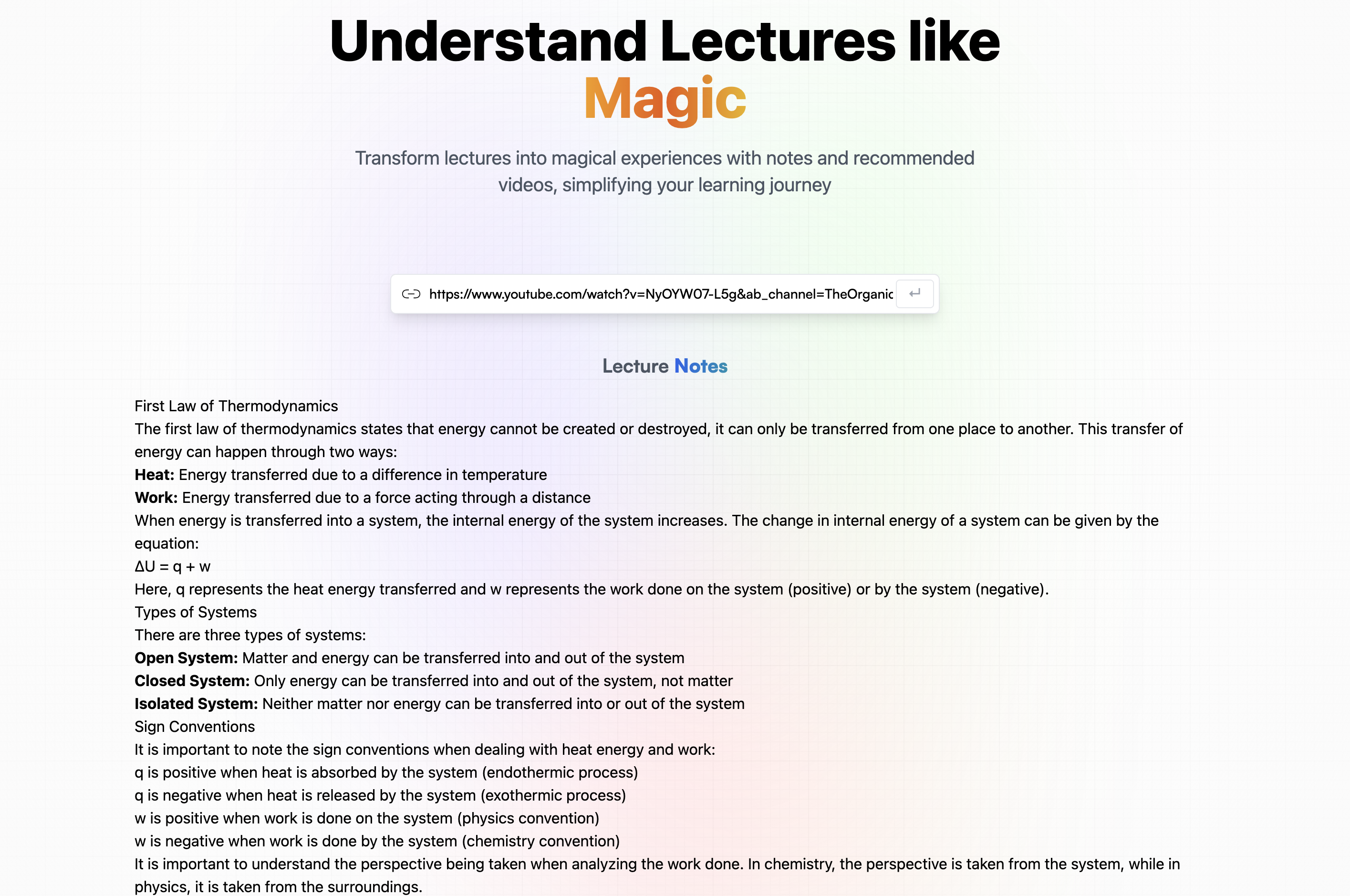
Kaizen takes in the lecture video URL and provides concise notes and links to external videos explaining key concepts .
How we built it
Kaizen leverages React, Node.js, MongoDB, and Azure OpenAI to transform lecture video links into concise notes and explanatory video links, streamlining the learning process. This innovative approach enhances study efficiency by providing quick access to distilled information and relevant visual aids.
Challenges we ran into
In developing Kaizen, our team faced critical challenges, notably in the integration of backend and frontend technologies and the constraints posed by limited API keys. The seamless integration of React for the frontend with Node.js for the backend required meticulous coordination to ensure fluid communication and real-time data exchange. This process was intricate, as it involved establishing a robust API design and efficient state management to support dynamic user interactions and data handling without compromising the application's performance or user experience.
Furthermore, the limitation of API keys, especially from Azure OpenAI, presented a significant obstacle. Given the restricted number of requests permissible under our plan, we were compelled to strategize our development and testing processes judiciously. This involved optimizing our API usage through efficient call management, implementing caching mechanisms to reduce redundant requests, and carefully scheduling our testing phases to avoid surpassing our API request quota. These challenges necessitated innovative solutions and strategic planning to ensure the successful deployment of Kaizen without compromising its functionality or user satisfaction.
Accomplishments that we're proud of
Certainly, here are the key accomplishments of Kaizen, summarized:
- Seamless User Interface: Achieved an intuitive and visually appealing UI, enabling easy navigation and a superior user experience.
- Concise Note Generation: Successfully developed the capability to distill key information from long videos into brief, digestible notes, leveraging Azure OpenAI.
- Integrated Video Thumbnails and Links: Implemented a feature to embed video thumbnails and links within notes for quick access to relevant content, enhancing the learning process.
What we learned
Throughout the development of Kaizen, our learning journey was rich and multifaceted, with significant insights gained in two key areas:
Using Azure API for Prompt Responses : We delved deep into the intricacies of leveraging Azure's OpenAI API, mastering how to construct and fine-tune prompts to generate meaningful, concise responses from the AI. This experience taught us not only about the technical aspects of interacting with Azure's API but also about the art of prompt engineering—how to effectively communicate with AI to achieve desired outcomes. We learned to iterate on our prompts, incorporating feedback and observations to refine the AI's output, ensuring that the notes generated were of high quality and relevance.
Creating APIs in NodeJS : Another significant area of learning was in developing our own APIs using Node.js.
What's next for Kaizen
Next for Kaizen, we plan to introduce flashcards, quizzes, and practice questions. These features aim to enhance interactive learning, allowing users to test their knowledge and reinforce key concepts for a more comprehensive understanding.


Log in or sign up for Devpost to join the conversation.