




KaiSight AI — About the Project
1. Inspiration
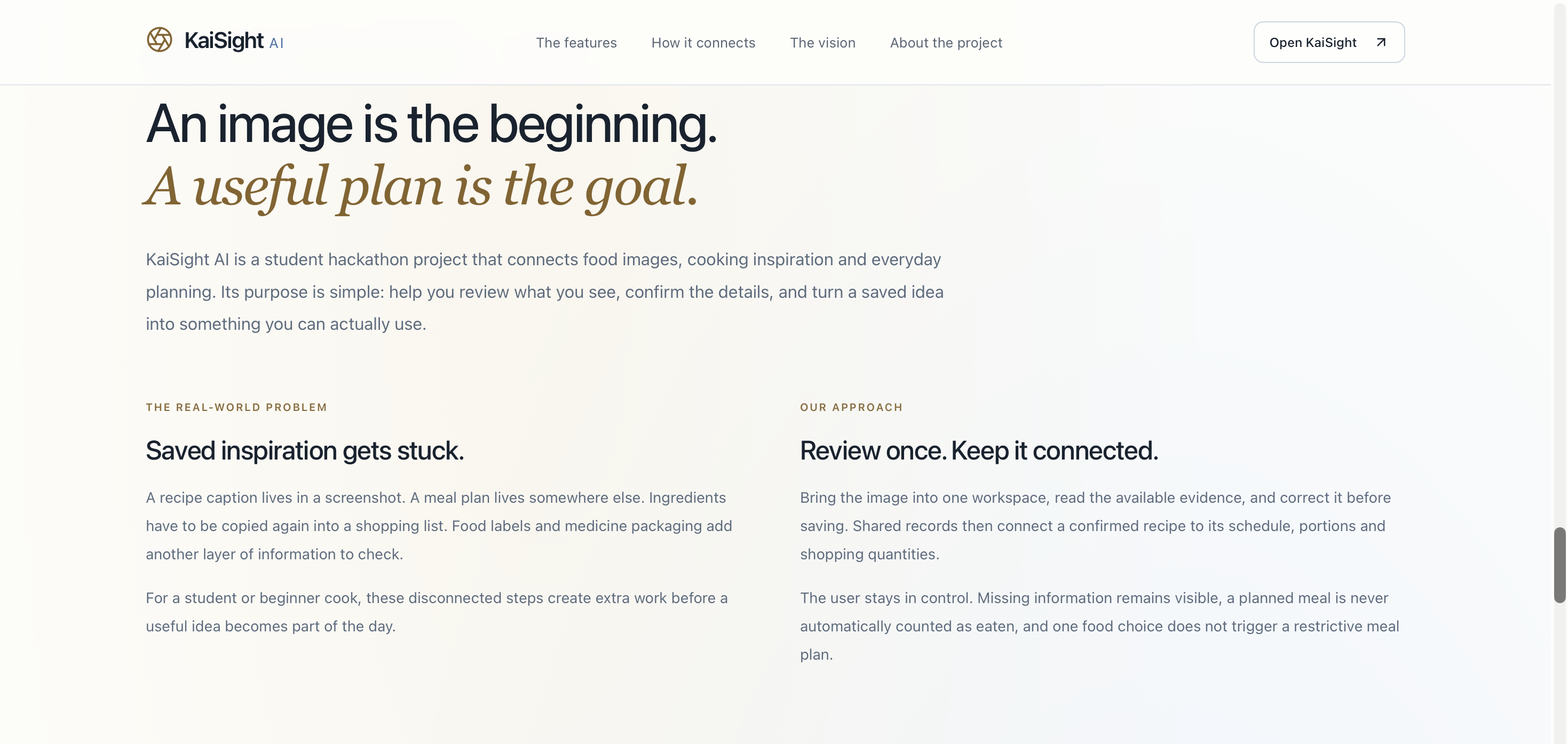
The inspiration behind KaiSight AI came from a simple question: What if AI could do more than answer questions and actually help people solve everyday problems?
Artificial intelligence is evolving rapidly, but many useful capabilities are scattered across different tools and platforms. I wanted to explore how multiple AI-powered experiences could come together in one accessible, user-friendly platform.
That idea became KaiSight AI. My vision was to build something that combines practical utility, intelligent assistance, and modern design into a single experience. Rather than creating just another chatbot, I wanted to experiment with a platform that could help people understand information and turn it into useful actions.
2. What KaiSight AI Does
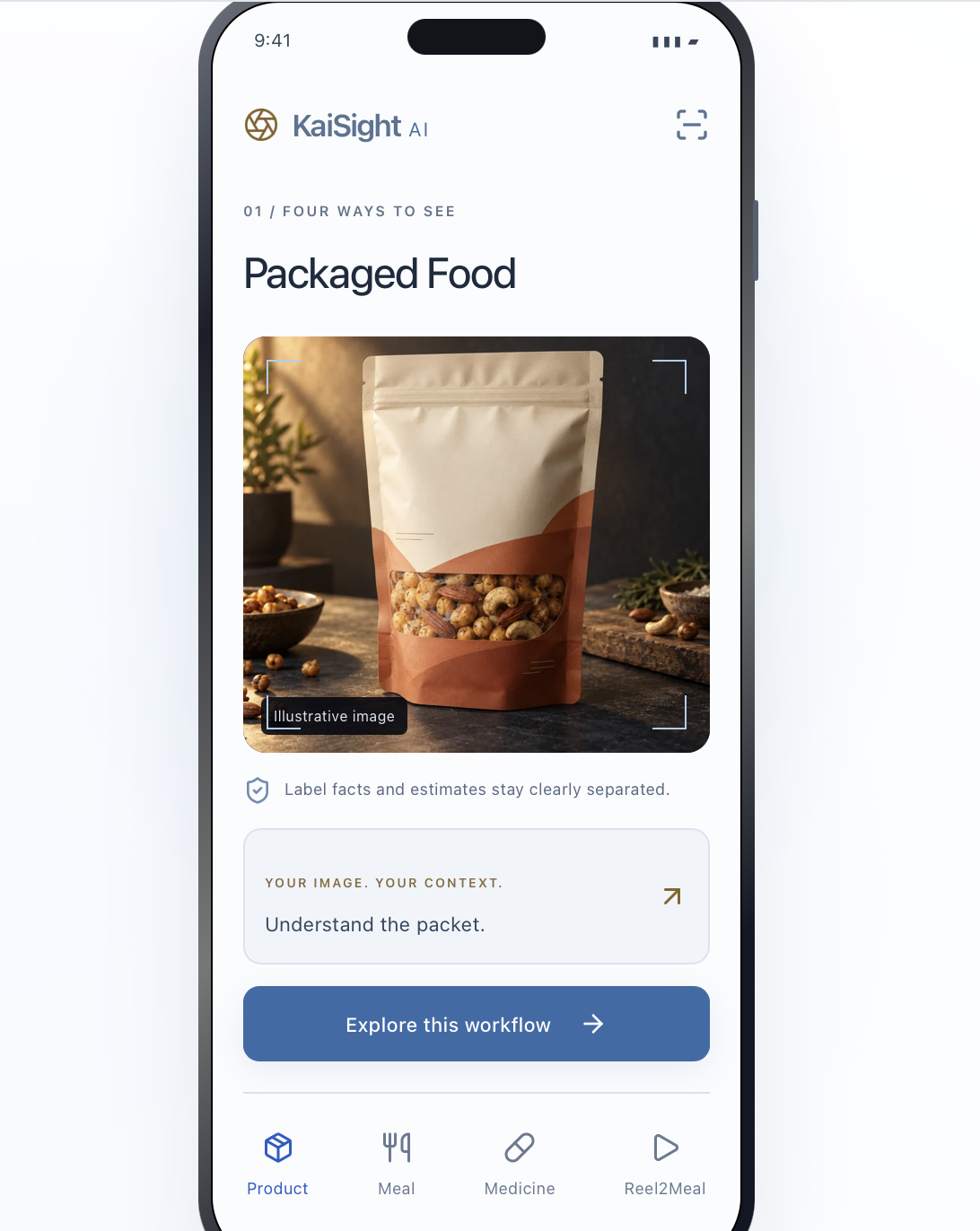
KaiSight AI is an AI-powered web platform built around practical, everyday use cases.
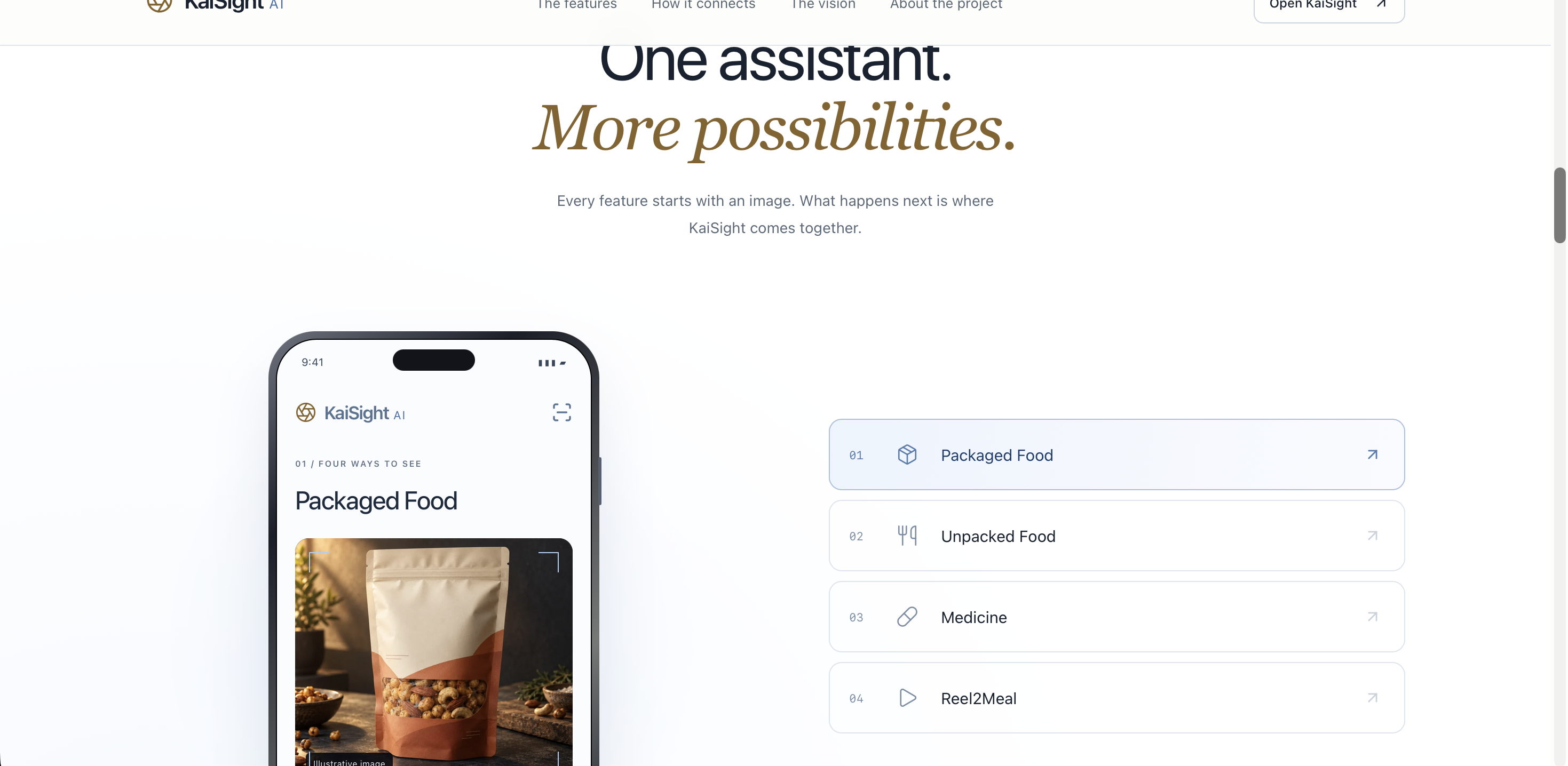
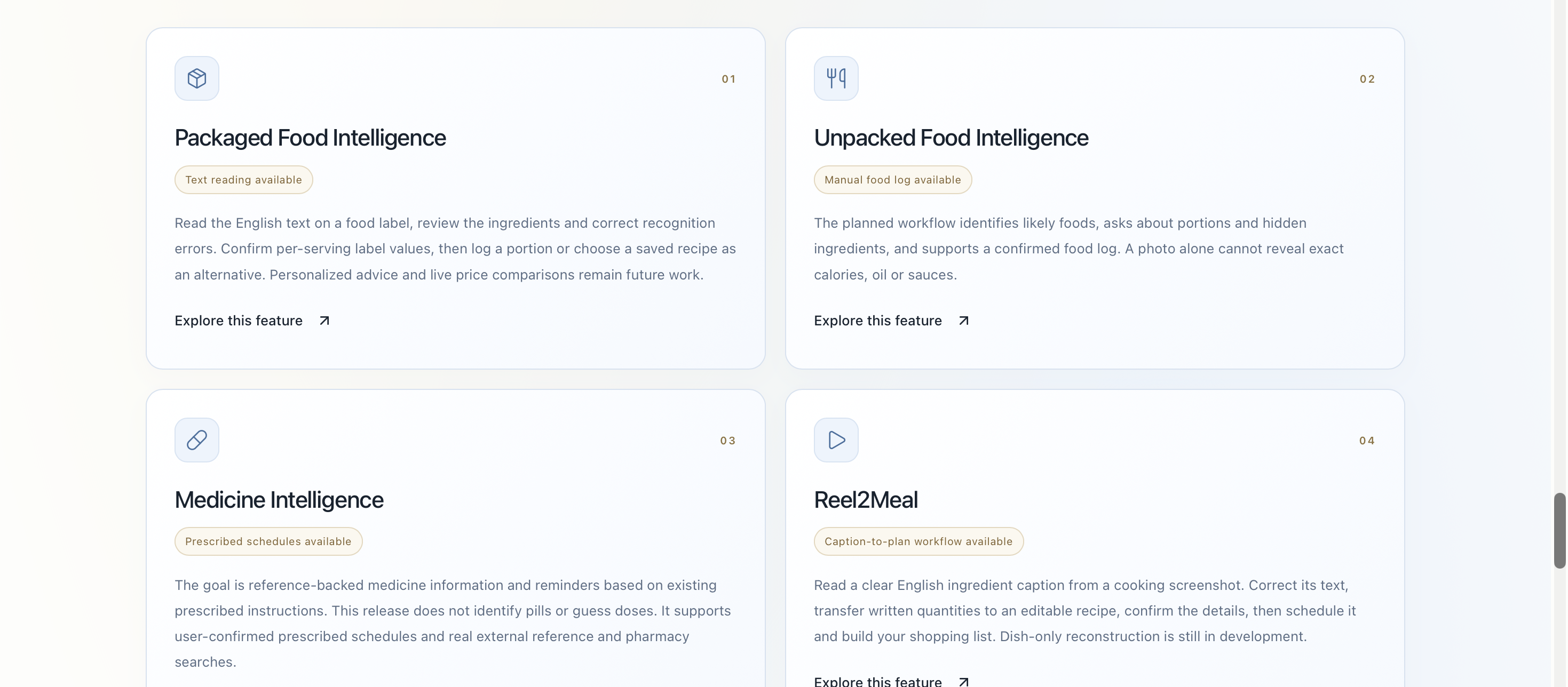
- Packaged Food Intelligence: Helps users understand packaged food information, including ingredients and nutritional details.
- Unpacked Food Intelligence: Explores the nutritional information of everyday foods and ingredients, even when packaged labels are unavailable.
- Medicine Intelligence: Helps users access and understand medicine-related information, with medical decisions requiring verification by qualified professionals.
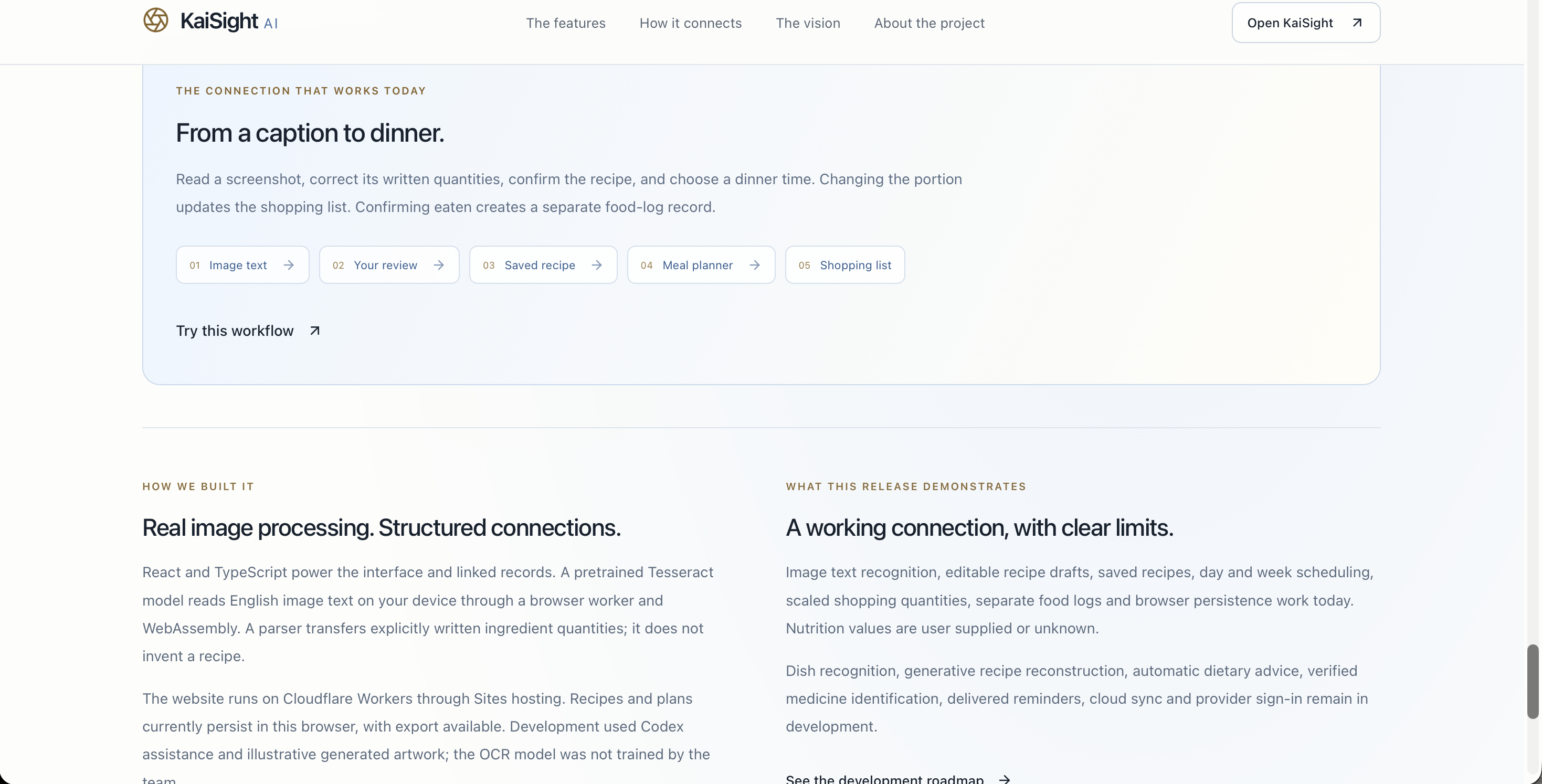
- Reel2Meal: Connects food-video inspiration with practical meal ideas, aiming to make it easier to turn something interesting online into something useful in the kitchen.
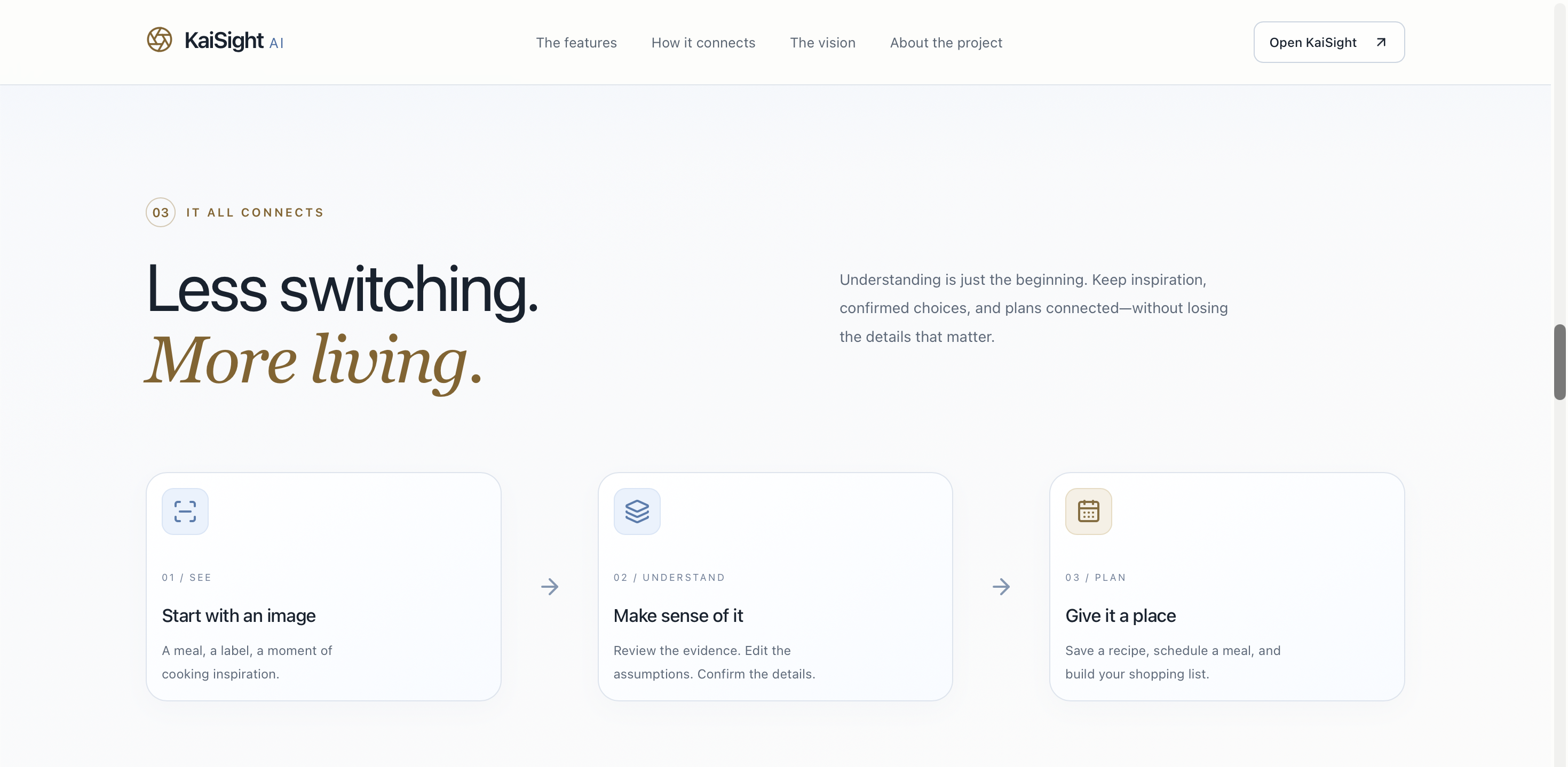
The larger idea is to bring these different experiences together through one interface rather than requiring users to navigate several separate tools.
3. How I Built It
I dedicated approximately 16 hours to developing KaiSight AI, moving from an initial idea toward a working web-based demonstration.
I approached development in stages:
Planning the concept: I identified the everyday problems I wanted to explore and organized the idea into distinct features.
Designing the experience: I focused on making the interface modern, clear, and easy to navigate. I wanted the project to feel like a coherent product rather than a collection of unrelated AI experiments.
Integrating AI capabilities: I worked on bringing AI-powered functionality into the platform. This involved experimenting with how the features could accept information, process user requests, and present useful results.
Building and refining: I iterated on the website's structure, presentation, and functionality to bring the different parts together into a single experience.
Preparing the demonstration: I focused on presenting the project's purpose, its features, and the broader problem it aims to address.
AI-assisted development helped me explore ideas and move faster, but the goal was not simply to generate a website. It was to understand the product I was building, evaluate its behavior, and keep improving the experience.
4. Challenges I Faced
One of the biggest challenges was turning a broad idea into a coherent product. Each feature serves a different purpose, so bringing them together required thinking about consistency, navigation, and the overall user experience.
Another challenge was working with AI functionality. An AI-powered feature needs more than an attractive interface: it must handle inputs appropriately, return relevant information, and communicate its limitations. Designing around these expectations made me think more carefully about reliability and usefulness.
Time was another constraint. With approximately 16 hours dedicated to the project, I had to balance the number of features I wanted to explore against the time available for development, refinement, and testing.
I also had to learn through experimentation. Not every idea works perfectly on the first attempt, and building a working demonstration requires identifying problems, adjusting the approach, and testing the result.
These challenges helped me understand that developing an AI product involves much more than writing code or connecting a model. It requires product thinking, interface design, technical integration, and continuous iteration.
5. What I Learned
Building KaiSight AI gave me practical experience in turning an idea into a demonstrable digital product.
I learned to think about software from a user's perspective: what problem a feature solves, how a person interacts with it, and whether the result is genuinely useful.
I also gained a better understanding of AI-assisted development, web interfaces, feature integration, and the importance of testing. The process showed me how AI can accelerate experimentation while also highlighting why developers need to understand the systems they build.
Most importantly, I learned to approach a large idea by breaking it into smaller components, prioritizing the essential functionality, and improving the product through iteration.
6. Future Vision
KaiSight AI is a starting point, not the end of the journey.
My next goal is to improve the accuracy, reliability, and consistency of its AI-powered features. I also want to refine the user experience, strengthen how information is presented, and ensure that each feature delivers meaningful value.
For features involving food and medicine, reliability and responsible information handling are especially important. Future development should focus on trustworthy information, transparent limitations, and appropriate safeguards rather than relying on AI-generated answers alone.
Over time, I want to explore how KaiSight AI can become a more capable platform by making its individual features work together more effectively.
7. Final Thoughts
KaiSight AI represents my attempt to turn curiosity about artificial intelligence into something practical. In approximately 16 hours, I explored an idea, developed a web-based demonstration, experimented with AI-powered features, and learned from the challenges of bringing them together.
For me, the project's value lies not only in what it does today, but also in what it has taught me about building technology.
My goal with KaiSight AI is simple: make artificial intelligence more practical, accessible, and useful in everyday life.
Built With
- ai
- ai-assisted-development
- ai-integration
- artificial-intelligence
- automation
- computer-vision
- css
- food-analysis
- food-technology
- generative-ai
- health-technology
- html
- imageai
- javascript
- machine-learning
- medicine-information
- nutrition
- rapid-prototyping
- user-experience
- user-interface
- web-development

Log in or sign up for Devpost to join the conversation.