-
-
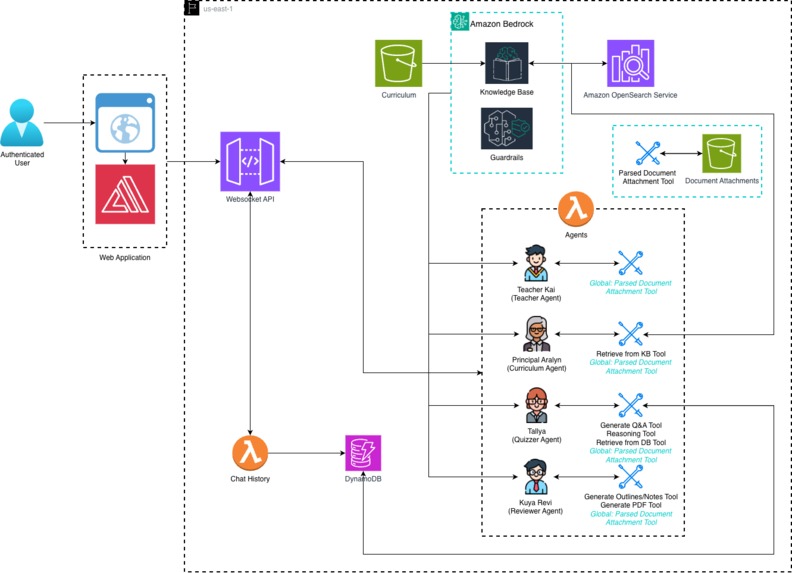
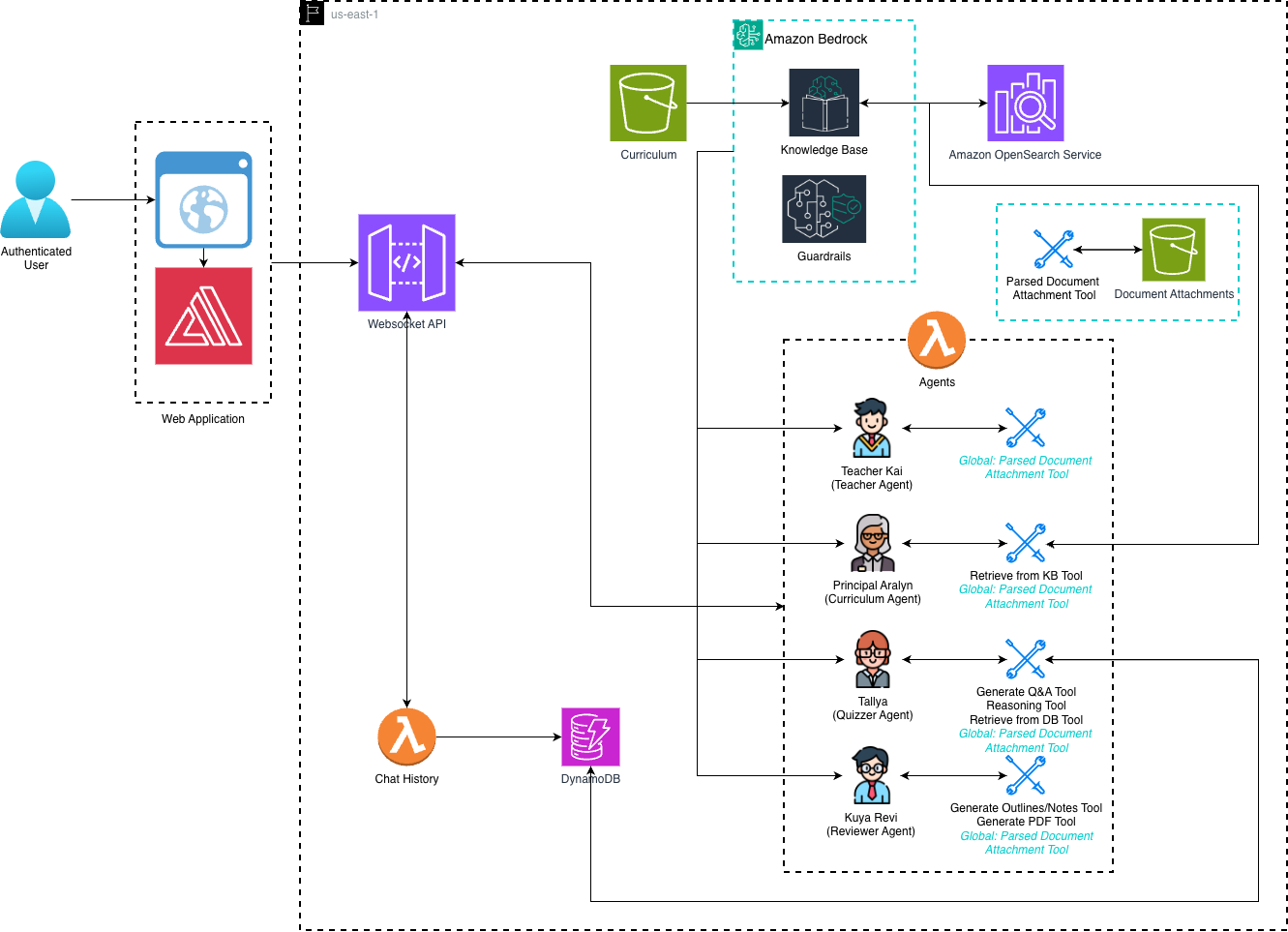
KAISA - Architecture Diagram
-
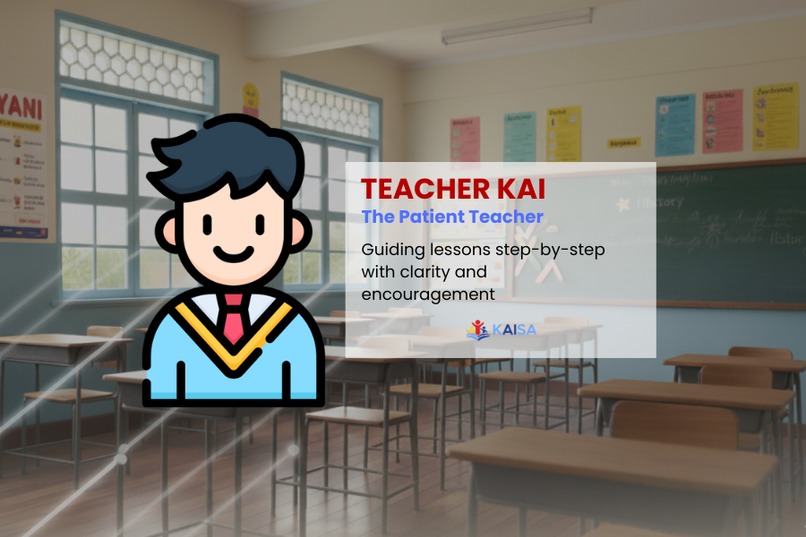
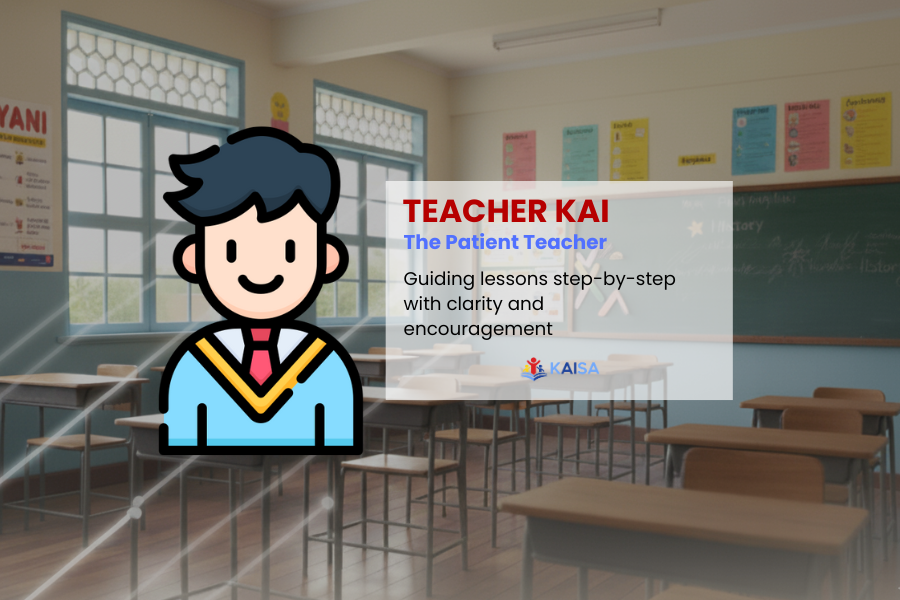
Teacher Kai - Teacher Agent
-
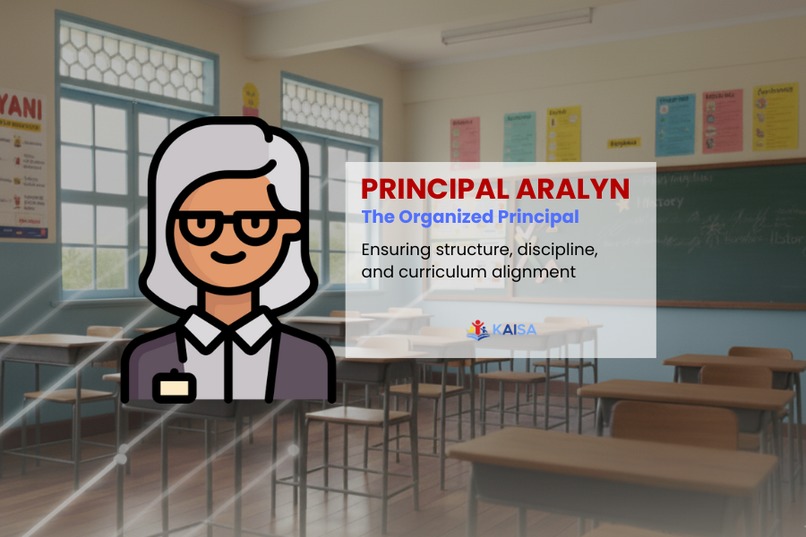
Principal Aralyn - Curriculum Agent
-
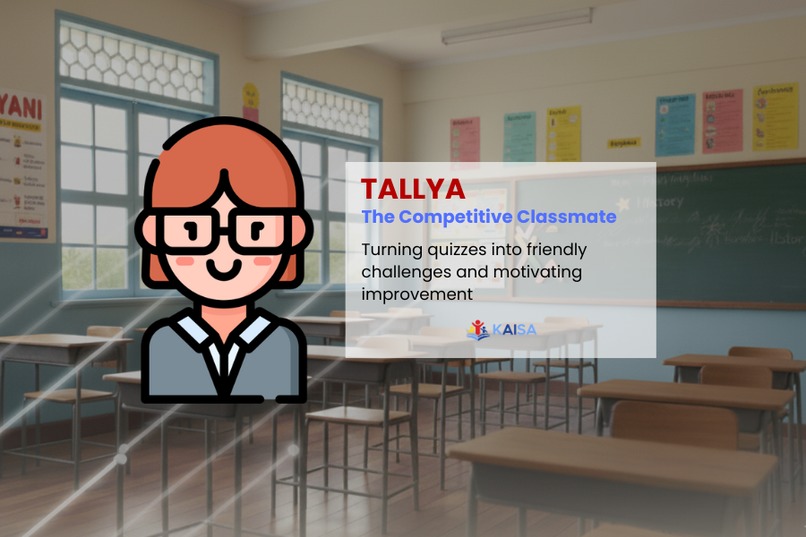
Tallya - Quizzer Agent
-
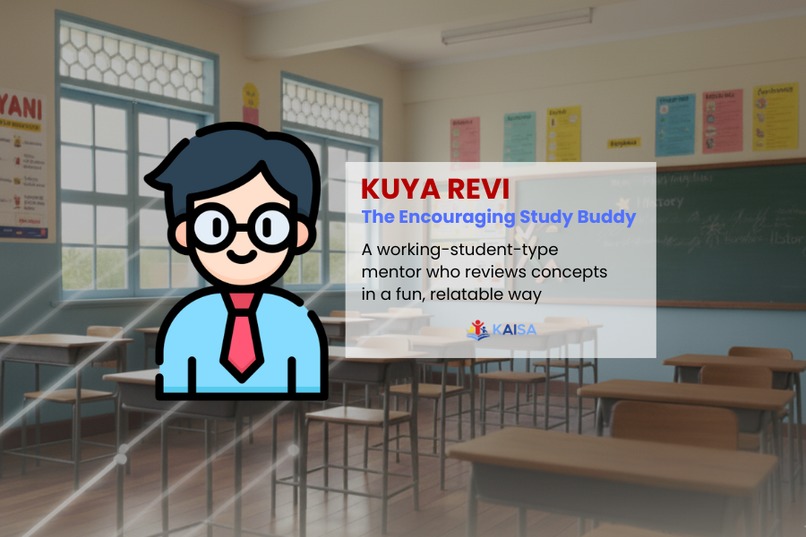
Kuya Revi - Reviewer Agent
-
KAISA (Unite) - Together we learn, together we rise
Inspiration
KAISA, from the Tagalog word meaning "unite", was inspired by the heart to uplift the next generation amid the educational crisis in the Philippines.
Many students lack access to proper mentorship because private tutoring remains expensive — often ₱400–₱800 per hour.
The educational gap in the Philippines stems not from a lack of motivation but from a lack of affordable guidance. Private tutoring costs exceed ₱80,000 per year per student, making consistent mentorship unreachable for most families.
A typical student needs about 1–2 hours per week per subject for consistent guidance.
The annual tutoring cost per subject can be estimated as:
$$ C = R \times H \times W = 500 \times 2 \times 40 = 40\,000 $$ Cost: ₱40,000
That’s around ₱80,000 per student per year for two subjects.
In the context of Senior High School (SHS) under the Department of Education (DepEd), the average class has about 40 students per section, with 3–5 sections per grade level, representing roughly 120–200 learners per grade.
If every student sought private tutoring for two core subjects, the annual cost per section and per grade level — for just one public SHS — would look like this:
| Category | Formula | Estimated Cost (₱500/hr baseline) |
|---|---|---|
| Per Section (40 students) | 40 × ₱80,000 | ₱3.2 million/year |
| Per Grade Level (3 sections) | 3 × ₱3.2 million | ₱9.6 million/year |
| Per Grade Level (5 sections) | 5 × ₱3.2 million | ₱16 million/year |
This means that even a single public Senior High School could need ₱9.6M–₱16M annually just for tutoring — an impossible cost for most families and schools in the country.
We envisioned KAISA as a way to unite technology, empathy, and education — making guided, personalized learning accessible to all.
What it does
KAISA (K-12 Artificial Intelligent Smart Agents) is an AI-powered learning ecosystem built to simulate a supportive classroom environment.
It features four Filipino-inspired AI tutors:
- Teacher KAI – the patient teacher, guiding lessons step-by-step with clarity and encouragement
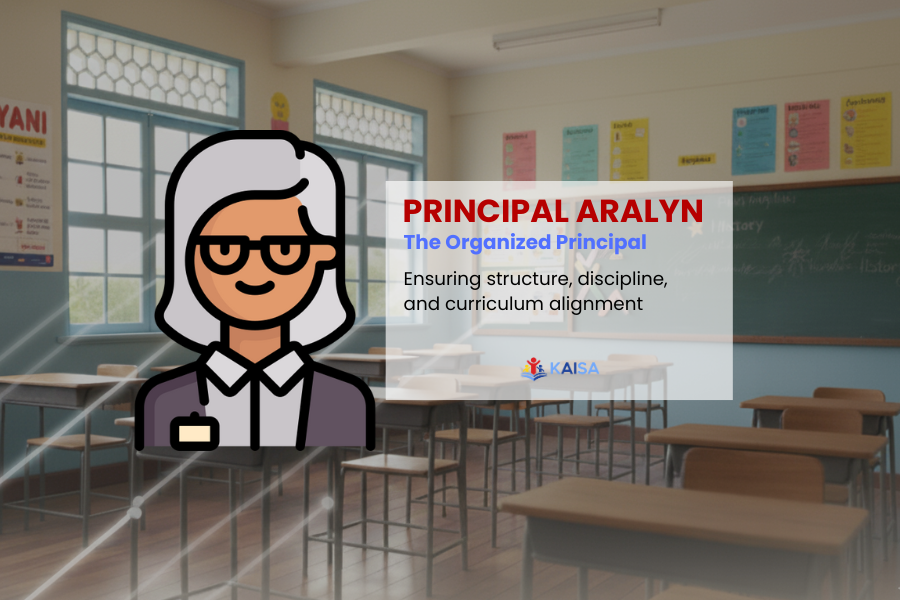
- Principal Aralyn – the organized principal, ensuring structure, discipline, and curriculum alignment
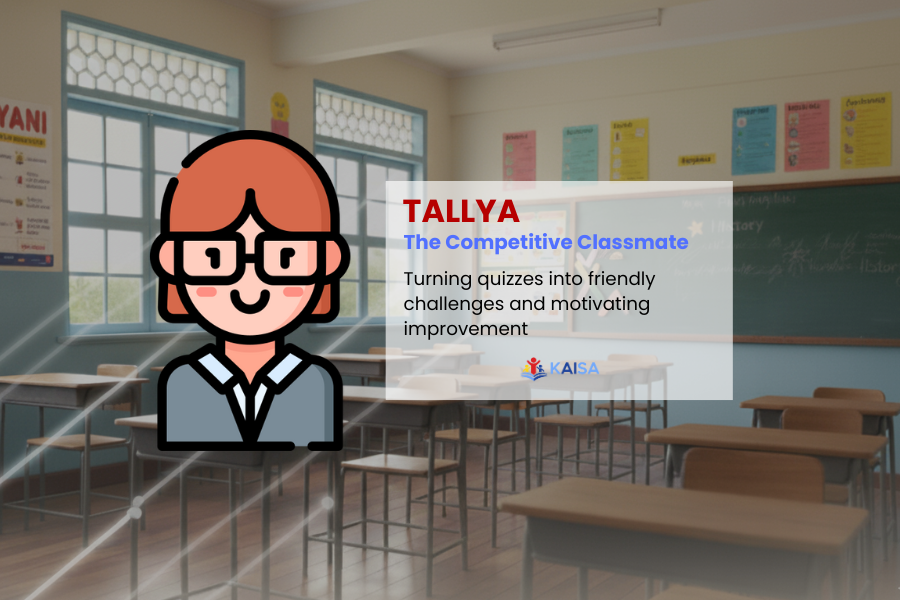
- Tallya – the competitive classmate, turning quizzes into friendly challenges and motivating improvement
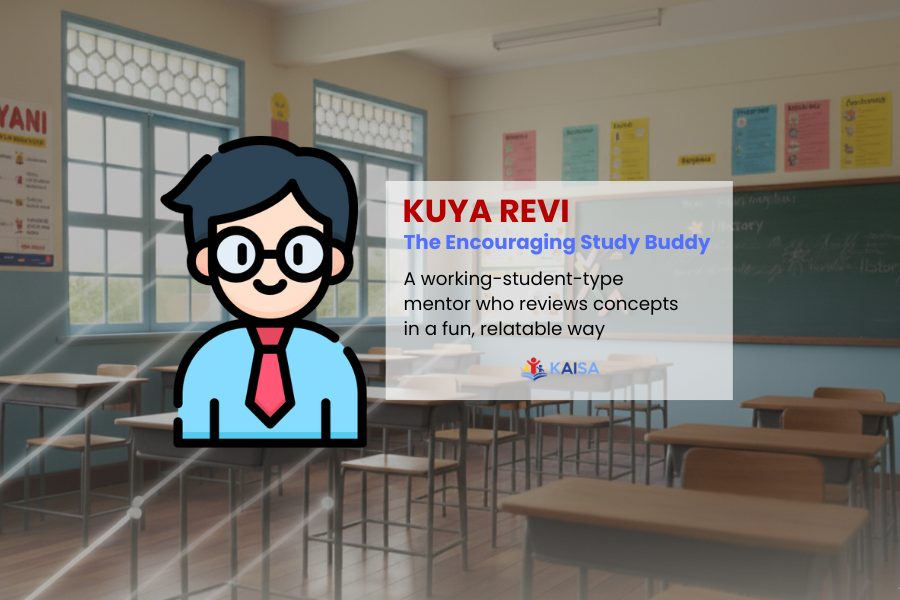
- Kuya Revi – the encouraging study buddy, a working-student-type mentor who reviews concepts in a fun, relatable way
Together, they generate study outlines, quizzes, and review PDFs tailored to each learner’s needs and progress.
Each agent collaborates autonomously through a shared session_id. For example, when Teacher KAI helps with a lesson, Tallya automatically creates adaptive quizzes, and Kuya Revi follows up with a personalized reviewer — forming a continuous learning cycle.
How we built it
We built KAISA using Amazon Bedrock and the Strands SDK, powered by models such as Nova Pro.
Each agent collaborates through Bedrock Agents with:
- Retrieval-Augmented Generation (RAG) for contextual content
- Bedrock Guardrails for safety and tone control
- Amazon S3 for storing reviewer PDFs
- DynamoDB for storing chat logs
We designed custom tools to let agents retrieve knowledge, summarize lessons, and format structured outputs automatically. (See architectural diagram in the “Gallery” section for detailed data flow.)
Learning engagement is modeled as:
$$ E = \alpha P + \beta Q + \gamma R $$
where (P) = personalization, (Q) = quiz adaptability, and (R) = relevance.
Challenges we ran into
- Integrating Bedrock AgentCore with Strands SDK for multi-agent orchestration
- Managing token cost and latency across multiple AI interactions
- Designing authentic Filipino personas that balance empathy with academic rigor
- Ensuring pedagogical soundness in automatically generated learning materials
Accomplishments that we're proud of
- Built a multi-agent tutoring system that feels genuinely human and culturally relevant
- Created AI personalities inspired by Filipino educators and classmates
- Automated reviewer and quiz generation using retrieval-based reasoning
- Demonstrated that AI mentorship can democratize learning while drastically reducing tutoring costs
What we learned
We learned that AI in education must feel relational, not transactional.
Students engage more deeply when the system listens, encourages, and adapts.
We also realized that cultural identity — warmth, humor, and compassion — is as essential as technical accuracy in creating meaningful learning experiences.
What's next for KAISA (K-12 Artificial Intelligent Smart Agents)
We plan to:
- Integrate speech and emotion recognition for more natural tutoring
- Align curricula with Philippine K-12 standards
- Build dashboards for teachers and parents to track student progress
- Partner with schools and local governments for pilot implementations
Ultimately, KAISA, from the Tagalog word for "unite", represents our hope to make guided, affordable, and empathetic education accessible to every Filipino learner.
KAISA aligns with AWS’s vision of responsible, accessible AI — empowering learners through technology that listens, understands, and uplifts.
“KAISA matuto, KAISA umunlad.”
(Together we learn, together we rise.)
Built With
- amazon-dynamodb
- amazon-web-services
- api-gateway
- bedrock
- css-tailwind
- lambda
- next.js
- python
- react
- s3
- sagemaker
- strand


Log in or sign up for Devpost to join the conversation.