-
-
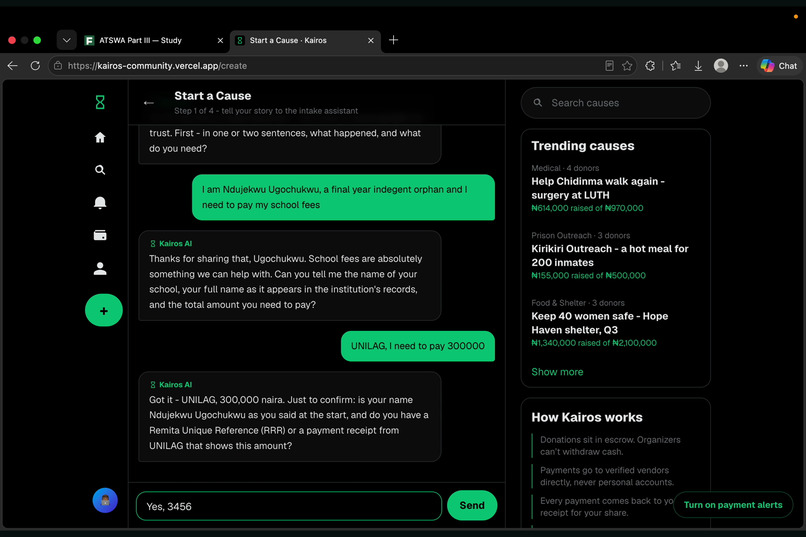
01 AI interview
-
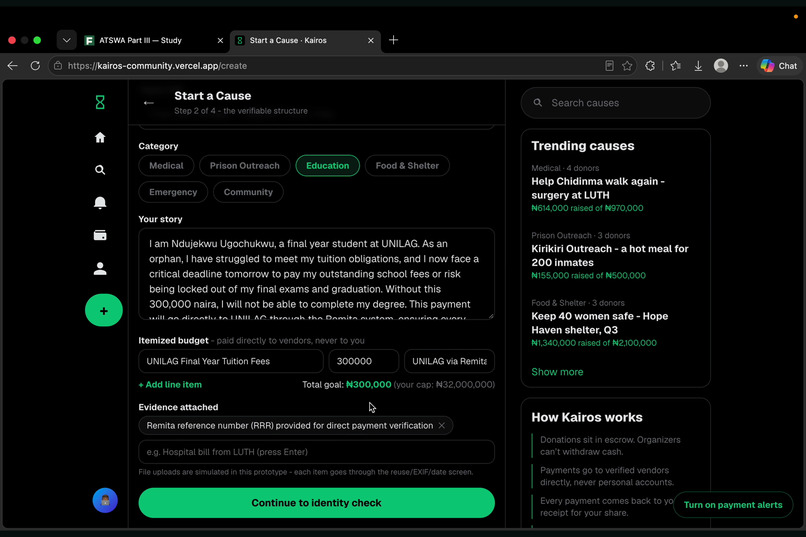
02 Story and budget
-
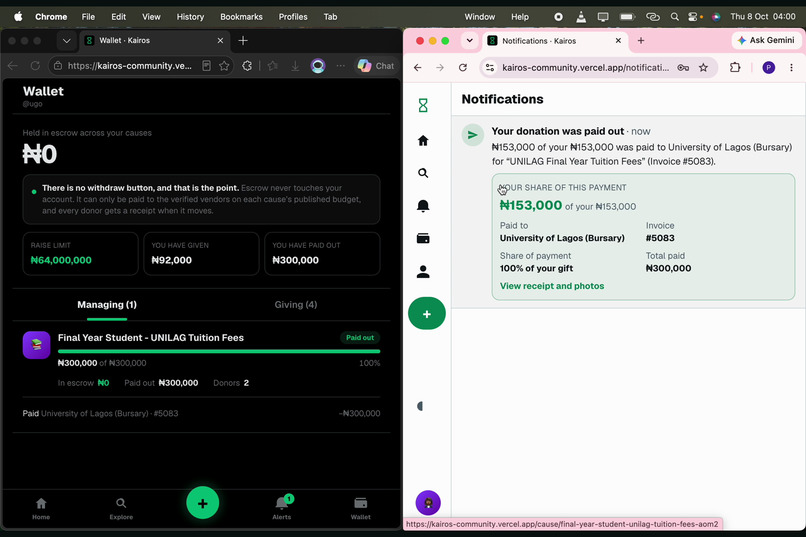
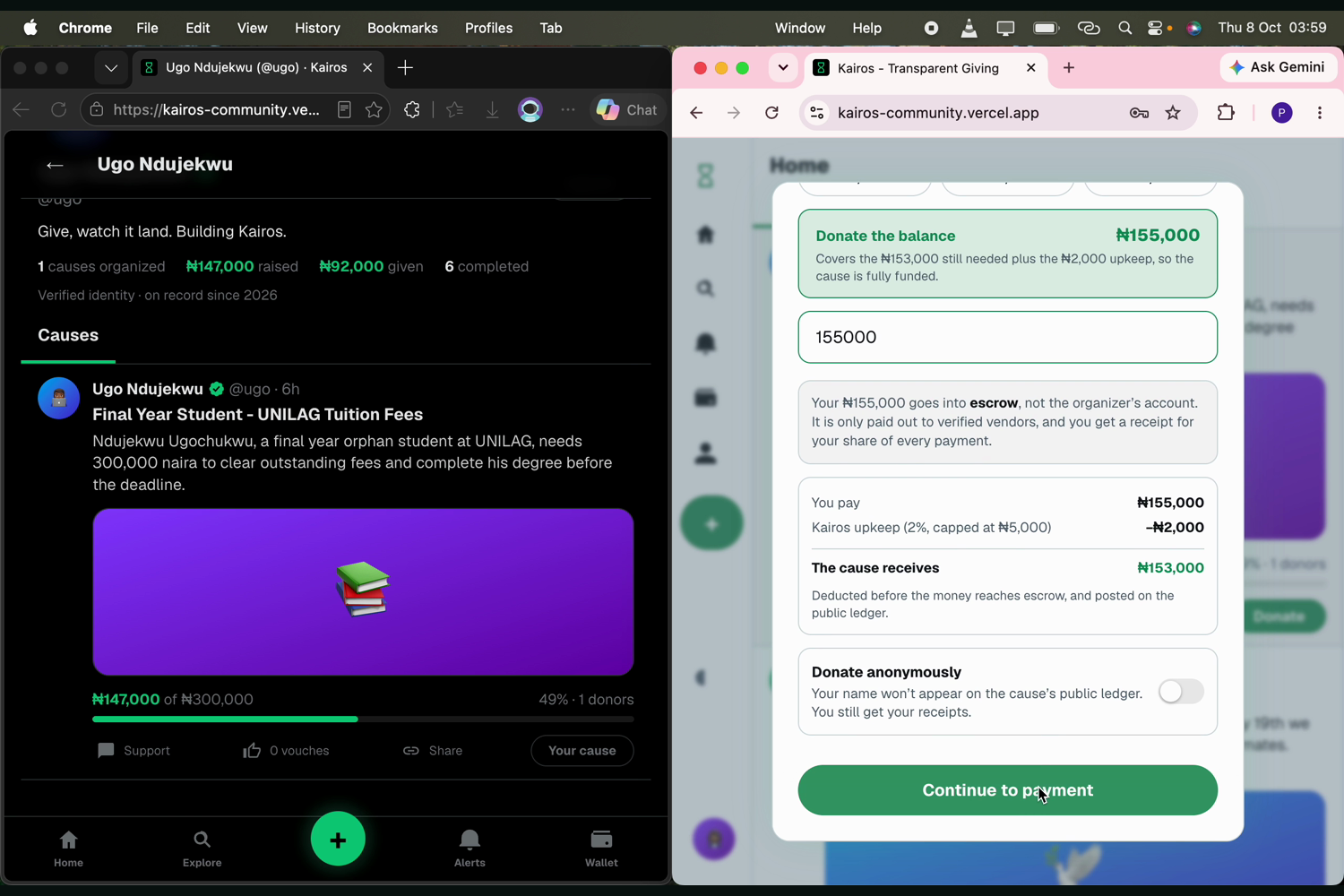
03 Donation and fee disclosure
-
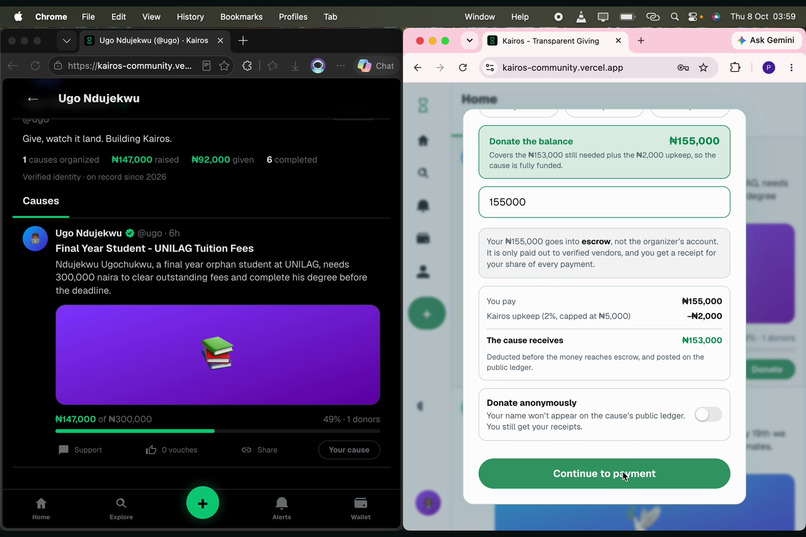
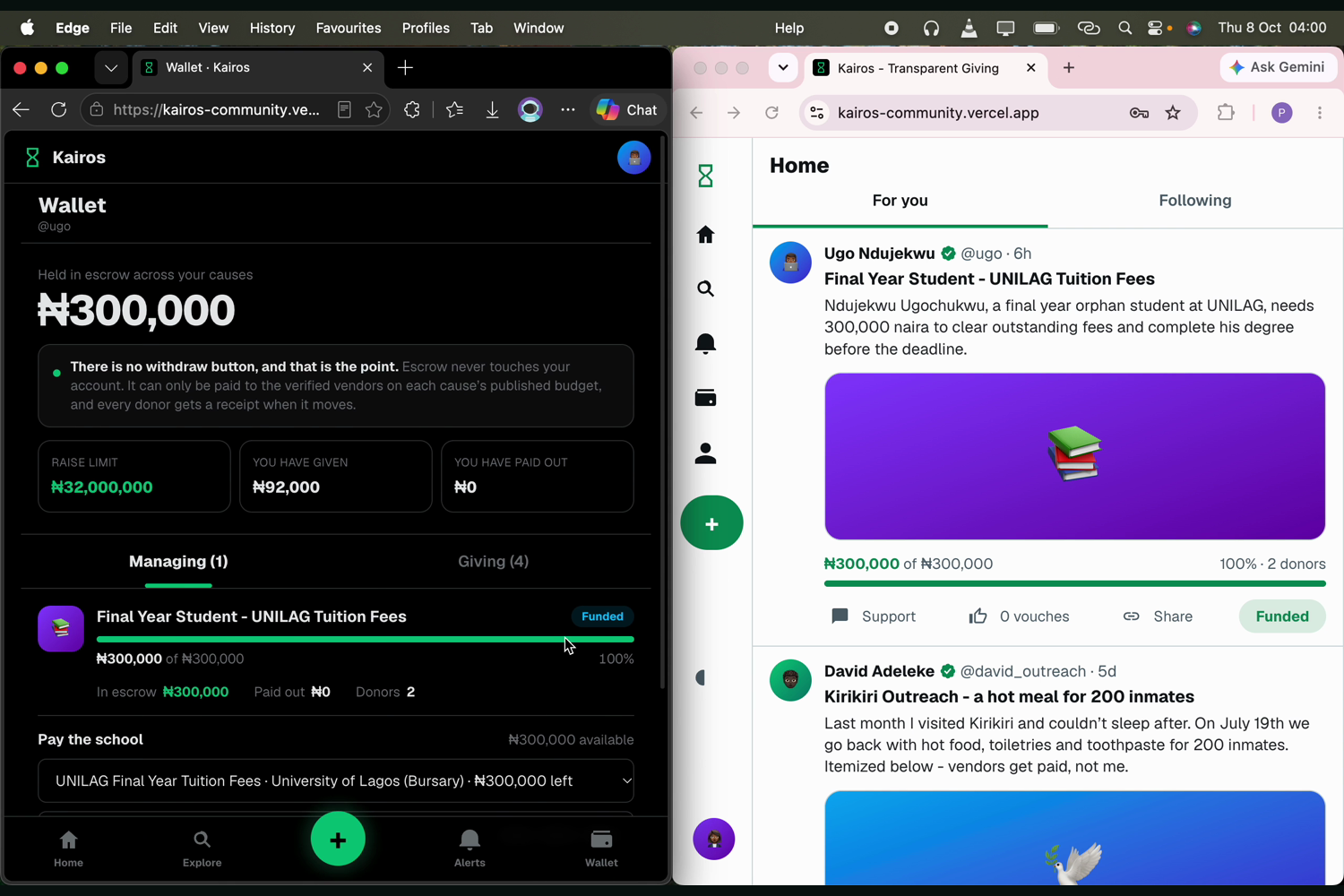
04 Wallet and provider payment
-
05 Donor receipt
Inspiration
Our school fees went up recently, and a final year student who couldn't afford it posted an appeal so he wouldn't drop out. People gave. But then more posts appeared, and my friends and I started to wonder if they were all real, because the screenshots looked identical and very easy to edit.
Even after giving, how would we know that the school was actually paid? We wanted people with genuine needs to get help with less hesitation, and the people giving to see what their money did. That is where Kairos started.
What it does
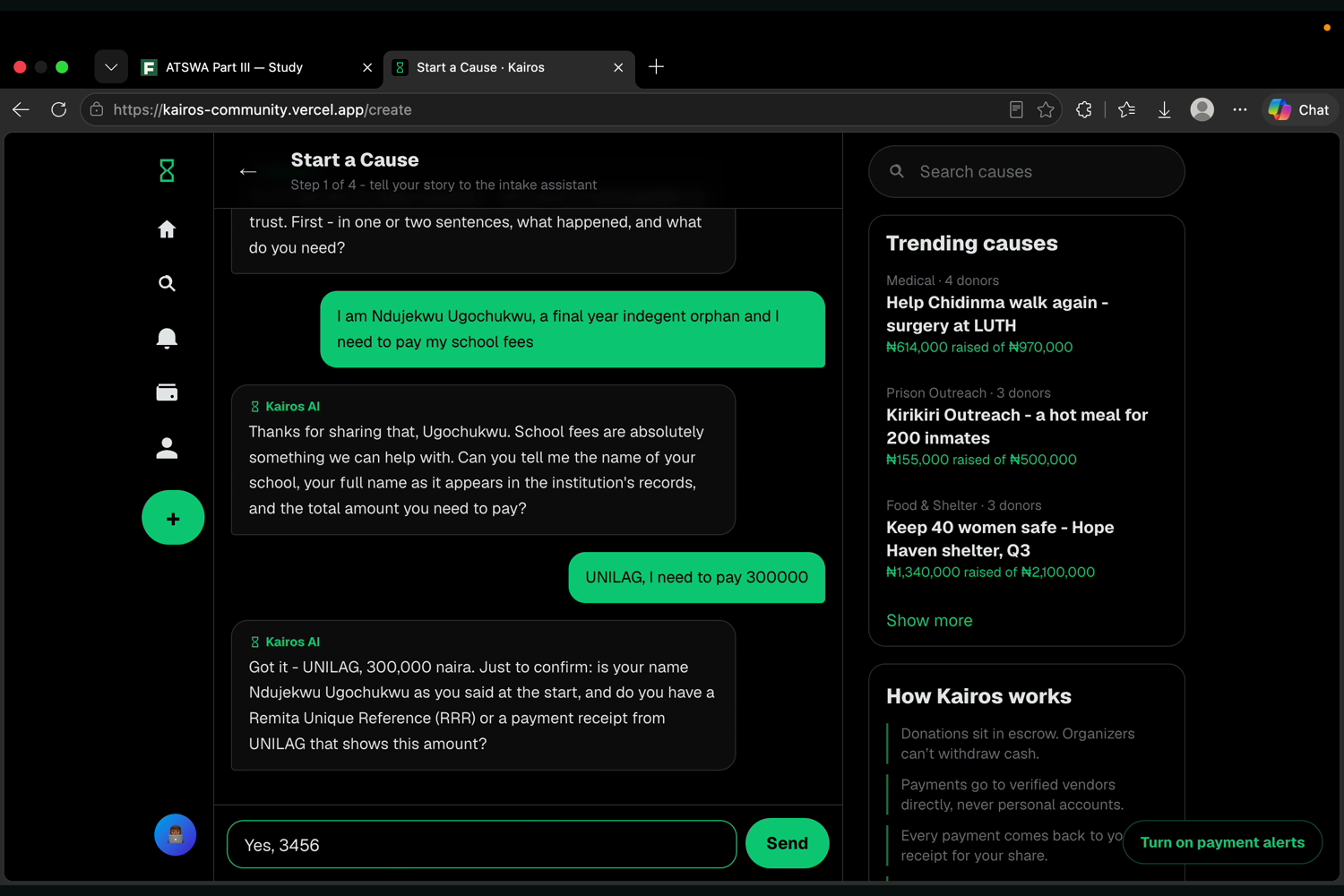
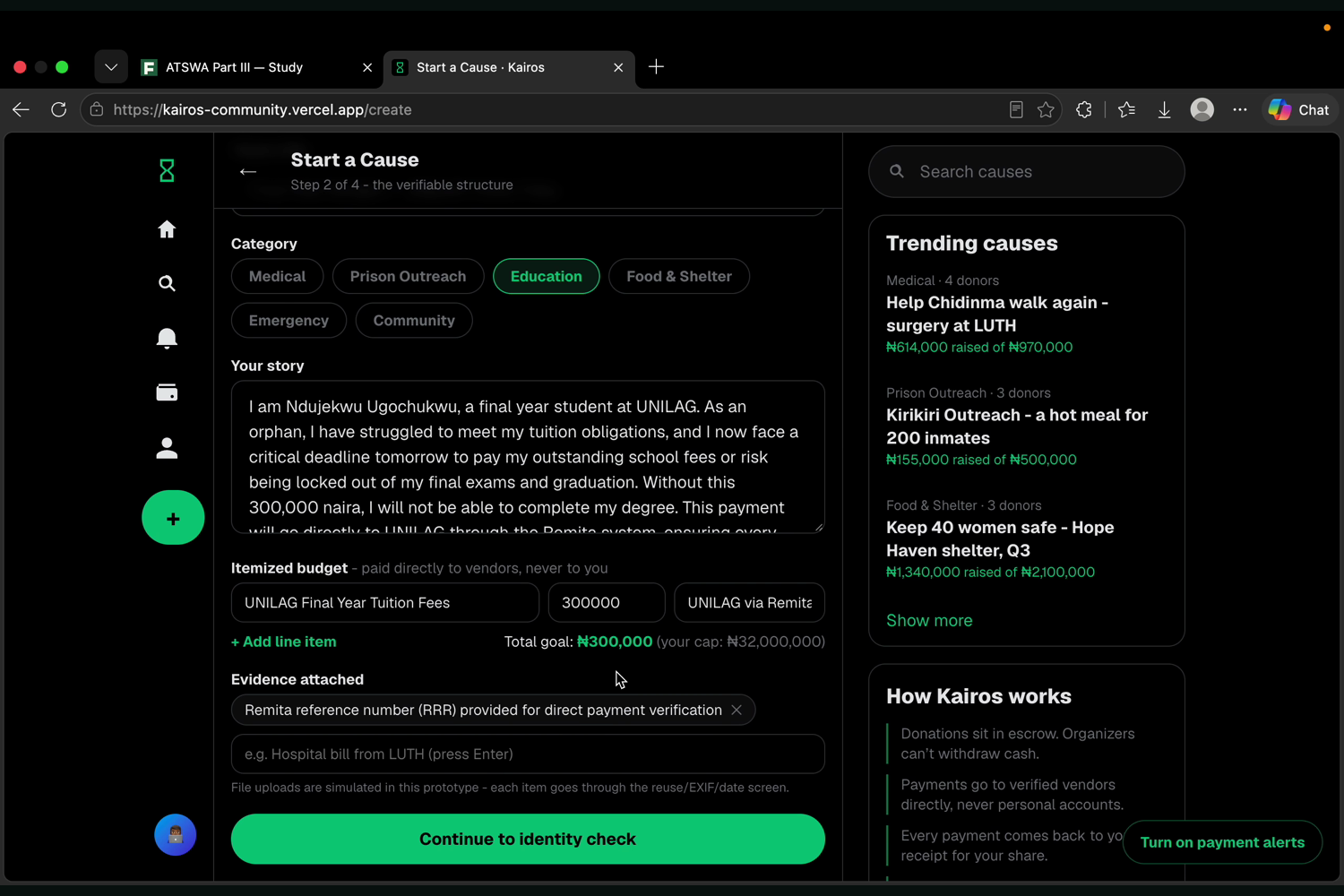
Kairos is a transparent giving prototype, starting with school fees in Nigeria. An organiser goes through an AI interview about the need, the circumstances, the evidence available and who should be paid. Their answers become a story and an itemised budget naming the school, hospital or other provider.
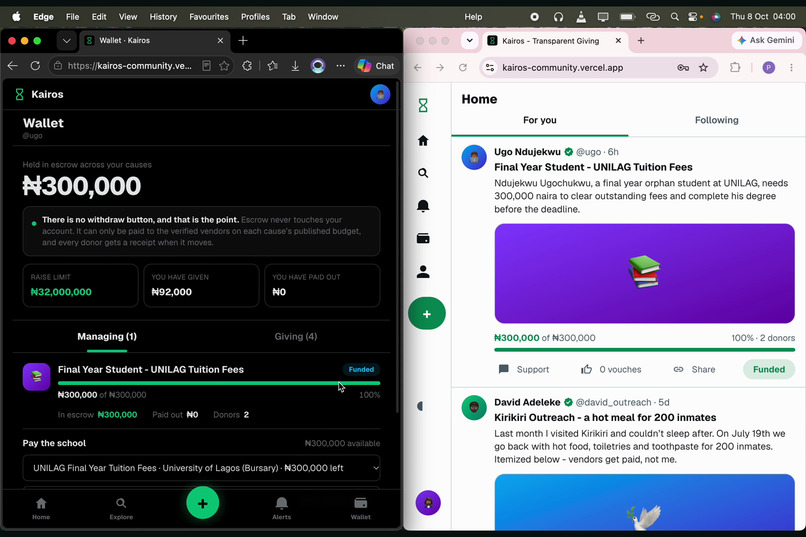
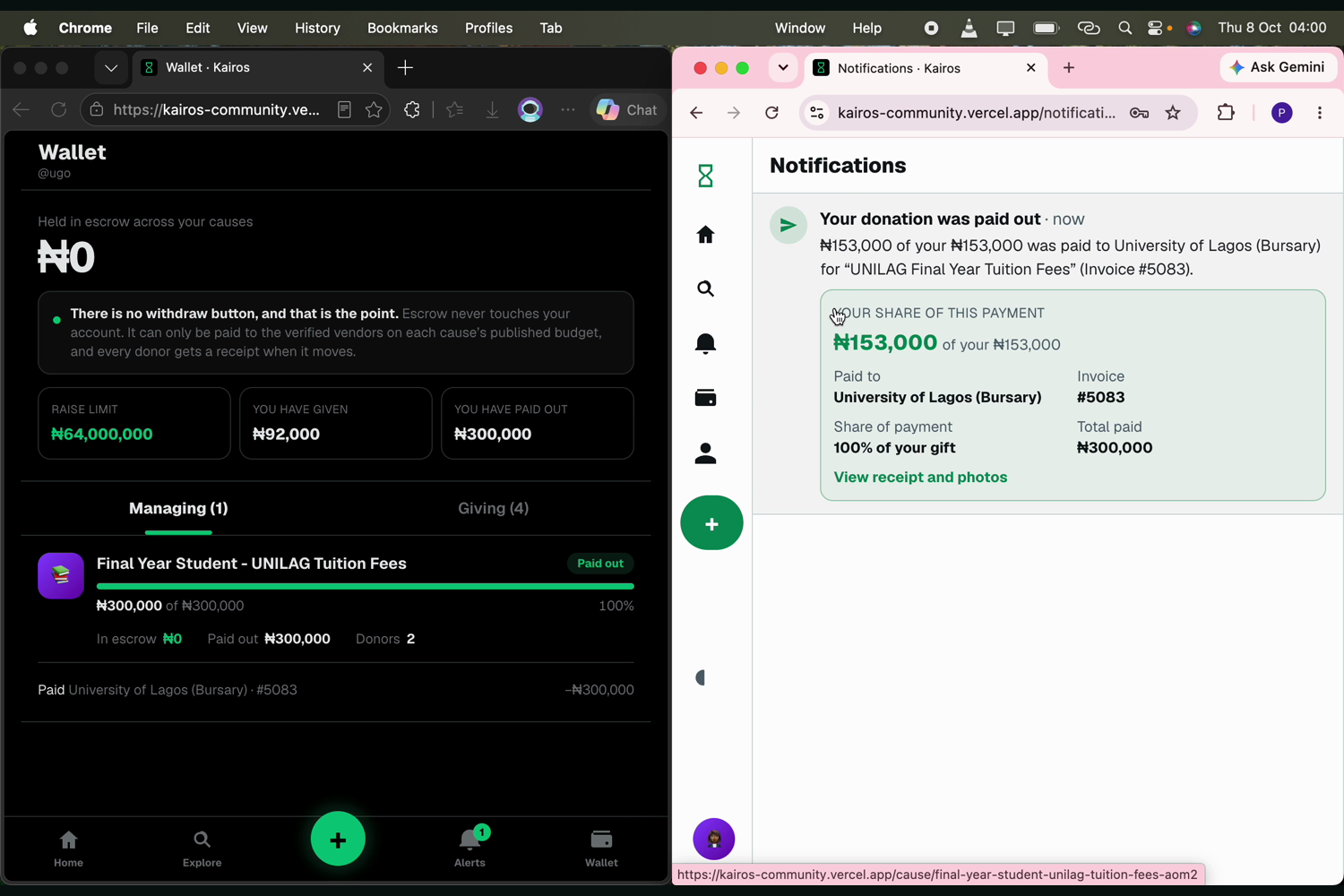
The cause can be shared as a link. Supporters can see the need, the budget and the transaction history. The intended payment flow holds contributions with a licensed partner and pays only the named provider, rather than the organiser's personal account. Each donor gets a receipt showing their own share of each recorded payment.
The prototype demonstrates that flow with simulated transactions. We have not moved real donations or arranged licensed custody.
How we built it
We built the app with Next.js, React, TypeScript and Tailwind CSS. MongoDB and Mongoose store the records, Cloudinary stores supporting files, Nodemailer handles email, and Vercel hosts the app.
The interviewer calls Claude through the Anthropic API. It uses the conversation to ask follow-up questions and produces structured cause details, including the story, named provider and budget. Zod checks the response structure. Application code checks recorded payments against the budget and available balance and calculates each donor's share. We do not use the model to authorise payments or certify that evidence is genuine.
Kairos existed before 7 November 2026. Our November work improved how the interview follows the conversation, preserves answers when the AI service fails, and handles supporting-file storage. These are improvements to an existing project, not a claim that we built everything during this event.
Bank transfer, Remita settlement and NIN lookup are simulated. Live CAC and account-name checks and automated document verification are not built. Supporting documents are stored, and published attachments can be viewed through the app. Automated privacy review and redaction remain planned.
Challenges we ran into
The interviewer needs to understand the need without making someone repeat answers or turning the conversation into a long interrogation. We worked on remembering supplied details, asking about missing information and keeping failed AI requests retryable instead of silently replacing them with scripted replies.
Another challenge was keeping the financial records understandable. Money raised, money still available and money recorded as paid out are different things. Several donors can contribute to one bill, so the receipt must explain each person's share.
Accomplishments that we're proud of
We can demonstrate a connected prototype: an AI interview becomes a published cause, contributions are recorded, a payment is recorded against the budget, and donors receive individual receipt details. The AI helps someone explain the request, while the application keeps the accounting connected to the public record.
What we learned
A convincing story is not the same as verified evidence, and a successful account transfer is not proof that a bill was paid. AI can help organise a request, but independent checks and clear responsibility are still needed before a real payment can happen.
We also learned that a useful interviewer must respond to what someone has already said. More questions do not automatically mean a better interview.
What's next for Kairos
We want to test the interview with more example cases and feedback from students, make it easier to use on phones, and improve how supporting documents are reviewed before publication.
Before accepting live donations, we need to arrange licensed custody, connect and validate identity and payment services, and work with providers on a small supervised pilot. That pilot has not happened yet. School fees are our starting point, with hospitals and other providers planned later.
Built With
- anthropic
- claude
- cloudinary
- css
- mongodb
- mongoose
- next.js
- node.js
- nodemailer
- react
- tailwind
- typescript
- vercel
- zod
