-
-
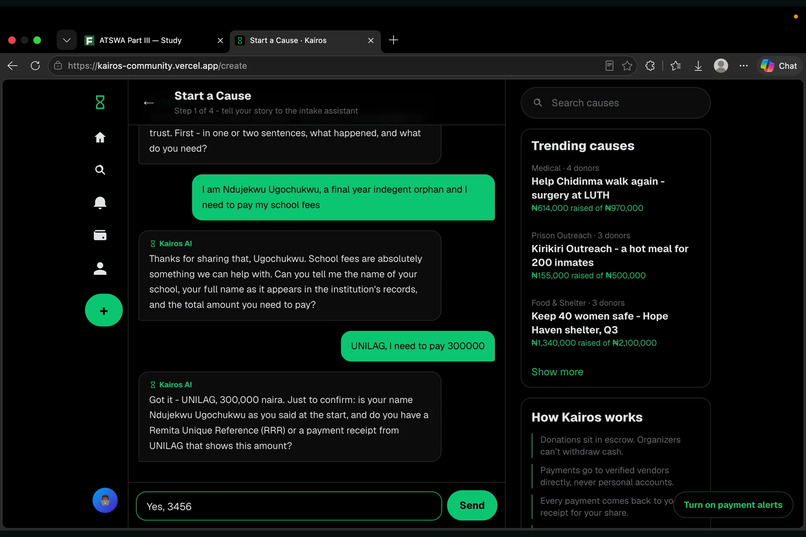
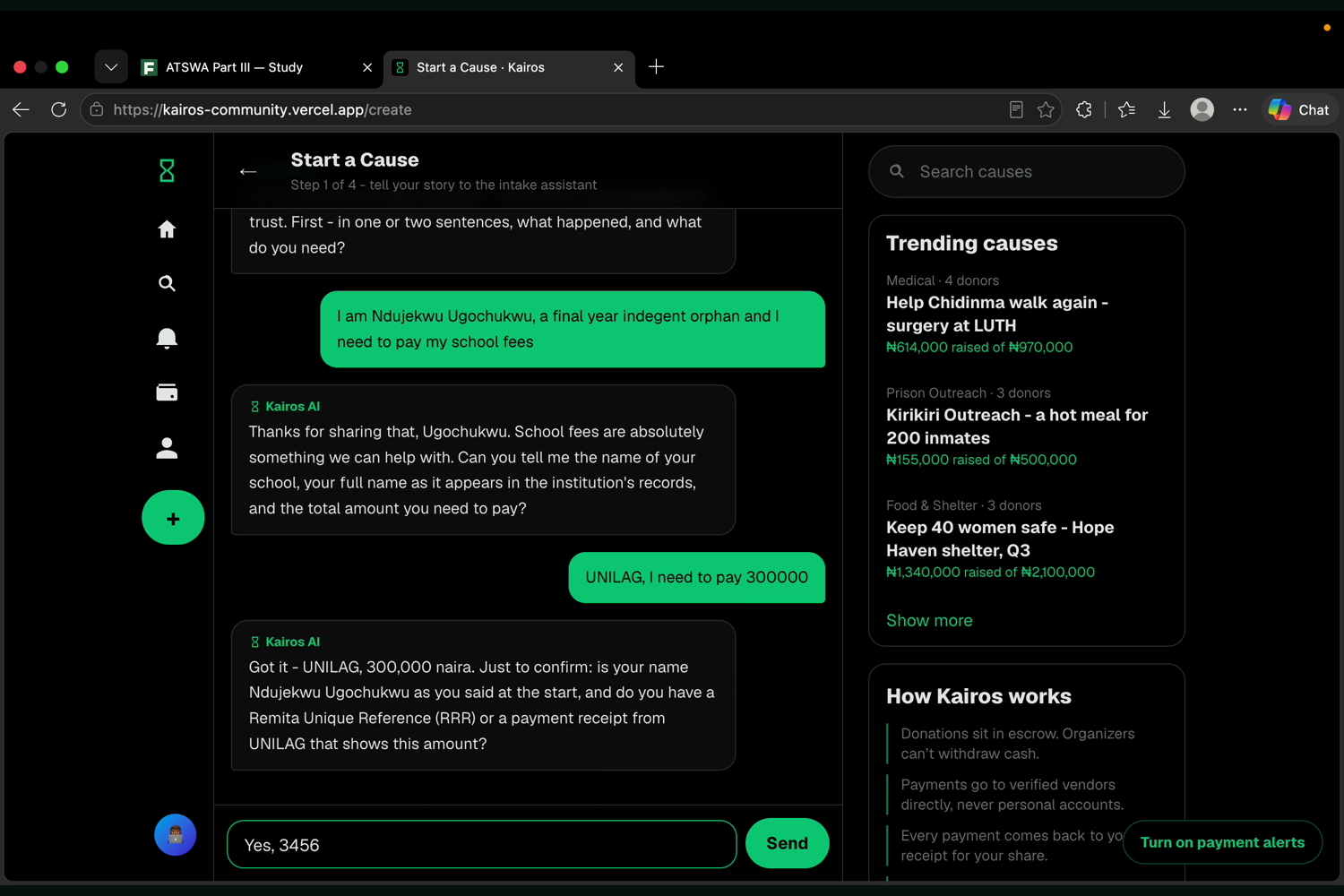
The AI interviewer asks about the need, the bill and who should be paid.
-
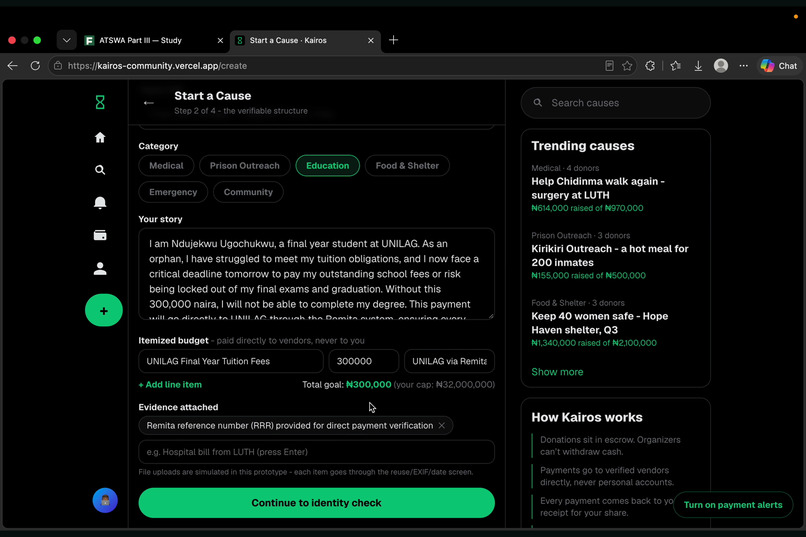
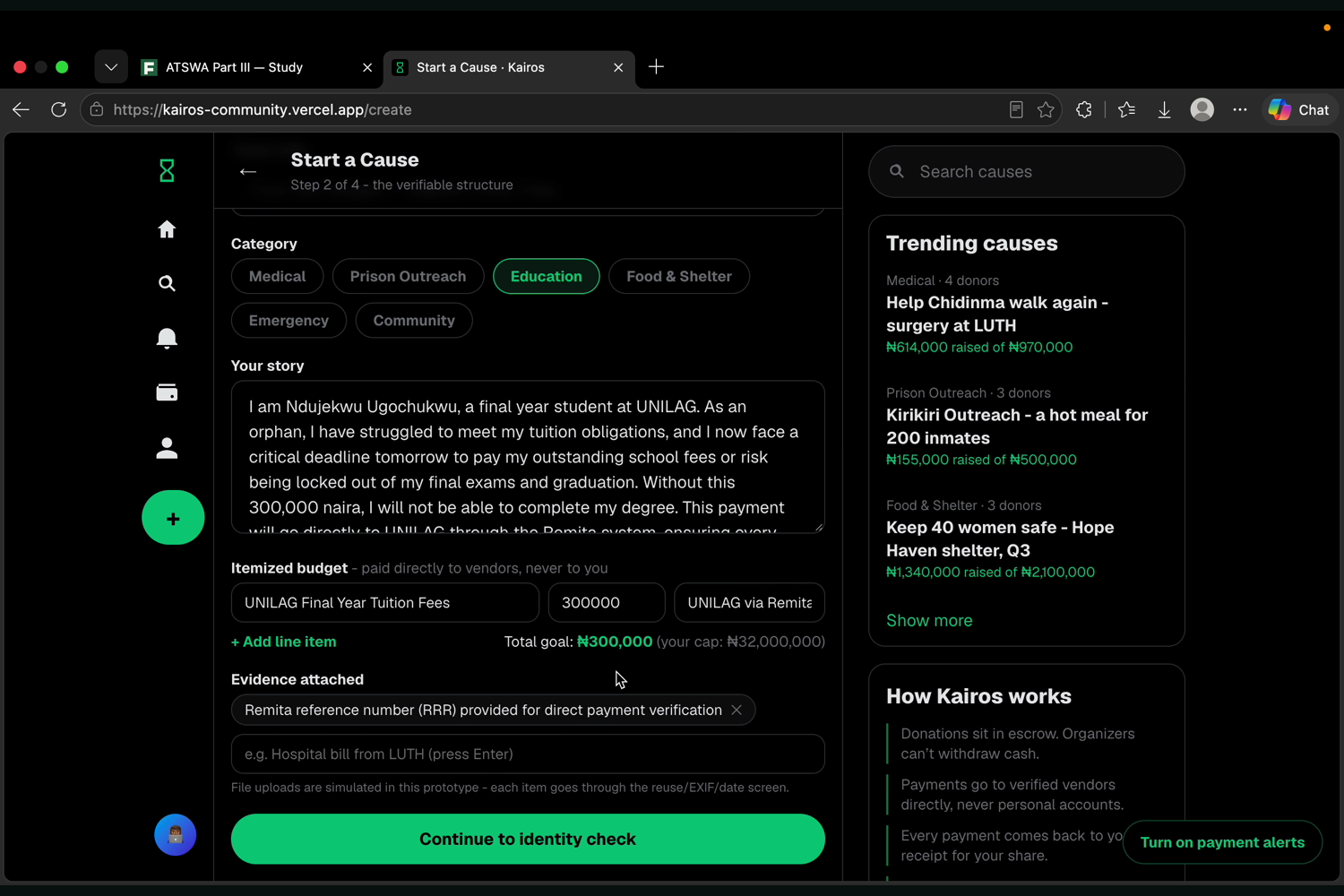
The answers become a clear story and an itemised budget naming the school, hospital or supplier to be paid.
-
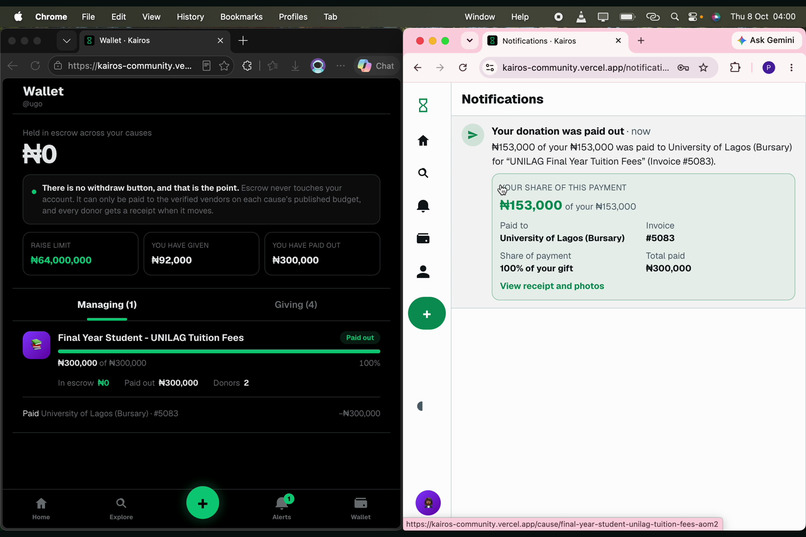
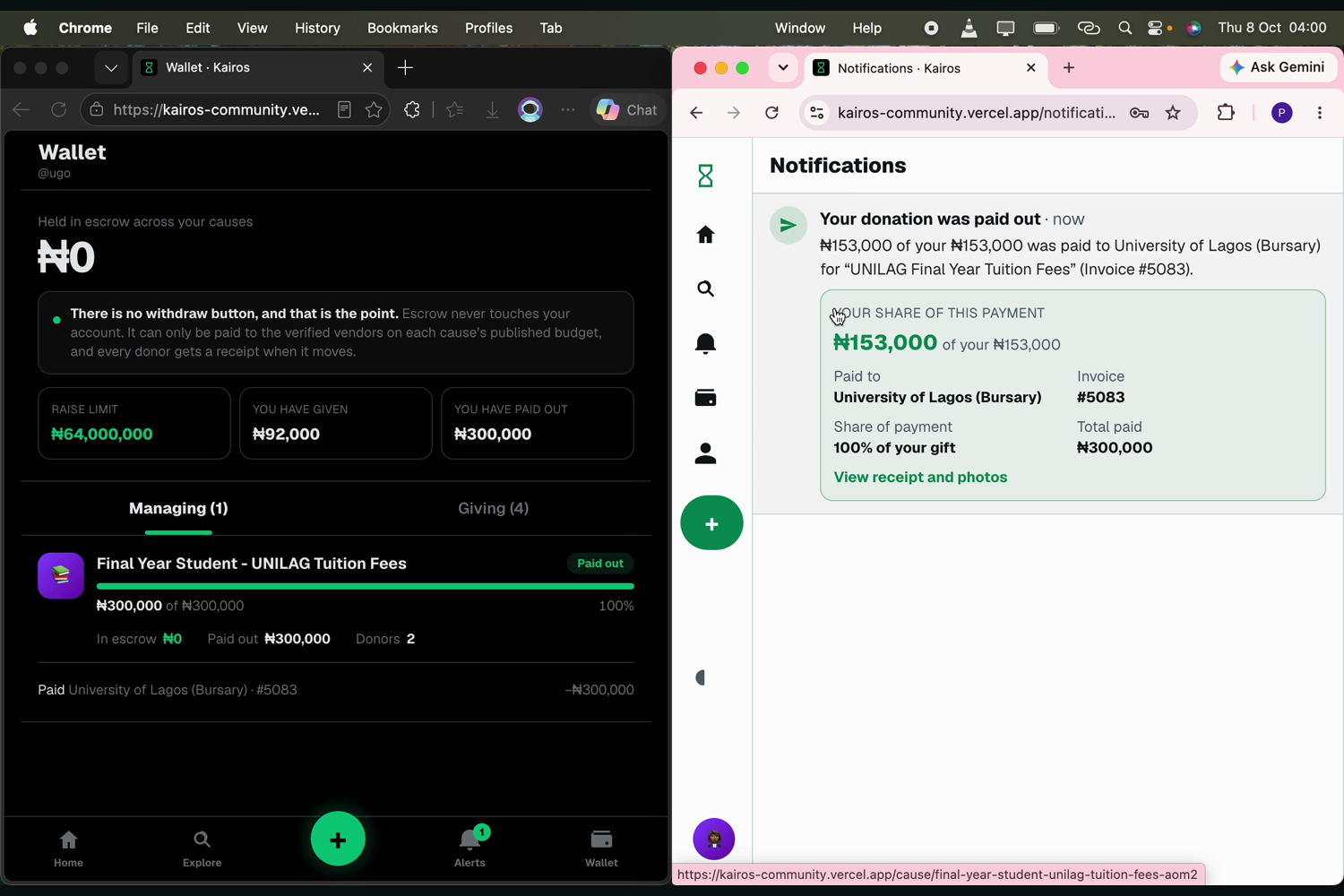
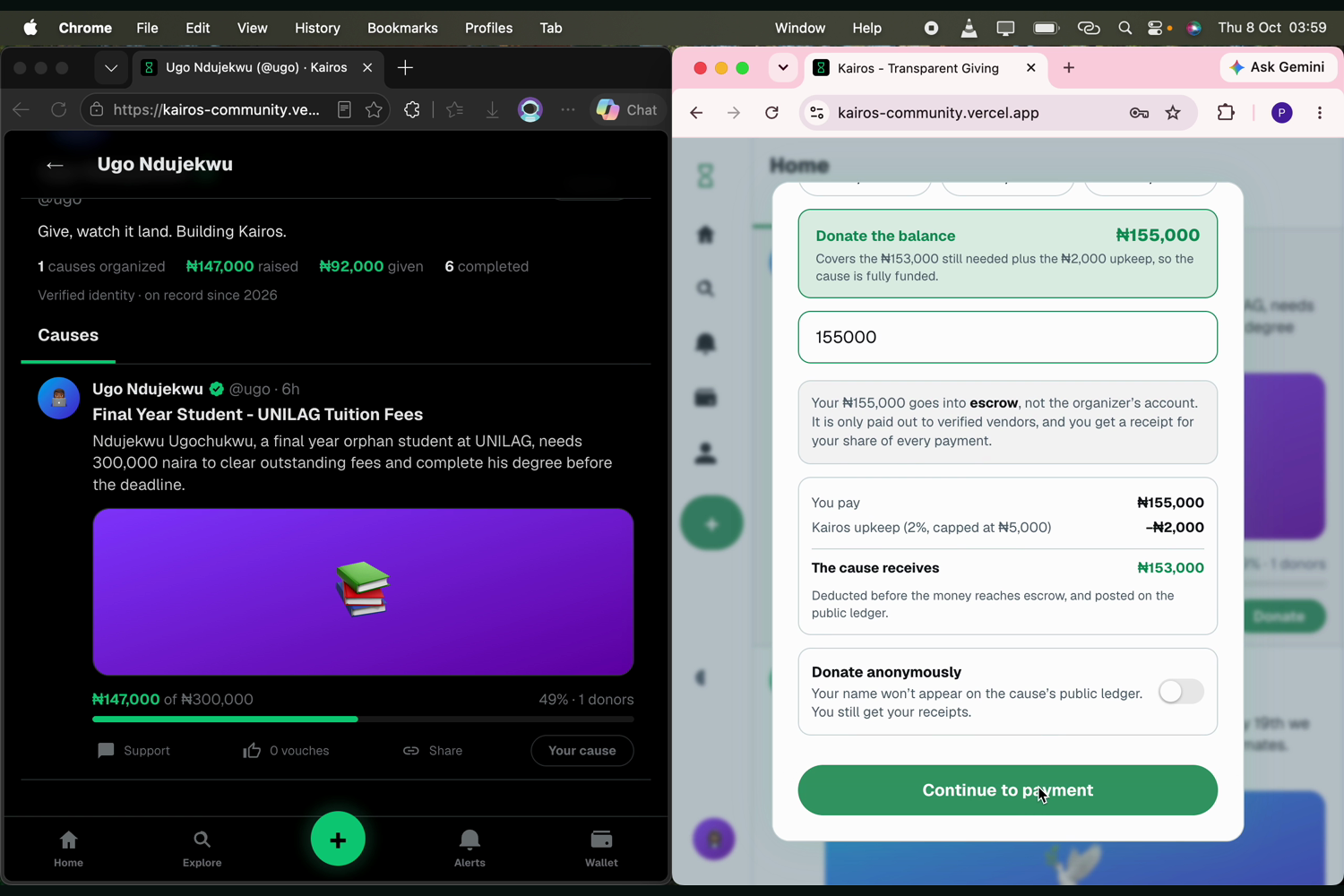
A donor doesn't just get a thank you. This demo receipt shows their own share of the payment.
-
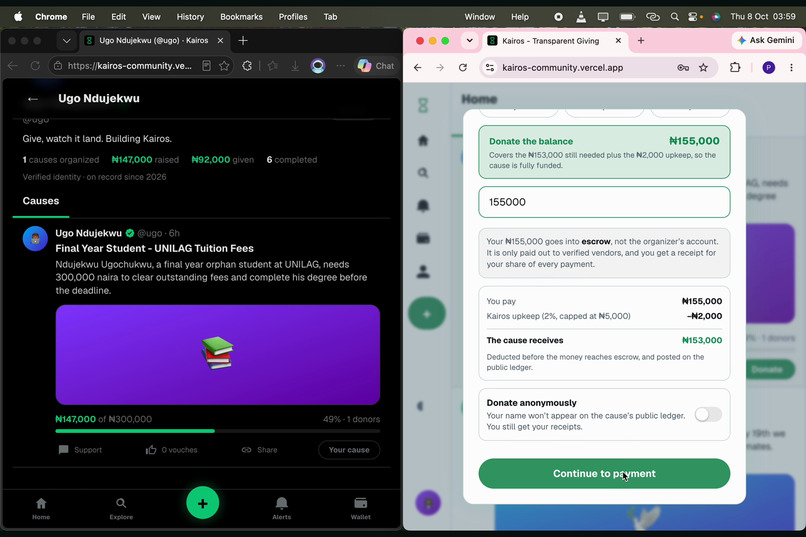
Before giving, the donor sees the upkeep and exactly how much will reach the cause.
-
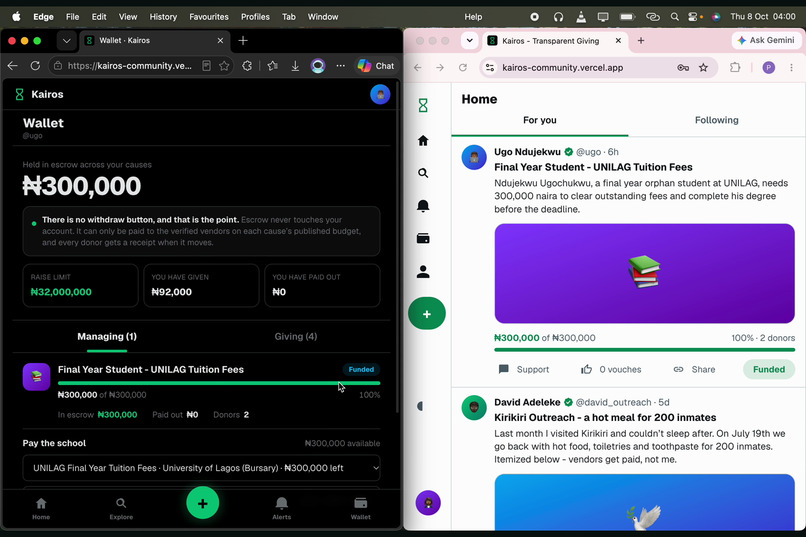
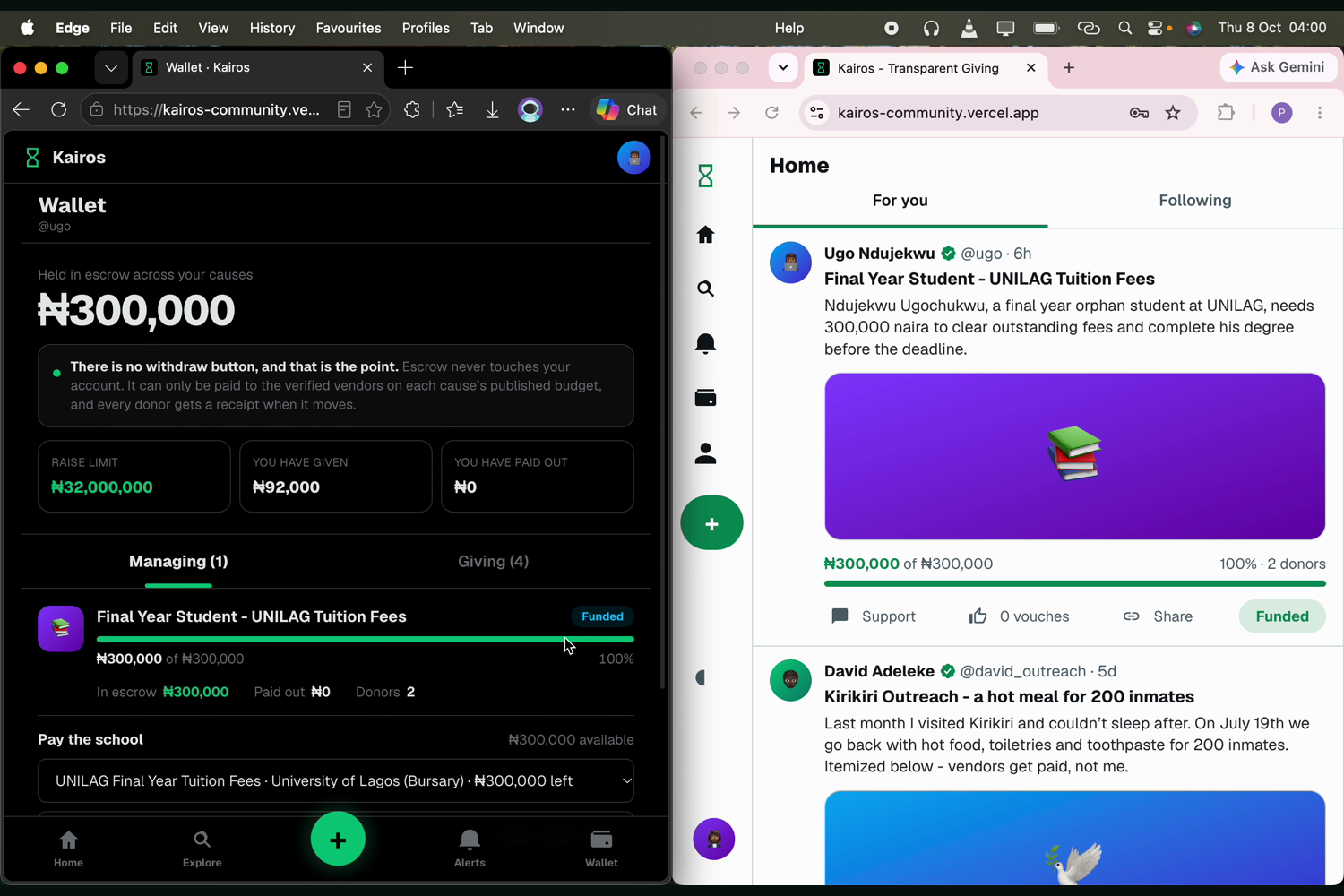
The cause is fully funded. The demo balance is set aside for the named provider, with no cash withdrawal option.
Inspiration
Our school fees went up recently and a final year student who couldn't afford it posted an appeal so he wouldn't drop out. People gave. But then more posts appeared and my friends and I started to wonder if they were all real, because the screenshots looked identical and very easy to edit.
Even after giving, how would we know that the school was actually paid? That is where Kairos started. We wanted people with genuine needs to get help with less hesitation, and the people giving to see what their money did.
What it does
Kairos is a transparent crowdfunding platform. Someone raising money goes through an AI interview about the need, the evidence available, who should be paid and how much. Their answers become a story and an itemised budget naming the school, hospital or supplier that should receive the money.
Each cause has a link people can share. Supporters can see the need, the budget and the transaction history. The intended payment flow holds contributions for that cause and pays the named provider directly, instead of letting the organiser withdraw the money into a personal account.
A donor doesn't just get a thank you. They get a receipt showing what their own contribution helped pay for.
How we built it
We built the web prototype with Next.js, React, TypeScript and Tailwind CSS, with MongoDB and Mongoose for the records. The current AI interviewer uses Claude. Cloudinary stores supporting documents, Nodemailer handles email, and the app runs on Vercel.
The accounting, budget checks, donor shares, notifications and public history work in the app. Bank transfer, Remita settlement and NIN lookup are simulated. Live CAC, account-name and automated evidence checks are not built. No real donations have moved, and licensed custody is still to be arranged.
Challenges we ran into
One challenge was getting the interviewer to understand the need properly instead of stopping after collecting a name and an amount. It needs to ask about the bill, the circumstances and the evidence without making the person repeat what they have already said.
Another was accounting for several people's contributions towards one bill, then showing each person their own share when a payment is recorded. We also needed to keep money raised separate from money actually paid out.
What we are proud of
We can demonstrate the whole prototype flow: someone creates a cause, people contribute, a payment is recorded against the budget, and the donors see their individual shares in the receipt. The accounting is connected to what the donor sees.
What we learned
A transfer only tells you that an account received money. It doesn't tell you that the need was met. We had to follow the contribution all the way to the bill and back to the donor's receipt.
What's next for this hackathon
Kairos existed before this hackathon. Our proposed addition is a hybrid AI interviewer using Firebase AI Logic: help people draft an appeal on-device where supported, with cloud fallback when needed. We would make it clear when their information is being sent to the cloud. AI would help organise the request; it would not approve payments or certify that a document is genuine.
That Firebase integration, App Check setup and on-device/cloud demonstration are not implemented yet. The accompanying video shows the existing Kairos prototype. We still need to build and test the hybrid extension and document the work completed during the competition before the final submission.
Built With
- anthropic
- claude
- cloudinary
- css
- mongodb
- mongoose
- next.js
- node.js
- nodemailer
- react
- tailwind
- typescript
- vercel
- zod
