Inspiration
We started with a question none of us could answer: why do some weeks feel full and others feel like they never happened?
We'd all experienced it — the Sunday evening where you realise you can't account for the last five days. The month that disappeared. The feeling of being present enough to function but not present enough to feel. Existing wellness tools told us how many steps we took, how long we slept, how much screen time we logged. None of them told us how alive we actually felt.
We kept coming back to the ancient Greek distinction between two kinds of time — Chronos, clock time, measurable and equal, and Kairos, felt time, weighted and meaningful. Every app ever built has measured Chronos. Nobody had ever tried to measure Kairos.
That became our brief to ourselves.
What it does
Kairos is a speculative wellness tool that measures the emotional texture of lived time — making the invisible experience of chronoception legible for the first time.
Using passive phone-based sensing — accelerometer, GPS dwell time, typing rhythm, screen behaviour, and optional camera-based heart rate detection — Kairos builds a continuous picture of how time is being felt, not just spent. It translates that data into:
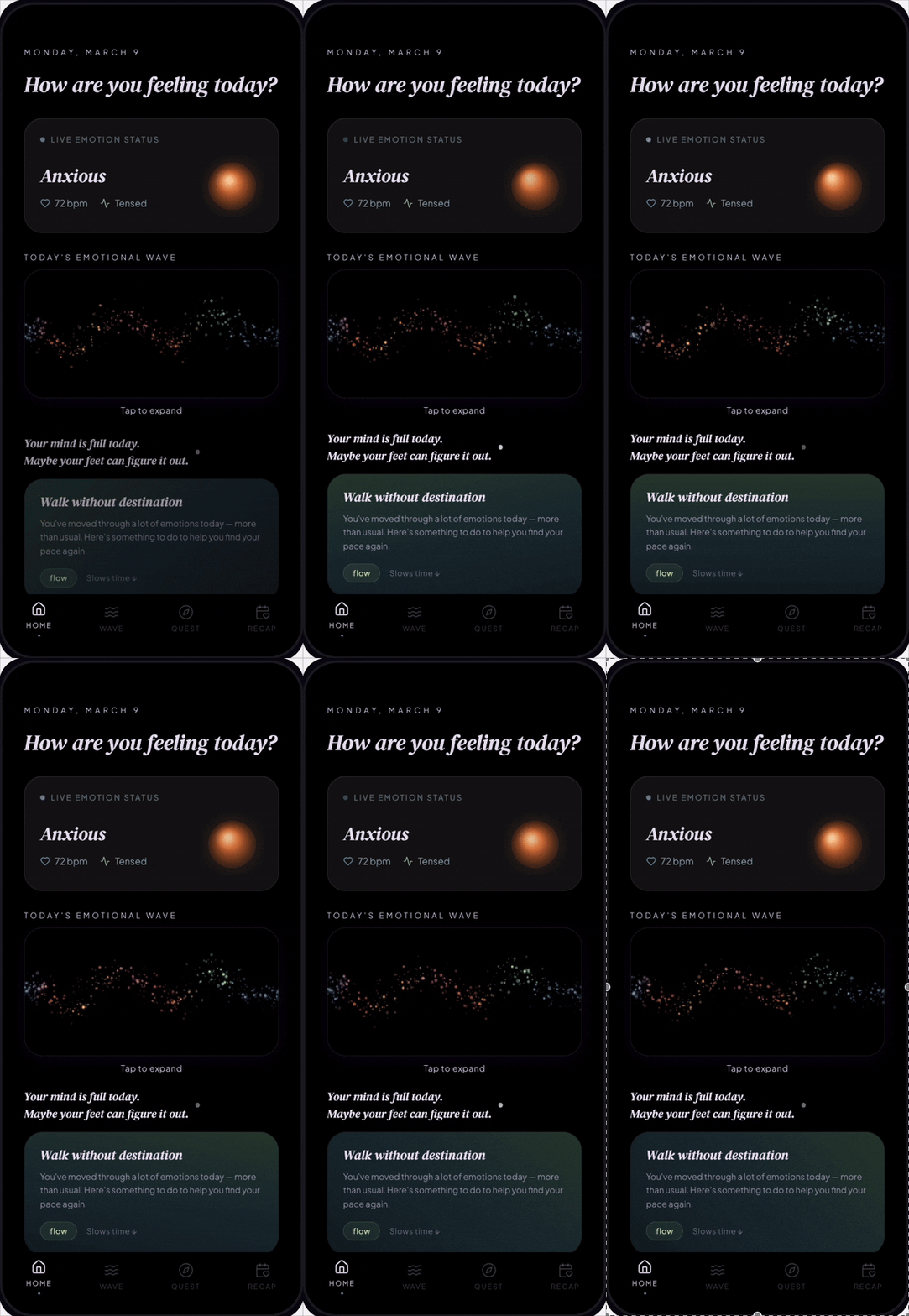
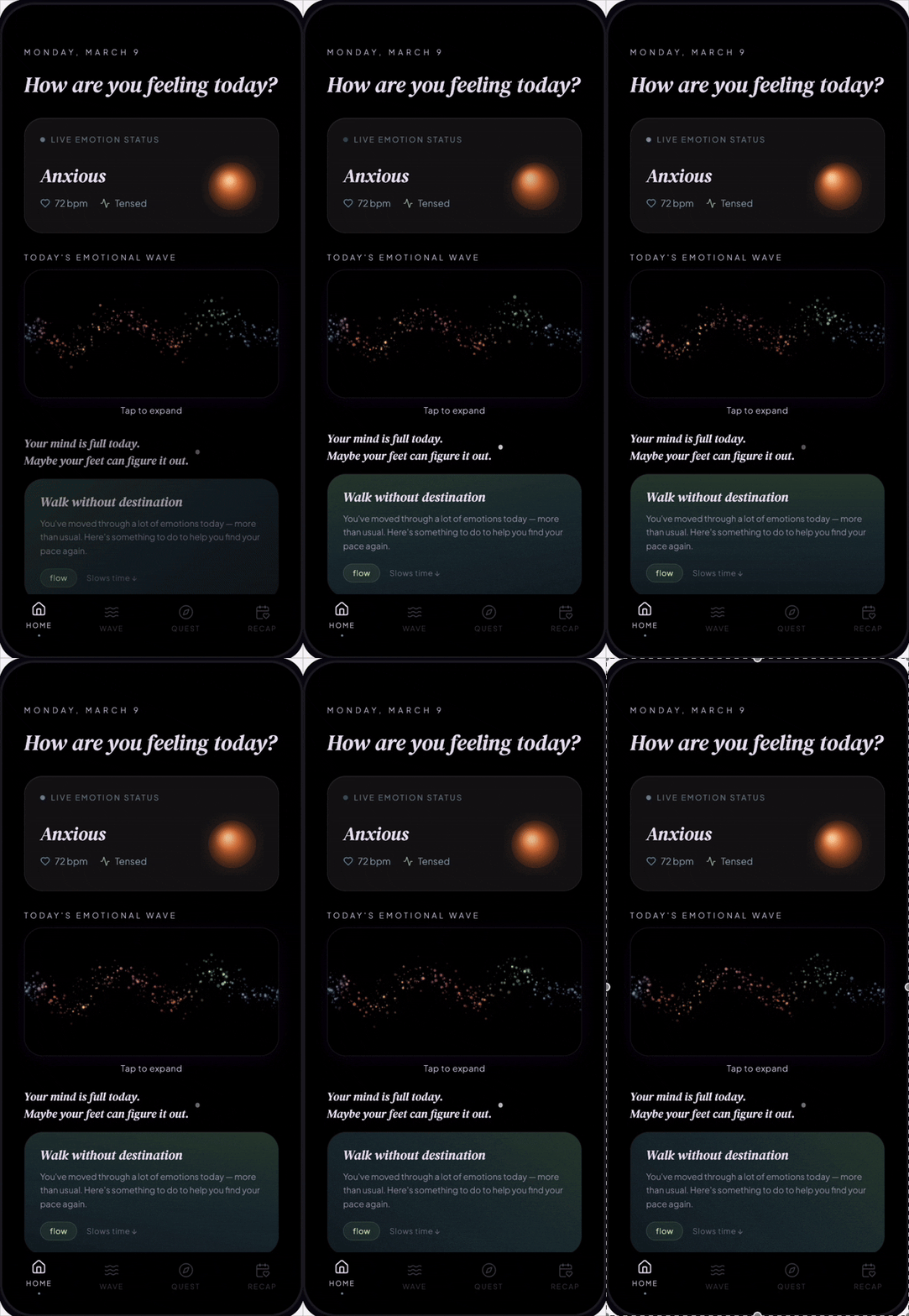
- A Live Emotion Status showing your current detected emotional state in real time
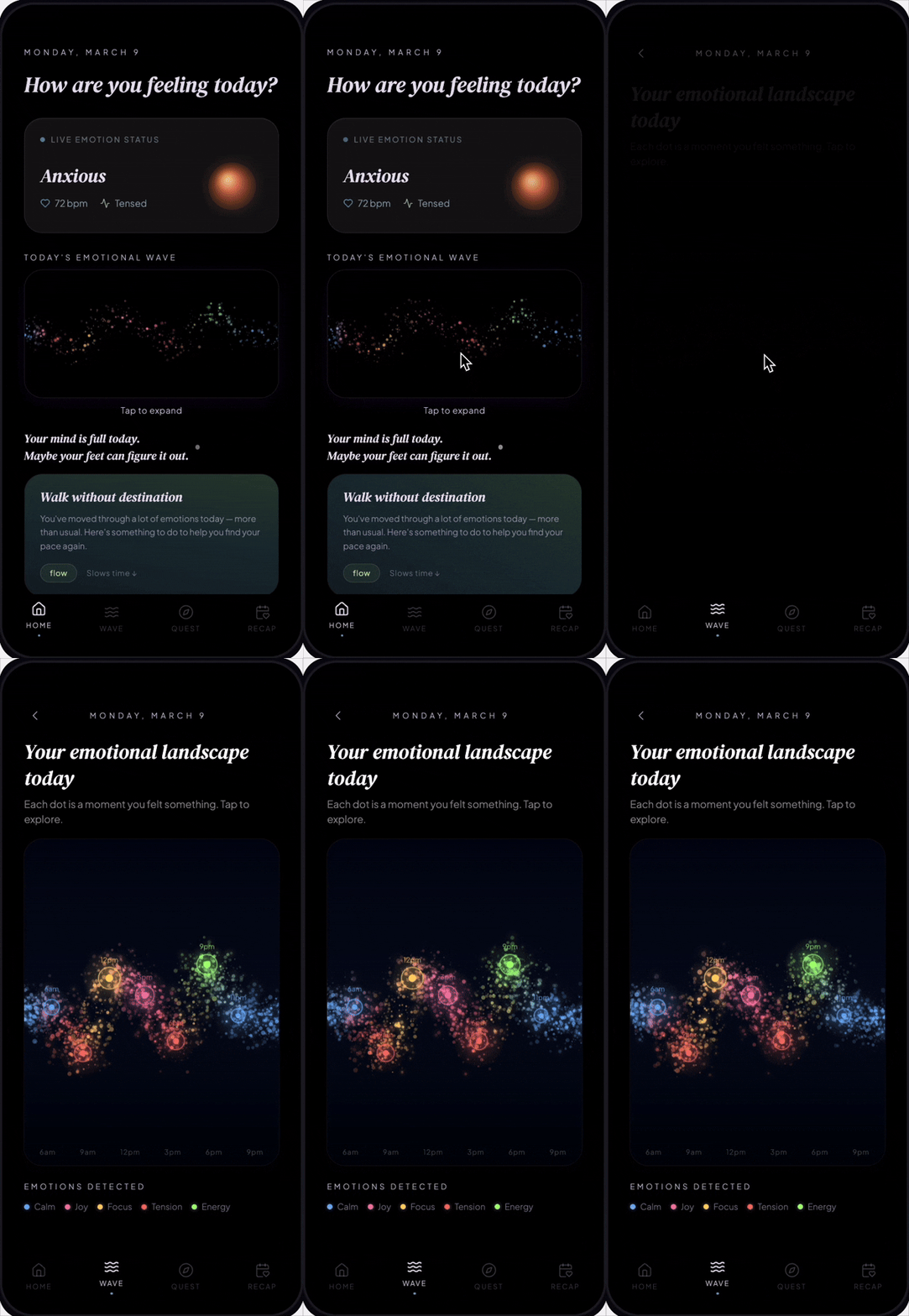
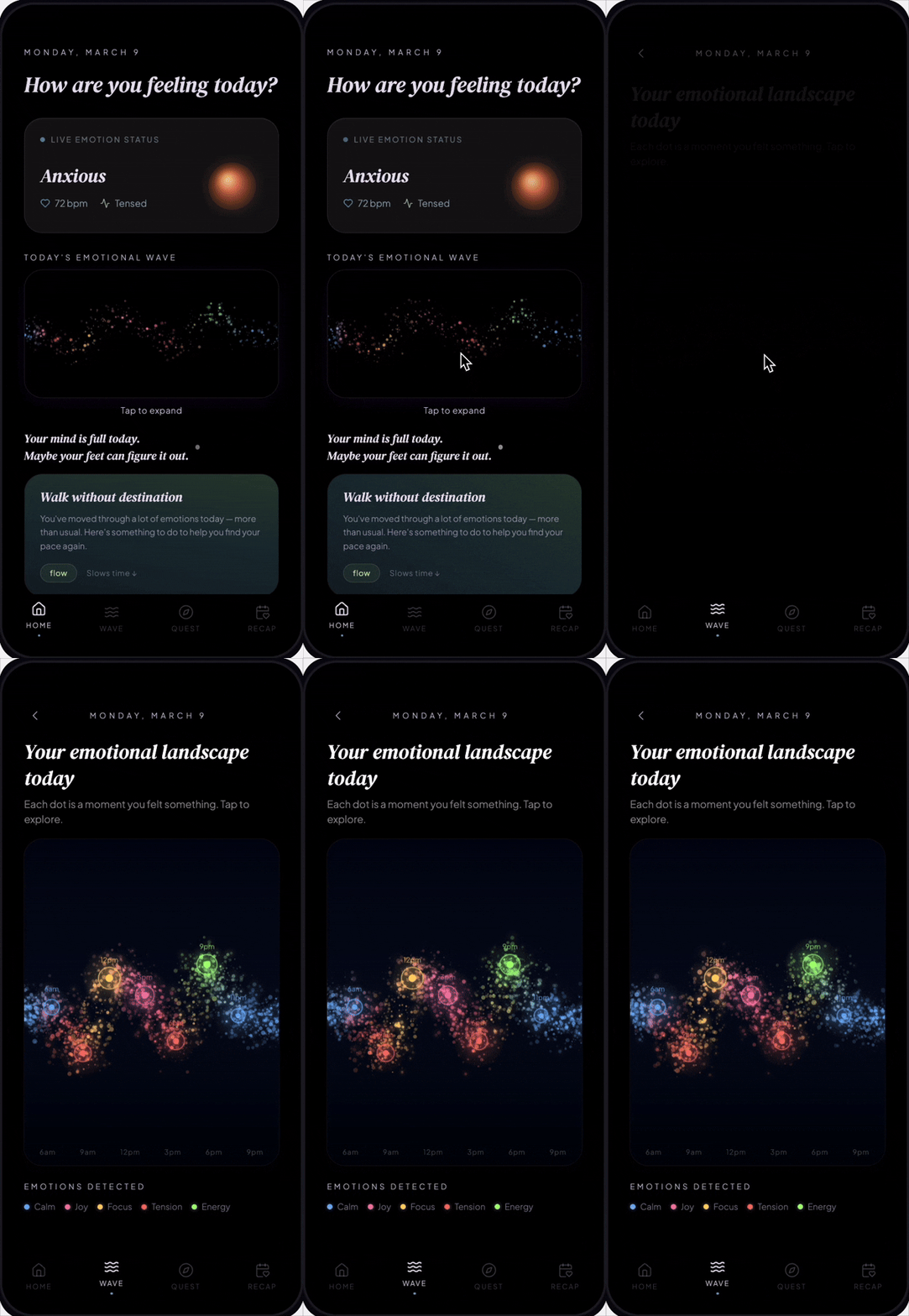
- A Daily Emotional Wave — the day rendered as a living constellation of felt moments
- A Weekly Recap mapping the entire week as a glowing emotional landscape
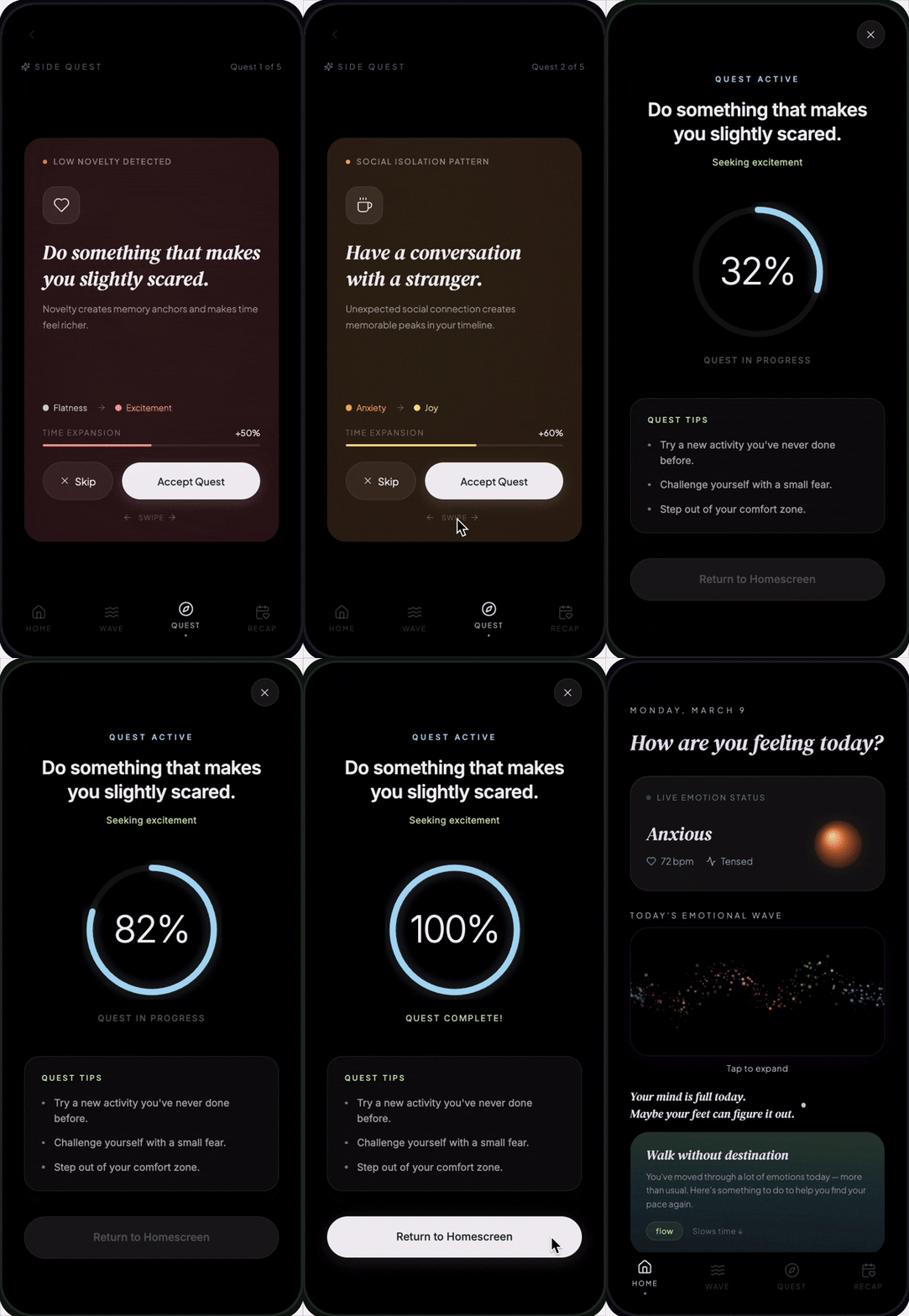
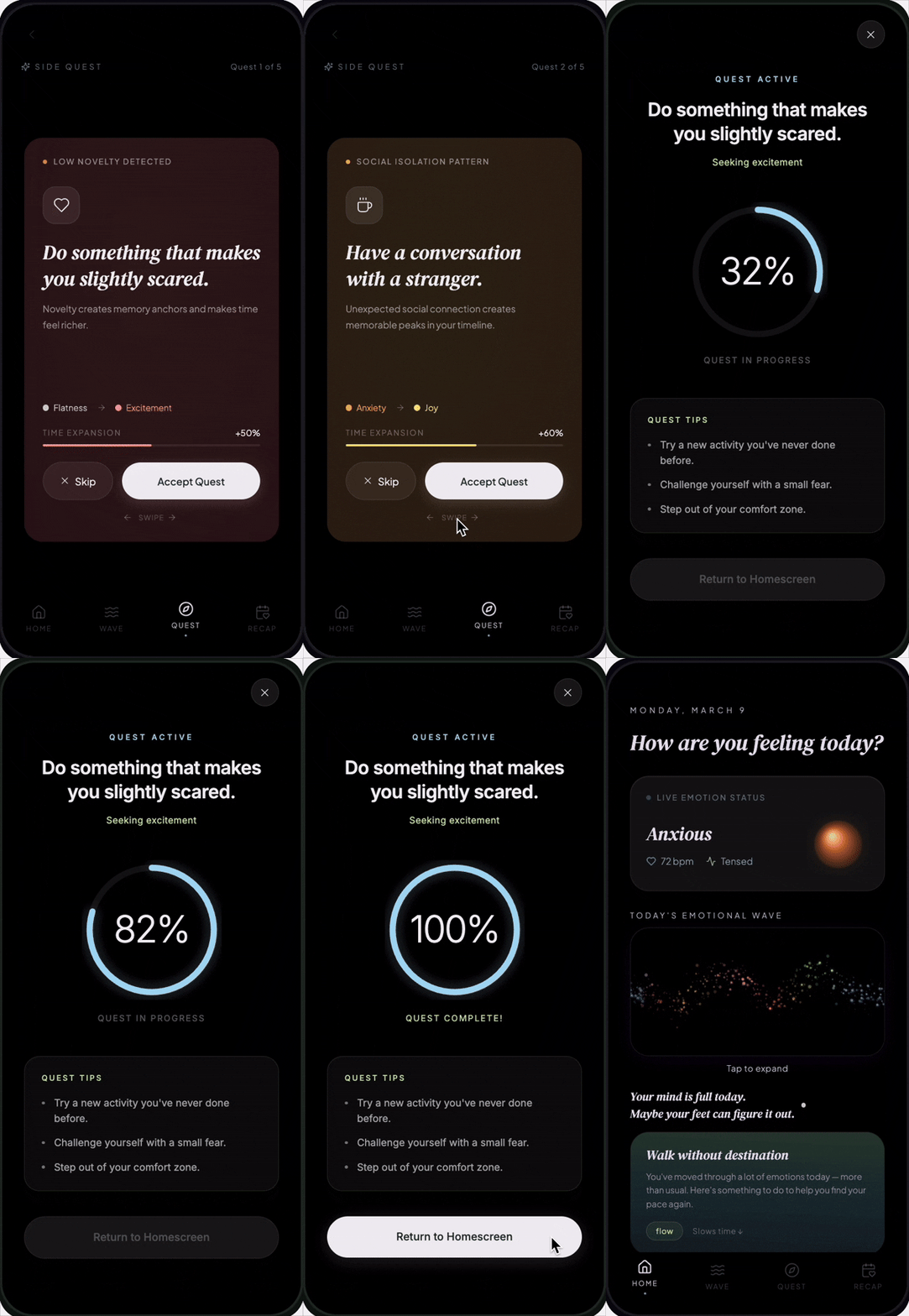
- Side Quests — personalised behavioural nudges triggered when hollow time or burnout patterns are detected
Kairos never tells you how you should feel. It only shows you what was already there.
How we built it
We built Kairos entirely in Figma Make over a single weekend, using Claude and canvas-based animation to bring the sensing system to life as an interactive prototype.
The core visual language — particle fields, emotional colour mapping, topographic time landscapes — was designed first as a set of principles before a single screen was drawn. We established that data should feel like atmosphere, not analytics.
Key build decisions:
- ParticleWaveCanvas — a custom canvas renderer drawing thousands of depth-layered particles along a Catmull-Rom spline, each coloured by emotional state and animated with per-particle physics
- EmotionCircle — a living orb that shifts colour, glow, and pulse frequency to reflect the current detected state without a single number on screen
- SwipeQuestCard — a gesture-driven card system letting users accept or skip quests without friction, built with motion values and drag constraints
- Weekly Recap visualisation — the full week rendered as a single explorable particle map with tappable day nodes
Typography, motion timing, and copy were treated as design materials with equal weight to the interface itself.
Challenges we ran into
Making data feel human without making it vague. Every time we added a number, something was lost. Every time we removed all numbers, nothing could be trusted. Finding the exact balance — intensity 7.2, duration 24m — took more iteration than any visual component.
The canvas rendering performance. Running three simultaneous layered particle systems — background micro-dots, mid-field primary dots, foreground accent particles — while maintaining smooth animation in a Figma Make environment pushed us to optimise dot counts, blur passes, and draw order repeatedly.
Writing copy that doesn't moralize. Kairos speaks in the voice of a quiet witness, not a wellness algorithm. Every insight, nudge, and recap line had to earn its place — specific enough to feel personal, open enough not to tell the user how they feel. We rewrote the copy more times than the code.
Speculative design grounded in real need. Designing for a sense — chronoception — that most people have never consciously named meant we had to make the invisible legible without making it clinical. The line between poetic and pretentious was something we walked carefully throughout.
Accomplishments that we're proud of
- Building a fully interactive multi-screen prototype in Figma Make from scratch in under 48 hours
- Designing a visual language for felt time that communicates emotional texture without charts, axes, or conventional data visualisation
- The particle wave rendering — thousands of animated dots organised by emotion, depth, and time that together feel less like a data visualisation and more like something alive
What we learned
Speculative design is most powerful when it's specific. The further we pushed into the fantastical — chromochronia, aliveness fingerprints, prospective nostalgia — the more we had to anchor each idea in a precise human moment. Specificity is what makes speculation feel real.
Motion is meaning. The difference between a particle field and an emotional portrait is entirely in how it moves. We learned to design animation as communication, not decoration — every pulse, drift, and glow carries information about the emotional state it represents.
The hardest interface to design is one that doesn't impose. Most apps are designed to tell you something. Kairos is designed to show you something you already know but haven't seen yet. Designing for reflection rather than instruction required us to unlearn a lot of default interface assumptions.
Copy is a design material. "Your mind is full today. Maybe your feet can figure it out." That line changed the entire tone of the home screen. We learned that the right sentence in the right place does more work than any visual component.
What's next for Kairos
- The Aliveness Fingerprint — the 30-day feature that generates each user's unique biological signature of what makes them feel most alive, built out as a full interaction
- Real sensing integration — prototyping the passive detection layer with actual accelerometer and screen behaviour data to validate the emotional classification model
- Therapist and clinician dashboard — a companion view that surfaces temporal perception data as a therapeutic signal for mental health practitioners
- Longitudinal memory — the ability to surface a moment from exactly one year ago today: "A year ago tonight felt very similar to tonight. You've carried this a long time."
- Shared aliveness maps — an opt-in social layer letting two people compare their aliveness fingerprints and discover where their felt time overlaps
The quantified self movement taught us to count our steps. Kairos teaches us to count our alive moments.
Built With
- chatgpt
- claude
- figma
- figmamake


Log in or sign up for Devpost to join the conversation.