-
Logo of our app
-
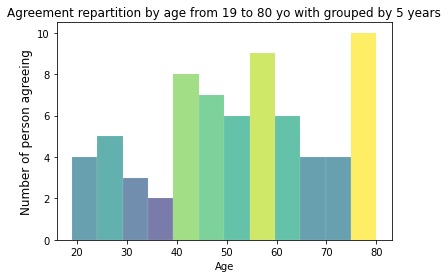
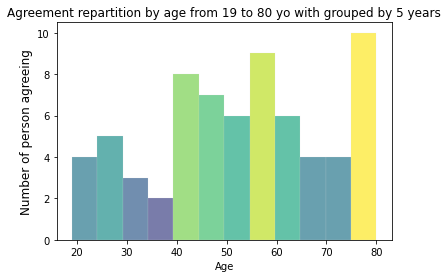
Example of an histogram generated using data from a randomly generated data set
-
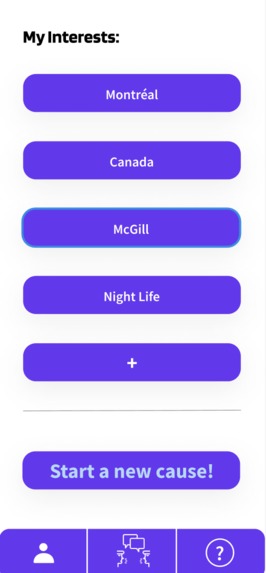
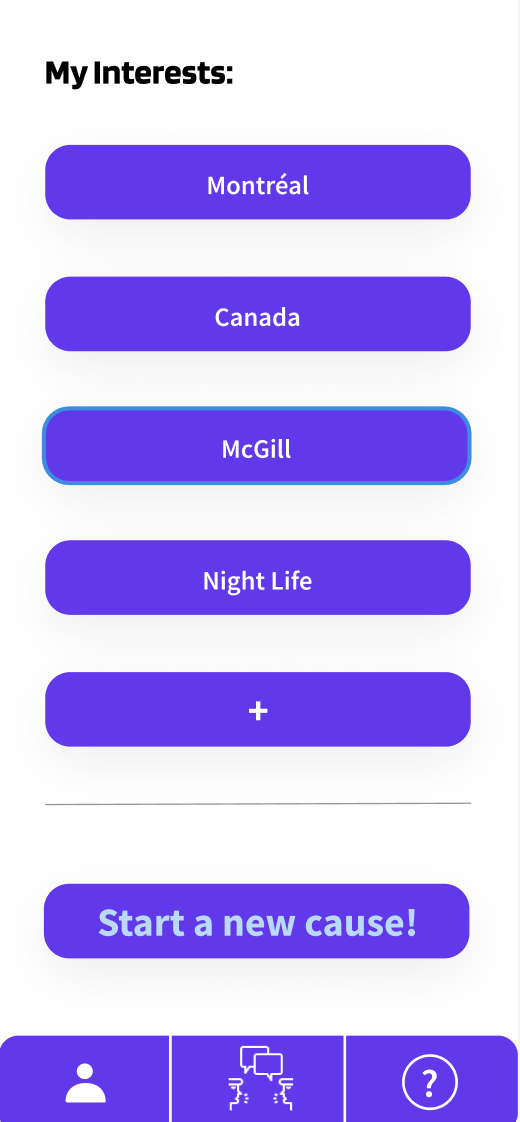
Example of a page of our mobile application interface
Inspiration
To set our goal, we were grandly inspired by the Swiss system, which has proven to be one of the most functional democracy in the world. In Switzerland, there is a free mobile application, VoteInfo, which is managed by a governmental institution, but is not linked to any political groups, where infos about votes and democratic events happening at a national, regional and communal scale are explained, vulgarized and promoted. The goal is to provide the population a deep understanding of the current political discussions and therefore to imply everyone in the Swiss political life, where every citizen can vote approximately 3 times a year on national referendum to decide the future of their country. We also thought it would be interesting to expand that idea to enable elected representative, elected staff and media to have a better sense of the needs and desires of a certain population. Here is a link to the swiss application website (in french, german and italian only).
What it does
We developed a mobile application where anyone over 18 can have an account. After creating their account and entering their information (which will NOT be sold for profit), they will have the ability to navigate through many "causes", on different scales. For example, a McGill student could join the "McGill" group, and see many ideas proposed by member of elected staff, or even by regular students. They could vote for or against those, or they could choose to give visibility to an idea that they believe is important. The elected staff of McGill could then use the data from the votes, plotted in the app in the form of histograms, to see how the McGill community feels about many different subjects. One could also join the "Montreal Nightlife" group. For instance, a non-profit organization with governmental partnerships like mtl2424, which is currently investigating the possibility of extending the alcohol permit fixed to 3 a.m., could therefore get a good understanding of how the Montreal population feels about this idea, by looking on the different opinion depending on the voters' age, their neighbourhood, or even both!
How we built it
We used Figma for the graphic interface, and Python (using Spyder IDE) for the data analysis and the graph plotting ,with Matplotlib and Numpy libraries.
Challenges we ran into
We tried to build a dynamic interface where one could easily be able to set graphs and histograms to certain conditions, i.e. age, gender, occupation... However, the implementation of such deep features happened to be too complicated and time-consuming for our level of understanding of software design, therefore, we abandoned that aspect. Also, as neither of us had any real background in software design, building the app interface was very challenging.
Accomplishments that we're proud of
We are really proud of the idea in itself, as we really and honestly believe that, especially in small communities like McGill, it could have a real positive impact. We put a lot of effort into building a realistic and useful tool that we, as students and members of different communities, would really like to have access to.
What we learned
The thing we mainly learned was how to create a mobile app interface. As stipulated before, it was a real challenge, as neither of us had any experience in software development, so we had to learn while creating our interface. As we were limited in time and knowledge, we also learned how to understand the priorities of our projects and to focus on them in the first place, and only afterward try to add some features.
What's next for Kairos
The first step would be to implement our application's back-end and link it to the front-end. In the future, we would really like to create a nice, dynamic and clean UI, to be attractive and easy to use for anyone, of any age, as the main problem with implementing technological tools for democracy is that the seniors are often under-represented. We would also like to implement a lot of features, like a special registration menu for organizations to create groups, dynamic maps, discussion channels etc... Probably the largest challenge in the upcoming implementations will be to find a good way to ensure each user has only one account, to prevent pollution in the sampling.


Log in or sign up for Devpost to join the conversation.