-
-
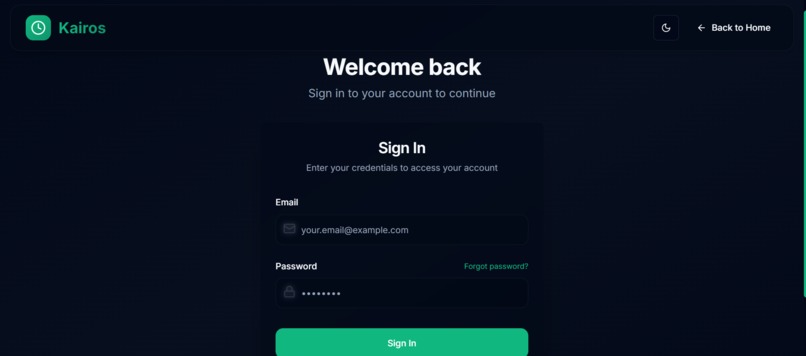
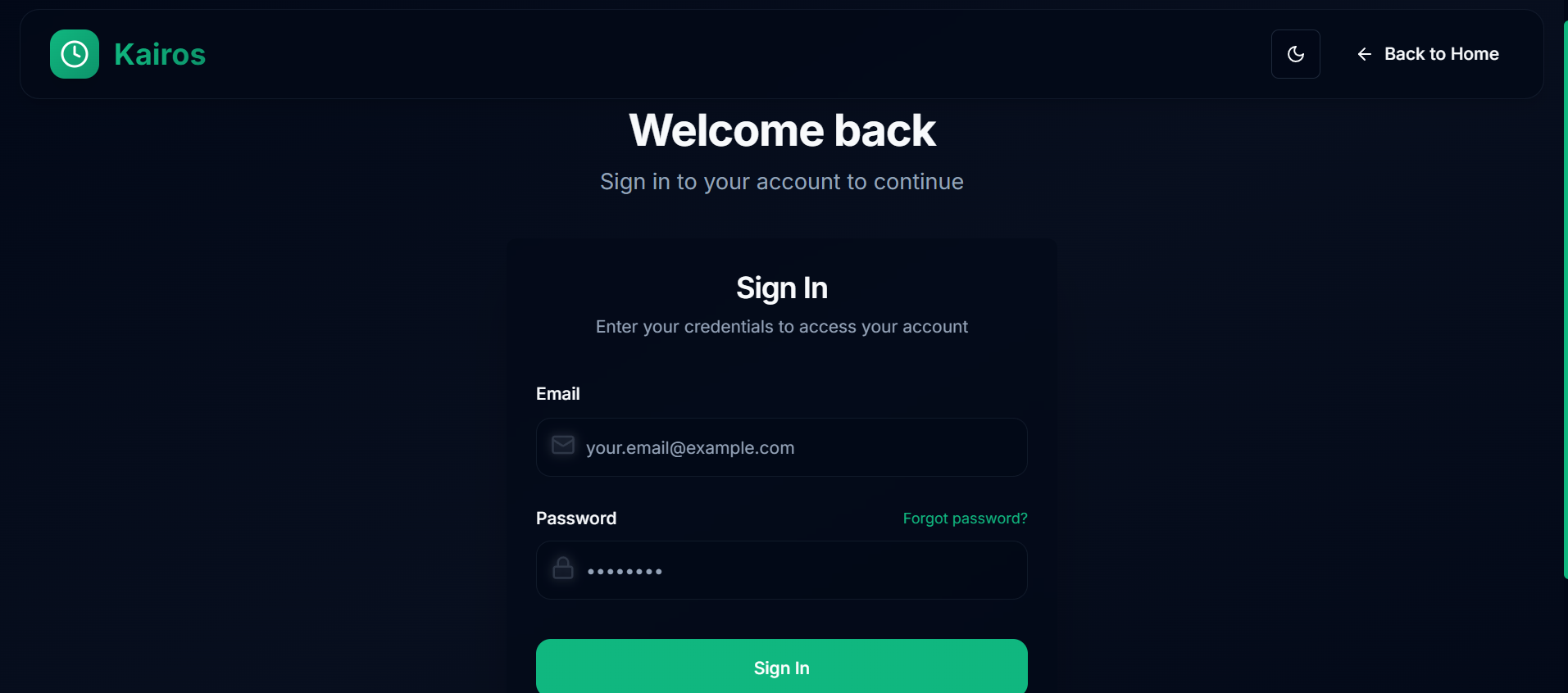
Login page
-
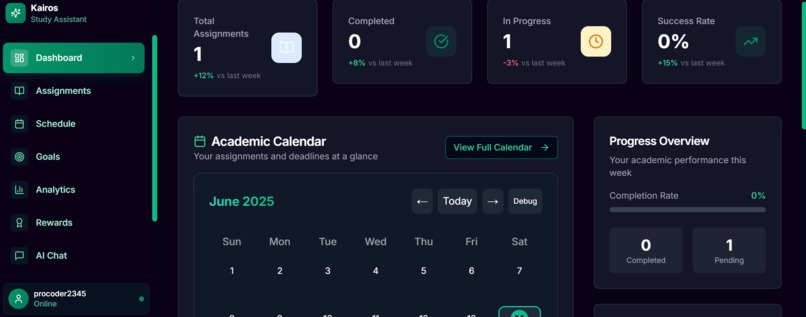
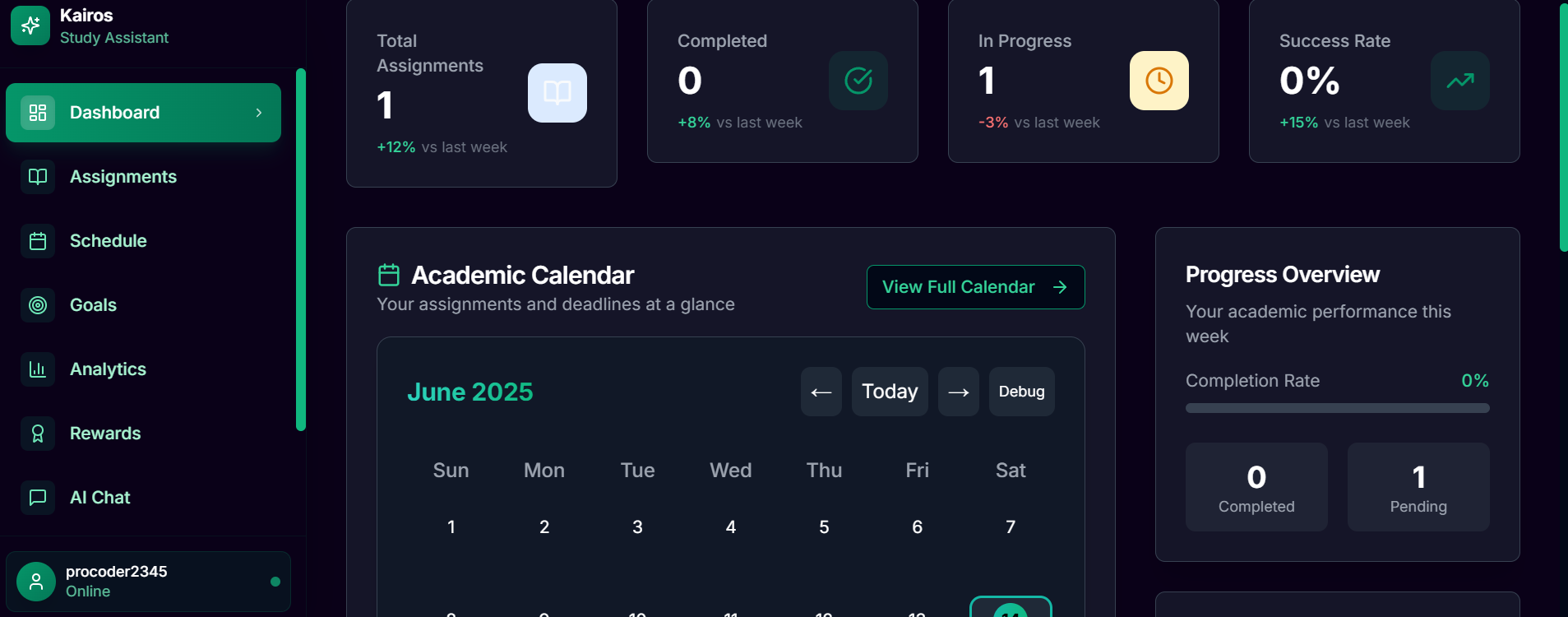
Dashboard view
Inspiration
Many students, like us, are struggling because of the fact that there is something that always seems more fun to do, which makes us prioritize that activity over our school assignments. We have even asked students and friends around our school and all of them are facing this problem, but at the same time, no one has found a solution that is easy enough to use where there is little to no work needed when entering an assignment. So this is what inspired us to create a whole AI-scheduling website for this hackathon.
What it does
Our website we have built takes in a user's assignment and breaks it down into less overwhelming and manageable tasks, which makes it more clear and direct on what you need to do every single day. It also has many other side features like goals and rewards, which make the experience a lot better.
How we built it
We used ChatGPT as a source of guidance for code snippets for API Integrations. We also hand-coded lots of the UI/UX but also had the help of ChatGPT for advanced animations and symbols. A lot of the formatting, the calendar, a big part of the backend, and a few other things were made with the help of ChatGPT but other than that, the rest was hand-coded.
Challenges we ran into
Our main challenge while building this app was time. We were tasked to build a complex app such as this, that required many features, in a short amount of time, while also studying for final exams in school. Our second challenge was the inability to access the desired AI system. We originally wanted to implement Anthropic Claude in Amazon Bedrock, as this combination does not take customer chat data for training purposes, which was a major privacy concern that we had. Furthermore, Anthropic Claude’s models have a 200,000 token capacity in a single interaction, which roughly equals 150,000 words, which would have been more than enough for user purposes. However, this combination is not free, and requires money that we currently do not have. So, we had to settle with OpenAI’s GPT-4o-mini, which does take customer chat data for training purposes. Furthermore, we were constrained to a maximum of 300 tokens per interaction, which roughly equates to 225 words. While this word limit may seem to be enough for some students, for others, simply a higher word count is necessary, especially during processing of PDFs.
Accomplishments that we're proud of
Even though we were only able to work for 2 days, we were able to complete a mostly functional website that met the capabilities we needed. All basic functionalities and UI are developed enough for use with a system that can successfully guide students to success. We are proud of what we have achieved in a short amount of time.
What we learned
From building this website, we were able to master UI design, API integration, and brainstorming solutions to persistent problems, key to successful problem-solving. And this learning has also helped us kickstart another website we are making for our school, which has proved our learning here to be an amazing experience as well as a useful thing.
What's next for Kairos
We are planning to end up integrating the website we have made into our school district, after seeing many students face this problem. We even have a scheduled call with the head of technology in our district this week.
Built With
- ai
- api
- chatgpt
- supabase
- typescript

Log in or sign up for Devpost to join the conversation.